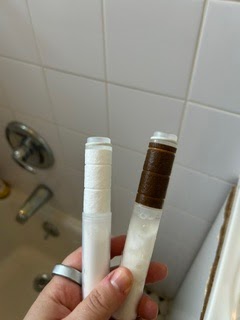
A renter-friendly shower filter installs by hand onto the existing shower arm, leaves no holes or permanent changes, and comes off when you move.
- US shower arms end in a standard 1/2-inch NPT thread, so heads made for US arms fit most showers (ASME A112.18.1).
- Keep the original head in a bag with its washer and put it back at move-out.
- Hand-tighten only and check the joint for drips the first time you run the water.
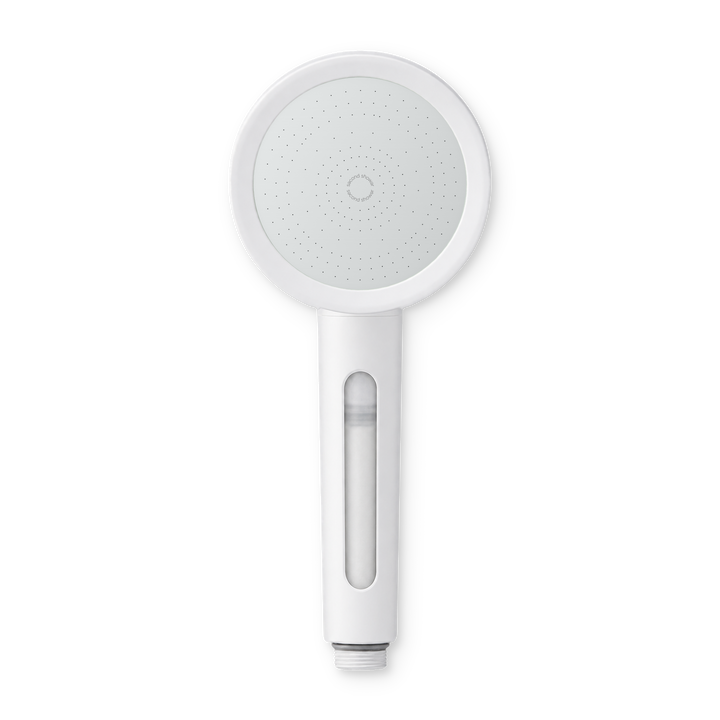
Our pick: the Second Showerhand ($89, or $69 on subscription), which installs in about a minute without tools. Its Vitamin C filter cut free chlorine and chloramine by 99.9% in independent lab testing, held through Day 1-30 in our testing.
Why Renters Need a Different Filter Strategy
Most shower filters are designed for homeowners: bulky inline cartridges, permanent wall mounts, or systems that require drilling. If you're renting, you need something that installs in under a minute, leaves zero damage, and comes with you when you move.
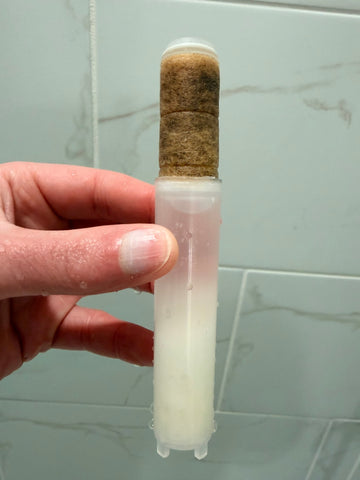
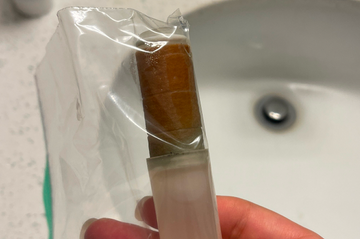
The Second Shower handheld filter (Showerhand) is purpose-built for renters. It threads onto your existing shower arm in 60 seconds — no tools, no tape, no permanent changes. When your lease ends, you unscrew it and take it with you.
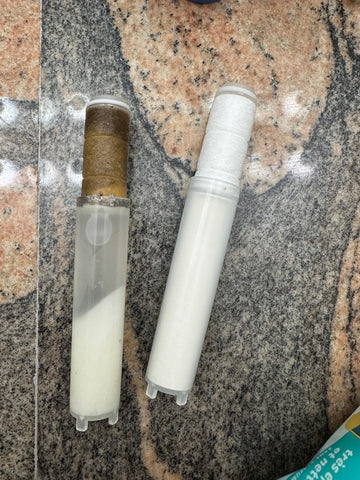
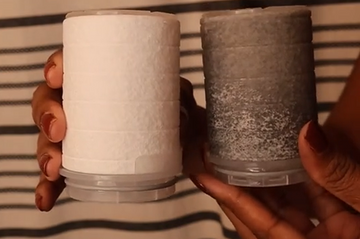
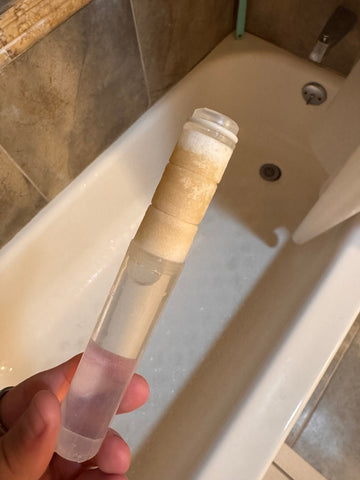
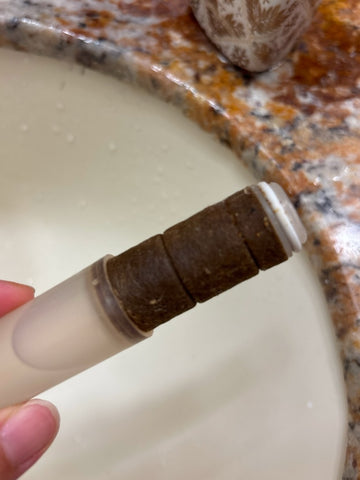
Beyond convenience, you need a filter that actually works. Many popular filters use KDF-55 (a copper-zinc alloy) that starts strong but degrades rapidly. Vitamin C gel, by contrast, maintains consistent performance through the cartridge's rated lifespan. For more on the chemistry, see our Vitamin C filtration science guide.
What's Actually in Your Tap Water
Municipal water quality varies by city, but three contaminants are nearly universal:
- Chlorine: Added at 0.2–4.0 ppm to kill bacteria in the pipes. It's safe to drink, but it oxidizes your skin's lipid barrier and damages hair protein (disulfide bonds convert to cysteic acid, increasing porosity and causing color fade).
- Chloramine: A chlorine-ammonia compound used in ~30% of US cities (including many large metros). It's more stable than free chlorine, which means it doesn't evaporate — and it's harder to filter. KDF-based filters struggle with chloramine; Vitamin C neutralizes it on contact.
- Hard minerals (calcium, magnesium): Measured in ppm or grains per gallon. High hardness can leave spots on glass and make soap lather less, but the minerals themselves aren't harmful. A 12-week UK trial (SWET) gave 336 children with moderate/severe eczema ion-exchange softeners; the softened-water group showed no improvement vs. control (SASSAD change −5.0 vs −5.7, p=0.53).
If you see "TDS" (total dissolved solids) mentioned online: TDS is a catch-all measure of everything dissolved in water — minerals, salts, trace metals. A reading above 150 ppm doesn't mean your water is unsafe; it just means it has stuff in it. For renters, chlorine and chloramine are the contaminants that matter most for skin and hair.
Renter-Friendly Filter Comparison


| Attribute | Second Shower (Showerhand) | Jolie | AquaBliss |
|---|---|---|---|
| Filter Media | Vitamin C gel matrix (proprietary) | KDF-55 + calcium sulfite | KDF-55 + Activated Carbon |
| Chlorine Day 1 | 99.9%¹ | 98% at first use (NSF data) | ~90% |
| Chlorine Day 60 | 99.9%¹ | Day 60 not published; 82% at 2,400 gal (NSF data) | <10% (estimated) |
| Chloramine Removal | Neutralizes chloramine | No result published (Oct 2026) | Poor (<50%) |
| NSF Certified | NSF/ANSI 42 (sediment pre-filter) | NSF/ANSI 177 (free chlorine) | No |
| Price (Device) | $69 | $148 | $35 |
| Filter Replacement Cost | $27/3-pack every 3–6 months | $35 per filter (subscription), $38 one-time | ~$15 every 3 months |
| Total Year 1 Cost | $123–177 | $288 (subscription) / $309 (list) | ~$95 |
| Pressure Impact | Zero loss (128 micro-jets) | Not published | 20–40% reduction (estimated) |
| Install | 60 seconds, tool-free, no tape | Tool-free | Tool-free |
| Handheld | Yes | No | No |
¹ Independent lab testing, free chlorine only, through Day 60 peak window. NSF/ANSI 42 certification applies to sediment pre-filter.
Where Jolie genuinely wins: Five finish options (Modern Chrome, Brushed Steel, Jet Black, Brushed Gold, Vibrant Red) and a 60-day return window (ours is 30 days).
Where AquaBliss genuinely wins: Lower upfront price point and wide retail availability on Amazon.
Installation: 60 Seconds, Zero Tools
Here's the full install process:
- Hand-tighten: unscrew your existing showerhead (counterclockwise).
- Thread the Showerhand onto the shower arm (clockwise) until snug.
- Turn on the water and check for leaks. If you see drips at the connection, hand-tighten another quarter turn.
No plumber's tape, no wrench, no permanent changes. When you move, you reverse the process and take the filter with you.
If you're in a fixed-head situation (hotel-style wall-mount), the Second Shower Showerhead works the same way — thread it on, turn it on, done.
How Long Filters Actually Last
Replacement timing depends on your water and how often you shower, but here's the general guidance:
- High chlorine or chloramine (>2 ppm): Replace every 3 months.
- Moderate chlorine (<2 ppm): Replace every 4–6 months.
- Multiple people using the same shower: Replace every 3 months regardless of chlorine level.
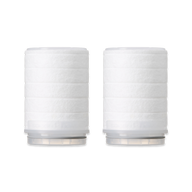
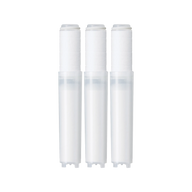
The Showerhand filter cartridge is rated for up to 10,000 gallons under typical conditions. At the average US shower flow rate (2.1 GPM) and duration (8 minutes), that's roughly 150 showers — or about 5 months for a single person showering daily.
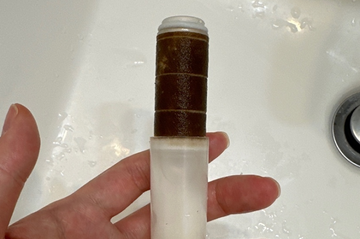
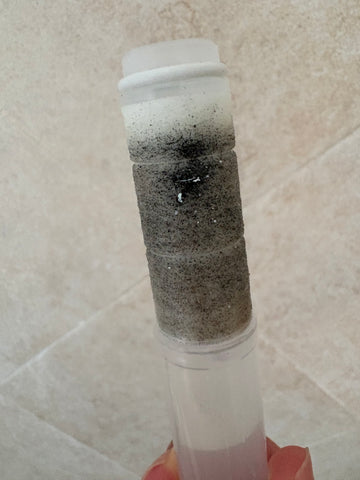
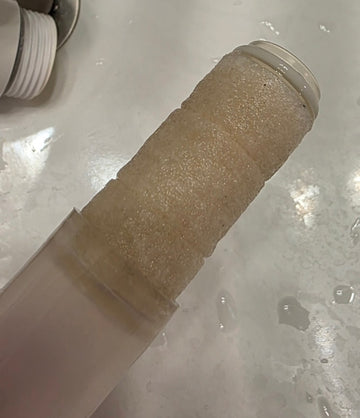
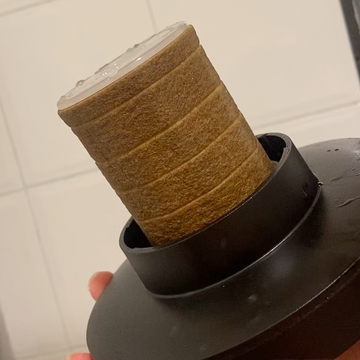
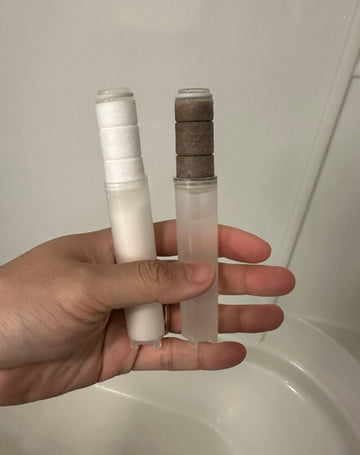
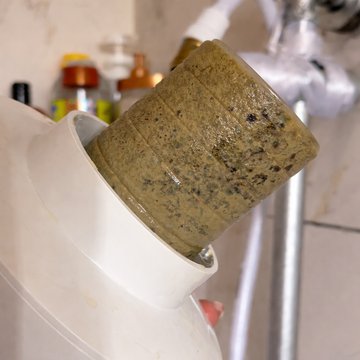
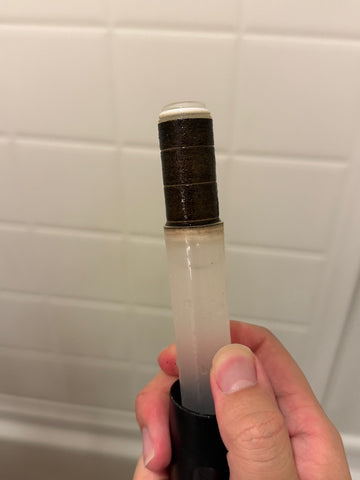
Filters fade with use: in our own testing, KDF-55 cartridges lost chlorine reduction as they aged. Second Shower's Vitamin C filter delivered 99.9% chlorine and chloramine reduction in independent lab testing and held it through Day 1-60 in our own testing (Day 1-30 for the Showerhand), the cartridge's peak window.
Do You Need a Hard Water Filter?
If you've searched "shower filter for hard water," you've probably seen products claiming to remove calcium and magnesium. Here's the reality:
Hard water minerals (calcium, magnesium) aren't harmful to your skin. The UK's SWET trial — a randomized controlled trial in 336 children with moderate/severe eczema living in hard-water areas — found that 12 weeks of ion-exchange water softening produced no improvement vs. usual care (SASSAD score change −5.0 vs −5.7, p=0.53).
The reason many people think hard water causes skin issues: hard water and chlorine often occur together in the same municipal supply. The chlorine is the oxidizer that disrupts your skin barrier; the calcium just makes your soap lather less.
If you live in a hard-water area, you'll get more benefit from removing chlorine than from softening. For a deeper dive, see our hard water filter guide.
What About TDS Meters?
TDS (total dissolved solids) meters measure the electrical conductivity of water, which correlates with the concentration of dissolved ions — minerals, salts, trace metals. A reading above 150 ppm is considered "hard," but that's not a safety threshold; it's just a measure of how much stuff is dissolved.
TDS doesn't tell you what's in the water, just that something is. A high TDS reading could be calcium and magnesium (harmless), or it could be lead and arsenic (not harmless). You need a water quality report to know which.
For renters, TDS is a distraction. Focus on chlorine and chloramine — the contaminants with documented skin and hair impact.
Frequently Asked Questions
Do I need my landlord's permission to install a shower filter?
No. A threaded shower filter like the Showerhand is considered a "fixture attachment" under most lease agreements — the same category as a removable showerhead. You're not altering the plumbing or drilling into walls, so no landlord permission is required. When you move out, unscrew the filter and reinstall the original showerhead.
Will a shower filter lower my water pressure?
Most inline filters reduce pressure by 20–40% because water has to push through dense packed media. The Showerhand preserves pressure with 128 precision micro-jets that accelerate flow as it exits — you get the same coverage and force as an unfiltered shower.
Can I use a shower filter with a handheld sprayer I already own?
Yes, if your existing handheld has a standard 1/2" threaded connection. The Showerhand replaces your current handheld entirely (it's both filter and sprayer in one unit), but if you want to keep your existing sprayer, you can install an inline filter between the shower arm and the hose. Just be aware that most inline filters will reduce pressure.
How do I know if my city uses chlorine or chloramine?
Check your city's Consumer Confidence Report (CCR) — every US municipal water system is required to publish one annually. Search "[your city name] water quality report" or visit the EPA's CCR search tool. Look for "chlorine" or "chloramine" in the disinfectant section. If your city uses chloramine, a Vitamin C filter is essential; KDF won't remove it.
What shower filter should I buy for a rental apartment with hard water?
If you're renting and dealing with hard water, focus on removing chlorine first — hard water minerals (calcium, magnesium) aren't harmful to skin, but chlorine is. The Second Shower handheld filter installs without tools, leaves no damage, and neutralizes chlorine and chloramine (the two contaminants that matter most). Portable ion-exchange softeners exist, but they're bulky, require salt refills, and the UK SWET trial found no skin benefit from softening in eczema patients. For renters, a Vitamin C filter is the practical, evidence-backed choice.
Do shower filters remove fluoride?
No. Fluoride is a small, stable ion that passes through standard shower filter media (KDF, activated carbon, Vitamin C). To remove fluoride, you'd need a reverse-osmosis system or a specialized alumina filter — neither of which is practical (or necessary) for shower water. Fluoride in municipal water is added at 0.7–1.2 ppm for dental health; dermal absorption through shower steam is negligible.
Can I install a shower filter if I have low water pressure?
Yes, but choose carefully. Many inline filters make low pressure worse by adding flow restriction. The Showerhand's micro-jet design preserves pressure — in some cases, users report that the concentrated jet pattern feels stronger than their original unfiltered showerhead, even though the flow rate (GPM) is the same.
The Bottom Line
For renters, the ideal shower filter is one that installs in seconds, leaves zero damage, and actually removes the contaminants that matter — chlorine and chloramine. The Second Shower handheld filter checks all three boxes: 60-second tool-free install, independently lab-tested 99.9% free-chlorine reduction through Day 60, and Vitamin C chemistry that neutralizes chloramine (something KDF-based filters can't do).
Hard water minerals, TDS readings, and fluoride are distractions. Focus on chlorine. That's the oxidizer disrupting your skin barrier and damaging your hair protein. Remove it, and you'll see the difference.