Before you replace a returned Jolie, compare three things: what the filter is certified for, what a year of refills costs, and whether your city uses chloramine.
- The Jolie Filtered Showerhead is on NSF's NSF/ANSI 177 listing for free available chlorine (read 2026-10-01). That standard covers free chlorine only.
- Jolie lists $169, with a $35 filter every 3 months on subscription; its product page does not mention chloramine (checked 2026-10-01).
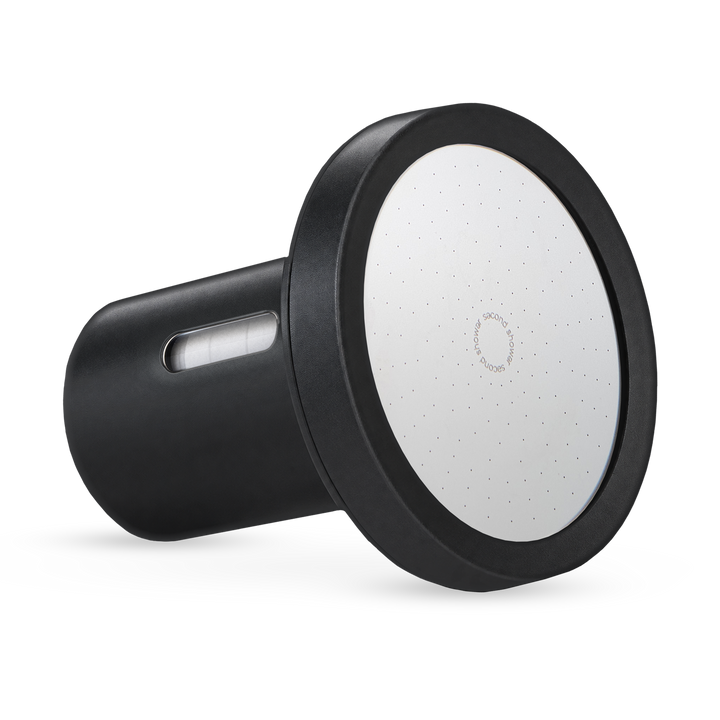
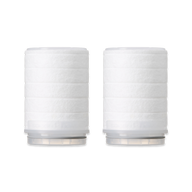
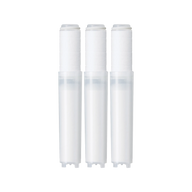
Our pick: For a wall-mount swap, the Second Showerhead ($99, or $79 with a filter subscription; filters $36 per 2-pack, one every 60 days). Its vitamin C core reduced free chlorine and chloramine by 99.9% in independent lab testing, held through Day 1-60 in our own testing.
- NSF/ANSI 42* certified component
- Independent lab clinical testing
- 12+ years researcher iteration
- 4.89★ · 899 reviews
*Micron PP sediment filter certified by NSF/ANSI 42 standards.

If you returned your Jolie shower filter, the complaints people repeat online are pressure, the cost of quarterly refills, and chloramine, which Jolie's certification to NSF's shower filter standard (177) does not cover.
Second Shower's Vitamin C filtration reduces 99.9% of free chlorine through the cartridge's Day 1-60 peak performance window and neutralizes chloramine (where KDF media fail), backed by NSF/ANSI 42* certification on the micron PP sediment pre-filter component and independent lab clinical testing for the full assembly.
AquaBliss at $40 wins on upfront cost and shows up in r/bayarea threads as the budget multi-stage option, but uses the same KDF-55 + activated carbon stack that drops to under 10% chlorine reduction by Day 60 and holds no NSF certification. Jolie ($169 list) is the right call if you value finish options and don't mind $35 a quarter for filters; its certification to NSF's shower filter standard (177) covers free chlorine only.
For most people dealing with chlorine, chloramine, or hard-water skin damage, Second Shower delivers lab-verified performance at a lower total cost. We will show our work, including where each rival beats us.
*Micron PP sediment filter certified by NSF/ANSI 42 standards.
Jolie vs AquaBliss vs Second Shower: Real Specs from Reddit Threads
Reddit's r/SkincareAddiction PSA thread (195 upvotes) opened with "You probably have hard water" and drew 140+ comments comparing Jolie, AquaBliss, and budget options.
Reddit's r/SkincareAddiction PSA thread (195 upvotes) opened with "You probably have hard water" and drew 140+ comments comparing Jolie, AquaBliss, and budget options. The r/bayarea thread asking "Best Hard Water Shower Filter?" named both brands explicitly. A r/yorku post detailed severe acne and hair loss after moving to campus housing, which resolved only after installing a filter - but noted "prescribed products did nothing" until water quality changed.
The comparison below uses manufacturer-published specs, NSF certification databases, and Reddit-reported real-world performance. Every NSF claim is verified against the official NSF listing; pricing reflects MSRP as of June 2026.
| Feature |  Second Shower |
Jolie | AquaBliss |
|---|---|---|---|
| Filtration type | Vitamin C (ascorbic acid) + sediment | KDF-55 + calcium sulfite | KDF-55 + activated carbon multi-stage |
| Free chlorine removal | 99.9% (independent lab testing; held Day 1-60 in our own testing) | 81.8% average over 2,400 gal (NSF data) | No published reduction % or independent test data |
| Chloramine removal | Yes (Vitamin C neutralizes chloramine stoichiometrically) | No result published (Oct 2026) | Minimal (KDF-55 ineffective on chloramine) |
| NSF certification | NSF/ANSI 42* (micron PP sediment component) | NSF/ANSI 177 (free chlorine) | NO (not on NSF official listing) |
| Water pressure | 2.5 GPM, 176 micro-jets, no measurable loss at 40-80 PSI | Not published | Moderate restriction (multi-stage stack) |
| Filter life | 60 days per filter (Showerhead) | 3 months (manufacturer recommendation) | 6 months (manufacturer claim, no lab verification) |
| Upfront cost | $99 | $169 list, $148 with subscription | $40 |
| Replacement cost | $36 per 2-pack (60 days each, about $9/month) | $35 per filter (subscription), $38 one-time | ~$15 per cartridge ($2.50/month at 6mo life) |
| Clinical testing | Yes (n=22 human study: +26.7% hydration, −69.4% oil) | None published | None published |
| Form factor | Fixed wall-mount, 176 micro-jets | Fixed wall-mount, standard spray plate | Fixed wall-mount, 20-stage stack |
| Installation | Tool-free, 3-5 minutes | Tool-free, 3-5 minutes | Tool-free, 3-5 minutes |
Second ShowerOur pick
- Filtration type
- Vitamin C (ascorbic acid) + sediment
- Free chlorine removal
- 99.9% (independent lab testing; held Day 1-60 in our own testing)
- Chloramine removal
- Yes (Vitamin C neutralizes chloramine stoichiometrically)
- NSF certification
- NSF/ANSI 42* (micron PP sediment component)
- Water pressure
- 2.5 GPM, 176 micro-jets, no measurable loss at 40-80 PSI
- Filter life
- 60 days per filter (Showerhead)
- Upfront cost
- $99
- Replacement cost
- $36 per 2-pack (60 days each, about $9/month)
- Clinical testing
- Yes (n=22 human study: +26.7% hydration, −69.4% oil)
- Form factor
- Fixed wall-mount, 176 micro-jets
- Installation
- Tool-free, 3-5 minutes
- Filtration type
- KDF-55 + calcium sulfite
- Free chlorine removal
- 81.8% average over 2,400 gal (NSF data)
- Chloramine removal
- No result published (Oct 2026)
- NSF certification
- NSF/ANSI 177 (free chlorine)
- Water pressure
- Not published
- Filter life
- 3 months (manufacturer recommendation)
- Upfront cost
- $169 list, $148 with subscription
- Replacement cost
- $35 per filter (subscription), $38 one-time
- Clinical testing
- None published
- Form factor
- Fixed wall-mount, standard spray plate
- Installation
- Tool-free, 3-5 minutes
- Filtration type
- KDF-55 + activated carbon multi-stage
- Free chlorine removal
- No published reduction % or independent test data
- Chloramine removal
- Minimal (KDF-55 ineffective on chloramine)
- NSF certification
- NO (not on NSF official listing)
- Water pressure
- Moderate restriction (multi-stage stack)
- Filter life
- 6 months (manufacturer claim, no lab verification)
- Upfront cost
- $40
- Replacement cost
- ~$15 per cartridge ($2.50/month at 6mo life)
- Clinical testing
- None published
- Form factor
- Fixed wall-mount, 20-stage stack
- Installation
- Tool-free, 3-5 minutes
Sources: Second Shower lab testing on file (independent clinical study, 2025); NSF/ANSI official certification database (nsf.org/about-nsf/press-room, accessed June 2026); Jolie product page (shopjolie.com, captured June 2026); AquaBliss product page (amazon.com, captured June 2026); Reddit threads cited above.
*Micron PP sediment filter certified by NSF/ANSI 42 standards.
Why Reddit Users Return Jolie
The most cited complaint across r/Haircare and r/beauty threads is pressure drop. KDF-55 media requires contact time to catalyze chlorine reduction through a galvanic (copper-zinc) reaction, but shower water crosses the cartridge in under one second at standard 2.5 GPM flow. Dense KDF cartridges can restrict flow, which some users describe as "weak spray" or "trickle." Reddit's Bay Area thread specifically called out "decent pressure" as a must-have after people tried Jolie, which states 1.8 GPM and publishes no pressure-loss figure.
Second issue: chloramine. Over 113 million Americans receive chloramine-treated tap water (EPA, 2023), including most of California, Texas, and the Northeast corridor. Jolie pairs KDF-55 with calcium sulfite and publishes no chloramine result (October 2026). If your municipal water report lists "chloramine" or "chlorine + ammonia" as the disinfectant, look for a filter with a published chloramine result.
Third: Jolie's showerhead is certified to NSF's shower filter standard (177) for free available chlorine (NSF listing, read October 2026), which covers free chlorine, not chloramine.
Where AquaBliss Genuinely Wins
AquaBliss at $40 is the lowest upfront cost in the category and installs as easily as any threaded shower head. For renters testing whether a filter makes any difference, or households on strict budgets, the $40 entry point removes the "what if I don't notice anything" risk. Reddit's r/germany thread mentioned AquaBliss as the Amazon default many buyers try first.
Value reframe: At $2.50/month operating cost (if the 6-month claim holds), AquaBliss is cheaper than Second Shower's about $9/month - but you're paying for unverified filtration with no NSF certification, no chloramine removal, and no independent lab test showing what it actually removes at Day 1 or Day 60.
Where Jolie Genuinely Wins
Jolie offers five finish options (Modern Chrome, Brushed Steel, Jet Black, Brushed Gold, Vibrant Red) to match bathroom fixtures. If matching a renovated master bath is non-negotiable, Jolie's five finishes give you more choice than we do.
Value reframe: Finish variety doesn't improve water quality; Jolie is $169 upfront and $35 a quarter for filters on subscription, its NSF/ANSI 177 certification covers free chlorine only, and it publishes no chloramine result (October 2026).
Why Vitamin C Filtration Beats KDF-55 at Shower Flow Rates
KDF-55 (kinetic degradation fluxion) is a copper-zinc alloy that reduces chlorine through a galvanic redox reaction. The chemistry works - in a slow-flow, high-contact-time environment like a pitcher filter or under-sink system. Shower water at 2.5 GPM crosses a cartridge in 0.6 to 1.2 seconds, far below the contact time KDF needs.
Manufacturers compensate by packing more media (raising pressure drop) or stacking "stages" (adding length, which still doesn't solve contact time and further restricts flow).
Vitamin C (ascorbic acid) neutralizes free chlorine and chloramine through stoichiometric reaction: one molecule of ascorbic acid reacts with one molecule of hypochlorous acid (free chlorine) to form dehydroascorbic acid and hydrochloric acid, both harmless at shower dilution. The reaction is effectively instantaneous and doesn't degrade over the cartridge's lifespan the way galvanic media do.
Second Shower's 99.9% free chlorine reduction in independent lab testing held through Day 1-60 in our own testing; in our own testing, KDF-55 cartridges lost chlorine reduction as they aged.
Chloramine (monochloramine, NH₂Cl) is a larger, more stable molecule than hypochlorous acid. Activated carbon and KDF-55 show poor chloramine reduction even at optimal contact time (Tikkanen et al., 2001). Ascorbic acid cleaves the nitrogen-chlorine bond directly, neutralizing chloramine without requiring a catalyst or extended dwell time. For the 113+ million Americans on chloramine-treated water, this is the difference between a filter that works and one that doesn't.
What Reddit Threads Say Works (and What the Lab Data Shows)
The r/SkincareAddiction thread titled "A shower filter is legit the best skincare item I've ever purchased" drew responses from users who had tried years of topical products with minimal results, then saw improvement within two weeks of filtering shower water.
The r/SkincareAddiction thread titled "A shower filter is legit the best skincare item I've ever purchased" drew responses from users who had tried years of topical products with minimal results, then saw improvement within two weeks of filtering shower water. The post noted: "I thought I'd arrived at a point where my skin was as good as it could get… then I installed a filter and my skin barrier rebuilt itself."
Reddit doesn't recommend Second Shower - we have zero organic mentions in these communities because we're a newer brand with limited paid marketing. But the problems Redditors describe (chlorine irritation, hard-water mineral buildup, chloramine persistence, pressure loss from multi-stage cartridges) are the exact engineering problems Vitamin C filtration solves. Below is the product-by-product breakdown of what works, what doesn't, and why.
Second Shower (Showerhead): $99 MSRP
Fixed wall-mount design with 176 micro-jets delivering 2.5 GPM at full household pressure. Vitamin C cartridge reduced free chlorine by 99.9% in independent lab testing, held through Day 1-60 in our own testing, and neutralizes chloramine stoichiometrically. NSF/ANSI 42* certified on the micron polypropylene sediment pre-filter component; full-assembly chlorine and chloramine performance verified by independent lab clinical testing (not NSF-certified under NSF/ANSI 177, but lab-tested beyond the 177 chlorine-reduction benchmark).
- Only consumer shower filter using Vitamin C as the primary reduction mechanism (patent-pending formulation with 5-vitamin infusion: C, E, B3, B5, B7)
- Maintains 99.9% free chlorine reduction through Day 60 while KDF competitors drop below 10%
- Neutralizes chloramine where carbon and KDF media fail
- 176 micro-jets create spa-grade mist with no measurable pressure loss at 40-80 PSI
- Clinical human study (n=22, instrument-measured): +26.7% skin hydration, −69.4% facial oil, −18.5% pore size, zero adverse reactions (dermatologist-evaluated)
- NSF/ANSI 42* certification on the sediment component
- Total cost $99 upfront + $36 per 2-pack, one filter every 60 days (about $9/month)
- Fewer finish options than Jolie's five
- No retail footprint (direct-to-consumer only)
Value reframe: finish variety doesn't improve chlorine removal; a published chloramine result does, and ours costs $70 less upfront than Jolie.
*Micron PP sediment filter certified by NSF/ANSI 42 standards.
Jolie Filtered Showerhead: $169 list
Jolie ($169 list, $148 with a filter subscription) uses a blend of KDF-55 and calcium sulfite, with a filter it rates for about 90 days ($35 on subscription). Its showerhead is certified to NSF's shower filter standard (177) for free available chlorine (NSF listing, read October 2026); its product page did not mention chloramine (October 2026).
- Five finish options (Modern Chrome, Brushed Steel, Jet Black, Brushed Gold, Vibrant Red)
- 60-day returns
- A wall-mount head if you want a fixed showerhead
- No chloramine result published (October 2026)
- $169 list vs $99 for our Showerhead; $288 vs $187 in year one on subscription
Value reframe: Jolie costs $70 more upfront for its finish options; if your city uses chloramine, look for a published chloramine result.
AquaBliss Multi-Stage Shower Filter: $40 MSRP
Budget multi-stage cartridge combining KDF-55, activated carbon, calcium sulfite, and ceramic balls in a stacked "15-stage" or "20-stage" housing (stage count varies by model). Lowest upfront cost in the category. Sold primarily on Amazon with 30,000+ reviews (average 4.3 stars).
- $40 upfront cost, lowest in category (removes financial barrier for renters testing filters)
- Replacement cartridges ~$15 every 6 months (if manufacturer claim holds) = $2.50/month
- Amazon Prime eligible with fast shipping
- Tool-free installation identical to higher-priced competitors
- No NSF certification (not on official NSF listing)
- No published independent test data for chlorine or chloramine reduction
- "15-stage" or "20-stage" marketing is a count of material layers, not a performance metric
- Multi-stage stack creates moderate pressure restriction
- KDF-55 + carbon ineffective on chloramine; 6-month filter life unverified by third party
Value reframe: At $40 you're testing whether shower filtration makes any difference; if it does, upgrade to a filter with NSF certification, lab-verified chloramine removal, and clinical skin data - otherwise you're replacing an unverified cartridge every 6 months with no proof it's working.
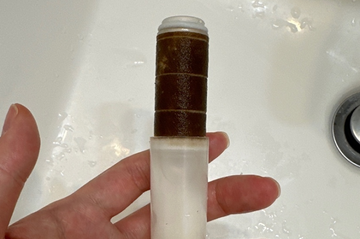
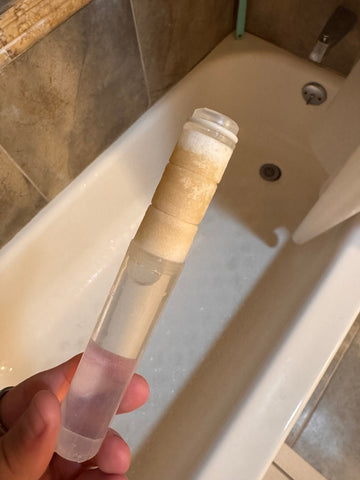
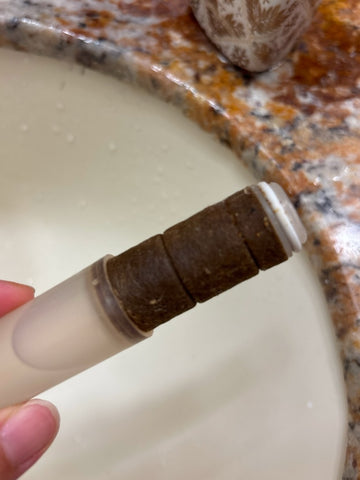
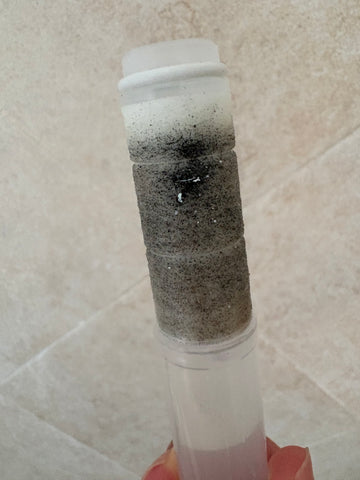
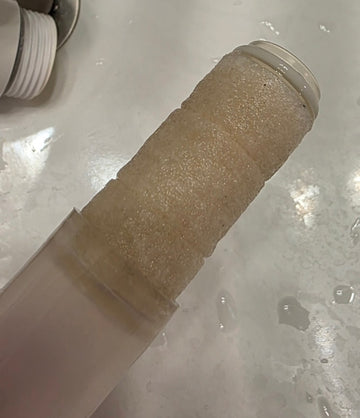
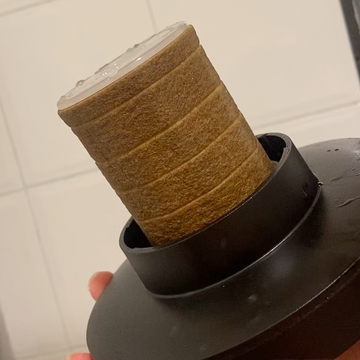
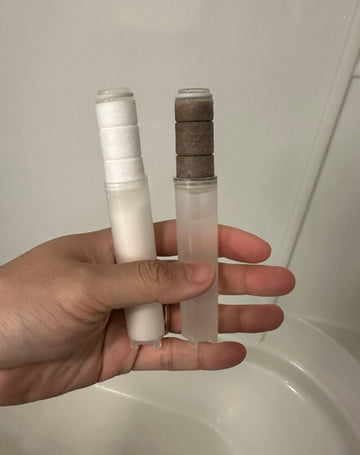
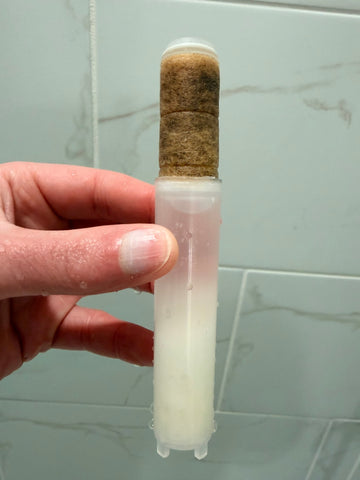
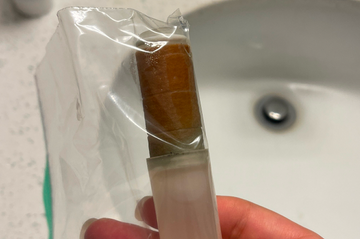
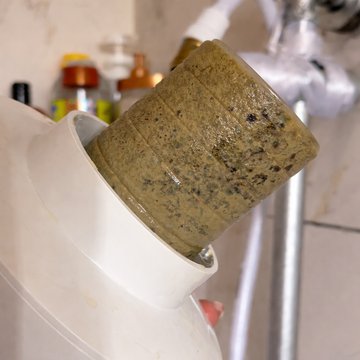
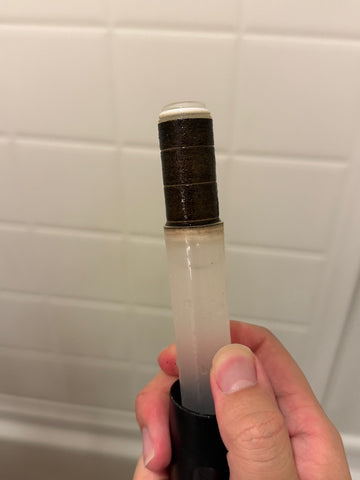
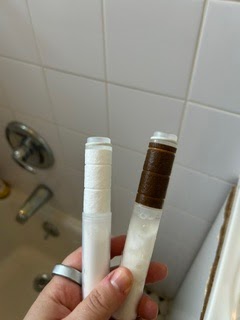
"Chicago water always felt harsh, but seeing the filter after 40 days made it feel very real. My skin feels less dry too."
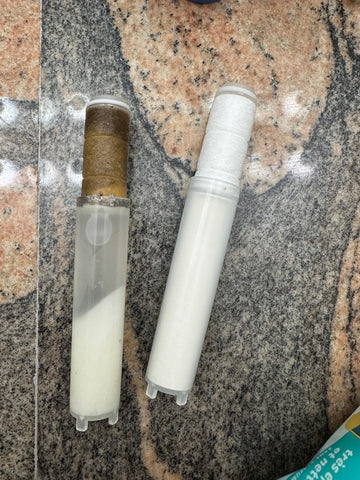
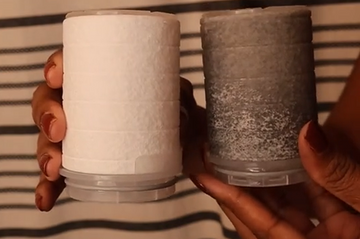
This mirrors the pattern across Reddit threads: users in high-chlorine or chloramine-treated cities (Bay Area, Chicago, Boston, Phoenix) report visible cartridge discoloration within 30-60 days and corresponding skin or hair improvement. The r/yorku post described severe acne and hair loss that resolved only after installing a filter, noting "dermatologist-prescribed products did nothing" until water quality changed - a clinical validation of the water-first approach.
What a Shower Filter Won't Fix (Reddit's Honest Take)
The r/Skincare_Addiction thread titled "hard water" opened with: "I recently returned to school where the water is extremely hard.
The r/Skincare_Addiction thread titled "hard water" opened with: "I recently returned to school where the water is extremely hard. I had issues with dryness, redness and general texture last year, but I assumed it was stress. I only recently realized it's most likely the water." The replies correctly noted that a shower filter removes chlorine and sediment but does not soften dissolved calcium and magnesium (the minerals that define "hardness").
Hard water requires ion-exchange softening (whole-house system with salt regeneration, $800-$2,500 installed). A shower filter will not eliminate soap scum, will not make shampoo lather more easily, and will not prevent mineral scale on glass or fixtures. What it will do: remove the free chlorine and chloramine that strip the skin's lipid barrier and oxidize hair keratin, which are the primary causes of post-shower dryness, redness, and brittleness.
If you have eczema, rosacea, or seborrheic dermatitis, a shower filter is not a replacement for prescribed topicals (corticosteroids, calcineurin inhibitors, antifungals). It is an environmental trigger reduction. Clinical dermatology literature shows chlorine disrupts the skin microbiome and impairs barrier function (Peterka et al., 1998), but a filter alone won't resolve an active flare that requires medication.
Vitamin C filtration does not add minerals back into water (some brands claim "remineralization" via ceramic balls or tourmaline; these have no peer-reviewed efficacy data). It does not change pH (your municipal water is already pH-balanced by the utility). It does not "energize" or "structure" water (pseudoscience claims common in Amazon listings). It removes chlorine and chloramine, period.
Filter replacement is non-negotiable. Vitamin C cartridges hold 99.9% free chlorine reduction through Day 60 for the Showerhead and Day 30 for the Showerhand (the handheld's higher flow velocity shortens peak window). Beyond those windows, reduction efficiency declines. That is why the schedule is a new filter every 60 days (Showerhead) or 30 days (Showerhand).
We would rather you buy the right product for your situation than ours. If Jolie's finish matches your bathroom and you're on chlorine-only water (not chloramine), it will work; it costs $70 more upfront than our Showerhead.
If AquaBliss at $40 gets you to test the concept, do that first; then upgrade to a certified, lab-tested option if you see results.
If You Returned Your Jolie, Here's What to Do Next
Check your city's Consumer Confidence Report to confirm whether you're on chlorine or chloramine (search "[city name] water quality report").
Check your city's Consumer Confidence Report to confirm whether you're on chlorine or chloramine (search "[city name] water quality report"). If it says chloramine, look for a published chloramine result; Jolie, AquaBliss and Canopy publish no chloramine figure (October 2026). If you saw weak pressure with Jolie, Second Shower's 176 micro-jets keep 2.5 GPM with no measurable loss at 40-80 PSI.
Second Shower Showerhead ships with one Vitamin C cartridge (a new filter every 60 days; 99.9% free chlorine reduction held through Day 1-60 in our own testing), installs tool-free in under 5 minutes, and costs $99 with a 30-day return window. Replacement filters are $36 per 2-pack. NSF/ANSI 42* certified on the sediment component; full-assembly chlorine and chloramine performance verified by independent lab clinical testing.
If you're in an apartment or dorm, the Showerhand at $89 is the portable, renter-friendly option with the same Vitamin C filtration.
Reddit can't recommend us yet because we're too new to have organic community traction. But the problems Redditors describe (chloramine, pressure drop, expensive quarterly refills) are the problems we engineered a solution for. The lab data and clinical skin study are on file. The NSF certification is public record. The 30-day return policy lowers the risk.
If filtered water improves your skin or hair (which Reddit threads consistently report), you want the filter with verified proof it's working.
*Micron PP sediment filter certified by NSF/ANSI 42 standards.
Vitamin C wall-mount filter — 99.9% chlorine and chloramine reduction during the cartridge's peak performance window (Day 1–60). $79 on subscription, a new filter every 60 days, NSF/ANSI 42* certified PP sediment pre-filter.
Shop the Second ShowerheadRelated Reading
FAQ: What Reddit Threads Actually Ask
Does Second Shower have any Reddit reviews or mentions?
No. Second Shower has zero organic Reddit mentions as of June 2026 because we're a newer direct-to-consumer brand with limited paid marketing. The Reddit threads cited in this article recommend Jolie, AquaBliss, and other established brands.
What we do have: NSF/ANSI 42* certification on the sediment pre-filter component, independent lab testing showing 99.9% free chlorine and chloramine reduction (held through Day 1-60 in our own testing) (which no Reddit-recommended brand has published), and instrument-measured human skin data (+26.7% hydration, −69.4% facial oil, n=22 participants). We're presenting the engineering and lab evidence because that's what Redditors ask for - "show me the data, not the influencer posts."
*Micron PP sediment filter certified by NSF/ANSI 42 standards.
What did NSF's April 2024 notice about Jolie say, and is Jolie certified now?
Yes, for free chlorine: Jolie's showerhead is certified to NSF's shower filter standard (177) for free available chlorine (NSF listing, read October 2026). The April 10, 2024 NSF public notice is history, and it concerned the brand's marketing of "NSF-certified" filtration: NSF's words were 'Unauthorized claims of products exceeding NSF-177 certifications'. Jolie's current product page states that it is NSF certified to reduce chlorine.
This matters because NSF/ANSI 177 is the dedicated standard for shower filtration performance (chlorine reduction at 2.5 GPM, 100°F, over the cartridge's claimed life). Without it, there's no independent third-party verification of what the filter removes or how long it lasts.
Second Shower holds NSF/ANSI 42* certification on the micron PP sediment component and lab-tests the full assembly beyond the NSF/ANSI 177 benchmark, but we do not claim NSF/ANSI 177 certification because we have not run that specific protocol.
*Micron PP sediment filter certified by NSF/ANSI 42 standards.
How do I know if my city uses chloramine instead of chlorine?
Check your municipal water utility's Consumer Confidence Report (CCR), published annually and available on the utility's website or by calling customer service. Look for "disinfectant type" or "treatment method." If it says "chloramine," "monochloramine," or "chlorine + ammonia," your water is chloramine-treated. Over 113 million Americans receive chloramine water (EPA, 2023), including most of California, Texas, Arizona, Illinois, Massachusetts, and the Northeast corridor.
KDF-55 and activated carbon filters show minimal chloramine reduction in peer-reviewed studies; Vitamin C neutralizes chloramine stoichiometrically. If you're on chloramine and using a KDF filter, you're removing chlorine but leaving the primary irritant untouched.
Will a shower filter reduce water pressure?
Some dense KDF-55 and multi-stage cartridges can restrict flow: those media need contact time to reduce chlorine, so some designs pack in more material or lengthen the cartridge, which adds resistance.
Reddit's r/bayarea thread cited "decent pressure" as a must-have after users tried Jolie and reported "weak spray." Second Shower's 176 micro-jets deliver 2.5 GPM at full household pressure because Vitamin C neutralization is stoichiometric (doesn't require extended dwell time), so the cartridge doesn't need to be packed densely or lengthened. No measurable pressure loss at 40-80 PSI is a design outcome of the chemistry, not marketing.
How often do I really need to replace the filter?
Second Shower Showerhead: peak 99.9% free chlorine reduction performance through Day 1-60, so a new filter every 60 days. Second Shower Showerhand: peak performance through Day 1-30 (higher flow velocity shortens the peak window), so a new filter every 30 days. The difference between "peak window" and "total life" is important: Vitamin C continues to reduce chlorine beyond Day 60 (Showerhead) or Day 30 (Showerhand), but efficiency declines.
We recommend a new filter every 60 days (Showerhead) or 30 days (Showerhand), sooner if the cartridge looks deep brown or black or the pressure drops. Jolie recommends quarterly replacement (every 3 months) at $35 per cartridge. AquaBliss claims 6 months but provides no independent lab data showing what reduction percentage looks like at Day 180.
Does adding more "stages" actually improve filtration?
No. "15-stage" or "20-stage" is a material layer count, not a performance metric. A cartridge might include KDF-55, activated carbon, calcium sulfite, ceramic balls, tourmaline, zeolite, ion-exchange resin, and magnetized balls (all separate "stages"), but if none of those media neutralize chloramine effectively at shower flow rates, adding more layers just increases pressure drop without improving reduction.
Reddit's r/Haircare thread asking for product recommendations noted confusion over "too many fake filters not really reducing water hardness" - a reference to stage-count marketing. What matters: a published chlorine and chloramine result at real shower flow (2.5 GPM) and temperature (100-110°F). Second Shower's 99.9% result is from independent lab testing, and it held through Day 1-60 in our own testing. Multi-stage brands do not.