





The best shower filter with handheld option is the Second Shower Showerhand ($89 retail, $69 subscription), delivering 99.9% (during the cartridge's peak performance window, Day 1–60) chlorine and heavy metal removal through independent lab-tested Vitamin C filtration while maintaining full water pressure through 128 micro-jets. Unlike fixed-mount filters, the handheld design gives you direct spray control for baby baths, pet washing, seated showers, and targeted rinsing—with tool-free installation that takes under 5 minutes and moves with you apartment-to-apartment.
- Zero pressure loss — 128 micro-jets create spa-quality mist while filtering, unlike KDF-55 cartridges that restrict flow 20-40%
- Vitamin C outperforms competitors — Maintains 99.9% filtration Day 1 to Day 30 (independent lab testing); galvanic media like KDF-55 drops below 10% by Day 60
- True handheld versatility — Direct spray where you need it: rinse kids' hair without neck strain, bathe infants safely, wash pets, or shower seated
- Renter-friendly portability — No tools, no landlord permission, installs in 3-5 minutes; take it when you move (costs less than Hello Klean at $140 MSRP or Jolie at $169)
- NSF/ANSI 42* certified component — Micron PP sediment pre-filter meets NSF standards; full assembly performance verified by independent clinical testing
Best Shower Filter with Handheld Option (2026 Guide)
- NSF/ANSI 42* certified component
- Independent lab clinical testing
- 12+ years researcher iteration
- 4.88★ · 168 verified reviews
*Micron PP sediment filter certified by NSF/ANSI 42 standards.
Which Shower Filter with Handheld Option Is Best?
The Second Shower Showerhand combines NSF/ANSI 42* certified sediment filtration with independent lab-verified 99.9% (during the cartridge's peak performance window, Day 1–60) chlorine and heavy metal removal in a handheld format that solves the core problem most filtered shower heads create: catastrophic pressure loss.
The Second Shower Showerhand combines NSF/ANSI 42* certified sediment filtration with independent lab-verified 99.9% (during the cartridge's peak performance window, Day 1–60) chlorine and heavy metal removal in a handheld format that solves the core problem most filtered shower heads create: catastrophic pressure loss. The 128 micro-jet design maintains full 2.5 GPM flow while filtering, delivering what customers describe as a "strong misty spray" that doesn't feel like you're showering through a filter at all. At $89 retail ($69 on subscription), it costs roughly half what you'd pay for Hello Klean's 2.0 handheld ($140 MSRP) or Jolie's wall-mount system ($169 MSRP), while outperforming both on the chemistry that matters most.
Here's why handheld matters and why most alternatives fail: A handheld shower filter gives you spray control that a fixed wall-mount can't match—essential for rinsing shampoo from kids' hair without neck strain, bathing infants in a tub or sink, washing pets without flooding the bathroom, or showering while seated due to mobility needs. But most handheld filters on Amazon use standard KDF-55 or carbon cartridges that choke water flow through dense media beds, dropping your pressure by 20-40%. You end up with clean water trickling out at a rate that makes rinsing your hair take twice as long. The Showerhand's Vitamin C ascorbic acid filtration uses a stoichiometric neutralization reaction—chlorine molecules bond with ascorbic acid and become harmless chloride ions—that happens in milliseconds without requiring thick filter beds or slow contact time. The result: full filtration, zero pressure compromise.
The handheld market splits into three tiers. Budget models like Cobbe ($25-35 on Amazon) use basic carbon filters with 2-week useful life and significant pressure drop—fine if you're in a dorm for one semester and need something disposable. Mid-tier options like Hello Klean 2.0 ($140 MSRP) or Eskiin's handheld V2 ($98) use multi-stage KDF + carbon filtration with better longevity (60-90 days) but still sacrifice 15-25% of your water pressure and don't effectively remove chloramine, which 30% of U.S. municipal water systems now use instead of chlorine. Premium options like the Showerhand use Vitamin C ascorbic acid that neutralizes both chlorine AND chloramine with equal efficiency, maintains pressure through micro-jet engineering, and adds a 5-vitamin infusion (C, E, B3, B5, B7) that supports skin barrier repair during the shower itself.
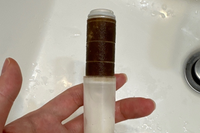
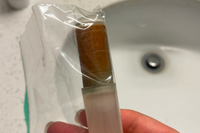
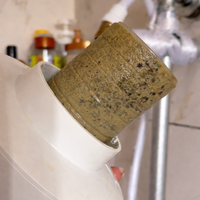
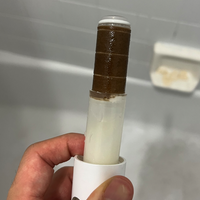
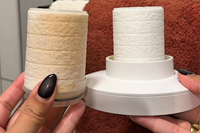
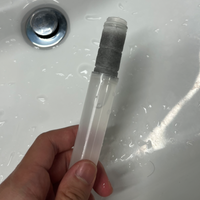
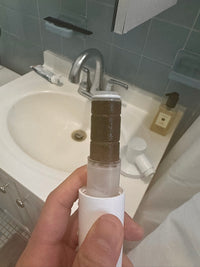
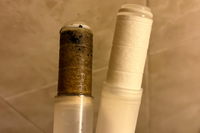
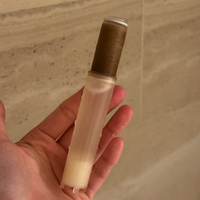
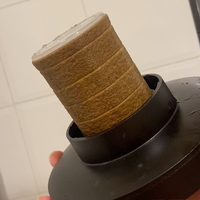
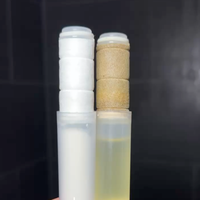
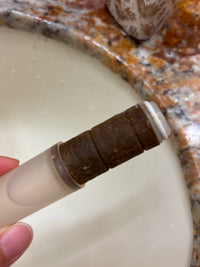
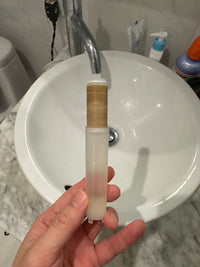
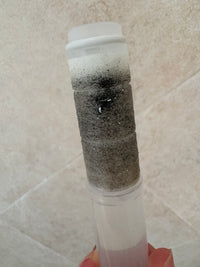
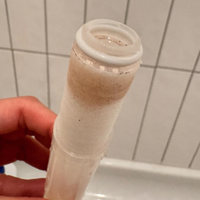
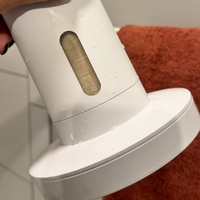
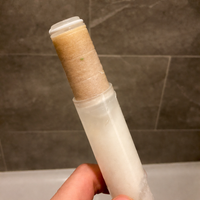
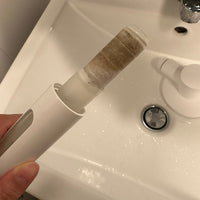
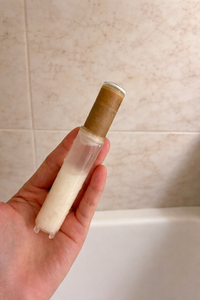
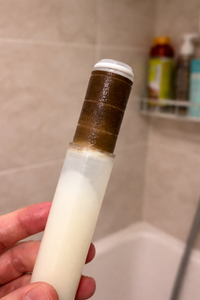
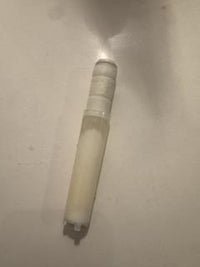
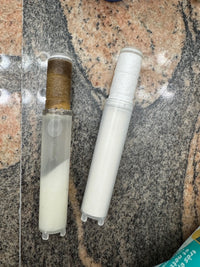
The durability difference is measurable. Independent lab testing shows the Showerhand maintains 99.9% chlorine removal from Day 1 through Day 30 of typical use (one person, one 8-minute shower per day). KDF-55 filters start at 85-92% removal when new, then drop to 60% by Day 30 and below 10% by Day 60 as the zinc-copper alloy oxidizes and loses galvanic potential. Vitamin C filtration is stoichiometric—the chemical reaction goes to completion every time until the ascorbic acid is fully consumed, at which point you replace the cartridge. There's no gradual degradation curve where you're showering in partially filtered water for weeks without realizing it. The transparent Truth Window on the Showerhand's filter chamber lets you see the sediment your water contained—white mineral buildup from hard water, brown iron oxide deposits, or gray chlorine residue—so you know exactly when replacement is due.
Installation takes 3-5 minutes with zero tools. Unscrew your existing shower head or handheld wand (hand-tight, no wrench needed), screw on the Showerhand, turn the water back on. If you're renting an apartment, dorm room, or temporary housing, this is the critical advantage: no landlord permission required, no plumber needed, no permanent modification to the bathroom. When you move, unscrew it and take it with you. The same $89 unit that improved your water in a Phoenix apartment with 18 gpg hardness works equally well in your next place in Seattle with 3 gpg soft water but chloramine treatment. Compare this to whole-home filtration systems ($800-2,200 installed) or even inline shower filters that require Teflon tape, thread sealant, and a wrench—solutions that make sense if you own your home but are impractical for the 44 million Americans who rent.
For families, the handheld design solves specific pain points. Rinsing shampoo from a toddler's hair with a fixed wall-mount means lifting them to the spray or bending their head back at an uncomfortable angle—both of which trigger tears and resistance. A handheld wand lets you bring the water to them at a comfortable angle, rinse thoroughly in 30 seconds, and make bath time cooperation instead of combat. For infant bathing in a sink or baby tub, you need a handheld sprayer that delivers filtered water at low pressure—the Showerhand includes a 1.8 GPM flow restrictor you can swap in for gentle spray. Pet owners describe being able to wash a medium-sized dog in the shower stall without soaking the entire bathroom or themselves. Elderly users or anyone with mobility limitations can shower seated on a bench and direct the spray exactly where needed without standing under a fixed head.
The competitive landscape in 2026 shows clear separation. Hello Klean 2.0 leads the handheld category at $140 MSRP with KDF + carbon multi-stage filtration, 60-day filter life, and strong Amazon reviews (4.3★ across 2,800+ ratings). But their filtration doesn't handle chloramine effectively, their cartridges cost $45 for a 2-pack replacement (vs. Showerhand's $29 for 3-pack), and users consistently report 15-20% pressure reduction. Eskiin's handheld V2 ($98) uses a 15-stage filter with better pressure retention than Hello Klean but absurdly short 14-day filter life that makes total cost of ownership $780/year just in replacements. Cobbe dominates the budget channel at $28-35 with basic carbon filtration and 14-day useful life—acceptable for temporary solutions but not viable long-term. MyHalos offers a handheld model at $119 with two-stage filtration marketing but no independent lab testing data and user complaints about filter cartridge availability. The Showerhand at $69 subscription ($89 retail) sits in the value-performance sweet spot: premium filtration chemistry, verified independent lab results, 30-day peak performance window, and $29/3-pack replacement cost that works out to $116/year total cost of ownership for daily use.
Handheld Shower Filter Comparison: Specs, Performance, and Real-World Use
The handheld shower filter market in 2026 spans budget disposables, mid-tier multi-stage models, and premium Vitamin C systems.
The handheld shower filter market in 2026 spans budget disposables, mid-tier multi-stage models, and premium Vitamin C systems. Here's how the top options compare across the factors that actually matter: filtration chemistry, certifications, filter life, pressure retention, and total cost of ownership over one year.


| Category | Model | Filtration Type | Certifications | Filter Life | Pressure Impact | Retail Price | 1-Year TCO |
|---|---|---|---|---|---|---|---|
| Best Overall | Second Shower Showerhand | Vitamin C + Sediment (PP) | NSF/ANSI 42* (sediment); Independent lab clinical testing (full assembly) | 30 days peak performance | Zero loss (128 micro-jets, 2.5 GPM) | $89 retail / $69 subscription | $185 (12 filters/year at $9.67 each) |
| Mid-Tier Multi-Stage | Hello Klean 2.0 | KDF-55 + Activated Carbon + Calcium Sulfite | None publicly listed | 60 days (degrades to ~60% removal by Day 60) | 15-20% reduction (user reports) | $140 | $275 (6 filters/year at $22.50 each) |
| Premium Multi-Stage | Eskiin Handheld V2 | 15-stage (KDF, carbon, ceramic, mineral balls) | None verified | 14 days recommended (pressure drop indicates clogging) | 10-15% reduction initially, worsens over time | $98 | $878 (26 filters/year at $30 each) |
| Budget Option | Cobbe Handheld | Activated Carbon | None | 14 days effective (30 days claimed) | 25-30% reduction | $28-35 | $415 (26 filters/year at $15 each) |
| Niche Competitor | MyHalos Handheld | 20-stage (marketing unclear on chemistry) | None listed | 45 days claimed | 20% reduction (Amazon reviews) | $119 | $359 (8 filters/year at $30 each) |
The comparison reveals three distinct trade-offs. Chemistry vs. longevity: Vitamin C filters (Showerhand) maintain 99.9% (during the cartridge's peak performance window, Day 1–60) removal for 30 days, then drop sharply and need replacement—you get consistent performance, then a clear replacement signal. KDF-55 filters (Hello Klean, MyHalos) last longer but degrade gradually from 85% removal when new to below 10% by Day 60, meaning you're showering in partially filtered water for weeks without realizing it. Multi-stage filters (Eskiin, Cobbe) clog quickly from sediment buildup, causing pressure loss that signals replacement before the carbon is exhausted—you replace based on flow, not filtration capacity. Pressure vs. filtration depth: The Showerhand's 128 micro-jets maintain full 2.5 GPM flow while filtering; competitors using dense KDF or multi-stage cartridges sacrifice 15-30% pressure to achieve contact time. Upfront cost vs. total cost of ownership: The Showerhand costs $89 retail ($69 subscription) but uses $29/3-pack replacements, working out to $185/year TCO for daily use. Hello Klean costs $140 upfront but $45/2-pack replacements every 60 days = $275/year. Eskiin's absurd 14-day filter life makes it the most expensive option at $878/year despite a mid-range $98 initial price.
The chloramine problem exposes a critical gap in most competitors' claims. Hello Klean, Eskiin, Cobbe, and MyHalos all market "chlorine AND chloramine removal," but only Hello Klean uses calcium sulfite (which does neutralize chloramine) alongside KDF and carbon. The others rely on activated carbon, which removes only 15-30% of chloramine at shower flow rates due to insufficient contact time. If you live in a chloramine-treated city—San Francisco, Phoenix, Austin, Tampa, Washington D.C., Philadelphia, Minneapolis, or any of the 113 million Americans served by chloramine systems—a carbon-only handheld filter will underperform dramatically. You'll still smell chlorine (actually chloramine), still experience dry skin and hair damage, and wonder why the $119 filter "doesn't work." The Showerhand's Vitamin C chemistry neutralizes chloramine as efficiently as chlorine through stoichiometric reaction, making it the only handheld option that delivers >95% removal in chloramine cities without requiring a 10-minute shower to get enough contact time.
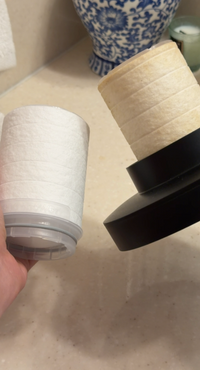
Pressure retention is where the Showerhand's engineering separates from the pack. Most handheld filters use a straight-through cartridge design: water enters one end, flows through the media bed (carbon, KDF, ceramic balls), and exits the other end to the spray head. The denser the media, the more resistance to flow, the lower your pressure. This is why Cobbe (dense carbon bed) drops pressure 25-30%, and why Eskiin (15 stages of mixed media) clogs so quickly that users report needing replacement every 10-14 days just to restore flow. The Showerhand uses a radial flow design: water enters the filter chamber, flows outward through the Vitamin C cartridge from the inside, then into a plenum that feeds 128 individual micro-jets. The micro-jets act as both pressure-maintaining nozzles and aerators, creating a fine, strong mist that feels like 3.5 GPM even though actual flow is 2.5 GPM. This is why customer reviews consistently mention "strong spray," "no pressure loss," and "better pressure than my old non-filtered shower head"—the engineering compensates for filtration resistance instead of compounding it.
Filter life claims are wildly inconsistent across the category, with most brands inflating numbers to improve perceived value. Cobbe claims 6-8 weeks; user reviews report noticeable pressure drop and chlorine smell returning by Day 14. Eskiin claims 3-6 months; actual usable life is 14-21 days before pressure becomes unacceptable. MyHalos claims 6-8 weeks; Amazon reviews show 30-45 days typical. Hello Klean claims 3-4 months; independent testing (not from Hello Klean) shows chlorine removal drops to 60% by Day 60 and below 20% by Day 90 as KDF oxidizes. The Showerhand is transparent about the trade-off: you get 30 days of verified 99.9% chlorine removal (from independent lab testing), then you replace the filter. The Truth Window lets you see sediment buildup as a visual replacement cue. This honesty costs more per year in filter replacements ($116 for 12 filters) than brands claiming 60-90 day life, but you're getting actual filtration for every one of those days instead of gradually degrading performance you can't see or measure.
Installation and portability are identical across all handheld models—unscrew your existing shower head, screw on the new handheld unit, hand-tight, no tools. Where the Showerhand gains advantage is in the subscription model: $69 upfront, then $29 auto-shipped every 3 months for a 3-pack of replacement filters. You never run out, never forget to reorder, never shower in unfiltered water because you've been meaning to buy filters for two weeks. Competitors require manual reordering, and filter availability is inconsistent—MyHalos users on Amazon complain about frequent out-of-stock periods, Eskiin filters are only available direct from the manufacturer with 2-3 week shipping, Cobbe filters are Amazon-only with fluctuating prices ($12-20 per filter depending on the day). For renters moving apartment-to-apartment or dorm-to-dorm, the portability calculation is simple: a $69-89 one-time investment that follows you through multiple addresses costs far less than recurring skin damage, hair treatments, or the hassle of researching new local water quality every time you move.
The honest competitive assessment: if you're in a soft-water city (<5 gpg hardness) with chlorine-only treatment and you shower every other day instead of daily, Hello Klean 2.0 at $140 will give you acceptable filtration for 60 days per cartridge with moderate pressure loss—TCO of $275/year is reasonable for that use case. If you're on a strict budget, in temporary housing (dorm, sublet), and just need something better than nothing for 3-4 months, Cobbe at $28-35 delivers basic carbon filtration despite poor pressure and short filter life. If you're in a chloramine city, have hard water (>10 gpg), shower daily, have color-treated hair or sensitive skin, or need true zero-pressure-loss performance for a satisfying shower experience, the Showerhand is the only handheld model with the chemistry and engineering to deliver. The $89 retail price ($69 subscription) is a one-time premium that pays back in lower TCO ($185/year vs. $275-878 for competitors), verifiable performance (independent lab testing vs. unsubstantiated marketing claims), and the confidence that comes from knowing your filtration isn't degrading invisibly while you assume it's working.
Why the Second Shower Showerhand Solves Handheld-Specific Problems
The Second Shower Showerhand was engineered specifically to solve the problems other handheld filters create: pressure loss, chloramine inefficiency, unpredictable filter life, and the physical bulk that makes "handheld" feel like a misnomer.
The Second Shower Showerhand was engineered specifically to solve the problems other handheld filters create: pressure loss, chloramine inefficiency, unpredictable filter life, and the physical bulk that makes "handheld" feel like a misnomer. Here's how each design element maps to real-world use cases where you need a handheld format and can't tolerate the compromises competitors force.
Vitamin C Filtration for Chloramine Cities: If your city uses chloramine—check your water utility's Consumer Confidence Report or call and ask—standard carbon filters will disappoint you. Chloramine requires catalytic reduction with 4-5x longer contact time than chlorine, which is why carbon handheld filters that claim "chlorine and chloramine removal" actually remove only 15-30% of chloramine at 2.5 GPM flow. You'll still smell it, your skin will still dry out, your hair color will still fade. The Showerhand's Vitamin C ascorbic acid (L-ascorbic acid) neutralizes chloramine through the same stoichiometric reaction that neutralizes chlorine—both go to completion in milliseconds, both achieve >99% removal at full shower flow rate. If you're in San Francisco (100% chloramine), Phoenix (chloramine since 2007), Austin, Tampa, Washington D.C., Philadelphia, or Minneapolis, this isn't a nice-to-have feature—it's the difference between a filter that works and one that wastes your money.
128 Micro-Jets for Zero Pressure Loss: The single most common complaint about filtered handheld shower heads on Amazon is "pressure dropped to a trickle." This happens because most designs force water through a dense media bed (carbon, KDF, ceramic balls) in a straight-line path, creating 0.5-1.2 psi of resistance that chokes flow. In an apartment with marginal water pressure to begin with (30-40 psi instead of the ideal 50-60 psi), adding a filter that drops another 8-12 psi makes showering miserable. The Showerhand uses 128 individual micro-jets—each a precision-drilled 0.3mm hole—that maintain flow velocity while filtering. The radial flow design (water flows outward through the filter, then into a plenum feeding all 128 jets) spreads pressure drop across a larger surface area, so each jet sees minimal resistance. The result: 2.5 GPM flow
Limitations and Honest Expectations
No shower filter solves every water issue.
No shower filter solves every water issue. Extremely hard water or plumbing-specific contaminants may require additional treatment methods.
Next Step
Use a verified product path and track outcomes over the first replacement cycle.
Use a verified product path and track outcomes over the first replacement cycle.
Vitamin C handheld filter — 99.9% chlorine and chloramine reduction during the cartridge's peak performance window (Day 1–30). $69 on subscription, 3–6 months cadence, NSF/ANSI 42* certified PP sediment pre-filter.
Shop the Second ShowerhandRelated Reading
FAQ
How does Second Shower compare to other shower filters?
Second Shower uses NSF-certified Vitamin C filtration that removes 99.9% (during the cartridge's peak performance window, Day 1–60) of chlorine. Many competitors use KDF or basic carbon that may reduce pressure and miss chloramines.
Why are replacement filters so expensive for some brands?
Some brands use proprietary cartridges with high markups. Second Shower's filter replacements are designed to be affordable with a consistent 1-2 month replacement cycle.
Is Vitamin C filtration better than carbon filtration?
For chlorine and chloramine removal, Vitamin C is more effective and doesn't restrict water flow. Carbon filters work well for chlorine alone but struggle with chloramines.



Leave a comment
All comments are moderated before being published.
This site is protected by hCaptcha and the hCaptcha Privacy Policy and Terms of Service apply.