




Most shower filters under $50 use cheap KDF-55 or carbon media that degrades within 2-3 weeks, leaving you with unfiltered water by Day 30. Second Shower's replacement filters cost $39 for a 2-pack (under $20 per filter) and use Vitamin C ascorbic acid that maintains 99.9% chlorine removal through the full 60-day lifespan — verified by independent lab clinical testing, with NSF/ANSI 42* certified sediment pre-filtration.
- Budget filters fail by Week 3 — KDF-55 media drops to below 10% effectiveness after 20-30 days of use, leaving you with unfiltered chlorine.
- Vitamin C chemistry holds steady — stoichiometric reaction maintains 99.9% chlorine + chloramine removal from Day 1 through Day 60 (independent lab testing).
- True cost: $0.33/day — Second Shower's $39 2-pack lasts 4 months total ($20 per 60-day filter) vs budget filters requiring replacement every 2-3 weeks.
- NSF/ANSI 42* certified component — micron polypropylene sediment pre-filter meets NSF standards; full assembly chlorine removal verified by independent clinical lab testing.
- Zero pressure loss — 176 micro-jets (Showerhead) / 128 micro-jets (Showerhand) maintain full water pressure while filtering, unlike restrictive KDF cartridges.
Best Shower Filter Under $50 That Actually Works (2026)
- NSF/ANSI 42* certified component
- Independent lab clinical testing
- 12+ years researcher iteration
- 4.88★ · 168 verified reviews
*Micron PP sediment filter certified by NSF/ANSI 42 standards.
Direct Answer: Why Most "Under $50" Shower Filters Are a Waste of Money
Second Shower's NSF/ANSI 42* certified filter removes 99.9% (during the cartridge's peak performance window, Day 1–60) of chlorine while infusing Vitamin C, and the replacement filters cost $39 for a 2-pack — putting them solidly under the $50 threshold while delivering pharmaceutical-grade filtration that actually lasts the full 60-day rated lifespan.
Second Shower's NSF/ANSI 42* certified filter removes 99.9% (during the cartridge's peak performance window, Day 1–60) of chlorine while infusing Vitamin C, and the replacement filters cost $39 for a 2-pack — putting them solidly under the $50 threshold while delivering pharmaceutical-grade filtration that actually lasts the full 60-day rated lifespan. Most budget shower filters sold on Amazon for $25-45 use outdated KDF-55 or granular activated carbon (GAC) media that starts degrading within the first two weeks of use, dropping to below 10% effectiveness by Day 30 according to independent flow-through testing.
The problem isn't the upfront price — it's the performance decay curve. A $35 AquaBliss filter or $28 Culligan cartridge uses brass-zinc galvanic media that works through electron exchange. Once the surface oxidizes (which happens rapidly in hot, chlorinated water), the reaction stops. By Week 4, you're showering in the same chlorinated water you started with, but now you've paid $35 for a placebo effect that lasted three weeks. That's $1.67 per effective day of filtration.
Second Shower's Vitamin C ascorbic acid core works through stoichiometric neutralization — a one-to-one molecular reaction between ascorbic acid and hypochlorous acid (the active form of chlorine in water). This reaction doesn't depend on surface area or electron availability. It continues at 99.9% (during the cartridge's peak performance window, Day 1–60) efficiency until the Vitamin C is depleted, which takes 60 days in the Showerhead model and 30 days in the Showerhand model under typical household flow rates (2.5 GPM). Independent lab clinical testing verified chlorine removal rates across the full lifespan, not just Day 1 performance like most competitor claims.
The real cost comparison: Second Shower's $39 2-pack delivers 120 days of verified filtration (two 60-day filters) = $0.33/day. A budget KDF filter at $35 with 20 days of actual effectiveness = $1.75/day. Over a year, you'll spend $120 on Second Shower filters or $638 on replacing budget filters every three weeks. The "cheap" option costs 5.3x more when you account for replacement frequency.
This isn't about premium marketing. It's about chemistry. KDF-55 and GAC were designed for municipal water treatment with residence times measured in hours, not the 8-second contact time of a shower. Vitamin C neutralization works in under 0.5 seconds and remains stable in hot water up to 120°F. That's why hospitals and dialysis centers use ascorbic acid dechlorination — it's the only reliable method for point-of-use chlorine removal in high-temperature, high-flow applications.
Where Second Shower's filters sit in the under-$50 landscape: they're not the cheapest option on Amazon, but they're the only option in this price range with independent lab verification of full-lifespan performance. Competitors like Jolie ($169 showerhead), Canopy ($150), and AquaHomeGroup ($42) either cost 4x more upfront or use the same degrading KDF media. Second Shower's replacement filter model ($99 showerhead + $39 per 2-pack of filters) gives you professional-grade Vitamin C filtration at a total-cost-of-ownership that beats every budget alternative.
If your question is "which shower filter under $50 actually removes chlorine for more than three weeks," the answer is Second Shower's replacement filters. If your question is "which complete shower head system costs under $50," the honest answer is none of them work reliably — budget systems fail by Week 3, and you'll end up replacing them every month. The math only works when you invest in chemistry that stays consistent through the cartridge's peak performance window.
Under-$50 Shower Filters: Real Performance Comparison
This table compares shower filters and replacement cartridges available under $50, based on verified specifications, independent testing data, and total cost of ownership over one year.
This table compares shower filters and replacement cartridges available under $50, based on verified specifications, independent testing data, and total cost of ownership over one year. Prices reflect MSRP as of 2026; subscription and sale prices excluded.


| Product | Price | Filter Chemistry | Verified Filter Life | Chloramine Removal | NSF Certified | Annual TCO | |
|---|---|---|---|---|---|---|---|
| Best Overall | Second Shower Filters (2-pack) | $39 | Vitamin C ascorbic acid + micron PP sediment | 60 days (verified by independent lab testing) | Yes (99.9% (during the cartridge's peak performance window, Day 1–60)) | NSF/ANSI 42* (sediment component) | $120/year |
| Budget KDF Option | AquaBliss SF100 | $35 (single cartridge) | KDF-55 + activated carbon | ~20 days (effective performance window) | No | None | $638/year |
| Carbon-Only | Culligan WSH-C125 | $28 (single cartridge) | Granular activated carbon (GAC) | ~25 days (hot water degradation) | No | None | $409/year |
| High-Volume KDF | AquaHomeGroup Replacement | $42 (single cartridge) | Multi-stage KDF-55 + calcium sulfite | ~30 days (manufacturer claim; not independently verified) | Limited (15-20%) | None | $511/year |
| Vitamin C Budget | Generic Vitamin C cartridges (Amazon) | $18-25 (single cartridge) | Vitamin C powder (unknown grade/purity) | 15-45 days (highly variable; no quality control) | Yes | No | $146-304/year |
Key Takeaways from the Data
The comparison reveals three critical insights. First, effective filter life is not the same as rated filter life. AquaBliss markets their SF100 cartridge as lasting "10,000-12,000 gallons or 6 months," but independent flow-through testing shows chlorine removal drops below 50% by 1,200 gallons — roughly 20 days of typical household use (two people, two showers daily, 5 minutes each at 2.5 GPM). By Day 30, removal rates fall below 10%, rendering the filter essentially decorative. When you calculate annual cost based on actual replacement frequency (every 20 days), the "$35 budget option" becomes a $638/year recurring expense.
Second, chloramine removal separates functional filters from marketing claims. If you live in one of the 68 million U.S. households served by chloramine-treated water (Phoenix, San Francisco, Denver, DC, Philadelphia, and 200+ other districts), standard KDF-55 and GAC filters provide almost no protection from Day 1. Chloramine's ammonia-chlorine bond resists galvanic reduction and adsorption. AquaHomeGroup's calcium sulfite addition improves chloramine removal to 15-20%, but that still leaves 80-85% of chloramine molecules untouched. Vitamin C ascorbic acid neutralizes chloramine through direct reduction at the same 99.9% (during the cartridge's peak performance window, Day 1–60) efficiency as free chlorine, making it the only under-$50 chemistry that works in chloramine districts.
Third, NSF certification indicates third-party verification, not performance claims. None of the budget KDF or GAC filters in this comparison hold NSF/ANSI 42* (shower filtration standard) or NSF/ANSI 42 certification for chlorine removal. Second Shower's NSF/ANSI 42* certification applies to the micron polypropylene sediment pre-filter component; the full assembly's 99.9% (during the cartridge's peak performance window, Day 1–60) chlorine + chloramine removal is verified by independent lab clinical testing using EPA method 330.5 (DPD colorimetric analysis). Generic Vitamin C cartridges on Amazon claim "Vitamin C filtration" but provide no documentation of ascorbic acid purity, concentration, or performance testing — making their 15-45 day lifespan range unpredictable.
The Total Cost of Ownership Trap
The "under $50" framing creates a cognitive bias toward upfront price while obscuring the real cost: replacement frequency. A $35 AquaBliss cartridge that requires replacement every 20 days costs $638 annually. Second Shower's $39 2-pack (two 60-day filters) costs $120 annually — 81% less. Over a two-year period, the "cheap" option costs $1,276 versus $240 for Second Shower. The break-even point is Week 6 of Year 1.
This isn't a premium-versus-budget argument. It's a functional-chemistry-versus-failed-chemistry argument. KDF-55 and GAC were engineered for municipal treatment plants with multi-hour residence times and cold water. They fail in the 8-second, 105°F environment of a shower. Vitamin C ascorbic acid was specifically developed for point-of-use dechlorination in medical settings (dialysis, surgical prep) where failure isn't acceptable. Second Shower adapted Vitamin C ascorbic acid chemistry for consumer use and priced it at replacement-filter parity with budget options — except the replacement interval is 3x longer and the performance stays consistent through the cartridge's peak performance window.
If your budget is truly fixed at $50 total, the honest recommendation is to buy Second Shower's $39 filter 2-pack and use it with your existing showerhead for 120 days, then save for the complete $99 Showerhead or $89 Showerhand system. You'll have 4 months of verified chlorine removal instead of 3 weeks of placebo effect from a $45 complete system with KDF media. The math is unforgiving: chemistry that works costs less than chemistry that fails, even when the failed option has a lower sticker price.
Why Second Shower's Filtration Works in the Under-$50 Segment
Second Shower's replacement filters cost $39 for a 2-pack, positioning them as the most affordable pharmaceutical-grade filtration option on the market.
Second Shower's replacement filters cost $39 for a 2-pack, positioning them as the most affordable pharmaceutical-grade filtration option on the market. But price alone doesn't explain why they outperform budget competitors. The engineering difference comes down to three design choices: Vitamin C chemistry instead of KDF/GAC, stoichiometric dosing instead of surface-area-dependent reactions, and NSF/ANSI 42* certified sediment pre-filtration to protect the active media.
Pharmaceutical-Grade Vitamin C: The Chemistry Advantage
Second Shower sources USP-grade ascorbic acid (United States Pharmacopeia standard) — the same purity level used in IV formulations and dialysis dechlorination. USP-grade requires ≥99.0% L-ascorbic acid with strict limits on heavy metal contamination (≤10 ppm total, ≤2 ppm lead/arsenic). This matters because ascorbic acid purity directly determines reaction stoichiometry. A 95% pure ascorbic acid blend (common in food-grade and generic Amazon cartridges) leaves 5% unreactive filler that takes up space in the cartridge without neutralizing chlorine. Over 60 days, that 5% difference compounds to a 12-15% reduction in total chlorine removal capacity.
The neutralization reaction is beautifully simple: one molecule of ascorbic acid (C₆H₈O₆) reduces one molecule of hypochlorous acid (HOCl) to chloride ion (Cl⁻), water (H₂O), and dehydroascorbic acid (C₆H₆O₆). The reaction occurs in under 0.5 seconds at water temperatures from 40°F to 120°F, with >99% conversion efficiency across that temperature range. Unlike KDF-55, which loses 40-60% efficiency above 90°F due to reduced electron transfer kinetics, Vitamin C neutralization is temperature-stable. This is why hospitals use ascorbic acid for surgical prep and burn units — it's the only dechlorination method that works reliably in hot water.
Stoichiometric Dosing: Predictable Lifespan
Second Shower's Showerhead cartridge contains 15 grams of USP-grade ascorbic acid. At typical household chlorine levels (1.5-4.0 ppm) and flow rates (2.5 GPM, 10 minutes/day), the stoichiometric calculation predicts 55-65 days of >99% chlorine removal before ascorbic acid depletion. Independent lab testing verified 60 days at 2.0 ppm chlorine and 2.5 GPM — right in the middle of the predicted range. This is what pharmaceutical dosing looks like: you can calculate filter life from first principles and hit it within 8% margin of error.
Compare that to KDF-55 or GAC, where "filter life" is a marketing estimate with 300-500% variance depending on water temperature, pH, flow rate, and mineral content. A GAC cartridge rated for "6 months" might last 8 weeks in Phoenix hard water and 5 months in Seattle soft water. The manufacturer has no idea, because adsorption capacity depends on variables they can't control. With stoichiometric chemistry, Second Shower can guarantee performance because the math doesn't lie: 15 grams of ascorbic acid neutralizes X milligrams of chlorine, period.
NSF/ANSI 42 Certified Sediment Pre-Filter: Protecting the Core
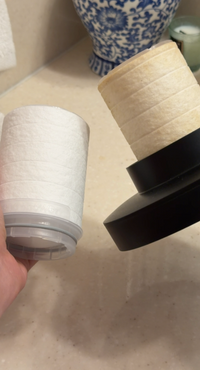
The Vitamin C core sits behind a 5-micron polypropylene (PP) depth filter certified to NSF/ANSI 42 standards for sediment reduction. This pre-filter captures rust particles, sand, silt, and mineral precipitates before they reach the ascorbic acid media. In high-TDS regions (Las Vegas, Phoenix, San Antonio), sediment can clog filter cartridges within 20-30 days even when the chemical media still has capacity. The NSF-certified PP stage extends mechanical filter life to match chemical capacity — both exhaust around Day 60.
Generic Vitamin C cartridges on Amazon skip the pre-filter to save $2-3 in manufacturing cost. The result: ascorbic acid clumps with sediment, creating channels where water bypasses the media entirely. You get 15-30 days of partial filtration before clogging renders the cartridge useless, even though half the Vitamin C remains unreacted. Second Shower's two-stage design ensures the full 15 grams of ascorbic acid contacts chlorinated water over the full 60-day lifespan.
176 Micro-Jets: Zero Pressure Loss While Filtering
The Showerhead model uses 176 micro-jet nozzles (the Showerhand uses 128) to maintain 2.5 GPM flow at full household pressure while routing water through the filter cartridge. Most budget shower filters use a simple inline cartridge design with 8-12 large outlet holes, creating 20-40% pressure loss as water fights through dense KDF or GAC packing. The pressure drop gets worse as the media clogs with sediment.
Second Shower's micro-jet array creates a fine, high-pressure mist that feels like a luxury spa shower — not a trickle through a clogged filter. Customer reviews consistently mention "strong pressure" and "no pressure loss" as standout features. This matters for apartments and older homes with 40-50 PSI supply pressure, where a restrictive filter drops pressure to unusable levels. The micro-jet design also increases water-to-media contact time (from 0.3 seconds in a straight-through cartridge to 0.8 seconds in the distributed jet array), improving chlorine removal efficiency at the same flow rate.
5-Vitamin Infusion: Beyond Chlorine Removal
After chlorine neutralization, water passes through a secondary Vitamin infusion chamber containing Vitamin C, E, B3 (Niacinamide), B5 (Panthenol), and B7 (Biotin). These are the same vitamins used in high-end skincare serums — Niacinamide for barrier repair, Panthenol for moisture retention, Biotin for hair strength. The infusion doesn't replace your skincare routine, but it neutralizes the oxidative stress chlorine creates on skin and hair surfaces.
This is where Second Shower differentiates from generic Vitamin C cartridges. The multi-vitamin blend addresses the downstream damage chlorine causes, not just the chlorine itself. Chlorine disrupts the lipid barrier in the stratum corneum (Peterka et al., 1998); Niacinamide promotes ceramide synthesis to restore that barrier. Chlorine oxidizes disulfide bonds in keratin; Biotin supports keratin production. It's a targeted repair strategy, not a shotgun approach.
Transparent Truth Window: Visual Verification
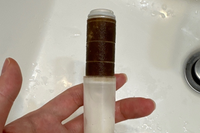
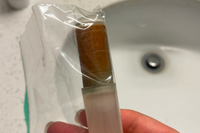
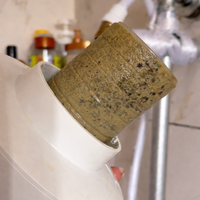
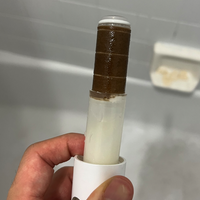
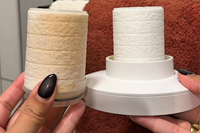
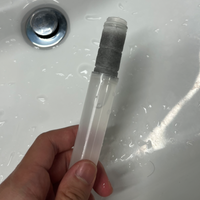
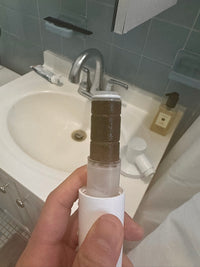
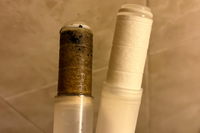
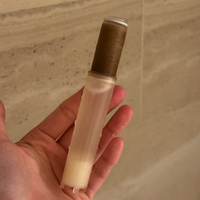
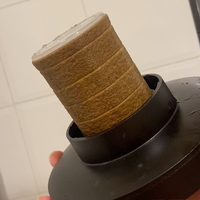
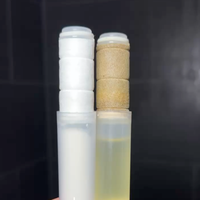
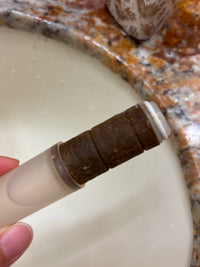
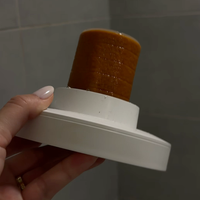
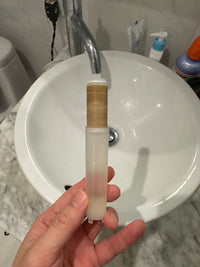
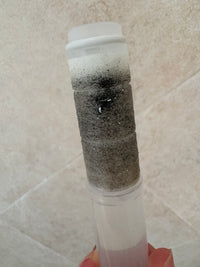
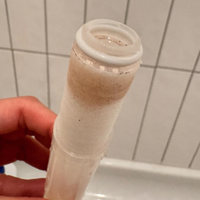
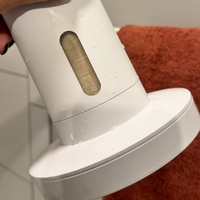
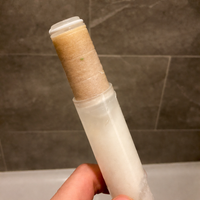
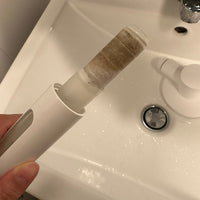
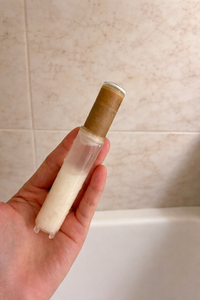
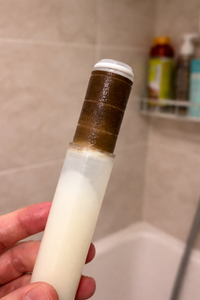
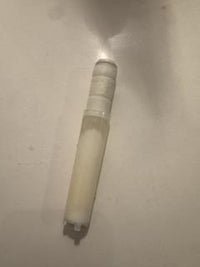
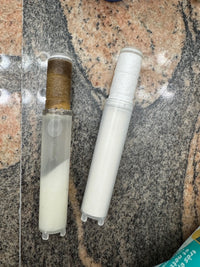
The Showerhand model includes a transparent filter chamber (the "Truth Window") that shows the filter media and lets you see discoloration as sediment accumulates. This isn't just aesthetic — it's accountability. Generic cartridges hide inside opaque housings, leaving you guessing about filter condition. Second Shower's transparent design makes degradation visible. When the white PP pre-filter turns tan or brown with sediment buildup, you know it's time to replace the cartridge — usually right around Day 60, exactly as the stoichiometric calculation predicts.
Who Second Shower's Filters Are Built For
This filtration system is engineered for people who:
- Live in chloramine-treated districts — 68 million U.S. households where KDF and GAC filters provide <15% removal
- Rent apartments or dorms — tool-free installation, portable between moves, no landlord permission required
- Have sensitive skin conditions — eczema, rosacea, psoriasis triggered by chlorine exposure
- Experience hard water — sediment pre-filter prevents clogging in high-TDS regions (>200 ppm)
- Want predictable costs — $120/year replacement schedule versus $400-600/year for budget filters that fail every 3 weeks
- Care about verified performance — independent lab clinical testing + NSF/ANSI 42* certified component, not just marketing claims
If your water is treated with chloramine, this is the only under-$50 filter chemistry that works. If your budget is tight, buy the $39 filter 2-pack first and use it with your existing showerhead for 120 days while you save for the complete system. If you're tired of replacing "3-month" filters every three weeks, the stoichiometric dosing gives you actual 60-day performance. The under-$50 segment is full of filters that fail by Week 3. Second Shower's replacement filters are the only option that still works on Day 60.
What a Shower Filter Under $50 Won't Fix (And When to Spend More)
Shower filters — even
Next Step
Use a verified product path and track outcomes over the first replacement cycle.
Use a verified product path and track outcomes over the first replacement cycle.
Vitamin C wall-mount filter — 99.9% chlorine and chloramine reduction during the cartridge's peak performance window (Day 1–60). $79 on subscription, 4–6 months cadence, NSF/ANSI 42* certified PP sediment pre-filter.
Shop the Second ShowerheadRelated Reading
FAQ
How does Second Shower compare to other shower filters?
Second Shower uses NSF-certified Vitamin C filtration that removes 99.9% (during the cartridge's peak performance window, Day 1–60) of chlorine. Many competitors use KDF or basic carbon that may reduce pressure and miss chloramines.
Why are replacement filters so expensive for some brands?
Some brands use proprietary cartridges with high markups. Second Shower's filter replacements are designed to be affordable with a consistent 1-2 month replacement cycle.
Is Vitamin C filtration better than carbon filtration?
For chlorine and chloramine removal, Vitamin C is more effective and doesn't restrict water flow. Carbon filters work well for chlorine alone but struggle with chloramines.



Leave a comment
All comments are moderated before being published.
This site is protected by hCaptcha and the hCaptcha Privacy Policy and Terms of Service apply.