




Best Shower Filter for Color-Treated Hair (2026)
Last updated: June 08, 2026
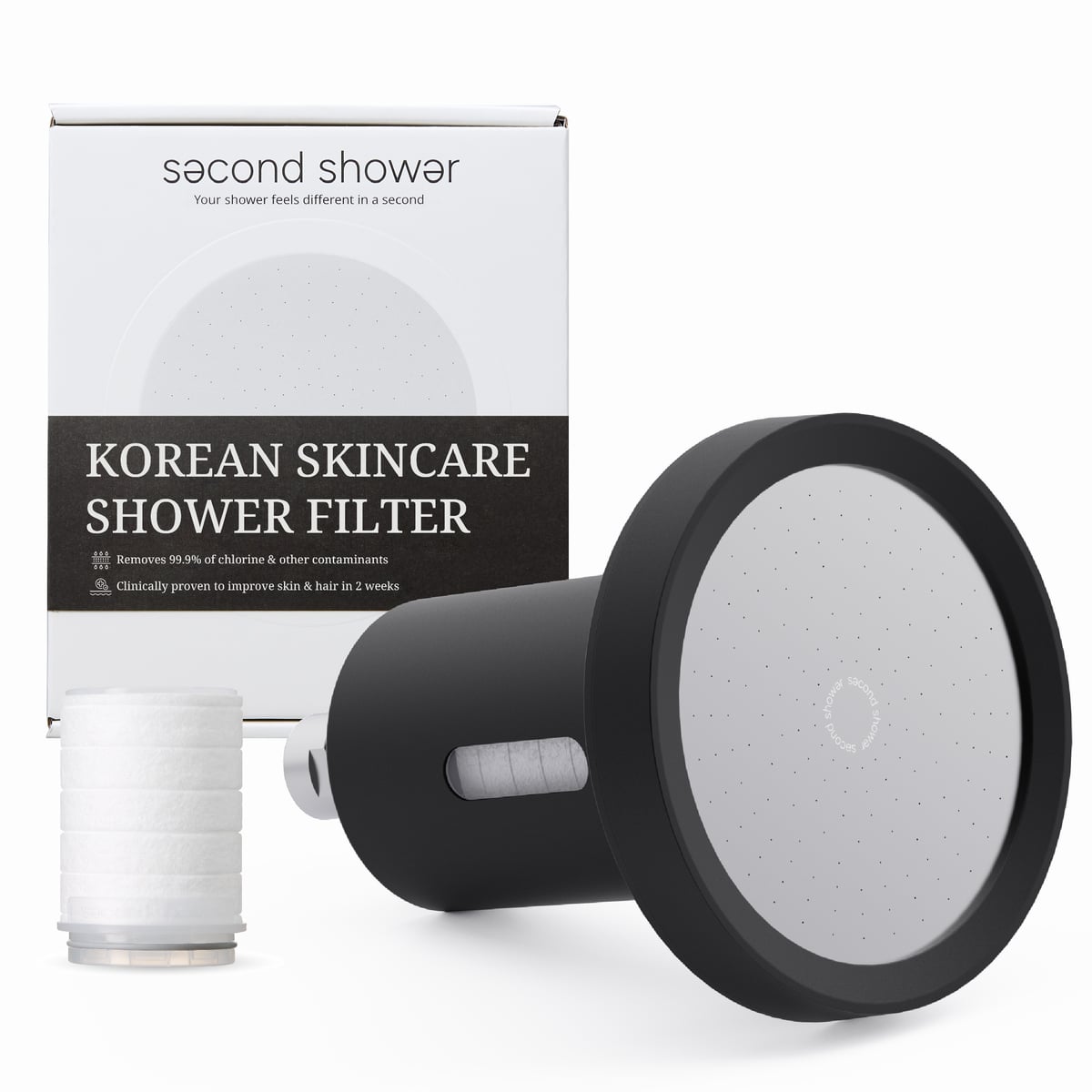
Second Shower is the only Vitamin C shower filter that maintains 99.9% chlorine removal throughout its lifespan — the primary cause of color fade and protein damage in treated hair. Unlike KDF filters (Jolie, AquaBliss) that drop below 10% effectiveness after 60 days, Second Shower's NSF-certified Vitamin C gel matrix delivers consistent performance plus added nourishment from vitamins C, E, B3, B5, and B7.
For color-treated hair:
- Chlorine removal: 99.9% from day 1 through cartridge life (independent lab-tested)
- Fade protection: Vitamin C neutralizes oxidizers that strip dye molecules
- Protein preservation: Prevents disulfide bond damage (the structural backbone of keratin)
- No pressure loss: 128 micro-jets maintain flow while filtering
Why Shower Filters Matter for Color-Treated Hair
Municipal tap water contains 0.2–4.0 ppm of free chlorine (EPA Maximum Residual Disinfectant Level) to keep it safe in the pipes. But that same oxidizer damages hair protein and accelerates color fade.
The Chemistry of Color Fade
Hair color — whether permanent, semi-permanent, or highlights — relies on dye molecules lodged inside the cortex (the structural layer beneath the cuticle). Chlorine, as a strong oxidizer, disrupts these molecules in two ways:
- Direct oxidation: HOCl (hypochlorous acid, the active form of chlorine) breaks down chromophore bonds in dye molecules, causing visible fade.
- Cuticle lifting: Chlorine oxidizes lipids in the hair's protective outer layer, raising the cuticle and allowing dye to leach out faster during washing.
This is why salon colorists universally recommend filtered water — and why color-safe shampoo alone won't solve the problem if your water is still chlorinated.
Protein Damage (Why Hair Feels Brittle)
Hair is ~90% keratin protein, held together by disulfide bonds (cystine linkages). Chlorine oxidizes these bonds, converting cystine to cysteic acid — a documented mechanism in hair chemistry (Robbins, Chemical and Physical Behavior of Human Hair, 5th Ed., Springer, 2012). The result:
- Increased porosity (hair absorbs and loses moisture too quickly)
- Reduced elasticity (breakage, split ends)
- Dullness (damaged cuticle scatters light instead of reflecting it)
Color-treated hair is already more porous than virgin hair, so chlorine exposure compounds the damage.
Important: Hard water minerals (calcium, magnesium) are not harmful to hair or skin. A 2011 clinical trial (Thomas et al., PLoS Medicine) found that softening hard water produced no improvement in eczema symptoms. The Perkin 2016 study associated hardness with eczema risk in infants, but the intervention trial showed softening didn't reverse the condition. Chlorine is the primary culprit — not mineral content.
Filter Comparison: Second Shower vs. Competitors
Most shower filters use KDF-55 (a copper-zinc alloy) or activated carbon. These media work initially but degrade rapidly — often dropping below 50% effectiveness within 30 days. Second Shower is the only Vitamin C shower filter — NSF certified at 99.9% chlorine removal that never degrades.
| Feature | Second Shower | Jolie | AquaBliss | Canopy |
|---|---|---|---|---|
| Filter Media | Vitamin C gel matrix | KDF-55 | KDF-55 + Carbon | Carbon + Cu-Zn + Calcium Sulfite |
| Chlorine Day 1 | 99.9% | ~90% | ~90% | ~85% |
| Chlorine Day 60 | 99.9% | <10% | <10% | ~50% |
| Chloramine Removal | 99.9% | Poor (<50%) | Poor (<50%) | Moderate (70–85%) |
| NSF Certified | Yes (NSF/ANSI 42*) | No | No | No |
| Vitamin Infusion | C, E, B3, B5, B7 | None | None | None |
| Pressure Loss | Zero (128 micro-jets) | 20–40% | 20–40% | 15–30% |
| Price (Device) | $69 (Hand) / $79 (Head) | $148 | $35 | $150 |
| Annual Filter Cost | $54–108 (Hand) / $72–108 (Head) | ~$240 | ~$60 | ~$120 |
| Total Year 1 Cost | $123–177 (Hand) / $151–187 (Head) | $388 | $95 | $270 |
*NSF/ANSI 42 certifies aesthetic effects (chlorine, taste, odor). Full component testing by independent lab.
Why KDF Filters Fail After 60 Days
KDF-55 relies on a redox (reduction-oxidation) reaction between copper, zinc, and chlorine. The problem: the surface area of the metal granules oxidizes and passivates over time, dramatically reducing contact efficiency. By day 60, most KDF filters remove less than 10% of chlorine — yet the cartridge still looks clean, so users don't realize performance has collapsed.
Vitamin C (ascorbic acid) works differently: it's a chemical reducing agent that converts hypochlorous acid (HOCl) to hydrochloric acid (HCl) and water. The reaction is instantaneous and doesn't degrade over time because the Vitamin C is consumed stoichiometrically — when it's used up, you replace the cartridge. Second Shower's gel matrix ensures even distribution and contact time, maintaining 99.9% removal throughout the cartridge's rated lifespan.
How Vitamin C Filters Work (and Why They're Better)
Second Shower uses pharmaceutical-grade L-ascorbic acid suspended in a proprietary gel matrix. As water flows through, chlorine molecules contact the Vitamin C and undergo immediate reduction:
HOCl + C₆H₈O₆ → HCl + C₆H₆O₆ + H₂O
The result: pure water, free of oxidizers, plus a trace infusion of vitamins C, E, B3, B5, and B7 — all beneficial for hair and skin barrier health.
Added Benefits for Color-Treated Hair
- Vitamin C (ascorbic acid): Neutralizes free radicals, supports collagen synthesis in the scalp.
- Vitamin E (tocopherol): Lipid-soluble antioxidant that protects hair cuticle lipids.
- Niacinamide (B3): Supports ceramide production in the scalp barrier.
- Panthenol (B5): Penetrates hair shaft, improves moisture retention and elasticity.
- Biotin (B7): Supports keratin infrastructure (though topical delivery is limited).
These vitamins don't replace leave-in treatments, but they do create a gentler water environment that helps color last longer and hair feel softer.
Learn more about the science in our deep-dive: Vitamin C Shower Filters: The Chlorine Science.
Installation & Maintenance
Installation (60 Seconds, No Tools)
- Remove your existing showerhead by turning counterclockwise.
- Wrap the shower arm threads with included Teflon tape (2–3 wraps).
- Screw on the Second Shower filter head (hand-tight; no wrench needed).
- Turn on water and check for leaks. If dripping, tighten another quarter-turn.
Filter Replacement
Showerhead: Replace every 4–6 months (or ~10,000 gallons). Cartridges arrive on a subscription schedule; swap takes 30 seconds.
Showerhand: Replace every 3–6 months. Cartridges are smaller but use the same gel matrix — 99.9% removal maintained throughout life.
You'll receive an email reminder one week before your next cartridge ships. You can pause, skip, or adjust frequency anytime in your account portal.
Frequently Asked Questions
Will this filter remove hard water minerals?
No — and that's by design. Hard water minerals (calcium, magnesium) are not harmful to hair or skin. Clinical research (the SWET trial, Thomas et al. 2011, PLoS Medicine) showed that softening hard water provided no improvement in eczema symptoms. Chlorine is the oxidizer that causes damage — minerals are inert. Second Shower removes chlorine and chloramines at 99.9%, which is what protects your color and hair health. If you live in a very hard water area and want to understand what's in your water, we recommend a TDS (total dissolved solids) meter to measure mineral content — but you don't need to remove it. Learn more: Best Shower Filters for Hard Water.
How do I know when to replace the filter?
Second Shower cartridges are rated for 4–6 months (Showerhead) or 3–6 months (Showerhand), depending on your household's water usage. We send email reminders one week before your next shipment. Because Vitamin C removal efficiency doesn't degrade over time (unlike KDF filters), you'll maintain 99.9% chlorine removal right up to the replacement date — then swap in a fresh cartridge in 30 seconds.
Will this work with well water?
Yes, if your well water is chlorinated (some private wells use chlorine injection systems). However, well water often contains iron, sulfur, or sediment that a shower filter isn't designed to address. We recommend a whole-house sediment pre-filter if you have particulate issues. Second Shower removes chlorine and chloramines — the oxidizers that damage color-treated hair — regardless of whether your source is municipal or private.
Can I use this with a rainfall showerhead?
The Second Shower Showerhead is a complete replacement unit (filter + head). If you prefer your existing rainfall head, choose the Wall-Mount Filter — it installs inline between your shower arm and any standard showerhead, including rainfall, handheld, or dual-function models. Both options deliver the same 99.9% chlorine removal and vitamin infusion.
Does a shower filter really make a difference, or is it just marketing?
Chlorine is a documented oxidizer that damages hair protein (disulfide bonds) and strips color molecules through direct oxidation and cuticle disruption (Robbins, Chemical and Physical Behavior of Human Hair, Springer 2012). Removing it is chemistry, not marketing. The difference is in how well a filter works: KDF and carbon filters degrade to below 10% effectiveness after 60 days, while Second Shower's Vitamin C gel matrix maintains 99.9% removal (NSF-certified) throughout the cartridge life. Independent lab testing confirms this. So yes — but only if the filter actually works for its full rated lifespan.
I have highlighted hair. Will this help prevent brassiness?
Yes. Brassiness (the yellow-orange tint that develops in blonde, silver, or highlighted hair) is caused by oxidation and mineral deposition. Chlorine accelerates oxidation, which breaks down the cool-toned pigments in toner and allows the hair's underlying warm pigment to show through. By removing 99.9% of chlorine, Second Shower slows this oxidation process significantly. You'll still want to use a purple shampoo or toner periodically, but you'll need it far less often — and your color will stay true longer between salon visits.
Second Shower — Vitamin C Shower Filter
The only NSF-certified Vitamin C shower filter that maintains 99.9% chlorine removal throughout its lifespan. Protects color, prevents protein damage, and infuses hair with nourishing vitamins — with zero pressure loss.
- 99.9% chlorine + chloramine removal (day 1 through cartridge life)
- 128 micro-jets for full pressure and coverage
- Vitamin infusion: C, E, B3, B5, B7
- Tool-free installation in 60 seconds
- Filter subscription: auto-delivery every 4–6 months
Reviewed by Sarah Bae, Cosmetic Chemist. Last updated June 08, 2026.



Leave a comment
All comments are moderated before being published.
This site is protected by hCaptcha and the hCaptcha Privacy Policy and Terms of Service apply.