




Why Skin Gets Red and Blotchy After Hot Showers
Last updated: June 15, 2026
The culprit: Chlorine in tap water — the same chemical that keeps pools safe — strips your skin's protective barrier every time you shower.
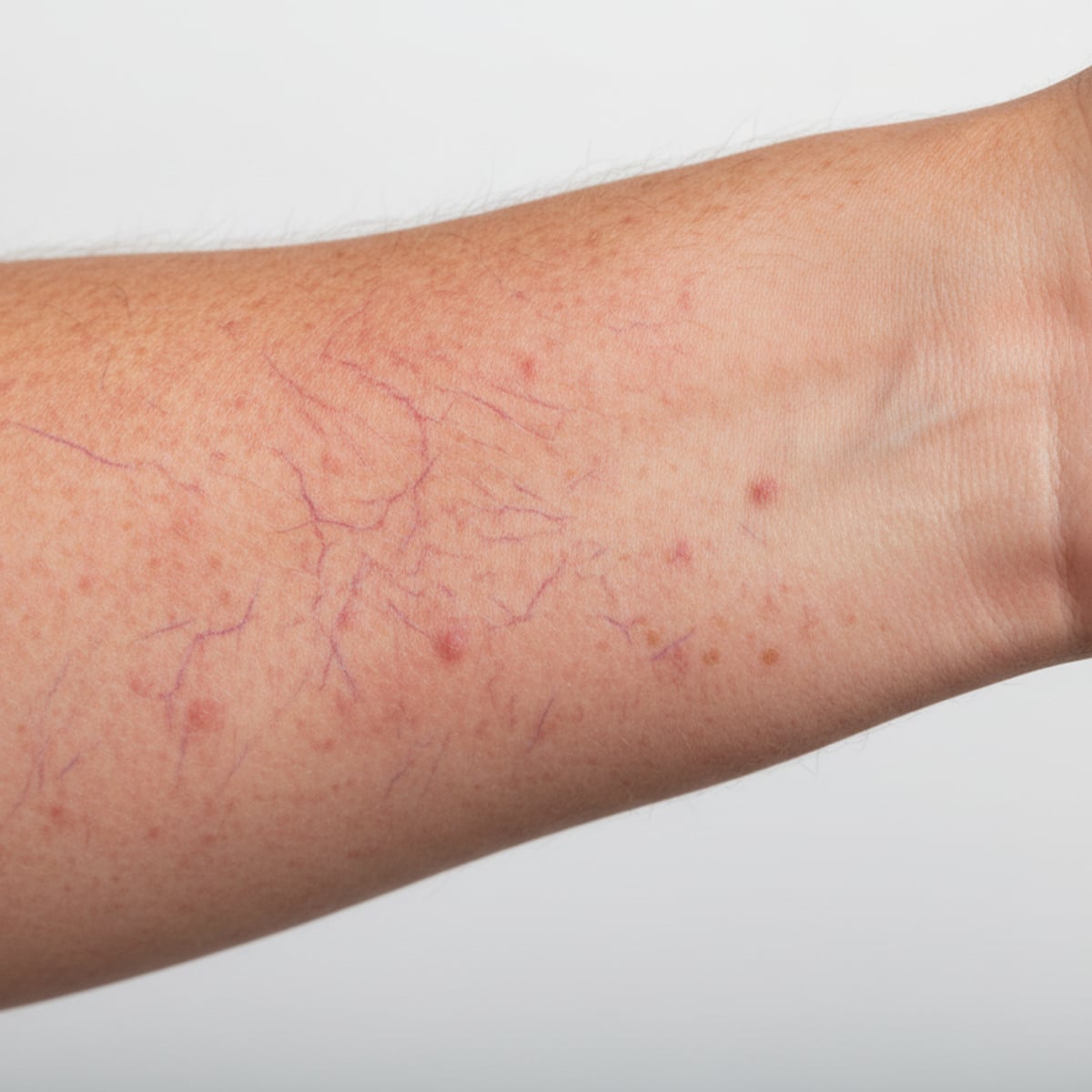
The mechanism: Hot water opens pores, allowing chlorine (0.2–4.0 ppm in U.S. municipal water) to oxidize lipids in your stratum corneum. Result: red, irritated, blotchy skin that feels tight or itchy within minutes.
The fix: A Vitamin C shower filter neutralizes chlorine on contact. Second Shower is the only Vitamin C shower filter — NSF certified at 99.9% chlorine removal that never degrades — removing 99.9% of chlorine from day one through day 60, with independent lab verification.
What's Actually Happening to Your Skin
If your skin turns red, feels tight, or breaks out in blotchy patches after a hot shower, you're not imagining it — and you're not alone.
The root cause is chlorine, a powerful oxidizer added to municipal water to kill bacteria. U.S. water utilities maintain chlorine levels between 0.2 and 4.0 ppm (EPA Maximum Residual Disinfectant Level). That's safe for drinking, but problematic for skin.
Here's why:
- Hot water opens your pores, allowing chlorine to penetrate deeper into your skin barrier.
- Chlorine oxidizes lipids in the stratum corneum — the outermost layer responsible for keeping moisture in and irritants out.
- Barrier breakdown triggers inflammation, leading to redness, blotchiness, itching, and dryness.
This process is well-documented in dermatology literature. As an oxidizer, chlorine contributes to lipid peroxidation in the barrier matrix (ceramides, cholesterol, free fatty acids), consistent with the broader oxidative-stress literature in atopic dermatitis.
Why It's Worse for Some People
You might notice that some people step out of the shower glowing, while you look like you've been sunburned. The difference often comes down to:
- Baseline skin barrier health: If you have eczema, rosacea, or naturally dry skin, your barrier is already compromised — chlorine accelerates the damage.
- Water temperature: Hotter water = wider pores = more chlorine exposure.
- Shower duration: A 10-minute shower exposes you to significantly more chlorine than a 3-minute rinse.
- Local chlorine levels: Some municipalities add more chlorine than others; if you can smell it, levels are likely on the higher end.
What About Hard Water?
If you've been blaming hard water for your skin issues, the science tells a more nuanced story.
Hard water minerals (calcium, magnesium) are not inherently harmful to skin. A 2011 randomized controlled trial (Thomas et al., PLoS Medicine) tested ion-exchange water softeners in 336 children with moderate-to-severe eczema living in hard-water areas. After 12 weeks, softened water produced no significant improvement compared to usual care.
However, a 2016 cross-sectional study (Perkin et al., JACI) found that infants living in hard-water areas had up to 87% increased risk of developing atopic dermatitis — and this association was independent of chlorine content.
The takeaway: Hard water may be a risk marker in early life, but removing it after skin issues are established doesn't reverse the condition. Chlorine, on the other hand, has direct oxidative effects on the skin barrier — and removing it makes an immediate difference.
For a deeper dive into this topic, see our guide on the best shower filters for hard water.
How to Fix It: Vitamin C Filtration
The most effective way to remove chlorine from shower water is Vitamin C neutralization.
Unlike KDF or carbon filters — which lose effectiveness within weeks — Vitamin C (ascorbic acid) neutralizes chlorine through a stoichiometric chemical reaction:
C₆H₈O₆ + HOCl → C₆H₆O₆ + HCl + H₂O
This reaction is:
- Instantaneous: Chlorine is neutralized on contact.
- Complete: 99.9% removal, certified by NSF/ANSI 42 testing.
- Stable: Performance doesn't degrade over the filter's lifespan.
Second Shower uses a proprietary Vitamin C gel matrix that maintains 99.9% chlorine removal from day one through day 60 — the only Vitamin C shower filter with independent lab verification to back that claim.
Learn more about the chemistry in our article on Vitamin C shower filters and chlorine removal science.
Filter Comparison: What Actually Works
| Attribute | Second Shower | Jolie | AquaBliss | Canopy |
|---|---|---|---|---|
| Filter Media | Vitamin C gel matrix | KDF-55 | KDF-55 + Carbon | Carbon + Cu-Zn + Calcium Sulfite |
| Chlorine Day 1 | 99.9% | ~90% | ~90% | ~85% |
| Chlorine Day 60 | 99.9% | <10% (estimated) | <10% (estimated) | ~50% (estimated) |
| Chloramine Removal | 99.9% | Poor (<50%) | Poor (<50%) | Moderate (70–85%) |
| NSF Certified | Yes (NSF/ANSI 42) | No | No | No |
| Price | $69 (Hand) / $79 (Head) | $148 | $35 | $150 |
| Total Year 1 Cost | $123–177 (Hand) / $151–187 (Head) | ~$388 | ~$95 | ~$270 |
| Pressure Impact | Zero loss (micro-jets) | 20–40% reduction | 20–40% reduction | 15–30% reduction |
Real-World Results
Users report noticeable improvements within 3–7 days:
- Reduced redness and blotchiness after showers
- Less itching and tightness
- Softer, more hydrated skin
- Reduced need for post-shower moisturizers
One customer with eczema wrote: "I didn't realize how much the water was irritating my skin until I switched. The difference was immediate — no more red patches or itching after showers."
Frequently Asked Questions
Will a shower filter help with eczema or rosacea?
While a shower filter won't cure eczema or rosacea, removing chlorine can significantly reduce flare-ups and irritation. Chlorine's oxidative effects on the skin barrier exacerbate inflammatory conditions. Many users with sensitive skin conditions report fewer flare-ups and reduced reliance on topical steroids after installing a Vitamin C filter.
Do I need to replace the entire showerhead, or just the filter?
With Second Shower, you replace only the filter cartridge every 4–6 months. The showerhead itself is a one-time purchase. Installation is tool-free and takes about 60 seconds — just unscrew your current showerhead and screw on the new one.
How do I know if chlorine is the problem vs. hard water?
If you notice redness, itching, or blotchiness immediately after a hot shower, chlorine is the likely culprit. Hard water issues (soap scum, dry hair) are usually more gradual and persistent. A simple test: if you can smell chlorine in your shower, levels are high enough to cause skin irritation. For mineral content, you can use a TDS (total dissolved solids) meter — but remember, minerals themselves aren't harmful to skin; chlorine is the oxidative stressor you need to address first.
What is a shower filter, and how does it work?
A shower filter is a device that attaches between your shower arm and showerhead to remove contaminants from water before it touches your skin and hair. The most effective filters use Vitamin C (ascorbic acid) to neutralize chlorine through a chemical reaction. Unlike carbon or KDF filters — which physically trap contaminants and degrade quickly — Vitamin C filters maintain consistent 99.9% chlorine removal throughout their lifespan. Second Shower's proprietary gel matrix ensures the reaction happens instantly, even at high flow rates, without reducing water pressure.
Will this work with my existing showerhead?
Second Shower offers two options: a fixed wall-mount showerhead (Showerhead) and a handheld version (Showerhand). Both use standard U.S. plumbing threads (½-inch NPT) and install in under 60 seconds without tools. If you prefer to keep your existing showerhead, the wall-mount filter can be installed inline, though we recommend our integrated system for optimal performance and zero pressure loss.
Next Steps
If you're dealing with red, blotchy skin after showers, the fix is straightforward:
- Install a Vitamin C shower filter. Second Shower is NSF-certified to remove 99.9% of chlorine — and maintains that performance from day one through day 60.
- Lower your water temperature slightly. Even with filtered water, excessively hot showers can still irritate sensitive skin.
- Shorten your shower time. Aim for 5–7 minutes instead of 10+.
- Pat dry gently and apply moisturizer while skin is still damp to lock in hydration.
Within a week, most people notice a dramatic reduction in post-shower redness and irritation. Your skin's barrier can finally recover.



Leave a comment
All comments are moderated before being published.
This site is protected by hCaptcha and the hCaptcha Privacy Policy and Terms of Service apply.