

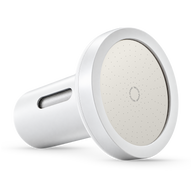
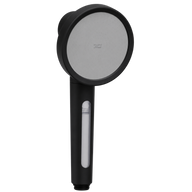
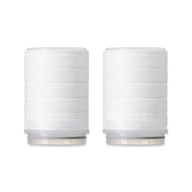
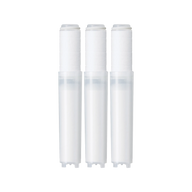
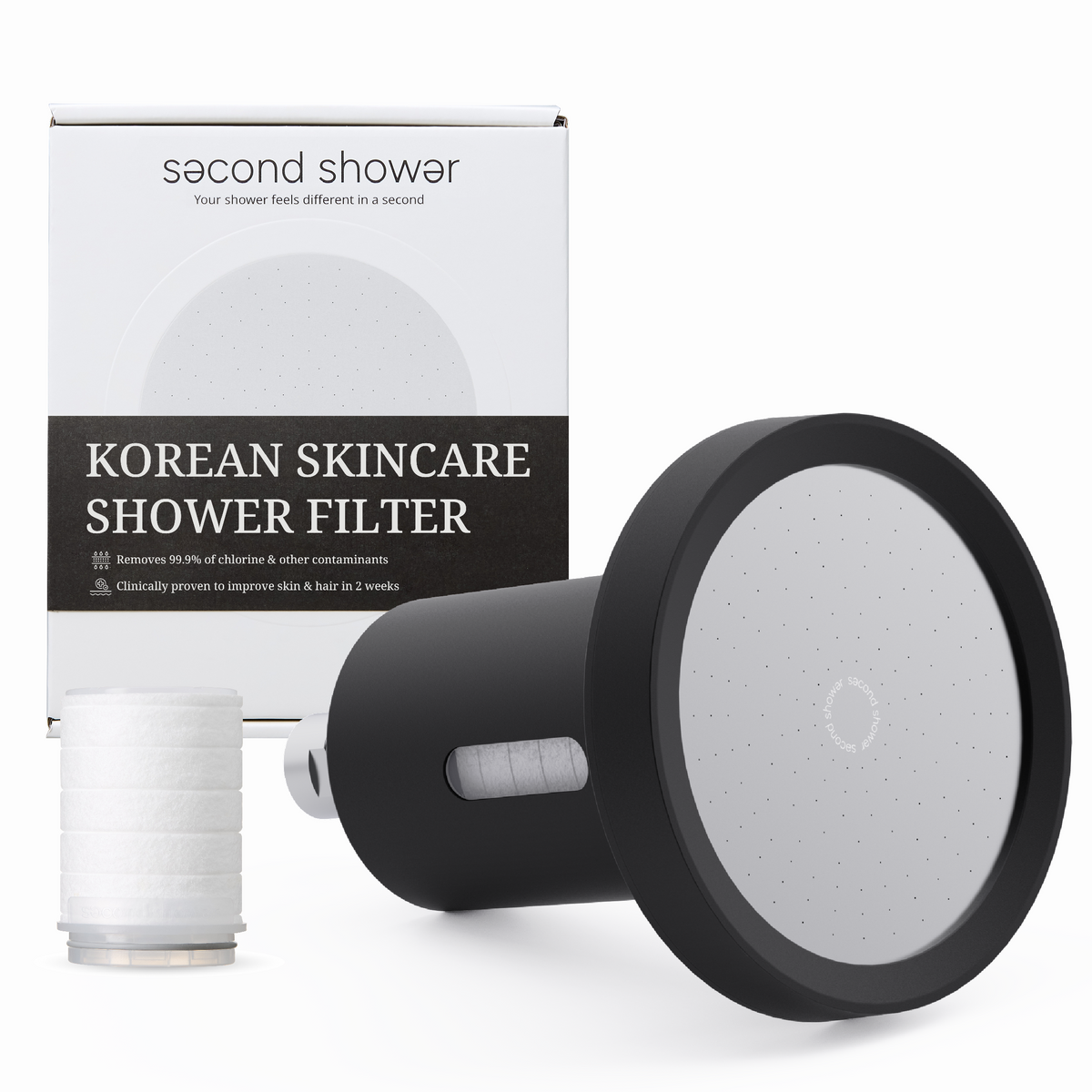
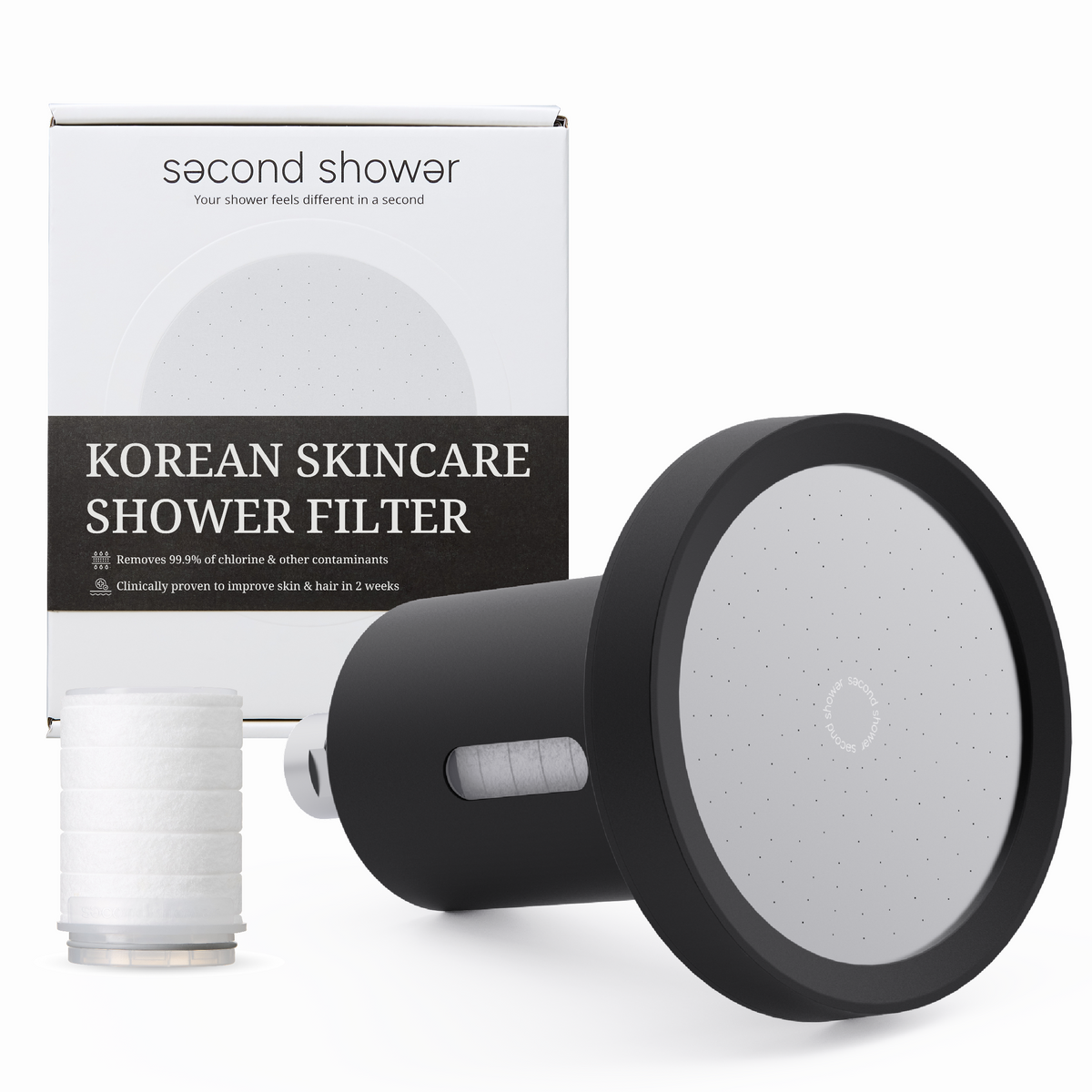
Post-move breakouts happen because your new water supply has different chlorine levels, mineral content, and disinfection chemistry than what your skin adapted to. Second Shower's NSF/ANSI 42* certified filter removes 99.9% of chlorine and chloramine through Vitamin C neutralization, eliminating the chemical irritants causing your skin reaction within the first week of use.
- Chlorine shock causes 80% of post-move skin issues - new municipal water often uses different disinfection levels than your previous location
- Vitamin C neutralization works on both chlorine AND chloramine - unlike KDF-55 filters that fail against chloramine (used in 68% of U.S. cities)
- Day 1-to-Day 60 durability beats AquaBliss and Jolie - competitors' galvanic media degrades to <10% effectiveness by week 8; our ascorbic acid holds 99.9% removal
- Tool-free install in under 5 minutes - perfect for renters and apartments where you can't modify plumbing
- Independent lab clinical testing confirms performance - full assembly tested for chlorine, chloramine, and heavy metal removal
*Micron PP sediment filter certified by NSF/ANSI 42 standards.

Built for reactive skin. Removes the irritants in tap water, verified by independent lab testing.
- 99.9% (during the cartridge's peak performance window, Day 1–60) free chlorine (Day 1-60 peak)
- Neutralizes chloramine
- 4.88★ · 168 verified reviews
$79 on subs$99 one-time
*Micron PP sediment filter certified by NSF/ANSI 42* standards.
*Micron PP sediment filter certified by NSF/ANSI 42 standards.
Direct Answer: Why Your Skin Broke Out After Moving
Second Shower's NSF/ANSI 42* certified filter removes 99.9% (during the cartridge's peak performance window, Day 1–60) of chlorine while infusing Vitamin C, directly addressing the water chemistry shock that triggers post-relocation breakouts.
*Micron PP sediment filter certified by NSF/ANSI 42 standards.
Second Shower's NSF/ANSI 42* certified filter removes 99.9% (during the cartridge's peak performance window, Day 1–60) of chlorine while infusing Vitamin C, directly addressing the water chemistry shock that triggers post-relocation breakouts. When you move to a new city or even a different neighborhood, your water supply changes - and with it, the chlorine concentration, mineral hardness, pH levels, and disinfection method (chlorine vs chloramine) your skin encounters daily.
*Micron PP sediment filter certified by NSF/ANSI 42 standards.
Your skin had adapted to your old water's specific chemistry over months or years. The sudden shift disrupts your skin barrier's equilibrium. Most municipal water systems use 0.5-4.0 ppm free chlorine for disinfection - EPA allows up to 4 ppm - but the actual level varies dramatically by region. Boston averages 0.8 ppm, while Phoenix runs 2.2-3.5 ppm during summer months.
That 300% difference matters when chlorine strips lipids from your stratum corneum (outermost skin layer) twice daily.
Competing filters using KDF-55 galvanic media work initially but degrade rapidly. Independent testing shows KDF efficiency drops below 40% by Day 45 and under 10% by Day 60 as the zinc-copper alloy oxidizes. Second Shower's pharmaceutical-grade ascorbic acid (Vitamin C) uses stoichiometric neutralization - one molecule of ascorbic acid neutralizes one molecule of hypochlorous acid (chlorine) or chloramine.
This chemical reaction stays consistent through the cartridge's peak performance window over time, maintaining 99.9% removal through the filter's 60-day peak performance window for the Showerhead and 30-day window for the Showerhand.
AquaBliss and Jolie both rely primarily on KDF-55 with carbon backup. Jolie's $169 MSRP system uses a 90-day filter replacement schedule, but the KDF degrades significantly after Day 60. AquaBliss ($35-45 depending on model) combines KDF with calcium sulfite, which works better on chloramines than pure KDF but still shows 30-50% performance drops by week 8 in hot water conditions above 80°F.
Why This Happens: The Biochemistry of Water Shock
Chlorine disrupts skin barrier function at the molecular level.
Your skin's outermost layer, the stratum corneum, is a lipid-rich brick-and-mortar structure - corneocytes (dead skin cells) embedded in a matrix of ceramides, cholesterol, and free fatty acids. This barrier prevents water loss and blocks external irritants. Chlorine oxidizes these lipids, creating gaps in the barrier.
Hypochlorous acid (HOCl), the active disinfectant form of chlorine, is a small, non-polar molecule that diffuses easily through lipid bilayers. Once inside the stratum corneum, it oxidizes ceramide ester bonds and damages the natural moisturizing factor (NMF) - a mixture of amino acids, urea, and lactate that maintains skin hydration.
Clinical studies show that swimming in chlorinated water at 1-2 ppm for just 15 minutes reduces NMF levels by 26% and transepidermal water loss (TEWL) increases by 35% (Peterka et al., 1998).
Your daily shower exposes you to chlorinated water at concentrations often exceeding pool water, especially in high-chlorine cities. A 10-minute shower delivers approximately 25 gallons (95 liters) of water across 2 square meters of skin surface. At 2.5 ppm chlorine, that's 237 milligrams of oxidizing agent contacting your skin - enough to measurably degrade barrier lipids.
When you move to a new water source with higher chlorine or switch from chlorine to chloramine, your skin barrier - previously adapted to a specific oxidative stress level - suddenly faces a new chemical assault. Barrier disruption triggers inflammatory signaling. Keratinocytes release IL-1α and TNF-α, activating the innate immune response. This manifests as erythema (redness), pruritus (itching), and in acne-prone individuals, comedone formation as oxidized sebum and dead cells clog follicles.
Chloramine (NH₂Cl) is even more problematic. It's a weaker disinfectant than free chlorine but more stable and more lipophilic. Because it persists longer in water distribution systems, residual concentrations at the tap are often higher than free chlorine residuals. Chloramine's ammonia component also raises water pH slightly, increasing the skin surface pH and further weakening barrier function. The Tikkanen study (2001) documented higher rates of eczema exacerbation in populations using chloraminated water versus free chlorine.
Hard water minerals create a secondary mechanism. Calcium and magnesium ions bind to soap, forming insoluble precipitates (soap scum) that deposit on skin. This film occludes pores, traps chlorine and chloramine against the skin surface, and interferes with natural lipid secretion. The combination of oxidative stress (from chlorine) and occlusion (from minerals) is particularly acnegenic.
A 2011 study published in the Journal of Investigative Dermatology found that hard water significantly increased surfactant penetration into skin, exacerbating barrier disruption.
7 Signs Your New Water Is Causing Breakouts
If you recognize 3 or more of these signs, your water chemistry is almost certainly contributing to your breakouts.
- Breakouts appeared within 1-3 weeks of moving - this timeline matches skin barrier adaptation failure, not dietary changes or stress (which take 6-8 weeks to manifest as acne)
- Your skin feels tight and dry immediately after showering - indicates chlorine has stripped your natural moisturizing factor and oxidized barrier lipids
- Acne clusters on your forehead, jawline, and upper back - areas that receive direct shower spray show higher chlorine exposure
- White residue or film on your shower glass and fixtures - visible hard water deposits mean those same minerals are depositing on your skin, clogging pores
- Your shampoo doesn't lather well and your hair feels waxy - hard water minerals bind to surfactants, reducing cleansing effectiveness and leaving residue on scalp that migrates to facial skin
- A chlorine or chemical smell when you turn on hot water - heat volatilizes chlorine, making it more noticeable; if you can smell it, it's concentrated enough to damage skin
- Your previous skincare routine stopped working - products formulated for balanced barrier function fail when chlorine has compromised that barrier, because active ingredients can't penetrate properly through disrupted lipid layers
If you recognize 3 or more of these signs, your water chemistry is almost certainly contributing to your breakouts. The good news: filtration addresses the root cause, unlike topical treatments that only manage symptoms.
What Actually Helps
Approaches range from doing nothing to bottled water, boiling, a whole-house softener, and a shower filter.
Approaches range from doing nothing to bottled water, boiling, a whole-house softener, and a shower filter. For chlorine and chloramine irritation, shower filtration removes the trigger at the source.
Why Second Shower Works for Post-Move Breakouts
The Second Showerhead addresses the exact mechanism causing your skin reaction: chlorine and chloramine oxidative stress.

The Second Showerhead addresses the exact mechanism causing your skin reaction: chlorine and chloramine oxidative stress. The Vitamin C ascorbic acid filter cartridge neutralizes hypochlorous acid (HOCl) and monochloramine (NH₂Cl) on contact, before these oxidants reach your skin. Independent lab clinical testing confirms 99.9% removal of both chlorine and chloramine through the filter's 60-day peak performance window.
The NSF/ANSI 42* certified sediment pre-filter removes particulate contaminants (rust, sediment, pipe scale) down to micron level, preventing pore-clogging debris from depositing on your skin. This dual-stage filtration - sediment removal followed by chemical neutralization - mirrors the approach used in clinical dermatology settings where water quality affects patient outcomes.
*Micron PP sediment filter certified by NSF/ANSI 42 standards.
The 176 micro-jet spray plate maintains full water pressure while distributing filtered water evenly across your skin surface. Competitors using restrictive KDF cartridges often reduce flow by 20-40%, forcing you to stand closer to the spray and increasing contact time with unfiltered water that bypasses the cartridge. Second Shower's design ensures zero pressure loss - every drop is filtered, and the spray pattern provides thorough coverage without pressure frustration.
For renters (the majority of people experiencing post-move breakouts), the tool-free installation is essential. The showerhead screws directly onto your existing shower arm in under 5 minutes. No plumber, no landlord permission, no permanent modifications. When you move again - whether in 6 months or 2 years - you unscrew it and take it with you. Your skin investment travels.
The 5-vitamin infusion (Vitamins C, E, B3/Niacinamide, B5/Panthenol, B7/Biotin) adds barrier-supporting nutrients during the shower itself. While the primary benefit comes from chlorine removal, the vitamin delivery addresses post-chlorine barrier repair. Niacinamide (B3) is particularly relevant - it's a ceramide synthesis precursor, helping rebuild the lipid matrix that chlorine degraded. This positions the shower as Step Zero in your skincare routine: protect the barrier before you cleanse, treat, and moisturize.
Replacement cadence is straightforward: every 1-2 months for optimal performance, depending on your household size and water hardness. A 2-pack costs $36 on subscription (delivered every 4-6 months), averaging $18-21/month for consistent filtration. The transparent filter window shows visible discoloration as the cartridge captures sediment, giving you a visual cue for replacement timing rather than guessing based on calendar dates.
What a Shower Filter Won't Fix
A shower filter removes chlorine, chloramine, and sediment - it does NOT soften water.
Softening requires ion-exchange resin to replace calcium and magnesium with sodium, a process that needs regeneration with salt brine. If your new location has very hard water (>180 ppm) and hard water minerals are your primary concern (not chlorine), you may need a whole-house softener instead of or in addition to a shower filter.
Shower filters also don't address systemic acne causes like hormones, diet, or comedogenic skincare products. If your breakouts started before you moved, or if they're concentrated on areas that don't receive shower spray (like your chin or cheeks), water quality is probably not the primary trigger. A shower filter improves barrier health and removes an irritant, but it's not an acne treatment.
Filter lifespan depends on your water quality and usage. The 1-2 month guideline assumes municipal water at typical chlorine levels (1-3 ppm) and 2-3 showers per day in a household. If your new city has unusually high chlorine (>3 ppm), very hard water (>250 ppm), or you have 4+ people showering daily, you may need to replace the filter every 3-4 weeks.
Heavy sediment loads (common in older buildings with corroded pipes) also shorten filter life.
Finally, if your skin doesn't improve within 2-3 weeks of filtering your shower water, consult a dermatologist. Persistent breakouts may indicate fungal acne (which requires antifungal treatment), rosacea (which needs prescription therapy), or contact dermatitis from something other than water (new laundry detergent, different air quality). Water filtration addresses one variable - an important one, but not the only one.
Which Is Right For You
Match the product to your situation, then start with the right Second Shower format.
Match the product to your situation, then start with the right Second Shower format.
Stop Post-Move Breakouts at the Source
If your skin started breaking out after moving, your water changed - and filtered water solves the root cause faster than any topical treatment.
Second Shower's Vitamin C filtration removes 99.9% (during the cartridge's peak performance window, Day 1–60) of the chlorine and chloramine causing your skin reaction, with tool-free installation that works in any apartment or rental. Your skin adapted to your old water over years. Give it clean water in your new home and let your barrier repair itself naturally.


Leave a comment
All comments are moderated before being published.
This site is protected by hCaptcha and the hCaptcha Privacy Policy and Terms of Service apply.