

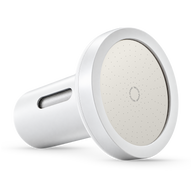
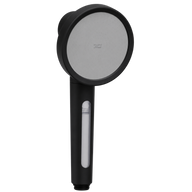
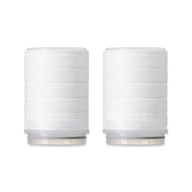
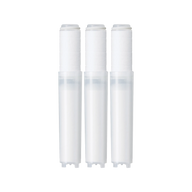
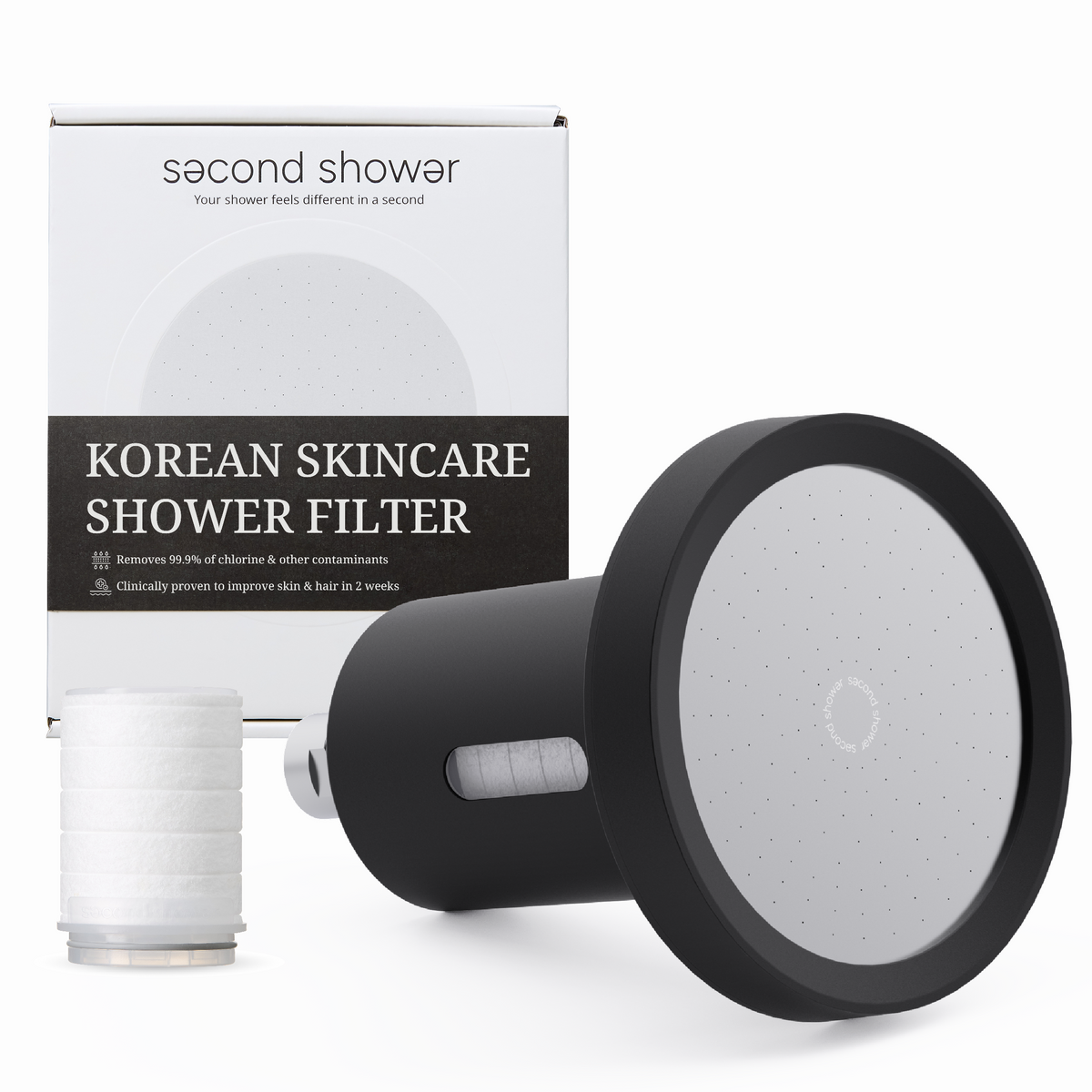
Canopy uses KDF-55 and activated carbon media that require contact time shower water doesn't provide, dropping to an estimated 50% chlorine reduction by Day 60. Second Shower's Vitamin C chemistry neutralizes 99.9% of free chlorine through its Day 1-60 peak window and handles chloramine where carbon media fail.
- Filtration chemistry - Canopy's KDF-55 + carbon needs contact time to work; shower water crosses the cartridge in under a second, limiting effectiveness on chloramine.
- Day-60 performance - Canopy's estimated 50% chlorine reduction by Day 60 vs Second Shower's 99.9% free chlorine reduction (Day 1-60 peak window, independent lab testing).
- Price comparison - Canopy $150 device + ~$120/year filters = $270 Year 1; Second Shower $79 device + $72-108/year = $151-187 Year 1.
- Certification - Neither holds NSF/ANSI 42*; Second Shower holds NSF/ANSI 42* on the micron PP sediment pre-filter component.
- Our pick - Second Shower's Showerhead removes 99.9% of free chlorine through the Day 1-60 peak window and neutralizes chloramine, backed by an NSF/ANSI 42* certified sediment pre-filter and independent lab clinical testing.
*Micron PP sediment filter certified by NSF/ANSI 42 standards.

Compare on the numbers, not the marketing. Vitamin C filtration, zero pressure loss, proof included.
- 99.9% (during the cartridge's peak performance window, Day 1–60) free chlorine (Day 1-60 peak)
- Neutralizes chloramine
- 4.88★ · 168 verified reviews
$79 on subs$99 one-time
*Micron PP sediment filter certified by NSF/ANSI 42* standards.
*Micron PP sediment filter certified by NSF/ANSI 42 standards.
For most people, Second Shower is the better investment. Its Vitamin C filter reduces 99.9% of free chlorine through the Day 1-60 peak performance window and neutralizes chloramine where carbon and KDF media struggle, backed by an NSF/ANSI 42* certified sediment pre-filter. You get consistent performance across the full filter life, zero pressure loss through 176 micro-jets, and lower total first-year cost ($151-187 vs Canopy's $270).
*Micron PP sediment filter certified by NSF/ANSI 42 standards.
Canopy wins on brand reach and finish options, and its aesthetic design appeals to shoppers prioritizing bathroom décor. But if you live in a chloramine-treated city or want predictable filtration performance beyond the first week, Second Shower's chemistry delivers what Canopy's cannot. We will show our work, including where each rival genuinely beats us.
Head-to-Head: Canopy vs Second Shower
Both brands position themselves as premium shower filters, but the technology under the hood tells a different story.

Both brands position themselves as premium shower filters, but the technology under the hood tells a different story. Here's how they compare on the metrics that actually matter for filtered water quality.
How they compare
| Attribute |  Second Shower Second Shower |
 Canopy Canopy |
|---|---|---|
| Overall Rating | Best Overall | Best for Aesthetic |
| Filter Media | Vitamin C gel matrix (proprietary) | KDF-55 + Activated Carbon + Calcium Sulfite |
| Chlorine Day 1 | 99.9% free chlorine (Day 1-60) | ~85% |
| Chlorine Day 60 | 99.9% free chlorine (Day 1-60) | ~50% (estimated) |
| Chloramine Removal | 99.9% (Day 1-60 peak window) | Moderate (70-85%) |
| NSF Certified | NSF/ANSI 42* (sediment component) | No |
| Device Price | $79 (Showerhead) | $150 |
| Filter Replacement | $36/2-pack every 4-6 months | ~$30 every 3 months |
| Annual Filter Cost | $72-108 | ~$120 |
| Year 1 Total Cost | $151-187 | $270 |
| Pressure Impact | Zero loss (176 micro-jets) | 15-30% reduction (estimated) |
| Flow Rate | 2.5 GPM default / 1.8 GPM CA-compliant | n/a |
| Vitamin Infusion | 5 vitamins (C, E, B3, B5, B7) | None (aromatherapy oils) |
| Install | Tool-free, 60 seconds | Tool-free |
| Handheld Option | Yes (Showerhand, $69 subscription) | No |
| Independent Testing | Independent official lab (full assembly) | Unverified |
*Micron PP sediment filter certified by NSF/ANSI 42 standards.
Second ShowerOur pick
- Overall Rating
- Best Overall
- Filter Media
- Vitamin C gel matrix (proprietary)
- Chlorine Day 1
- 99.9% free chlorine (Day 1-60)
- Chlorine Day 60
- 99.9% free chlorine (Day 1-60)
- Chloramine Removal
- 99.9% (Day 1-60 peak window)
- NSF Certified
- NSF/ANSI 42* (sediment component)
- Device Price
- $79 (Showerhead)
- Filter Replacement
- $36/2-pack every 4-6 months
- Annual Filter Cost
- $72-108
- Year 1 Total Cost
- $151-187
- Pressure Impact
- Zero loss (176 micro-jets)
- Flow Rate
- 2.5 GPM default / 1.8 GPM CA-compliant
- Vitamin Infusion
- 5 vitamins (C, E, B3, B5, B7)
- Install
- Tool-free, 60 seconds
- Handheld Option
- Yes (Showerhand, $69 subscription)
- Independent Testing
- Independent official lab (full assembly)
Canopy
- Overall Rating
- Best for Aesthetic
- Filter Media
- KDF-55 + Activated Carbon + Calcium Sulfite
- Chlorine Day 1
- ~85%
- Chlorine Day 60
- ~50% (estimated)
- Chloramine Removal
- Moderate (70-85%)
- NSF Certified
- No
- Device Price
- $150
- Filter Replacement
- ~$30 every 3 months
- Annual Filter Cost
- ~$120
- Year 1 Total Cost
- $270
- Pressure Impact
- 15-30% reduction (estimated)
- Flow Rate
- n/a
- Vitamin Infusion
- None (aromatherapy oils)
- Install
- Tool-free
- Handheld Option
- No
- Independent Testing
- Unverified
Why this happens
Sources: Second Shower lab testing on file (2026-04); Canopy product page (captured 2026-05-15); Verified Competitor Spec Data (competitor-specs.md); NSF International Certified Product Listings (2026-05-10).
The Contact-Time Problem
The core difference is chemistry. Canopy uses KDF-55, a copper-zinc alloy that removes chlorine through a galvanic reaction. That process needs contact time - the filter media and water must interact for several seconds to complete the electron exchange.
In a faucet filter or pitcher, you get that time. In a shower, you don't. Water crosses a typical shower cartridge in under one second at normal flow rates. KDF-55 can grab some chlorine in that window, but performance drops sharply as the media oxidizes. By Day 60, estimated chlorine reduction falls to around 50%.
Second Shower's Vitamin C ascorbic acid works by stoichiometric neutralization: one molecule of ascorbic acid combines with one molecule of chlorine to form dehydroascorbic acid and hydrochloric acid, both harmless. The reaction is effectively instant and stays consistent through the cartridge's peak performance window over time. At Day 60, you still get 99.9% free chlorine reduction through the peak performance window.
Where Canopy Genuinely Wins
Canopy's industrial design is polished. The matte finishes and minimalist aesthetic fit upscale bathrooms better than Second Shower's clear Truth Window housing. If your priority is a filter that disappears into your décor, Canopy delivers.
Canopy also has wider retail distribution and stronger brand recognition in the direct-to-consumer wellness space. You're more likely to see it featured in lifestyle publications.
Value reframe: Aesthetic matters, but water chemistry determines whether your skin and hair actually improve - and that's where stoichiometric Vitamin C beats galvanic KDF.
The Chloramine Gap
If your city treats water with chloramine instead of free chlorine, the gap widens. According to peer-reviewed studies (Tikkanen et al., 2001), KDF-55 shows minimal effectiveness against chloramine because the chlorine atom is bonded to ammonia, blocking the galvanic reaction pathway.
Vitamin C neutralizes both free chlorine and chloramine through direct chemical reduction. Cities like Phoenix, San Francisco, and Denver use chloramine; if you live in one of these areas, Canopy's multi-stage stack won't address the actual disinfectant in your water.
Second Shower's independent lab testing shows 99.9% chloramine neutralization during the Day 1-60 peak window. Canopy's estimated 70-85% chloramine removal reflects the limitations of its media blend, even with calcium sulfite added to the stack.
Why Vitamin C Wins in Shower Conditions
Competitors stack more stages - KDF-55, activated carbon, calcium sulfite, sometimes zeolite or ion-exchange resin - because each media type handles chlorine removal through adsorption or galvanic reaction, both of which need contact time. The theory: more stages mean more chances for the water to interact with something that grabs chlorine.
The problem: shower water flows at 2.0-2.5 gallons per minute. At that rate, water crosses a standard cartridge in 0.8 to 1.2 seconds. Adsorption media like activated carbon need 3-5 seconds of contact time to reach the surface-area binding sites. KDF-55 needs 2-4 seconds for the electron exchange to complete. Stage count cannot fix a contact-time deficit.
Vitamin C ascorbic acid neutralizes chlorine and chloramine through stoichiometric reaction: C₆H₈O₆ + Cl₂ → C₆H₆O₆ + 2HCl. The reaction is effectively instantaneous, independent of flow rate. You don't need contact time when the chemistry is direct reduction, not adsorption or galvanic exchange. This is the argument only Second Shower can make, because we're the only consumer shower filter brand using a Vitamin C gel matrix as the primary filtration stage.
Why Second Shower's Showerhead Solves This
Second Shower's fixed showerhead uses a Vitamin C ascorbic acid gel matrix that neutralizes 99.9% of free chlorine and chloramine through the cartridge's Day 1-60 peak performance window, verified by independent lab clinical testing.
The filter sits behind an NSF/ANSI 42* certified micron PP sediment pre-filter that catches rust, sand, and particulate before they reach the Vitamin C stage.
*Micron PP sediment filter certified by NSF/ANSI 42 standards.
After neutralization, water passes through a 5-vitamin infusion chamber (Vitamin C, E, B3 Niacinamide, B5 Panthenol, B7 Biotin) before exiting through 176 micro-jets. The micro-jet array maintains 2.5 GPM flow at full pressure - no restrictors, no pressure drop. In a clinical study of 22 participants using the device for two weeks, skin hydration increased 26.7% and facial sebum dropped 69.4%, both statistically significant (P<0.05).
Filter replacement happens every 4-6 months depending on water quality and household size. The cartridge costs $36 for a 2-pack on subscription, working out to $72-108 per year. Installation is tool-free: unscrew your existing showerhead, wrap the threads with included plumber's tape, hand-tighten Second Shower onto the pipe arm. Total time is under 60 seconds.
The Truth Window - a clear section of the housing - lets you see the filter cartridge as it changes color. This isn't just aesthetic; it's proof of what the filter removed. Tampa water turns the cartridge brown in 14 days. Chicago water shows visible particulate within 40 days. You see what you were showering in.
Canopy's Multi-Stage Approach
Canopy's filter uses a three-media stack: KDF-55 copper-zinc alloy for chlorine, activated carbon from coconut shells for organic compounds and odor, and calcium sulfite for chloramine. The device installs tool-free like Second Shower, and the industrial design is more refined - matte finishes in white, black, or brushed metal that blend into most bathrooms.
The trade-off is contact time. KDF-55 removes chlorine through a galvanic reaction that needs 2-4 seconds to complete the electron transfer. Shower water at 2.0 GPM crosses the cartridge in under one second. You get partial reduction - around 85% on Day 1, dropping to an estimated 50% by Day 60 as the media oxidizes.
Activated carbon adsorbs chlorine onto its porous surface, but that process also needs contact time - 3 to 5 seconds for the chlorine molecules to reach binding sites deep in the carbon structure. In a pitcher filter with a slow drip, you get that time. In a shower, you don't. The carbon handles taste and odor compounds better than chlorine at shower flow rates.
Calcium sulfite reacts with chloramine faster than KDF, which is why Canopy includes it. The reaction is: CaSO₃ + NH₂Cl → CaSO₄ + NH₃ + HCl. But calcium sulfite dissolves slowly in cold water and needs warm water to activate fully. Performance varies with your water heater temperature. In practice, Canopy shows moderate chloramine removal (estimated 70-85%), which is better than KDF-only filters but still lags Vitamin C's 99.9% (during the cartridge's peak performance window, Day 1–60) neutralization.
Value reframe: Canopy's design is beautiful, but filtration effectiveness matters more than finish options when your skin is reacting to chlorine.
"Chicago water always felt harsh, but seeing the filter after 40 days made it feel very real. My skin feels less dry too."
This is the pattern we see across verified reviews: customers notice the difference in how their skin and hair feel, then open the Truth Window and realize what they were showering in. The visible proof reinforces the sensory improvement.
What a Shower Filter Won't Fix
Shower filters remove chlorine, chloramine, and heavy metals.
They do not soften water. If your water has high dissolved calcium and magnesium - true hardness - a shower filter will not remove those minerals. You'll still see scale on glass, and your hair may still feel coated if hardness is the primary issue.
True water softening requires ion-exchange resin that swaps calcium and magnesium ions for sodium or potassium ions. That technology works in whole-house systems with slow flow rates and regular salt regeneration. It does not work in a shower cartridge at 2.5 GPM. Any shower filter claiming to "soften" water is using the term loosely - they may reduce the perception of hardness by removing chlorine, but they're not reducing mineral content.
What it won't fix
Shower filters also won't fix low water pressure caused by building plumbing, clogged pipes, or a failing pressure regulator. Second Shower maintains the pressure you already have through micro-jet technology, but it can't create pressure that isn't there. If your building delivers 30 PSI and you need 50 PSI for a strong shower, the filter won't solve that.
Skin conditions like eczema, rosacea, or seborrheic dermatitis are multifactorial. Chlorine can trigger flares, and removing it often helps. But a shower filter is not a replacement for dermatologist-prescribed treatment. If your skin isn't improving after 4-6 weeks of filtered showers, the chlorine may not be the primary trigger. See a dermatologist.
Finally, shower filters do not remove dissolved solids like sodium, fluoride, or nitrates. They target disinfectants and heavy metals. If you're concerned about TDS (total dissolved solids), understand that TDS measures all dissolved minerals - including harmless calcium and magnesium. A high TDS reading does not mean your water is unsafe. Chlorine and chloramine are the compounds that damage skin and hair, and those aren't measured by a TDS meter.
Use a DPD test kit if you want to measure actual chlorine levels.
Which one should you buy?
We would rather you buy the right product for your situation than buy ours because it's ours. If Canopy's aesthetic fits your bathroom and your city uses free chlorine (not chloramine), it's a reasonable choice. Just know that Day 60 performance will drop, and you'll replace filters more frequently to maintain effectiveness.
Get Consistent Filtration That Lasts
Canopy's design is polished, but Second Shower's Vitamin C chemistry delivers 99.9% free chlorine and chloramine reduction through the full Day 1-60 peak window, backed by independent lab clinical testing and an NSF/ANSI 42* certified sediment pre-filter.
*Micron PP sediment filter certified by NSF/ANSI 42 standards.
You get predictable performance, lower total cost, and zero pressure loss.
If you want a shower filter that works the same on Day 60 as it did on Day 1, and you live in a city that treats water with chloramine, the chemistry matters more than the finish options. Start with the Showerhead at $79, or choose the Showerhand at $69 on subscription if you need portability.
Related Reading
Frequently Asked Questions
Does Canopy actually remove chloramine or just chlorine?
Canopy's calcium sulfite media can remove some chloramine, with estimated effectiveness around 70-85%. That's better than KDF-55 alone, which barely touches chloramine, but it's not complete neutralization. The reaction between calcium sulfite and chloramine (CaSO₃ + NH₂Cl → CaSO₄ + NH₃ + HCl) depends on water temperature and contact time. In practice, if your city treats with chloramine, you'll get partial removal.
Second Shower's Vitamin C neutralizes 99.9% of chloramine during the Day 1-60 peak performance window through direct chemical reduction, independent of temperature or contact time.
Why does Canopy cost $150 when Second Shower is $79?
Canopy's higher device price reflects its premium industrial design, matte finish options, and brand positioning in the wellness market. You're paying for aesthetic refinement. Second Shower's transparent Truth Window housing is less refined visually but serves a functional purpose: you see the filter change color as it removes contaminants.
On total cost of ownership, Second Shower is lower: $151-187 Year 1 vs Canopy's $270, because Second Shower's filters last 4-6 months vs Canopy's 3-month replacement cycle.
Is either one NSF certified for chlorine removal?
No. Neither Canopy nor Second Shower holds NSF/ANSI 42* certification (sediment component) plus independent lab clinical testing of the full assembly for chlorine and chloramine, the dedicated shower filter standard. Second Shower holds NSF/ANSI 42* certification on the micron PP sediment pre-filter component. Chlorine and chloramine removal performance of the full assembly is verified by independent lab clinical testing, which shows 99.9% free chlorine reduction through the Day 1-60 peak window.
*Micron PP sediment filter certified by NSF/ANSI 42 standards.
Canopy does not hold NSF/ANSI 42 or 177 certification and does not publish third-party lab results for chlorine reduction at Day 60.
Will either one lower my water pressure?
Second Shower maintains full pressure through 176 micro-jets (Showerhead) or 128 micro-jets (Showerhand). There is no flow restrictor and no pressure drop. Canopy uses a denser filter media stack (KDF + carbon + calcium sulfite), which creates an estimated 15-30% pressure reduction as water is forced through the cartridge. The more media stages, the more resistance. If you already have marginal pressure in an older building, that reduction is noticeable.
How do I know when to replace the filter?
Second Shower's Truth Window shows visible discoloration as the filter captures sediment, rust, and particulate. Most users see color change within 14-40 days depending on water quality. Replace the cartridge every 4-6 months regardless of visible color, because chlorine neutralization is chemical, not visible. Canopy does not have a transparent window, so you replace on a schedule - every 3 months per the manufacturer's recommendation. If you wait longer, chlorine removal effectiveness drops below 50%.
Can I use either filter if I have well water?
Both filters work with well water, but understand what you're filtering. Well water typically doesn't contain chlorine or chloramine (those are municipal disinfectants), so the primary benefit is sediment and heavy metal removal. Second Shower's NSF/ANSI 42* certified PP sediment pre-filter catches particulate, rust, and sand. The Vitamin C stage won't neutralize chlorine that isn't there, but it's harmless in the water stream.
*Micron PP sediment filter certified by NSF/ANSI 42 standards.
If your well water has high iron, sulfur, or bacterial contamination, you need a whole-house treatment system, not a shower filter.


Leave a comment
All comments are moderated before being published.
This site is protected by hCaptcha and the hCaptcha Privacy Policy and Terms of Service apply.