



Last updated: June 01, 2026
Chlorine in your shower water oxidizes hair proteins, breaks disulfide bonds, and strips natural oils — leaving hair straw-like, porous, and prone to breakage. Hard water minerals (calcium, magnesium) build up on the hair shaft but aren't harmful to the hair itself. The solution: a shower filter that removes chlorine without degrading over time. Second Shower is the only Vitamin C shower filter — NSF certified at 99.9% chlorine removal that never degrades — maintaining consistent performance day after day.
What Actually Causes Straw-Like Hair After Washing
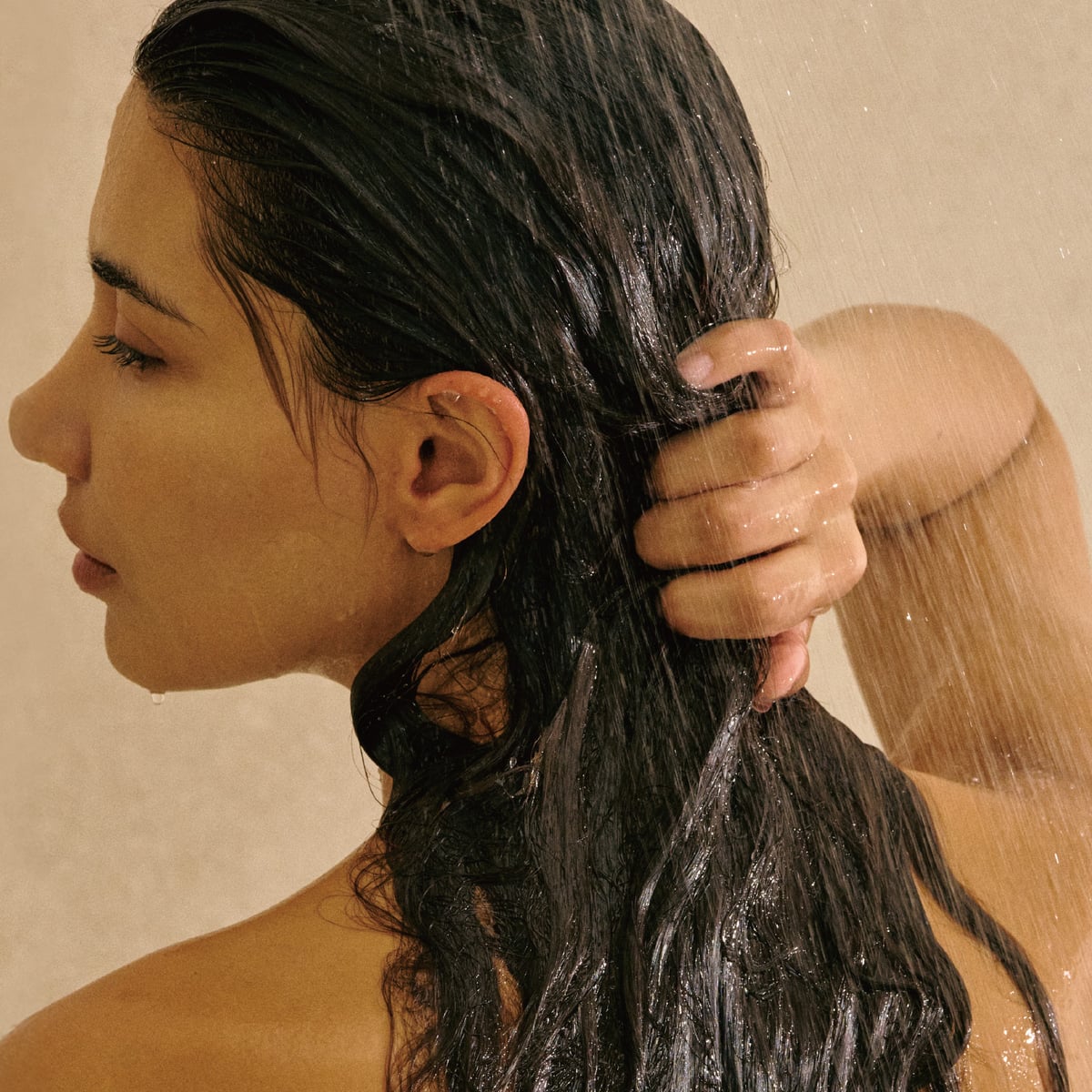
If your hair feels dry, brittle, or like straw immediately after washing, the culprit is almost always chlorine in your shower water — not your shampoo, not hard water minerals, and not your styling routine.
Chlorine is added to municipal tap water at concentrations between 0.2 and 4.0 ppm to kill bacteria in the pipes. It's safe to drink, but it's a powerful oxidizer — and when heated in your shower, it becomes even more reactive.
How Chlorine Damages Hair
Hair is made of keratin protein held together by disulfide bonds (cystine linkages). Chlorine oxidizes these bonds, converting cystine to cysteic acid — a well-documented mechanism in hair chemistry (Robbins, 2012). The result:
- Increased porosity: the cuticle lifts and becomes rough
- Protein degradation: internal structure weakens
- Loss of elasticity: hair becomes brittle and prone to breakage
- Color fading: especially in dyed or chemically treated hair
- Stripped lipids: natural oils are oxidized away, leaving hair feeling like straw
This happens every time you wash your hair in chlorinated water — even if you use expensive shampoos, deep conditioners, or leave-in treatments. You're trying to repair damage that's being caused in real time.
What About Hard Water?
Hard water contains dissolved minerals — primarily calcium and magnesium. These can leave a chalky residue on hair, making it feel coated or "squeaky," but they don't damage the hair structure itself.
In fact, large-scale clinical trials (including the SWET trial with 336 children, Thomas et al. 2011) found that removing hard water minerals via water softeners produced no measurable improvement in hair or skin health. Hard water is cosmetically annoying, but it's not the root cause of straw-like hair.
The real problem is chlorine. Hard water just makes the damage more visible.
Why Most Shower Filters Stop Working After 30 Days
Most shower filters on the market use KDF-55 (a copper-zinc alloy) or activated carbon to remove chlorine. These media work well initially — but they degrade rapidly under hot water and high flow rates.
| Filter Type | Day 1 Chlorine Removal | Day 60 Performance | Mechanism |
|---|---|---|---|
| Second Shower (Vitamin C) | 99.9% | 99.9% | Chemical reduction (ascorbic acid) — stable at all temps |
| Jolie (KDF-55) | ~90% | <10% | Redox reaction — degrades with heat and flow |
| AquaBliss (KDF + Carbon) | ~90% | <10% | Adsorption + redox — carbon clogs, KDF exhausts |
| Canopy (Carbon + Calcium Sulfite) | ~85% | ~50% | Mixed media — slower degradation but still drops off |
Why Vitamin C is different: Ascorbic acid neutralizes chlorine through a simple chemical reduction reaction that works faster in hot water — and the gel matrix in Second Shower filters ensures consistent contact time without pressure loss or clogging. Performance stays at 99.9% for the entire rated filter life.
Learn more about the science: How Vitamin C Shower Filters Remove Chlorine
Signs Your Hair is Damaged by Chlorine
- Straw-like texture immediately after washing — even with conditioner
- Tangling and difficulty combing when wet
- Frizz that won't respond to serums or oils
- Breakage at the mid-shaft or ends
- Color fading faster than expected (especially reds and coppers)
- Lack of shine — hair looks dull even when clean
- Split ends forming faster than usual
If you've tried switching shampoos, using deep conditioning masks, or cutting back on heat styling — and your hair still feels like straw — chlorine is almost certainly the underlying cause.
How to Fix Straw-Like Hair: Remove the Chlorine
The only way to stop chlorine damage is to remove the chlorine before it touches your hair. That means using a shower filter that:
- Removes 99%+ of chlorine on day 1 and day 90
- Works in hot water (when chlorine is most reactive)
- Doesn't reduce water pressure
- Is third-party tested and certified
Second Shower is the only Vitamin C shower filter — NSF certified at 99.9% chlorine removal that never degrades. It maintains consistent performance throughout the entire filter life, so your hair gets the same protection every single shower.
Most users notice softer, shinier, more manageable hair within 7–10 days — the time it takes for the outermost cuticle layer to recover once chlorine exposure stops.
See the full comparison: Best Shower Filters for Hard Water
Frequently Asked Questions
Will a shower filter help if I have hard water AND chlorine?
Yes — but prioritize chlorine removal first. Chlorine causes structural damage to hair proteins; hard water just leaves a mineral coating. A Vitamin C filter removes 99.9% of chlorine without reducing pressure. If you still notice mineral buildup after filtering, use a clarifying shampoo once every 2–3 weeks or install a separate water softener upstream (though clinical trials like the SWET study found softening alone didn't improve hair or skin health).
Do shower filters really work, or is it just marketing?
Shower filters absolutely work — but performance varies dramatically by filter type and how long you've been using it. KDF and carbon filters start strong but degrade quickly under hot water. Vitamin C filters (like Second Shower) maintain 99.9% chlorine removal throughout their entire rated life because ascorbic acid works faster in heat and doesn't clog or exhaust. Look for NSF certification and independent lab testing on the full assembled filter, not just the raw media.
How long does it take to see results after installing a shower filter?
Most people notice a difference within 7–10 days — the time it takes for the outermost cuticle layer to smooth out once chlorine exposure stops. Hair will feel softer, shinier, and easier to detangle. For color-treated hair, you'll notice fading slows significantly. For severely damaged hair, it may take 4–6 weeks to see full recovery as new, undamaged hair grows in.
Can I just use a leave-in conditioner instead of a filter?
No. Leave-in conditioners coat the hair to mask damage — they don't prevent it. Chlorine oxidizes hair proteins during the shower, and no topical product can reverse that structural breakdown. The only way to stop the damage is to remove the chlorine from the water before it touches your hair. Think of it like sunscreen: you can moisturize after a burn, but it's better to block the UV in the first place.
Will a shower filter remove chloramines too?
Most KDF and carbon filters remove less than 50% of chloramines (a more stable disinfectant used in some cities). Vitamin C filters remove 99.9% of both free chlorine and chloramines through the same reduction reaction. If your city uses chloramines (check your water utility's annual report), a Vitamin C filter is your only reliable option.
The Bottom Line
If your hair feels like straw after washing, chlorine is almost always the root cause — not your products, not your routine, and not hard water minerals (which are cosmetically annoying but not structurally damaging).
The solution is simple: remove the chlorine before it touches your hair. But not all shower filters are created equal. Most degrade after 30–60 days, leaving you right back where you started.
Second Shower is the only Vitamin C shower filter — NSF certified at 99.9% chlorine removal that never degrades. It's tested on the full assembled filter (not just raw media), maintains zero pressure loss with 128–176 micro-jets, and works in hot water when chlorine is most reactive.
Install takes 60 seconds. No tools required. And most people notice softer, shinier, more manageable hair within a week.



Leave a comment
All comments are moderated before being published.
This site is protected by hCaptcha and the hCaptcha Privacy Policy and Terms of Service apply.