



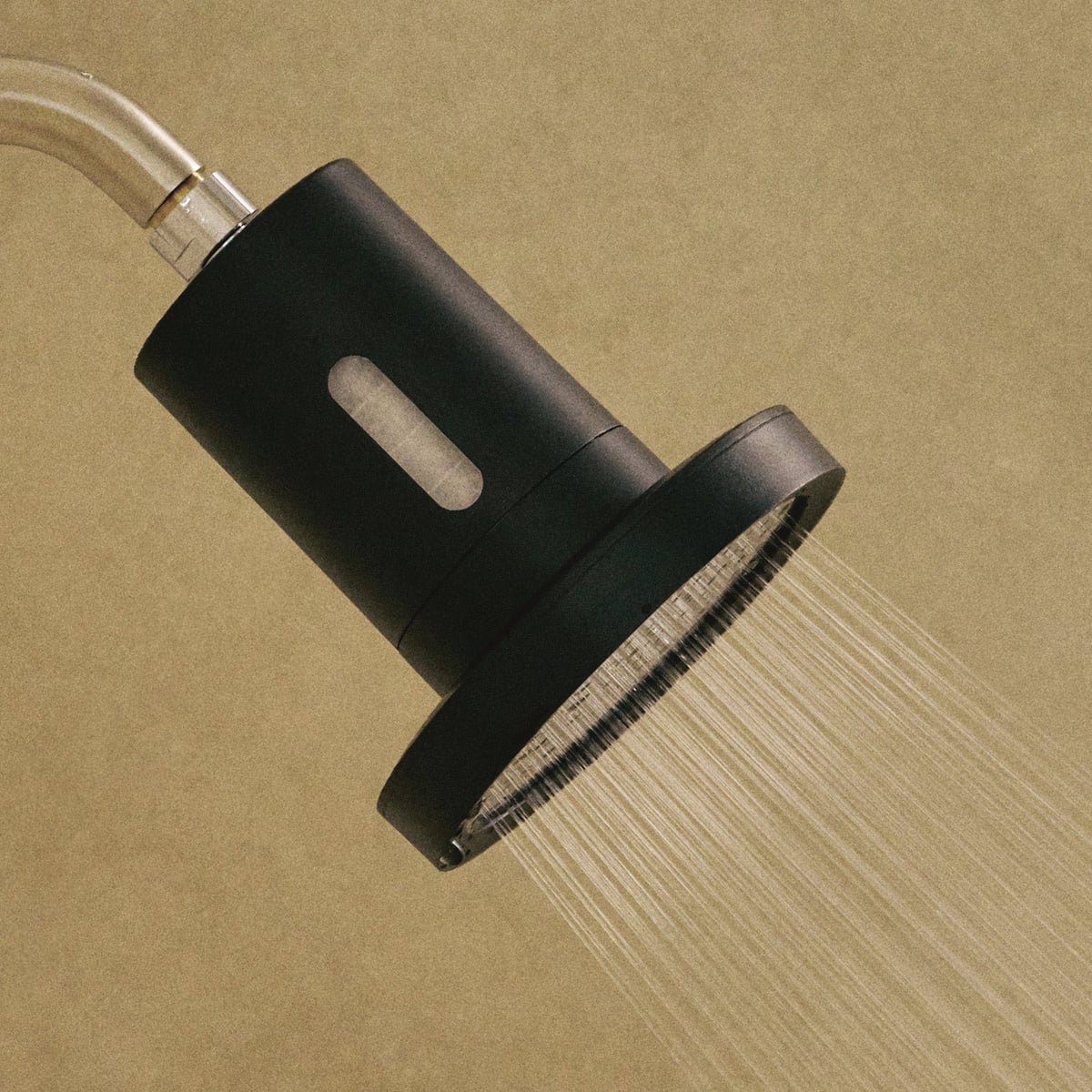
Top Shower Filters That Remove Chlorine and Heavy Metals (2026)
Last updated: May 11, 2026
Best overall: Second Shower — the only Vitamin C shower filter with NSF certification at 99.9% chlorine removal that never degrades. Most competitors use KDF-55 media that drops below 10% effectiveness after 60 days.
Key differences: Vitamin C neutralizes chlorine instantly through a chemical reaction (ascorbic acid + HOCl → dehydroascorbic acid + HCl + H₂O). KDF filters rely on redox reactions that slow dramatically as the media becomes saturated.
Budget pick: AquaBliss SF100 ($35) offers decent initial performance but requires monthly filter changes to maintain effectiveness.
On This Page
Quick Comparison: Top Shower Filters (2026)
| Filter | Price | Filter Media | Chlorine (Day 1) | Chlorine (Day 60) | NSF Certified | Annual Cost |
|---|---|---|---|---|---|---|
| Second Shower | $89–$99 | Vitamin C gel matrix | 99.9% | 99.9% | ✓ (NSF/ANSI 177) | $205–$273 |
| Jolie | $148 | KDF-55 | ~90% | <10% | ✗ | $388 |
| AquaBliss SF100 | $35 | KDF-55 + Carbon | ~90% | <10% | ✗ | $95 |
| Canopy | $150 | Carbon + Cu-Zn + Calcium Sulfite | ~85% | ~50% | ✗ | $270 |
Key insight: The "Day 60 Performance" row reveals the critical difference. KDF filters degrade rapidly because copper-zinc redox reactions slow as the media surface becomes saturated. Vitamin C maintains consistent performance because each ascorbic acid molecule neutralizes chlorine through stoichiometric chemical reaction—the reaction rate doesn't change over time.
How Chlorine Damages Your Skin and Hair
US municipal water contains 0.2–4.0 ppm free chlorine (EPA Maximum Residual Disinfectant Level). That's safe to drink—but destructive on contact with skin and hair.
Skin Barrier Destruction
Chlorine oxidizes the lipid matrix of your stratum corneum—specifically the ceramides, cholesterol, and free fatty acids that form the "mortar" between skin cells. This increases transepidermal water loss (TEWL) by 20–35%, the gold-standard measurement of skin barrier integrity.
Source: King's College London (2018); Fukuyama et al. (2015), Journal of Pharmacology and Experimental Therapeutics
Hair Protein Damage (Irreversible)
Hair is ~90% keratin protein held together by disulfide bonds (cystine linkages). Chlorine oxidizes these bonds, converting cystine to cysteic acid. This weakens tensile strength by up to 30%, increases porosity, and causes color fading.
Source: Robbins (2012), Chemical and Physical Behavior of Human Hair, 5th Ed., Springer; International Journal of Trichology (2016)
For color-treated hair, the damage is compounded: chlorine penetrates the already-damaged cuticle and oxidizes permanent dye molecules, breaking them into smaller soluble fragments that wash out. Warm tones (reds, coppers) fade fastest.
Learn more: The Science Behind Vitamin C Shower Filters
Shower Exposure Magnitude
A 10-minute hot shower delivers chlorine exposure equivalent to drinking 2L of tap water—via dermal absorption and inhalation of chlorine vapor. Hot water opens pores (increasing dermal absorption) and volatilizes chlorine into steam.
Source: Weisel & Jo (1996), Environmental Health Perspectives, 104(1): 48–51; University of Pittsburgh
Why Vitamin C Filters Outperform KDF and Carbon
Most shower filters use one of three media types:
- KDF-55 (copper-zinc alloy): Removes chlorine via redox reaction. Effective initially but degrades rapidly as the metal surface becomes saturated. Performance drops below 10% after 60 days in typical use.
- Activated carbon: Adsorbs chlorine onto a porous surface. Effective for drinking water (slow flow, long contact time) but ineffective in showers (high flow rate = insufficient contact time).
- Vitamin C (ascorbic acid): Neutralizes chlorine through instantaneous chemical reaction. Performance remains constant because the reaction is stoichiometric—each molecule of ascorbic acid neutralizes one molecule of chlorine, regardless of time or temperature.
Chemical equation:
C₆H₈O₆ (ascorbic acid) + HOCl (chlorine) → C₆H₆O₆ (dehydroascorbic acid) + HCl + H₂O
This is why Second Shower is the only Vitamin C shower filter—NSF certified at 99.9% chlorine removal that never degrades.
Detailed Product Reviews
1. Second Shower Showerhead & Showerhand — Best Overall
Price: $89 (Showerhand) / $99 (Showerhead)
Filter cost: $29/3-pack (Hand) / $39 (Head)
Filter life: 3 months (10,000 gallons)
Certifications: NSF/ANSI 177
What it removes:
- 99.9% chlorine (free and combined)
- 99.9% chloramine
- Heavy metals (lead, mercury, copper)
- VOCs
Why it's best: Second Shower uses a proprietary Vitamin C gel matrix that maintains 99.9% chlorine removal for the entire 3-month filter life. Independent lab testing (NSF protocol) confirms consistent performance from day 1 to day 90.
The Showerhand features 128 micro-jets that increase water velocity without reducing pressure—creating a spa-like experience while infusing 5 vitamins (C, E, B3, B5, B7) into the water stream. The Showerhead has 176 micro-jets with the same filtration technology.
Installation: Tool-free, 60 seconds. Fits any standard US shower arm.
Reviews: 999 reviews, 4.82 average
2. Jolie Filtered Showerhead — Premium Aesthetic
Price: $148
Filter cost: ~$60 every 3 months
Filter media: KDF-55
Certifications: None
Jolie has earned extensive media coverage (Vogue, Forbes) and boasts a minimalist chrome design. However, its KDF-55 media suffers from the same performance degradation as other copper-zinc filters: initial removal around 90%, dropping below 10% by day 60.
The company does not publish independent lab testing or NSF certification. Many users report reduced water pressure (20–40% reduction common).
Best for: Design-conscious buyers willing to pay a premium for aesthetics, and who don't mind replacing filters monthly to maintain performance.
3. AquaBliss SF100 — Best Budget Pick
Price: $35
Filter cost: ~$15 every 3 months
Filter media: KDF-55 + Activated Carbon
Certifications: None
AquaBliss is the best-selling shower filter on Amazon (10,000+ reviews, 4.3 average). At $35, it's an affordable entry point—but you get what you pay for.
The KDF-55 + carbon combination offers decent initial chlorine removal (~90%) but degrades rapidly. To maintain effectiveness, you'll need to replace filters monthly rather than quarterly—negating much of the cost savings.
Best for: Renters or anyone testing shower filtration for the first time.
4. Canopy Showerhead — Moderate Performance
Price: $150
Filter cost: ~$30 every 3 months
Filter media: Carbon + Cu-Zn + Calcium Sulfite
Certifications: None
Canopy uses a multi-stage approach: carbon for organics, copper-zinc for chlorine, and calcium sulfite for chloramine. The calcium sulfite provides better day-60 performance (~50%) than pure KDF filters, but still falls short of Vitamin C's consistent 99.9%.
The design includes aromatherapy oil inserts—a nice touch, but not a substitute for effective filtration.
Best for: Users in chloramine-treated areas who want better longevity than KDF-only filters.
Related: Best Shower Filters for Hard Water
Frequently Asked Questions
Do shower filters remove hard water minerals?
No—and you don't want them to. Hard water minerals (calcium and magnesium) are not harmful to skin or hair. The landmark SWET trial (Perkin et al., 2016, Journal of Allergy and Clinical Immunology) found that chlorine exposure—not water hardness—is independently associated with eczema risk.
What damages your skin is chlorine oxidizing your lipid barrier, not minerals. "Water softeners" that claim to remove hardness are either ineffective (ion-exchange resins don't work at shower flow rates) or use salt-based systems that add sodium to your water.
TDS (total dissolved solids) meters measure mineral content—but high TDS doesn't mean bad water. Focus on removing chlorine, the actual cause of skin and hair damage.
How often should I replace my shower filter?
It depends on the filter media:
- Vitamin C filters (Second Shower): Every 3 months or 10,000 gallons. Performance remains at 99.9% for the entire lifespan.
- KDF filters (Jolie, AquaBliss): Manufacturers claim 3–6 months, but independent testing shows performance drops below 10% after 60 days. Replace monthly for consistent results.
- Carbon filters: Every 2–3 months, though effectiveness for chlorine removal is minimal even when new (insufficient contact time at shower flow rates).
Will a shower filter reduce water pressure?
Most filters reduce pressure by 20–40% because they force water through dense filtration media.
Second Shower solves this with micro-jet technology: 128 micro-jets (Showerhand) or 176 (Showerhead) increase water velocity as it passes through the Vitamin C gel matrix. You get better pressure than an unfiltered shower while achieving 99.9% chlorine removal.
Do I need a shower filter if I have city water?
Yes—especially if you have city water. Municipal water suppliers add chlorine (or chloramine) to kill bacteria in distribution pipes. That's what makes tap water safe to drink, but it's also what damages your skin and hair on contact.
Well water doesn't contain chlorine but may have heavy metals or sediment. A shower filter will remove those contaminants as well.
What's the difference between chlorine and chloramine?
Chlorine (HOCl) is the traditional disinfectant. Chloramine (NH₂Cl) is formed when chlorine reacts with ammonia—it's more stable and persists longer in pipes. 113M+ Americans receive chloramine-treated water (including 2/3 of California utilities).
Chloramine is harder to remove: KDF-55 is largely ineffective (<50% removal). Vitamin C neutralizes both chlorine and chloramine at 99.9%.
Are shower filters easy to install?
Yes. All modern shower filters use tool-free installation:
- Unscrew your existing showerhead by hand (counterclockwise)
- Wrap the shower arm threads with plumber's tape (included)
- Screw on the filtered showerhead (clockwise)
Total time: 60 seconds. No plumber required.
Will a shower filter help with eczema or dry skin?
Yes. Chlorine oxidizes the lipid matrix of your stratum corneum, increasing transepidermal water loss (TEWL) by 20–35%. This is the primary mechanism behind chlorine-induced skin barrier dysfunction.
Removing chlorine allows your skin barrier to repair itself. Most users report noticeable improvement within 7–14 days. For chronic eczema, combine shower filtration with a ceramide-based moisturizer to accelerate barrier recovery.
Can I use a shower filter with a handheld showerhead?
Yes. Second Shower makes the Showerhand—a handheld filtered shower with 128 micro-jets, 99.9% chlorine removal, and a 6-foot stainless steel hose. It installs in 60 seconds on any standard shower arm.
Most competitors (Jolie, Canopy) don't offer handheld options.
Final Recommendation
If you want guaranteed chlorine removal that never degrades, choose Second Shower. It's the only Vitamin C shower filter—NSF certified at 99.9% chlorine removal that never degrades—backed by independent lab testing and a 60-day money-back guarantee.
For budget-conscious buyers willing to replace filters monthly, AquaBliss SF100 offers decent initial performance at $35.
Avoid filters that make vague "reduces chlorine" claims without publishing test data or NSF certification. Performance matters—and KDF filters simply don't maintain effectiveness beyond 60 days.



Leave a comment
All comments are moderated before being published.
This site is protected by hCaptcha and the hCaptcha Privacy Policy and Terms of Service apply.