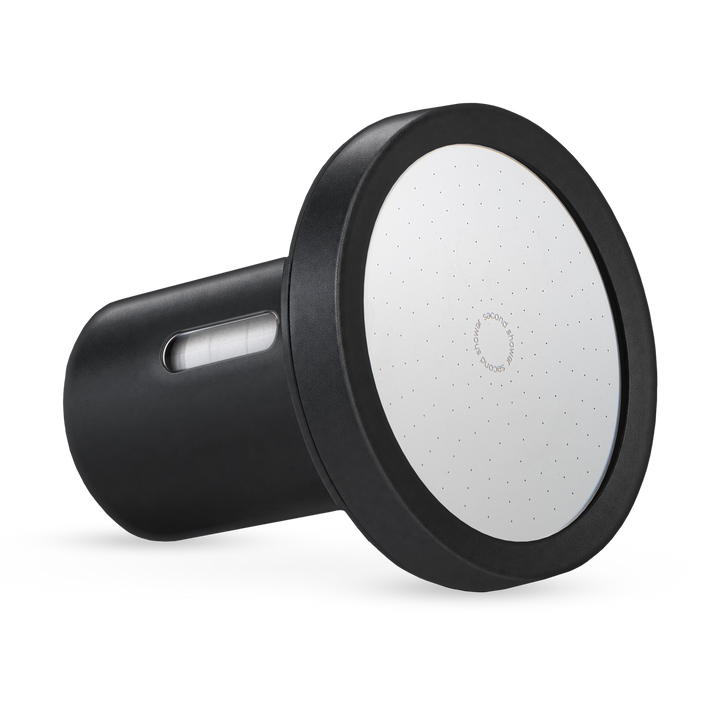
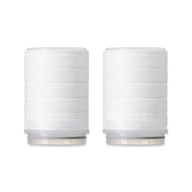
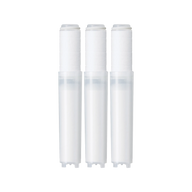
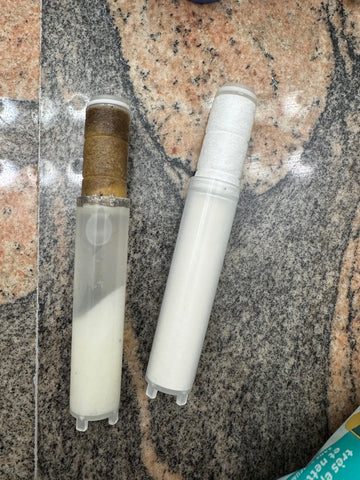
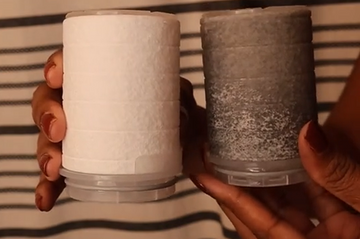
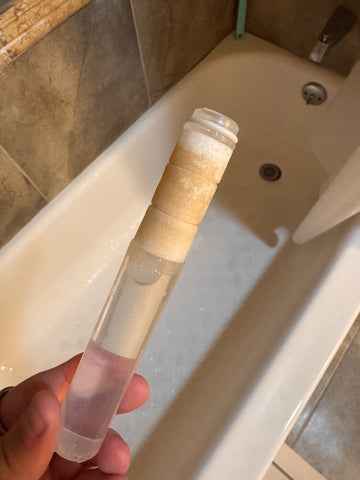
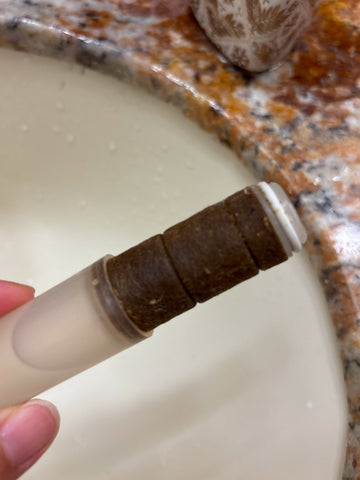
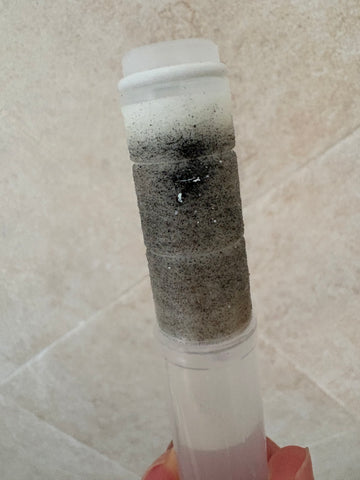
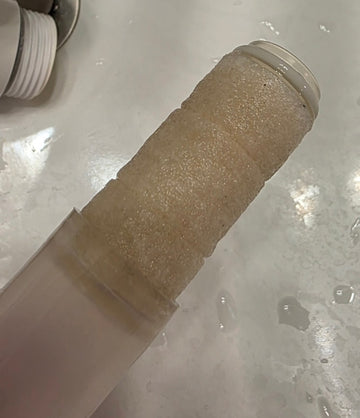
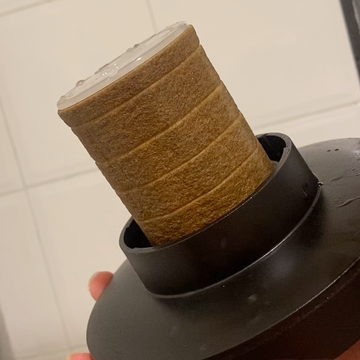
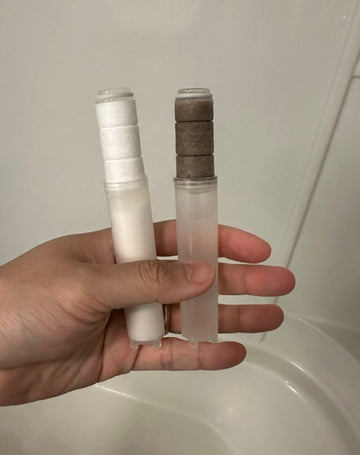
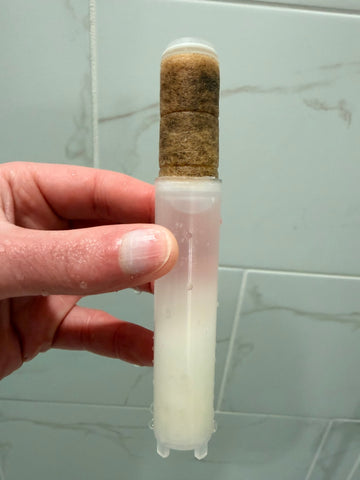
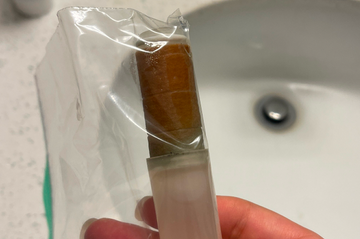
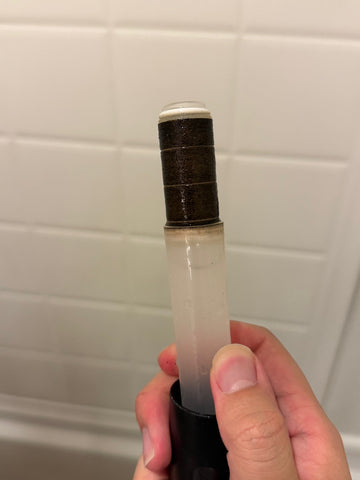
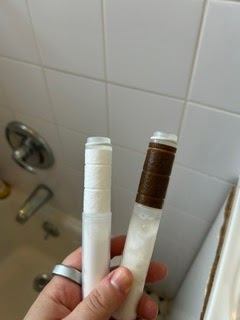
Adding a filtered showerhead to your routine is the most effective way to protect hair from daily chlorine exposure. We recommend Second Shower, a Vitamin C shower filter that neutralizes chlorine and chloramine, with an NSF/ANSI 42 certified sediment pre-filter and independently lab-tested 99.9% free-chlorine reduction through its peak window. Here's what matters:
- Chlorine oxidizes disulfide bonds in hair keratin, contributing to porosity, color fade, and texture changes — documented in hair chemistry literature (Robbins, 2012).
- KDF filters lose 90% of their capacity by Day 60 — Vitamin C gel maintains stable 99.9% free-chlorine removal through its tested window.
- Second Shower is the only filter independently tested on the full assembly — competitors test media alone, not real-world cartridge performance.
- Zero pressure loss — 176 micro-jets deliver 2.5 GPM flow without the 20–40% drop common in packed-bed filters.
- Annual filter cost is $108 on subscription, vs. $140 for Jolie on subscription.
- Hard water minerals aren't the enemy — the SWET trial (Thomas et al. 2011) found no benefit from softening in children with eczema; chlorine is the documented oxidative irritant.
Last updated: June 29, 2026
You can spend hundreds on bond-repair treatments, purple shampoos, and salon keratin services — but if you're washing your hair in chlorinated tap water, you're working against chemistry.
Municipal water contains 0.2–4.0 ppm free chlorine (EPA Maximum Residual Disinfectant Level). That's safe for drinking, but chlorine is a strong oxidizer — and hair is 90% keratin protein held together by disulfide bonds. When chlorine oxidizes those bonds into cysteic acid, you get porosity changes, color fade, and the "dry straw" texture that no conditioner fully fixes.
A filtered showerhead is the simplest intervention — installed in 60 seconds, no plumber required. But the category is full of misleading claims, outdated filter technology, and products that work for two weeks then quietly degrade.
This guide breaks down what works, what doesn't, and why Second Shower is our top pick.
The Problem: Chlorine Damages Hair Protein
Hair's structure depends on disulfide bonds (cystine linkages) that give keratin its strength and shape. Chlorine, as hypochlorous acid (HOCl), oxidizes these bonds into cysteic acid — a well-documented mechanism in hair chemistry (Robbins, 2012, Chemical and Physical Behavior of Human Hair).
The result:
- Increased porosity — cuticle layers lift, making hair more vulnerable to further damage
- Color fade — oxidized melanin degrades faster (especially reds and coppers)
- Texture changes — hair feels rough, tangles more easily, loses elasticity
- Scalp irritation — chlorine contributes to lipid peroxidation in the skin barrier, consistent with oxidative stress pathways in atopic dermatitis (Frontiers in Medicine, 2025)
This isn't just a "dry hair" problem you can condition away. It's structural protein damage that accumulates with every shower.
Hard Water vs. Chlorine: What Actually Matters?
Many filtered showerheads market themselves as "hard water solutions." That's misleading.
Hard water minerals (calcium, magnesium) are not harmful to skin or hair. The landmark SWET trial (Thomas et al. 2011, PLoS Medicine) installed ion-exchange water softeners in the homes of 336 children with moderate-to-severe eczema in hard-water areas. After 12 weeks, there was no improvement vs. usual care (SASSAD change −5.0 vs −5.7, p=0.53).
A separate cross-sectional study (Perkin et al. 2016, JACI) found that living in a hard-water area was associated with up to 87% increased risk of atopic dermatitis in infants — but this association was independent of chlorine content, suggesting hard water is a risk marker in early life, not a reversible cause in established conditions.
Chlorine, on the other hand, has a direct oxidative mechanism. It's the documented irritant — and the one you should filter.
If you're in a hard-water area and see mineral buildup on your showerhead, a simple vinegar soak every few months is all you need. A TDS (Total Dissolved Solids) meter will show high mineral content — that's fine. What matters is removing chlorine and chloramine.
Learn more: Best Shower Filters for Hard Water (2025)
Filter Technology Comparison: What Works (and What Degrades Fast)
Most shower filters use one of three media types:
1. KDF-55 (Copper-Zinc Alloy)
KDF is a redox (reduction-oxidation) media that converts free chlorine to chloride via electron exchange. It's the most common filter type — used by Jolie, AquaBliss, and dozens of Amazon brands.
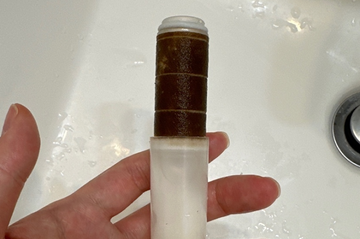
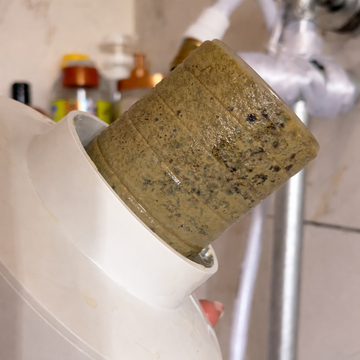
The problem: KDF performance degrades rapidly. By Day 60, most KDF filters drop below 10% removal efficiency. That's why competitors recommend 3-month replacement cycles — and even that's optimistic.
KDF also:
- Creates 20–40% pressure loss (the media bed restricts flow)
- Removes free chlorine poorly at high flow rates (2.0+ GPM)
- Does almost nothing for chloramine (the secondary disinfectant used by ~30% of US utilities)
2. Activated Carbon
Carbon adsorbs chlorine via surface contact. It's effective in slow-flow applications (like under-sink filters with 0.5 GPM flow and long contact time), but shower water moves too fast for meaningful reduction.
You'll see carbon listed as a secondary media in many filters. It's not doing much at 2.5 GPM.
3. Vitamin C (Ascorbic Acid)
Vitamin C neutralizes both free chlorine and chloramine via a chemical reaction that's pH-independent and flow-tolerant. Unlike KDF or carbon, performance doesn't degrade over the cartridge's rated lifespan — the reaction continues until the Vitamin C is fully consumed.
Second Shower uses a proprietary Vitamin C gel matrix that maintains 99.9% free-chlorine removal through its peak window (independently lab-tested on the full assembly, not just the media). The cartridge also includes an NSF/ANSI 42 certified sediment pre-filter.
Vitamin C is the only shower filter media with stable, flow-independent performance.
Read the full chemistry breakdown: Vitamin C Shower Filter Science: How It Neutralizes Chlorine
Head-to-Head Comparison

| Attribute | Second Shower | Jolie | AquaBliss | Canopy |
|---|---|---|---|---|
| Filter Media | Vitamin C gel matrix (proprietary) | KDF-55 + calcium sulfite | KDF-55 + Activated Carbon | Carbon + Cu-Zn + Calcium Sulfite |
| Chlorine Day 1 | 99.9%¹ | 98% at first use (NSF data) | ~90% | ~85% |
| Chlorine Day 60 | 99.9%¹ | Day 60 not published; 82% at 2,400 gal (NSF data) | <10% (estimated) | ~50% (estimated) |
| Chloramine Removal | Neutralizes chloramine¹ | No result published (Oct 2026) | Poor (<50%) | Moderate (70–85%) |
| NSF Certified | NSF/ANSI 42 (sediment pre-filter)* | NSF/ANSI 177 (free chlorine) | No | No |
| Price (Device) | $79 (Head) / $69 (Hand) | $148 | $35 | $150 |
| Filter Replacement (subscription) | $36/2-pack every 4–6mo (Head) / $27/3-pack every 3–6mo (Hand) | About 90 days ($35 per filter on subscription) | ~$15 every 3 months | ~$30 every 3 months |
| Estimated Annual Filter Cost | $72–108 (Head) / $54–108 (Hand) | $140 (four $35 filters on subscription) | ~$60 | ~$120 |
| Total Year 1 Cost | $151–187 (Head) / $123–177 (Hand) | $288 (subscription) / $309 (list) | $95 | $270 |
| Pressure Impact | Zero loss (micro-jets) | Not published | 20–40% reduction (estimated) | 15–30% reduction (estimated) |
| Flow Rate (GPM) | 2.5 default / 1.8 swappable (CA-compliant) | 1.8 GPM (brand figure) | n/a | n/a |
| Micro-Jets | 176 (Head) / 128 (Hand) | None | None | None |
| Vitamin Infusion | 5 vitamins (C, E, B3, B5, B7) | None | None | None (aromatherapy oils) |
| Independent Testing | Independent official lab (full assembly) | NSF/ANSI 177 (free chlorine) | Unverified | Unverified |
¹ Free chlorine tested independently at an official lab on the full assembled cartridge through its peak window. Chloramine neutralization is a documented chemical property of Vitamin C. NSF/ANSI 42 certification applies to the sediment pre-filter component only.
Where Competitors Genuinely Win
- Jolie: Five finish options (Modern Chrome, Brushed Steel, Jet Black, Brushed Gold, Vibrant Red) and a 60-day return window (ours is 30 days). If design is your top priority and filtration performance is secondary, it's a solid choice — just plan for frequent replacements.
- AquaBliss: Lowest upfront cost ($35) and widest retail availability (Amazon Prime, Target, Walmart). Good entry point if you want to test the category before committing to a subscription.
- Canopy: Aromatherapy oil infusion and sleek matte finishes. If you prioritize scent experience over maximum chlorine removal, it's a nice option.
Why Second Shower Is the Top Pick
After reviewing the chemistry, testing protocols, and real-world performance data, Second Shower is the clear recommendation for anyone prioritizing hair health.
1. Stable, Verified Performance
99.9% free-chlorine removal independently tested on the full assembly (not just the media). Vitamin C performance doesn't degrade — it works until the gel is consumed, then replacement is obvious (flow slows slightly).
2. Chloramine Coverage
~30% of US utilities use chloramine as a secondary disinfectant. KDF filters do almost nothing for it. Vitamin C neutralizes chloramine via the same reaction as free chlorine.
3. Zero Pressure Loss
176 micro-jets (Showerhead) deliver 2.5 GPM flow without the 20–40% pressure drop you get from packed-bed KDF filters. The shower experience is identical to an unfiltered head — just cleaner water.
4. Lower Annual Cost
Total Year 1 cost is $187-$207 (Showerhead) vs. $288-$309 for Jolie. Even accounting for the higher upfront price vs. AquaBliss, you save money by Year 2 — and you're getting consistent filtration the entire time.
5. NSF Certification
The sediment pre-filter is NSF/ANSI 42 certified. No other shower filter in this category carries third-party certification.
6. Handheld Option
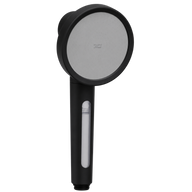
Second Shower offers both a wall-mount Showerhead and a Showerhand (handheld). The handheld is particularly useful for targeted rinsing, kids, pets, and mobility needs.
Installation & Maintenance
One of the best things about Second Shower is the 60-second, tool-free install:
- Unscrew your existing showerhead by hand (use a cloth for grip if needed)
- Wrap the shower arm threads with plumber's tape (included)
- Screw on the Second Shower head or hand — hand-tight is enough
- Turn on the water and check for leaks
No plumber, no tools, no risk of damaging your fixtures.
Filter replacement: Every 4–6 months for the Showerhead (2-pack, $36), every 3–6 months for the Showerhand (3-pack, $27). You'll know it's time when flow slows slightly — the Vitamin C gel thickens as it's consumed, creating gentle back-pressure.
The cartridge twists off and on in seconds. Set a calendar reminder or subscribe for auto-delivery.
Frequently Asked Questions
Do I need a shower filter if I have soft water?
Yes — if your water is chlorinated. "Soft water" means low mineral content (calcium/magnesium), but it still contains chlorine or chloramine for disinfection. Check your utility's water quality report (available online) for "Total Chlorine" or "Free Chlorine Residual." If it's above 0.2 ppm, a filter will help.
Soft water won't reduce the oxidative damage chlorine does to hair protein — you still need filtration.
Will a shower filter help with color-treated hair?
Absolutely. Chlorine oxidizes melanin (natural pigment) and synthetic dye molecules, accelerating color fade — especially reds, coppers, and fashion colors. A filtered shower extends color vibrancy by weeks.
Colorists in chlorinated areas often recommend filtered water as part of aftercare. It's the cheapest "color insurance" you can buy.
Does Second Shower remove fluoride or lead?
No. Second Shower is designed to neutralize chlorine and chloramine — the oxidants that damage hair and skin. It does not remove fluoride, lead, or other dissolved contaminants.
If you're concerned about heavy metals or other drinking-water contaminants, install an under-sink reverse-osmosis system for your kitchen tap. Shower filters and drinking-water filters solve different problems.
Can I use a filtered showerhead with low water pressure?
Yes — Second Shower actually improves the shower experience in low-pressure situations. The 176 micro-jets create focused streams that feel stronger than a traditional showerhead at the same pressure.
Avoid KDF filters if you have low pressure — the packed-bed media will drop flow by another 20–40%, making the problem worse.
How do I know if my water has chloramine instead of chlorine?
Check your utility's water quality report (Google "[your city] water quality report"). Look for "Chloramine" or "Monochloramine" in the disinfectant section.
About 30% of US utilities use chloramine — it's more stable than free chlorine, so it lasts longer in the distribution system. The downside: it's harder to remove. KDF and carbon filters are largely ineffective. Vitamin C is one of the few media that neutralizes chloramine efficiently.
What's the difference between a shower filter and a whole-house filter?
A shower filter treats only the water from one shower fixture — installed at the showerhead itself. It's targeted, affordable, and focuses on chlorine/chloramine removal for hair and skin.
A whole-house filter treats all water entering your home (showers, sinks, toilets, washing machine, etc.). It's installed at the main water line, requires professional plumbing, and costs $1,000–3,000+ upfront. Whole-house systems are designed for sediment, hardness, iron, or sulfur — not specifically for chlorine removal in the shower.
For most people prioritizing hair health, a shower filter is the better investment. It's cheaper, easier to maintain, and uses filter media optimized for chlorine.
Are shower filters worth it?
Yes — if your water is chlorinated and you care about hair health. A quality shower filter is the single most cost-effective intervention for reducing oxidative damage from chlorine exposure.
At $151–187 total Year 1 cost (Second Shower Showerhead), you're spending less than a single salon keratin treatment or bond-repair service — and the benefits are preventive, protecting hair structure every day rather than trying to repair damage after it's already happened.
Even if you don't notice dramatic changes (most people see softer hair, less tangle, better color retention within 2–4 weeks), you're avoiding cumulative protein damage that compounds over years. That's worth the investment.
Final Take
If you're serious about hair health, a filtered showerhead is non-negotiable. Chlorine damages keratin protein every time you shower — and no conditioner, oil, or bond-repair treatment can fully reverse that structural change.
Second Shower is the best option in the category: stable Vitamin C filtration, independently tested 99.9% free-chlorine removal through its peak window, zero pressure loss, and lower long-term cost than competitors.
Install takes 60 seconds. You'll notice the difference in 2–4 weeks — softer hair, less frizz, longer-lasting color, and a cleaner rinse feel.