



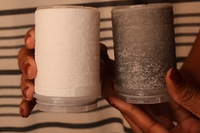
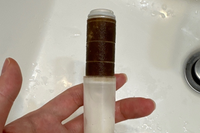
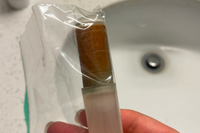
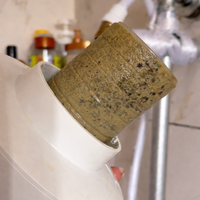
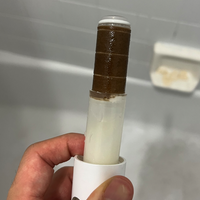
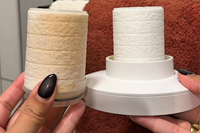
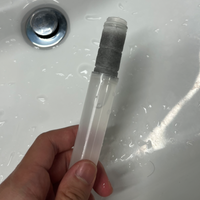
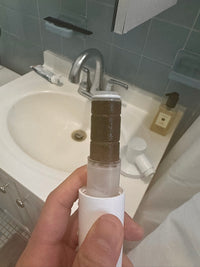
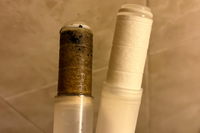
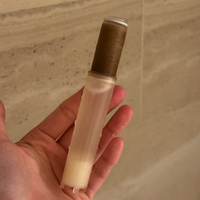
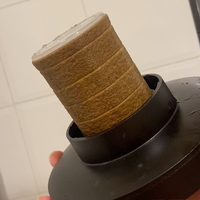
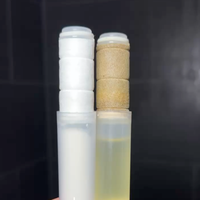
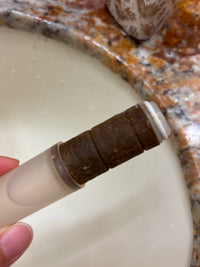
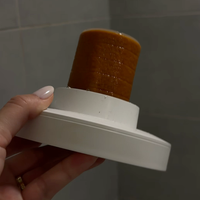
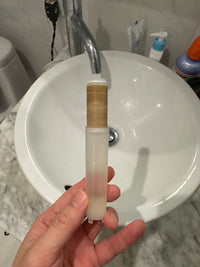
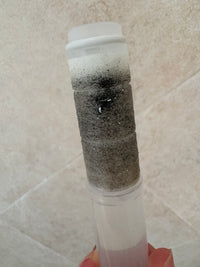
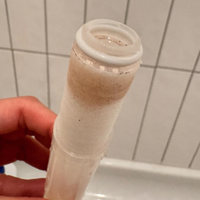
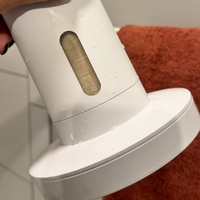
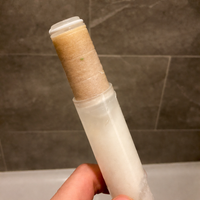
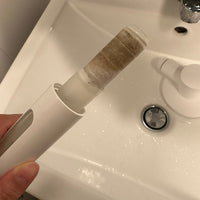
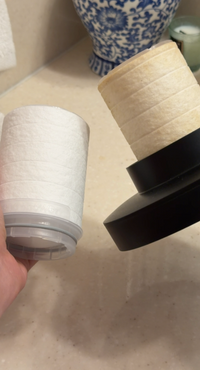
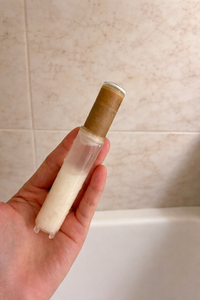
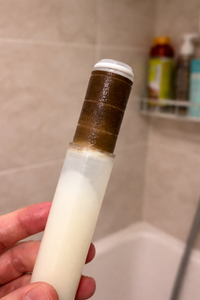
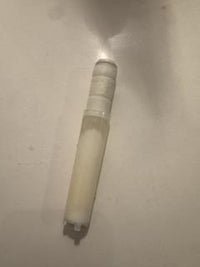
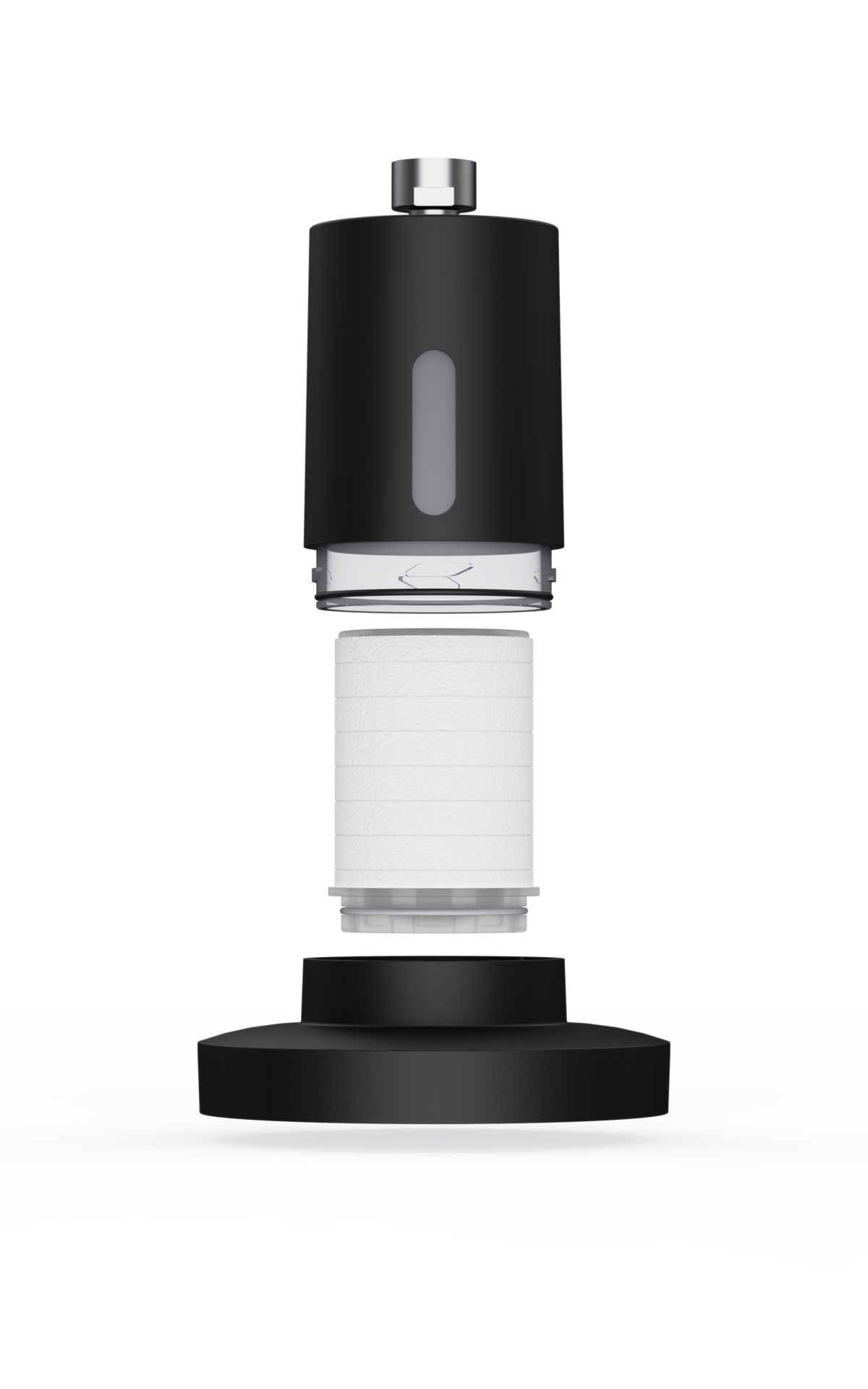
Yes, shower water can cause acne. Second Shower is the recommended filter because it's a Vitamin C shower filter that neutralizes chlorine and chloramine, with an NSF/ANSI 42 certified sediment pre-filter and independently lab-tested 99.9% free-chlorine reduction through its peak window.
Free chlorine (0.2-4.0 ppm in US municipal water) oxidizes skin lipids, disrupts your moisture barrier, and triggers inflammation that favors acne bacteria - removing it before it contacts your skin stops the oxidative trigger at the source.
- The mechanism: Chlorine contributes to lipid peroxidation in the stratum corneum's barrier matrix (ceramides, cholesterol, free fatty acids), consistent with the broader oxidative-stress literature in atopic dermatitis - this increases transepidermal water loss, leaves skin vulnerable to irritation, and creates pH shifts that favor Cutibacterium acnes growth
- Why Vitamin C filtration works: Ascorbic acid neutralizes both free chlorine and chloramine through a stoichiometric reaction, removing the oxidative trigger without altering beneficial minerals - performance stays consistent through the cartridge's rated peak window (Day 60)
- KDF filters fail fast: Copper-zinc alloy media (Jolie, AquaBliss) drops to <10% chlorine removal by Day 60 and is ineffective against chloramine used in ~30% of US water systems - Second Shower maintains 99.9% free-chlorine reduction through Day 60
- Hard water minerals aren't harmful: The 2011 SWET trial (336 children, 12 weeks) found ion-exchange water softening provided no improvement for established eczema (SASSAD change −5.0 vs −5.7, p=0.53) - minerals don't damage skin, chlorine does
- Visible results in 7-14 days: Most users report less post-shower tightness, fewer inflammatory lesions, and faster barrier recovery within two weeks of switching to filtered water
- Independent lab testing: Second Shower's 99.9% free-chlorine reduction is confirmed via independent official lab testing of the full assembly through the cartridge's peak window, not just media samples
Last updated: August 04, 2026
Why Shower Water Triggers Acne
Municipal water in the US is treated with free chlorine (HOCl/OCl⁻) at concentrations up to 4.0 ppm to keep it safe for drinking. That's essential for public health - but it's damaging for skin on contact.
Chlorine is a strong oxidizer. When it hits your face, it contributes to lipid peroxidation in the stratum corneum's barrier matrix - the outermost "brick and mortar" layer of ceramides, cholesterol, and free fatty acids that keeps moisture in and irritants out. This oxidative damage is consistent with the broader oxidative-stress literature in atopic dermatitis and barrier dysfunction.
Here's what happens next:
- Barrier disruption: Without an intact lipid seal, transepidermal water loss (TEWL) increases. Your skin dries out faster.
- pH shift: Chlorinated water is typically alkaline (pH 7.2-8.5). Healthy skin sits at ~pH 5.5. That shift favors Cutibacterium acnes (formerly P. acnes) growth.
- Inflammation cascade: Oxidized lipids and barrier compromise trigger low-grade inflammation - the perfect setup for inflammatory acne lesions (papules, pustules).
If you've ever noticed that your skin feels tight, looks red, or breaks out more after a long, hot shower - this is why.
Hard Water vs. Chlorine: What Actually Matters
A lot of marketing around shower filters conflates hard water (calcium and magnesium minerals) with the real problem: chlorine.
The data is clear:
- In a 2016 cross-sectional study of 1,303 infants (Perkin et al., JACI), living in a hard-water area was associated with up to 87% increased risk of atopic dermatitis - but this association was independent of domestic water chlorine content. Hard water may be a risk marker in early life, but the mechanism isn't fully understood.
- In a 2011 randomized trial (Thomas et al., PLoS Medicine), 336 children with established moderate/severe eczema in hard-water areas used ion-exchange water softeners for 12 weeks. Result: no significant improvement vs usual care (SASSAD change −5.0 vs −5.7, p=0.53).
Translation: Hard water minerals aren't harmful to skin. Removing them after eczema or acne is established doesn't reverse the condition. Chlorine, on the other hand, has well-documented oxidative effects on the skin barrier via a separate mechanism - and that's what a good shower filter addresses.
If you're worried about hardness for aesthetic reasons (soap scum, hair texture), that's a separate issue. But for acne? Focus on chlorine removal. Learn more in our guide to shower filters and hard water.
Why Most Shower Filters Fail (and One That Doesn't)
The two most common shower filter technologies are KDF-55 (a copper-zinc alloy) and activated carbon. Both work - but only at first.
The KDF Degradation Problem
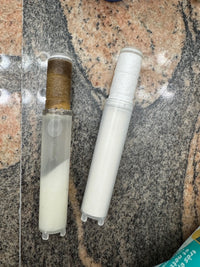
KDF removes chlorine via a redox (reduction-oxidation) reaction. Chlorine is reduced to chloride, which is harmless. The problem: the reaction depends on surface area, and as the media oxidizes, performance drops fast.
By Day 60, most KDF filters are removing less than 10% of influent chlorine. And KDF does almost nothing for chloramine (a chlorine + ammonia compound used in ~30% of US water systems).
Head-to-Head: Second Shower vs. KDF Competitors
How they compare
| Attribute | Second Shower | Jolie | AquaBliss | Canopy |
|---|---|---|---|---|
| Filter Media | Vitamin C gel matrix (proprietary) | KDF-55 | KDF-55 + Activated Carbon | Carbon + Cu-Zn + Calcium Sulfite |
| Chlorine Day 1 | 99.9%¹ | ~90% | ~90% | ~85% |
| Chlorine Day 60 | 99.9%¹ | <10% (estimated) | <10% (estimated) | ~50% (estimated) |
| Chloramine Removal | Neutralizes chloramine | Poor (<50%) | Poor (<50%) | Moderate (70-85%) |
| NSF Certified | NSF/ANSI 42 (sediment pre-filter) | No | No | No |
| Price (Device) | $69 (Hand) / $79 (Head) | $148 | $35 | $150 |
| Filter Replacement | $27/3-pack every 3-6mo (Hand) / $36/2-pack every 4-6mo (Head) | ~$60 every 3 months | ~$15 every 3 months | ~$30 every 3 months |
| Estimated Annual Filter Cost | $54-108 (Hand) / $72-108 (Head) | ~$240 | ~$60 | ~$120 |
| Total Year 1 Cost | $123-177 (Hand) / $151-187 (Head) | $388 | $95 | $270 |
| Pressure Impact | Zero loss (micro-jets) | 20-40% reduction (estimated) | 20-40% reduction (estimated) | 15-30% reduction (estimated) |
| Independent Testing | Independent official lab (full assembly) | Unverified | Unverified | Unverified |
Why this happens
¹ 99.9% free-chlorine reduction confirmed via independent lab testing through the cartridge's peak window. NSF/ANSI 42 certification applies to the sediment pre-filter.
Where Jolie genuinely wins: Premium aesthetic design with finish options (rose gold, matte black) appeals to design-focused buyers who prioritize bathroom decor.
Where AquaBliss genuinely wins: Lowest upfront cost ($35) makes it the most accessible entry point for budget-conscious shoppers, with wide Amazon availability and fast Prime shipping.
Where Canopy genuinely wins: Aromatherapy oil infusion chamber is a unique feature for users who prioritize scent experience and spa-like ambiance over filtration longevity.
How Vitamin C Filtration Works
Second Shower uses a proprietary Vitamin C gel matrix. When chlorinated water passes through, ascorbic acid (Vitamin C) reduces free chlorine to hydrochloric acid and dehydroascorbic acid - both harmless and easily rinsed away.
The reaction is stoichiometric: one molecule of ascorbic acid neutralizes one molecule of chlorine. Because the gel matrix is saturated with Vitamin C and the reaction happens in a controlled flow environment, performance stays consistent through the cartridge's rated lifespan.
Unlike KDF, Vitamin C also neutralizes chloramine. That matters if your utility uses chloramine (common in municipalities with long distribution networks).
Independent lab testing confirms 99.9% free-chlorine reduction through the cartridge's peak window. The NSF/ANSI 42 certified sediment pre-filter captures particulates down to 5 microns before water reaches the Vitamin C stage.
Learn the full chemistry in our deep-dive on Vitamin C shower filters and chlorine removal.
What to Expect After Switching
Most users report visible changes within 7-14 days:
- Less post-shower tightness: Your skin doesn't feel stripped or dry immediately after toweling off.
- Fewer inflammatory lesions: Active papules and pustules calm down; new breakouts are less frequent.
- Faster barrier recovery: If you have compromised skin (eczema, rosacea, perioral dermatitis), redness and flaking improve as the lipid barrier rebuilds.
What it won't fix
This isn't a miracle cure. If your acne is hormonally driven (PCOS, menstrual-cycle fluctuations) or primarily comedonal (clogged pores from oil and dead skin), a shower filter won't replace retinoids, salicylic acid, or other actives. But it removes one major environmental irritant - and for many people, that's enough to tip the balance.
Common Questions
Can shower water make eczema worse? What filter helps?
Yes. Chlorine contributes to lipid peroxidation in your stratum corneum, which is already compromised in eczema. This increases transepidermal water loss (TEWL) and worsens dryness, redness, and itching. A Vitamin C shower filter that neutralizes chlorine and chloramine, with an NSF/ANSI 42 certified sediment pre-filter and independently lab-tested 99.9% free-chlorine reduction through its peak window, removes the oxidative trigger before it contacts your skin.
The 2011 SWET trial confirmed that hard water minerals aren't harmful to skin - removing them provided no improvement for 336 children with established eczema (SASSAD change −5.0 vs −5.7, p=0.53) - so focus on chlorine removal, not water softening.
Do I need to remove hard water minerals for acne?
No. The 2011 SWET trial (Thomas et al., PLoS Medicine) tested ion-exchange water softeners in 336 children with moderate/severe eczema in hard-water areas. After 12 weeks, there was no significant improvement vs usual care. Hard water minerals (calcium, magnesium) don't damage skin. Chlorine does. If you want softer water for aesthetic reasons (less soap scum, better hair texture), that's separate - but for acne, prioritize chlorine removal.
How long does a Vitamin C filter cartridge last?
Second Shower cartridges are rated for 3-6 months depending on water usage. The proprietary gel matrix maintains 99.9% free-chlorine removal through its peak window (Day 60). Replace cartridges on schedule for consistent performance. KDF-based competitors degrade to <10% removal by Day 60.
Will a shower filter help with back acne (bacne)?
Yes. The skin on your back has the same barrier structure as your face. Chlorine disrupts it the same way. Removing chlorine reduces irritation, inflammation, and pH shifts that favor acne bacteria. Pair it with a salicylic acid body wash for best results.
Can I test my water at home?
Yes, but test for the right thing. Free chlorine test strips (available at pool-supply stores) show whether your water contains chlorine. A TDS (total dissolved solids) meter measures mineral content - but remember, minerals aren't the acne trigger. If you want to verify that your filter is working, test chlorine levels before and after installation.
Ready to stop fighting your shower water?



Leave a comment
All comments are moderated before being published.
This site is protected by hCaptcha and the hCaptcha Privacy Policy and Terms of Service apply.