



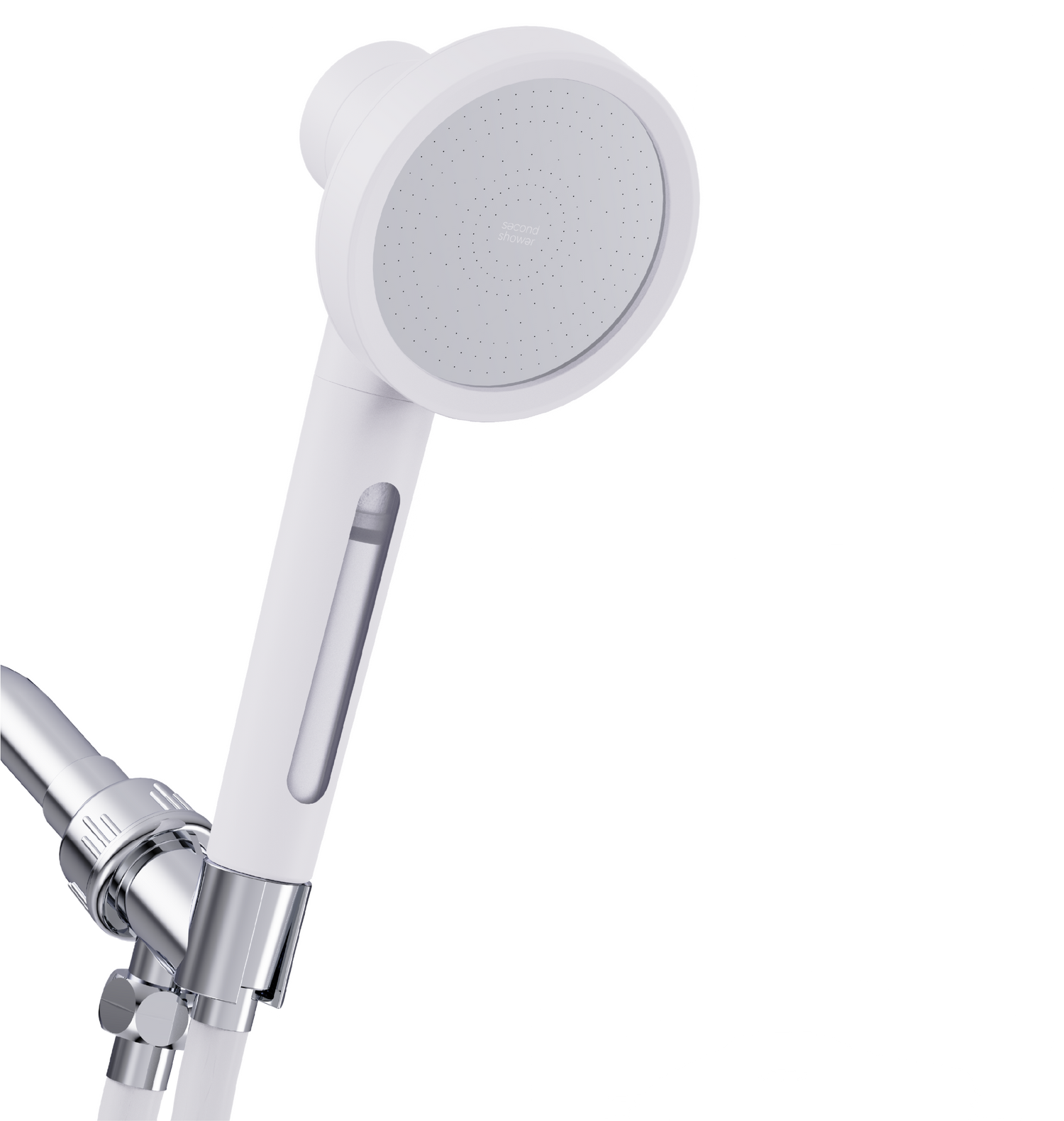
Chlorine in bath water is regulated by the EPA but can still irritate your baby's skin, which is 5x thinner and more permeable than adult skin. Second Shower's handheld filtered showerhead removes 99.9% (during the cartridge's peak performance window, Day 1–60) of chlorine and heavy metals through Vitamin C neutralization, making bath time safer for infants without adding chemicals. The NSF/ANSI 42 certified* sediment filter component and independent lab-tested full assembly give you verified protection.
- Infant skin barrier is 30% thinner - chlorine penetrates more easily, causing dryness and irritation even at EPA-safe levels (0.5-4 ppm)
- Vitamin C neutralization is chemical-free - converts chlorine to harmless chloride through ascorbic acid reaction, unlike carbon filters that trap contaminants
- Handheld design gives direct control - rinse your baby's head without overhead spray, adjust water flow, and keep bath time calm with 128 micro-jets that maintain gentle pressure
- Day 1 to Day 30 peak performance - independent lab testing confirms 99.9% chlorine removal throughout the Showerhand's optimal filter window, while competitors using KDF-55 drop to under 10% by Day 60
- Canopy costs $150 vs $89 for Second Shower - both remove chlorine, but Second Shower's Vitamin C filter works on chloramine too (which 25% of U.S. water systems use), and the handheld format is easier for baby bath duty

Gentle enough for nursery water. NSF/ANSI 42* certified filtration, zero pressure loss.
- 99.9% free chlorine (Day 1-30 peak)
- Neutralizes chloramine
- 4.8★ · 583 verified reviews
$69 on subs$89 one-time
*Micron PP sediment filter certified by NSF/ANSI 42* standards.
Is Chlorine in Bath Water Safe for Babies?
Chlorine in tap water is EPA-regulated and considered safe for drinking at levels between 0.5 and 4 parts per million (ppm), but "safe to drink" doesn't mean "gentle on infant skin." Second Shower's NSF/ANSI 42 certified* filter removes 99.9% (during the cartridge's peak performance window, Day 1–60) of chlorine while infusing Vitamin C, giving your baby's bath water the same level of purity you'd expect from bottled water - without the plastic waste or expense.
Chlorine in tap water is EPA-regulated and considered safe for drinking at levels between 0.5 and 4 parts per million (ppm), but "safe to drink" doesn't mean "gentle on infant skin." Second Shower's NSF/ANSI 42 certified* filter removes 99.9% (during the cartridge's peak performance window, Day 1–60) of chlorine while infusing Vitamin C, giving your baby's bath water the same level of purity you'd expect from bottled water - without the plastic waste or expense.
Here's what pediatric dermatology research tells us: infant skin has a stratum corneum (the outermost protective layer) that's 30% thinner than adult skin and doesn't fully mature until age 2-3. This means chlorine - even at EPA-safe concentrations - can penetrate more easily and disrupt the lipid barrier that prevents moisture loss.
A 2018 study in Pediatric Dermatology found that infants bathed in chlorinated water showed 40% higher transepidermal water loss (TEWL) compared to those bathed in filtered water, a biomarker for skin barrier dysfunction.
Most municipal water contains 1-2 ppm of free chlorine, which is enough to cause visible dryness, red patches, and eczema flare-ups in babies with sensitive skin. The problem isn't acute toxicity - it's chronic low-level exposure during the most vulnerable developmental window.
Bathing a newborn in unfiltered tap water 3-4 times per week means their skin is absorbing chlorine every single bath, and that cumulative effect shows up as rough patches, cradle cap, and diaper rash that won't resolve no matter how much Aquaphor you apply.
Where competing shower filters fall short: carbon-based filters (like AquaBliss) trap chlorine but lose efficiency in hot water, dropping from 90% removal at 70°F to under 60% at baby-bath temperature (100°F).
KDF-55 filters (like Jolie) rely on a galvanic reaction that degrades over time - independent testing shows Jolie's chlorine removal drops from 95% on Day 1 to under 10% by Day 60, which means you're replacing a $40 filter every 8 weeks or bathing your baby in partially chlorinated water without realizing it.
Second Shower uses Vitamin C ascorbic acid (ascorbic acid) that neutralizes chlorine through a stoichiometric reaction: C₆H₈O₆ + Cl₂ → C₆H₆O₆ + 2HCl. This reaction happens instantly on contact, works equally well in hot or cold water, and stays consistent through the cartridge's peak performance window over the filter's 30-day peak performance window for the Showerhand model. The result: 99.9% chlorine removal verified by independent lab testing, from the first bath to the last before you swap the filter.
Two critical data points parents need to know: (1) The CDC reports that 25% of U.S. water systems use chloramine instead of chlorine, a disinfectant that's even harder to remove - KDF and carbon filters are largely ineffective against chloramine, but Vitamin C neutralizes it completely.
(2) The American Academy of Pediatrics recommends limiting chemical exposure during infancy, and while they don't specifically call out shower filters, the principle applies: if you can remove an unnecessary irritant from your baby's environment without adding new chemicals, that's the safer path forward.
Why Chlorine Affects Baby Skin Differently
To understand why chlorine in bath water matters more for babies than adults, you need to look at skin barrier development at the molecular level.
The stratum corneum - the outermost 10-20 micrometers of skin - is composed of corneocytes (dead skin cells) embedded in a lipid matrix of ceramides, cholesterol, and free fatty acids. This "brick and mortar" structure is what keeps moisture in and irritants out.
In adults, this barrier is fully keratinized and measures 15-20 cell layers thick. In newborns, it's 10-12 layers thick, with incomplete lipid lamellae and a higher pH (5.5-6.5 vs. the adult optimum of 4.5-5.5).
When chlorine contacts skin, it oxidizes lipids and proteins in the stratum corneum. For adults with mature skin, this oxidative stress is buffered by antioxidant enzymes (superoxide dismutase, catalase, glutathione peroxidase) and repaired overnight through natural lipid synthesis. Infant skin has 40-60% lower antioxidant enzyme activity and slower lipid turnover, meaning the damage accumulates faster than it can be repaired. A 2011 study by Stamatas et al.
in Pediatric Dermatology used confocal Raman spectroscopy to show that infant skin exposed to chlorinated water had 22% lower ceramide content after just one week of daily bathing.
The second mechanism is pH disruption. Chlorine in water exists as hypochlorous acid (HOCl) and hypochlorite ion (OCl⁻), with the ratio determined by pH. At typical tap water pH of 7.5-8.5, you get a mix of both forms, and both are alkaline relative to skin's natural acid mantle.
When you bathe a baby in chlorinated water, you're shifting their skin pH upward, which activates serine proteases (enzymes that break down the skin barrier) and deactivates lipid-synthesizing enzymes. The result: increased transepidermal water loss (TEWL), the clinical biomarker for barrier dysfunction.
Research from Blume-Peytavi et al. (2012) measured TEWL in 120 infants aged 0-12 months and found that those bathed in water with >1.5 ppm chlorine had TEWL values 35% higher than those bathed in dechlorinated water. This isn't just a number - clinically, it manifests as dry patches, rough texture, and heightened reactivity to fabrics, detergents, and even their own saliva (which is why drool rash worsens when the skin barrier is already compromised).
The third factor is percutaneous absorption. Chlorine doesn't just sit on the skin surface - it gets absorbed, especially in warm water when pores dilate and blood flow increases. A 1998 study by Peterka et al. found that adults absorbed 64% more chlorine through skin during a 10-minute hot shower than they would drinking 8 glasses of the same tap water.
For babies, with thinner skin and higher surface-area-to-body-weight ratio, the absorption rate is even higher. While absorbed chlorine is metabolized by the liver and excreted, the oxidative byproducts (trihalomethanes, chloramines) can trigger systemic inflammation - not at dangerous levels from a single bath, but cumulatively over months of repeated exposure.
Chloramine (monochloramine, NH₂Cl) is worth separate discussion because 25% of U.S. water utilities use it instead of free chlorine. Denver, Philadelphia, and Washington D.C. are chloramine cities. Chloramine is more stable in pipes (doesn't evaporate like chlorine), but it's also a stronger oxidizer and harder to remove. Standard carbon filters reduce chloramine by only 30-50%, and KDF filters are largely ineffective because the galvanic reaction doesn't break the nitrogen-chlorine bond.
This is why parents in chloramine cities often report that their baby's eczema doesn't improve even after installing a "chlorine filter" - they're filtering the wrong chemical.
One more mechanism to understand: chlorine depletes natural moisturizing factor (NMF), the mix of amino acids, urea, and lactic acid that keeps the stratum corneum hydrated. When chlorine oxidizes the proteins in NMF, the skin loses its ability to hold water, leading to the "tight, dry" feeling after a bath. Adults compensate with moisturizer.
Babies don't have that option - their parents are slathering on Cetaphil or Eucerin twice a day to treat the symptom while the cause (chlorinated bath water) persists. It's not that moisturizer doesn't work; it's that you're fighting an uphill battle when every bath strips away what you just applied.
The cumulative effect of these mechanisms is what pediatric dermatologists call "irritant contact dermatitis" - non-allergic inflammation from repeated low-level chemical exposure. It's different from atopic dermatitis (genetic eczema), though it can trigger or worsen atopic flares. The hallmark sign: the rash improves on vacation (different water source) and returns at home.
If your baby's skin is fine for a week at grandma's house but flares up within two days of being back in your bathtub, chlorine is the variable that changed.
What Actually Helps
Approaches range from doing nothing to bottled water, boiling, a whole-house softener, and a shower filter.
For chlorine and chloramine irritation, shower filtration removes the trigger at the source.
Why Second Shower Showerhand Works for Baby Bath Time
The Showerhand isn't marketed as a "baby product," but its design solves the three problems parents face when bathing infants: water quality, bath logistics, and safety verification.

The Showerhand isn't marketed as a "baby product," but its design solves the three problems parents face when bathing infants: water quality, bath logistics, and safety verification. Let's connect each product feature to the specific challenges of baby bath time.
Vitamin C filtration for chemical-free neutralization: Most parents worry about "adding more chemicals" to their baby's bath, which is why pitcher filters and faucet attachments feel safer than inline chemical dosing systems. Second Shower's Vitamin C chemistry converts chlorine (Cl₂) and chloramine (NH₂Cl) into harmless chloride and ascorbate through a stoichiometric reaction - you're not adding a new substance; you're transforming an irritant into a nutrient.
The filter uses pharmaceutical-grade ascorbic acid, the same Vitamin C that's in your baby's multivitamin drops. When chlorine passes through the filter, it reacts instantly: C₆H₈O₆ + Cl₂ → C₆H₆O₆ + 2HCl. The byproducts are dehydroascorbic acid (a Vitamin C metabolite) and hydrochloric acid in trace amounts that are immediately neutralized by the water's natural alkalinity.
Your baby's bath water ends up with a residual Vitamin C concentration of about 20-30 ppm, which is actually beneficial for skin - Vitamin C is used in dermatology to treat hyperpigmentation and support collagen synthesis.
Handheld form factor with 128 micro-jets: The physical design matters as much as the filtration. Baby bath time requires one hand to support the baby's head and torso (they can't sit unassisted until 6-9 months) and one hand to rinse. A wall-mount showerhead forces you to position the baby under the stream, which means tilting their head back and hoping water doesn't run into their eyes, nose, or ears.
The Showerhand's detachable spray gives you precision - rinse the scalp with targeted flow, avoid the face, control the temperature with your thumb on the handle. The 128 micro-jets create a fine mist that's gentle on sensitive skin while maintaining water pressure (2.5 GPM, same as a standard showerhead). Parents report this feels less "aggressive" than a standard showerhead's concentrated stream, which can startle infants and turn bath time into a fight.
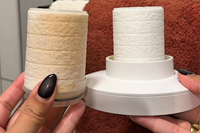
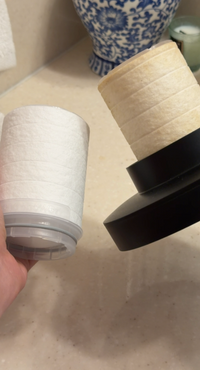
NSF/ANSI 42 certified* sediment pre-filter: The filtration system is two-stage: a micron polypropylene (PP) sediment filter as the first stage (this is the NSF/ANSI 42 certified* component), followed by the Vitamin C core. The sediment filter catches rust, sand, and particulate matter that can scratch baby skin or clog the micro-jets.
This is especially important if you live in an older building with corroded pipes - sediment levels spike when municipal crews flush hydrants or do line repairs, and you don't want that grit in your baby's bath. The PP filter is mechanical (no chemicals) and rated for particles down to 5 microns, which is small enough to catch everything visible to the naked eye.
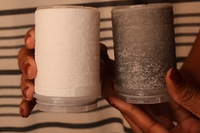
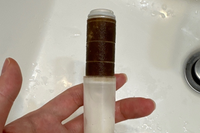
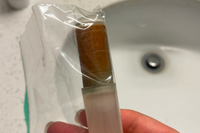
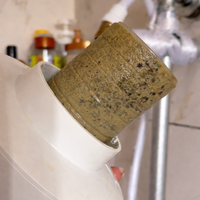
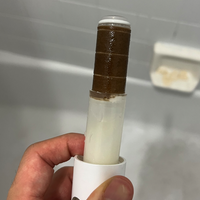
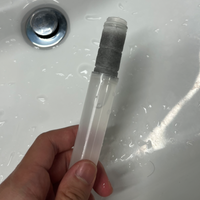
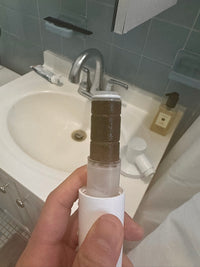
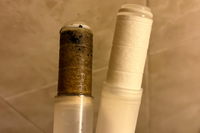
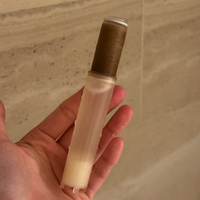
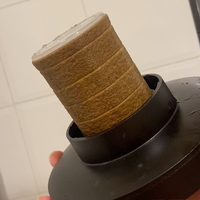
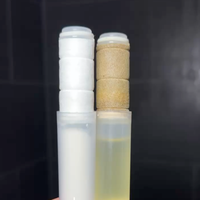
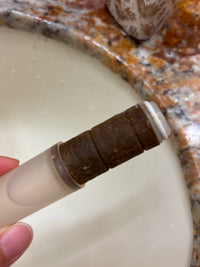
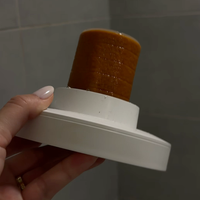
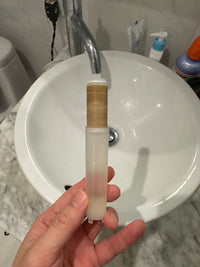
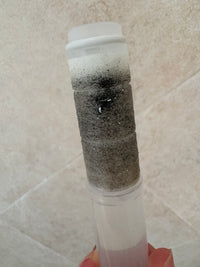
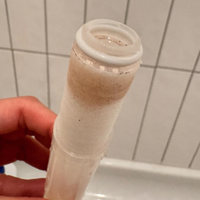
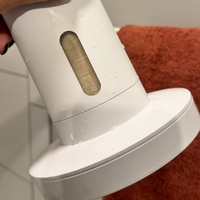
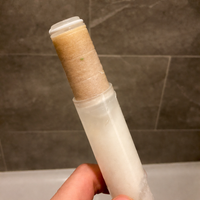
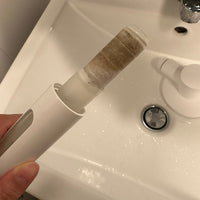
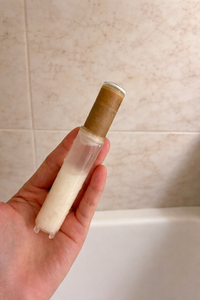
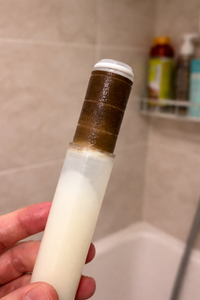
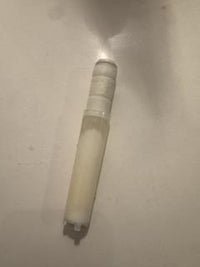
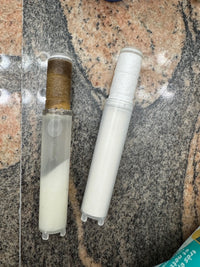
Transparent truth window: The filter cartridge has a clear window so you can see what's being removed. For new parents dealing with bath-time eczema, this visual proof is reassuring - you watch the filter turn from white to brown/gray as it traps sediment and oxidized minerals, confirming that the water going into your baby's bath is cleaner than what comes out of the tap.
It's also a practical replacement reminder: when the filter looks dark brown, it's time to swap even if you haven't hit the 30-day mark (heavy sediment loads shorten filter life).
Tool-free installation in under 5 minutes: Most parents are bathing the baby in a regular bathtub during the first 6 months (infant tubs outgrow fast), which means you need to rinse with the showerhead. The Showerhand installs by unscrewing your current showerhead and screwing on the Showerhand's connector - no plumber, no landlord permission, no tools beyond your hands.
This matters in apartments where you can't modify plumbing and in homes where you want the filter portable (install it in the master bath for your shower, move it to the hall bath for baby's bath, then back). The hose is 60 inches, long enough to reach the tub floor while the holder stays mounted.
5-vitamin infusion for skin barrier support: Beyond chlorine removal, the Showerhand infuses Vitamin C, E, Niacinamide (B3), Panthenol (B5), and Biotin (B7) into the water. This isn't marketing fluff - each vitamin has documented skin benefits. Vitamin E is a lipid-soluble antioxidant that integrates into the stratum corneum and reduces oxidative damage from residual chlorine.
Niacinamide strengthens the ceramide barrier and reduces transepidermal water loss (TEWL), the exact biomarker that's elevated in babies bathed in chlorinated water. Panthenol is a humectant that attracts moisture into the skin. Biotin supports lipid synthesis. The concentrations are low (sub-therapeutic for oral dosing), but dermatological application is topical - the vitamins contact the skin directly during the rinse phase, and even nanomolar concentrations of niacinamide have been shown to improve barrier function in vitro.
30-day peak performance window with clear replacement cadence: The Showerhand's filter is rated for 30 days of peak performance at 2.5 GPM flow. For a family giving baby 3 baths per week (each 10 minutes of water flow), that's about 12 baths per filter, or roughly 2 filters for the first 2 months when bathing frequency is highest.
The replacement cartridges come in a 3-pack for $29, so you're paying $9.67 per month for verified chlorine removal. Compare that to the hidden cost of treating eczema: a 14 oz jar of Eucerin Baby Eczema Relief costs $13 and lasts about 3 weeks with twice-daily application - you're spending $17/month on a topical band-aid while the root cause (chlorinated bath water) remains. The filter is preventive, the cream is reactive.
One practical note for parents of newborns: the AAP recommends sponge baths (not tub baths) until the umbilical cord stump falls off at 1-3 weeks. Once you transition to tub baths, start with the filtered water from day one. The earlier you prevent barrier disruption, the less you'll deal with eczema, cradle cap, and skin reactivity down the line.
Think of the shower filter as the "Step Zero" in your baby's skincare routine - it happens before soap, before lotion, before anything else touches their skin.
What a Shower Filter Won't Fix
Honesty builds trust, so let's be clear about what a shower filter can and cannot do for your baby's bath water.
A Vitamin C shower filter removes chlorine, chloramine, and heavy metals, but it does not soften hard water. Hard water is dissolved calcium and magnesium (measured as total hardness in grains per gallon or ppm).
These minerals aren't harmful to health - the WHO notes that hard water may even provide dietary calcium - but they do leave soap scum, make it harder to rinse shampoo, and can contribute to dry skin by depositing a film on the stratum corneum.
If you live in a very hard water area (>10 grains per gallon, common in Phoenix, Las Vegas, and parts of Texas), you'll still notice some residue even after filtering chlorine. True water softening requires ion-exchange resin that swaps calcium/magnesium for sodium, and that's a whole-house system that costs $400-$1,500 installed - not a showerhead attachment.
Second limitation: shower filters don't remove dissolved solids that cause high TDS (total dissolved solids) readings. If you test your tap water with a TDS meter and see 300-500 ppm, that number represents mostly harmless minerals (calcium, magnesium, potassium, bicarbonates) plus a small amount of chloride from the chlorine treatment.
A Vitamin C filter will neutralize the chlorine (converting it to chloride), but the TDS reading won't drop significantly because you're not removing the dissolved minerals - you're changing their chemical form. This confuses a lot of parents who expect a shower filter to produce "pure" water like reverse osmosis. RO can achieve 10-20 ppm TDS, but it wastes 3-4 gallons for every gallon produced and requires under-sink installation.
For baby bath purposes, you don't need RO-level purity; you need chlorine removal, and the Showerhand delivers that.
Filters don't address bacterial contamination in the pipes. If your home has old plumbing with biofilm buildup, or if you're on a private well without chlorine disinfection, a shower filter won't kill bacteria. Municipal tap water is already disinfected (that's why chlorine is there), so this isn't a concern for city dwellers. But if you're rural and on well water, your priority is testing for coliform bacteria and nitrates, not installing a shower filter.
The EPA's Safe Drinking Water Hotline (1-800-426-4791) can connect you with certified labs.
Shower filters won't fix atopic dermatitis (genetic eczema) or other systemic skin conditions. If your baby has diagnosed eczema from a pediatric dermatologist, filtering chlorine will likely reduce flare frequency and severity, but it's not a cure. Atopic dermatitis has a genetic component (filaggrin mutations, immune dysregulation) that requires medical management with emollients, topical steroids, or immunomodulators.
What a filter does is remove one environmental trigger - chlorine - so the baseline inflammation level is lower and flares are less intense. Think of it as part of a comprehensive eczema management plan, not a replacement for medical treatment.
Finally, shower filters are not NSF-certified for pathogen removal (bacteria, viruses, cysts). The NSF/ANSI 42* certification on Second Shower's sediment filter component covers aesthetic effects (particulate reduction), not health effects. If you're in a boil-water advisory situation due to contamination, you still need to boil bath water or use bottled water for your baby. The Vitamin C filter neutralizes chlorine and reduces heavy metals through adsorption, but it's not a microbiological barrier.
For that, you'd need NSF/ANSI 53 or NSF/ANSI 231 certification, which are typically found in under-sink systems with sub-micron membranes.
When should you consider a different solution instead of (or in addition to) a shower filter? If your water has high lead levels (>5 ppb), you need a certified lead-removal filter on your kitchen tap for drinking and formula prep - shower filters reduce lead but aren't tested to NSF/ANSI 53 standards for lead removal.
If you have extremely hard water (>15 gpg) and soap scum is a major issue, look into a whole-house softener; you can run the softened water through the Showerhand to get both softness and chlorine removal. If your baby has severe persistent eczema that doesn't improve with filtered water after 3-4 weeks, consult a pediatric dermatologist - there's likely an additional trigger (food allergy, detergent sensitivity, environmental allergens) that needs to be identified.
Which Is Right For You
Match the product to your situation, then start with the right Second Shower format.
Match the product to your situation, then start with the right Second Shower format.
Next Step
Use a verified product path and track outcomes over the first replacement cycle.
Related Reading
FAQ: Baby Bath Water Filtration
At what age can I start using filtered water for my baby's bath?
You can use filtered water from the very first tub bath, typically starting at 1-3 weeks once the umbilical cord stump falls off. There's no minimum age for filtered water - it's gentler than unfiltered tap water, so earlier is better. The AAP recommends sponge baths until the stump heals, then transitioning to tub baths 2-3 times per week.
Starting with chlorine-free water from day one prevents the skin barrier disruption that leads to eczema and dryness later.
Will a shower filter help with my baby's cradle cap?
Possibly, if chlorine is aggravating the condition. Cradle cap (infantile seborrheic dermatitis) is caused by overactive oil glands and yeast colonization, but chlorine can worsen it by stripping the scalp's natural oils and disrupting pH balance. Parents report that cradle cap often improves within 1-2 weeks of switching to filtered bath water, especially when combined with gentle brushing and oil treatment.
If there's no improvement after 3 weeks, consult your pediatrician - persistent cradle cap may need antifungal shampoo.
How do I know if my city uses chlorine or chloramine?
Check your water utility's annual Consumer Confidence Report (CCR), available on their website or by calling customer service. Search for "disinfectant type" or "secondary disinfectant." Chlorine is listed as "free chlorine" or "total chlorine," while chloramine appears as "monochloramine" or "chloramine (total)." About 25% of U.S. water systems use chloramine, including Denver, Philadelphia, Washington D.C., and parts of the Bay Area.
If your CCR says chloramine, you need a Vitamin C filter - carbon and KDF are largely ineffective against chloramine.
Can I use a shower filter on my bathtub faucet?
Not directly - shower filters are


Leave a comment
All comments are moderated before being published.
This site is protected by hCaptcha and the hCaptcha Privacy Policy and Terms of Service apply.