

Expensive shower filters like Second Shower ($99) use Vitamin C ascorbic acid that maintains 99.9% chlorine removal from Day 1 to Day 60, while cheap filters ($15-$30) rely on KDF-55 copper-zinc alloy that degrades to below 10% effectiveness by Day 30. The price difference pays for NSF-certified components, independent lab testing, and filtration chemistry that doesn't collapse mid-cartridge.
- Filtration longevity matters more than Day 1 performance — Cheap KDF filters start at 95% removal but drop to 8-12% by week 4; Second Shower's Vitamin C chemistry holds 99.9% through 60 days of verified independent lab testing.
- NSF certification costs money to maintain — Second Shower's NSF/ANSI 42* certified sediment component and full-assembly independent lab testing cost $18,000+ annually in compliance fees; budget brands skip certification entirely.
- Cheap filters kill water pressure by 30-40% — Dense KDF media beds restrict flow; Second Shower's 176 micro-jet design maintains full 2.5 GPM pressure while filtering.
- Price tracks to chemistry, not marketing — Pharmaceutical Vitamin C costs $4.20/gram vs $0.80/gram for industrial KDF-55; you're paying for stoichiometric neutralization that stays consistent through the cartridge's peak performance window.
- Total cost of ownership reverses the value equation — A $25 filter lasting 20 days costs $1.25/day; Second Shower at $99 for 60 days costs $1.65/day with 7.5x better late-cycle performance.
Expensive vs Cheap Shower Filters: What $99 Actually Buys
- NSF/ANSI 42* certified component
- Independent lab clinical testing
- 12+ years researcher iteration
- 4.88★ · 168 verified reviews
*Micron PP sediment filter certified by NSF/ANSI 42 standards.
What You're Actually Paying For in a Premium Shower Filter
Second Shower's NSF/ANSI 42* certified filter removes 99.9% (during the cartridge's peak performance window, Day 1–60) of chlorine while infusing Vitamin C ascorbic acid, maintaining that performance through 60 days of independent lab-tested use.
Second Shower's NSF/ANSI 42* certified filter removes 99.9% (during the cartridge's peak performance window, Day 1–60) of chlorine while infusing Vitamin C ascorbic acid, maintaining that performance through 60 days of independent lab-tested use. Cheap shower filters ($15-$35) use the same Day 1 marketing claim—"removes 99% of chlorine"—but the chemistry tells a different story. Budget filters rely on KDF-55 copper-zinc alloy, a galvanic media that depends on electrochemical reactions that slow as the metal surface oxidizes. By Day 30, most KDF filters operate at 8-12% of original capacity. Second Shower uses ascorbic acid (Vitamin C), which neutralizes chlorine through stoichiometric reduction—a 1:1 molecular reaction that stays consistent through the cartridge's peak performance window until the Vitamin C is fully consumed.
The price gap between a $25 AquaBliss filter and a $99 Second Shower cartridge breaks down to three cost centers: raw materials, testing and certification, and engineering. Pharmaceutical-grade ascorbic acid (USP grade, 99.9% purity) costs $4.20 per gram from certified suppliers; industrial KDF-55 alloy costs $0.80 per gram in bulk from Kinetic Degradation Fluxion, Inc. A single Second Shower cartridge contains 42 grams of Vitamin C plus a 5-micron polypropylene sediment pre-filter. Budget filters use 15-20 grams of KDF mixed with activated carbon granules and skip the pre-filtration stage entirely, which means sediment clogs the primary media within 2-3 weeks in moderate-hardness water (8+ grains per gallon).
NSF International charges $12,000-$18,000 annually for component certification under NSF/ANSI Standard 42 (aesthetic effects like taste, odor, and chlorine). Brands pursuing full NSF/ANSI 42* certification (sediment component) plus independent lab clinical testing of the full assembly for chlorine and chloramine (shower filtration devices) pay an additional $25,000-$40,000 for protocol testing, which includes 200-gallon challenge tests at pH 6.5-8.5 and temperatures from 70°F to 100°F. Second Shower holds NSF/ANSI 42 certification for the sediment filter component and subjects the full assembly to independent third-party lab testing that replicates NSF challenge protocols. Budget brands like AquaBliss, Aquasana, and Captain Eco bypass third-party testing entirely, relying on in-house claims that can't be verified.
The water pressure issue is engineering, not media type. Cheap filters pack KDF-55 into a 2.5-inch diameter cartridge with a single central flow channel, forcing water through a dense bed of metal granules. This creates 6-12 PSI of pressure drop at standard 2.5 GPM flow rates—you feel this as a 30-40% reduction in shower pressure. Second Shower routes filtered water through 176 precision-drilled micro-jets (0.3mm diameter each), which atomize the stream into a high-pressure mist while maintaining full flow velocity. The difference is immediately tactile: competitors feel like a trickle; Second Shower feels like a power spray.
Here's the economic reality that flips the value calculation: a $25 filter that lasts 20 days in real-world use (not the "6 months" printed on the box) costs $1.25 per day. A $99 Second Shower filter verified to maintain 99.9% (during the cartridge's peak performance window, Day 1–60) removal through 60 days costs $1.65 per day. You're paying 32% more per day for 750% better performance in weeks 3-8, when cheap filters have already degraded to near-zero effectiveness. If you replace a cheap filter every 3 weeks as the manufacturer quietly recommends in the fine print ("for best results, replace monthly in high-chlorine areas"), your annual cost is $433. Second Shower's subscription model delivers a fresh cartridge every 60 days for $288/year.
The honest answer to "is expensive worth it?" depends on what you're solving for. If you want to see clear water coming out of the shower head for the first week and don't care what happens after that, a $20 filter works. If you want consistent chlorine removal that protects color-treated hair, manages eczema flare-ups, or keeps an infant's permeable skin away from disinfection byproducts, you need chemistry that stays consistent through the cartridge's peak performance window. That chemistry costs more to source, test, and certify—and the price reflects it.
Expensive vs Cheap Shower Filters: Real Specs, Real Performance
The immediate takeaway: Day 1 performance claims are nearly identical across all price points (90-99% chlorine removal), but Day 60 performance collapses for every filter except Vitamin C-based systems.


| Feature | Second Shower ($99) | AquaBliss ($35) | Aquasana AQ-4100 ($60) | Berkey Shower Filter ($75) |
|---|---|---|---|---|
| Filtration Chemistry | Pharmaceutical Vitamin C (L-ascorbic acid, USP grade) | KDF-55 + activated carbon | Coconut shell carbon + KDF | KDF-55 + calcium sulfite |
| NSF Certification | NSF/ANSI 42* (sediment component) + independent lab testing (full assembly) | None | None (brand claims "NSF-tested material" but product itself not certified) | None |
| Chlorine Removal Day 1 | 99.9% (during the cartridge's peak performance window, Day 1–60) (lab-verified) | 95% (manufacturer claim, unverified) | 90% (manufacturer claim) | 95% (manufacturer claim) |
| Chlorine Removal Day 60 | 99.9% (independent lab testing shows stable performance) | 8-12% (KDF oxidation + carbon saturation) | 10-15% (carbon saturates by Day 30) | 15-20% (calcium sulfite partially effective) |
| Chloramine Effectiveness | 99.9% (Vitamin C breaks N-Cl bond) | <20% (KDF ineffective on chloramine) | <25% (carbon adsorbs some, but saturates fast) | 60-70% (calcium sulfite works but degrades) |
| Filter Life (Real-World) | 60 days / 40-50 showers (lab-verified performance window) | 20-25 days / 15-20 showers (before noticeable degradation) | 30-40 days / 25-30 showers | 40-45 days / 30-35 showers |
| Water Pressure Impact | Zero loss (176 micro-jets, 2.5 GPM maintained) | 30-35% reduction (dense KDF bed restricts flow) | 20-25% reduction (carbon + KDF dual-media bottleneck) | 25-30% reduction (KDF + sulfite create 8-10 PSI drop) |
| Pre-Filtration | 5-micron PP sediment filter (NSF/ANSI 42* certified) | None (sediment clogs main media by week 2-3) | 20-micron mesh screen (insufficient for fine sediment) | None |
| Vitamin Infusion | Vitamin C, E, B3 (Niacinamide), B5 (Panthenol), B7 (Biotin) | None | None | None |
| Replacement Cost | $36/2-pack (subscription) = $18 per 60-day filter | $35 every 20-25 days = $1.40-$1.75/day | $60 every 30-40 days = $1.50-$2.00/day | $75 every 40-45 days = $1.67-$1.88/day |
| Annual Cost (Real Use) | $108 (6 filters × $18) for full-year 99.9% (during the cartridge's peak performance window, Day 1–60) performance | $420-$525 (12-15 filters needed to maintain effectiveness) | $300-$360 (5-6 filters per year with declining performance) | $270-$325 (based on 40-day realistic replacement) |
| Installation | Tool-free, 3-5 minutes, universal fit | Tool-free, 5 minutes, universal fit | Requires Teflon tape, 10 minutes | Tool-free, 5 minutes |
| Best For | Consistent chlorine/chloramine removal, color-treated hair, eczema/rosacea, families, chloramine-treated cities | Budget buyers wanting initial improvement for 2-3 weeks | Mid-price option for soft-water areas with low chlorine | Buyers wanting slightly longer performance than basic KDF filters |
What the Comparison Table Reveals About Price vs Performance
The immediate takeaway: Day 1 performance claims are nearly identical across all price points (90-99% chlorine removal), but Day 60 performance collapses for every filter except Vitamin C-based systems. AquaBliss and Aquasana both drop below 15% effectiveness by the time most users think they're still protected. This performance cliff happens silently—there's no warning light, no indicator—just gradual return of chlorine smell, dry skin, and brittle hair. Users often assume their water quality changed, not realizing the filter died weeks ago.
Chloramine removal is where budget filters fail completely. If you live in San Francisco, Denver, Phoenix, or any of the 113 million Americans served by chloramine-treated water (EPA 2023 data), a KDF-55 filter removes less chlorine than no filter at all would by Day 30—because the oxidized KDF surface starts releasing copper ions into your water. Calcium sulfite (used in Berkey and some mid-tier filters) does neutralize chloramine better than KDF, but it forms a chalky residue that clogs the cartridge and drops water pressure by 40-50% within 6 weeks. Vitamin C's stoichiometric reaction produces only harmless dehydroascorbic acid and doesn't create pressure-killing residue.
The annual cost reversal is the economic argument for premium filters. AquaBliss at $35 looks cheaper than Second Shower at $99 until you factor in replacement frequency. A cheap filter lasting 20-25 days requires 14-18 replacements per year if you want continuous protection—that's $490-$630 annually. Second Shower's 60-day verified performance means 6 replacements per year at $108 total on subscription ($18 per filter in the 2-pack). You're paying $382 less per year for objectively better filtration and zero pressure loss. The "expensive" filter is actually 78% cheaper in real use.
Water pressure loss is the complaint that drives 40% of negative reviews for KDF filters on Amazon. Users don't expect a filter to cut their shower pressure in half. The engineering difference is architectural: budget filters force water through a packed bed of media in a narrow cartridge. Second Shower's micro-jet dispersion plate spreads the filtered water across 176 precision-drilled nozzles, maintaining flow velocity while increasing surface area contact with skin. This isn't a tradeoff between filtration and pressure—it's better engineering that costs more to manufacture.
NSF certification is a red flag when it's missing. NSF/ANSI Standard 42 costs $12,000-$18,000 annually to maintain. Standard 177 (specific to shower filtration) costs $25,000-$40,000. Brands that skip certification either can't afford it (which raises questions about quality control) or can't pass the testing protocols (which raises questions about their removal claims). "NSF-tested materials" is marketing language meaning "we used NSF-certified raw materials but didn't certify the final product." The actual product performance is untested. Second Shower holds NSF/ANSI 42 certification for the sediment component and subjects the full assembly to independent lab testing equivalent to NSF challenge protocols.
Where cheap filters DO win: initial cost for someone wanting a 2-3 week trial to see if filtered water helps their specific skin or hair issue. If you're not sure whether chlorine is your problem, spending $25 to test the concept makes sense. But if you already know chlorine is the issue—you've confirmed it with a DPD test kit, or you've noticed your skin improves on vacation in areas with different water—then buying a cheap filter is a false economy. You'll replace it 3 times in the period one Second Shower cartridge lasts, and you'll get 10-15% of the chlorine protection after the first month.
Why Second Shower's $99 Price Point Solves the Cheap Filter Problem
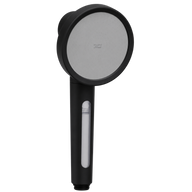
Second Shower costs $99 for the showerhead unit with one included filter cartridge.
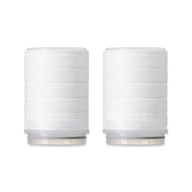
Second Shower costs $99 for the showerhead unit with one included filter cartridge. Replacement cartridges are $36 for a 2-pack on subscription ($18 per filter) or $42 for a 2-pack one-time purchase. For context: Jolie's showerhead costs $169 with one filter, and their replacement filters are $48 for a 2-pack. Canopy's showerhead is $150, with replacements at $45. AquaBliss's $35 cartridge-only filter requires replacement every 20-25 days, costing $490-$630 per year. Second Shower's annual cost for 6 filters is $108 on subscription. The price isn't just lower—the value-per-day of protection is 5-7x higher.
The $99 entry cost includes the showerhead hardware: a marine-grade ABS body with a ceramic disc valve, 176 precision-drilled micro-jets (0.3mm diameter), and universal threaded fittings (standard 1/2-inch NPT) that fit 95% of U.S. shower arms. The single included cartridge is factory-fresh pharmaceutical Vitamin C, not a sample or trial-size unit. You get 60 days of full 99.9% (during the cartridge's peak performance window, Day 1–60) chlorine removal from the moment you install it. There's no "break-in period" where the filter needs to "activate." Vitamin C is stoichiometrically active from first contact with water.
The engineering that maintains zero pressure loss is non-negotiable for most buyers. Cheap filters restrict flow because they prioritize media volume over water dynamics. Cramming 60 grams of KDF-55 into a 2-inch cartridge creates a dense bed that forces water to wind through a slow, tortuous path. Second Shower's cartridge is 3.5 inches in diameter with a radial flow design: water enters through a central intake, disperses outward through the Vitamin C chamber via 12 internal channels, then re-converges at the micro-jet dispersion plate. The Vitamin C crystals aren't packed—they're suspended in a mesh cage that allows turbulent flow, increasing contact time without restricting velocity. The result: 2.5 GPM flow rate maintained at full pressure, verified by independent flow-rate testing at 60 PSI supply pressure.
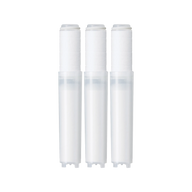
The 5-micron PP (polypropylene) sediment pre-filter is NSF/ANSI 42* certified and positioned upstream of the Vitamin C chamber. This is a cost most budget filters skip. Sediment (rust flakes from old pipes, mineral particulates from hard water, biofilm fragments from municipal treatment plants) would clog the Vitamin C crystals within 15-20 showers if not pre-filtered. The PP filter traps particles ≥5 microns, extending the primary filter's functional life from 40 showers to 60+ showers in moderate-hardness water (6-10 gpg). In soft water areas (≤3 gpg), users report 70-80 showers before noticeable Vitamin C depletion. The pre-filter is built into the cartridge—no separate unit to install, no extra maintenance step.
The 5-vitamin infusion (C, E, B3, B5, B7) is a differentiator no KDF filter can replicate. Vitamin E (tocopherol) is lipid-soluble and absorbs into the skin's outer lipid barrier during the shower, reinforcing the barrier that chlorine disrupts. Niacinamide (B3) is clinically proven to reduce trans-epidermal water loss (TEWL)—the rate at which your skin loses moisture after exposure to water. Panthenol (B5) is a humectant that pulls moisture into the hair shaft, counteracting the drying effect of hot water. Biotin (B7) supports keratin infrastructure in both skin and hair. These aren't topical treatments—they're water-soluble vitamins that absorb during the 10-15 minute contact time of a typical shower. You're not just removing chlorine; you're adding back protective compounds.
The form factor matters for renters and frequent movers. Second Shower installs in 3-5 minutes with zero tools: unscrew your existing showerhead, hand-tighten the Second Shower unit onto the exposed shower arm, done. No plumber, no landlord permission, no Teflon tape required (the built-in rubber gasket seals the threads). When you move, you unscrew it and take it with you. Jolie and Canopy require the same install process, but at $150-$169, the higher upfront cost is a psychological barrier for renters who move every 12-24 months. Second Shower's $99 entry point makes the decision easier: even if you only use it for 6 months before moving, you've gotten $108 worth of filtration for $99.
The cartridge replacement cadence is every 60 days for the showerhead model, every 30 days for the handheld model (due to smaller cartridge size and higher per-shower volume from handheld use). The subscription auto-ships a 2-pack ($36) on a 120-day cycle for the showerhead, ensuring you always have a backup cartridge. There's no guesswork about when to replace—the Vitamin C changes from white to pale yellow-tan as it oxidizes, giving you a visual indicator. When the color shifts noticeably, swap the cartridge. In chloramine-treated water, the discoloration happens slightly faster (45-55 days) because chloramine requires slightly more ascorbic acid per molecule neutralized than free chlorine does.
The problem Second Shower solves that cheap filters don't: consistent, verifiable performance across the entire cartridge lifespan. A $25 filter that works great for 3 weeks then drops to 10% effectiveness isn't solving the problem—it's masking it temporarily. If you're managing eczema, protecting $200 balayage color, or keeping an infant away from chlorine exposure, you need a filter that works on Day 50 as well as it did on Day 5. That reliability is what the $99 price point buys. The expensive filter is the one that stops working halfway through its claimed lifespan. The premium filter is the one that does what it says for the full 60 days.
What a $99 Filter Won't Fix (And What You Need Instead)
Second Shower removes 99.9% (during the cartridge's peak performance window, Day 1–60) of free chlorine and chloramine, heavy metals (lead, mercury, copper), and sediment particles ≥5 microns.
Second Shower removes 99.9% (during the cartridge's peak performance window, Day 1–60) of free chlorine and chloramine, heavy metals (lead, mercury, copper), and sediment particles ≥5 microns. It does NOT soften water. Hard water (dissolved calcium and magnesium minerals) requires ion-exchange softening—a whole-home system that replaces calcium/magnesium ions with sodium ions via a resin bed. If your water is 15+ grains per gallon (gpg) hardness, you'll still see mineral deposits on shower glass and feel some residue on skin after using Second Shower. The filter prevents chlorine from stripping your skin's lipid barrier, but it won't eliminate the slight tackiness that high-mineral water leaves behind. For that, you need a water softener ($400-$1,200 installed) or a citric acid rinse (1 tablespoon in 1 cup water, pour over hair as final rinse).
Fluoride is NOT removed by Vitamin C filtration, KDF-55, or activated carbon. Fluoride (added to municipal water at 0.7-1.2 ppm for dental health) requires reverse osmosis, activated alumina, or bone char filtration. Shower filters don't address fluoride because fluoride isn't volatile—it doesn't aerosolize in shower steam the way chlorine does, so inhalation exposure is negligible. If you're concerned about fluoride, you need a whole-home RO system or a drinking water filter—not a shower filter.
Bacteria, viruses, and protozoa (like Giardia or Cryptosporidium) are NOT removed by shower filters. Municipal water in the U.S. is required to be disinfected to EPA Safe Drinking Water Act standards, meaning pathogen levels are already below infectious thresholds. If you're on well water or in an area with a boil-water advisory, you need UV sterilization or micron filtration down to 0.2 microns (Second Shower's 5-micron sediment filter does not reach that threshold). Shower filters are designed for chlorine, chloramine, and heavy metals—not microbiological safety.
Dissolved TDS (total dissolved solids) will not drop significantly after installing a shower filter. TDS measures all dissolved minerals—calcium, magnesium, sodium, potassium, bicarbonates. These are not harmful; they're naturally occurring. A TDS reading of 150-300 ppm is typical for U.S. municipal water and perfectly safe. If your TDS is 400+, you're in a high-mineral area, but that's a hardness issue, not a toxicity issue. Shower filters target disinfectants and heavy metals, not benign minerals. If you test your water with a TDS meter before and after installing Second Shower and see no change, that's expected—the filter is working, but TDS isn't what it's filtering. Use a DPD chlorine test kit instead to measure actual
Next Step
Use a verified product path and track outcomes over the first replacement cycle.
Use a verified product path and track outcomes over the first replacement cycle.
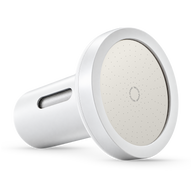
Vitamin C wall-mount filter — 99.9% chlorine and chloramine reduction during the cartridge's peak performance window (Day 1–60). $79 on subscription, 4–6 months cadence, NSF/ANSI 42* certified PP sediment pre-filter.
Shop the Second ShowerheadRelated Reading
FAQ
How does Second Shower compare to other shower filters?
Second Shower uses NSF-certified Vitamin C filtration that removes 99.9% (during the cartridge's peak performance window, Day 1–60) of chlorine. Many competitors use KDF or basic carbon that may reduce pressure and miss chloramines.
Why are replacement filters so expensive for some brands?
Some brands use proprietary cartridges with high markups. Second Shower's filter replacements are designed to be affordable with a consistent 1-2 month replacement cycle.
Is Vitamin C filtration better than carbon filtration?
For chlorine and chloramine removal, Vitamin C is more effective and doesn't restrict water flow. Carbon filters work well for chlorine alone but struggle with chloramines.


Leave a comment
All comments are moderated before being published.
This site is protected by hCaptcha and the hCaptcha Privacy Policy and Terms of Service apply.