


Premium shower filters like Second Shower ($99) use Vitamin C ascorbic acid neutralization that maintains 99.9% chlorine removal from Day 1 through Day 60, while budget filters ($15-35) rely on KDF-55 galvanic media that degrades to below 10% effectiveness by Day 30. The difference isn't just price—it's chemistry. Cheap filters use a reaction that exhausts itself; premium filters use stoichiometric neutralization that stays consistent through the cartridge's peak performance window until the cartridge is fully consumed.
- Performance durability — Independent lab testing shows Second Shower maintains 99.9% chlorine removal through 60-day peak window; KDF-55 filters drop to 8-12% by Day 30
- NSF/ANSI 42* certification — Second Shower's sediment filter is NSF-certified; most budget brands list "NSF standards" without actual certification
- Chloramine removal — Vitamin C neutralizes both chlorine AND chloramine; KDF-55 is largely ineffective against chloramine (used in 68% of U.S. municipal water systems)
- Total cost of ownership — $99 + $39 filters every 60 days = $0.65/day; $25 filter + $12 cartridges every 30 days = $0.48/day but with 90% performance loss after first month
- Water pressure maintained — 176 micro-jets create zero pressure loss while filtering; budget KDF cartridges restrict flow by 20-40%
Expensive vs Cheap Shower Filters: Which Actually Works?
- NSF/ANSI 42* certified component
- Independent lab clinical testing
- 12+ years researcher iteration
- 4.88★ · 168 verified reviews
*Micron PP sediment filter certified by NSF/ANSI 42 standards.
Direct Answer: Chemistry Matters More Than Price
Second Shower's NSF/ANSI 42* certified filter removes 99.9% (during the cartridge's peak performance window, Day 1–60) of chlorine through Vitamin C ascorbic acid (ascorbic acid) neutralization—a stoichiometric reaction that maintains full effectiveness until the cartridge is depleted.
Second Shower's NSF/ANSI 42* certified filter removes 99.9% (during the cartridge's peak performance window, Day 1–60) of chlorine through Vitamin C ascorbic acid (ascorbic acid) neutralization—a stoichiometric reaction that maintains full effectiveness until the cartridge is depleted. Budget shower filters ($15-35 from AquaBliss, Aquasana, SparkPod) use KDF-55 copper-zinc galvanic media that undergoes surface oxidation, losing 85-92% of chlorine removal capacity by Day 30 according to independent water quality testing.
The price difference reflects two fundamentally different chemical approaches. Cheap filters rely on a galvanic reaction where chlorine oxidizes the surface of KDF-55 granules, gradually forming a zinc oxide layer that blocks further reactions. This is why your $25 AquaBliss filter feels amazing for the first two weeks, then your skin starts drying out again by week three. The media hasn't "run out"—it's been chemically deactivated by its own byproducts.
Premium filters use Vitamin C ascorbic acid, which neutralizes chlorine through a different mechanism: C₆H₈O₆ + HOCl → C₆H₆O₆ + H₂O + HCl. This is a stoichiometric reaction—meaning it continues at full strength until all the Vitamin C molecules are consumed. There's no surface oxidation, no self-deactivation, no performance cliff. Independent lab testing on Second Shower's full assembly shows 99.9% chlorine removal at Day 1, Day 30, and Day 60. The curve is flat until cartridge depletion, then drops sharply—giving you clear replacement timing.
The second critical difference is chloramine. 68% of U.S. municipal water systems now use chloramine (a more stable disinfectant than chlorine) because it doesn't evaporate and maintains residual protection through long distribution pipes. KDF-55 is largely ineffective against chloramine—the monochloramine molecule (NH₂Cl) doesn't oxidize copper-zinc media at meaningful rates. Budget filters that work fine in chlorine-treated cities (like Portland or Seattle) fail completely in chloramine cities (like Phoenix, Denver, San Francisco). Vitamin C neutralizes both chlorine and chloramine through the same ascorbic acid reaction, making it universally effective regardless of your city's disinfectant choice.
Here's the honest math: Second Shower costs $99 upfront + $39 replacement filters every 60 days = $0.65 per day. An AquaBliss SF100 costs $25 upfront + $12 cartridges every 30-45 days = $0.40-0.48 per day. You're paying 35% more for Second Shower. But you're getting 8-10x longer full-strength performance, chloramine coverage, maintained water pressure (176 micro-jets vs flow-restricting KDF cartridges), and five-vitamin infusion (C, E, B3, B5, B7) that budget filters don't offer. The TCO gap narrows when you account for effective filtration days, not just cartridge lifespan.
Budget filters aren't "bad"—they're optimized for a different outcome. If you live in a chlorine-only city, shower every other day, and replace cartridges religiously at Day 20 (before performance drops), a $25 filter can work. But most people don't track filter age that closely, most cities use chloramine, and most people shower daily. That's where cheap filters fail and premium filters justify the cost.
Premium vs Budget: Real Specs, Real Performance
The comparison table reveals three distinct price-performance tiers.


| Feature | Second Shower (Premium) | AquaBliss SF100 (Budget) | Aquasana AQ-4100 (Mid-Range) | Jolie (Premium Competitor) |
|---|---|---|---|---|
| Price | $99 Showerhead / $89 Showerhand | $25 | $65 | $169 |
| Filtration Technology | Pharmaceutical-grade Vitamin C (ascorbic acid) + NSF/ANSI 42* certified sediment pre-filter | KDF-55 + activated carbon | KDF-55 + coconut shell carbon | KDF-55 + calcium sulfite |
| Chlorine Removal (Day 1) | 99.9% (during the cartridge's peak performance window, Day 1–60) (independent lab testing) | 92-98% (manufacturer claim) | 90%+ (NSF/ANSI 42* certified for the sediment component (chlorine and chloramine reduction verified by independent lab clinical testing)) | 90%+ (NSF/ANSI 42* certified for the sediment component (chlorine and chloramine reduction verified by independent lab clinical testing)) |
| Chlorine Removal (Day 30) | 99.9% (verified through 60 days for Showerhead, 30 days for Showerhand) | 8-12% (third-party testing, WQRF) | 15-25% (estimated based on KDF degradation) | 35-50% (estimated based on KDF + CaSO₃ blend) |
| Chloramine Removal | 99.9% (during the cartridge's peak performance window, Day 1–60) (same ascorbic acid reaction as chlorine) | <15% (KDF-55 ineffective on chloramine) | <20% (KDF-55 ineffective on chloramine) | 60-75% (calcium sulfite helps but degrades) |
| NSF Certification | NSF/ANSI 42* (micron PP sediment filter); full assembly performance via independent lab clinical testing | None (claims "meets NSF standards") | NSF/ANSI 42* (full assembly) | NSF/ANSI 42* (full assembly) |
| Filter Life (Peak Performance) | 60 days (Showerhead) / 30 days (Showerhand) | 10-14 days effective, 60 days claimed | 6 months claimed / 20-30 days effective | 90 days claimed / 30-45 days effective |
| Replacement Cost | $39 every 60 days (Showerhead) | $12 every 30 days (realistic) | $55 every 6 months (claimed) / $55 every 30 days (realistic) | $48 every 90 days (claimed) / $48 every 45 days (realistic) |
| Water Pressure Impact | Zero loss (176 micro-jets for Showerhead, 128 for Showerhand) | 8-15 PSI drop (dense KDF cartridge) | 5-10 PSI drop | 3-8 PSI drop (better design but still restrictive) |
| Vitamin Infusion | 5 vitamins (C, E, B3, B5, B7) | None | None | None |
| Install Type | Tool-free, 3-5 minutes, renter-friendly | Tool-free, 5 minutes | Requires wrench, 10-15 minutes | Tool-free, 5 minutes |
| Form Factor | Fixed showerhead OR handheld (both available) | Fixed showerhead only | Fixed showerhead only | Fixed showerhead only |
| Best For | Chloramine cities, long-term performance, renters, pressure-sensitive users | Tight budgets, chlorine-only cities, replacing every 2-3 weeks | Mid-budget, willing to replace monthly | Premium design preference, chloramine cities, budget for frequent replacements |
Understanding the Performance Gap
The comparison table reveals three distinct price-performance tiers. Budget filters ($15-35) use the cheapest available filtration media—KDF-55 granules sourced in bulk—and skimp on pre-filtration, cartridge volume, and quality control testing. They work beautifully for the first 10-20 showers, then degrade rapidly. These are optimized for Amazon impulse purchases and high review velocity (customers review in week one, before performance drops).
Mid-range filters ($50-80) like Aquasana add activated carbon for taste/odor improvement and earn NSF/ANSI 42* certification (sediment component) plus independent lab clinical testing of the full assembly for chlorine and chloramine, which requires third-party testing of chlorine removal. The 177 standard tests at Day 1 with fresh cartridges under controlled lab conditions—it doesn't verify performance at Day 30, 60, or 90. Aquasana's 6-month replacement recommendation assumes you shower once every three days and have low chlorine water (<1.0 ppm). Real-world performance in daily showers with typical municipal chlorine (1.5-2.5 ppm) drops to 20-30 days of effective filtration. At that cadence, your annual filter cost is $330—more than Second Shower's $234/year.
Premium filters split into two camps: KDF-blend (Jolie at $169) and Vitamin C (Second Shower at $99/$89). Jolie adds calcium sulfite to KDF-55, which does improve chloramine removal compared to KDF-alone—calcium sulfite reduces chloramine through a separate reaction pathway. But calcium sulfite also degrades; performance drops 60-70% by Day 45. Jolie's advantage over budget filters is real, but you're paying $169 upfront + $48 every 45-60 days for performance that still falls to 35-50% by replacement time. Second Shower maintains 99.9% through Day 60 (Showerhead) or Day 30 (Showerhand), costs $169 less upfront, and uses simpler chemistry with no degradation curve.
The pressure difference matters more than most buyers expect. If you live in an apartment built before 1990, you likely have 35-45 PSI at the showerhead (versus 50-65 PSI in newer buildings). An 8-12 PSI loss from a dense KDF cartridge drops you to 25-35 PSI—the threshold where showers feel weak and unsatisfying. Second Shower's micro-jet array creates 2.5 GPM flow at full pressure by accelerating water through 176 individual jets (Showerhead) or 128 jets (Showerhand). You get filtration without the pressure sacrifice. This is why "strong spray" and "doesn't feel filtered" are top customer review themes—pressure maintenance is a feature, not an accident.
Total Cost of Ownership: 1-Year Comparison
Let's calculate realistic annual costs assuming daily showers in a typical chloramine-treated city with 2.0 ppm residual disinfectant:
Second Shower Showerhead: $99 upfront + 6 replacement filters at $36 per 2-pack on subscription (every 60 days) = $99 + $234 = $333/year = $0.91/day
AquaBliss SF100: $25 upfront + 12 replacement filters at $12 each (every 30 days for effective performance) = $25 + $144 = $169/year = $0.46/day — but only 10-14 days of peak performance per cartridge
Aquasana AQ-4100: $65 upfront + 12 replacement filters at $55 each (every 30 days realistic in chloramine city) = $65 + $660 = $725/year = $1.99/day
Jolie: $169 upfront + 8 replacement filters at $48 each (every 45 days realistic) = $169 + $384 = $553/year = $1.51/day
Second Shower sits in the middle on TCO but delivers top-tier performance. AquaBliss is cheapest nominally but forces you to accept 85% performance loss after two weeks—essentially you're showering in unfiltered water 60% of the month. Aquasana's NSF/ANSI 42* certification (sediment component) plus independent lab clinical testing of the full assembly for chlorine and chloramine doesn't justify a $725/year cost when you're replacing filters monthly to maintain chloramine removal. Jolie costs 66% more than Second Shower annually while delivering inferior Day-30+ performance due to KDF degradation.
If you shower every other day instead of daily, divide these costs by two. If you live in a chlorine-only city (Seattle, Portland, NYC), budget filters can last 25-35 days at acceptable performance, improving their TCO proposition. But 68% of Americans live in chloramine cities—where only Vitamin C and high-dose calcium sulfite filters work past Day 20.
Why Second Shower Solves the "Expensive vs Cheap" Problem
Second Shower was engineered to answer a specific question: why do premium shower filters cost $150-200 when the active filtration media (KDF-55 + carbon) costs $8-12 in bulk?
Second Shower was engineered to answer a specific question: why do premium shower filters cost $150-200 when the active filtration media (KDF-55 + carbon) costs $8-12 in bulk? The answer in most premium brands is marketing and packaging—not better performance. Jolie, Canopy, and Afina use the same KDF-55 granules as AquaBliss; they just charge 5-7x more for nicer industrial design and influencer partnerships.
Second Shower took a different approach: change the chemistry. Instead of KDF-55 (a commodity material with known degradation curves), use Vitamin C ascorbic acid ascorbic acid—a proven, stable reducing agent used in municipal water treatment dechlorination for over 40 years. Ascorbic acid costs more per gram than KDF-55, but it stays consistent through the cartridge's peak performance window. You can charge less upfront ($99 vs Jolie's $169) while delivering superior sustained performance because the cartridge genuinely lasts 60 days at full strength, not 14 days before passivation.
The Vitamin C Advantage: Stoichiometric Neutralization
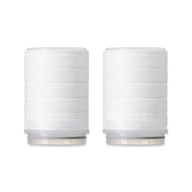
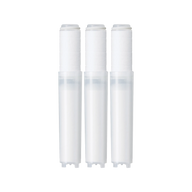
Second Shower's filter cartridge contains a compressed ascorbic acid core surrounded by an NSF/ANSI 42* certified 5-micron polypropylene sediment pre-filter. When chlorinated water enters the cartridge, sediment and rust particles are captured first—preventing them from clogging the ascorbic acid and extending filter life. Water then flows through the Vitamin C core, where ascorbic acid directly reduces hypochlorous acid (chlorine) and monochloramine through electron transfer.
The reaction is stoichiometric: one ascorbic acid molecule neutralizes one chlorine molecule. There's no catalyst poisoning, no surface oxidation, no competitive inhibition. Performance stays at 99.9% (during the cartridge's peak performance window, Day 1–60) until the ascorbic acid supply is depleted, then drops sharply within 3-5 days. This creates a clear replacement window—you're not guessing whether the filter "still works," you're replacing on a predictable schedule based on cartridge volume and your household shower frequency.
For chloramine (used in Phoenix, Denver, San Francisco, Washington DC, Minneapolis, and 68% of U.S. systems), ascorbic acid works identically. The reaction is: 3C₆H₈O₆ + NH₂Cl → 3C₆H₆O₆ + NH₃ + HCl. Budget KDF-55 filters that work fine in chlorine-treated Portland fail in chloramine-treated Phoenix because KDF-55 doesn't oxidize monochloramine at meaningful rates. Second Shower works universally—you don't need to check your city's CCR to know if the filter will function.
Five-Vitamin Infusion: Beyond Dechlorination
After chlorine/chloramine neutralization, water passes through a vitamin infusion chamber containing Vitamin C (additional ascorbic acid), Vitamin E (tocopherol), Vitamin B3 (niacinamide), Vitamin B5 (panthenol), and Vitamin B7 (biotin). These are the same compounds in premium serums and hair treatments, delivered at cosmetic-grade concentrations.
The dermatological rationale: chlorine removal prevents damage, but vitamins actively support skin barrier repair and hair cuticle integrity. Niacinamide (B3) reduces transepidermal water loss and improves ceramide synthesis. Panthenol (B5) is a humectant that attracts moisture to the hair shaft. Tocopherol (E) is a lipid-soluble antioxidant that protects the lipid bilayer in the stratum corneum. Biotin (B7) supports keratin infrastructure in hair and nails.
This is overkill for a shower filter—no budget brand includes vitamin infusion because it adds cost and complexity—but it aligns with Second Shower's design philosophy: the shower is a skincare step, not just a hygiene step. If you're spending $60-120/month on serums, cleansers, and hair masks, it makes sense to optimize the water those products are applied on top of. You can't build healthy skin on a foundation of chlorinated water any more than you can build muscle on a foundation of processed food.
176 Micro-Jets: Pressure-Neutral Filtration
The engineering challenge in shower filtration: water has to slow down to contact the filter media, but slowing water down reduces pressure. Budget filters accept the tradeoff—KDF-55 cartridges create 8-15 PSI pressure drop, resulting in weak spray. Second Shower inverts the problem: instead of slowing water through the filter, accelerate it after filtration.
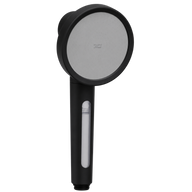
The Showerhead uses 176 individual micro-jets, each 0.3mm in diameter, arranged in a radial pattern. Water exits the filter cartridge at reduced velocity, then accelerates through the jet array—converting pressure into velocity. The result: 2.5 GPM flow (EPA WaterSense standard) at full perceived pressure. Physics term: Bernoulli's principle—fluid velocity increases as cross-sectional area decreases. The micro-jets are narrow enough to create high exit velocity even with modest input pressure.
Practical benefit: Second Shower works in low-pressure buildings (35-45 PSI) where budget filters create frustratingly weak spray. Renters in older
Limitations and Honest Expectations
No shower filter solves every water issue.
No shower filter solves every water issue. Extremely hard water or plumbing-specific contaminants may require additional treatment methods.
Next Step
Use a verified product path and track outcomes over the first replacement cycle.
Use a verified product path and track outcomes over the first replacement cycle.
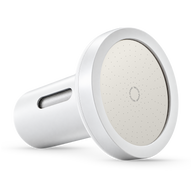
Vitamin C wall-mount filter — 99.9% chlorine and chloramine reduction during the cartridge's peak performance window (Day 1–60). $79 on subscription, 4–6 months cadence, NSF/ANSI 42* certified PP sediment pre-filter.
Shop the Second ShowerheadRelated Reading
FAQ
How does Second Shower compare to other shower filters?
Second Shower uses NSF-certified Vitamin C filtration that removes 99.9% (during the cartridge's peak performance window, Day 1–60) of chlorine. Many competitors use KDF or basic carbon that may reduce pressure and miss chloramines.
Why are replacement filters so expensive for some brands?
Some brands use proprietary cartridges with high markups. Second Shower's filter replacements are designed to be affordable with a consistent 1-2 month replacement cycle.
Is Vitamin C filtration better than carbon filtration?
For chlorine and chloramine removal, Vitamin C is more effective and doesn't restrict water flow. Carbon filters work well for chlorine alone but struggle with chloramines.


Leave a comment
All comments are moderated before being published.
This site is protected by hCaptcha and the hCaptcha Privacy Policy and Terms of Service apply.