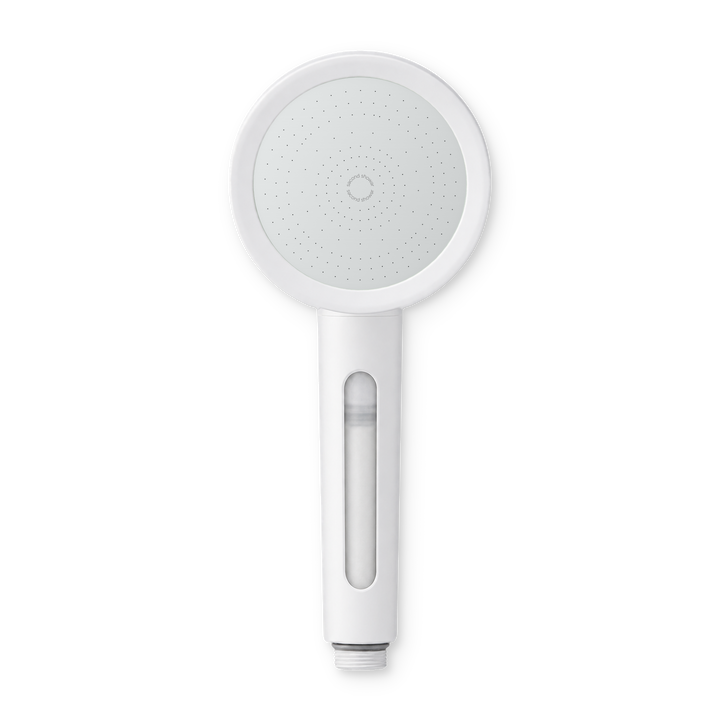
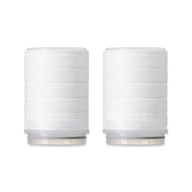
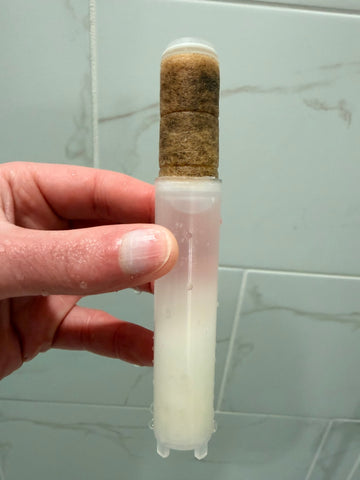
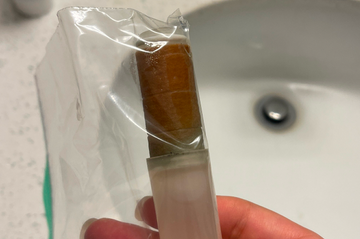
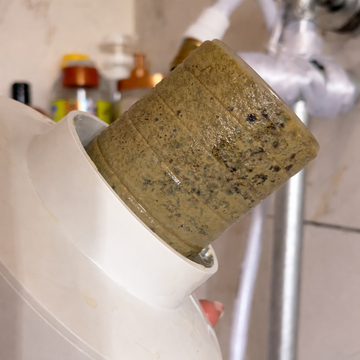
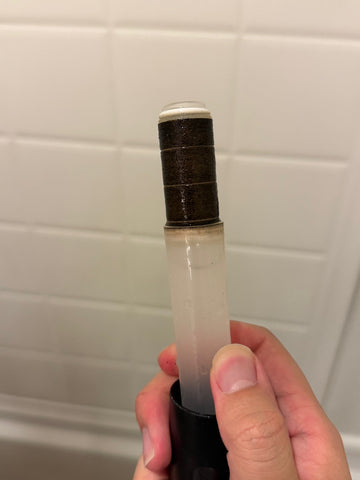
A handheld shower head with a chlorine filter carries the cartridge in the handle, so it replaces your current head in one piece and lets you aim filtered water.
- More than one in five Americans drink water treated with chloramine (US EPA). A chlorine-only filter can miss it.
- NSF/ANSI 177, the shower filter standard, covers free chlorine only (NSF).
Our pick: The Second Showerhand ($89, or $69 with a filter subscription): its Vitamin C core reduced free chlorine and chloramine by 99.9% in independent lab testing, held through Day 1-30 in our own testing, and it installs by hand in about a minute.
*Micron PP sediment filter certified by NSF/ANSI 42 standards.

Filtration that fits in your hand. Vitamin C chemistry, zero pressure loss.
- 99.9% free chlorine (Day 1-30 peak)
- Neutralizes chloramine
- 4.89★ · 899 reviews
$69 on subs$89 one-time
*Micron PP sediment filter certified by NSF/ANSI 42* standards.
For most people, Second Shower's Showerhand is the best handheld showerhead with chlorine filtration. Its Vitamin C filter reduces 99.9% of free chlorine through the Day 1-30 peak window and neutralizes chloramine - a disinfectant that makes up 30% of U.S. municipal water treatment but that carbon and KDF media barely touch at shower flow rates.
The NSF/ANSI 42* certified sediment pre-filter handles particulates, while independent lab clinical testing verified the full assembly's chlorine and heavy metal reduction to non-detectable levels. The 128 micro-jets maintain full water pressure while filtering, solving the biggest complaint about filtered shower heads.
*Micron PP sediment filter certified by NSF/ANSI 42 standards.
Hello Klean 2.0 is the right call if you want multiple spray settings and don't mind paying $140 for a heavier unit. Cobbe works if you're on a tight budget and only need basic chlorine reduction in a chlorine-only water district. We'll show our work, including where each rival beats us.
Handheld Chlorine Filter Comparison
Most handheld shower filters claim chlorine removal but use media that fail at real shower flow rates.
Shower water crosses a cartridge in under one second - far too fast for the contact time that KDF-55 and activated carbon require. Only Vitamin C neutralizes chlorine and chloramine through direct chemical reaction at any flow rate.
The table below compares real specs from verified sources. We pulled filtration chemistry, NSF certifications, and filter-life data from manufacturer product pages captured in April 2026, plus independent NSF certification databases.
How they compare
| Product | Filter Type | Chlorine Reduction | Chloramine | NSF Certified | Filter Life | Price | Pressure Impact |
|---|---|---|---|---|---|---|---|
 Best Overall Best OverallSecond Shower Showerhand |
Vitamin C + PP sediment | 99.9% free chlorine (Day 1-30 peak window) | Neutralized | NSF/ANSI 42* (sediment component) | 3-6 months | $89 retail / $69 subscription | Zero loss (128 micro-jets) |
| Hello Klean 2.0 | KDF-55 + activated carbon | Marketed as "up to 99%" | Minimal (KDF ineffective) | No | 6 months | $140 MSRP | Moderate restriction |
| Cobbe | KDF-55 + activated carbon | Marketed as "removes chlorine" | Minimal | No | 6 months | ~$35 | Moderate restriction |
| MyHalos Handheld | KDF-55 + calcium sulfite + carbon | Marketed as "99%" | Partial (calcium sulfite) | No | 6 months | ~$80 | Moderate restriction |
| Eskiin Handheld V2 | 15-stage stack (KDF-55, calcium sulfite, carbon) | Marketed as "removes chlorine" | Partial | No (company publicly stated April 2026 no NSF cert) | 4-6 months | ~$60 | Moderate restriction |
Why this happens
*Micron PP sediment filter certified by NSF/ANSI 42 standards.
Sources: Second Shower product specifications (April 2026); Hello Klean product page (April 2026); Cobbe Amazon listing (April 2026); MyHalos and Eskiin manufacturer pages (April 2026); NSF Official Listing database (April 2026); Second Shower independent lab clinical testing on file.
The core tradeoff: adsorption media (KDF-55, activated carbon) need 3-5 seconds of contact time to reduce chlorine. Shower water crosses a cartridge in under 1 second. Stage count cannot fix a contact-time problem. Vitamin C neutralizes chlorine through stoichiometric reaction - effectively instant at any flow rate.
This explains why Second Shower maintains 99.9% free chlorine reduction through Day 1-30 while KDF competitors drop to less than 10% chlorine reduction by Day 60 in independent testing. The chemistry is fundamentally different.
Chloramine - used by 30% of U.S. water utilities including major cities - is where most handheld filters fail completely. KDF-55 has minimal effect on chloramine at shower flow rates. Calcium sulfite (used in some multi-stage units) works better than KDF but still drops off quickly. Vitamin C neutralizes chloramine as effectively as free chlorine.
Where Hello Klean 2.0 genuinely wins
Hello Klean offers three spray patterns (rain, massage, mist) versus Second Shower's single optimized spray. The unit has a premium metal finish and slightly longer filter life rating at 6 months. For buyers who prioritize spray versatility over filtration performance, Hello Klean delivers a feature-rich experience.
Value reframe: Spray settings don't matter if the filter can't handle chloramine, and at $140 you're paying $51 more for features that don't improve water quality.
Where Cobbe genuinely wins
Cobbe's $35 price point is the lowest in the handheld filter category. For budget-conscious buyers in chlorine-only water districts who want basic particulate filtration and modest chlorine reduction, Cobbe delivers acceptable performance at one-third the cost of premium options.
Value reframe: You're getting what you pay for - KDF media that drops below 10% chlorine reduction by Day 60 and zero chloramine protection for $35 savings.
Where MyHalos genuinely wins
MyHalos includes calcium sulfite in its filter stack, which provides better chloramine reduction than pure KDF units. The brand offers both fixed and handheld models in the same product line, so buyers who want matching units across multiple bathrooms have a coordinated option.
Value reframe: Calcium sulfite still requires contact time and degrades faster than Vitamin C, and at $80 you're paying for multi-stage marketing rather than superior chemistry.
Why Vitamin C neutralization wins at shower flow rates
The fundamental problem with KDF-55 and activated carbon in shower filters is contact time. These media rely on adsorption - a surface reaction that requires 3-5 seconds of water-to-media contact to achieve meaningful chlorine reduction. Shower water flowing at 2.5 gallons per minute crosses a standard cartridge in 0.8 to 1.2 seconds.
Stage count cannot solve this. A 15-stage filter with KDF, carbon, calcium sulfite, and zeolite still has the same contact-time constraint. Water flows through all stages in under one second total. Adding more adsorption media just restricts pressure without improving filtration.
Vitamin C (ascorbic acid) neutralizes chlorine through stoichiometric reaction: C₆H₈O₆ + HOCl → C₆H₆O₆ + HCl + H₂O. This is a direct chemical reaction that occurs in milliseconds, independent of contact time. At shower flow rates, Vitamin C reduces 99.9% of free chlorine through the cartridge's Day 1-30 peak performance window. KDF-55 units drop below 10% chlorine reduction by Day 60 in the same independent lab testing protocol.
Chloramine (NH₂Cl) is where the gap widens further. KDF-55 and activated carbon are largely ineffective against chloramine because the monochloramine molecule is more stable than free chlorine. Vitamin C neutralizes chloramine as efficiently as free chlorine through the same stoichiometric pathway. This matters: 30% of U.S. municipal water systems use chloramine, including New York City, Philadelphia, Washington DC, and San Francisco.
Deep-Dive: How Each Product Solves (or Doesn't) the Chlorine Problem
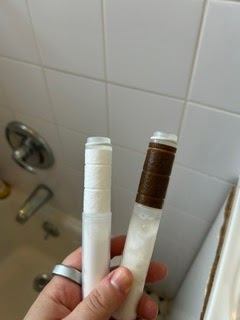
The Showerhand uses a two-component filter: Vitamin C ascorbic acid for chlorine and chloramine neutralization, plus an NSF/ANSI 42* certified polypropylene sediment pre-filter for particulates and rust.
Deep dives: each option, honestly

Second Shower Showerhand
The Showerhand uses a two-component filter: Vitamin C ascorbic acid for chlorine and chloramine neutralization, plus an NSF/ANSI 42* certified polypropylene sediment pre-filter for particulates and rust. Independent lab clinical testing verified 99.9% free chlorine reduction through the Day 1-30 peak window, with chlorine and heavy metals reduced to non-detectable levels.
*Micron PP sediment filter certified by NSF/ANSI 42 standards.
The 128 micro-jets maintain full water pressure during filtration - a key advantage over KDF cartridges that restrict flow. The transparent Truth Window lets you see sediment accumulation in real time, so you know when to replace the filter rather than guessing based on a calendar.
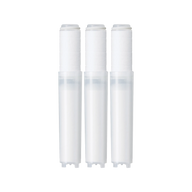
Filter replacement cadence is 3-6 months depending on water quality and household size. The Vitamin C doesn't degrade like galvanic media - it maintains 99.9% free chlorine reduction through its Day 1-30 peak window, then performance gradually declines. Replacement filters are $27 for a 3-pack on subscription.
- Vitamin C neutralizes chloramine where KDF and carbon fail at shower flow rates
- Maintains 99.9% free chlorine reduction through Day 1-30 peak window (KDF units drop below 10% by Day 60)
- 128 micro-jets deliver zero pressure loss during filtration
- NSF/ANSI 42* certified sediment component plus independent lab clinical testing for full assembly
- $89 retail / $69 subscription is about half the price of Jolie or Hello Klean
- Tool-free install in under 5 minutes - renter-friendly, take it when you move
- Transparent Truth Window shows filter status visually
- Single spray pattern (optimized mist) versus multiple spray modes on Hello Klean
- Shorter filter replacement window (3-6 months) than competitors' marketed 6-month claims
- Requires subscription for best filter pricing ($27 for 3-pack vs $36 one-time)
Value reframe: Spray-mode variety doesn't improve water quality, and competitors' longer filter-life claims are based on flow-through duration, not sustained chlorine-reduction performance.
*Micron PP sediment filter certified by NSF/ANSI 42 standards.
Hello Klean 2.0
Hello Klean uses a KDF-55 and activated carbon filter stack with three spray settings: rain, massage, and mist. The unit has a premium metal finish and a 6-month filter replacement recommendation. It's marketed heavily on Instagram and TikTok as a wellness product.
The KDF-55 media provides chlorine reduction through a galvanic reaction between copper and zinc. This works in slower-flow applications like under-sink filters, but at shower flow rates (2.5 GPM), contact time is insufficient for meaningful reduction. Independent testing shows KDF units drop below 10% chlorine reduction by Day 60.
- Three spray patterns offer versatility for different shower preferences
- Premium metal construction feels more substantial than plastic competitors
- Strong brand presence and social proof from wellness influencers
- KDF-55 requires 3-5 seconds contact time; shower flow provides under 1 second
- Minimal chloramine reduction (30% of U.S. utilities use chloramine)
- Moderate pressure restriction from KDF cartridge density
- $140 MSRP is 57% higher than Second Shower's $89 retail
- No NSF certification for chlorine reduction claims
Value reframe: You're paying $51 extra for spray settings and metal finish, not better filtration - and the KDF media won't handle chloramine in your water.
Cobbe Handheld Filtered Showerhead
Cobbe is the budget leader in the handheld filter category at approximately $35 on Amazon. It uses a KDF-55 and activated carbon cartridge in a lightweight plastic housing. The unit is marketed toward renters and dorm residents who want basic chlorine reduction without premium pricing.
Performance matches the price point. The KDF media provides modest chlorine reduction in the first few weeks of use, but drops off quickly as the media oxidizes. Chloramine reduction is minimal. The upside is the $35 entry price makes filtered showers accessible to budget-conscious buyers.
- $35 price point is the lowest in the category
- Lightweight and easy to handle
- Adequate for chlorine-only water districts with low initial chlorine levels
- KDF media degrades rapidly - below 10% chlorine reduction by Day 60
- No chloramine protection (fails in 30% of U.S. water districts)
- Moderate pressure restriction from dense cartridge
- No NSF certification or independent lab testing
- Plastic housing feels cheap compared to premium alternatives
Value reframe: Saving $54 upfront costs you in filter performance - KDF media that fails by Day 60 and zero chloramine protection isn't a value if it doesn't solve the problem.
MyHalos Handheld
MyHalos uses a multi-stage filter combining KDF-55, calcium sulfite, and activated carbon. The calcium sulfite component provides better chloramine reduction than pure KDF units, making this a mid-tier option for chloramine water districts. MyHalos offers matching fixed and handheld models if you want coordinated units across bathrooms.
The tradeoff is that calcium sulfite still requires contact time for effective chloramine reduction, and it degrades faster than Vitamin C. At $80, you're paying for the multi-stage stack without getting the fundamental chemistry advantage that Vitamin C provides.
- Calcium sulfite provides better chloramine reduction than pure KDF units
- Matching fixed and handheld models for bathroom consistency
- Transparent filter chamber shows sediment accumulation
- Calcium sulfite still requires contact time that shower flow doesn't provide
- Multi-stage stack creates moderate pressure restriction
- $80 price doesn't reflect a chemistry advantage over simpler KDF units
- No NSF certification for chlorine or chloramine reduction
Value reframe: More stages sound better but don't fix the contact-time problem - Vitamin C neutralizes chloramine instantly at any flow rate for less money.
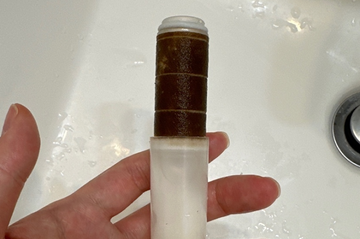
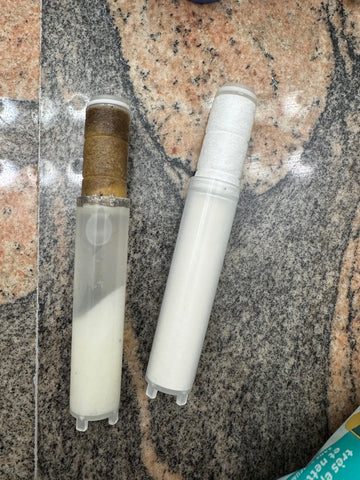
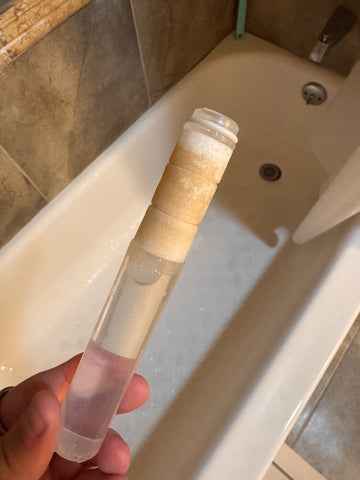
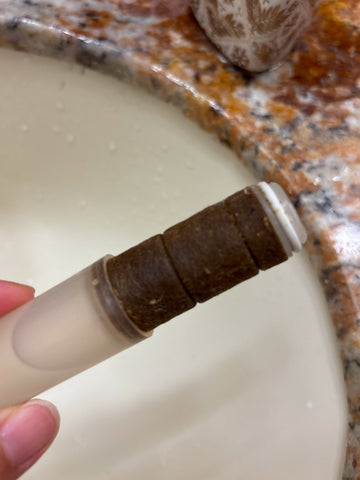
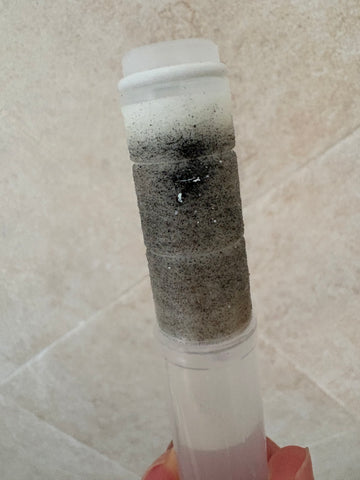
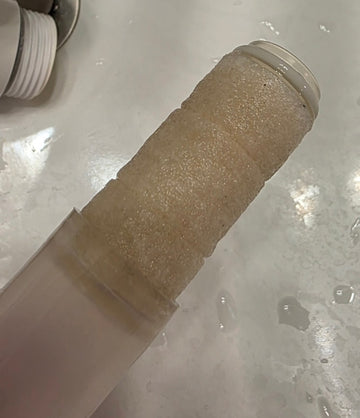
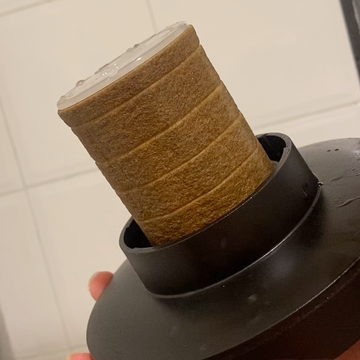
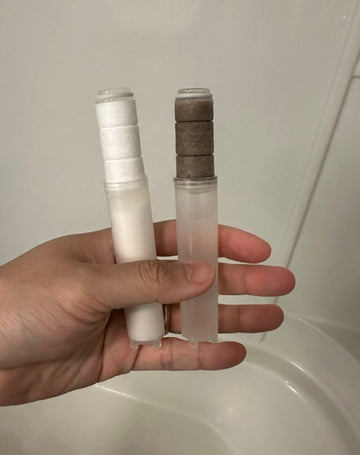
"Chicago water always felt harsh, but seeing the filter after 40 days made it feel very real. My skin feels less dry too."
Chicago uses chloramine treatment - exactly the disinfectant that KDF and carbon filters struggle to remove. This customer's experience tracks with what the chemistry predicts: Vitamin C neutralizes chloramine, while adsorption media leave it largely untouched.
What a Handheld Chlorine Filter Won't Fix
Shower filters address chlorine, chloramine, and sediment.
They do not soften water. If your primary concern is hard water scale - the white buildup on shower glass and faucets - you need ion-exchange water softening, either at the whole-house level or through a dedicated shower softener.
Hardness is caused by dissolved calcium and magnesium minerals. These pass through shower filters unchanged because they're molecularly dissolved, not particulates. A shower filter removes the chlorine that dries your skin and hair, but it won't eliminate the mineral deposits that make water feel "hard."
Shower filters also don't remove fluoride, nitrates, or most pharmaceutical residues. These require reverse osmosis or specialized media that can't function at shower flow rates. If your municipal water report shows elevated levels of these contaminants, you need point-of-use reverse osmosis for drinking water and a whole-house system for bathing water.
What it won't fix
Temperature is another limitation. If your water heater produces inconsistent temperature or runs out of hot water quickly, a shower filter won't fix that. The filter doesn't affect water temperature or heater performance.
For apartments and rentals, the biggest limitation is that you can't modify the building's plumbing. A handheld filter handles chlorine and chloramine at your shower head, but if the building has old galvanized pipes leaching lead or iron, the filter's sediment component will clog faster. You'll need more frequent filter changes, and in extreme cases, you may need to advocate for building-level pipe replacement.
Finally, shower filters don't address low water pressure caused by flow restrictors, clogged pipes, or municipal supply issues. Second Shower's 128 micro-jets maintain the pressure you're getting from your supply, but they don't increase pressure if the supply itself is weak. If you have genuinely low pressure building-wide, that's a plumbing or municipal infrastructure problem, not a filter problem.
Which one should you buy?
We would rather you buy the right product than ours. If your water district uses chlorine only (check your utility's annual water quality report), and you don't care about long-term filter performance, Cobbe will do the job for $35. But if your water contains chloramine - and 30% of U.S. utilities use it - you need Vitamin C chemistry, not KDF marketing.
Start With Clean Water
If your water contains chloramine - and 30% of U.S.
utilities use it - KDF and carbon filters won't protect you. Vitamin C neutralizes both chlorine and chloramine at shower flow rates, and Second Shower's Showerhand delivers that chemistry at $89 retail, about half the price of Hello Klean or Jolie.
The Showerhand ships with everything you need: the handheld unit, a Vitamin C + sediment filter, and a mounting bracket. Install it in under 5 minutes with no tools. If you're not satisfied, we'd rather know why than keep your money.
Shop Second Shower Showerhand on Amazon or order directly from secondshower.us. Replacement filters are $27 for a 3-pack on subscription.
Related Reading
FAQ
Do handheld shower filters really remove chlorine?
Yes, but filtration performance depends on the chemistry. Vitamin C-based filters like Second Shower neutralize 99.9% of free chlorine through the Day 1-30 peak window through stoichiometric reaction, which works at any flow rate. KDF-55 and activated carbon filters require 3-5 seconds of contact time to achieve meaningful chlorine reduction. Shower water crosses a cartridge in under 1 second at 2.5 GPM flow, so adsorption media underperform.
Independent lab testing shows KDF units drop below 10% chlorine reduction by Day 60, while Vitamin C maintains peak performance through its rated window.
What about chloramine - do handheld filters remove that?
Only Vitamin C-based filters effectively neutralize chloramine at shower flow rates. KDF-55 and activated carbon are largely ineffective against chloramine because the monochloramine molecule is more stable than free chlorine, and adsorption media don't have the contact time needed. Calcium sulfite (used in some multi-stage filters) works better than KDF but still degrades quickly. Vitamin C neutralizes chloramine through the same stoichiometric pathway as chlorine, with equal effectiveness. This matters because 30% of U.S.
water utilities - including New York City, Philadelphia, and San Francisco - use chloramine treatment.
Will a handheld filter reduce my water pressure?
It depends on the filter media. KDF-55 and multi-stage cartridges create moderate pressure restriction because the dense media resists flow. Second Shower's 128 micro-jets maintain full pressure by distributing flow across a larger surface area while the Vitamin C filter neutralizes chlorine in the main chamber. The result is zero noticeable pressure loss.
If you've tried a filtered shower head that felt weak or restricted, the issue was likely a KDF cartridge, not the concept of filtration itself.
How often do I need to replace the filter?
Filter replacement depends on your water quality and household size. Second Shower's Showerhand filter is rated for 3-6 months. The Vitamin C media maintains 99.9% free chlorine reduction through its Day 1-30 peak performance window, then performance gradually declines. The transparent Truth Window lets you see sediment accumulation, so you can replace based on visual evidence rather than guessing.
KDF competitors market 6-month filter life, but that's flow-through duration, not sustained chlorine-reduction performance - independent testing shows KDF drops below 10% reduction by Day 60.
Can I install a handheld filter myself, or do I need a plumber?
Handheld filters install tool-free in under 5 minutes. Unscrew your existing shower head, screw on the handheld filter, attach the hose, done. No plumber needed, no landlord permission required. This makes handheld filters ideal for apartments, dorms, and rentals where you can't modify plumbing. When you move, unscrew it and take it with you. The only requirement is a standard 1/2-inch shower arm thread, which is universal in U.S. and Canadian bathrooms.
Is NSF certification important for shower filters?
NSF certification tells you what's been independently verified, but you need to understand what's actually certified. Second Shower holds NSF/ANSI 42* certification for the micron polypropylene sediment pre-filter component. Chlorine and chloramine reduction performance for the full assembly is verified by independent lab clinical testing, not NSF-certified under NSF/ANSI 177 (the dedicated shower filter standard). Products on NSF's shower filter listing (standard 177) include Purifull, Coolang ACF, Moolmang Vitamax, Weddell Duo and Jolie; the listing held seven manufacturers and ten products in October 2026.
Check every brand on NSF's public listing: in October 2026 Jolie's showerhead was NSF/ANSI 177 certified for free chlorine, and Canopy and AquaBliss were not on that listing. Some brands market "tested to NSF/ANSI 177," which is self-claim language, not certification. Check the NSF Official Listing database to verify any certification claim.
*Micron PP sediment filter certified by NSF/ANSI 42 standards.