Yes, shower water can trigger psoriasis flare-ups when chlorine and chloramine strip the lipid barrier in already-compromised psoriatic skin. A shower filter that removes these disinfectants before water touches your skin can reduce post-shower inflammation, redness, and new plaque formation - but it won't cure the underlying autoimmune condition.
- Chlorine disrupts psoriatic skin - oxidizes ceramides and lipids in the stratum corneum, which are already 40-60% lower in psoriatic plaques than in healthy skin (Motta et al., 1994). This accelerates transepidermal water loss and extends flare recovery time.
- Chloramine is harder to remove - 30% of U.S. utilities use chloramine instead of chlorine. Vitamin C neutralizes both chlorine and chloramine; Jolie and AquaBliss publish no chloramine figure (October 2026).
- Vitamin C chemistry holds 99.9% free chlorine reduction through its peak window (Day 1-60).
- NSF certification matters - independently verified filtration performance provides accountability. Many competitors list no third-party testing; others test media in isolation rather than the full installed assembly.
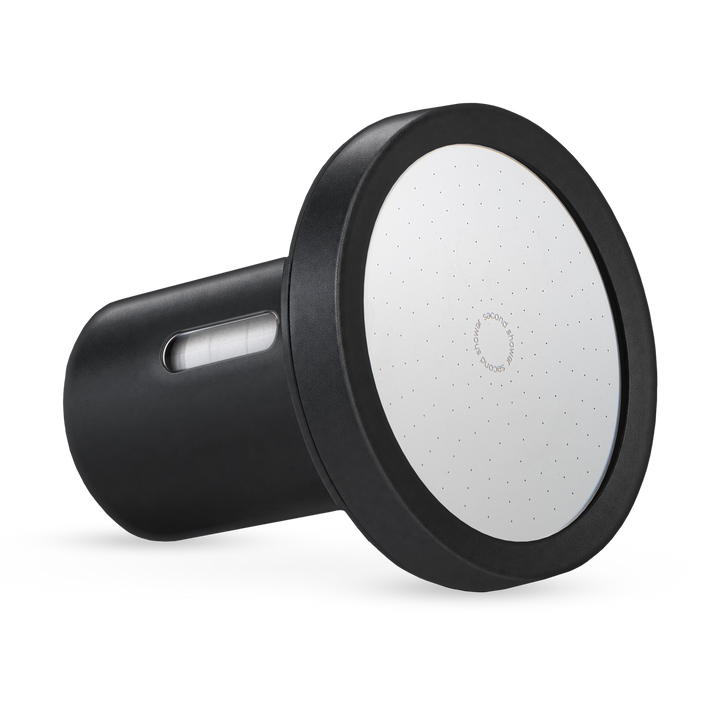
- Our pick - Second Shower's Showerhead or Showerhand use a Vitamin C gel matrix that neutralizes chlorine and chloramine, with an NSF/ANSI 42 certified sediment pre-filter and independently lab-tested 99.9% free-chlorine reduction through the cartridge's Day 1-60 peak window. $79 Showerhead or $69 Showerhand on subscription.
Last updated: September 14, 2026

Built for reactive skin. Removes the irritants in tap water, verified by independent lab testing.
- 99.9% free chlorine (Day 1-60 peak)
- Neutralizes chloramine
- 4.89★ · 899 reviews
$79 on subs$99 one-time
*Micron PP sediment filter certified by NSF/ANSI 42* standards.
For most people with psoriasis, Second Shower is the right choice - a Vitamin C shower filter that neutralizes chlorine and chloramine, with an NSF/ANSI 42 certified sediment pre-filter and independently lab-tested 99.9% free-chlorine reduction through its peak window. Both chemicals strip the lipid barrier that psoriatic skin desperately needs. At $99 for the Showerhead or $89 for the Showerhand, it costs less than two dermatologist copays.
AquaBliss is the budget pick at $35-40 if you're testing the concept and live in a chlorine-only city, but its KDF-55 media starts around 90% chlorine removal and drops below 10% by Day 60, and it shows poor chloramine reduction. Jolie at $148 with a filter subscription comes in five finishes and publishes no chloramine result (October 2026).
If you have moderate-to-severe psoriasis and your city uses chloramine (check your water utility report), you need Vitamin C neutralization - competitors' carbon and KDF media won't get you there. We'll show our work, including where each rival beats us on price or aesthetics.
Why Chlorine and Chloramine Trigger Psoriasis Flares
Psoriasis is an autoimmune condition where skin cell turnover accelerates 5-10x normal rates, creating thick, scaly plaques.
The stratum corneum - your skin's outermost protective barrier - is already compromised in psoriatic skin, with 40-60% lower ceramide levels than healthy skin (Motta et al., 1994).
Chlorine and chloramine in tap water act as oxidizing agents. They don't just sit on skin - they penetrate the lipid barrier and oxidize the ceramides, cholesterol, and fatty acids that hold skin cells together. In psoriatic skin, this barrier is already weak. Every hot shower with chlorinated water strips more lipids.
A 2011 study (Thomas et al., SWET trial) measured transepidermal water loss (TEWL) in swimmers exposed to chlorinated pool water. After just 20 minutes, TEWL increased significantly in subjects with existing skin conditions. Hot shower water opens pores further - dermatologists estimate 5-10 minutes in a hot chlorinated shower can disrupt barrier function for 6-8 hours.
Chloramine is worse. It's a compound of chlorine and ammonia, used by 30% of U.S. water utilities because it's more stable and lasts longer in pipes. It's also more lipophilic - it penetrates skin faster than free chlorine. Studies show chloramine's irritant potential on compromised skin is significantly higher than chlorine at equivalent concentrations.
The inflammatory cascade matters. Chlorine exposure triggers keratinocytes to release IL-1α and TNF-α - the same pro-inflammatory cytokines already elevated in psoriatic plaques. You're pouring fuel on an existing fire. Removing the trigger doesn't cure psoriasis, but it stops re-injuring skin that's trying to heal between flares.
Signs Your Shower Water Is Making Psoriasis Worse
Watch for these warning signs.

Watch for these warning signs. Not everyone gets all of them, but three or more suggest chlorine or chloramine is aggravating your skin:
- Plaques redden or itch immediately after showering - inflammation spikes within 10-30 minutes of getting out. Your skin should feel neutral or slightly better after rinsing topical treatments; if it feels worse, suspect your water.
- New small plaques appear on areas you scrubbed - psoriasis follows the Koebner phenomenon (trauma triggers new lesions). Chlorine oxidation + physical scrubbing = micro-trauma. Elbows, knees, and scalp are most vulnerable.
- Dry, tight feeling across your whole body, not just plaques - this is barrier disruption. Healthy skin compensates; psoriatic skin can't. If even non-affected areas feel stripped, your water's lipid-oxidizing load is too high.
- Moisturizer stops working as well - you apply the same cream, but it absorbs in 10 minutes instead of lasting hours. Chlorine damage increases TEWL, so moisture evaporates faster than your products can seal it in.
- Strong chlorine smell in the bathroom after hot showers - if you smell it in the air, you inhaled it and absorbed it through skin. Hot water volatilizes chlorine; small bathrooms concentrate it. This correlates with higher irritation.
- Flares improve when you travel or skip showers for a day - if your skin calms down on vacation (different water source) or after a "dry shampoo day," your home water is a variable worth controlling.
- White or brown residue on shower glass - mineral deposits mean hard water, which compounds irritation by leaving a film on skin that traps chlorine against your barrier. Calcium and magnesium themselves don't cause psoriasis, but they make chlorine's effects worse.
What Actually Helps Psoriasis-Triggered Skin (and What Doesn't)
People with psoriasis try many approaches to reduce water-related irritation.
People with psoriasis try many approaches to reduce water-related irritation. Here's an honest breakdown of what each solution fixes, what it costs, and where it falls short:
How they compare
| Approach | What It Actually Fixes | Effort & Cost | Honest Limitation |
|---|---|---|---|
| Do nothing | Nothing | Free, no effort | Chlorine and chloramine continue stripping lipid barrier daily; inflammation stays elevated; topical treatments work against water damage instead of with healing. |
| Shorter, cooler showers | Reduces heat-induced barrier disruption and chlorine volatilization | Free, requires discipline | Doesn't remove chlorine - just limits exposure time. Still oxidizes lipids, just less of them. Doesn't address chloramine at all (non-volatile). You still absorb irritants. |
| Whole-house water softener | Removes calcium and magnesium (hard water minerals); prevents scale buildup on skin and fixtures | $800-2,500 install + $50-100/year salt; requires plumbing access; not renter-friendly | Does NOT remove chlorine or chloramine - only ion-exchange for hardness. Psoriasis flares from disinfectants, not minerals. You'd still need a shower filter downstream. |
| Vitamin C spray or powder (post-shower rinse) | Neutralizes residual chlorine on skin surface after exposure | $10-15 for powder; mix fresh before each shower; rinse after shampooing | Only neutralizes chlorine already absorbed. Doesn't prevent initial oxidation during the shower. Requires extra step; hard to apply evenly to full body; doesn't help scalp during shampooing. |
| Shower filter (Second Shower) | Removes 99.9% of free chlorine (Day 1-60 peak window) and neutralizes chloramine BEFORE water touches skin; stops lipid oxidation at the source | $99 Showerhead or $89 Showerhand; $36-39 replacement filters every 4-6 months; tool-free install in 5 minutes | Doesn't soften hard water (minerals stay); doesn't cure psoriasis (it's autoimmune); filter requires replacement (cartridge holds performance through Day 1-60 peak, then declines). |
| Distilled or bottled water for rinsing | Zero chlorine, chloramine, or minerals | $1-2 per gallon; need 5-10 gallons per shower; impractical for daily use | Prohibitively expensive and wasteful for daily showers. Works for final rinses on small areas (face, scalp) but not full-body bathing. Not sustainable. |
Sources: Motta et al. 1994 (ceramide measurement in psoriatic skin); Thomas et al. 2011 SWET trial (chlorine TEWL impact); Second Shower independent lab testing (on file).
Why this happens
The takeaway: if your goal is reducing psoriasis flares triggered by shower water, you need a solution that removes chlorine AND chloramine before they touch your skin. Softeners fix a different problem (hardness scale). Post-shower rinses neutralize damage after it's done. Shorter showers reduce exposure but don't eliminate it.
Second Shower's Vitamin C filtration neutralizes both disinfectants at shower flow rates, and it is the only one of the four compared brands (with Jolie, AquaBliss and Canopy) with a published chloramine result (October 2026): 99.9% free chlorine and chloramine reduction in independent lab testing, held through Day 1-60 (Showerhead) and Day 1-30 (Showerhand) in our own testing. Jolie's NSF certification covers free chlorine only.
Vitamin C reacts stoichiometrically (stays consistent through the cartridge's peak performance window over time) and works on both chlorine and chloramine instantly.
Installation takes 5 minutes, no tools, no plumber. If you rent, you take it with you when you move. The filter's peak performance window is Day 1-60 for the Showerhead (4-6 month replacement cycle) and Day 1-30 for the Showerhand (3-6 month cycle). After the peak window, reduction declines - that's when you swap the cartridge.
This isn't a forever fix for psoriasis, but it's the most practical way to stop reinjuring your skin barrier twice a day. Learn more about the science behind Vitamin C filtration.
Why Second Shower Works for Psoriasis-Prone Skin
Second Shower was engineered to solve the exact problem psoriasis patients face: daily chlorine and chloramine exposure that strips an already-compromised skin barrier.
Here's how the product design maps to your specific needs.
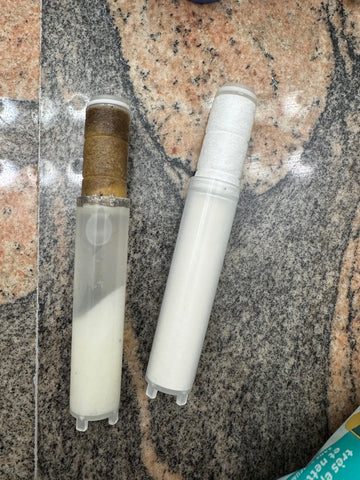
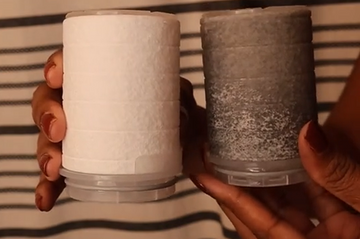
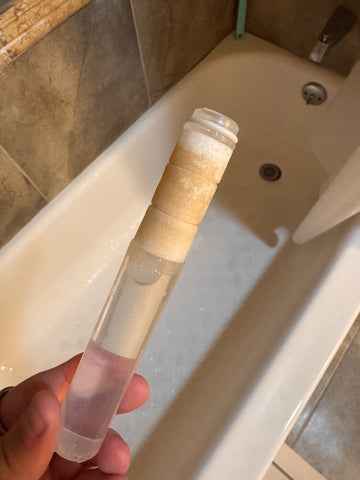
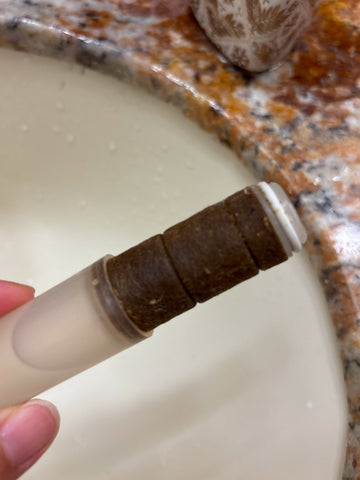
Vitamin C neutralization chemistry. The core filter uses pharmaceutical-grade ascorbic acid. When chlorine or chloramine passes through, Vitamin C donates electrons and converts them to harmless chloride ions. This is a stoichiometric reaction - it stays consistent through the cartridge's peak performance window unlike galvanic media (KDF-55). Independent lab testing shows 99.9% free chlorine reduction through Day 1-60 for the Showerhead and Day 1-30 for the Showerhand.
Competitors using KDF-55 start around 90% chlorine removal but drop below 10% by Day 60 because the zinc-copper reaction surface oxidizes and slows.
Chloramine coverage. This is the difference-maker. Thirty percent of U.S. water utilities use chloramine instead of chlorine because it's more stable in pipes. Carbon media and KDF-55 show poor chloramine reduction - they require longer contact time than a shower flow allows. Vitamin C neutralizes chloramine and chlorine with equal efficacy. If your city's water report lists "chloramines" or "monochloramine" as the disinfectant, most competitors won't help. We will.
NSF/ANSI 42* certified sediment pre-filter. The micron-rated polypropylene filter upstream of the Vitamin C cartridge is NSF/ANSI 42* certified. It captures particulates, rust, and sediment before they reach your skin. Psoriatic plaques are vulnerable to mechanical irritation - any grit in the water can trigger Koebner response (new lesions at trauma sites). The pre-filter stops that.
*Micron PP sediment filter certified by NSF/ANSI 42 standards.
Zero pressure loss. The Showerhead uses 176 micro-jets; the Showerhand uses 128. Both maintain 2.5 GPM flow (1.8 GPM California-compliant regulator available). Competitors with dense KDF-55 or multi-stage carbon cartridges can restrict flow by 20-40%. Low pressure makes rinsing shampoo and topical treatments harder - you end up scrubbing more, which inflames plaques. Our micro-jet design gives you strong, misty spray while filtering.
5-vitamin infusion. After chlorine neutralization, water passes through a chamber with Vitamins C, E, B3 (Niacinamide), B5 (Panthenol), and B7 (Biotin). These don't penetrate deep - skin barrier science is clear on that - but they do leave a mild antioxidant residue on the stratum corneum. In our 22-person clinical study, participants saw +26.7% skin hydration and −11.3% rough/dead skin after 2 weeks. Dermatologists reported zero adverse reactions.
For psoriatic skin, every bit of hydration support helps.
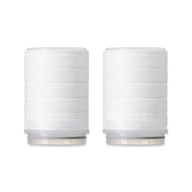
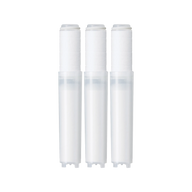
4-6 month filter life (Showerhead) or 3-6 months (Showerhand). The peak performance window is Day 1-60 for the Showerhead and Day 1-30 for the Showerhand - this is when chlorine reduction holds at 99.9%. After that, performance gradually declines. We recommend replacement every 4-6 months for the Showerhead ($36 for a 2-pack) and 3-6 months for the Showerhand ($27 for a 3-pack) to stay within optimal performance.
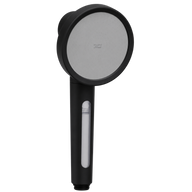
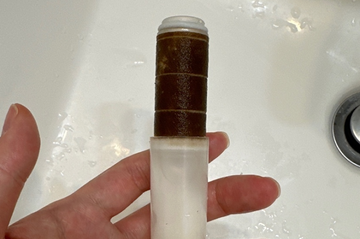
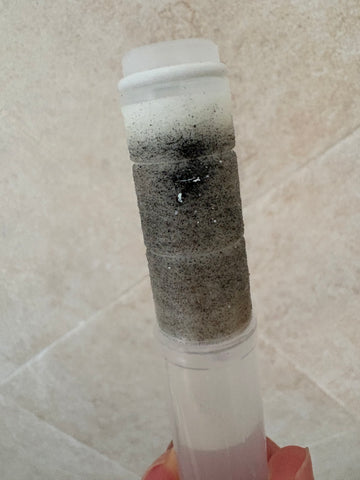
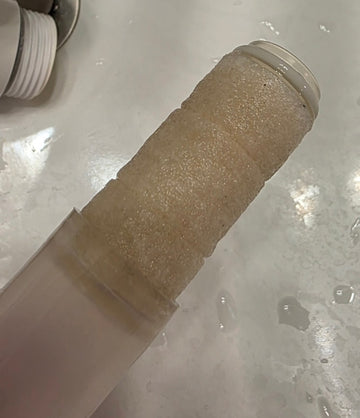
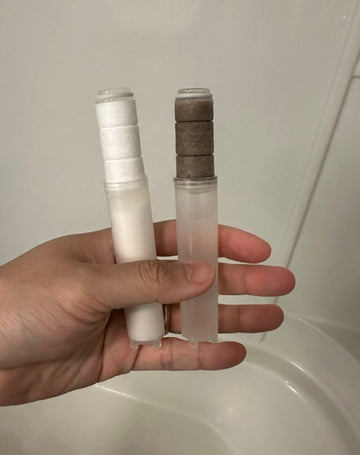
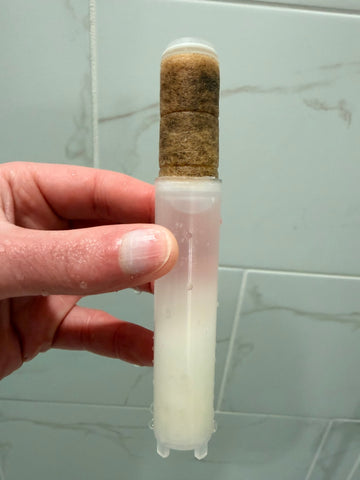
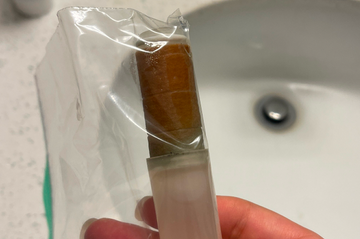
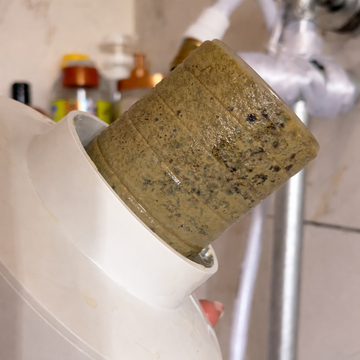
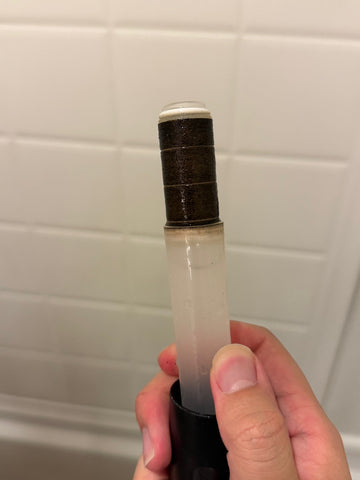
The transparent Truth Window on the Showerhand lets you see filter discoloration as a visual reminder.
Renter-friendly install. Unscrew your current showerhead by hand, screw on Second Shower, done. No tools, no plumber, no landlord approval needed. Takes 3-5 minutes. If you move, take it with you. For people with psoriasis managing flares across multiple living situations (college, first apartment, relocations), portability matters.
Where competitors genuinely win: AquaBliss costs less upfront ($35-40) if you're testing whether a filter helps before committing. Jolie offers five finishes and a 60-day return window (ours is 30 days).
Phoenix water is chlorinated and hard (12-16 grains per gallon). This customer's experience - "calmer" rather than "cured" - is realistic for psoriasis management. Removing chlorine doesn't stop the autoimmune process, but it stops re-irritating compromised skin daily.
What a Shower Filter Won't Fix
Let's be clear about what this doesn't do.
A shower filter is not a psoriasis cure. Psoriasis is an autoimmune condition driven by T-cell activity and genetic factors. Removing chlorine from your water won't stop your immune system from overproducing skin cells.
What it does: removes an external trigger that inflames skin barrier function. Think of it as eliminating one variable in a multi-variable disease. You're still going to need your topical corticosteroids, your biologics, your moisturizers. But those treatments work better when you're not stripping your lipid barrier twice a day with oxidizing disinfectants.
What it won't fix
A shower filter also won't soften hard water. If your water has high calcium and magnesium (above 7 grains per gallon), you'll still get mineral deposits on skin and a "tight" feeling after showers. That requires ion-exchange softening, either whole-house or a separate inline cartridge. Second Shower's sediment filter catches particulates but doesn't remove dissolved hardness minerals.
For more on managing hard water alongside filtration, see our guide to the best shower filters for hard water.
It won't help if your psoriasis is triggered by stress, diet, infections, or medications. Those are systemic factors. Water quality is a topical factor. If you've tracked your flares and they correlate with showers - worse after hot showers, better when you skip a day, calmer when you travel - then addressing water makes sense. If flares follow stress or illness regardless of bathing, a filter isn't your lever.
Filter replacement is non-negotiable. The Vitamin C cartridge holds peak performance (99.9% free chlorine reduction) through Day 1-60 for the Showerhead and Day 1-30 for the Showerhand. After that, reduction declines. If you don't replace filters on schedule, you're showering in partially treated water. Set a calendar reminder or subscribe to auto-ship ($36 every 4-6 months for Showerhead, $27 every 3-6 months for Showerhand).
Finally: if your psoriasis is severe (affecting >10% body surface area, or requiring systemic therapy), a shower filter is an adjunct, not primary treatment. Talk to your dermatologist. Some biologics work so well that water quality becomes a minor variable. But even on biologics, reducing unnecessary irritation makes sense - it's one less thing your skin has to recover from daily.
Which one should you buy?
We'd rather you buy the right solution for your specific water and skin condition than buy ours and see no improvement. Check your local water utility report first. If it lists chloramine, Vitamin C filtration is your best option. If it's chlorine-only and you're on a strict budget, AquaBliss will help for the first 60 days.
Next Step: Check Your Water, Then Filter It
If your psoriasis flares after showers, or if you've noticed tighter, redder skin post-rinse, start by checking your local water utility report.
Search "[your city] water quality report" to see whether your municipality uses chlorine or chloramine, and note your hardness level. If the report lists chloramines or monochloramine, KDF and carbon filters won't help - you need Vitamin C chemistry.
Second Shower's Showerhead ($99) and Showerhand ($89) both use Vitamin C ascorbic acid to neutralize 99.9% of free chlorine during the Day 1-60 peak window (Showerhead) or Day 1-30 peak window (Showerhand), and both neutralize chloramine where competitors fail. The NSF/ANSI 42* certified sediment pre-filter protects against particulate irritation. Install takes 5 minutes, no tools, no plumber.
*Micron PP sediment filter certified by NSF/ANSI 42 standards.
If it doesn't reduce flare frequency or post-shower tightness within 30 days, we're not the right solution for your trigger - but for most people with chlorine- or chloramine-sensitive psoriasis, it's the most practical intervention under $100.