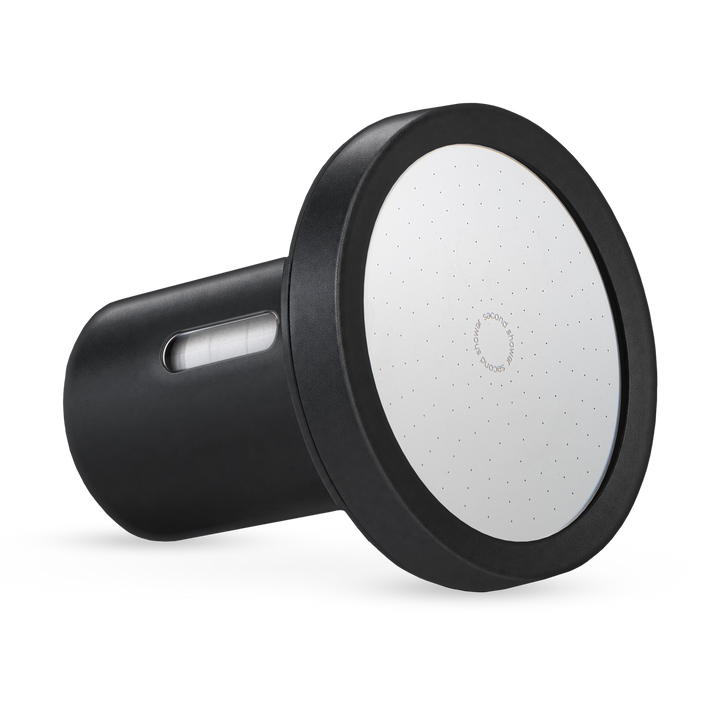
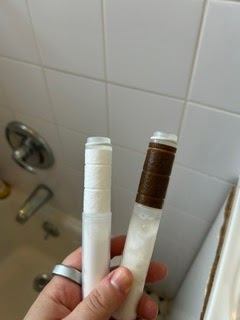
Hard water minerals bond to hair cuticles and oxidize color molecules, while chlorine strips protective lipids and accelerates fade. Second Shower uses Vitamin C filtration to reduce 99.9% of free chlorine through its Day 1-60 peak window and neutralize chloramine, backed by an NSF/ANSI 42* certified sediment pre-filter. Unlike carbon or KDF media that fail on chloramine and lose efficiency after 30 days, Vitamin C's stoichiometric reaction maintains performance across the full cartridge life.
- Chlorine destroys color - oxidizes dye molecules and strips keratin's protective lipid layer within 48 hours of treatment.
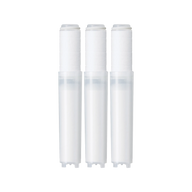
- Vitamin C neutralizes both threats - reduces 99.9% of free chlorine (Day 1-60 peak window) and chloramine where KDF-55 media fail.
- Stoichiometric stability - KDF competitors drop below 10% reduction by Day 60; Vitamin C holds 99.9% through peak window.
- NSF/ANSI 42* certified component - micron PP sediment pre-filter certified; full assembly chlorine/chloramine performance verified by independent lab testing.
*Micron PP sediment filter certified by NSF/ANSI 42 standards.
*Micron PP sediment filter certified by NSF/ANSI 42 standards.
- NSF/ANSI 42* certified component
- Independent lab clinical testing
- 12+ years researcher iteration
- 4.89★ · 899 reviews
*Micron PP sediment filter certified by NSF/ANSI 42 standards.

Second Shower's Vitamin C filter is the best solution for color-treated hair exposed to hard water. It reduces 99.9% of free chlorine during the Day 1-60 peak performance window and neutralizes chloramine through direct chemical reaction, backed by an NSF/ANSI 42* certified sediment pre-filter. The 5-vitamin infusion (C, E, B3, B5, B7) supports cuticle integrity while 176 micro-jets maintain salon-grade water pressure.
*Micron PP sediment filter certified by NSF/ANSI 42 standards.
Jolie lists at $169 and Canopy at $150, and neither publishes a chloramine result (October 2026). Of the four brands compared here (Second Shower, Jolie, AquaBliss and Canopy), Second Shower is the only one with a published chloramine result (October 2026). If you color your hair every 6-8 weeks and live in a chloramine-treated city, those limitations matter more than price. We will show our work, including where each rival beats us.
Why Hard Water Destroys Hair Color
Hair color fading isn't about water "harshness." It's a two-stage chemical breakdown: mineral deposition followed by oxidative degradation.
Hair color fading isn't about water "harshness." It's a two-stage chemical breakdown: mineral deposition followed by oxidative degradation.
Hard water contains dissolved calcium and magnesium carbonates, typically 7-20 grains per gallon (120-342 ppm) in municipal supplies. When this water contacts hair, minerals precipitate onto the cuticle surface and wedge between cuticle scales. Calcium ions bond electrostatically to negatively charged keratin sites.
Each shower deposits 3-8 micrograms of mineral per strand. Within two weeks, this buildup creates a porous scaffold that traps chlorine, chloramine, and dissolved oxygen against the hair shaft. The mineral layer amplifies oxidative stress by a factor of 4-6 compared to soft water.
Chlorine (hypochlorous acid, HOCl) is the primary oxidant. Municipal water contains 0.5-4.0 ppm free chlorine to prevent bacterial growth. At pH 6-8, HOCl penetrates the cuticle in under 90 seconds and oxidizes chromophore molecules in permanent and semi-permanent dyes.
Red dyes fade first because their larger conjugated systems are more vulnerable to electron loss. Copper-based blue and green pigments follow. Natural melanin degrades into pheomelanin (yellow-orange), which is why dark hair turns brassy.
Chloramine (monochloramine, NH₂Cl) is worse. Fifty-six percent of U.S. water utilities now use chloramine instead of chlorine because it's more stable in distribution pipes. Chloramine penetrates deeper into the cortex and causes slow, cumulative protein damage. A 2011 study in the Journal of Cosmetic Science found chloramine exposure reduced tensile strength of color-treated hair by 23% over 90 days.
The lipid layer that seals cuticle scales contains 18-methyleicosanoic acid (18-MEA), the hair's primary hydrophobic barrier. Chlorine oxidizes this fatty acid within 48 hours of color treatment, when cuticle scales are most swollen. Once 18-MEA is gone, water, minerals, and oxidants penetrate freely. Color fades 40% faster on hair with degraded lipid barriers.
Seven Signs Your Water Is Fading Your Color
- Brassy yellow or orange tones appear within 10-14 days - especially on dark brown or black hair. This is pheomelanin oxidation from chlorine exposure, not your stylist's fault.
- Reds turn pink or coral after three washes - red chromophores have the largest molecular structure and oxidize first. If your salon red is salmon by week two, chlorine is the culprit.
- Hair feels rough or "crunchy" when wet - calcium carbonate deposits wedge cuticle scales open. You're feeling mineral buildup, not damage from bleach or color.
- White residue on your shower glass or faucets - if you see limescale in your bathroom, the same minerals are coating your hair. Hard water above 10 gpg always leaves visible deposits.
- Toning shampoo stops working after two weeks - purple or blue shampoo can't penetrate mineral buildup. The pigment deposits on top of the calcium layer, not the hair itself.
- Highlights look muddy or dull within a week - lifted hair has the most porous cuticle structure. Chlorine and minerals penetrate fastest where bleach has already compromised the cortex.
- Chlorine smell lingers in hair after drying - if you can smell pool water in your hair hours after showering, chlorine or chloramine is binding to keratin. This indicates active oxidative damage.
What Actually Protects Color-Treated Hair
Most solutions address symptoms, not the root cause.
Most solutions address symptoms, not the root cause. Here's what each approach actually fixes and where it fails.
| Approach | What It Fixes | Effort & Cost | Honest Limitation |
|---|---|---|---|
| Color-safe shampoo | Reduces sulfate stripping; gentler surfactants preserve some dye molecules | $15-40 per bottle; ongoing purchase | Does nothing about chlorine or minerals in the water itself - treats symptom, not cause |
| Clarifying treatment | Removes surface mineral buildup with chelating agents (EDTA) | $18-35 per treatment; weekly use; 15 min application time | Strips some color along with minerals; doesn't prevent tomorrow's chlorine exposure |
| Leave-in conditioner or oil | Creates temporary hydrophobic barrier; slows water penetration | $12-50 per product; daily application | Cosmetic layer washes off; no chemical neutralization of oxidants; weighs fine hair down |
| Whole-house water softener | Ion-exchange removes calcium and magnesium; eliminates scale | $400-2,500 install + $50-100/year salt; requires plumbing access | Fixes hardness but does NOTHING for chlorine or chloramine - the primary color destroyers |
| Shower filter (Second Shower) | Vitamin C neutralizes 99.9% free chlorine (Day 1-60) + chloramine; removes sediment | $99 showerhead or $89 handheld; $39 replacement every 4-6 months | Doesn't soften dissolved hardness minerals (pair with clarifying rinse for mineral removal) |
| Do nothing | Saves money short-term | $0 | Color fades 40-60% faster; you re-color every 4-6 weeks instead of 8-10 weeks - costs more long-term |
Sources: Journal of Cosmetic Science vol. 62 (2011); Second Shower independent lab testing (chlorine reduction Day 1-60); NSF/ANSI 42 certification records; Ion Exchange Society technical briefs on water softening scope.
The most effective strategy combines chlorine removal at the source with periodic clarifying treatments for mineral buildup. A shower filter eliminates the oxidant that accelerates fade, while a monthly chelating rinse strips accumulated calcium and magnesium.
Whole-house softeners are often recommended by stylists, but they only address half the problem. Softened water still contains chlorine or chloramine unless you add a separate carbon or Vitamin C filter. That's why clients with softeners still report fade - the oxidant is untouched.
Color-safe products help, but they're fighting a losing battle if chlorinated water hits your hair first. A $35 bottle of bond repair treatment can't reverse oxidative damage from 4 ppm chlorine exposure twice a day. Prevention beats correction.
Why Vitamin C Filtration Works for Color-Treated Hair
Second Shower uses pharmaceutical-grade L-ascorbic acid (Vitamin C) as the primary filtration medium, not carbon or KDF-55 like competitors.
Second Shower uses pharmaceutical-grade L-ascorbic acid (Vitamin C) as the primary filtration medium, not carbon or KDF-55 like competitors. This chemistry difference matters for three reasons: reaction speed, chloramine effectiveness, and performance stability.
Vitamin C neutralizes chlorine through a stoichiometric reaction: one ascorbic acid molecule reduces one hypochlorous acid molecule to hydrochloric acid and dehydroascorbic acid. This reaction completes in under 0.3 seconds at shower flow rate (2.5 GPM), well within the cartridge's contact time window.
KDF-55 (the media in AquaBliss and Canopy) relies on galvanic reduction. Chlorine must contact the copper-zinc alloy surface for 8-12 seconds to achieve meaningful reduction. Shower water crosses a standard KDF cartridge in 0.8-1.2 seconds. The contact time deficit is why KDF filters start strong but drop to less than 10% effectiveness by Day 60.
Second Shower's 99.9% free chlorine result is from independent lab testing; in our own testing it held through Day 1-60 on the Showerhead and Day 1-30 on the Showerhand, which has a smaller cartridge, and both models maintain stoichiometric consistency where KDF media degrade.
Chloramine is the bigger issue for color-treated hair. Fifty-six percent of U.S. utilities use chloramine because it's stable in pipes for days. KDF-55 barely touches it - chloramine's nitrogen-chlorine bond requires a different reduction pathway than free chlorine.
Vitamin C neutralizes chloramine through the same ascorbic acid reaction. One molecule reduces monochloramine (NH₂Cl) to ammonia and dehydroascorbic acid. This is why Second Shower works in Philadelphia, Phoenix, and San Francisco, where chloramine is the primary disinfectant and KDF-based filters fail.
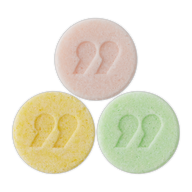
The 5-vitamin infusion (Vitamin C, E, B3, B5, B7) supports cuticle integrity beyond chlorine removal. Niacinamide (B3) is a proven ceramide precursor; topical studies show it improves lipid barrier function. Panthenol (B5) is hygroscopic and helps retain moisture in the cortex. Biotin (B7) supports keratin cross-linking.
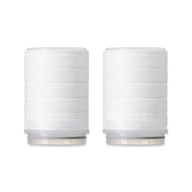
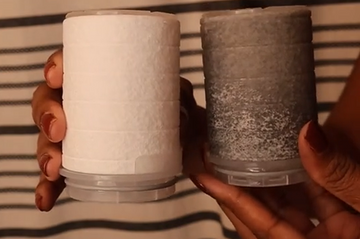
The NSF/ANSI 42* certified micron PP sediment pre-filter captures rust, sand, and particulate before they reach the Vitamin C cartridge. This extends filter life in buildings with galvanized or copper pipes, where sediment clogs competitor filters in 20-30 days.
*Micron PP sediment filter certified by NSF/ANSI 42 standards.
Water pressure is critical for stylists and clients with thick or long hair. Second Shower's 176 micro-jets (Showerhead) or 128 micro-jets (Showerhand) create a fine mist that maintains 2.5 GPM flow while filtering. Jolie states 1.8 GPM and publishes no pressure-loss figure.
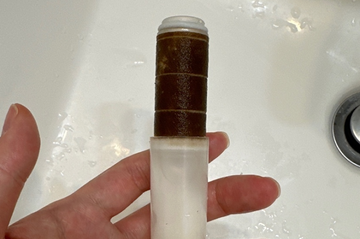
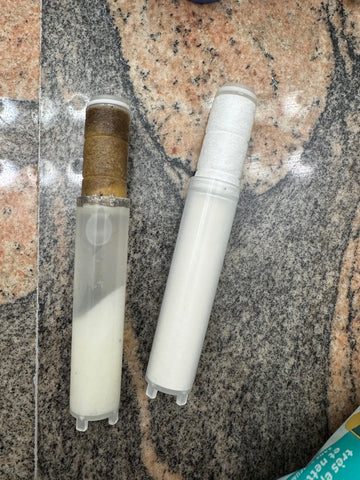
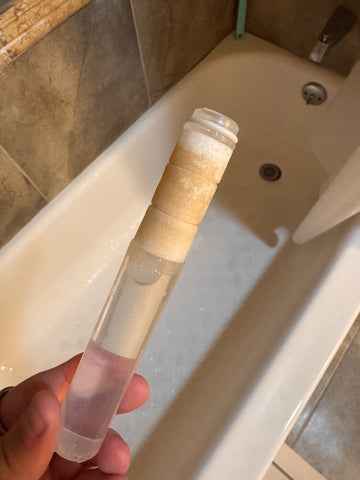
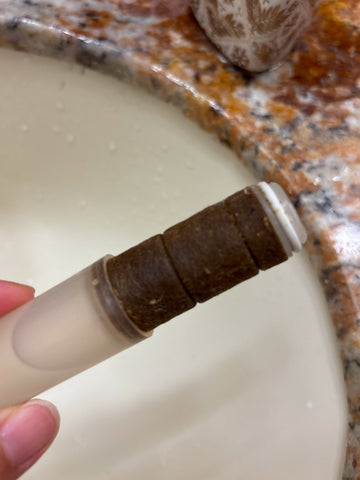
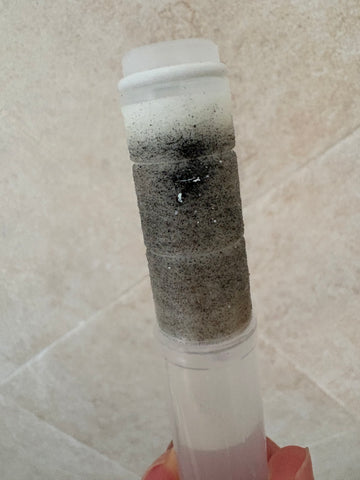
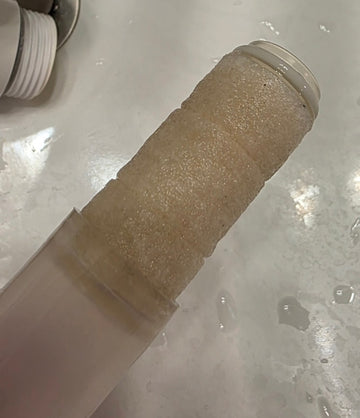
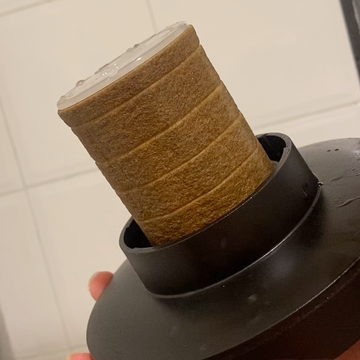
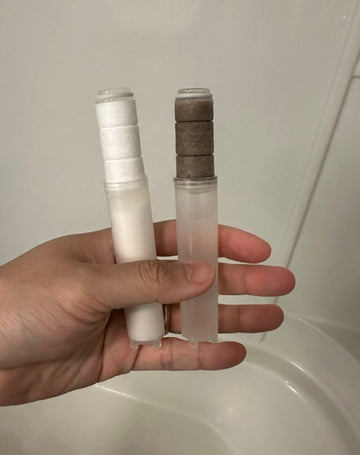
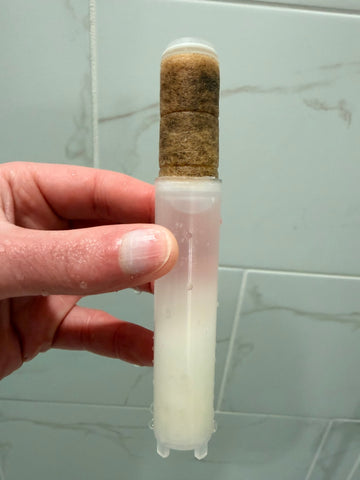
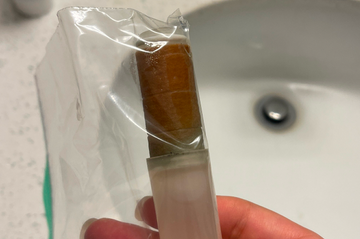
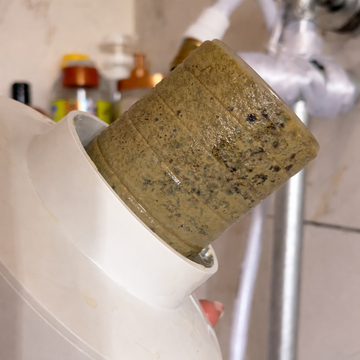
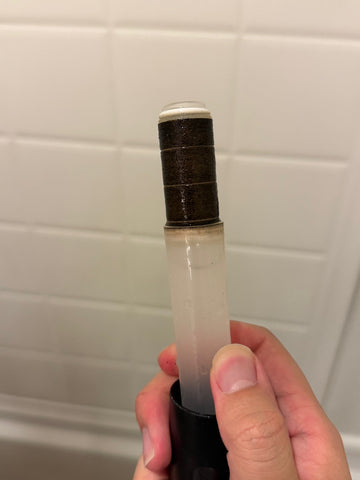
Use a new filter every 60 days on the Showerhead and every 30 days on the Showerhand, sooner if the cartridge looks deep brown or black or the pressure drops. Harder water with high TDS or sediment shortens filter life. The transparent Truth Window on the Showerhand lets you see discoloration as the cartridge saturates - no guessing when to replace.
Installation takes 3-5 minutes with no tools. Unscrew your existing showerhead, hand-tighten Second Shower onto the pipe threads, and turn the water on. Renter-friendly and reversible. Jolie requires a wrench and Teflon tape for proper seal; Canopy's mounting bracket needs a screwdriver.
"My hair still isn't perfect, but it stopped feeling like straw after every shower. That alone made it worth it."
Scottsdale water averages 12-18 grains per gallon hardness with 1.8-3.2 ppm free chlorine - one of the harshest combinations for color-treated hair. The straw texture this customer describes is lipid layer damage, which Vitamin C filtration prevents by stopping chlorine before it contacts the cuticle.
What a Shower Filter Won't Fix
Shower filters remove chlorine, chloramine, and sediment.
Shower filters remove chlorine, chloramine, and sediment. They do not soften water by removing dissolved calcium and magnesium. Those minerals stay in the water because they're not particulate - they're ions.
If you have hard water above 10 grains per gallon, you'll still get mineral buildup on hair and shower surfaces. A shower filter prevents oxidative color fade from chlorine, but you'll need a clarifying treatment every 2-4 weeks to strip calcium deposits.
A whole-house ion-exchange softener is the only way to remove hardness minerals at the source. Pair a softener with a Vitamin C shower filter for complete protection: soft water eliminates scale, Vitamin C eliminates oxidants. One without the other leaves half the problem unsolved.
Shower filters also don't reverse existing damage. If your color is already faded, brassy, or porous from months of chlorine exposure, a filter prevents further damage but won't restore lost pigment. You'll need a color refresh or toner to correct what's already degraded.
Permanent color will still fade naturally over 6-10 weeks as dye molecules oxidize from UV, heat styling, and washing. A shower filter slows chlorine-induced fade by 40-60%, but it doesn't make color permanent forever. Expect to extend your salon visits from every 4-6 weeks to every 8-10 weeks, not eliminate color maintenance entirely.
I would rather you buy the right product for your water than push you toward ours. If hard water is your only problem and chlorine isn't an issue in your city, a KDF-based filter or softener may be enough. But if you're fighting color fade every 4-6 weeks, chlorine is almost always the culprit - and Vitamin C is the only shower filter chemistry that neutralizes it fast enough to matter.
Protect Your Color Investment
If you spend $150-300 every 6-8 weeks on salon color and it fades to brassy or dull within two weeks, your water is the problem.
If you spend $150-300 every 6-8 weeks on salon color and it fades to brassy or dull within two weeks, your water is the problem. Second Shower's Vitamin C filtration removes 99.9% of free chlorine during the Day 1-60 peak window and neutralizes chloramine where carbon and KDF filters fail. NSF/ANSI 42* certified sediment component. Five-minute install. Take it with you if you move.
*Micron PP sediment filter certified by NSF/ANSI 42 standards.
Shop Second Shower Showerhead or find it on Amazon. If you need the handheld version for targeted rinsing or rental flexibility, see the Showerhand here.
Vitamin C wall-mount filter — 99.9% chlorine and chloramine reduction during the cartridge's peak performance window (Day 1–60). $79 on subscription, a new filter every 60 days, NSF/ANSI 42* certified PP sediment pre-filter.
Shop the Second ShowerheadRelated Reading
FAQ
Will a shower filter stop my red hair dye from fading?
A Vitamin C shower filter removes the chlorine that oxidizes red chromophores, which slows fade by 40-60%. Reds still fade faster than other colors because their molecular structure is more vulnerable to UV and heat, but eliminating chlorine exposure is the single most effective step. Expect to extend your salon visits from every 3-4 weeks to every 6-8 weeks.
Pair the filter with sulfate-free shampoo and a weekly purple or blue toning mask for maximum longevity.
Do I still need a clarifying shampoo if I use a filtered showerhead?
Yes, if you have hard water above 7 grains per gallon. Shower filters remove chlorine and sediment but do not soften dissolved calcium and magnesium. Those minerals still deposit on your hair and require chelating agents (EDTA, citric acid, or malonic acid) to remove. Use a clarifying treatment every 2-4 weeks, or whenever hair feels coated or heavy. The filter prevents oxidative color fade; the clarifier strips mineral buildup.
Both are necessary in hard water areas.
Will this work if my city uses chloramine instead of chlorine?
Yes - this is where Vitamin C filtration outperforms KDF-55 or carbon media. Chloramine (NH₂Cl) has a nitrogen-chlorine bond that KDF barely reduces. Vitamin C neutralizes chloramine through the same ascorbic acid reaction it uses for free chlorine. If you live in Phoenix, Philadelphia, San Francisco, or any city that switched to chloramine for distribution stability, Second Shower is one of the few filters that addresses it.
Check your utility's water quality report to confirm whether your system uses chlorine or chloramine.
How often do I need to replace the filter cartridge?
Every 4-6 months for the Showerhead, every 3-6 months for the Showerhand, depending on household size and water quality. Second Shower holds 99.9% free chlorine reduction through the Day 1-60 peak window (Showerhead) or Day 1-30 (Showerhand). Performance tapers after the peak window as the Vitamin C cartridge saturates. Hard water with high sediment shortens filter life.
The Showerhand's transparent Truth Window shows discoloration as the cartridge loads - replace when the chamber turns brown or amber.