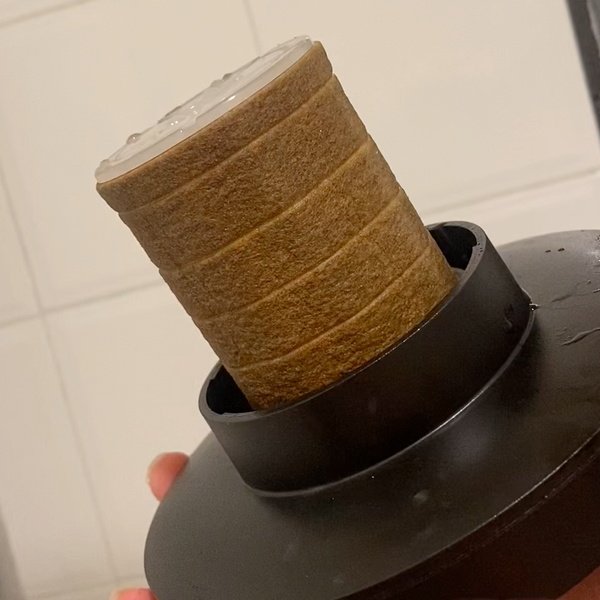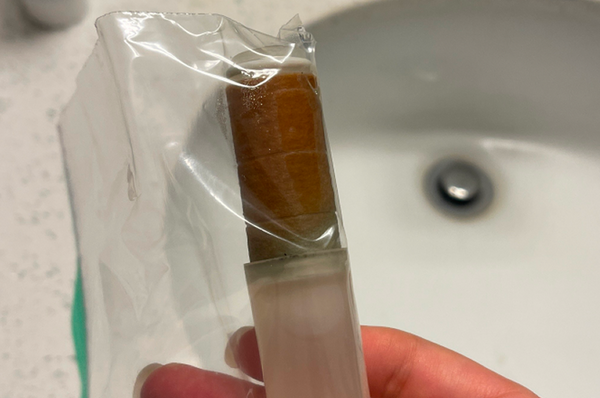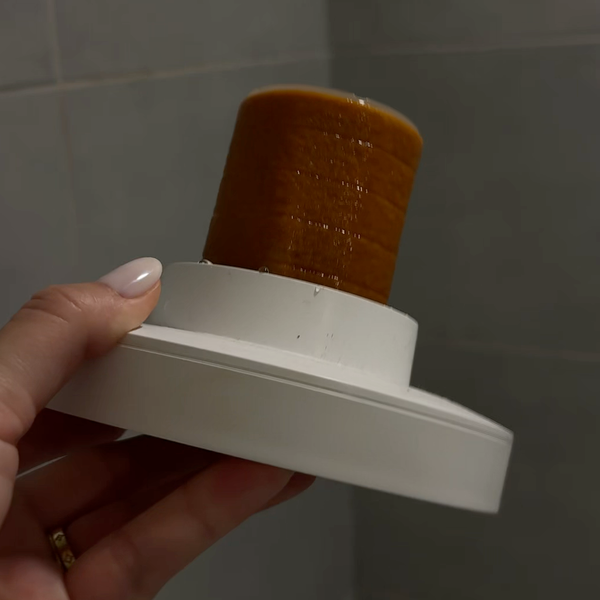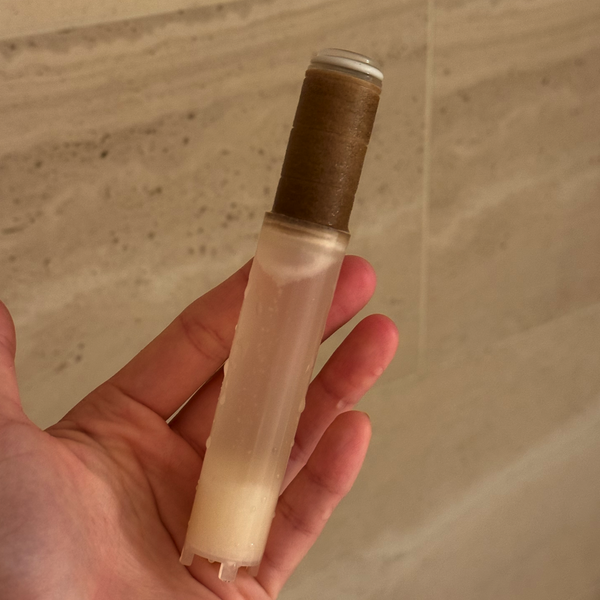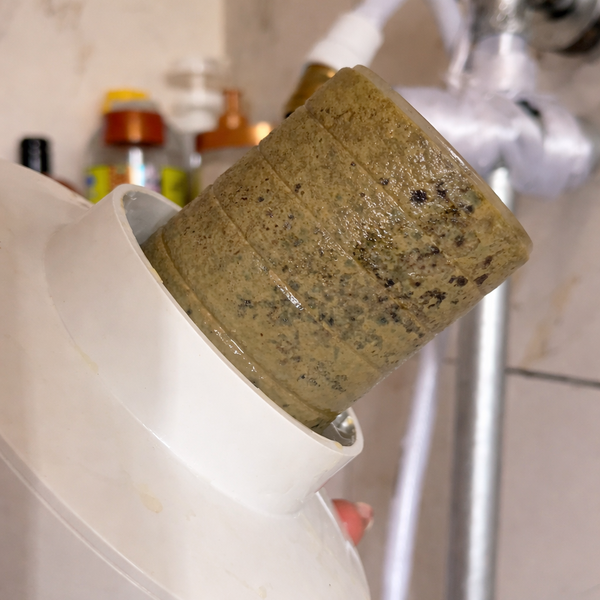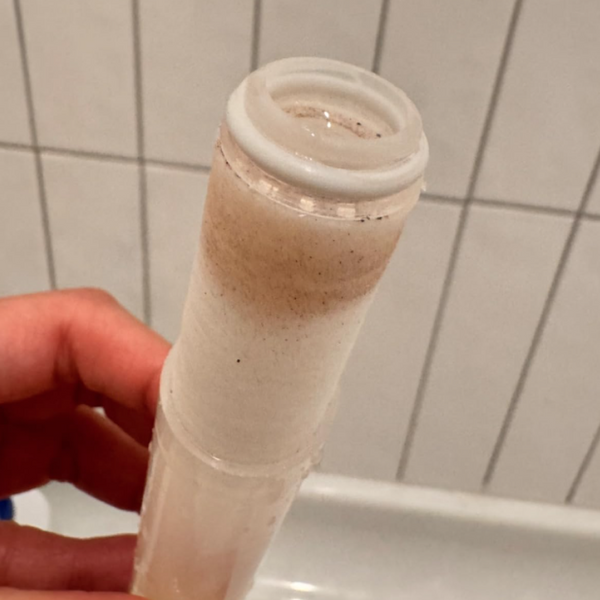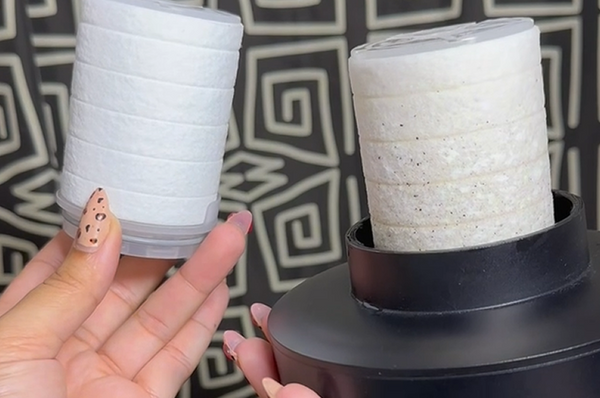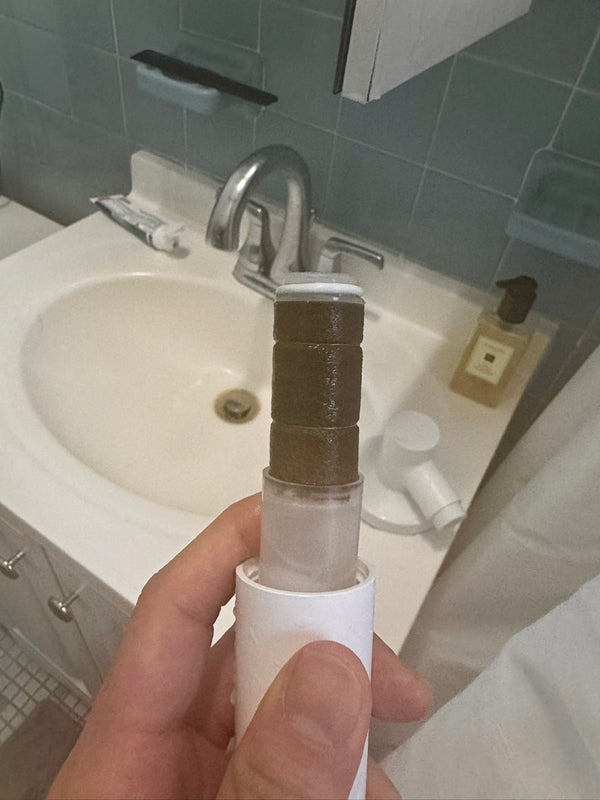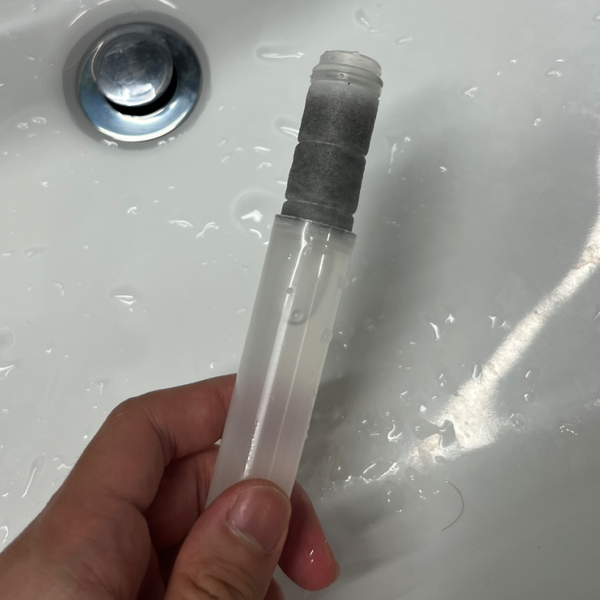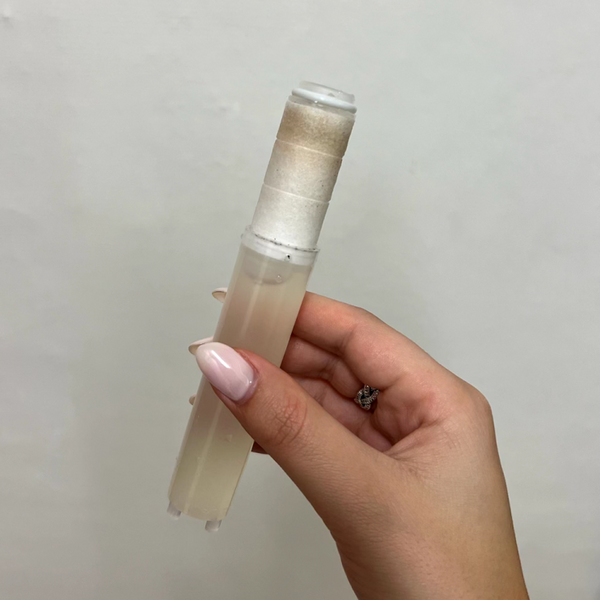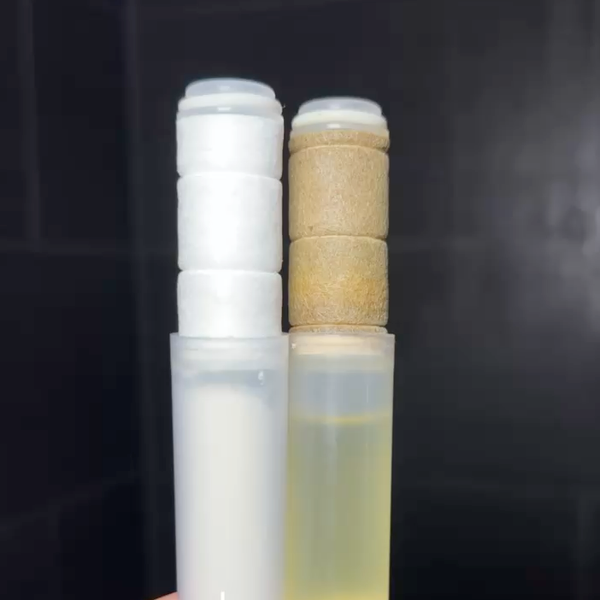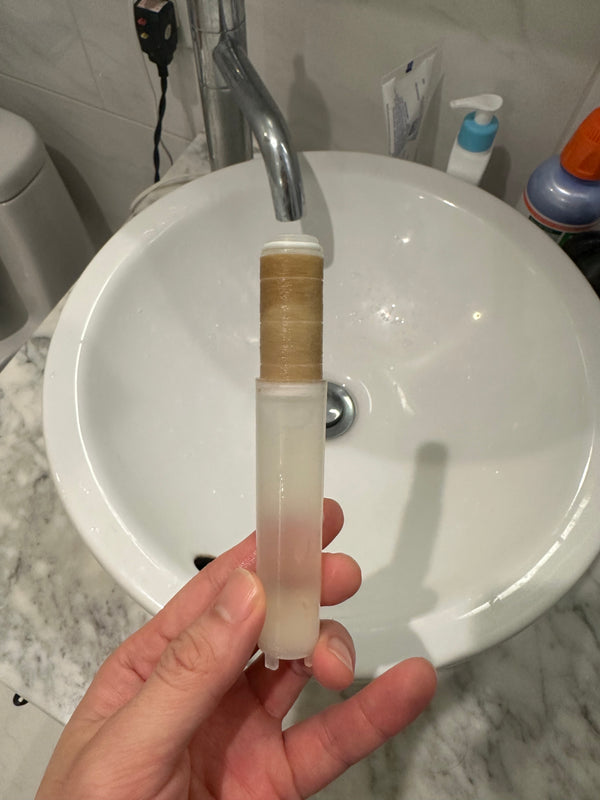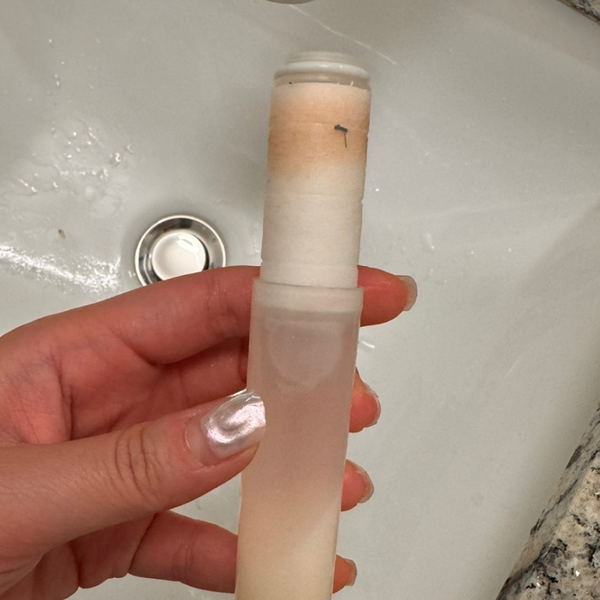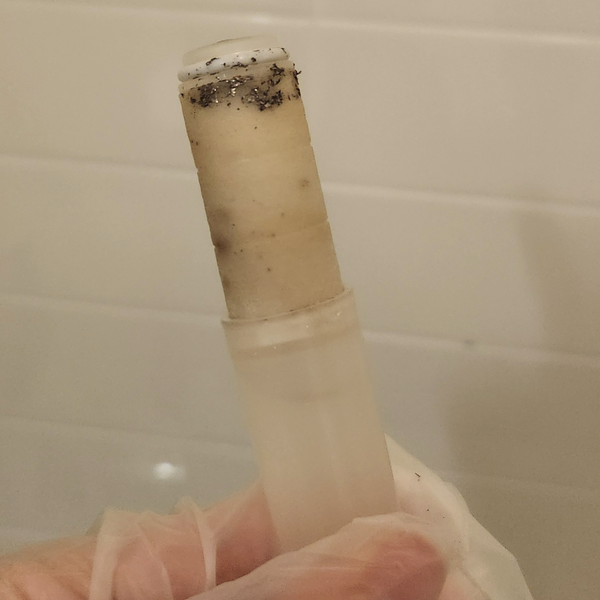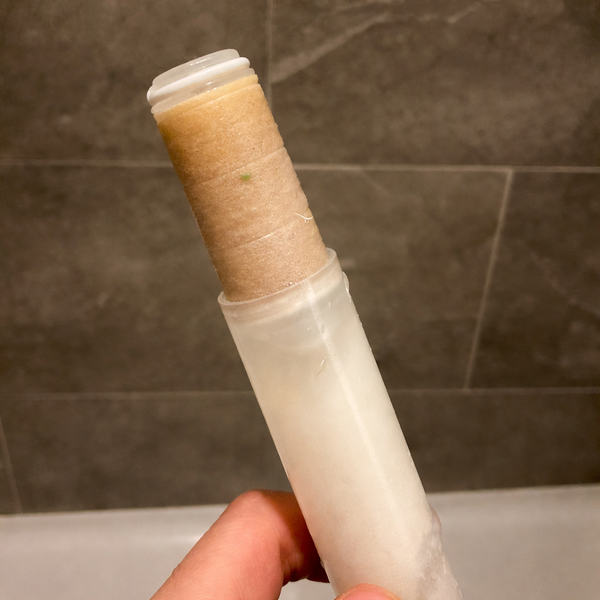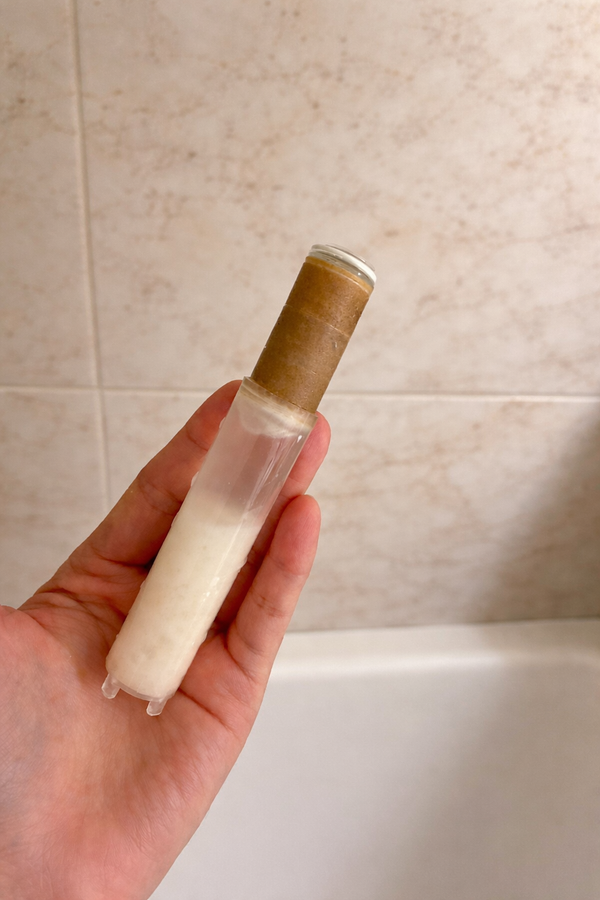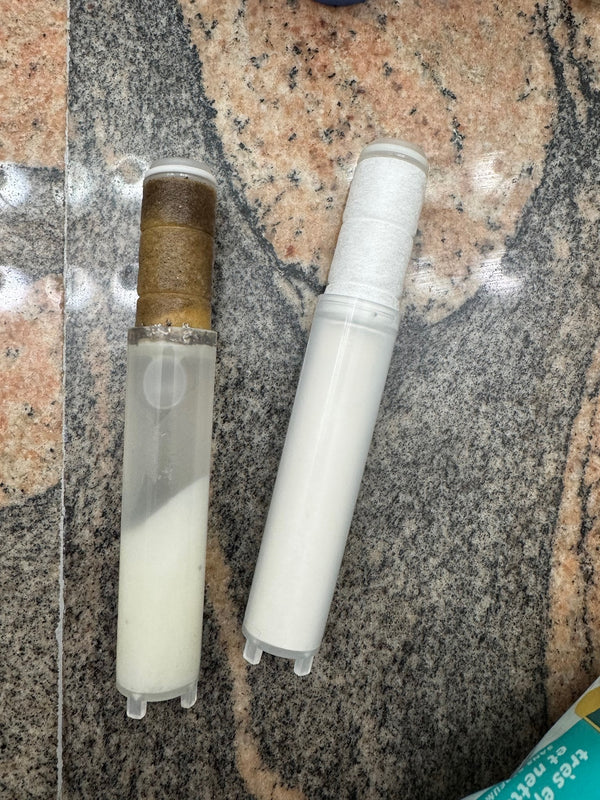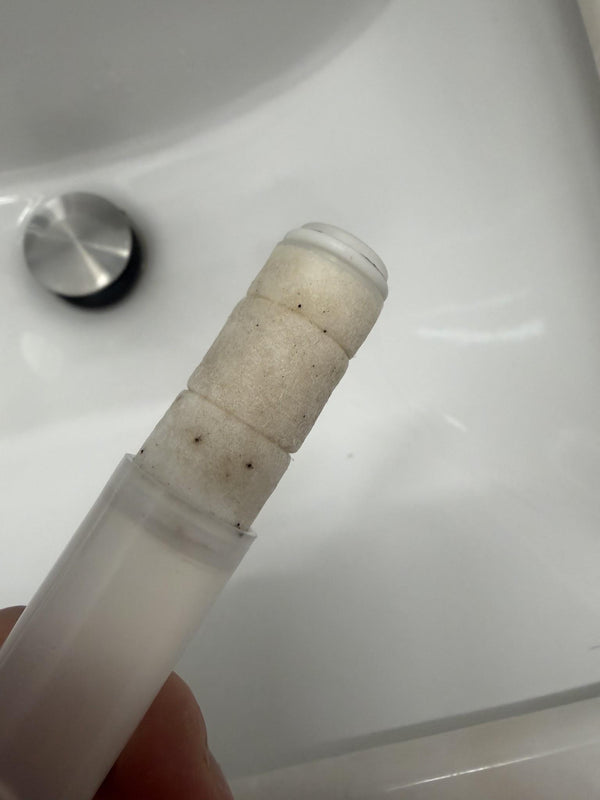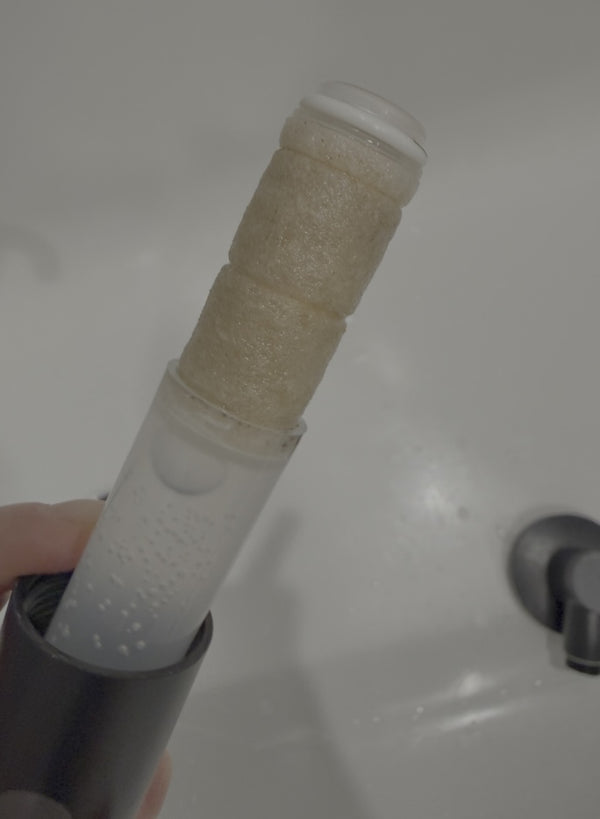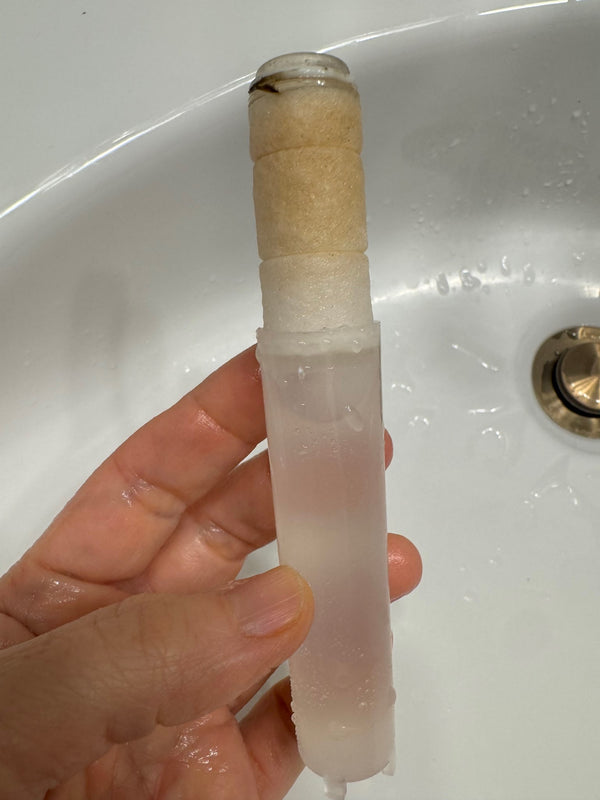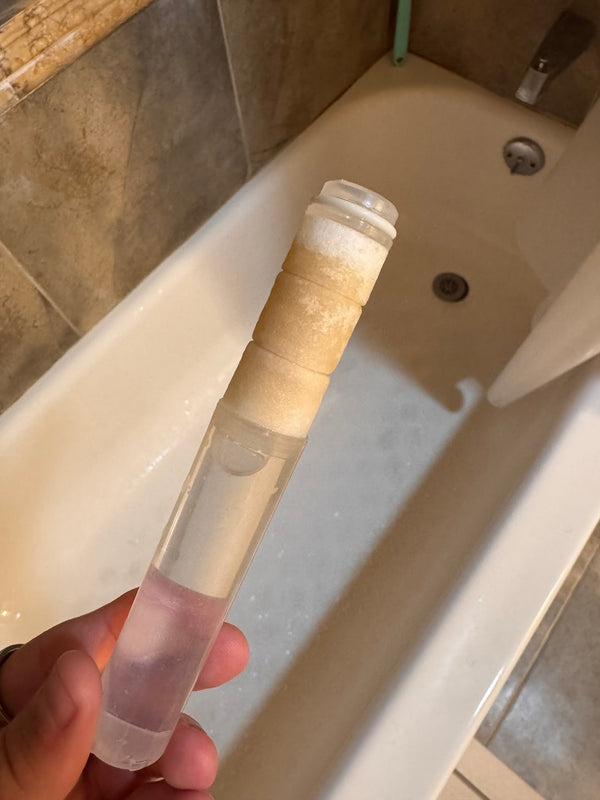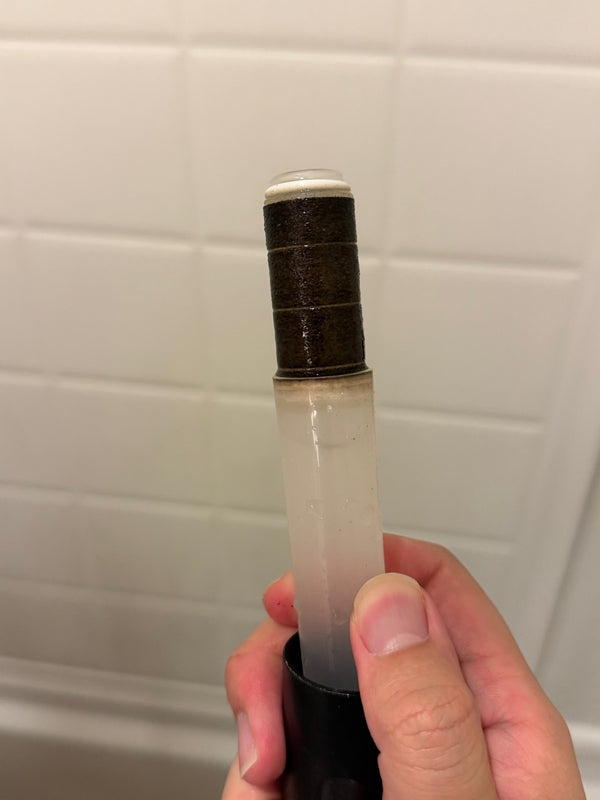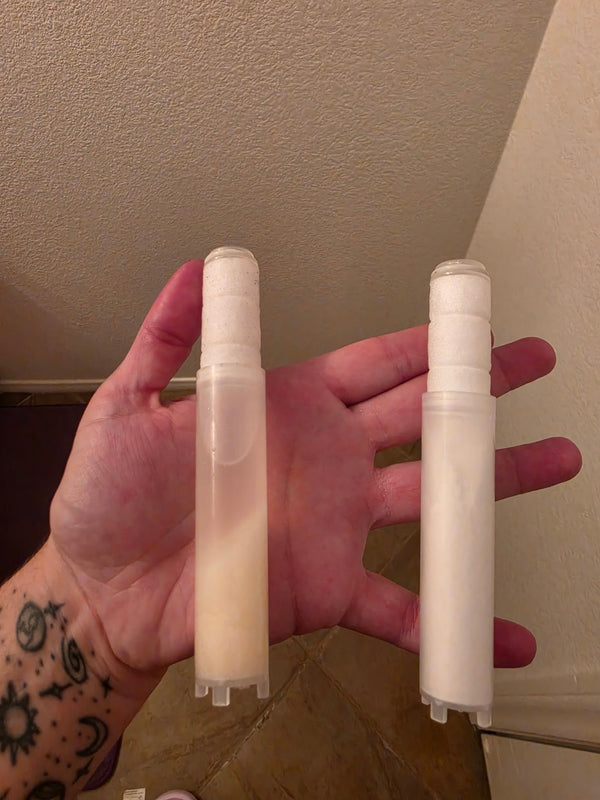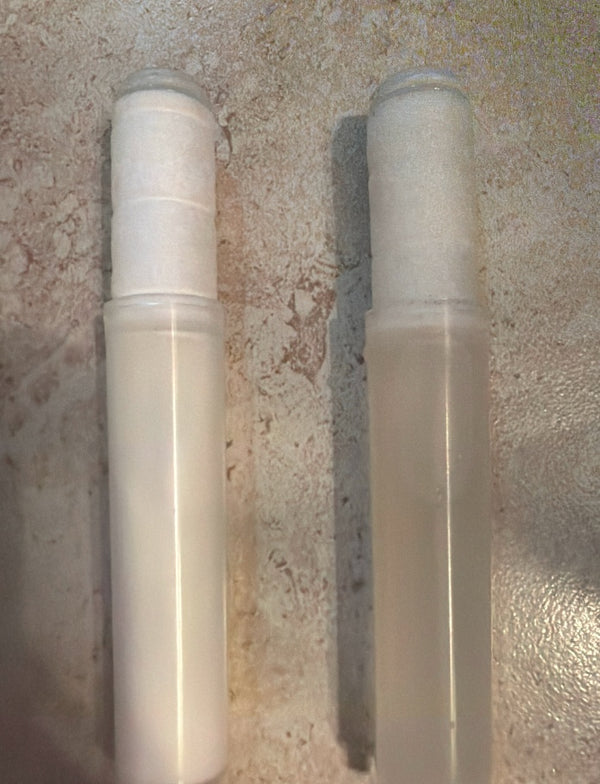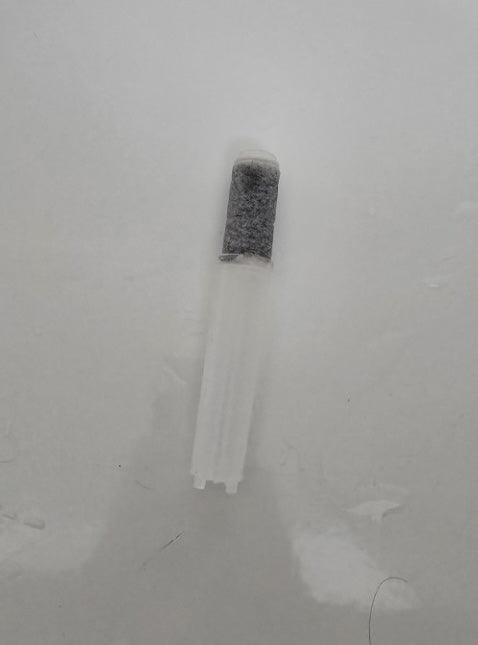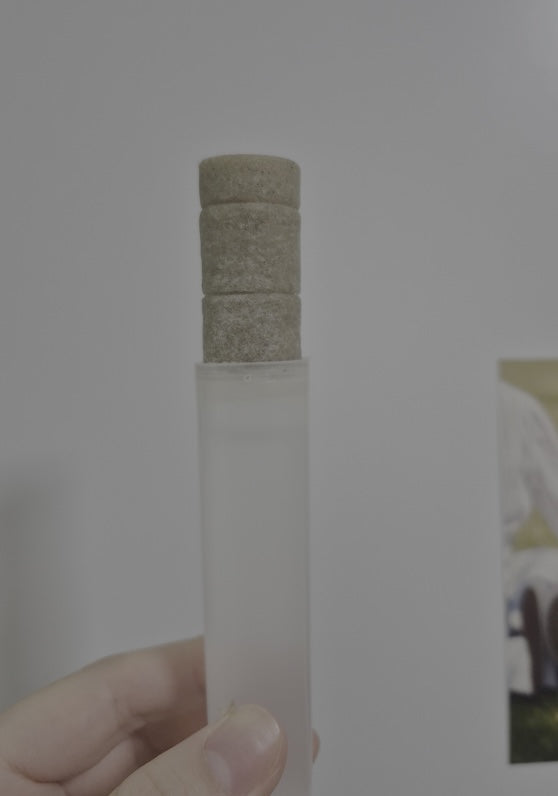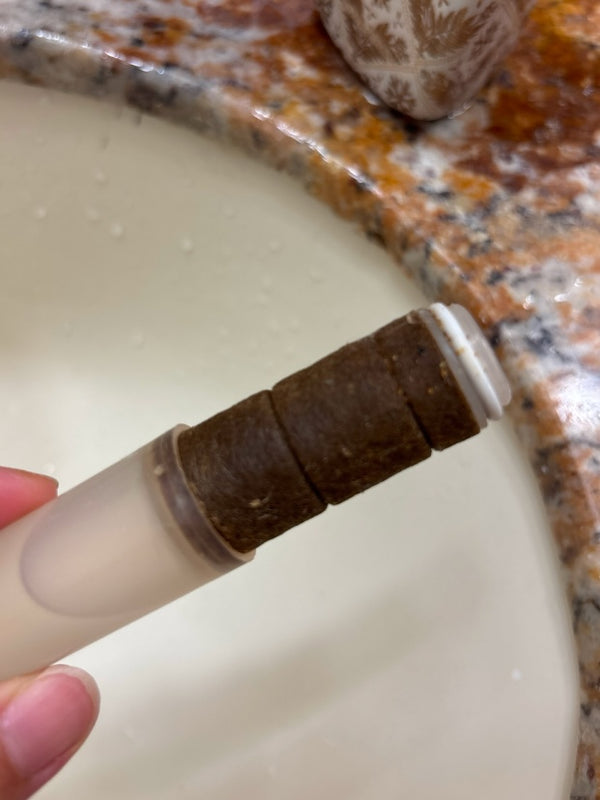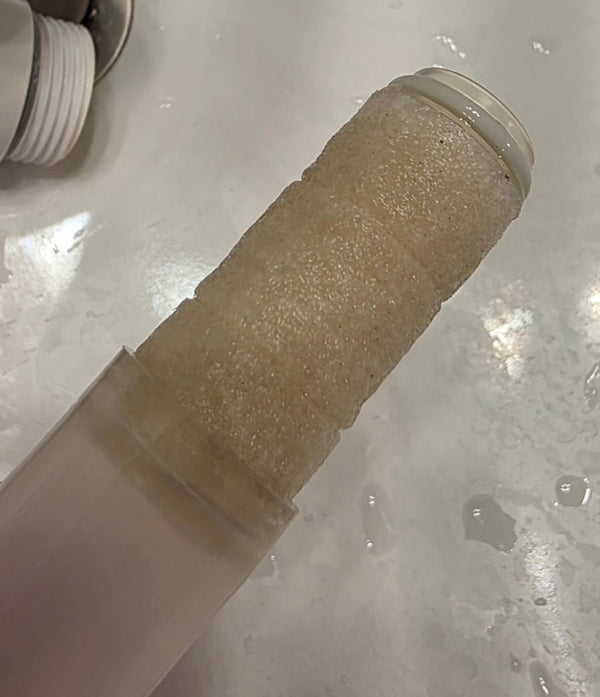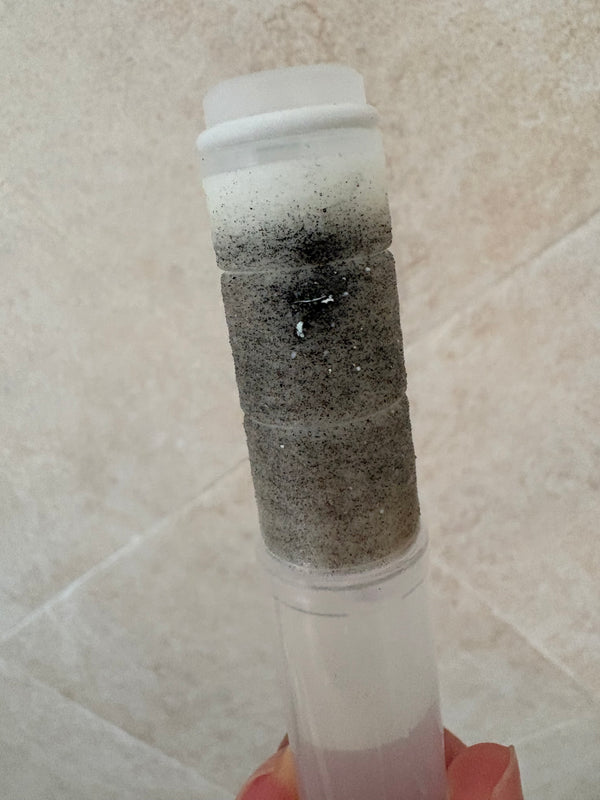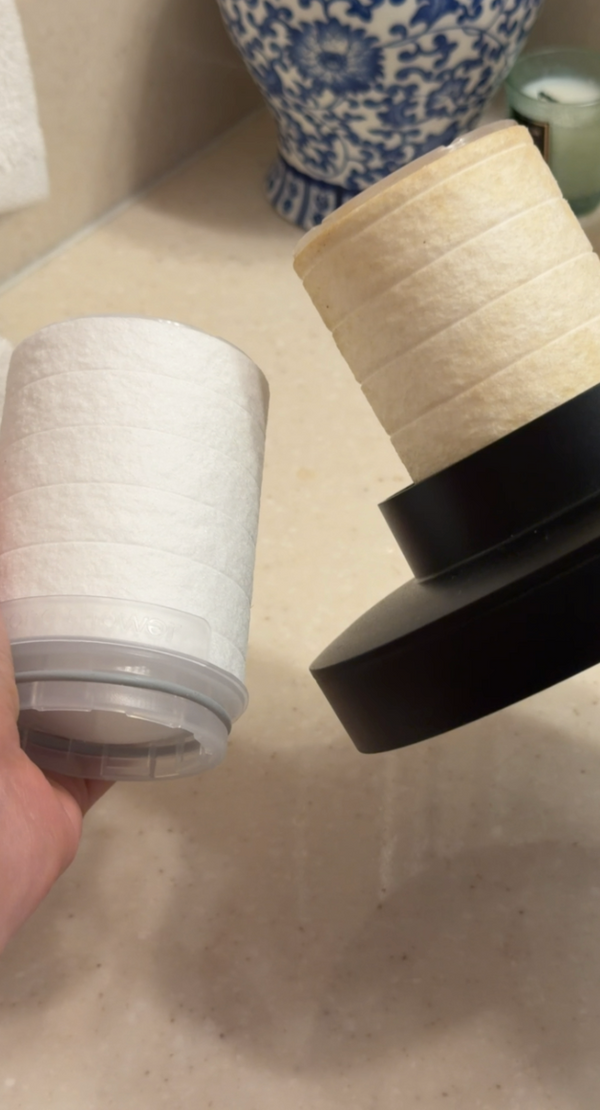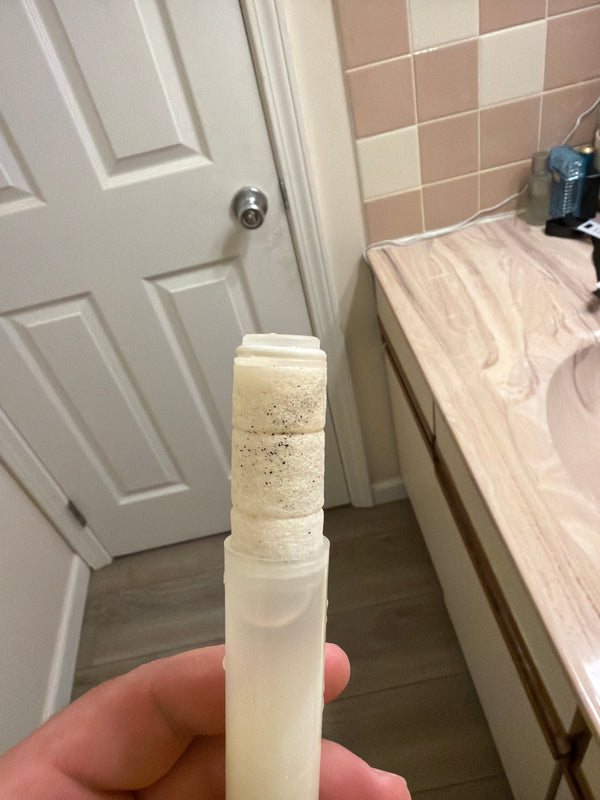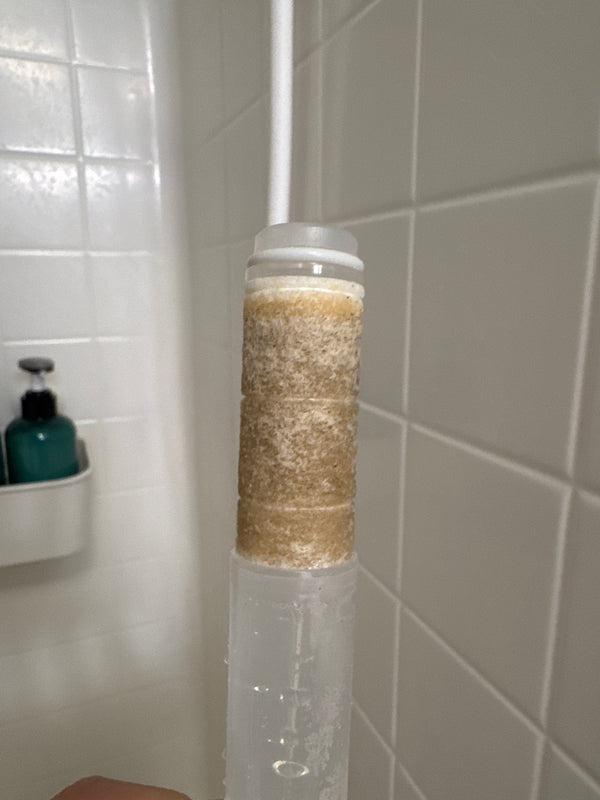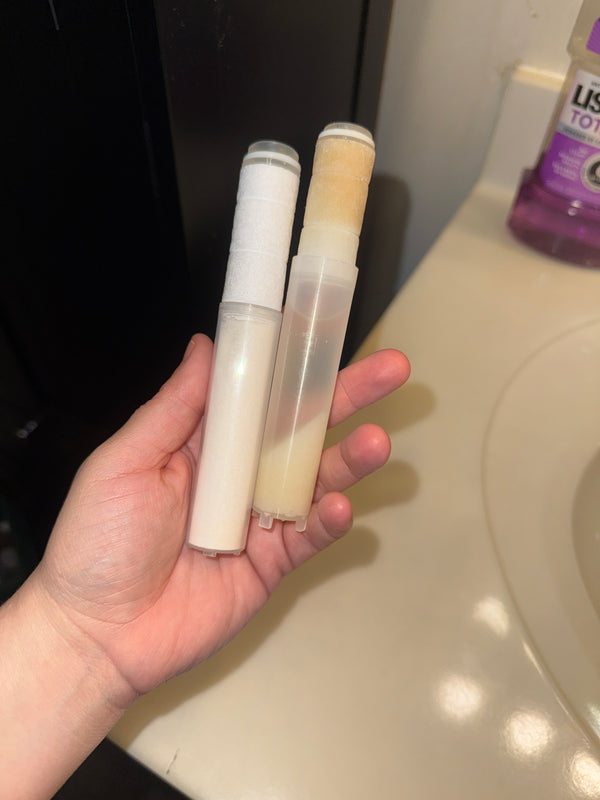
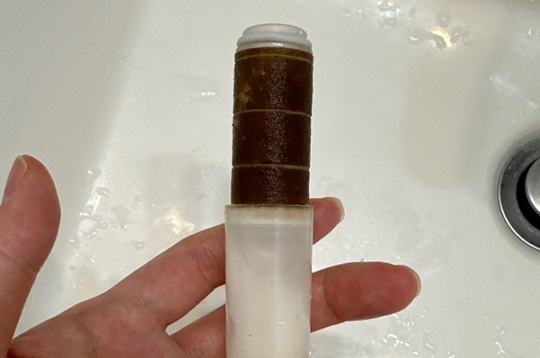
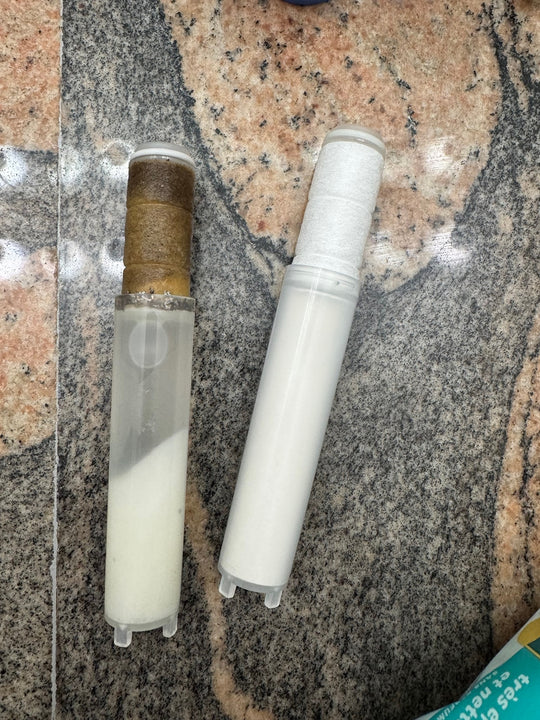
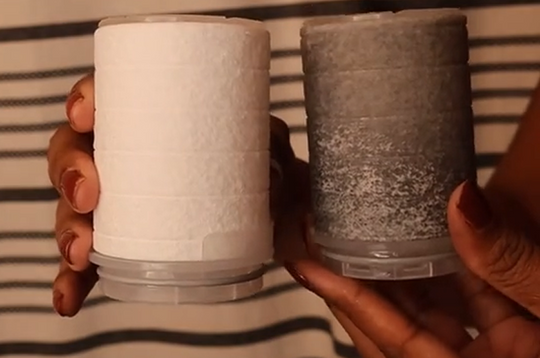
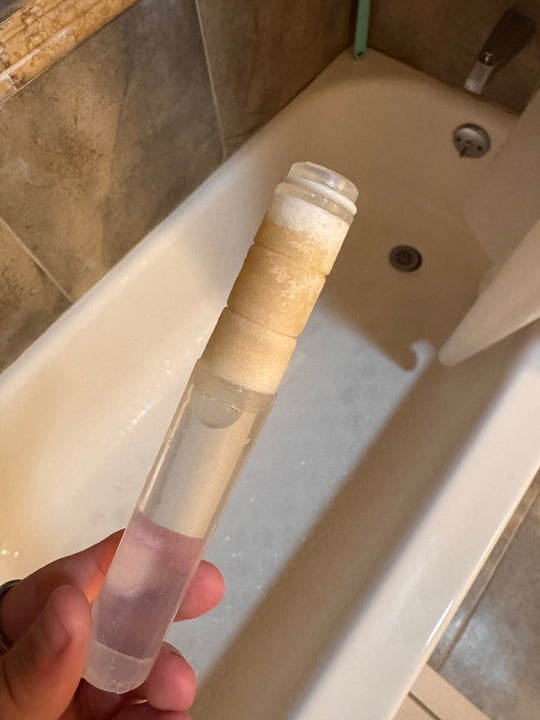
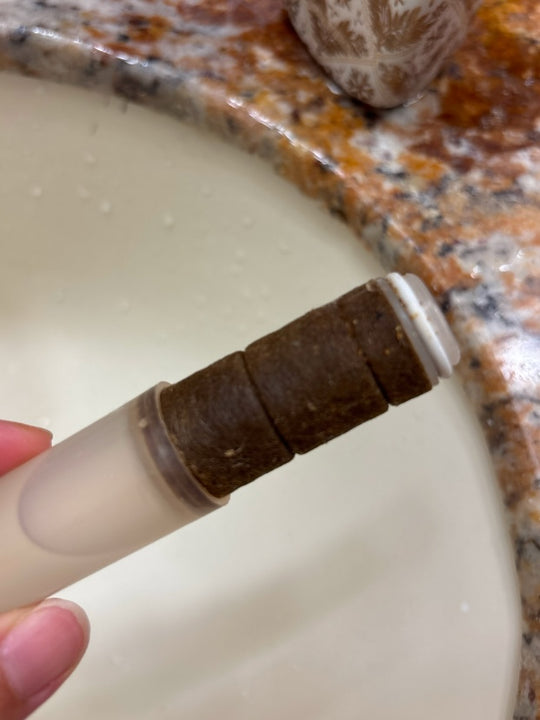
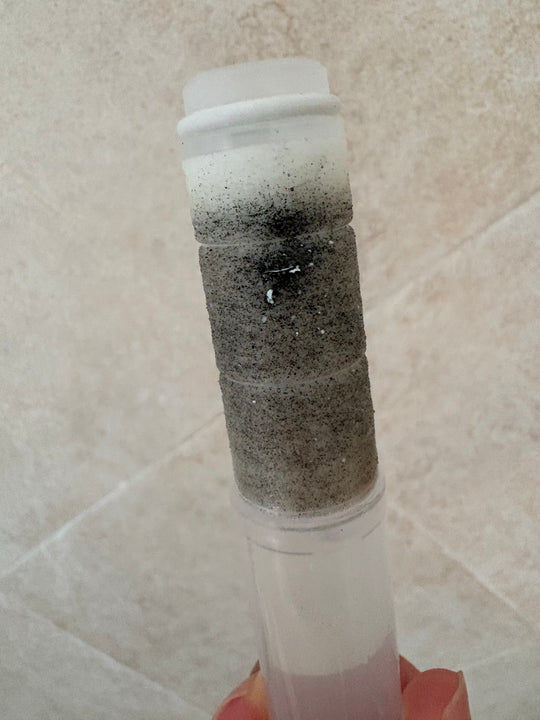
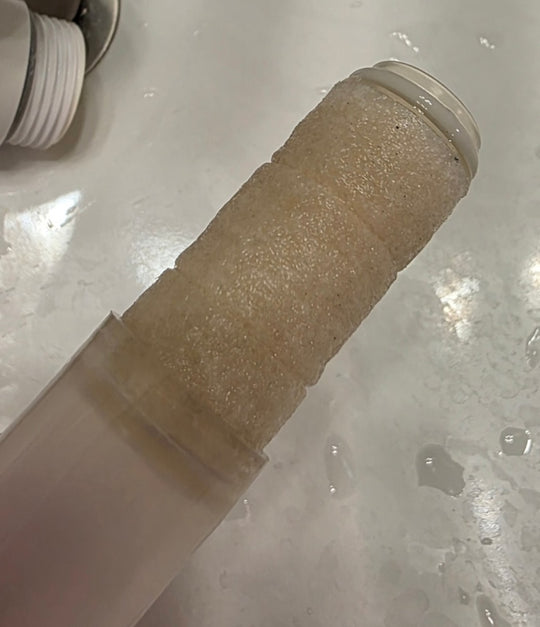
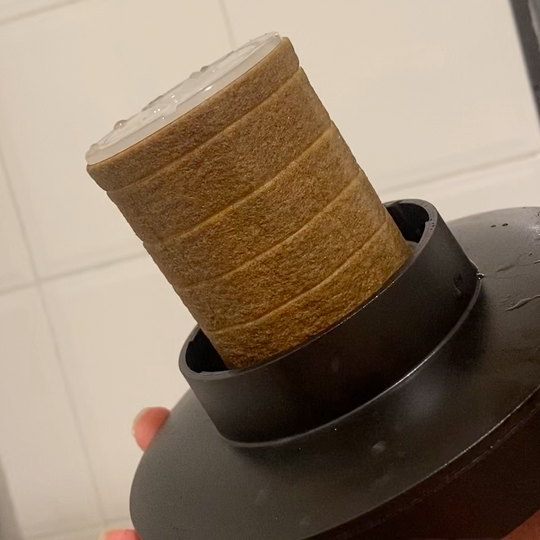
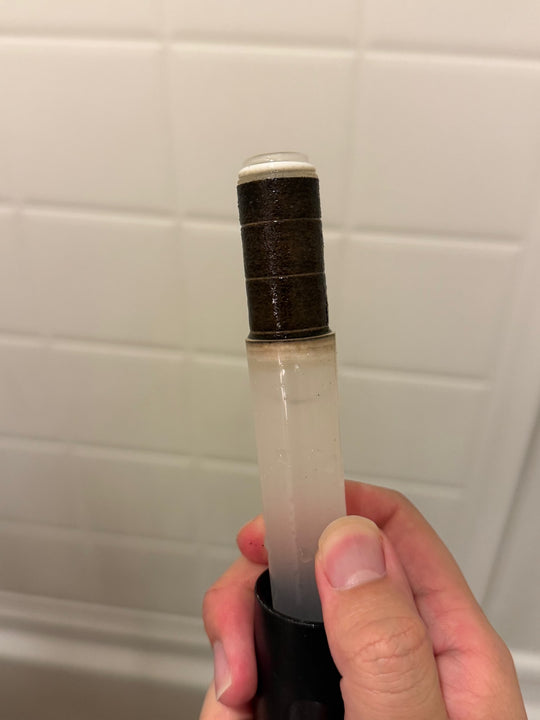
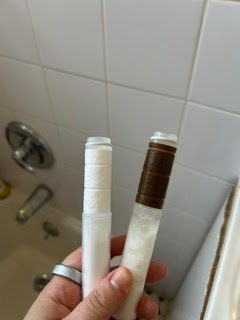
That white crust is limescale: calcium and magnesium left behind when hard water dries in the nozzles. Take the head off (or tie a bag of white vinegar around it) and soak it for 1 hour, or overnight if the buildup is heavy. Then rub the rubber nozzles with your thumb and rinse with the water running. If vinegar alone doesn't clear it, use a citric acid solution, soak longer, and check the screen at the inlet for grit. Replace the head if it's cracked, flaking or still weak after two thorough cleanings. Scale will come back as long as the water stays hard.

Why does my shower head keep clogging with white crust?
Hardness is the amount of dissolved calcium and magnesium in your water. When hard water dries, the minerals stay behind as scale, the same white crust you see on shower glass, faucets and inside a kettle.[1] A shower head is a perfect place for it to grow: after every shower, a little water sits in each nozzle and evaporates, so each shower leaves a thin new layer. Over weeks the nozzles narrow, some close off completely, and the spray turns weak or shoots sideways.
The USGS classes water by hardness in mg/L: soft 0 to 60, moderately hard 61 to 120, hard 121 to 180, very hard over 180. In grains per gallon (gpg), hard begins at 7 and very hard starts above 10.5.[1] If you just moved and your new head clogs much faster than your old one did, the water is the likely reason, not you or the fixture.
To find your number, look at your utility's Consumer Confidence Report, the annual water quality report every community water system must send its customers, usually by July 1. Many list hardness, and the utility's name is on your water bill.[2] Hardness test strips are inexpensive and give a reading in about a minute. You can also look up your ZIP code on our water page. One caution: a TDS meter measures all dissolved solids, so it isn't a hardness test.
How do I clean it properly the first time?
A soak works best when it lasts long enough, covers the whole face, and is followed by a scrub. Here's a method that covers all three.
- Take it off if you can. Most heads unscrew from the shower arm counterclockwise by hand. If it's stuck, wrap a cloth around the nut before you use a wrench or pliers so the jaws don't scratch the finish.
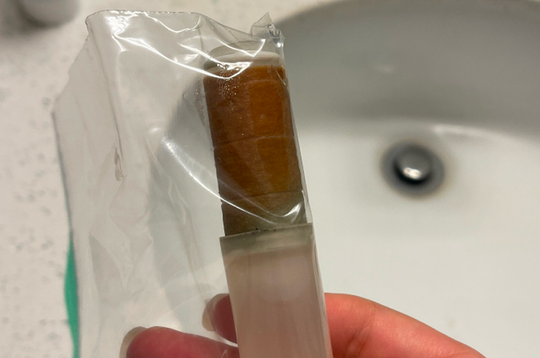
- Or bag it in place. If it won't come off, fill a plastic bag with white vinegar, pull it up so the whole face is under the liquid, and tie it around the arm with a rubber band or a twist tie.
- Soak for the right amount of time. Give light buildup about 1 hour. Heavy crust can need several hours or overnight. Check partway through: once the scale goes soft or chalky, it has done its job.
- Scrub the nozzles. Many heads have soft rubber nozzles. Rub across them with your thumb and the loosened scale crumbles out. On the faceplate, use an old soft toothbrush.
- Flush it. Put the head back on and run hot water for a minute to push out loose flakes.
Don't mix vinegar with bleach or any other cleaner. Use one product at a time and rinse between them.
What can I try when a vinegar soak didn't clear the nozzles?
Thick or old scale can take more than a single soak. Work through these steps in order and stop once the spray comes back.
- Soak again, longer, after a scrub. The first soak softens the outer layer and the scrub removes it. A second soak can then reach the scale underneath.
- Warm the vinegar. Warm vinegar (not boiling) usually works faster than cold. Only do this for a head you've taken off, never with the bag still on the fixture.
- Try citric acid. Citric acid powder sold for descaling kettles and coffee makers dissolves scale too, and it smells milder than vinegar. Mix it according to the package.
- Use a store-bought descaler. Products labeled for limescale on bathroom fixtures can be stronger. Follow the label exactly, especially the contact time and the list of finishes it's safe on.
- Clear single nozzles by hand. If a few holes are still blocked after a soak, gently push a toothpick into each one. Don't force a pin through a rubber nozzle, because a torn nozzle sprays in the wrong direction for good.
- Open the faceplate if it's designed to open. Some heads have a faceplate held by screws or a twist ring. Scale can sit behind it, out of reach of any soak. Never pry one open if it isn't built to come apart.
How do I clean a shower head in a rental without damaging it?
You want to give the head back looking the way you found it. Remember that acids attack mineral scale and can also dull some finishes.
- Know the finish. Plain chrome usually handles a vinegar soak well. Brass, gold-tone, matte, painted and oil-rubbed bronze finishes can be more delicate. If the brand is printed on the head, check the maker's care instructions.
- Test first. Dab a little of your cleaner somewhere that won't show and wait before you soak the whole head.
- Keep soaks short on delicate finishes. Check every 30 minutes and take the head out as soon as the scale loosens.
- No abrasives. Skip steel wool, wire brushes and scouring powder. A soft toothbrush and a cloth are enough.
- Rinse and dry. Rinse off every trace of cleaner and dry the head with a towel so no acid is left on the surface.
- Protect the threads. When you put the head back, wrap the shower arm threads with a few turns of plumber's tape, clockwise, and tighten by hand. Overtightening cracks plastic nuts.
Is it scale, or is something else blocking the flow?
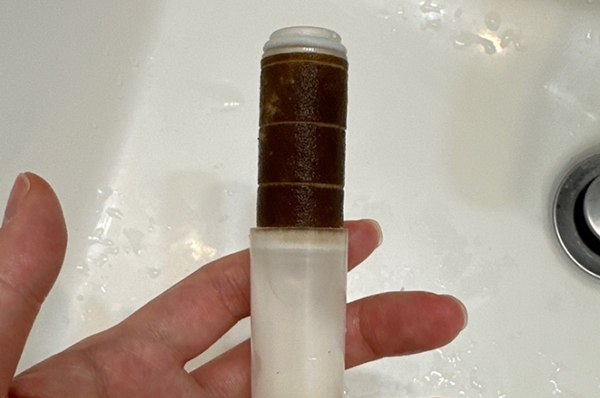
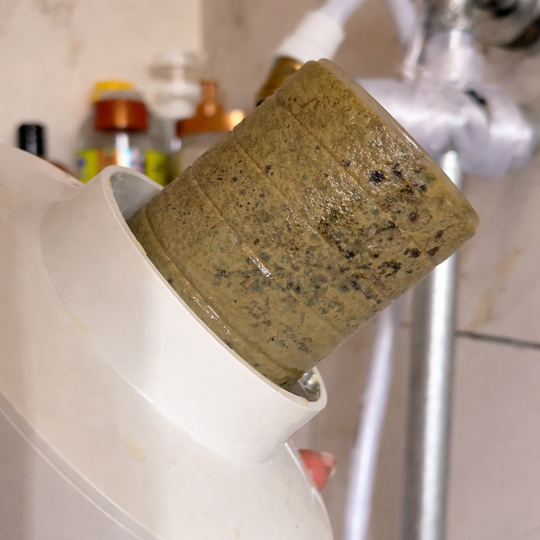
If the nozzles look clear and the spray is still weak, look inside the inlet, where the head screws onto the arm. Many heads have a small mesh screen or a flow restrictor there. Grit, sand or rust flakes from the building's pipes can catch on it, and older buildings with older plumbing are more likely to shed them. Take the screen out carefully, rinse it, and put it back. Don't throw the restrictor away, because it limits the flow rate the head was designed for.
If every fixture in the unit has weak pressure, not just the shower, the cause is probably in the building's plumbing. Tell your landlord.
When is a shower head too scaled to save?
| What you see | Clean it | Replace it |
|---|---|---|
| White crust on the face, a few blocked nozzles | Yes | |
| Spray still weak after two full soak-and-scrub rounds and a clean inlet screen | Yes | |
| Rubber nozzles torn, hardened or spraying sideways | Yes | |
| Plating peeling, flaking or pitted | Yes | |
| Cracked body or nut, or a leak at the connection that tape won't fix | Yes | |
| Scale sealed inside a head that doesn't come apart | One long soak | If that fails |
A basic replacement head can cost less than a stack of descaling products and weekends of scrubbing. In a rental, it's your landlord's call.
Can I swap the shower head in a rental?
Check your lease and ask your landlord first, in writing if you can. Some landlords are fine with a tenant swapping a clogged head, and some will replace it for you. If you do swap it, keep the original in a bag with its washer and put it back before you move out. Most US shower arms use a standard 1/2 inch thread, so for most heads the job is to unscrew one and screw on the other.
How do I slow the scale from building up again?
Cleaning only removes the scale that has formed. As long as the water is hard, it will keep forming. A few habits slow it down:
- Dry the face. After you shower, wipe the nozzles with a towel or run a squeegee over them. Scale forms where water evaporates.
- Rub the nozzles weekly. Thirty seconds with your thumb across the rubber nozzles breaks up fresh deposits before they harden.
- Descale on a schedule. A short monthly soak is easier than a rescue job every six months.
- Know what removes hardness. Calcium and magnesium are removed by an ion-exchange water softener, usually installed for the whole house. In a rental, that's a conversation with the landlord.
If hard water is also leaving soap scum or a film on your hair, a chelating shampoo is designed for that. It binds minerals like calcium and magnesium so they rinse away. It's meant for occasional use, so follow the label.
Will a shower filter fix hard water? (Short answer: no)
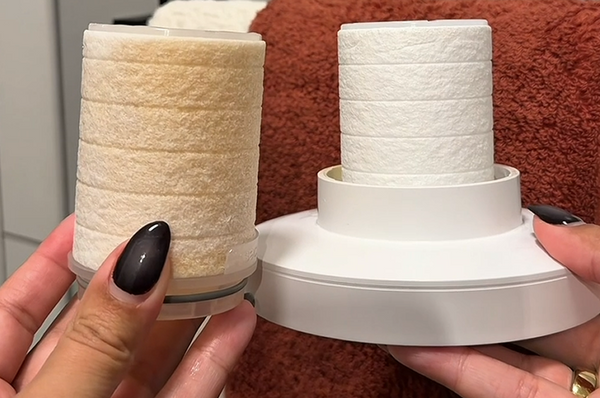
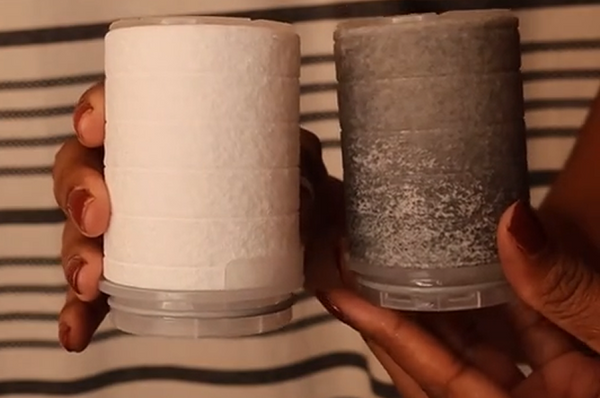
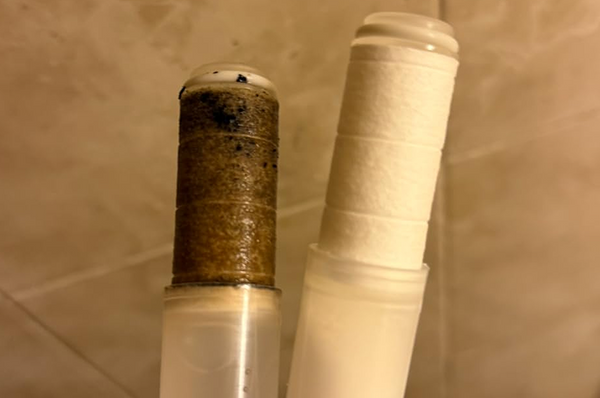
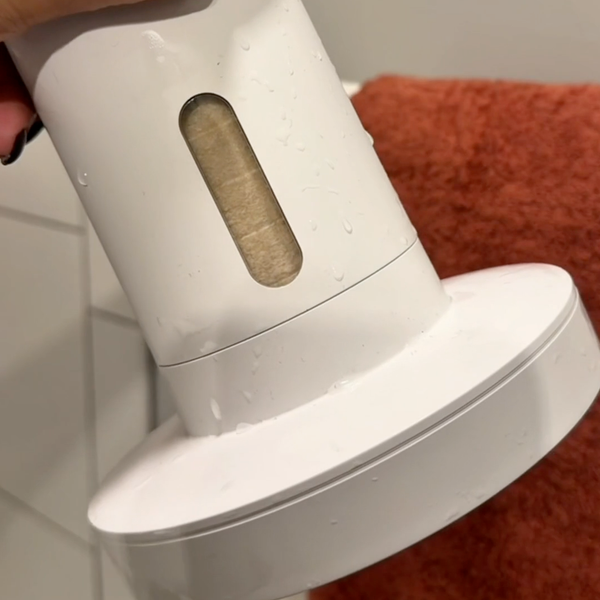
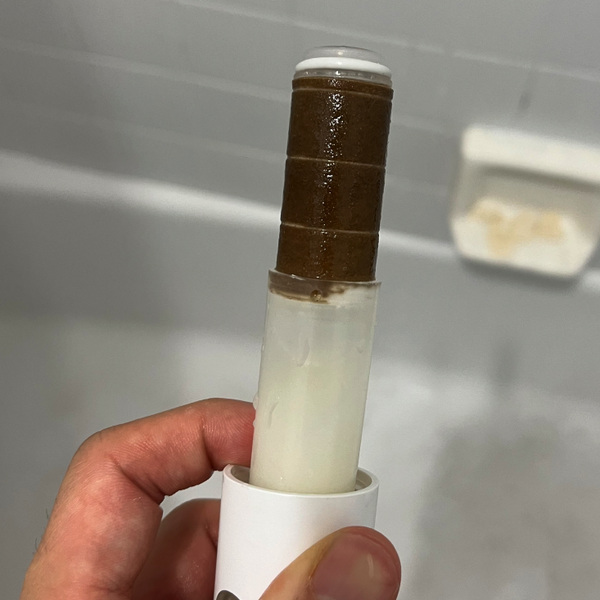
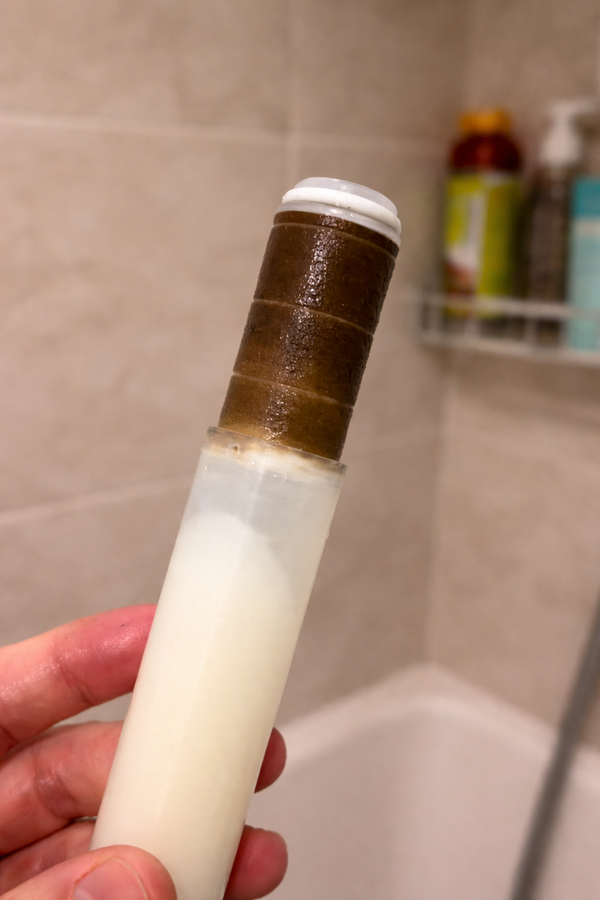
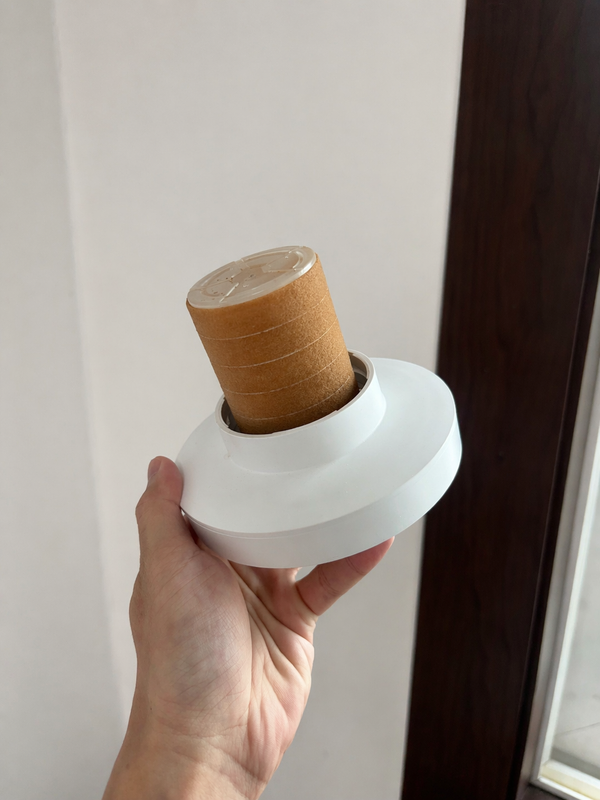
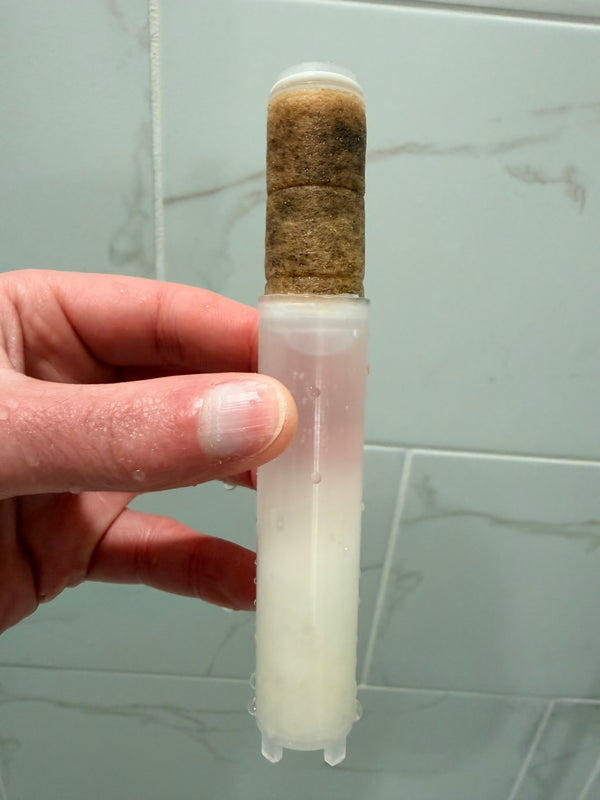
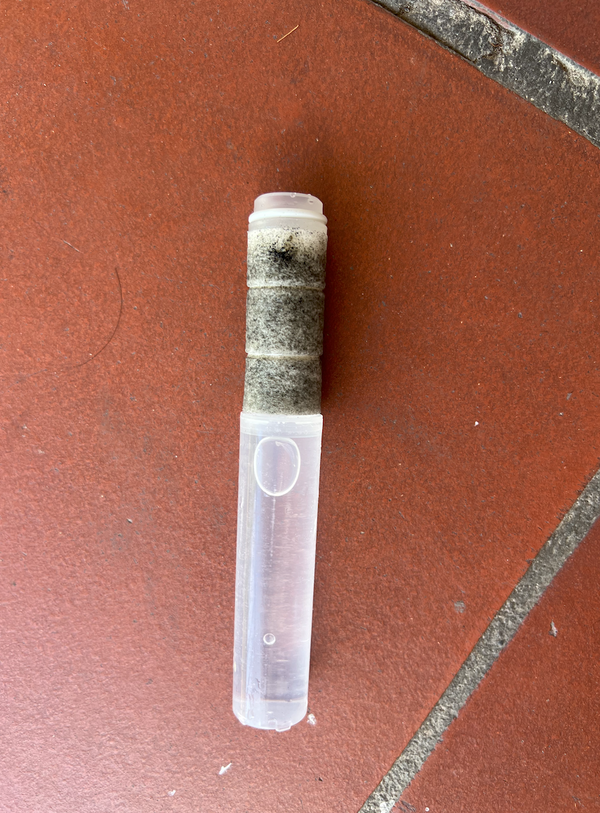
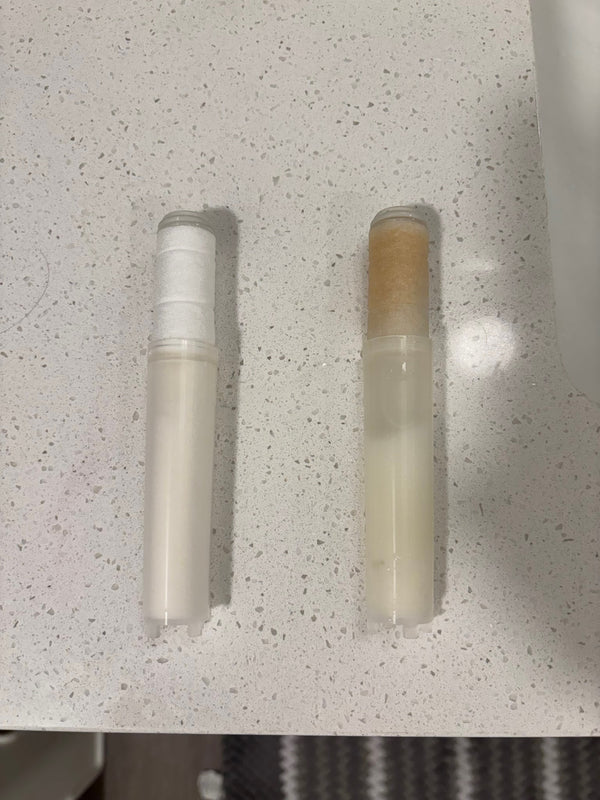
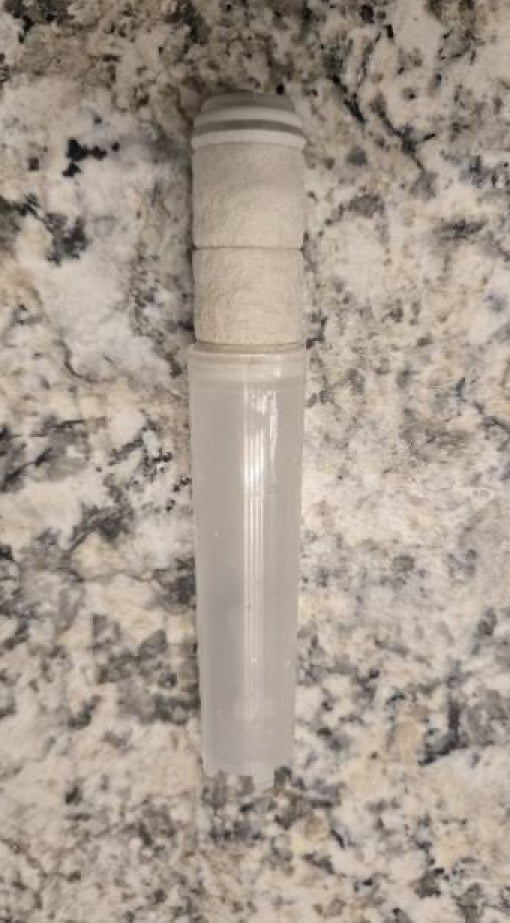
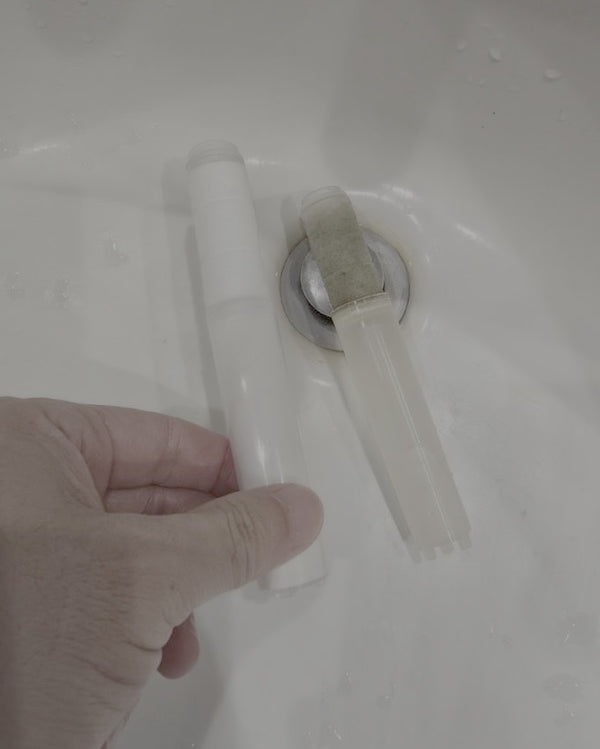
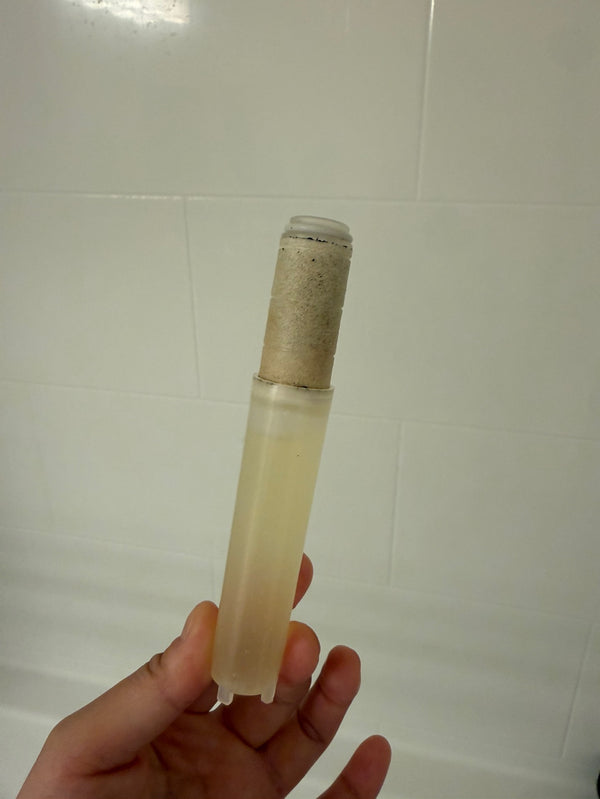
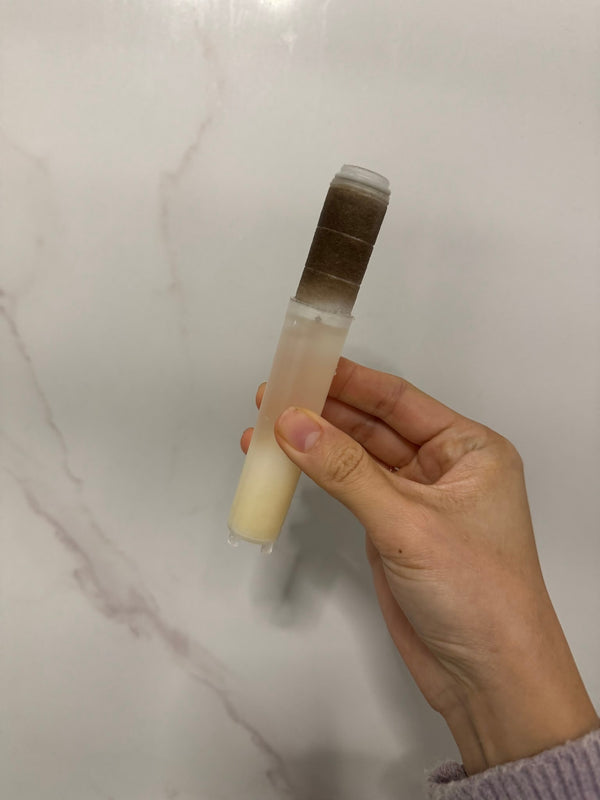
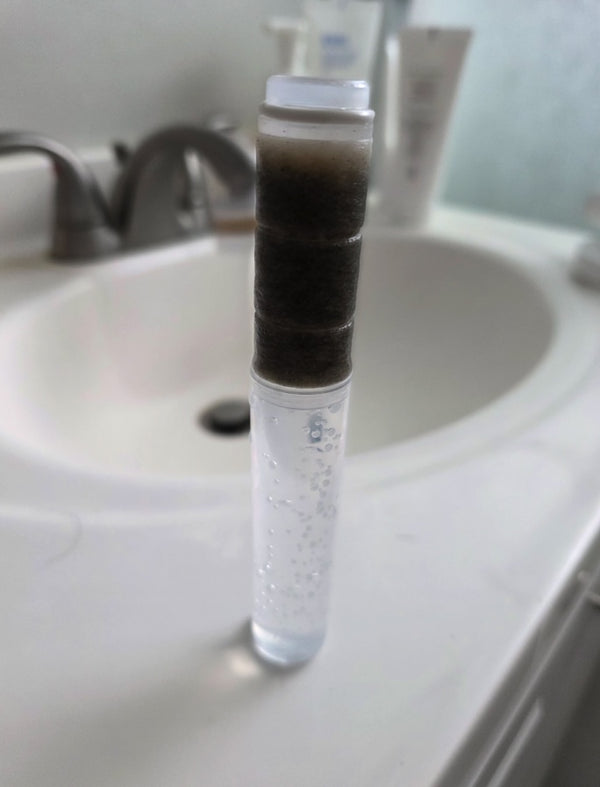
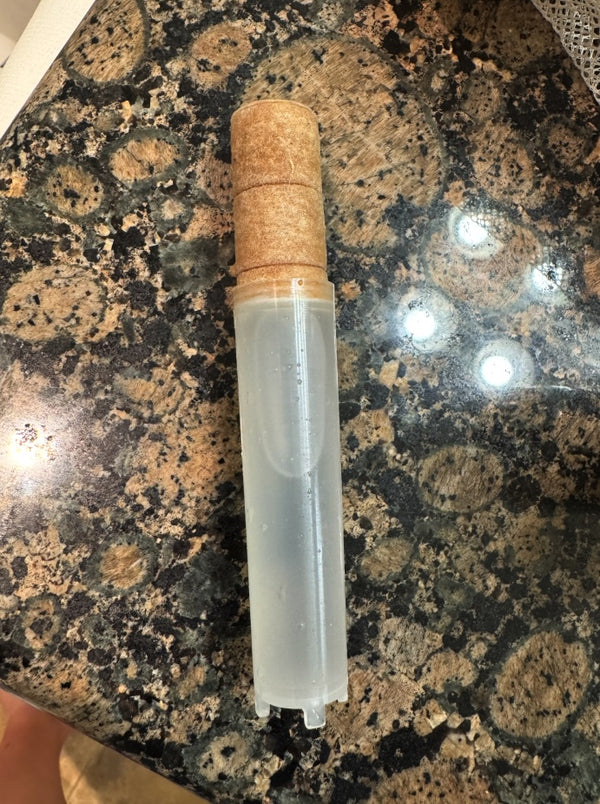
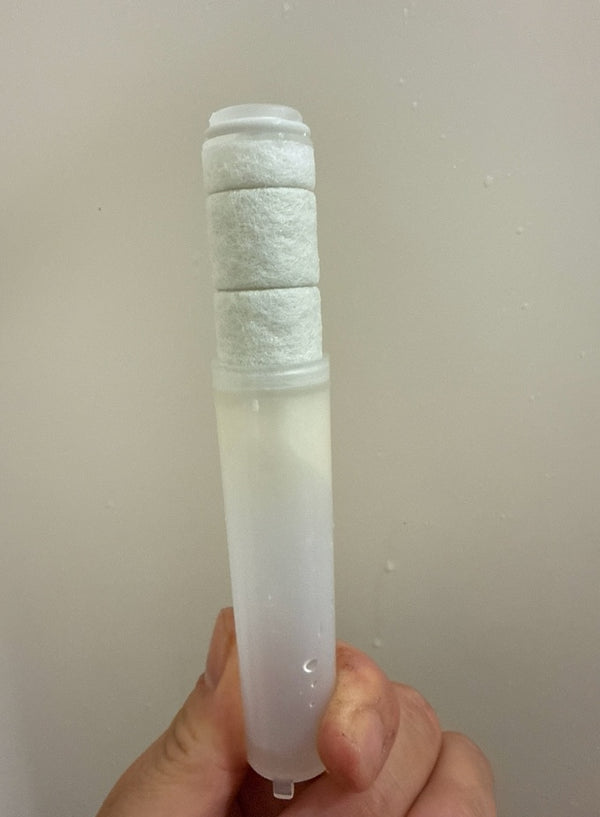
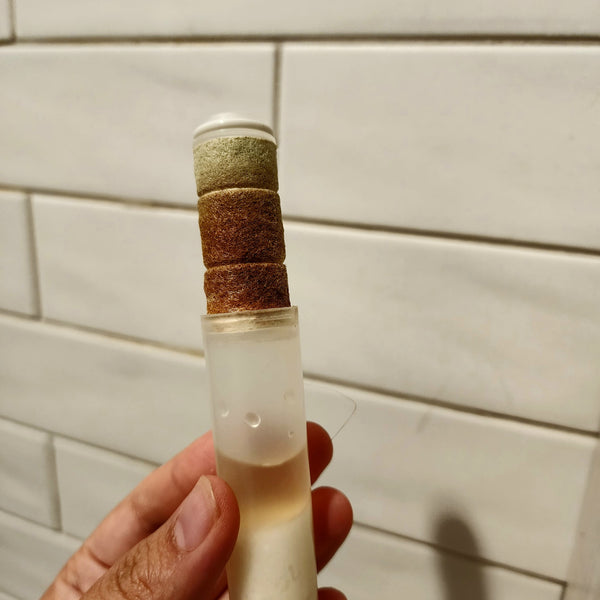
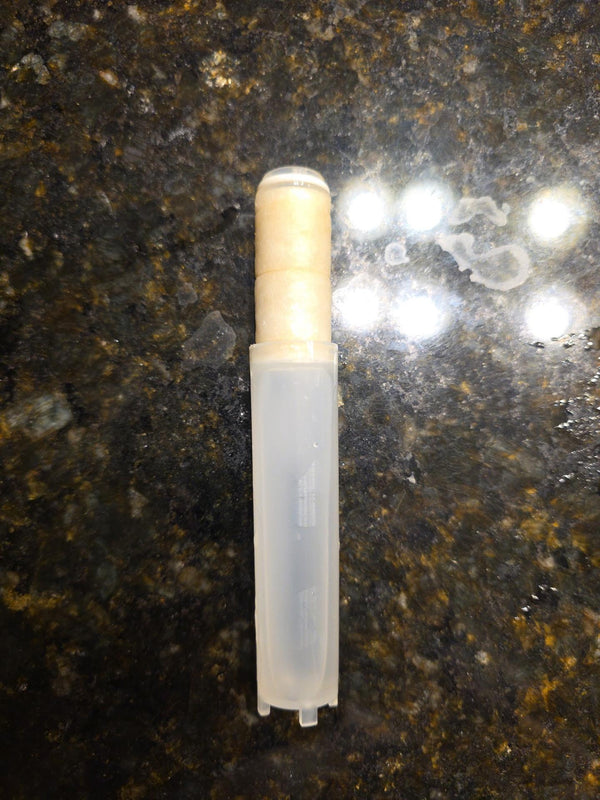
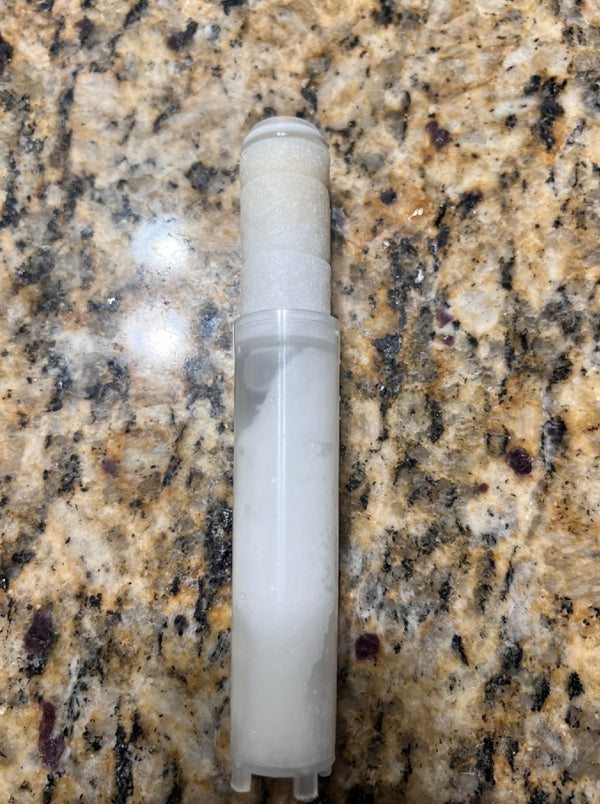
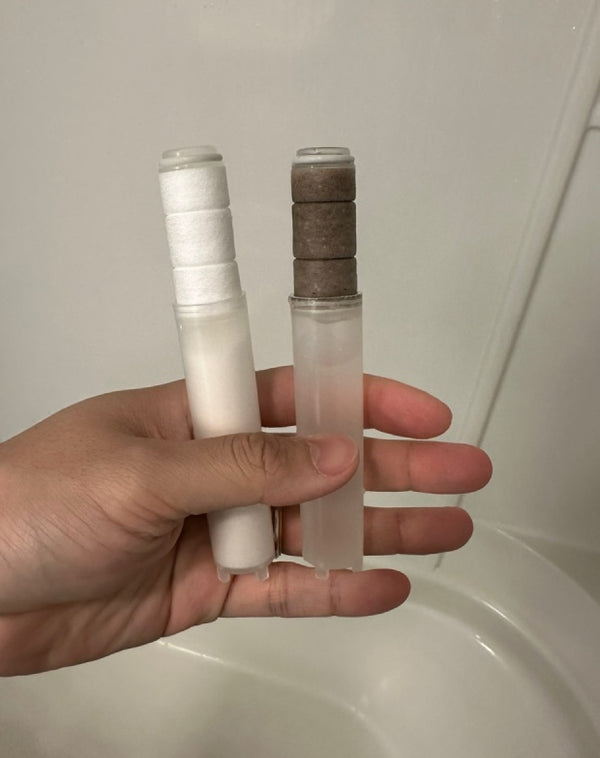
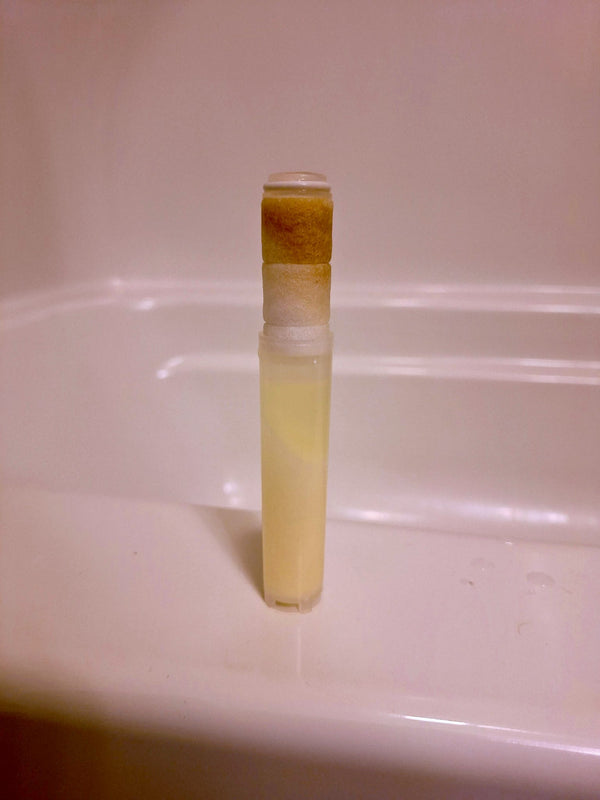
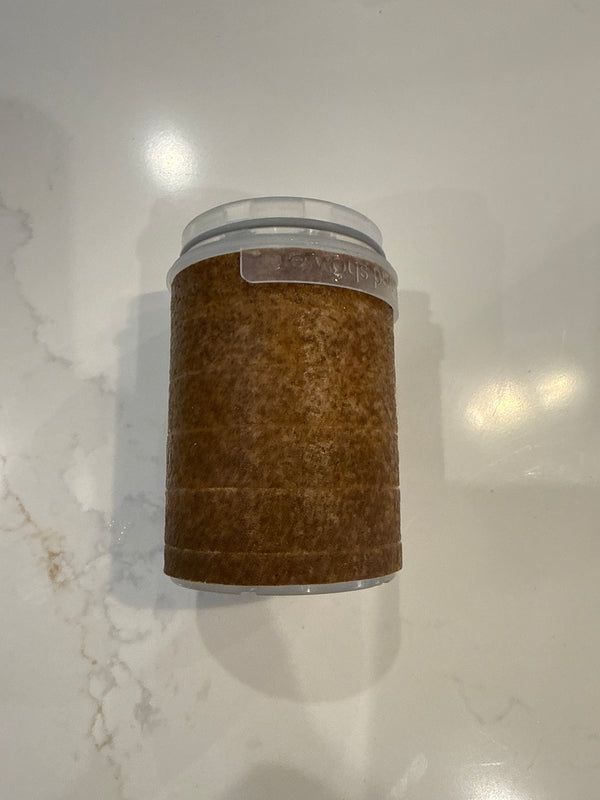
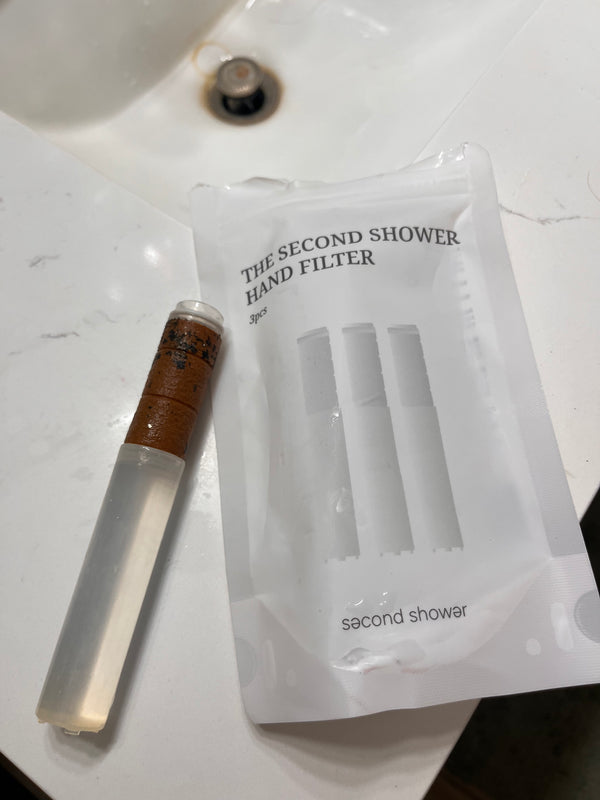
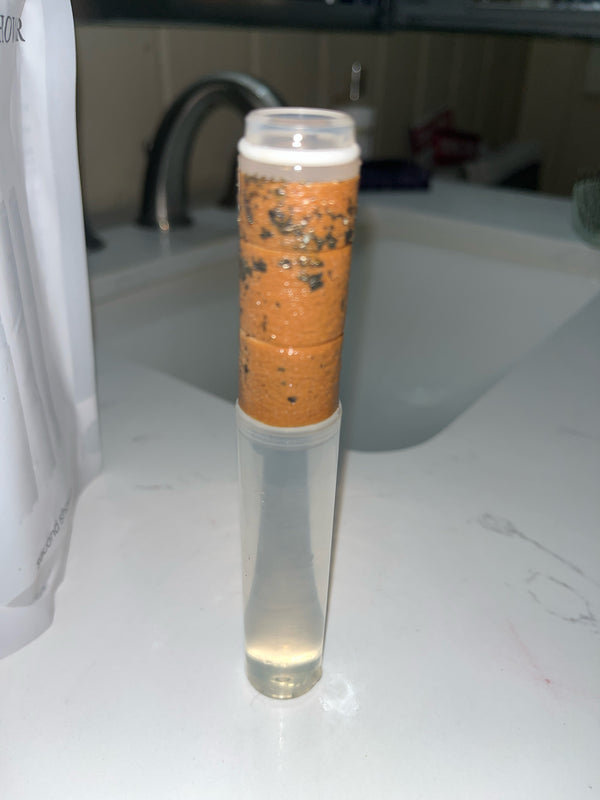
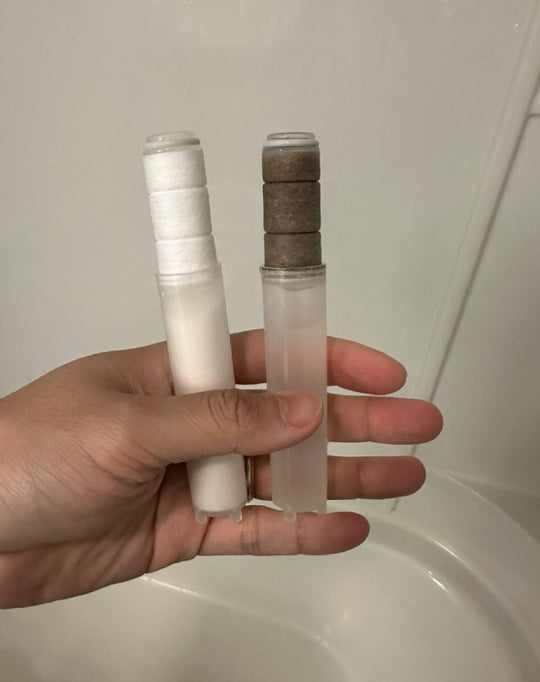
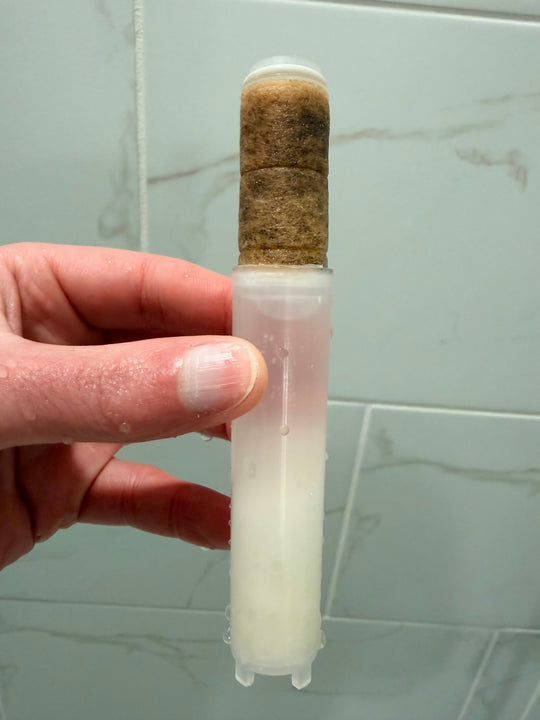
To be direct: a shower filter does not soften water or remove hardness, and neither does ours. A water softener does that. Scale can build up on a filtered shower head in hard water too, so the cleaning steps above still apply.
Hard water is one issue and the disinfectant is another. Utilities add chlorine or chloramine whether the water is hard or soft. Chloramine is chlorine plus ammonia, made to last longer in the pipes, and more than one in five Americans have chloramine-treated water.[3] Chlorine is an oxidizer, and in a hot shower it can leave hair feeling dry and rough. That part a shower filter can address.
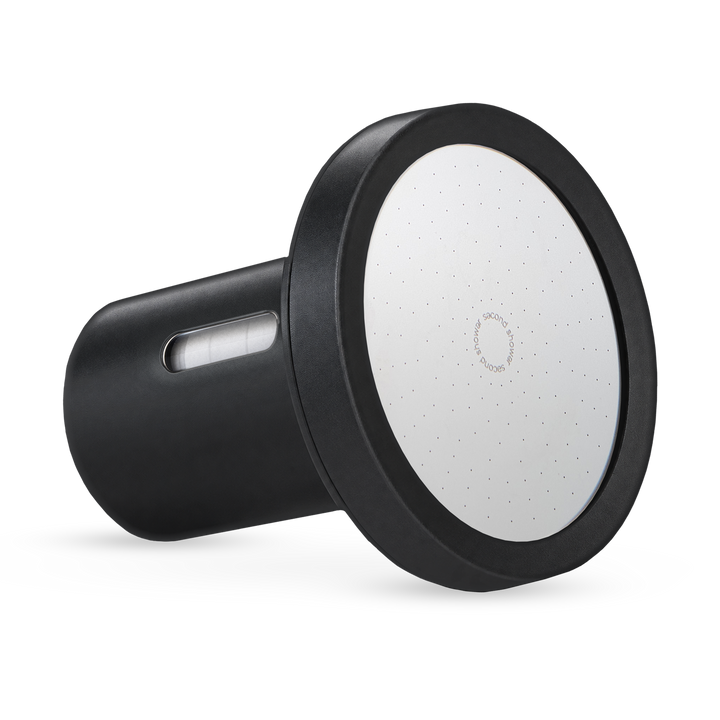
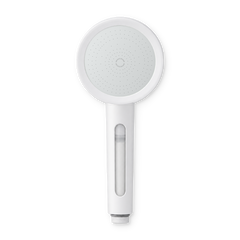
If you're replacing a scaled-up head anyway, The Second Showerhead ($99, or $79 with a filter subscription) is one option. We use an NSF/ANSI 42 certified filter*, and in independent lab testing it removed 99.9% of chlorine and chloramine. It installs without tools in about a minute on a standard 1/2 inch shower arm, and the wrench in the box is there for a stuck old head. One filter included. Keep your landlord's original head for move-out day.
*Micron PP sediment filter certified by NSF/ANSI 42 standards.
FAQ
How long should I soak a shower head in vinegar?
About 1 hour for light buildup, and several hours or overnight for heavy crust. On delicate finishes such as brass, matte or oil-rubbed bronze, check every 30 minutes and take the head out once the scale goes soft. Always scrub the nozzles and flush with hot water afterward.
Why didn't my vinegar soak work?
Common reasons are a soak that was too short, a face that wasn't fully under the liquid, or loosened scale that never got scrubbed out. Soak again after a scrub, try warm vinegar or a citric acid solution on a removed head, and check the inlet screen for grit, which looks like a clog but isn't scale.
Is it cheaper to clean or replace a clogged shower head?
If it's only crusty, cleaning costs almost nothing and usually works. If it's still weak after two thorough rounds, or the nozzles are torn or the plating is flaking, replacing it can be faster and cheaper than more cleaning products. In a rental, check with your landlord first.
Does a filtered shower head prevent limescale?
No. A shower filter does not soften water or remove calcium and magnesium, so scale still forms. Second Shower does not soften water; hardness is removed by an ion-exchange water softener, usually installed for the whole house. A shower filter's job is the disinfectant, chlorine and chloramine.
How do I know if my water is hard?
Check your utility's annual Consumer Confidence Report, which often lists hardness, or use an inexpensive hardness test strip. The USGS calls water hard from 121 mg/L (about 7 gpg) and very hard above 180 mg/L. A TDS meter isn't a hardness test.