A shower filter does not treat dandruff. Dandruff is often linked to an oily scalp and a yeast, and a medicated shampoo is the first fix.
- Dermatologists recommend dandruff shampoos with ingredients such as zinc pyrithione, selenium sulfide or ketoconazole (American Academy of Dermatology).
- US tap water may carry up to 4 mg/L of chlorine or chloramine (US EPA).
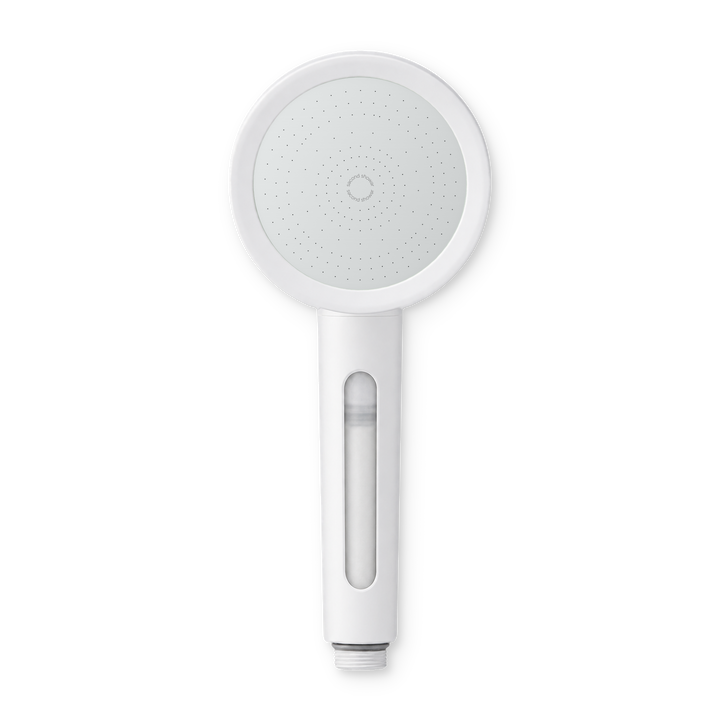
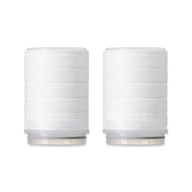
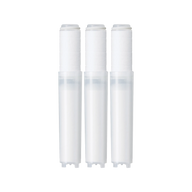
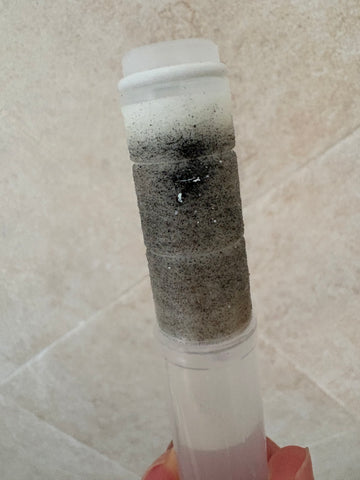
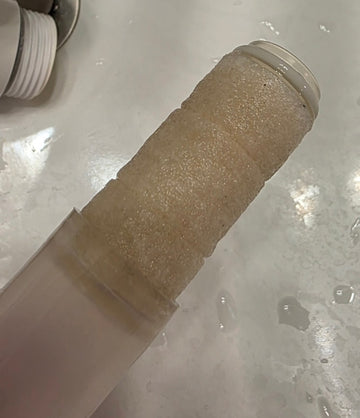
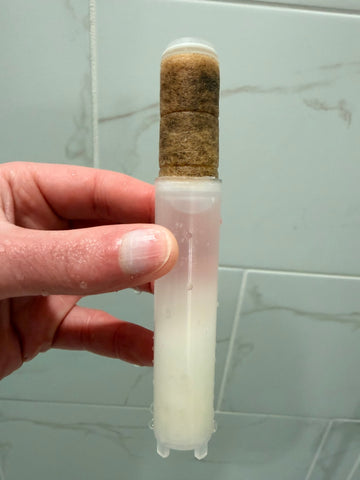
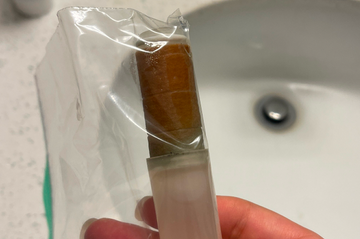
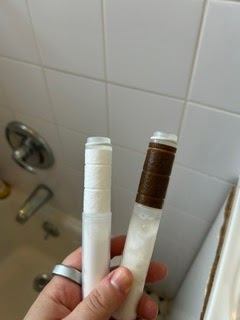
Our pick: If your scalp also feels dry after showering and you want the chlorine out, the Second Showerhand rinses the scalp at close range; its Vitamin C core reduced free chlorine and chloramine by 99.9% in independent lab testing, held through Day 1-30 in our own testing.
Why Chlorine Worsens Dandruff
Municipal water in the US contains 0.2–4.0 ppm free chlorine (EPA Maximum Residual Disinfectant Level). It keeps water safe in the pipes — but it damages skin and scalp on contact.
Scalp barrier disruption: Chlorine, as a strong oxidizer, contributes to lipid peroxidation in the skin's barrier matrix (ceramides, cholesterol, free fatty acids). This is consistent with the broader oxidative-stress literature in atopic dermatitis.
Dryness and flaking: A compromised lipid barrier leads to trans-epidermal water loss (TEWL), which manifests as dryness, tightness, and visible flaking — often mistaken for dandruff.
Not the same as seborrheic dermatitis: True dandruff (seborrheic dermatitis) is driven by Malassezia yeast overgrowth and requires antifungal treatment. Chlorine-induced flaking is a separate, barrier-driven issue — but the two often overlap, and chlorine can worsen existing seborrheic dermatitis by further disrupting the scalp's protective layer.
Hard water minerals (calcium, magnesium) are often blamed for scalp issues, but cross-sectional research shows no harm in adults. The 2011 SWET trial (336 children with eczema in hard-water areas) found that 12 weeks of ion-exchange water softening produced no significant improvement vs usual care. Chlorine, by contrast, has well-documented oxidative skin-barrier effects via a separate mechanism.
Filter Types Compared
Three main technologies dominate the shower filter market:
KDF-55 (Kinetic Degradation Fluxion)
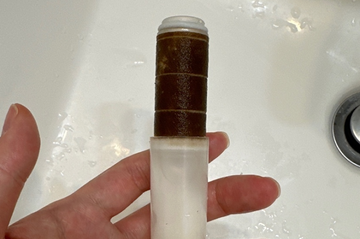
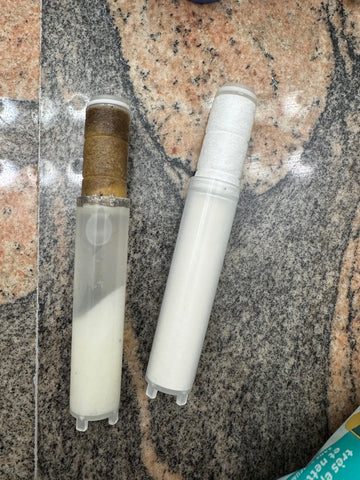
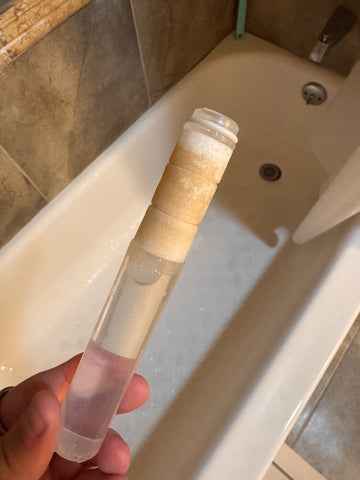
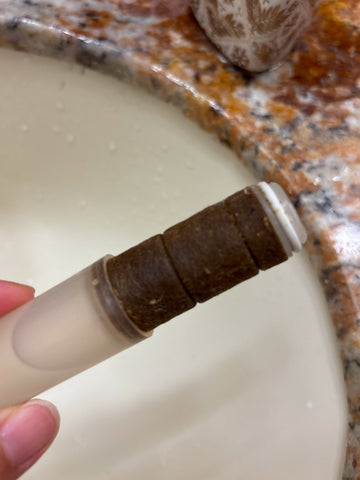
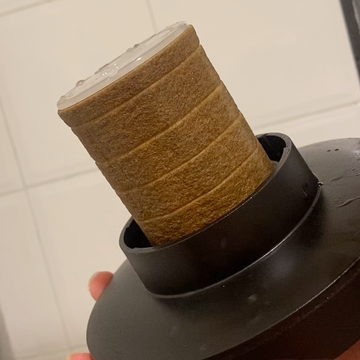
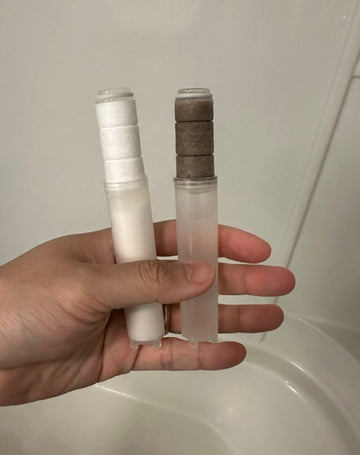
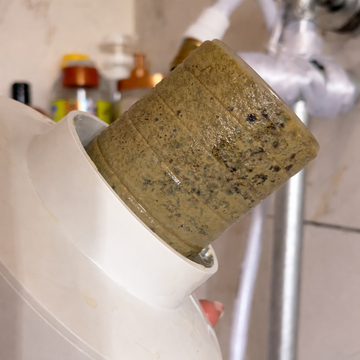
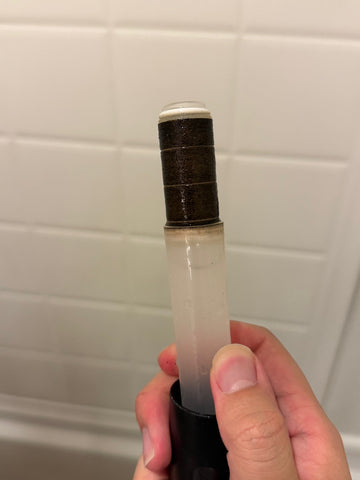
A copper-zinc alloy that removes chlorine through redox (reduction-oxidation) reactions. Popular in budget and mid-range filters such as AquaBliss. The problem: performance degrades rapidly — most KDF filters drop below 10% effectiveness by Day 60.
Activated Carbon
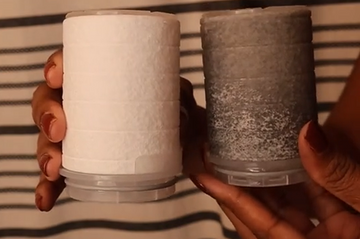
Adsorbs chlorine and some organics. Works well in cold, slow-flow applications (like pitcher filters), but shower water moves too fast and too hot for reliable contact time. Often paired with KDF to extend lifespan.
Vitamin C (Ascorbic Acid)
Neutralizes both free chlorine and chloramine through a chemical reaction (not adsorption or mechanical filtration). Fast, complete, and maintains 99.9% free-chlorine reduction through the cartridge's rated peak window. Second Shower uses a proprietary Vitamin C gel matrix for consistent dosing.
For a deeper dive into the chemistry, see our Vitamin C filtration science breakdown.
Why Vitamin C Works Best
Vitamin C (ascorbic acid) neutralizes chlorine through a straightforward chemical reaction:
C₆H₈O₆ + HOCl → C₆H₆O₆ + H₂O + HCl
One molecule of ascorbic acid neutralizes one molecule of hypochlorous acid (free chlorine). The byproducts — dehydroascorbic acid, water, and trace hydrochloric acid — are harmless at the dilutions present in shower water.
Chloramine too: Vitamin C also neutralizes monochloramine (NH₂Cl), which ~30% of US municipal systems use as a secondary disinfectant. KDF and carbon filters struggle with chloramine; Vitamin C handles it completely.
No degradation window: Because the reaction is stoichiometric (one-to-one), performance remains at 99.9% free-chlorine removal until the Vitamin C is depleted — then it drops to zero. Second Shower cartridges are rated for 10,000–15,000 gallons (4–6 months for most households), with performance tested through Day 60.
Head-to-Head Comparison

| Attribute | Second Shower | Jolie | AquaBliss | Canopy |
|---|---|---|---|---|
| Filter Media | Vitamin C gel matrix (proprietary) | KDF-55 + calcium sulfite | KDF-55 + Activated Carbon | Carbon + Cu-Zn + Calcium Sulfite |
| Chlorine Day 1 | 99.9% | 98% at first use (NSF data) | ~90% | ~85% |
| Chlorine Day 60 | 99.9% | Day 60 not published; 82% at 2,400 gal (NSF data) | <10% | ~50% |
| Chloramine Removal | Neutralizes completely | No result published (Oct 2026) | Poor (<50%) | Moderate (70–85%) |
| NSF Certified | NSF/ANSI 42 (pre-filter)* | NSF/ANSI 177 (free chlorine) | No | No |
| Price (Device) | $69 (Hand) / $79 (Head) | $148 | $35 | $150 |
| Filter Replacement | $27/3-pack every 3–6mo (Hand) $36/2-pack every 4–6mo (Head) |
About 90 days ($35 per filter on subscription) | ~$15 every 3 months | ~$30 every 3 months |
| Estimated Annual Filter Cost | $54–108 (Hand) / $72–108 (Head) | $140 (four $35 filters on subscription) | ~$60 | ~$120 |
| Total Year 1 Cost | $123–177 (Hand) / $151–187 (Head) | $288 (subscription) / $309 (list) | $95 | $270 |
| Pressure Impact | Zero loss (micro-jets) | Not published | 20–40% reduction | 15–30% reduction |
| Handheld Option | Yes (Showerhand) | No | No | No |
| Independent Testing | Independent official lab (full assembly) | NSF/ANSI 177 (free chlorine) | Unverified | Unverified |
*NSF/ANSI 42 certification applies to Second Shower's sediment pre-filter component. The 99.9% free-chlorine reduction claim is based on independent third-party lab testing of the full assembly through Day 60.
Where Jolie wins: Five finish options (Modern Chrome, Brushed Steel, Jet Black, Brushed Gold, Vibrant Red) and a 60-day return window (ours is 30 days).
Where AquaBliss wins: Lowest upfront cost — a good entry point if you're testing the concept and don't mind replacing filters monthly.
Where Canopy wins: Aromatherapy oil infusion for users who prioritize scent over filtration consistency.
For more on hard water specifically, see our hard water filter guide.
Frequently Asked Questions
Will a shower filter cure my dandruff?
Not if it's true seborrheic dermatitis (fungal overgrowth). A filter removes chlorine and chloramine, which can worsen scalp barrier disruption and dryness — but it won't treat Malassezia yeast, psoriasis, or other medical conditions.
What to expect: If your flaking is chlorine-induced (barrier-driven dryness), you'll typically see improvement within 1–2 weeks. If symptoms persist after 3–4 weeks with a filter, consult a dermatologist — you likely need antifungal or prescription treatment.
Do I need a filter if I have hard water?
Hard water minerals (calcium, magnesium) are not harmful to skin or hair. The 2011 SWET trial showed no benefit from water softening in 336 children with eczema living in hard-water areas.
What matters: Chlorine (or chloramine) — not hardness. A TDS (total dissolved solids) meter will show high numbers in hard water, but TDS measures all dissolved minerals, most of which are benign. Focus on removing chlorine/chloramine, not chasing a low TDS number.
For a full breakdown, see our hard water filter guide.
How often do I replace the filter?
Second Shower cartridges last 10,000–15,000 gallons, or 4–6 months for a two-person household. The proprietary gel matrix delivers consistent 99.9% free-chlorine removal through Day 60 (the rated peak window), then performance drops sharply as the Vitamin C depletes.
Subscription timing: Cartridges ship every 3–6 months depending on your household size. Swap the cartridge when you notice the Vitamin C scent fading — that's the chemical signal that the gel matrix is nearing depletion.
Can I use a shower filter with a water softener?
Yes. A whole-house water softener removes calcium and magnesium (hardness minerals) via ion exchange, but it doesn't remove chlorine or chloramine. You'll still need a point-of-use filter (like Second Shower) at the showerhead to neutralize disinfectants.
Do shower filters actually work, or is it marketing hype?
Chlorine removal works — when the filtration media and flow rate are properly matched. The challenge is that many filters use KDF-55 or carbon, which degrade rapidly in shower conditions (hot water, high flow, short contact time). By Day 60, most KDF filters drop below 10% effectiveness, even though the cartridge still looks fine.
What works: Vitamin C (ascorbic acid) neutralizes chlorine and chloramine through a stoichiometric chemical reaction — not mechanical filtration or adsorption. Performance remains at 99.9% free-chlorine removal through the cartridge's rated window, then drops to zero when the Vitamin C is depleted. Second Shower's independent lab testing confirms this through Day 60.
What doesn't: Filters that claim to remove hardness, heavy metals, or fluoride without specifying the media, flow rate, and third-party testing. If a filter promises "99% of everything" for $25 and lasts a year, it's marketing.
If chlorine-induced scalp irritation is your primary concern, Second Shower's Vitamin C filtration delivers the most consistent, long-term performance — with zero pressure loss and 30-day returns.