Chloramine is the disinfectant many US cities use instead of plain chlorine, and it is much harder for a shower filter to remove. The common filter media, KDF-55 and activated carbon, need more contact time than a shower allows. Vitamin C reacts with chloramine almost instantly, which is why it works at shower flow.
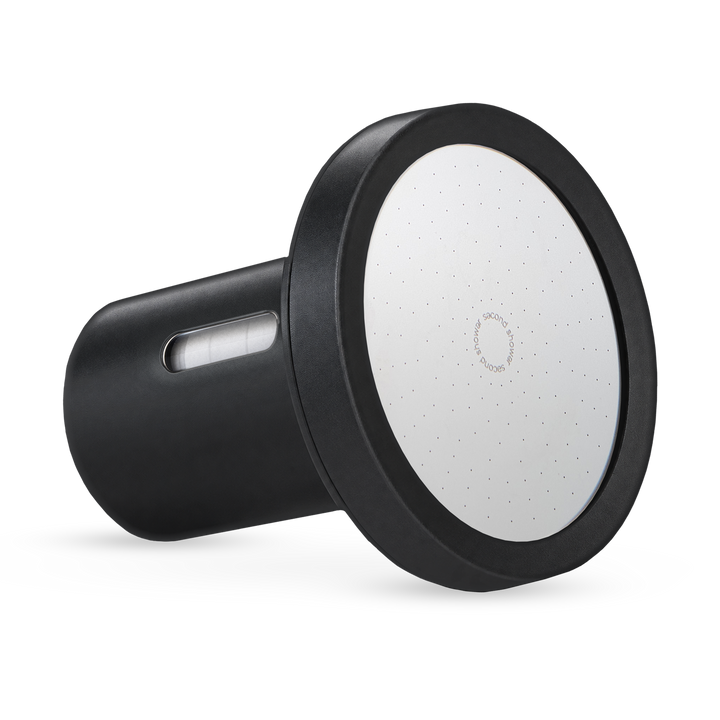
- Our pick: the Second Showerhead ($99, $79 on subscription) or the Second Showerhand ($89, $69 on subscription). In independent lab testing the filter reduced chloramine by 99.9%, held through its peak window in our own testing (Day 1-60 Showerhead, Day 1-30 Showerhand), with an NSF/ANSI 42* certified sediment pre-filter.
- What to check on any filter: a published chloramine result with a number, not "helps reduce".
- Not sure what your city uses? Your utility's annual water quality report names the disinfectant. Steps below.
*Micron PP sediment filter certified by NSF/ANSI 42 standards.
What chloramine is, and why cities switched to it
Chloramine is chlorine combined with a small amount of ammonia. Utilities use it because it lasts longer in the pipes, so water stays disinfected all the way to the farthest tap.
Plain chlorine is a strong disinfectant, but it fades as water travels through miles of pipe, and it reacts with organic matter to form byproducts that the EPA regulates. Adding ammonia turns it into monochloramine, which is weaker but far more stable and forms fewer of those byproducts. That trade is good for the water system. More than one in five Americans now drink and shower in water treated with chloramine, according to the EPA.
The same stability is what makes chloramine a problem at the shower head. A disinfectant designed to survive a long trip through the pipes does not break down in the second or two it spends inside a shower filter. It reaches your skin and hair the way it left the treatment plant.
How to tell if your water has chloramine
- Read your utility's water quality report. Every US community water system publishes an annual Consumer Confidence Report. Search for your utility's name and "water quality report", then look for the disinfectant: "chloramine", "chloramines", "monochloramine" or "total chlorine" with ammonia listed.
- Call or check the utility's website. Many publish a page on their disinfection method, especially those that switched recently.
- Test it. A DPD test kit that reads both free and total chlorine tells you. If total chlorine is much higher than free chlorine, most of what is in your water is chloramine. A TDS meter cannot tell you; it measures dissolved minerals, not disinfectants.
Large utilities known to use chloramine include those serving Los Angeles, San Francisco, Denver, Dallas, Houston and Tampa, among many others. Others, such as New York City, use free chlorine. Utilities change methods and some switch seasonally, so check your own report rather than a list.
Why most shower filters struggle with chloramine
| Filter media | Free chlorine | Chloramine | Why |
|---|---|---|---|
| KDF-55 (copper-zinc) | Works by redox reaction | Largely ineffective | The reaction that handles free chlorine does little to the more stable chloramine |
| Activated carbon | Works, given contact time | Needs far longer contact than a shower allows | Chloramine breaks down slowly on carbon; whole-house catalytic carbon tanks are sized for this |
| Calcium sulfite | Works | Brands claim it; few publish results | Often added to KDF and carbon stacks |
| Vitamin C (ascorbic acid) | Works almost instantly | Works almost instantly | Reacts directly with both; used by utilities to dechlorinate water |
A shower pushes about two gallons a minute through a cartridge the size of a soda can. That leaves very little contact time, which is fine for a fast chemical reaction and not fine for a slow one. It is why a filter can do well on free chlorine in a test and still let most chloramine through.
Vitamin C reacts with chloramine the same way it reacts with free chlorine: directly, and fast enough to finish while water passes through the filter. The reaction uses up the Vitamin C as it goes, about two and a half parts of ascorbic acid for each part of chlorine (Tikkanen et al., 2001), so how much Vitamin C a filter holds, and how often it is replaced, decides how long it keeps working.
The takeaway: on a chloramine system, the filter media matters more than the brand. Ask for a chloramine number.
What to look for in a chloramine shower filter
- A chloramine result, with a number. "Helps reduce chloramine" or a list of media is not a result. Look for a percentage and who measured it.
- Certification read correctly. NSF/ANSI 177, the shower filter standard, covers free available chlorine. A 177 listing says nothing about chloramine. "Tested to NSF standards" is the brand's own statement, not a listing.
- A replacement schedule that matches the chemistry. Reactive media is consumed as it works. A filter that claims many months on chloramine should show the data for it.
- Full pressure. A filter that chokes the flow makes showers longer, which means more time in the water.
For a brand-by-brand look at who claims chloramine and who publishes a result, see our eight-brand comparison of filtered shower heads.
Our pick for chloramine
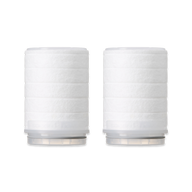
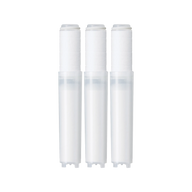
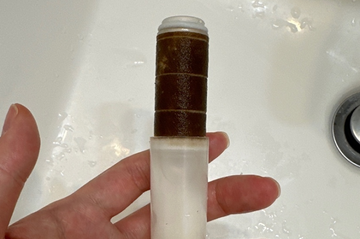
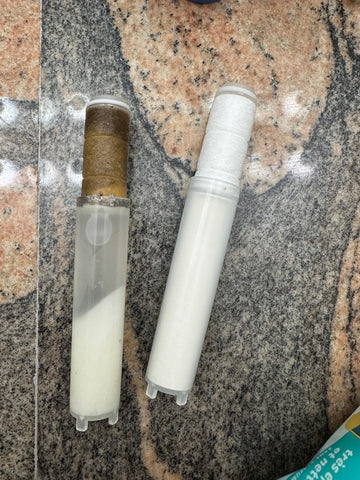
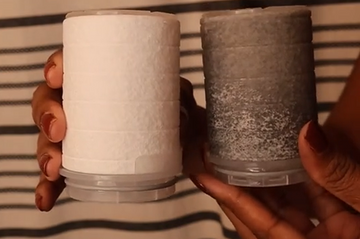
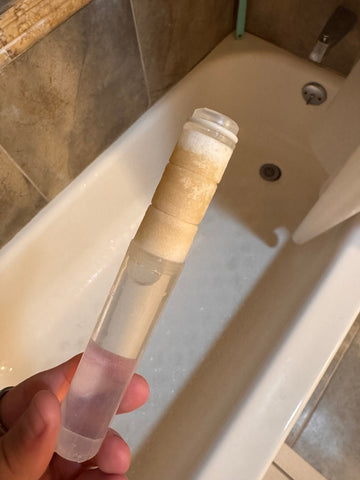
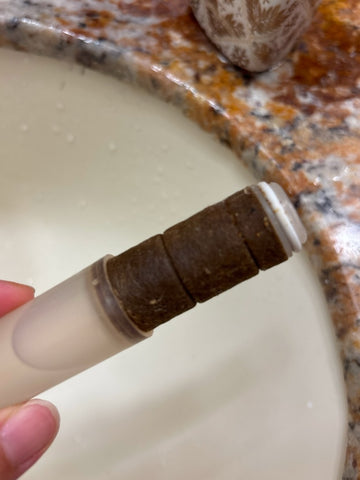
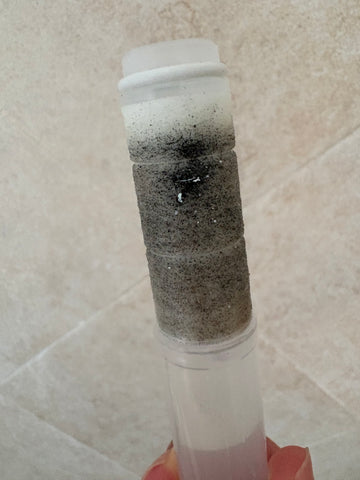
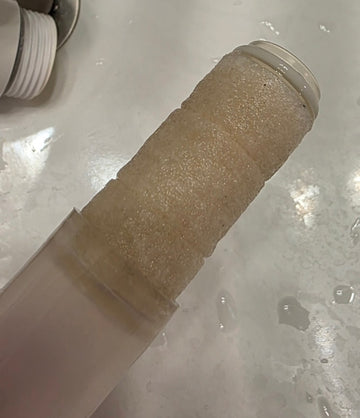
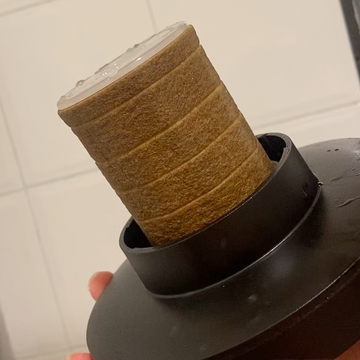
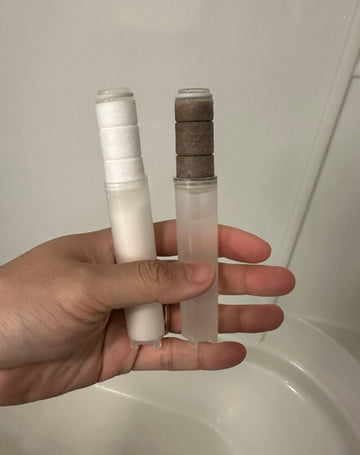
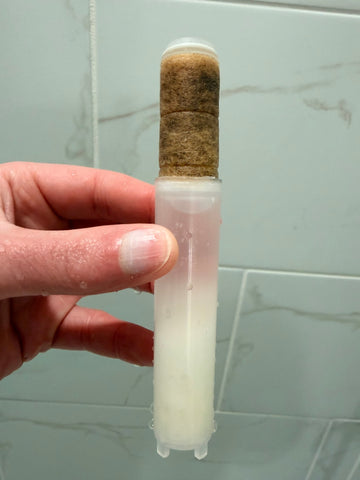
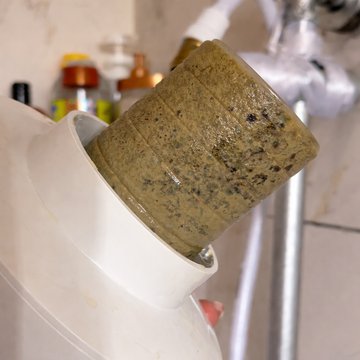
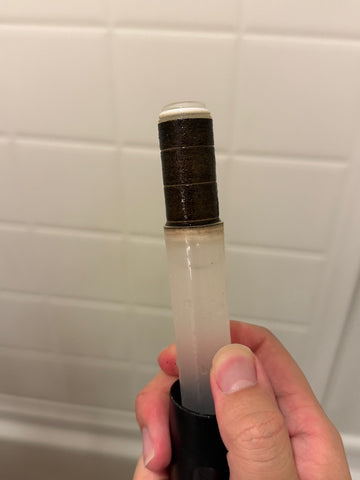
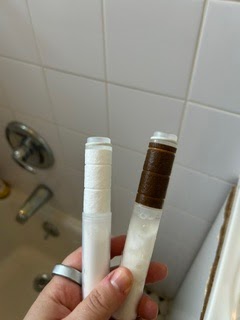
We built our filter for chloramine first. Water passes a micron PP sediment pre-filter, the NSF/ANSI 42* certified part, and then a Vitamin C core. In independent lab testing the full filter reduced chloramine by 99.9% and free chlorine by 99.9%, to non-detectable at the tested input. In our own testing the Second Showerhead held that result through Day 1-60 and the Second Showerhand through Day 1-30, which is why we recommend a new filter every 60 and every 30 days. Replace it sooner if the filter looks deep brown or black or the water pressure drops noticeably.
We are not NSF/ANSI 177 certified, and we keep that separate from our lab result: 177 is a free-chlorine service-life standard, and our chloramine and chlorine figures come from independent lab testing of the full filter. Both heads run at 2.5 GPM with no measurable pressure loss at 40-80 PSI, through 176 micro-jets (Showerhead) or 128 (Showerhand), and install by hand in about a minute. Refills are $36 for a Showerhead two-pack and $27 for a Showerhand three-pack on subscription.
*Micron PP sediment filter certified by NSF/ANSI 42 standards.
What chloramine in the shower means for skin and hair
Chloramine is a weaker oxidizer than free chlorine, but it is still in the water that reaches your shower. Like chlorine, it reacts with the oils that keep skin from drying out and with the protein in hair. People on chloramine systems often notice the same things chlorine users do: tight skin after a shower, dry or dull hair, faster color fade. A filter that removes it takes that daily exposure out. It is not a treatment for any skin condition.
Two practical notes: chloramine is harder to air out than chlorine, so letting water sit or run does not remove it, and a carbon pitcher for drinking water is a different job from a shower filter.
Which one should you buy?
FAQ
Do shower filters remove chloramine?
Some do and many do not. KDF-55 is largely ineffective against chloramine, and activated carbon needs more contact time than a shower allows. Vitamin C reacts with chloramine almost instantly. Our filter reduced chloramine by 99.9% in independent lab testing, held through its peak window in our own testing.
How do I know if my water has chloramine?
Check your utility's annual water quality report for chloramine or monochloramine, or use a DPD test kit that reads free and total chlorine. If total chlorine is much higher than free chlorine, most of it is chloramine.
Is NSF/ANSI 177 a chloramine certification?
No. NSF/ANSI 177 covers free available chlorine reduction by shower filters. A product certified to it may or may not remove chloramine; look for a separate chloramine result.
Does Vitamin C remove chloramine?
Yes. Ascorbic acid reacts directly with chloramine and free chlorine, which is why water utilities use it to dechlorinate water. The Vitamin C is used up as it reacts, so the filter needs replacing on schedule.
Can you boil or air out chloramine?
Not practically. Chloramine is far more stable than free chlorine, so letting water stand or boiling it is not a practical way to remove it. For the shower, a filter that removes it is the practical fix.
How we know
- US EPA, Chloramines in Drinking Water; EPA Consumer Confidence Report rule.
- Tikkanen MW et al. (2001), Guidance Manual for the Disposal of Chlorinated Water, AWWA Research Foundation Report 90863 (Vitamin C dechlorination and stoichiometry).
- NSF/ANSI 177, Shower Filtration Systems, Aesthetic Effects (scope: free available chlorine).
- Second Shower: independent lab test of the full filter assembly (chloramine and free chlorine, 99.9%); our own peak-window testing (Day 1-60 Showerhead, Day 1-30 Showerhand); prices from secondshower.us, October 2026.
- Utility disinfection methods: each utility's published water quality report; check your own.