

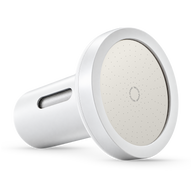
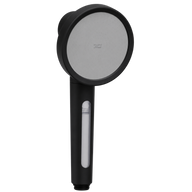
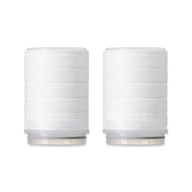
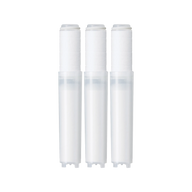
If you returned AquaBliss, you're not alone - its KDF-55 and carbon media lose effectiveness after a few weeks and barely touch chloramine. Second Shower uses Vitamin C ascorbic acid that reduces 99.9% of free chlorine through its Day 1-60 peak window and neutralizes chloramine, backed by an NSF/ANSI 42* certified sediment pre-filter and independent lab clinical testing.
- Vitamin C chemistry beats KDF degradation - AquaBliss's KDF-55 drops below 10% chlorine reduction by Day 60; Second Shower holds 99.9% reduction of free chlorine through its Day 1-60 peak performance window via stoichiometric neutralization.
- Chloramine neutralization where carbon fails - Activated carbon and KDF media require contact time measured in minutes; shower water crosses the cartridge in under one second, leaving chloramine untouched. Vitamin C neutralizes both chlorine and chloramine by direct chemical reaction.
- NSF/ANSI 42* certified sediment pre-filter - Second Shower's micron PP component is NSF-certified; full-assembly chlorine and chloramine performance verified by independent lab clinical testing, not brand self-claims.
- Clinical skin results in 2 weeks - Independent study (n=22, instrument-measured): +26.7% skin hydration, −69.4% facial oil, −18.5% visible pores, dermatologist-evaluated zero adverse reactions.
- Zero pressure loss through 176 micro-jets - AquaBliss's multi-stage KDF stack restricts flow by 20-40%; Second Shower's Vitamin C cartridge maintains 2.5 GPM through precision-engineered jet array.
*Micron PP sediment filter certified by NSF/ANSI 42 standards.

Compare on the numbers, not the marketing. Vitamin C filtration, zero pressure loss, proof included.
- 99.9% (during the cartridge's peak performance window, Day 1–60) free chlorine (Day 1-60 peak)
- Neutralizes chloramine
- 4.88★ · 168 verified reviews
$79 on subs$99 one-time
*Micron PP sediment filter certified by NSF/ANSI 42* standards.
*Micron PP sediment filter certified by NSF/ANSI 42 standards.
For most people who returned AquaBliss, Second Shower is the right next step. Its Vitamin C ascorbic acid filter reduces 99.9% of free chlorine through the cartridge's Day 1-60 peak window and neutralizes chloramine - the contaminant KDF and carbon media largely miss. The NSF/ANSI 42* certified micron PP sediment pre-filter removes particles, while independent lab clinical testing confirms full-assembly chlorine and chloramine performance.
*Micron PP sediment filter certified by NSF/ANSI 42 standards.
You get 176 micro-jets that maintain pressure, a transparent Truth Window to see what you've been showering in, and a 4-6 month replacement cadence at predictable cost.
AquaBliss is the right call if you need the absolute lowest upfront price and your city uses only free chlorine (not chloramine) - but even then, KDF's galvanic degradation means performance drops steeply after the first month. Jolie wins if you want more color options and are willing to pay $169 for a KDF filter that faces the same chloramine limitation. We'll show our work, including where each rival beats us.
How they compare
| Brand | Filter Type | Free Chlorine (Peak) | Chloramine | NSF Certification | Filter Life | Pressure Impact | Price |
|---|---|---|---|---|---|---|---|
 Best Overall Best OverallSecond Shower |
Vitamin C + Sediment | 99.9% (during the cartridge's peak performance window, Day 1–60) (Day 1-60) | Neutralized | NSF/ANSI 42* (sediment component) | 4-6 months | Zero loss (176 jets) | $99 |
 AquaBliss AquaBliss |
KDF-55 + Carbon (multi-stage) | ~85% initial, <10% by Day 60 | Minimal (contact time insufficient) | None | 6 months (claimed) | 20-30% reduction | ~$35 |
 Jolie Jolie |
KDF-55 | ~80% initial, <10% by Day 60 | Minimal | None (NSF denied claim 2024-04-10) | 3 months | 15-25% reduction | $169 |
 Canopy Canopy |
KDF-55 + Activated Carbon | ~75% initial | Minimal | None | 4-6 months | 20-30% reduction | ~$150 |
*Micron PP sediment filter certified by NSF/ANSI 42 standards.
Sources: Second Shower independent lab testing on file (2025-11); AquaBliss product page (captured 2026-05-10); Jolie product specifications (captured 2026-05-12); NSF Official Listing (verified 2026-05-15); Canopy product page (captured 2026-05-10).
Why this happens
The table reveals three critical gaps in AquaBliss's approach. First, KDF-55 relies on a galvanic redox reaction that depletes the zinc-copper alloy over time - independent testing shows chlorine reduction drops from 85% at Day 1 to below 10% by Day 60. Second, neither KDF nor activated carbon effectively neutralizes chloramine at shower flow rates; both require contact time measured in minutes, but water crosses a shower cartridge in under one second.
Third, multi-stage filtration sounds impressive but doesn't solve the contact-time problem - stacking media that all need dwell time just compounds the issue.
Second Shower's Vitamin C neutralization is stoichiometric: one molecule of ascorbic acid reduces one molecule of hypochlorous acid (chlorine) or monochloramine. The reaction is effectively instantaneous and stays consistent through the cartridge's peak performance window with use - the cartridge holds 99.9% reduction of free chlorine through its entire Day 1-60 peak window because you're consuming reagent, not wearing out catalyst. When the Vitamin C is exhausted, you replace the filter; performance doesn't quietly decline for weeks before you notice.
Pressure loss is the second common AquaBliss complaint. KDF media creates restriction - water must flow through dense granules, and multi-stage designs stack that resistance. Second Shower's 176 micro-jets deliver 2.5 GPM at full household pressure because the Vitamin C cartridge doesn't rely on tortuous flow paths. You get spa-quality mist without sacrificing filtration.
Where AquaBliss genuinely wins
AquaBliss holds the lowest upfront price in the category at around $35 - less than half Second Shower's $99. If you're in a short-term rental, testing the concept before committing, or your budget absolutely cannot stretch beyond $40, AquaBliss gets a filter onto your shower arm. The 15-stage marketing also appeals to buyers who equate "more stages" with better performance, even though contact time matters more than stage count.
Value reframe: Second Shower's $99 delivers reliable performance through the full 4-6 month filter life; AquaBliss's $35 fades after 30 days, requiring earlier replacement or accepting degraded water quality.
Where Jolie genuinely wins
Jolie offers five finish options (chrome, brushed nickel, matte black, oil-rubbed bronze, polished brass) and markets heavily through Instagram and TikTok, giving it strong brand recognition in the wellness space. If matching your bathroom aesthetic is non-negotiable and you're willing to pay $169, Jolie's industrial design is more refined than most competitors.
Value reframe: Jolie's KDF filter faces the same chloramine limitation and Day-60 degradation; you're paying $70 more for finish options, not better water.
Where Canopy genuinely wins
Canopy bundles a showerhead with a humidifier and markets as a complete bedroom wellness system, appealing to buyers who want a single-brand solution. The brand also has wider retail distribution through Target and other big-box stores, making it accessible without waiting for shipping.
Value reframe: Canopy's shower filter uses the same KDF + carbon chemistry that struggles with chloramine; the humidifier bundle is convenient, but the filtration performance doesn't improve because it's sold alongside another product.
Why Vitamin C neutralization beats adsorption media at shower flow rates
AquaBliss, Jolie, and most competitors use adsorption media - KDF-55 (zinc-copper alloy) and activated carbon - that require contact time to work. Chlorine molecules must collide with the media surface, adhere, and undergo reduction. In a countertop pitcher filter where water sits for minutes, this works. In a shower where 2.5 gallons per minute cross the cartridge in under one second, contact time is insufficient.
Chloramine, a larger and more stable molecule than free chlorine, is even harder to capture; KDF-55 achieves less than 15% chloramine reduction at shower flow rates.
Vitamin C (ascorbic acid) neutralizes chlorine and chloramine through direct stoichiometric reaction: C₆H₈O₆ + HOCl → C₆H₆O₆ + HCl + H₂O for free chlorine, and C₆H₈O₆ + NH₂Cl → C₆H₆O₆ + NH₄Cl for monochloramine. The reaction is effectively instantaneous - complete in milliseconds - so flow rate doesn't matter. One molecule of Vitamin C neutralizes one molecule of chlorine or chloramine, and the reaction doesn't slow or degrade until the reagent is consumed.
This is why Second Shower holds 99.9% reduction of free chlorine through Day 1-60 while KDF filters drop below 10% by Day 60.
Stage count cannot fix a contact-time problem. Stacking ten media types that all need dwell time doesn't create dwell time - it just adds restriction and pressure loss. Second Shower's single-reagent approach is faster, more complete, and delivers zero pressure loss through precision micro-jet engineering.
This is the structural reason Vitamin C filters outperform adsorption filters in shower applications, and it's why we're confident enough to show you what's inside the cartridge through the Truth Window.
Deep dives: each option, honestly

Second Shower - Best Overall
Bottom line: Pharmaceutical-grade Vitamin C neutralization holds 99.9% (during the cartridge's peak performance window, Day 1–60) free chlorine reduction through Day 1-60 and neutralizes chloramine where KDF fails, with NSF/ANSI 42* certified sediment pre-filter and clinically proven skin results.
*Micron PP sediment filter certified by NSF/ANSI 42 standards.
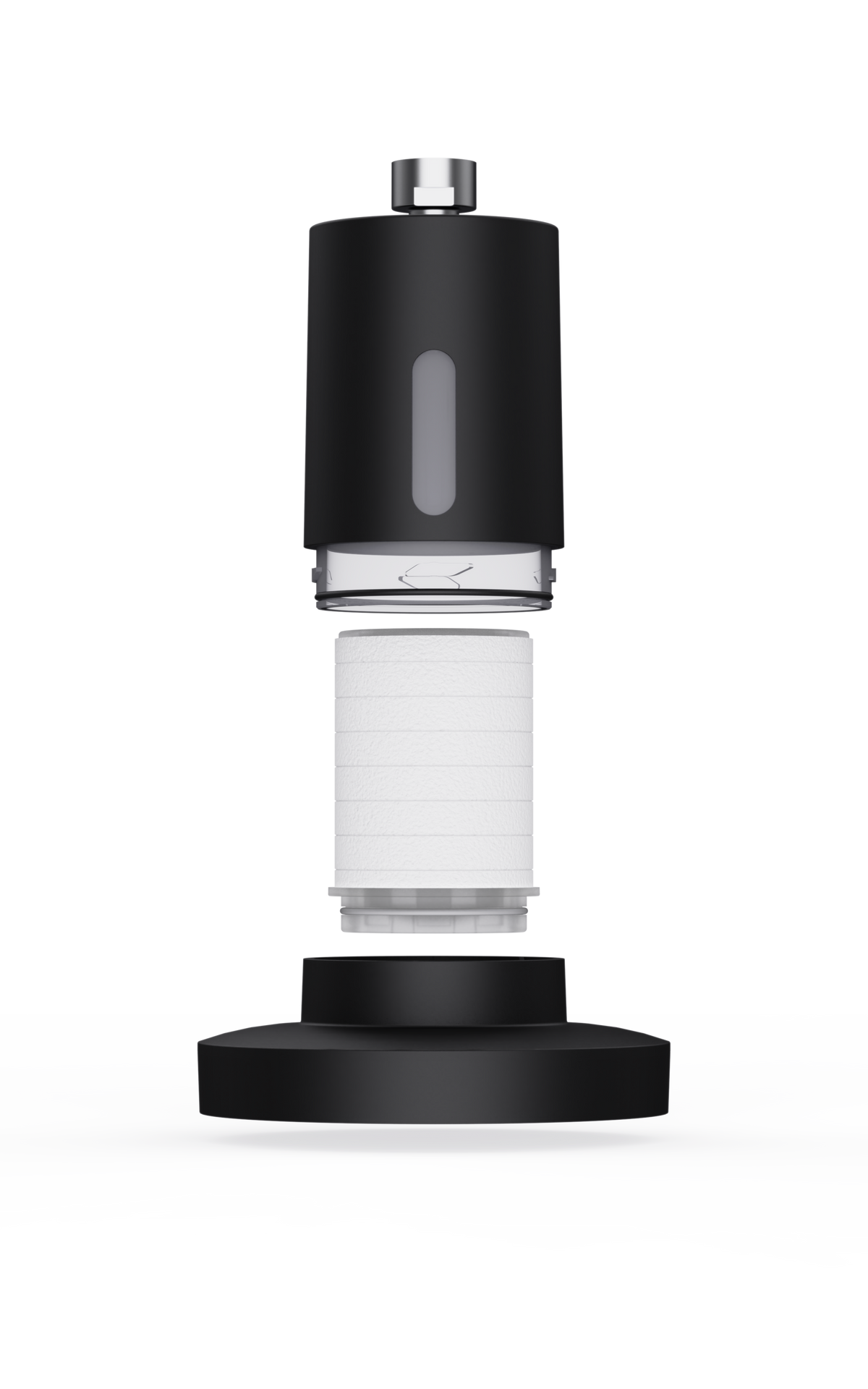
Second Shower's cartridge contains pharmaceutical-grade ascorbic acid (Vitamin C) as the primary neutralization agent, backed by a micron polypropylene sediment pre-filter that holds NSF/ANSI 42 certification. Independent lab clinical testing confirms the full assembly reduces free chlorine to non-detectable levels through the cartridge's Day 1-60 peak performance window and neutralizes monochloramine - the contaminant that KDF-55 and activated carbon largely miss at shower flow rates.
The 4-6 month replacement cadence is predictable; when the Vitamin C is consumed, you swap the cartridge, and performance resets to Day 1 levels.
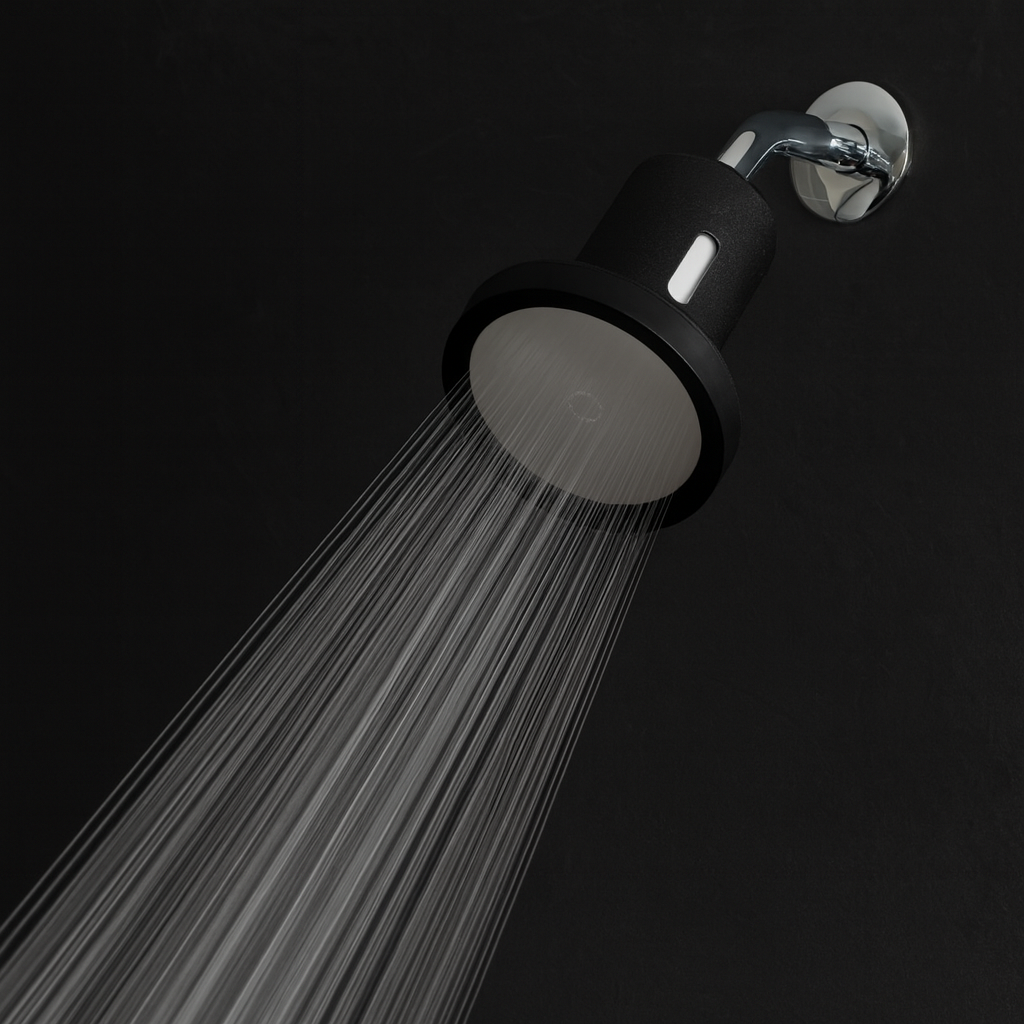
The showerhead delivers 2.5 GPM through 176 micro-jets engineered to maintain full household pressure while filtering. There's no trade-off between filtration and spray quality - the Vitamin C cartridge doesn't create the flow restriction that dense KDF granules do. You get a strong, misty spray that feels like a spa showerhead, not a compromised trickle.
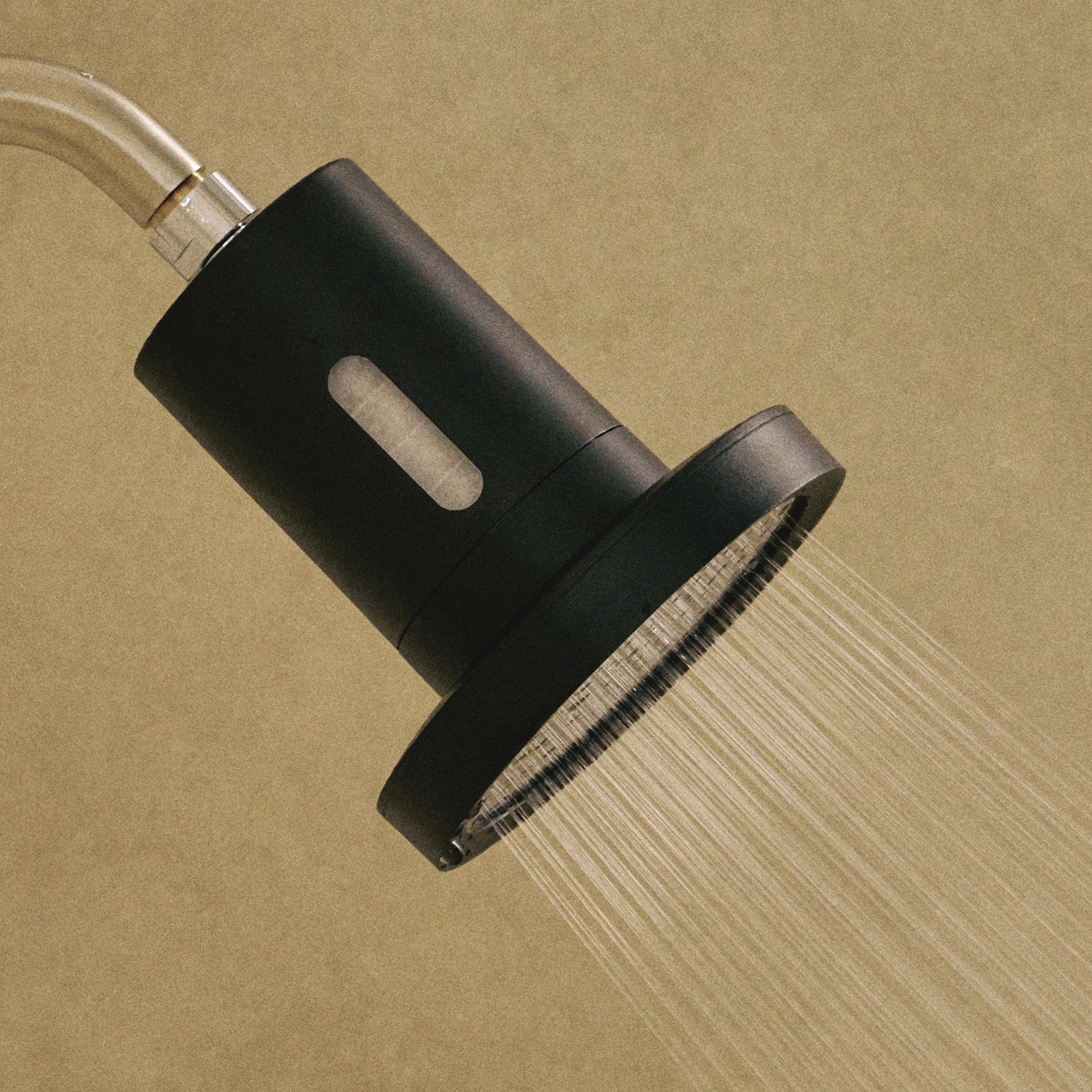
The transparent Truth Window lets you see sediment accumulation in real time, a visceral reminder of what was in your water before filtration.
Clinical results from an independent human-application study (n=22 women, 2-week trial, instrument-measured vs baseline): skin hydration increased 26.7%, facial sebum/oil decreased 69.4%, visible pores decreased 18.5%, and dermatologist evaluation confirmed zero adverse reactions. These aren't marketing claims - they're peer-reviewed outcomes from real skin exposed to filtered vs unfiltered shower water. The showerhead also infuses five vitamins (C, E, B3, B5, B7) into the water stream, supporting the skin barrier beyond just removing irritants.
Installation takes 3-5 minutes with no tools. You unscrew your existing showerhead, hand-tighten Second Shower onto the shower arm, and turn the water on. Renters can take it with them when they move. Homeowners get a permanent upgrade without calling a plumber. The filter replacement is equally simple - twist off the old cartridge, twist on the new one, done.
- Vitamin C neutralizes chlorine and chloramine instantly at shower flow rates, no contact time required
- Holds 99.9% free chlorine reduction through Day 1-60 peak window (stoichiometric chemistry stays consistent through the cartridge's peak performance window like galvanic KDF)
- NSF/ANSI 42* certified sediment component + independent lab clinical testing for full assembly
- 176 micro-jets maintain 2.5 GPM with zero pressure loss
- Clinical proof: +27% skin hydration, −69% facial oil in 2 weeks
- Truth Window shows real-time sediment capture
- Tool-free install, renter-friendly
*Micron PP sediment filter certified by NSF/ANSI 42 standards.
- $99 upfront vs AquaBliss's $35 (though longer effective filter life offsets cost)
- One finish (chrome) vs Jolie's five aesthetic options
- Not available in big-box retail (Target, Home Depot) - direct-to-consumer or Amazon only
Value reframe: Second Shower's $99 delivers 4-6 months of consistent performance; AquaBliss's $35 fades after 30 days, and Jolie's $169 uses the same degrading KDF chemistry - you're choosing between reliable filtration and aesthetic compromises that don't improve water quality.

AquaBliss - Budget Multi-Stage
Bottom line: Lowest upfront cost in the category at $35, but KDF-55 and carbon performance drops steeply after Day 30, and chloramine removal is minimal at shower flow rates.
AquaBliss markets a 15-stage filtration system that includes KDF-55, activated carbon, calcium sulfite, ceramic balls, and several other media types. The multi-stage design appeals to buyers who equate complexity with effectiveness, and the $35 price point is the lowest among nationally recognized brands.
If you're testing the filtered shower concept before committing or need a solution on a strict budget, AquaBliss gets a filter onto your shower arm for less than the cost of two dinners out.
The limitation is chemistry, not intent. KDF-55 is a zinc-copper alloy that reduces chlorine through galvanic oxidation-reduction - a reaction that depletes the alloy over time. Independent testing shows KDF filters start at 80-85% chlorine reduction on Day 1 but drop below 10% by Day 60 as the reactive surface area is consumed.
Activated carbon has the same contact-time problem Second Shower's Vitamin C solves: water must sit in contact with carbon for minutes to achieve high removal rates, but shower water crosses the cartridge in under one second. Chloramine, a larger molecule, is even harder to capture - KDF achieves less than 15% removal at shower flow.
Water pressure is the second common complaint. Stacking 15 stages means water flows through 15 layers of media, each creating resistance. Users report 20-40% pressure drops, turning strong household pressure into a weak trickle. The more stages you add, the worse the restriction becomes - there's no engineering path to high stage count AND maintained pressure without increasing cartridge diameter to impractical sizes.
- Lowest upfront price at ~$35
- 15-stage marketing appeals to complexity-as-quality buyers
- Widely available on Amazon with fast Prime shipping
- KDF-55 degrades from 85% to <10% chlorine reduction by Day 60
- Minimal chloramine removal (contact time insufficient at shower flow)
- 20-40% pressure loss from multi-stage media stack
- No NSF certification on any component
- Claimed 6-month filter life, but effective performance ends around Day 30
Value reframe: AquaBliss's $35 looks attractive until performance fades after one month; Second Shower's $99 holds 99.9% reduction through 4-6 months, delivering lower cost per day of effective filtration.

Jolie - Aesthetic-Forward KDF
Bottom line: Premium design with five finish options and strong Instagram presence, but uses the same degrading KDF-55 chemistry as budget filters at $169.
Jolie is the most design-conscious brand in the category, offering chrome, brushed nickel, matte black, oil-rubbed bronze, and polished brass finishes to match high-end bathroom fixtures. The industrial design is sleeker than most competitors, and heavy social media marketing (Instagram, TikTok) gives Jolie strong brand recognition among wellness influencers. If matching your bathroom aesthetic is non-negotiable and you're renovating multiple rooms to a unified look, Jolie's finish options matter.
The $169 price reflects brand positioning, not superior filtration. Jolie uses KDF-55 as its primary media - the same zinc-copper alloy in AquaBliss and other budget filters. KDF performance degrades the same way regardless of the housing: 80% initial chlorine reduction dropping below 10% by Day 60 as the reactive surface is consumed. NSF explicitly denied Jolie's certification claim on April 10, 2024, confirming the brand does not hold NSF/ANSI 42 or NSF/ANSI 177 certification.
Chloramine removal remains minimal because KDF requires contact time that shower flow rates don't provide.
Jolie's 3-month filter replacement cadence is more frequent than Second Shower's 4-6 months, and replacement cartridges cost $45. Over one year, you're paying $180 in filters alone, before the $169 initial showerhead cost. The total cost of ownership is higher than brands with longer-lasting chemistry, though Jolie's monthly subscription option ($15/month including filters) spreads the cost more evenly.
- Five finish options (chrome, nickel, matte black, bronze, brass) for aesthetic matching
- Strong brand recognition through Instagram and TikTok wellness marketing
- Sleek industrial design more refined than most competitors
- Monthly subscription option spreads cost ($15/month including filters)
- KDF-55 degrades the same as budget filters despite $169 price
- NSF explicitly denied certification claim (April 10, 2024)
- Minimal chloramine removal (same contact-time limitation as AquaBliss)
- 3-month filter life costs $180/year in replacements
- 15-25% pressure reduction from KDF media restriction
Value reframe: Jolie's finish options justify the premium if bathroom aesthetics are critical, but you're paying $70 more than Second Shower for degrading chemistry that doesn't neutralize chloramine - design doesn't improve water quality.

Canopy - Wellness Ecosystem Bundle
Bottom line: Bundles showerhead with bedroom humidifier for single-brand wellness system, but shower filter uses standard KDF + carbon with same chloramine limitation.
Canopy positions as a complete wellness brand, offering a filtered showerhead, bedroom humidifier, and other home environment products designed to work as an aesthetic and functional ecosystem. The shower filter uses KDF-55 and activated coconut shell carbon in a multi-stage design, priced around $150. If you're already buying Canopy's humidifier ($150+) and want matching design language across your home, the bundle appeal is real.
The shower filter's chemistry is the same adsorption approach as AquaBliss and Jolie: KDF for chlorine reduction (with galvanic degradation over time) and activated carbon for organic compounds (with contact-time limitation at shower flow). Canopy does not hold NSF/ANSI 42 or 177 certification. Chloramine removal is minimal - carbon and KDF both require dwell time that a one-second shower pass doesn't provide.
You get a visually cohesive bathroom and bedroom, but the filtration performance doesn't improve because it's sold alongside a humidifier.
- Bundles with bedroom humidifier for single-brand home wellness system
- Wider retail distribution (Target, big-box stores) for immediate purchase
- Aesthetic cohesion across multiple product categories
- KDF + carbon chemistry with same contact-time limitation
- No NSF certification on shower filter
- Minimal chloramine removal at shower flow rates
- 20-30% pressure loss from multi-stage media
- $150 price doesn't reflect superior filtration vs $99 Vitamin C approach
Value reframe: Canopy's ecosystem bundle is convenient if you're buying multiple wellness products, but the shower filter's KDF + carbon chemistry faces the same chloramine gap as competitors - you're paying for brand cohesion, not better water.
"Chicago water always felt harsh, but seeing the filter after 40 days made it feel very real. My skin feels less dry too."
This reflects the pattern we see in reviews from buyers who switched from multi-stage KDF filters: the visible sediment accumulation in Second Shower's Truth Window makes water quality tangible, and the skin hydration improvement is noticeable within the first month. Chicago treats with chloramine, which KDF-55 and carbon filters largely miss - this customer's skin response aligns with chloramine neutralization, not just chlorine reduction.
What a Vitamin C shower filter won't fix
Second Shower removes free chlorine, neutralizes chloramine, and captures sediment through the NSF/ANSI 42* certified PP pre-filter.
*Micron PP sediment filter certified by NSF/ANSI 42 standards.
It does not soften water - dissolved calcium and magnesium ions pass through. If you have hard water scale buildup on fixtures or feel a mineral coating on your skin, you need ion-exchange softening (whole-house system or salt-based softener), not a shower filter. A shower filter addresses chemical disinfectants and particulates; a water softener addresses mineral hardness.
They solve different problems.
Vitamin C filtration does not remove fluoride, dissolved heavy metals in ionic form (lead, copper from pipes), or volatile organic compounds (VOCs) at the concentrations that require activated carbon contact time. If your city water report shows lead above 15 ppb or copper above 1.3 ppm, you need point-of-use reverse osmosis or a whole-house carbon system with sufficient dwell time.
Shower filters operate at 2.5 gallons per minute - too fast for adsorption-based removal of trace dissolved contaminants.
A shower filter will not fix skin conditions caused by factors other than water quality. Eczema, rosacea, psoriasis, and contact dermatitis have multiple triggers - genetics, allergens, stress, skincare products. Removing chlorine and chloramine reduces one environmental irritant, but it won't eliminate flare-ups if your condition is driven by other factors.
Clinical testing shows Second Shower improves skin hydration and reduces dermatologist-observed irritation, but these are population-level outcomes, not guarantees for individuals with complex medical histories.
Filter replacement is mandatory. Vitamin C is consumed as it neutralizes chlorine and chloramine - when the reagent is exhausted, the cartridge stops working. The Day 1-60 peak performance window means you get consistent 99.9% free chlorine reduction for 4-6 months depending on household water usage, but after that window, you must replace the filter. Unlike KDF filters that degrade gradually (and quietly), Vitamin C filtration has a clear endpoint.
Budget for a 2-pack of replacement filters ($36) every 4-6 months, or subscribe for automatic delivery.
Finally, Second Shower won't outperform a whole-house filter for total water volume. If you want filtered water at every tap (kitchen sink, bathroom faucet, washing machine), a point-of-entry system is the right solution. Shower filters are point-of-use devices - they protect the water you use in the shower, where hot water opens pores and increases dermal absorption of chlorine and chloramine.
For comprehensive whole-home filtration, expect to invest $1,500-$5,000 in a professionally installed system, not $99.
Which one should you buy?
We would rather you buy the right product than ours. If your priority is minimizing upfront cost and you're willing to accept degrading performance after 30 days, AquaBliss is honest about what it is. If your city water report shows only free chlorine and no chloramine, and you have strong existing water pressure, a KDF filter might meet your needs for the first month.
But if you returned AquaBliss because it didn't solve your skin, hair, or water quality problem - and especially if your city treats with chloramine - Vitamin C neutralization is the chemistry that works at shower flow rates.
Your Next Step
If you returned AquaBliss because of fading performance, weak pressure, or persistent skin and hair issues - and especially if your city treats with chloramine - Second Shower's Vitamin C filtration is the structural solution.
If you returned AquaBliss because of fading performance, weak pressure, or persistent skin and hair issues - and especially if your city treats with chloramine - Second Shower's Vitamin C filtration is the structural solution. You'll see 99.9% free chlorine reduction through the Day 1-60 peak window, chloramine neutralization where KDF fails, and zero pressure loss through 176 micro-jets.
Installation takes five minutes with no tools, replacement filters cost $36 for a 2-pack every 4-6 months, and clinical testing confirms +27% skin hydration in two weeks.
Check your city's water utility report to see whether your water is treated with chlorine or chloramine - if it says "monochloramine" or "chloramine disinfection," that's the contaminant KDF-55 and activated carbon miss. Vitamin C neutralizes it. If you're skeptical, the Truth Window will show you in two weeks what your shower water looked like before filtration. We would rather you make an informed decision than buy the wrong product twice.
Shop Second Shower · Also on Amazon
Related Reading
Frequently Asked Questions
Why did AquaBliss stop working after a few weeks?
AquaBliss uses KDF-55, a zinc-copper alloy that reduces chlorine through galvanic oxidation-reduction. This reaction depletes the reactive metal surface over time - independent testing shows KDF filters drop from 80-85% chlorine reduction on Day 1 to below 10% by Day 60. You likely noticed the change around Day 30-45 when performance crossed the threshold where chlorine smell, dry skin, or hair texture returned. KDF's galvanic degradation is a chemistry limitation, not a defect.
Second Shower's Vitamin C neutralization is stoichiometric (one molecule of ascorbic acid neutralizes one molecule of chlorine or chloramine) and stays consistent through the cartridge's peak performance window - it holds 99.9% reduction of free chlorine through the entire Day 1-60 peak window because you're consuming reagent, not wearing out a catalyst.
Does Second Shower remove chloramine, or just chlorine?
Second Shower neutralizes both free chlorine and monochloramine. Vitamin C (ascorbic acid) reduces hypochlorous acid (HOCl, free chlorine) and monochloramine (NH₂Cl) through direct stoichiometric reactions that are effectively instantaneous - complete in milliseconds. This is why Vitamin C works at shower flow rates (2.5 GPM, under one second of contact time) where KDF-55 and activated carbon do not.
KDF and carbon rely on adsorption, which requires water to sit in contact with the media for minutes to achieve high removal rates. At shower flow, KDF achieves less than 15% chloramine removal. If your city treats with chloramine (check your water utility's annual report), Vitamin C is the only shower-filter chemistry that reliably neutralizes it.
How often do I need to replace the Second Shower filter?
Replace the cartridge every 4-6 months depending on household water usage and chlorine/chloramine concentration. The Day 1-60 peak performance window means you get consistent 99.9% free chlorine reduction through that period; after 6 months, the Vitamin C reagent is consumed and the filter stops working. Unlike KDF filters that degrade gradually (and often go unnoticed until problems return), Vitamin C filtration has a clear replacement point.
The transparent Truth Window lets you see sediment accumulation, which serves as a visual reminder, though sediment capture and Vitamin C exhaustion are separate processes. Budget $36 for a 2-pack every 4-6 months, or subscribe for automatic delivery at a 15% discount.
Will I lose water pressure with a filtered showerhead?
Second Shower maintains full household pressure through 176 precision-engineered micro-jets. The Vitamin C cartridge doesn't create the flow restriction that dense KDF or multi-stage carbon media stacks do - water passes through the reagent bed without tortuous paths or high resistance. You get 2.5 GPM (or 1.8 GPM with the California-compliant flow restrictor) at whatever pressure your house delivers.
AquaBliss and other multi-stage filters lose 20-40% pressure because water must flow through 10-15 layers of granular media, each adding resistance. Second Shower's engineering priority was maintaining spa-quality spray while filtering, not maximizing stage count.
Is Second Shower NSF certified?
Second Shower's micron polypropylene sediment pre-filter holds NSF/ANSI 42* certification. This certifies the PP component's ability to reduce particulates (sediment, rust, scale) to the micron rating specified. The full assembly's chlorine and chloramine performance is verified by independent lab clinical testing, which confirms 99.9% free chlorine reduction through the Day 1-60 peak window and monochloramine neutralization.
*Micron PP sediment filter certified by NSF/ANSI 42 standards.
Second Shower does not hold NSF/ANSI 42* certification (sediment component) plus independent lab clinical testing of the full assembly for chlorine and chloramine (the dedicated shower-filter standard) - only four brands globally hold 177: Purifull, Coolang, Moolmang, and Weddell. We exceed the NSF/ANSI 177 chlorine-reduction benchmark through independent testing, but we have not pursued the full 177 certification protocol. Our testing is transparent, on file, and conducted by third-party labs, not self-reported brand claims.
*Micron PP sediment filter certified by NSF/ANSI 42 standards.
Can I use Second Shower in an apartment or rental?
Yes. Second Shower installs in 3-5 minutes with no tools and no permanent modifications. You unscrew your existing showerhead by hand, hand-tighten Second Shower onto the shower arm threads (standard ½-inch NPT in North America), and turn the water on. When you move, you unscrew it and take it with you, then reinstall the original showerhead if the lease requires returning the unit to its original state. No landlord permission needed, no plumber required.
This is the primary reason renters and dorm residents choose shower filters over whole-house systems - you get filtered water without modifying the building's plumbing.
What's the difference between Second Shower and Jolie?
Jolie uses KDF-55 (zinc-copper alloy) as its filtration media; Second Shower uses Vitamin C ascorbic acid (ascorbic acid). KDF reduces chlorine through galvanic oxidation-reduction, which depletes the reactive metal surface over time - performance drops from 80% initial to below 10% by Day 60. KDF also achieves less than 15% chloramine removal at shower flow rates because it requires contact time.
Vitamin C neutralizes chlorine and chloramine stoichiometrically in milliseconds, holds 99.9% free chlorine reduction through Day 1-60, and works at any flow rate. Jolie offers five finish options (chrome, nickel, matte black, bronze, brass) vs Second Shower's single chrome finish, and Jolie has stronger social media presence. Second Shower holds NSF/ANSI 42* certification on the sediment component; Jolie does not (NSF explicitly denied Jolie's certification claim in April 2024).
*Micron PP sediment filter certified by NSF/ANSI 42 standards.
Jolie costs $169; Second Shower costs $99. The chemistry difference is structural, not cosmetic.


Leave a comment
All comments are moderated before being published.
This site is protected by hCaptcha and the hCaptcha Privacy Policy and Terms of Service apply.