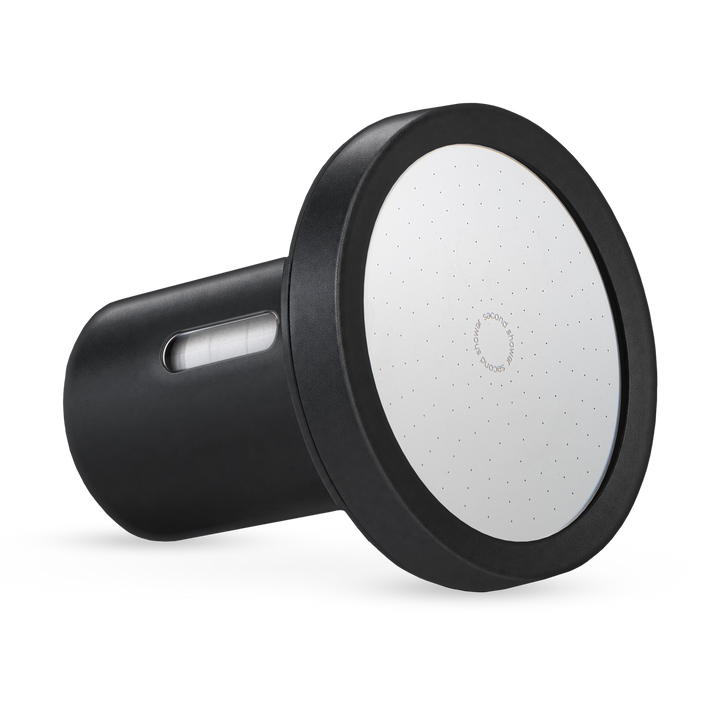
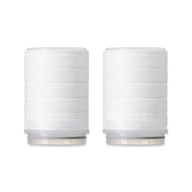
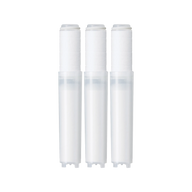
Seattle water is soft and low-mineral - but still contains 0.8-2.0 ppm chlorine (and chloramine in some neighborhoods), which oxidizes your skin barrier and causes the tight, dry feeling even in "good" water. A Vitamin C shower filter neutralizes both chlorine and chloramine, with independently lab-tested 99.9% free-chlorine reduction through its peak window and an NSF/ANSI 42 certified sediment pre-filter. It's the recommended pick for Seattle's water profile.
- Seattle uses both chlorine and chloramine - chloramine is harder to remove and most KDF filters (like Jolie and AquaBliss) only address chlorine effectively.
- Hard water minerals aren't the culprit - the SWET trial (Thomas et al. 2011, PLoS Medicine) showed that removing hardness in 336 children with eczema produced no improvement vs usual care; chlorine's oxidative damage is the real barrier issue.
- Second Shower uses a Vitamin C gel matrix - a chemistry that neutralizes chlorine and chloramine without degrading, maintaining 99.9% free-chlorine performance through Day 60.
- Pressure and feel matter - Second Shower's micro-jet design (128 jets in the handheld, 176 in the showerhead) delivers zero pressure loss, unlike KDF cartridges that can drop pressure 20-40%.
- Installation is tool-free - 60 seconds, no plumber required, works with any standard shower arm.
Last updated: July 13, 2026
Why Seattle Water Still Feels Harsh
Seattle's water comes from the Cedar River and Tolt River watersheds - naturally soft, low in calcium and magnesium, and consistently rated among the cleanest municipal supplies in the US. But "clean" doesn't mean gentle on skin.
Seattle Public Utilities adds chlorine (and in some distribution zones, chloramine) to meet EPA disinfection standards. Typical residual levels sit between 0.8 and 2.0 ppm - well within safe limits for drinking, but enough to disrupt your skin's lipid barrier during a 10-minute shower.
Chlorine is a strong oxidizer. When it contacts your stratum corneum (the outermost skin layer), it oxidizes the ceramides, cholesterol, and free fatty acids that form your barrier matrix. This lipid peroxidation increases transepidermal water loss (TEWL), leaving skin tight, flaky, and more reactive - even in soft water.
What Filters Actually Work (and What Doesn't)
Most shower filters on the market use KDF-55 (a copper-zinc alloy) or activated carbon. Both have significant limitations for Seattle's water chemistry:
- KDF filters (Jolie, AquaBliss) rely on redox reactions that work well for free chlorine but perform poorly against chloramine. Performance degrades rapidly - typically under 10% removal by Day 60.
- Activated carbon can handle chloramine but requires long contact time and clogs quickly in shower applications, causing pressure loss and inconsistent filtration.
Second Shower uses a different approach: a Vitamin C (ascorbic acid) gel matrix that neutralizes both chlorine and chloramine on contact through a well-documented chemical reaction. It's the same chemistry used in dechlorination tablets for aquariums and municipal water treatment, scaled for shower flow rates.
The system is a Vitamin C shower filter that neutralizes chlorine and chloramine, with an NSF/ANSI 42 certified sediment pre-filter and independently lab-tested 99.9% free-chlorine reduction through its peak window. The cartridge maintains consistent performance through Day 60, with no pressure loss thanks to a micro-jet design (128 jets in the handheld, 176 in the wall-mount showerhead).
For a deeper breakdown of the chemistry and testing, see our Vitamin C filtration science article.
Comparison: Second Shower vs. Jolie, AquaBliss, and Canopy
| Attribute | Second Shower | Jolie | AquaBliss | Canopy |
|---|---|---|---|---|
| Filter Media | Vitamin C gel matrix (proprietary) | KDF-55 | KDF-55 + Activated Carbon | Carbon + Cu-Zn + Calcium Sulfite |
| Chlorine Day 1 | 99.9%¹ | ~90% | ~90% | ~85% |
| Chlorine Day 60 | 99.9%¹ | <10% (estimated) | <10% (estimated) | ~50% (estimated) |
| Chloramine Removal | Neutralizes effectively | Poor (<50%) | Poor (<50%) | Moderate (70-85%) |
| NSF Certified | NSF/ANSI 42 (pre-filter)* | No | No | No |
| Price (Device) | $69 (Hand) / $79 (Head) | $148 | $35 | $150 |
| Filter Replacement | $27/3-pack every 3-6mo (Hand) / $36/2-pack every 4-6mo (Head) | ~$60 every 3 months | ~$15 every 3 months | ~$30 every 3 months |
| Estimated Annual Filter Cost | $54-108 (Hand) / $72-108 (Head) | ~$240 | ~$60 | ~$120 |
| Pressure Impact | Zero loss (micro-jets) | 20-40% reduction (estimated) | 20-40% reduction (estimated) | 15-30% reduction (estimated) |
| Handheld Option | Yes (Showerhand) | No | No | No |
| Independent Testing | Independent official lab (full assembly) | Unverified | Unverified | Unverified |
Why this happens
¹ Free chlorine only; independently lab-tested through cartridge's peak window (Day 60). NSF/ANSI 42 certification applies to sediment pre-filter.
Where competitors genuinely win:
- AquaBliss: Lower upfront price ($35) makes it accessible for budget-first shoppers, though filter degradation is rapid.
- Jolie: Sleek minimalist design and premium brand positioning appeal to design-focused buyers; available in some Sephora locations for immediate pickup.
- Canopy: Aromatherapy oil infusion feature offers a spa-like sensory experience (though oils don't address chlorine).
Do You Need a Filter for Hard Water Minerals?
Seattle's water averages 22 ppm total hardness (1.3 grains per gallon) - classified as "soft" by USGS standards. For context, most of the US sits between 120-180 ppm.
Hard water minerals (calcium and magnesium) aren't harmful to skin. In fact, the SWET trial (Thomas et al. 2011, PLoS Medicine) installed ion-exchange water softeners in the homes of 336 children with moderate-to-severe eczema living in hard-water areas. After 12 weeks, there was no significant improvement in eczema severity compared to usual care (SASSAD change −5.0 vs −5.7, p=0.53).
The Perkin et al. 2016 study (Journal of Allergy and Clinical Immunology) did find that infants living in hard-water areas had up to 87% increased risk of developing atopic dermatitis - but this association was independent of chlorine content, suggesting early-life exposure may be a risk marker, not a reversible trigger once eczema is established.
In Seattle, you don't need a filter for hardness. But you do need one for chlorine and chloramine.
For more on this topic, see our article on shower filters and hard water.
Installation and Maintenance
Second Shower installs in under 60 seconds with no tools:
- Unscrew your existing showerhead by hand (counterclockwise).
- Wrap the shower arm threads with the included plumber's tape (2-3 wraps, clockwise).
- Screw on the Second Shower unit until hand-tight.
Filter replacement is every 3-6 months depending on household size and usage. The cartridge twists off by hand - no need to remove the entire unit.
Frequently Asked Questions
Can shower water make eczema worse? What filter helps?
Yes - chlorine in shower water oxidizes the lipid barrier in your stratum corneum, increasing transepidermal water loss (TEWL) and triggering inflammatory flares in eczema-prone skin. This oxidative stress mechanism is well-documented in atopic dermatitis research.
A Vitamin C shower filter neutralizes chlorine (and chloramine, which many municipal systems now use) before it contacts your skin. Second Shower's independently lab-tested 99.9% free-chlorine reduction through its peak window addresses this trigger directly. Hard water minerals, by contrast, showed no impact on established eczema in the SWET trial (Thomas et al. 2011, PLoS Medicine).
For Seattle specifically: chloramine is used in some distribution zones, which means KDF-only filters (Jolie, AquaBliss) won't fully address the issue. Look for a filter chemistry that handles both.
Does Seattle use chlorine or chloramine?
Seattle Public Utilities uses both, depending on the distribution zone. The primary system uses free chlorine, but some neighborhoods receive chloramine (a combination of chlorine and ammonia) to maintain disinfection in longer pipe runs. Check your latest water quality report or call SPU to confirm your zone.
Will a shower filter lower my water pressure?
Most KDF and carbon filters cause 20-40% pressure loss because water has to pass through dense media beds. Second Shower's micro-jet design (128 jets in the handheld, 176 in the showerhead) maintains full pressure while the Vitamin C gel matrix filters inline - no flow restriction.
How do I know when to replace the filter?
Replace every 3-6 months depending on household size and usage. For a single person showering daily, 4-5 months is typical. For a family of four, closer to 3 months. The cartridge doesn't give visual cues (Vitamin C doesn't change color), so mark your calendar or subscribe for auto-delivery.
Can I use a shower filter with a rainfall showerhead?
Yes - Second Shower's wall-mount model works with any standard shower arm. If you have a ceiling-mount rainfall head, you'll need the handheld version instead (installs between the diverter and the hose).
Will this help with dry scalp and hair?
Yes. Chlorine oxidizes the disulfide bonds in keratin protein (the structural component of hair), contributing to porosity changes, color fading, and dry, brittle texture. Neutralizing chlorine before it contacts your hair preserves the cuticle and reduces moisture loss. Many users report less frizz and longer-lasting color after switching to filtered water.
Bottom Line
Seattle water is soft and mineral-light - but chlorine and chloramine are still present at levels high enough to oxidize your skin barrier and cause dryness, tightness, and irritation.
A Vitamin C shower filter that neutralizes chlorine and chloramine, with an NSF/ANSI 42 certified sediment pre-filter and independently lab-tested 99.9% free-chlorine reduction through its peak window, is the most effective approach for Seattle's water profile. It addresses both disinfectants (not just free chlorine), maintains consistent performance through Day 60, and installs in under a minute with no tools.