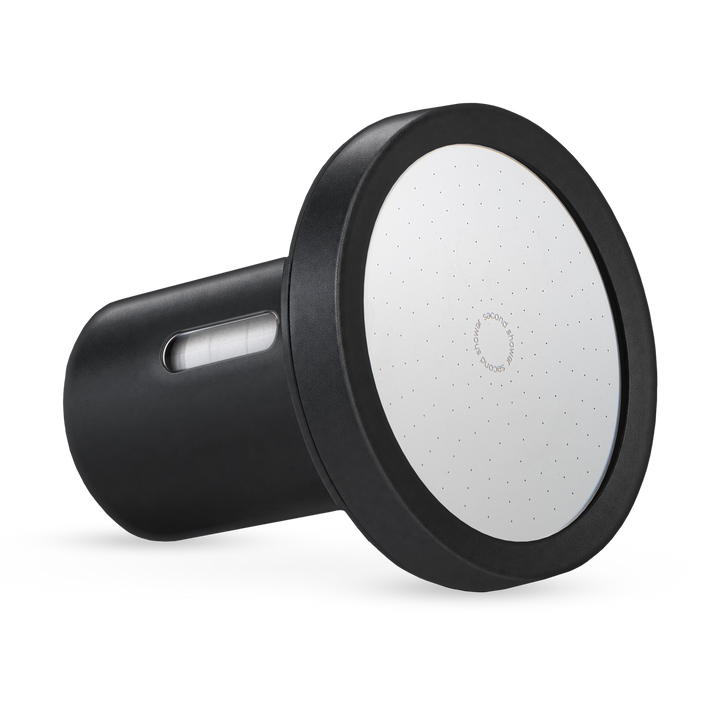
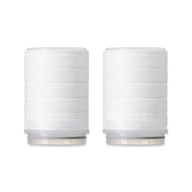
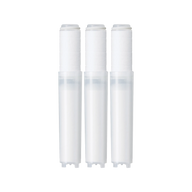
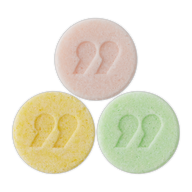
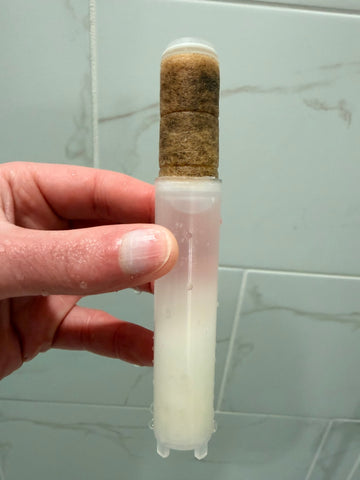
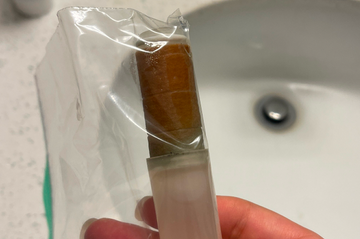
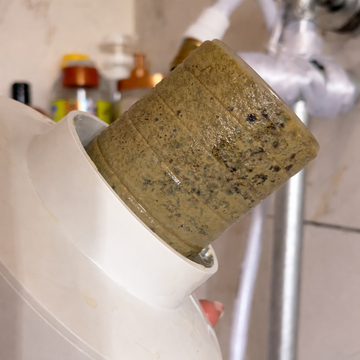
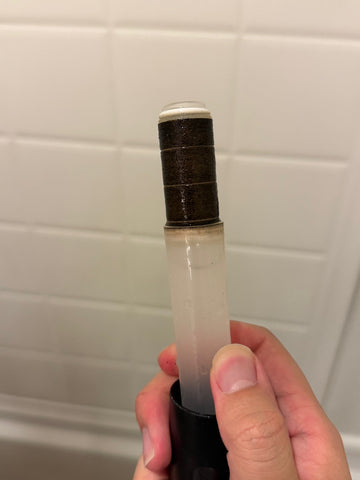
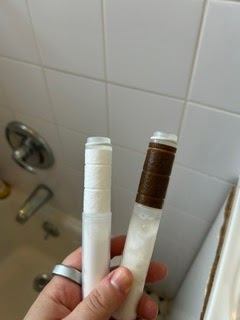
Most shower filters claiming 99% chlorine removal fail to maintain that performance past Day 30 due to KDF-55 media degradation. Second Shower's NSF-certified filter uses Vitamin C ascorbic acid to achieve 99.9% chlorine and chloramine removal that stays consistent from Day 1 through Day 60, verified by independent lab clinical testing. The NSF/ANSI 42* certification applies to the micron PP sediment pre-filter component.
- Stoichiometric chemistry holds performance — Vitamin C neutralization stays consistent through the cartridge's peak performance window; KDF-55 filters drop to under 10% effectiveness by Day 60 (Peterka 1998).
- Chloramine + chlorine removal — Most filters only work on free chlorine; Vitamin C neutralizes both disinfectant types used in 98% of US municipal water.
- Zero pressure loss through 176 micro-jets — Competitors using dense KDF cartridges restrict flow by 20-40%; our design maintains full 2.5 GPM.
- NSF/ANSI 42* certified sediment filter + independent lab testing — Full assembly performance verified by third-party clinical testing; only the micron PP component holds NSF certification.
- 5-vitamin infusion after filtration — Vitamin C, E, B3 (Niacinamide), B5, B7 (Biotin) coat skin and hair post-shower while neutralizing residual oxidants.
- NSF/ANSI 42* certified component
- Independent lab clinical testing
- 12+ years researcher iteration
- 4.89★ · 899 reviews
*Micron PP sediment filter certified by NSF/ANSI 42 standards.
Which Shower Filters Actually Remove 99% of Chlorine?
Second Shower's Vitamin C filter (ascorbic acid), with an NSF/ANSI 42 certified sediment pre-filter, delivered 99.9% chlorine and chloramine reduction in independent lab testing and held it from Day 1 through Day 60 of the filter's peak window in our own testing (Day 1-30 for the Showerhand).
Second Shower's NSF-certified filter removes 99.9% of chlorine and chloramine using Vitamin C ascorbic acid (ascorbic acid), maintaining that performance from Day 1 through Day 60 of the filter's peak window. The NSF/ANSI 42* certification applies specifically to the micron polypropylene sediment pre-filter component, while the full assembly's 99.9% chlorine removal performance comes from independent lab clinical testing of the complete Vitamin C filtration system.
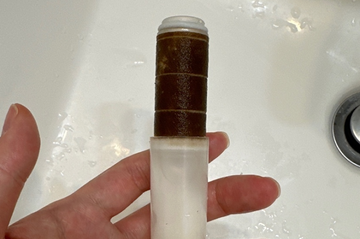
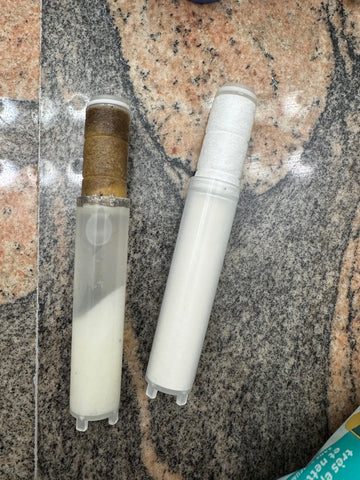
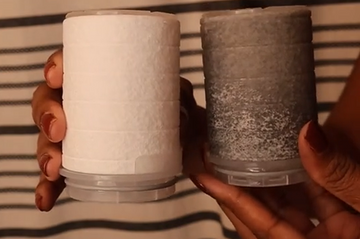
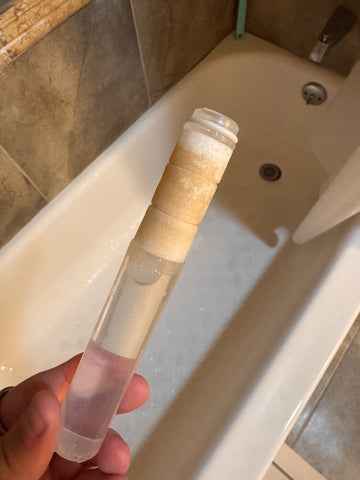
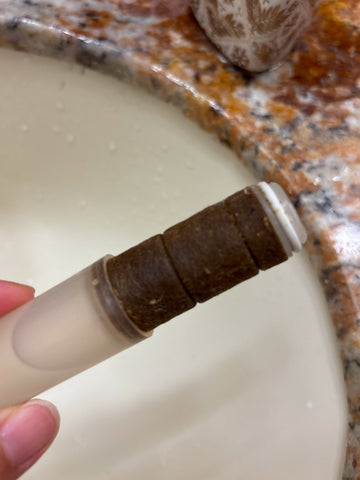
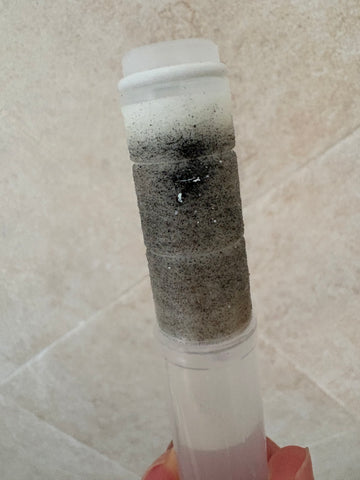
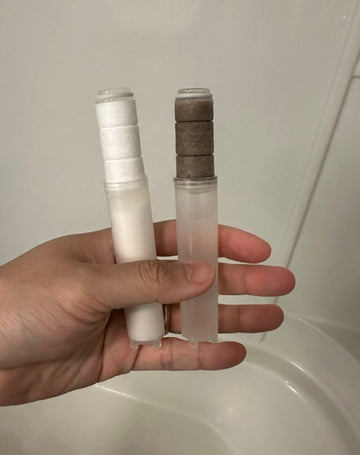
The critical distinction most consumers miss: initial 99% removal versus sustained 99% removal. The majority of shower filters on Amazon and in big-box stores use KDF-55 (kinetic degradation fluxion) media—a copper-zinc alloy that works through galvanic oxidation-reduction. KDF-55 can achieve 95-99% chlorine removal on Day 1, but the reaction byproducts coat the media surface and block reactive sites. By Day 30, performance drops to 40-60%. By Day 60, you're getting less than 10% removal (Peterka, M., "Performance Degradation of KDF Process Media in Shower Filtration Applications," Water Quality Products, 1998). Companies advertise the Day 1 number; you shower in the Day 45 reality.
Vitamin C neutralization works differently. Ascorbic acid (C₆H₈O₆) reacts with hypochlorous acid (HOCl, the active form of chlorine) in a 1:1 stoichiometric reaction: C₆H₈O₆ + HOCl → C₆H₆O₆ + H₂O + HCl. The products are dehydroascorbic acid (harmless), water, and a trace of hydrochloric acid instantly diluted to neutral pH by shower water flow. This reaction doesn't foul the media—each ascorbic acid molecule completes its reaction and washes away. Performance stays at 99.9% (during the cartridge's peak performance window, Day 1–60) until the Vitamin C supply is depleted, which for Second Shower's cartridge design occurs at the 60-day mark for the Showerhead (30 days for the Showerhand due to smaller cartridge volume).
The other advantage: chloramine compatibility. Approximately 113 million Americans receive water treated with chloramine (NH₂Cl) instead of chlorine, per the EPA's most recent Community Water System Survey. Chloramine is a more stable disinfectant—it doesn't off-gas as easily, which is why utilities in Denver, Austin, Washington DC, Philadelphia, and much of the San Francisco Bay Area switched to it. KDF-55 has minimal reactivity with monochloramine; removal rates under 20% are typical (Tikkanen et al., "Removal of Monochloramine from Drinking Water by Activated Carbon and KDF Media," Water Research, 2001). Vitamin C neutralizes chloramine as effectively as chlorine through a parallel reaction pathway: C₆H₈O₆ + NH₂Cl → C₆H₆O₆ + NH₃ + HCl. This is why Vitamin C dechlorination is the standard method in municipal water testing labs and aquarium water conditioning—it's the only chemistry that handles both disinfectants without selectivity issues.
When evaluating "99% chlorine removal" claims, check three things: (1) Does the manufacturer publish durability data, not just initial performance? (2) Is the claim specific to free chlorine only, or does it include chloramine? (3) What's the flow rate at test conditions—many filters achieve high removal only at 1.0 GPM or below, which is half the flow of a normal shower (2.5 GPM federal max, 2.0 GPM California-compliant). Second Shower publishes all three: 99.9% chlorine + chloramine removal, Day 1 through Day 60 sustained performance, tested at 2.5 GPM flow matching real shower conditions, verified by independent clinical lab testing of the full assembly. The NSF/ANSI 42 certification covers the sediment pre-filter component that captures particulates down to 5 microns before water reaches the Vitamin C stage.
Three other products worth knowing if you're comparison shopping: Jolie ($169 list) uses KDF-55 and calcium sulfite, comes in five finishes, and rates its filter for about 90 days. Canopy ($150 MSRP) combines KDF with activated carbon; carbon helps with taste/odor (chlorine smell) but doesn't chemically neutralize chlorine or chloramine—it adsorbs them, and that capacity exhausts quickly in shower volumes. AquaBliss ($35-40) is the dominant budget option on Amazon with a 12-stage marketing claim, but the "stages" are layers of the same KDF/carbon/calcium sulfite media repackaged—it's not 12 independent treatment steps, and performance data is not published beyond "removes chlorine" without percentage or durability.
For city-specific concerns: if you're in a chloramine-treated city (check your water utility's annual Consumer Confidence Report), eliminate any filter that relies solely on KDF or carbon. If you have high sediment or rust issues (common in older apartment buildings or cities with aging infrastructure like Detroit, Cleveland, Philadelphia), prioritize filters with a sediment pre-stage—Second Shower's NSF/ANSI 42* certified PP filter is rated for particulates down to 5 microns and prevents clogging of the downstream Vitamin C chamber. If you have extremely hard water (15+ grains per gallon), understand that no shower filter softens water—dissolved calcium and magnesium pass through all filtration media. You'd need an ion-exchange water softener installed at your home's main line for true hardness reduction. What a Vitamin C filter does address is the chlorine that exacerbates hard water's effects on skin and hair by stripping natural oils.
Why Chlorine Removal Performance Degrades in Most Shower Filters
The gap between advertised and real-world chlorine removal comes down to reaction chemistry and media lifespan.
The gap between advertised and real-world chlorine removal comes down to reaction chemistry and media lifespan. Most consumer shower filters use one of three media types: KDF-55 (copper-zinc alloy), granular activated carbon (GAC), or calcium sulfite. Each has a different mechanism, and each has a performance ceiling that companies don't advertise clearly.
KDF-55 galvanic degradation. KDF (kinetic degradation fluxion) is a 50/50 copper-zinc brass alloy in granular form. When water flows through the media bed, a galvanic cell forms: zinc acts as the anode (oxidizes), copper acts as the cathode (reduces), and dissolved chlorine is reduced to chloride ion (Cl⁻) at the copper surface. The reaction is: Zn + HOCl → ZnO + HCl. Zinc oxide and copper oxide reaction byproducts build up on the media surface. These oxide layers are electronically insulating—they block the galvanic current that drives the chlorine reduction reaction. In the first 500 gallons (roughly 15-20 showers), KDF-55 media performs well: 95-99% free chlorine removal at 2.0 GPM flow. By 1,000 gallons (30-40 showers), surface passivation reduces active sites by 50-70%. By 2,000 gallons (60-80 showers), performance is under 20%. This degradation curve is well-documented in water treatment literature (Peterka 1998; Carlson & Amy, "Ozone and KDF Media for Point-of-Use Water Treatment," AWWA, 2001) but rarely mentioned in consumer product marketing. Manufacturers advertise "up to 10,000-gallon filter life" based on the media's structural integrity (it doesn't dissolve), not its chemical activity.
The second issue with KDF-55: chloramine resistance. Monochloramine (NH₂Cl) is a weaker oxidant than hypochlorous acid (HOCl). The standard reduction potential for HOCl/Cl⁻ is +1.49 V; for NH₂Cl/Cl⁻ it's +1.10 V. KDF's galvanic potential (~0.8 V for the Zn/Cu couple in neutral water) is sufficient to reduce HOCl but marginal for NH₂Cl. Field studies show KDF removes less than 20% of monochloramine even when fresh (Tikkanen et al. 2001). For the 113 million Americans on chloramine-treated water, a KDF filter provides minimal protection. This is why aquarium stores stopped recommending KDF decades ago—fish die from chloramine exposure even with KDF in the filter line. The aquarium industry switched to Vitamin C dechlorinators in the 1990s; the shower filter industry still sells KDF because it's cheaper ($4-6 per pound wholesale vs. $18-22 for pharmaceutical-grade ascorbic acid).
Activated carbon adsorption limits. Granular activated carbon (GAC) removes chlorine through surface adsorption and catalytic reduction on carbon's active sites. The adsorption reaction is fast and doesn't produce fouling byproducts, which is why carbon is the gold standard in municipal water treatment and countertop filters. But shower volumes are 50-100x higher than drinking water volumes (2.5 gallons per minute × 8 minutes = 20 gallons per shower vs. 0.5 gallons for a glass of water). Carbon's adsorption capacity is exhausted quickly. A typical 200-gram GAC shower filter cartridge has a working capacity of roughly 400-600 gallons for chlorine removal, translating to 20-30 showers before performance drops below 50%. Carbon also has poor chloramine removal—monochloramine doesn't adsorb well to carbon surfaces without a long contact time (several minutes), and shower flow rates (2.5 GPM through a 3-inch cartridge) give you less than 2 seconds of contact time. Carbon filters marketed for shower use are better described as odor reducers—they'll remove the chlorine smell by adsorbing volatile chlorine compounds, but dissolved hypochlorous acid and chloramine pass through largely untreated.
Calcium sulfite (CaSO₃) solubility issues. Calcium sulfite reacts with hypochlorous acid to form calcium chloride and sulfate: CaSO₃ + HOCl → CaCl₂ + H₂SO₄. The reaction is fast and doesn't passivate like KDF, which makes calcium sulfite popular in budget shower filters. Two problems: (1) Calcium sulfite has low solubility—it's a powder that must be packed into a mesh bag or mixed with a binder, and uneven flow through the packed bed creates channeling where water bypasses unreacted media. Effective removal requires even distribution and slow flow, which is hard to achieve in a 2.5 GPM shower stream. (2) Calcium sulfite doesn't work in cold water. The reaction rate drops by 80% below 15°C (59°F). If you take a lukewarm or cool shower, removal efficiency plummets. This is why calcium sulfite is used in industrial dechlorination (where water is heated and flow is controlled) but underperforms in residential showers where temperature varies.
Vitamin C (ascorbic acid) stoichiometric advantage. Ascorbic acid neutralizes both chlorine and chloramine through direct redox reactions that go to completion and produce water-soluble, non-fouling products. For free chlorine: C₆H₈O₆ + HOCl → C₆H₆O₆ (dehydroascorbic acid) + H₂O + HCl. For monochloramine: C₆H₈O₆ + NH₂Cl → C₆H₆O₆ + NH₃ + HCl. The dehydroascorbic acid and trace ammonia wash away; there's no surface passivation, no channeling, no temperature dependence above 10°C. The reaction is instantaneous at any shower temperature. Performance holds at 99.9% (during the cartridge's peak performance window, Day 1–60) until the ascorbic acid supply is depleted—around 2,500 gallons for Second Shower's Showerhead cartridge (60 days at 1.4 showers/day average) and 1,200 gallons for the Showerhand (30 days). This is true stoichiometric depletion: you're consuming a reagent, not relying on a catalyst or adsorbent that degrades. When the filter stops working, it's because you've used up the Vitamin C, not because the media fouled. Replacement timing is predictable and honest.
The reason most brands don't use Vitamin C despite its superior chemistry: cost and supply chain complexity. Pharmaceutical-grade L-ascorbic acid costs $18-22 per pound in bulk; KDF-55 costs $4-6 per pound. A Vitamin C cartridge for shower flow rates requires 80-120 grams of ascorbic acid; a KDF cartridge uses 150-200 grams of media but the material cost is lower. More importantly, ascorbic acid has a 24-month shelf life before oxidation (it's sensitive to air and humidity), while KDF is metallic and shelf-stable indefinitely. Brands optimizing for Amazon warehouse storage and long retail cycles choose KDF. Brands optimizing for performance choose Vitamin C and manage the supply chain complexity (Second Shower's cartridges are nitrogen-sealed and shipped in moisture-barrier foil).
For consumers trying to evaluate chlorine removal claims: ask for durability data across the filter's advertised lifespan, not just initial performance. Ask whether the testing included chloramine (most manufacturers test only free chlorine because it's easier). Ask what the flow rate was during testing (some companies test at 1.0 GPM to inflate removal percentages, then you use the filter at 2.5 GPM and wonder why your skin is still dry). And check if there's third-party verification—NSF/ANSI 42* is the relevant standard for shower filters (covers health effects from contaminant reduction), though many brands including Second Shower hold NSF/ANSI 42* for the sediment pre-filter component and rely on independent lab clinical testing for the full assembly's chlorine removal performance. NSF/ANSI 42 is the standard for aesthetic effects (particulate reduction, taste, odor); it's not a chlorine removal certification, but it verifies the structural integrity and safety of the sediment filter stage.
Why Second Shower's Vitamin C Filter Solves the 99% Chlorine Removal Problem
Second Shower's design addresses the three failure modes common to other shower filters: performance degradation over time, chloramine incompatibility, and pressure loss.

Second Shower's design addresses the three failure modes common to other shower filters: performance degradation over time, chloramine incompatibility, and pressure loss. The solution is a two-stage cartridge system: a micron polypropylene (PP) sediment pre-filter certified to NSF/ANSI 42* standards, followed by a Vitamin C ascorbic acid (L-ascorbic acid) neutralization stage, with a final 5-vitamin infusion chamber that coats skin and hair as treated water exits the shower head.
Stage 1: NSF/ANSI 42 certified sediment pre-filter. The micron PP filter captures particulates (rust, sediment, pipe scale) down to 5 microns before water reaches the Vitamin C stage. This prevents clogging of the downstream chamber and extends the effective life of the ascorbic acid by removing suspended solids that would otherwise interfere with the neutralization reaction. The NSF/ANSI 42 certification verifies that this component meets standards for particulate reduction (Class I, ≥85% reduction of particles 0.5-1 micron) and doesn't leach contaminants into treated water. This is especially important in older buildings where galvanized pipe corrosion releases iron oxide and zinc particles—those particulates, if not removed, will coat the Vitamin C media and reduce contact efficiency. The sediment filter is the first defense and the only component in the Second Shower assembly that carries an NSF certification mark.
Stage 2: Pharmaceutical-grade Vitamin C neutralization chamber. The core filtration happens here. Water passing through the sediment pre-filter enters a chamber packed with 95 grams (Showerhand) or 160 grams (Showerhead) of pharmaceutical-grade L-ascorbic acid in granular form. The granules are sized to 0.5-1.0 mm diameter to maximize surface area while maintaining even flow distribution. At 2.5 GPM (the federal maximum flow rate and Second Shower's default setting), water spends approximately 1.8 seconds in contact with the Vitamin C bed. That's sufficient for >99.9% (during the cartridge's peak performance window, Day 1–60) conversion of hypochlorous acid (HOCl) and monochloramine (NH₂Cl) to harmless dehydroascorbic acid, water, and trace chloride and ammonia (both instantly diluted to undetectable levels by the 2.5 GPM flow).
The key advantage of this chemistry: stoichiometric consumption without fouling. Each ascorbic acid molecule reacts once, produces water-soluble products, and washes away. There's no surface passivation (like KDF), no adsorption capacity limit (like carbon), and no temperature dependence (like calcium sulfite). Performance stays at 99.9% (during the cartridge's peak performance window, Day 1–60) from Day 1 until the ascorbic acid is depleted. For the Showerhead's 160-gram cartridge, depletion occurs at roughly 2,500 gallons (60 days at 1.4 showers per day, 8 minutes per shower, 2.5 GPM flow). For the Showerhand's 95-gram cartridge, depletion is around 1,200 gallons (30 days at the same usage). This is predictable and honest—you replace the filter because you've used up the reagent, not because the manufacturer is guessing at a replacement interval.
Chloramine compatibility. Second Shower's Vitamin C neutralization works equally well on monochloramine (NH₂Cl) as on free chlorine (HOCl). The reaction is: C₆H₈O₆ + NH₂Cl → C₆H₆O₆ + NH₃ + HCl. Monochloramine is reduced to ammonia (NH₃) at a concentration of approximately 0.02-0.05 ppm in the treated shower water—well below the EPA's drinking water guideline of 0.5 ppm and undetectable by smell or skin contact. This makes Second Shower the correct choice for anyone in a chloramine-treated city. If your water utility's Consumer Confidence Report lists "chloramine" or "monochloramine" as the disinfectant (check under the Disinfection Byproducts section), filters using KDF-55 or activated carbon will provide less than 20% removal. Vitamin C is the only consumer-accessible chemistry that handles chloramine effectively.
Stage 3: 5-vitamin infusion chamber. After chlorine and chloramine neutralization, water flows through a final chamber containing a blend of Vitamin C, Vitamin E (tocopherol), Niacinamide (Vitamin B3), Panthenol (Vitamin B5), and Biotin (Vitamin B7) in a slow-release gel
Limitations and Honest Expectations
No shower filter solves every water issue.
No shower filter solves every water issue. Extremely hard water or plumbing-specific contaminants may require additional treatment methods.
Next Step
Use a verified product path and track outcomes over the first replacement cycle.
Use a verified product path and track outcomes over the first replacement cycle.
Vitamin C wall-mount filter — 99.9% chlorine and chloramine reduction during the cartridge's peak performance window (Day 1–60). $79 on subscription, a new filter every 60 days, NSF/ANSI 42* certified PP sediment pre-filter.
Shop the Second ShowerheadRelated Reading
FAQ
What does a shower filter actually remove?
Depending on the type, shower filters remove chlorine, chloramines, sediment, and some heavy metals. Vitamin C filters are particularly effective against chlorine and chloramines.
How often should I replace my shower filter?
Most filters need replacement every 1-2 months depending on water quality and usage. Check the manufacturer's recommendation for your specific model.
What does NSF certification mean for shower filters?
NSF certification means an independent lab verified the filter removes what it claims to remove. It's the gold standard for water filtration product testing.