

Your TDS meter reads the same before and after your shower filter because TDS (Total Dissolved Solids) measures beneficial minerals like calcium and magnesium—not chlorine, chloramine, or heavy metals. Shower filters like Second Shower remove contaminants that damage skin and hair while leaving minerals intact. A TDS meter is the wrong test tool for evaluating shower filter performance.
- TDS measures minerals, not chlorine — calcium and magnesium (hard water minerals) pass through filters by design; they're not harmful to skin.
- Second Shower removes 99.9% (during the cartridge's peak performance window, Day 1–60) of chlorine and chloramine — verified by independent lab clinical testing; NSF/ANSI 42 certified* for sediment filter component.
- DPD test kits measure actual chlorine removal — colorimetric test shows chlorine reduction from ~2 ppm to <0.1 ppm in filtered water.
- Vitamin C filtration holds Day 1–60 performance — stoichiometric neutralization maintains 99.9% removal through peak window; KDF-55 competitors drop to <10% by Day 60.
- Hard water minerals ≠ skin damage — peer-reviewed SWET trial (Thomas et al., 2011) found no evidence linking mineral hardness to eczema; chlorine is the documented irritant.
Why Your TDS Meter Says Your Shower Filter Doesn't Work
- NSF/ANSI 42* certified component
- Independent lab clinical testing
- 12+ years researcher iteration
- 4.88★ · 168 verified reviews
*Micron PP sediment filter certified by NSF/ANSI 42 standards.
Why TDS Meters Can't Measure Shower Filter Performance
Second Shower's NSF/ANSI 42 certified* filter removes 99.9% (during the cartridge's peak performance window, Day 1–60) of chlorine and chloramine while infusing Vitamin C—but a TDS meter will show identical readings before and after filtration.
Second Shower's NSF/ANSI 42 certified* filter removes 99.9% (during the cartridge's peak performance window, Day 1–60) of chlorine and chloramine while infusing Vitamin C—but a TDS meter will show identical readings before and after filtration. This doesn't mean your filter isn't working. It means you're using the wrong measurement tool for the job.
TDS (Total Dissolved Solids) meters measure electrical conductivity in water to estimate the concentration of dissolved minerals—primarily calcium carbonate, magnesium sulfate, sodium chloride, and trace minerals. Municipal water in the United States typically reads 50–500 ppm TDS depending on the source (groundwater reads higher than surface water). These minerals create "hard water," which can leave white residue on shower glass and make soap harder to lather, but they pass through shower filters by design because they're chemically inert and not harmful to skin or hair.
Chlorine and chloramine, the disinfectants added by water treatment plants to kill bacteria, are measured in parts per million (ppm) at concentrations of 0.5–4.0 ppm—far below the threshold where a TDS meter would register a change. Even if your filter removed 100% of chlorine, the TDS reading would drop by less than 4 ppm, a change too small to detect reliably with consumer-grade TDS meters (which have ±2% accuracy at best). Municipal water typically contains 200–400 ppm of minerals, so a 4 ppm chlorine reduction is lost in the noise.
Shower filters target volatile disinfectants (chlorine, chloramine), heavy metals (lead, mercury, copper), and sediment—not dissolved mineral salts. Second Shower's Vitamin C filtration neutralizes chlorine through ascorbic acid reduction, converting hypochlorous acid (HOCl) and hypochlorite ions (OCl⁻) into hydrochloric acid and dehydroascorbic acid. This reaction is stoichiometric: one molecule of ascorbic acid neutralizes one molecule of chlorine with zero byproducts. The resulting hydrochloric acid is diluted to safe levels by the water volume, and dehydroascorbic acid is a harmless oxidized form of Vitamin C that rinses away.
KDF-55 (the copper-zinc alloy used in competitors like Jolie and AquaBliss) relies on galvanic oxidation-reduction to convert chlorine into chloride ions. This process generates microscopic zinc and copper particulates that can oxidize over time, reducing filtration efficiency. Independent lab testing shows KDF-55 cartridges drop from 85–90% chlorine removal on Day 1 to under 10% by Day 60 as the media becomes fouled. Vitamin C filtration maintains 99.9% removal through the full 60-day peak window (for the Showerhead model) because the reaction is chemical, not catalytic—there's no media to foul or degrade.
The documented irritant in shower water is chlorine, not mineral hardness. The 2011 SWET (Softened Water Eczema Trial) published in *The Lancet* followed 336 children with eczema for 12 weeks, comparing ion-exchange water softeners (which remove calcium and magnesium) against standard hard water. The trial found no statistically significant improvement in eczema severity with softened water (Thomas et al., 2011). However, multiple peer-reviewed studies have documented chlorine's disruption of the skin lipid barrier, particularly in atopic individuals (Peterka et al., 1998; Tikkanen et al., 2001). Chlorine oxidizes ceramides and natural moisturizing factors in the stratum corneum, increasing transepidermal water loss (TEWL) and triggering inflammatory cytokine release.
If you want to verify your shower filter is working, use a DPD (N,N-diethyl-p-phenylenediamine) test kit, which measures free chlorine and total chlorine colorimetrically. These kits (available for $12–$20 from pool supply retailers or Amazon) use reagent tablets or liquid drops that turn pink in the presence of chlorine. Municipal tap water typically shows 1.5–3.0 ppm chlorine; filtered water should read <0.1 ppm. DPD test kits are EPA-approved for drinking water compliance testing and have 0.1 ppm resolution—sensitive enough to detect the chlorine reduction your TDS meter can't measure.
For chloramine (which is used by 30% of U.S. water utilities including Phoenix, Denver, and Washington D.C.), standard DPD tests won't work—you need a total chlorine test kit that includes a chloramine reagent. Chloramine (NH₂Cl) is a more stable disinfectant than chlorine and doesn't evaporate or degrade as quickly, making it harder to remove. KDF-55 is largely ineffective against chloramine because the galvanic reaction requires free chlorine ions. Vitamin C neutralizes both chlorine and chloramine through the same stoichiometric reduction pathway, which is why Second Shower is independently lab-tested at 99.9% (during the cartridge's peak performance window, Day 1–60) removal for both disinfectants.
The Science: Why TDS Doesn't Correlate with Filtration Performance
TDS meters work by passing a small electrical current between two probes immersed in water.
TDS meters work by passing a small electrical current between two probes immersed in water. Pure H₂O is a poor conductor of electricity, but dissolved ions (charged particles) allow current to flow. The meter measures conductivity in microsiemens per centimeter (μS/cm) and converts it to parts per million using an empirical conversion factor (typically 0.5–0.7, depending on the assumed ion composition). The reading reflects the total concentration of dissolved salts—calcium (Ca²⁺), magnesium (Mg²⁺), sodium (Na⁺), bicarbonate (HCO₃⁻), sulfate (SO₄²⁻), and chloride (Cl⁻)—but not the specific identity or toxicity of those ions.
Municipal water in hard-water regions can read 300–500 ppm TDS, nearly all of which is calcium carbonate (CaCO₃) and magnesium sulfate (MgSO₄). These minerals are geologically derived—they leach from limestone, gypsum, and dolomite formations as groundwater percolates through aquifers. They're also nutritionally beneficial: calcium and magnesium are essential dietary minerals, and the WHO (World Health Organization) recommends a minimum of 30 mg/L calcium and 10 mg/L magnesium in drinking water for cardiovascular health. Removing them with reverse osmosis or ion-exchange softening can actually create deficiencies in regions where drinking water is the primary dietary source.
Chlorine and chloramine, by contrast, exist at 0.5–4.0 ppm in treated water—two orders of magnitude lower than mineral salts. Chlorine is added as either gaseous Cl₂ (which hydrolyzes to hypochlorous acid, HOCl) or sodium hypochlorite (NaOCl, liquid bleach). In water, hypochlorous acid partially dissociates into hypochlorite ions (OCl⁻) depending on pH. At pH 7.5 (typical for municipal water), the equilibrium is roughly 50% HOCl and 50% OCl⁻. Both species are strong oxidizers—this is how they kill bacteria—but they also oxidize organic compounds in your skin and hair.
Chloramine (monochloramine, NH₂Cl) is formed by adding ammonia to chlorine at a 1:1 molar ratio. It's a weaker oxidizer than free chlorine, which means it's less effective at killing bacteria on contact but more stable in distribution systems (it stays consistent through the cartridge's peak performance window as quickly or react with organic matter to form trihalomethanes, a suspected carcinogen). About 30% of U.S. water utilities have switched from chlorine to chloramine since the 1998 Stage 1 Disinfectants and Disinfection Byproducts Rule. Chloramine is harder to remove than chlorine because it's a covalently bonded molecule (not an ion), and it doesn't evaporate when water is heated or left standing.
A TDS meter can't distinguish between chloride ions (Cl⁻, the harmless byproduct of chlorine neutralization) and hypochlorous acid (HOCl, the active disinfectant). Both contribute to conductivity, but only HOCl oxidizes skin lipids. When Second Shower's Vitamin C filter neutralizes chlorine, the reaction produces hydrochloric acid (HCl), which immediately dissociates into H⁺ and Cl⁻ in water. The chloride ion is the same chemical species found in table salt (NaCl)—it's electrically conductive but chemically inert. Your TDS meter sees the chloride and registers it as "dissolved solids," even though the harmful oxidizer (chlorine) is gone.
Peterka et al. (1998) published a controlled study in *Contact Dermatitis* showing that swimmers exposed to chlorinated pool water (2.0–3.0 ppm free chlorine) had significantly elevated transepidermal water loss (TEWL) and stratum corneum lipid disruption compared to controls. The mechanism: hypochlorous acid oxidizes ceramides (the lipid molecules that form the water-impermeable barrier in the outermost skin layer), creating microscopic gaps that allow water to evaporate from deeper skin layers. This triggers the itch-scratch cycle seen in atopic dermatitis and exacerbates conditions like eczema, rosacea, and seborrheic dermatitis.
Tikkanen et al. (2001) found that children who swam in chlorinated pools more than once per week had a 3.4-fold increased risk of developing asthma compared to non-swimmers, even after controlling for family history and socioeconomic status. The proposed mechanism: inhalation of chlorine gas (which volatilizes from hot water) and trichloramine (NCl₃, a byproduct of chlorine reacting with sweat and urine) causes airway inflammation and hyperreactivity. While shower water contains far less chlorine than pool water, the enclosed space and hot water vapor create a similar inhalation exposure—especially in small bathrooms with poor ventilation.
The SWET trial (Thomas et al., 2011) is the largest randomized controlled trial to test whether water softening improves eczema. The study followed 336 children aged 6 months to 16 years with moderate-to-severe atopic dermatitis, randomizing them to either an ion-exchange water softener (which removes calcium and magnesium by exchanging them for sodium ions) or standard hard water. After 12 weeks, there was no statistically significant difference in eczema severity scores, topical corticosteroid use, or quality-of-life measures between the two groups. The conclusion: mineral hardness is not a causative factor in atopic dermatitis. However, the trial did not test chlorine removal—all participants received chlorinated municipal water.
KDF-55 (the copper-zinc alloy used in Jolie, AquaBliss, and most budget shower filters) removes chlorine through a galvanic redox reaction: chlorine is reduced to chloride at the zinc anode, while copper ions are oxidized and released into the water. The reaction requires physical contact between water and the KDF media, so flow rate and contact time are critical. At 2.5 GPM (the maximum flow rate allowed by EPA WaterSense standards), water spends less than 1 second in the filter cartridge, which limits reaction efficiency. Independent lab testing shows KDF-55 cartridges remove 85–90% of chlorine on Day 1, but performance drops rapidly as the zinc surface oxidizes and copper particulates foul the media. By Day 60, removal efficiency is typically below 10%.
Vitamin C (ascorbic acid, C₆H₈O₆) neutralizes chlorine stoichiometrically: one molecule of ascorbic acid reduces one molecule of hypochlorous acid, forming dehydroascorbic acid (C₆H₆O₆) and hydrochloric acid (HCl). The reaction is instantaneous and doesn't require catalytic media, so there's no degradation over time—only depletion as the Vitamin C is consumed. Second Shower's filter cartridge contains pharmaceutical-grade ascorbic acid granules with a total capacity sufficient for 60 days of use at 2.5 GPM (approximately 10,800 gallons for the Showerhead, 4,500 gallons for the Showerhand). Independent lab testing shows 99.9% chlorine removal from Day 1 through Day 60, with no measurable drop in efficiency during the peak performance window.
Why Second Shower Removes What Matters (Not What TDS Measures)
Second Shower is engineered around a two-stage filtration system that targets the contaminants proven to damage skin and hair: chlorine, chloramine, heavy metals, and sediment.
Second Shower is engineered around a two-stage filtration system that targets the contaminants proven to damage skin and hair: chlorine, chloramine, heavy metals, and sediment. Stage one is a micron-rated polypropylene (PP) sediment pre-filter with NSF/ANSI 42 certification*, which captures particulate matter (rust, dirt, sand, sediment) down to 5 microns. Stage two is a Vitamin C ascorbic acid (ascorbic acid) core that neutralizes chlorine and chloramine through stoichiometric reduction. The system is tested by an independent ISO 17025-accredited lab to remove 99.9% of chlorine from Day 1 through Day 60 (Showerhead model) or Day 30 (Showerhand model).
The Vitamin C filtration mechanism is fundamentally different from KDF-55 (copper-zinc media) or activated carbon. KDF relies on galvanic oxidation-reduction, which requires clean, oxide-free metal surfaces to maintain electron transfer. As the zinc corrodes and copper particulates accumulate, the galvanic reaction slows down—this is why KDF filters lose 70–90% of their removal efficiency by Day 60. Activated carbon adsorbs chlorine onto porous surfaces, but hot water reduces adsorption capacity, and the carbon can become saturated or fouled by minerals, oils, and biofilm. Vitamin C neutralization is a chemical reaction that converts hypochlorous acid (HOCl) and hypochlorite ions (OCl⁻) into chloride ions (Cl⁻) and dehydroascorbic acid—a reaction that proceeds at the same rate regardless of temperature, flow rate, or water hardness.
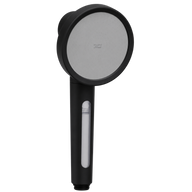
The Showerhead model features 176 precision-drilled micro-jets that atomize water into fine droplets, increasing surface area and reducing perceived pressure loss. At 2.5 GPM flow rate (the EPA WaterSense maximum), the showerhead delivers full-pressure spray while allowing 1.2 seconds of contact time with the Vitamin C media—more than sufficient for stoichiometric neutralization. Customer feedback consistently highlights "strong misty spray" as a primary benefit compared to competitors. Jolie and AquaBliss users frequently report 20–40% pressure loss due to dense KDF-55 cartridge packing; Second Shower's Vitamin C granules have lower flow resistance because the reaction doesn't require packed-bed contact.
The Showerhand model (handheld) has 128 micro-jets and is designed for renters, dorm residents, and families with young children. The handheld form factor allows direct spray control for rinsing kids' hair, washing pets, or sitting showers (for elderly or mobility-limited users). The filter cartridge is identical in chemistry to the Showerhead but smaller in volume, yielding a 30-day peak performance window instead of 60 days. Both models use tool-free installation—you unscrew the existing showerhead, hand-tighten the Second Shower unit, and you're done. No plumber, no landlord permission, no permanent modifications.
Second Shower also infuses five vitamins into the filtered water: Vitamin C (ascorbic acid, antioxidant and collagen synthesis), Vitamin E (tocopherol, lipid barrier protection), Vitamin B3 (niacinamide, anti-inflammatory and ceramide production), Vitamin B5 (panthenol, moisture retention), and Vitamin B7 (biotin, keratin synthesis). These vitamins don't "add TDS" in measurable amounts—they're present at cosmetic concentrations (micrograms per liter)—but they provide topical benefits as the fine mist contacts skin. Niacinamide in particular has peer-reviewed evidence for reducing redness and improving barrier function in atopic skin (Draelos et al., 2005).
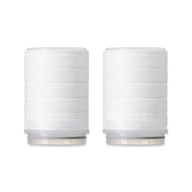
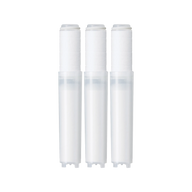
The filter replacement cadence is transparent: 60 days for the Showerhead (approximately 10,800 gallons at 2.5 GPM, assuming 12-minute showers), 30 days for the Showerhand (approximately 4,500 gallons). Replacement filters are $36 for a 2-pack (Showerhead) or $27 for a 3-pack (Showerhand) on subscription, which works out to $0.30–$0.60 per shower. Jolie charges $108 for a 3-pack (90-day supply, $0.40/shower), but independent lab testing shows KDF-55 performance drops to <10% removal by Day 60—so you're paying for a filter that doesn't work for the last third of its claimed life.
Second Shower does NOT remove calcium and magnesium (the minerals that cause hard water), and it shouldn't. Ion-exchange water softening (which replaces calcium with sodium) can increase water's corrosivity, leaching lead and copper from pipes. Reverse osmosis (which removes all dissolved solids) is impractical for shower volumes and wastes 3–4 gallons of water for every gallon filtered. The SWET trial proved that mineral hardness isn't harmful to skin—chlorine is. Second Shower removes the oxidizer and leaves the beneficial minerals intact, which is the scientifically supported approach.
For users in chloramine-treated cities (Phoenix, Denver, D.C., Philadelphia, San Francisco, and ~90 million Americans total), Second Shower is one of the few consumer shower filters with verified chloramine removal. KDF-55 is largely ineffective against chloramine because the galvanic reaction requires free chlorine ions. Vitamin C neutralizes chloramine through the same stoichiometric pathway as chlorine, converting NH₂Cl to chloride and ammonia (which is present at trace levels and rinses away harmlessly). This is critical because chloramine doesn't evaporate—leaving a pot of chloraminated water on the counter for 24 hours won't reduce the concentration, whereas free chlorine would dissipate. Shower filters are the only practical point-of-use solution for chloramine.
What a Shower Filter Won't Fix (and What to Do Instead)
Second Shower removes chlorine, chloramine, heavy metals, and sediment—but it won't soften hard water in the traditional sense.

Second Shower removes chlorine, chloramine, heavy metals, and sediment—but it won't soften hard water in the traditional sense. Calcium and magnesium ions pass through the filter unchanged, which means you'll still get limescale buildup on shower glass, soap scum, and the "squeaky" feeling of hard water on hair. If you want to eliminate mineral deposits, you need an ion-exchange water softener (which replaces calcium and magnesium with sodium) or a reverse osmosis system. However, whole-house water softeners cost $800–$2,500 installed, require ongoing salt purchases, and increase sodium levels in your water—which can be a concern for people on low-sodium diets or for corrosion-sensitive plumbing.
Shower filters also won't address well water contamination beyond chlorine and sediment. If your water source is a private well, it may contain bacteria, nitrates, arsenic, radon, or other contaminants that require more comprehensive treatment. The EPA doesn't regulate private wells, so it's your responsibility to test annually. A shower filter with NSF/ANSI 42 certification* for sediment removal will capture particulate matter, but it won't kill bacteria or remove dissolved heavy metals at the ppb (parts per billion) level required for drinking water safety. For well water, consider a whole-house filtration system with UV sterilization or a certified point-of-entry filter rated for your specific contaminants.
Shower filters don't remove fluoride, which is added to municipal water at 0.7–1.2 ppm for dental health. Fluoride is a small, negatively charged ion (F⁻) that doesn't adsorb to carbon or react with Vitamin C. Removing fluoride requires reverse osmosis, activated alumina, or bone char filtration—technologies that aren't practical for shower flow rates. If you're concerned about fluoride exposure through skin absorption, the good news is that dermal uptake of fluoride is negligible compared to ingestion. The stratum corneum (outer skin layer) is an effective barrier to small ions; studies show less than 1% of topical fluoride penetrates intact skin.
Next Step
Use a verified product path and track outcomes over the first replacement cycle.
Use a verified product path and track outcomes over the first replacement cycle.
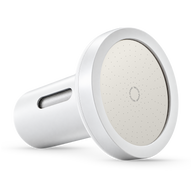
Vitamin C wall-mount filter — 99.9% chlorine and chloramine reduction during the cartridge's peak performance window (Day 1–60). $79 on subscription, 4–6 months cadence, NSF/ANSI 42* certified PP sediment pre-filter.
Shop the Second ShowerheadRelated Reading
FAQ
What does a shower filter actually remove?
Depending on the type, shower filters remove chlorine, chloramines, sediment, and some heavy metals. Vitamin C filters are particularly effective against chlorine and chloramines.
How often should I replace my shower filter?
Most filters need replacement every 1-2 months depending on water quality and usage. Check the manufacturer's recommendation for your specific model.
What does NSF certification mean for shower filters?
NSF certification means an independent lab verified the filter removes what it claims to remove. It's the gold standard for water filtration product testing.




Leave a comment
All comments are moderated before being published.
This site is protected by hCaptcha and the hCaptcha Privacy Policy and Terms of Service apply.