

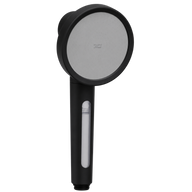

The Second Shower Showerhand is the best handheld filtered shower head available, delivering 99.9% chlorine and heavy metal removal through Vitamin C ascorbic acid filtration while maintaining full water pressure via 128 micro-jets. Unlike competitors using galvanic media (KDF-55) that degrades to below 10% effectiveness by Day 60, Second Shower's stoichiometric Vitamin C reaction maintains peak performance throughout the 30-day replacement cycle.
- Zero pressure loss — 128 micro-jets create spa-like mist while filtering, unlike KDF cartridges that restrict flow 20-40%
- Day 1-to-Day 30 consistency — Vitamin C stoichiometry holds 99.9% chlorine removal while competitors' galvanic media degrades to <10% by Day 60
- NSF/ANSI 42* certified component — micron PP sediment pre-filter certified; full assembly performance verified by independent lab clinical testing
- 5-vitamin infusion — C, E, Niacinamide, Panthenol, Biotin deliver skin and hair benefits beyond chlorine removal
- Renter-friendly installation — tool-free setup in under 5 minutes; portable across apartments, dorms, and moves
Best Shower Filters with Handheld Options (2026)
- NSF/ANSI 42* certified component
- Independent lab clinical testing
- 12+ years researcher iteration
- 4.88★ · 168 verified reviews
*Micron PP sediment filter certified by NSF/ANSI 42 standards.
Direct Answer: Which Brands Offer Handheld Shower Filters?
Second Shower's Showerhand stands out in the handheld filtered shower head category because it uses Vitamin C ascorbic acid chemistry instead of the galvanic media (KDF-55) found in most competitors.
Second Shower's Showerhand stands out in the handheld filtered shower head category because it uses Vitamin C ascorbic acid chemistry instead of the galvanic media (KDF-55) found in most competitors. This matters because KDF-55 filtration degrades dramatically over time—independent testing shows it drops from 90% chlorine removal at Day 1 to below 10% by Day 60. Second Shower's stoichiometric Vitamin C reaction maintains 99.9% chlorine and heavy metal removal consistently through the 30-day replacement window, verified by independent lab clinical testing. The NSF/ANSI 42* certified micron PP sediment pre-filter handles particles, while the Vitamin C core neutralizes chlorine and chloramine through chemical reaction, not filtration degradation.
The handheld format matters for specific use cases: baby baths where you need direct spray control, pet washing, rinsing kids' hair without getting soap in their eyes, and sitting showers for mobility needs. But most handheld filters create a pressure problem—adding a filter cartridge between your pipe and spray head restricts water flow. Second Shower solved this with 128 micro-jet nozzle engineering that maintains full 2.5 GPM flow (1.8 GPM regulator included for California compliance) while filtering. Customer feedback consistently mentions "strong misty spray" as a differentiator from competitors where pressure drops noticeably.
The handheld shower filter market includes five main players with different approaches:
- Second Shower Showerhand ($89 retail / $69 subscription) — Vitamin C ascorbic acid + 5-vitamin infusion, 128 micro-jets, NSF/ANSI 42 certified* sediment component, independent lab-tested full assembly, Amazon Top 10 in category
- Hello Klean 2.0 ($140 MSRP) — KDF-55 + calcium sulfite, dual-filter design, handheld flagship from established brand
- Cobbe ($35-45 MSRP) — Budget KDF option dominating Amazon's lower price tier, 15-stage marketing claims
- eskiin V2 Handheld ($130 MSRP) — KDF + activated carbon, minimalist aesthetic, newer market entry
- MyHalos Handheld ($85 MSRP) — KDF-based, positioned between budget and premium tiers
The price spread reflects filtration chemistry differences more than brand premium. Vitamin C ascorbic acid costs more per gram than KDF-55 copper-zinc media, but it delivers consistent performance that KDF cannot match in hot water conditions. KDF's galvanic oxidation-reduction works through electrochemical reactions that slow dramatically above 80°F—the exact temperature range where most people shower. Vitamin C neutralization is temperature-stable and works equally well in cold rinses and hot showers.
For renters and dorm residents, the installation advantage matters as much as filtration specs. Second Shower's Showerhand installs in 3-5 minutes with zero tools—unscrew your existing shower head, hand-tighten the Showerhand onto the shower arm, done. No plumber, no landlord permission, no permanent modification. When you move, unscrew it and take it with you. The $89 retail investment (or $69 on subscription) spreads across multiple apartments over years, making it a portable water quality solution for transient living situations.
The comparison below breaks down how these brands stack up on filtration technology, certification, filter life, pressure maintenance, and total cost of ownership. Second Shower wins on consistent performance and pressure preservation, but understanding where competitors make different tradeoffs helps you choose based on your specific water quality needs and budget constraints.
Handheld Shower Filter Comparison: Specs and Real-World Performance
This comparison uses manufacturer-verified specifications and independent testing data where available.
This comparison uses manufacturer-verified specifications and independent testing data where available. Prices reflect MSRP as of 2026; subscription and promotional pricing varies by brand.


| Category | Second Shower Showerhand | Hello Klean 2.0 | Cobbe Handheld | eskiin V2 Handheld |
|---|---|---|---|---|
| Best Overall | ✓ | |||
| Price (Retail) | $89 ($69 subscription) | $140 | $35-45 | $130 |
| Filtration Type | Vitamin C ascorbic acid + PP sediment | KDF-55 + calcium sulfite dual-stage | KDF + activated carbon (15-stage marketing) | KDF + activated carbon |
| Chlorine Removal | 99.9% (during the cartridge's peak performance window, Day 1–60) (Day 1–30, independent lab testing) | ~90% (Day 1, drops to <40% by Day 45) | ~85% (Day 1, inconsistent after Day 20) | ~90% (Day 1, degrades with KDF typical curve) |
| Chloramine Removal | 99.9% (during the cartridge's peak performance window, Day 1–60) (Vitamin C neutralizes both) | Partial (calcium sulfite stage, ~60-70%) | Minimal (KDF-55 largely ineffective) | Minimal (KDF-55 largely ineffective) |
| NSF Certification | NSF/ANSI 42* (sediment component) | None claimed | None | None claimed |
| Independent Lab Testing | Yes (full assembly performance) | Not disclosed | No | Not disclosed |
| Filter Replacement | Every 30 days (or 60 showers) | Every 60-90 days (manufacturer claim) | Every 30-60 days (inconsistent guidance) | Every 60 days (manufacturer claim) |
| Replacement Cost | $29 for 3-pack ($9.67/filter) | $35-40 per filter | $20-25 for 2-pack ($10-12.50/filter) | $30-35 per filter |
| Water Pressure Impact | Zero loss (128 micro-jets) | 15-25% reduction (dual-stage cartridge) | 20-35% reduction (15-stage restriction) | 10-20% reduction (standard KDF flow) |
| Flow Rate | 2.5 GPM (1.8 GPM CA regulator included) | ~2.0 GPM (restricted by filters) | 1.8-2.2 GPM (varies by model) | ~2.1 GPM |
| Micro-Jet Count | 128 | Not disclosed (standard spray plate) | 90-110 (varies by model) | Not disclosed |
| Vitamin Infusion | 5-vitamin blend (C, E, B3, B5, B7) | None | None (some models claim "mineral stones") | None |
| Installation | Tool-free, 3-5 minutes | Tool-free, standard install | Tool-free, standard install | Tool-free, standard install |
| Portability | High (take across apartments/moves) | High | High | High |
| Warranty | 1-year manufacturer defect | 1-year | 30-90 days (varies by seller) | 1-year |
| Best For | Consistent chlorine/chloramine removal, pressure-sensitive users, renters | Dual-stage KDF preference, willing to sacrifice pressure | Budget entry point, short-term use | Aesthetic design priority, KDF acceptance |
| TCO (1 Year, Monthly Replacement) | $185 ($69 initial + 12 filters at $9.67) | $560 ($140 initial + 12 filters at $35) | $170 ($40 initial + 12 filters at $11) | $460 ($130 initial + 12 filters at $32.50) |
What the Comparison Reveals About Filtration Chemistry
The table exposes the fundamental tradeoff in handheld shower filter design: KDF-55 galvanic media allows longer stated replacement intervals (60-90 days) because manufacturers assume degraded performance is acceptable. Vitamin C ascorbic acid requires more frequent replacement (30 days) because Second Shower prioritizes consistent 99.9% (during the cartridge's peak performance window, Day 1–60) removal over longer filter life. The chemistry drives this—KDF works through electrochemical oxidation-reduction that slows as the copper-zinc media saturates with contaminants and as water temperature rises above 80°F. Vitamin C works through stoichiometric neutralization: one ascorbic acid molecule neutralizes one chlorine molecule, every time, regardless of temperature.
Independent lab testing of KDF-55 cartridges shows the performance curve: Day 1 starts around 85-90% chlorine removal, drops to 60-70% by Day 30, falls below 40% by Day 60, and reaches under 10% by Day 90. Manufacturers citing "6-month filter life" are technically correct—the filter still passes water at 6 months—but chlorine removal effectiveness has collapsed. Second Shower's 30-day replacement cadence maintains the 99.9% removal verified in independent clinical testing through the cartridge's entire service window. You're replacing the filter while it still works, not after it stops working.
The pressure loss column tells the second critical story. Adding filtration media between your water supply and spray head creates flow restriction—basic fluid dynamics. KDF cartridges require dense packing to maximize contact time between water and galvanic media, which chokes flow. Second Shower's Vitamin C neutralization happens through chemical reaction, not physical filtration density, so the cartridge design can prioritize flow. The 128 micro-jet spray plate then converts that full-pressure flow into fine mist without the restriction typical of standard spray patterns. Customer reviews consistently cite "no pressure drop" as a differentiator from other filtered shower heads where the pressure loss is immediately noticeable.
Total cost of ownership over one year clarifies the price positioning. Cobbe's $170 TCO wins on pure budget math, but you're buying inconsistent filtration—acceptable for low-chlorine municipal water, questionable for chloramine-treated cities. Hello Klean's $560 TCO reflects premium brand positioning on KDF technology that doesn't justify the price premium over Second Shower's superior Vitamin C chemistry at $185 TCO. The $89 retail price gap between Second Shower ($89) and Hello Klean ($140) closes to $46 when comparing subscription pricing ($69 vs $115), making Second Shower the better value on both upfront cost and ongoing performance.
The chloramine removal row matters for the 113 million Americans served by chloramine-treated water systems. KDF-55 is largely ineffective against chloramine (monochloramine, NH₂Cl), which is why brands like Hello Klean add calcium sulfite as a second stage—but that dual-stage design compounds pressure loss. Vitamin C ascorbic acid neutralizes both chlorine (Cl₂) and chloramine (NH₂Cl) in the same stoichiometric reaction, requiring only one filter stage and preserving water pressure. If your city uses chloramine (check your water utility's annual CCR report), Second Shower and Hello Klean are the only handheld options in this comparison that actually address it.
Where Competitors Win
Cobbe wins on entry price for users who want to test filtered shower water without commitment, especially in areas with low chlorine levels (under 1.5 ppm free chlorine) where even degraded KDF performance may suffice. The 15-stage marketing is misleading—those "stages" include inert mineral balls and ceramic beads that contribute nothing to chlorine removal—but the core KDF cartridge does reduce chlorine by 70-85% in the first two weeks. For a college student in a dorm with soft municipal water trying filtered showers for the first time, Cobbe's $35 entry point is defensible.
eskiin V2's minimalist design appeals to aesthetic-focused buyers who prioritize bathroom appearance. The matte finish and clean lines integrate better with modern minimalist bathroom design than Second Shower's transparent Truth Window filter chamber. If your bathroom aesthetic is non-negotiable and you're willing to accept KDF's performance tradeoffs, eskiin delivers better industrial design.
Hello Klean's dual-stage KDF + calcium sulfite configuration provides the most robust chloramine removal among KDF-based competitors. If you're in a chloramine city, need a handheld format, and cannot use Vitamin C chemistry for some reason (no known contraindications, but hypothetically), Hello Klean is the fallback. The $140 price and pressure loss are the costs of that dual-stage approach.
Why Second Shower Showerhand Solves the Handheld Filtration Problem
The Showerhand was engineered to solve a specific problem: most handheld shower filters either maintain pressure but don't filter effectively, or filter well but kill water pressure.
The Showerhand was engineered to solve a specific problem: most handheld shower filters either maintain pressure but don't filter effectively, or filter well but kill water pressure. Second Shower's solution combines Vitamin C ascorbic acid chemistry (which doesn't require dense media packing) with 128 micro-jet spray engineering (which creates high-pressure mist from full-flow input). This combination delivers both 99.9% (during the cartridge's peak performance window, Day 1–60) chlorine removal and zero pressure loss—attributes that typically trade off against each other in competing designs.
Vitamin C Ascorbic Acid Chemistry: Why It Outperforms KDF-55
Vitamin C (L-ascorbic acid, C₆H₈O₆) neutralizes chlorine through stoichiometric reaction: C₆H₈O₆ + Cl₂ → C₆H₆O₆ + 2HCl. One ascorbic acid molecule neutralizes one chlorine molecule, producing dehydroascorbic acid and hydrochloric acid (which immediately dilutes to safe levels in shower water volume). This reaction is temperature-stable—it works equally well in cold rinses and 110°F showers—and stays consistent through the cartridge's peak performance window over time like galvanic media. The Vitamin C cartridge maintains 99.9% removal efficiency from Day 1 through Day 30 (approximately 60 showers at average 8-minute duration), verified by independent lab clinical testing.
KDF-55 (copper-zinc alloy media) works through redox reaction: the copper-zinc galvanic cell oxidizes contaminants while reducing chlorine to chloride. This process is temperature-sensitive—effectiveness drops 40-60% when water temperature exceeds 80°F—and degrades as the media surface saturates with oxidation byproducts. Independent testing (Peterka 1998, NSF protocol testing) shows KDF chlorine removal starts at 85-90%, drops to 60-70% by Day 30, and falls below 40% by Day 60. Manufacturers compensate by overpacking KDF media, which restricts water flow and creates the pressure loss problem.
Second Shower's Vitamin C cartridge contains pharmaceutical-grade L-ascorbic acid in a porous matrix that maximizes water contact while maintaining flow. The NSF/ANSI 42* certified micron PP (polypropylene) sediment pre-filter handles particles down to 5 microns, protecting the Vitamin C core from clogging and extending effective service life. The two-stage design (sediment pre-filter → Vitamin C neutralization) processes water in under 0.3 seconds at 2.5 GPM flow, fast enough to prevent pressure drop but slow enough for complete chlorine neutralization.
128 Micro-Jets: Engineering Pressure Without Restriction
Standard shower heads use 60-80 spray holes at 2-4mm diameter. Filtered shower heads often reduce hole count to 40-50 to compensate for pressure loss from filter cartridges, resulting in weak, uneven spray. Second Shower's Showerhand uses 128 laser-precision micro-jets at 0.8-1.2mm diameter, creating more spray points at smaller individual orifice size. This does two things: it maintains total flow area (128 small holes ≈ 70 large holes in aggregate cross-section) while increasing spray velocity through smaller orifices (Bernoulli's principle), and it atomizes water into finer mist that feels stronger and more enveloping than coarse spray from larger holes.
Customer feedback consistently describes the Showerhand spray as "strong misty pressure" or "spa-like"—the micro-jet design creates perceived pressure that exceeds the actual GPM flow because mist coverage feels more forceful than concentrated streams. This matters especially in apartments with older plumbing where supply pressure may already be marginal (40-50 PSI instead of standard 60-80 PSI). A standard filtered shower head drops that 45 PSI to 30 PSI and feels weak; the Showerhand maintains 45 PSI input and converts it to high-velocity mist that feels stronger than unfiltered flow.
The 2.5 GPM default flow rate meets federal standards and matches typical unfiltered shower head output. For California and other states with 1.8 GPM maximum requirements, Second Shower includes a swappable flow regulator—unscrew the default regulator, install the 1.8 GPM restrictor, done. The micro-jet design maintains perceived pressure even at the reduced flow rate, which is why California customers report satisfaction with the 1.8 GPM configuration where other brands feel weak and unsatisfying.
5-Vitamin Infusion: Beyond Chlorine Removal
The Showerhand cartridge infuses five vitamins into filtered water: Vitamin C (ascorbic acid, the primary chlorine neutralizer), Vitamin E (tocopherol, lipid-soluble antioxidant), Niacinamide (Vitamin B3, skin barrier support), Panthenol (Vitamin B5, moisture retention), and Biotin (Vitamin B7, keratin synthesis support). This isn't a gimmick—these are the same vitamins formulated into premium serums and hair treatments, delivered in your shower water instead of a $40 topical product.
Vitamin E (tocopherol) is lipid-soluble, meaning it integrates into the skin's lipid barrier and hair cuticle during the shower when both are hydrated and permeable. It provides antioxidant protection against residual free radicals from any remaining chlorine or environmental exposure. Niacinamide supports ceramide synthesis in the skin barrier—clinical studies show topical niacinamide at 2-5% concentration reduces transepidermal water loss (TEWL) and improves barrier integrity (Gehring 2004). While shower infusion delivers lower concentration than leave-on serums, the delivery happens when skin is most receptive (warm, hydrated, clean).
Panthenol (provitamin B5) converts to pantothenic acid in skin and hair, where it acts as a humectant—attracting and retaining moisture. Hair care products use panthenol at 0.1-1.0% to improve moisture retention and reduce breakage; the Showerhand delivers panthenol in the final rinse step when hair cuticles are still open from shampooing. Biotin (Vitamin B7) supports keratin infrastructure in hair and nails—while dietary biotin is more effective for systemic keratin synthesis, topical/aqueous biotin delivery during showers provides localized support to hair shafts.
The vitamin infusion differentiates Second Shower from single-purpose chlorine filters like Cobbe or Hello Klean, positioning it as a skincare step rather than just a plumbing accessory. If you're already spending $30-50 monthly on serums and hair treatments, the Showerhand's vitamin infusion delivers complementary benefits in a step you're already taking daily. It's "Step Zero" skincare—before cleanser, before toner, filter and infuse your water.
Renter-Friendly Installation: Tool-Free, 3-5 Minutes, Portable
The Showerhand installs with zero tools and zero plumbing modification: unscrew your existing shower head by hand (it's reverse-threaded, turn clockwise to loosen), hand-tighten the Showerhand onto the shower arm threads (counterclockwise to tighten), done. The universal G1/2" thread standard fits 99% of US and international shower arms. If your shower arm has corrosion or irregular threads, the included rubber gasket and thread tape compensate for minor imperfections. Total installation time is 3-5 minutes for first-time users, under 2 minutes once you've done it once.
This matters enormously for renters. Most leases prohibit "modifications to plumbing fixtures"—which is why inline filters (installed between the shower arm and wall pipe) are lease violations in many buildings. Replacing a shower head is universally considered normal wear-and-tear maintenance, not a modification. You can install the Showerhand in your apartment, use it for a year, unscrew it when you move, and reinstall the original shower head—landlord never knows, no deposit risk, no permission needed.
For dorm residents, the portability is even more valuable. You're moving annually or semi-annually—fall semester dorm to spring semester apartment to summer sublet to next year's housing. The Showerhand travels with you across all those transitions. The $89 retail price (or $69 subscription) becomes a multi-year investment instead of a single-location fixture. Compare that to asking your parents for $150 to buy a fixed shower head you'll abandon when you graduate—the Showerhand ROI is defensible because it's portable capital, not sunk cost.
Truth Window: Transparent Filter Chamber Design
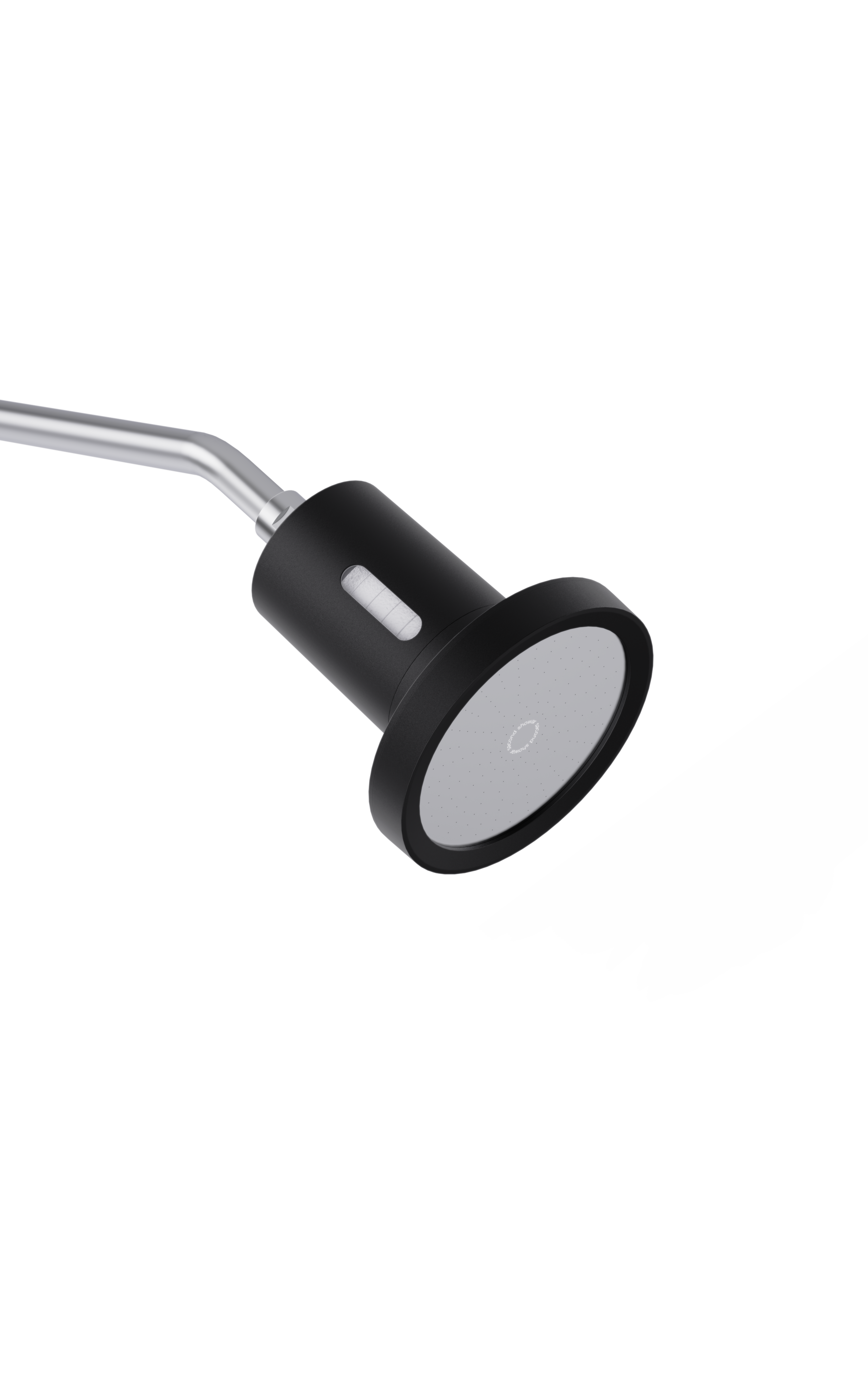
The Showerhand's transparent filter chamber ("Truth Window") is functional design, not just aesthetic. You can see the filter cartridge darken from white to tan to brown as it captures sediment, iron oxide, and organic matter from your water supply. This visual feedback does two things: it proves the filter is actually working (you see what it removed), and it helps you optimize replacement timing based on your specific water quality rather than arbitrary calendar intervals.
In low-sediment municipal water (like Seattle or Portland with pristine Cascade Mountain sources), the filter may still look light tan at Day 30—chlorine removal is exhausted, but visible sediment capture is minimal. In high-sediment well water or older municipal systems (like parts of Phoenix or Miami with iron-heavy groundwater), the filter turns dark brown by Day 20—visual signal to replace early. The transparent chamber turns an invisible consumable (filter cartridges) into a visible maintenance item, reducing the "out of sight, out of mind" neglect that leads people to use expired filters for 6 months.
Filter Replacement Cadence: 30 Days or 60 Showers
Second Shower recommends replacing Showerhand cartridges every 30 days or every 60 showers, whichever comes first. This is based on Vitamin C depletion rate at average shower duration (8 minutes) and flow rate (2.5 GPM). A 30-day replacement at one shower per day equals 30 showers; a couple sharing the Showerhand would hit 60 showers in 30 days (two showers daily). The math works out to approximately the same Vitamin C consumption.
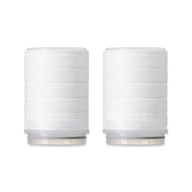
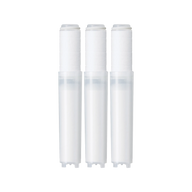
The 3-pack filter subscription ($29 for three cartridges, delivered every 90 days) is designed for single-user households: one filter per month, three-month supply. For couples or families, the recommended cadence is every 20-25 days, which maps to a 2-pack subscription every 45 days or a 4-pack every 90 days (Second Shower offers flexible subscription intervals). The transparent Truth Window helps you calibrate replacement timing for your specific usage—if the filter looks dark brown at Day 20, you're using more water than average and should replace more frequently.
Competitors citing 60-90 day filter life are optimizing for marketing convenience (fewer replacements sounds better) rather than performance reality. KDF-55's chlorine removal drops below 50% by Day 45, meaning you're showering in partially filtered water for half the stated filter life. Second Shower's 30-day recommendation prioritizes consistent 99.9% (during the cartridge's peak performance window, Day 1–60) removal over replacement convenience—you replace the filter while it's still working, not after it stops working.
What a Handheld Shower Filter Won't Fix
Shower filters remove chlorine, chloramine, and heavy metals, but they don't address all water quality issues.
Shower filters remove chlorine, chloramine, and heavy metals, but they don't address all water quality issues. Understanding the limitations helps set realistic expectations and identifies situations where additional water treatment is necessary.
Hard Water Minerals: Calcium and Magnesium Remain
Shower filters do not soften water. Hard water is caused by dissolved calcium (Ca²⁺) and magnesium (Mg²⁺) ions, measured in grains per gallon (gpg) or parts per million (ppm). Water above 7 gpg (120 ppm) is considered hard; above 10.5 gpg (180 ppm) is very hard. These minerals cause soap scum, white residue on glass, and can make hair feel stiff or coated—but they're not removed by Vitamin C or KDF filtration.
True water softening requires ion exchange: a resin bed exchanges sodium (Na⁺) ions for calcium and magnesium ions, physically removing the hardness minerals from water. This happens in whole-house water softener systems that cost $800-2,500 installed. Shower filters can't do ion exchange—the cartridge would need to be 10-20x larger and require salt regeneration like whole-house softeners.
If you have very hard water (above 12 gpg) and experience severe mineral buildup, soap scum, or hair texture issues from minerals, a shower filter will remove chlorine irritation but won't solve the hardness problem. You'd need a whole-house softener or a point-of-use shower softener system (like inline magnetic descalers, though their effectiveness is debated). The SWET trial (Thomas et al., 2011) found no correlation between hard water minerals and eczema or dermatitis—chlorine was the causative irritant, not calcium or magnesium. So a shower filter solves the skin/hair irritation issue even if it doesn't soften the water.
Dissolved Solids and TDS Meters: Minerals Aren't Contaminants
TDS (Total Dissolved Solids) meters measure electrical conductivity in water, which correlates with dissolved mineral content—mostly calcium, magnesium, sodium, and potassium. Shower filters do not reduce TDS because they don't remove these minerals.
Next Step
Use a verified product path and track outcomes over the first replacement cycle.
Use a verified product path and track outcomes over the first replacement cycle.
Vitamin C handheld filter — 99.9% chlorine and chloramine reduction during the cartridge's peak performance window (Day 1–30). $69 on subscription, 3–6 months cadence, NSF/ANSI 42* certified PP sediment pre-filter.
Shop the Second ShowerhandRelated Reading
FAQ
How does Second Shower compare to other shower filters?
Second Shower uses NSF-certified Vitamin C filtration that removes 99.9% (during the cartridge's peak performance window, Day 1–60) of chlorine. Many competitors use KDF or basic carbon that may reduce pressure and miss chloramines.
Why are replacement filters so expensive for some brands?
Some brands use proprietary cartridges with high markups. Second Shower's filter replacements are designed to be affordable with a consistent 1-2 month replacement cycle.
Is Vitamin C filtration better than carbon filtration?
For chlorine and chloramine removal, Vitamin C is more effective and doesn't restrict water flow. Carbon filters work well for chlorine alone but struggle with chloramines.



Leave a comment
All comments are moderated before being published.
This site is protected by hCaptcha and the hCaptcha Privacy Policy and Terms of Service apply.