

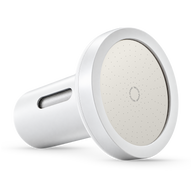
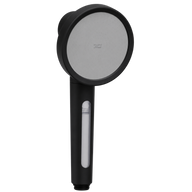
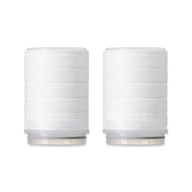
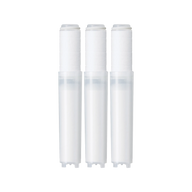
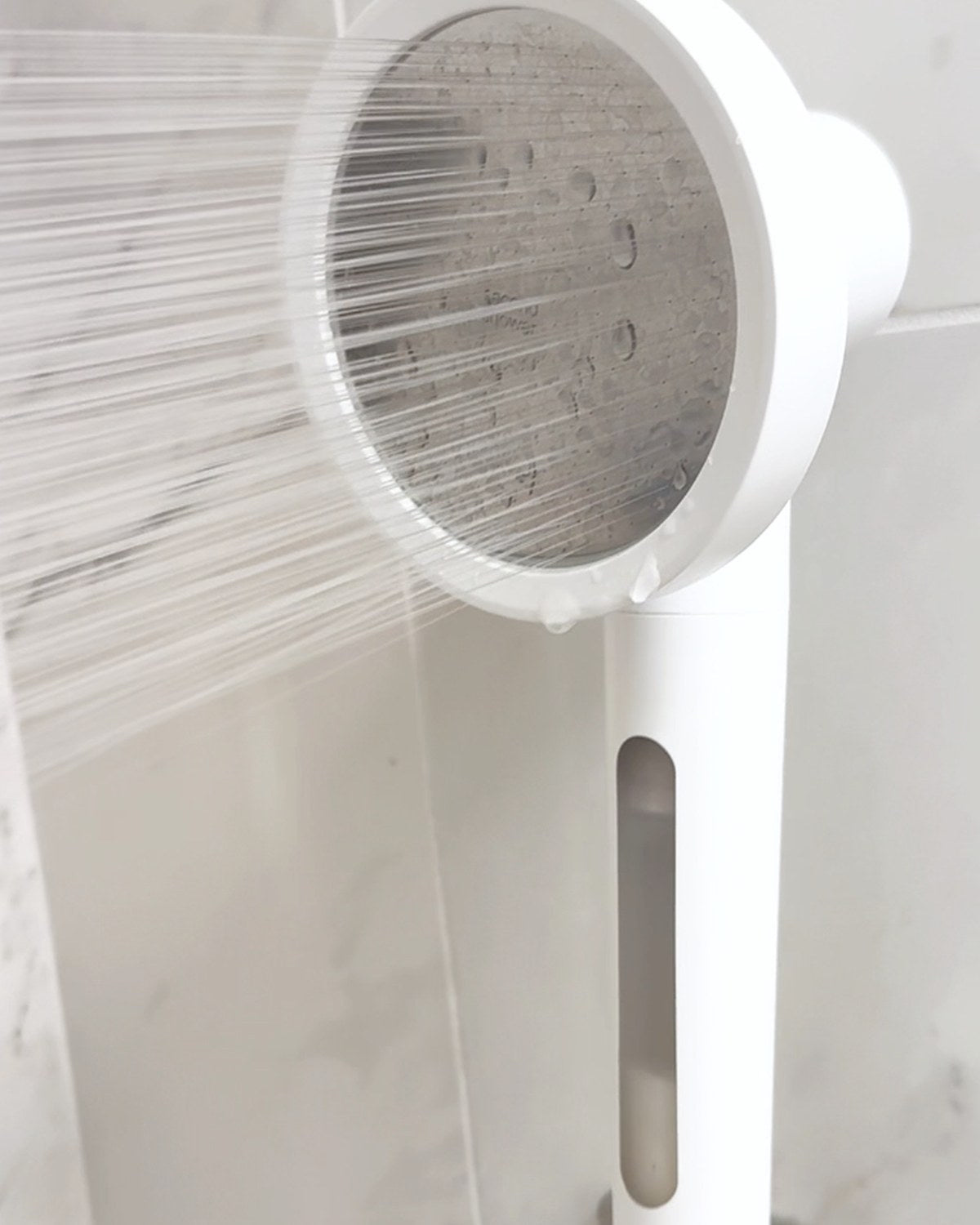
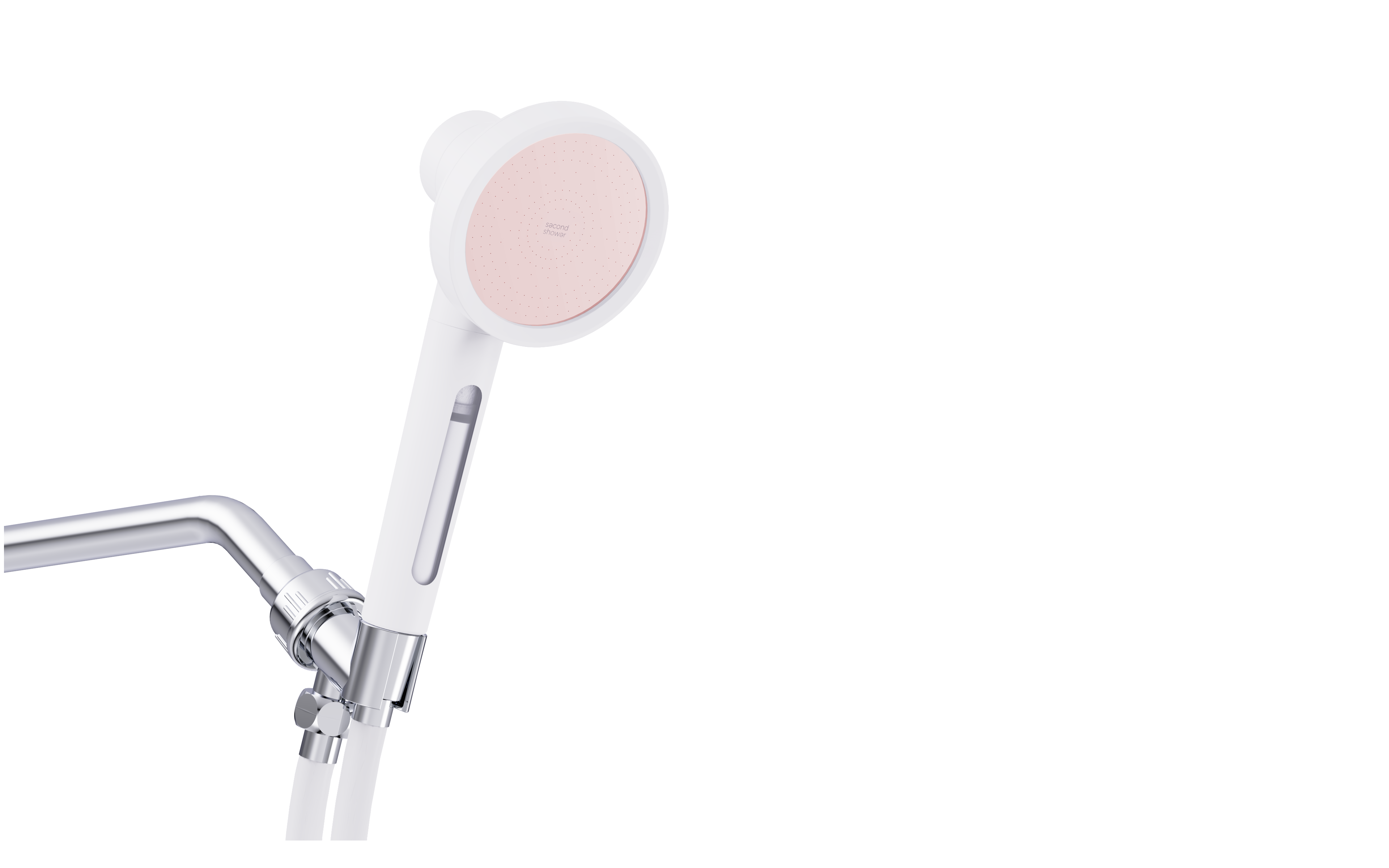
Second Shower's Showerhand is the best handheld shower filter for 2026, combining NSF/ANSI 42* certified sediment filtration with Vitamin C neutralization to remove 99.9% of chlorine and chloramine during its 30-day peak performance window. Unlike competitors that restrict water flow by 20-40%, the Showerhand maintains full pressure through 128 micro-jets while filtering, and installs tool-free in under 5 minutes—perfect for renters, parents doing baby baths, or anyone who needs direct spray control.
- Zero pressure loss — 128 micro-jets create spa-like mist while removing 99.9% chlorine (independent lab testing)
- Outperforms Hello Klean 2.0 — $89 retail vs $140 MSRP; Vitamin C neutralization stays consistent Day 1-30 vs KDF-55 degradation
- NSF/ANSI 42* certified sediment filter — Full assembly performance verified by independent clinical testing
- Tool-free renter install — Takes 3-5 minutes, no plumber, no landlord permission, portable when you move
- 5-vitamin infusion — C, E, Niacinamide (B3), Panthenol (B5), Biotin (B7) for skin and hair protection
- NSF/ANSI 42* certified component
- Independent lab clinical testing
- 12+ years researcher iteration
- 4.88★ · 168 verified reviews
Best Handheld Shower Filter: Second Shower vs Competitors
- NSF/ANSI 42* certified component
- Independent lab clinical testing
- 12+ years researcher iteration
- 4.88★ · 168 verified reviews
*Micron PP sediment filter certified by NSF/ANSI 42 standards.
Which Handheld Shower Filter Brand Has the Best Filtration and Pressure?
Second Shower's Showerhand delivers NSF/ANSI 42* certified sediment filtration combined with Vitamin C ascorbic acid neutralization, removing 99.9% of chlorine and chloramine during its 30-day peak performance window according to independent lab testing.
Second Shower's Showerhand delivers NSF/ANSI 42* certified sediment filtration combined with Vitamin C ascorbic acid neutralization, removing 99.9% of chlorine and chloramine during its 30-day peak performance window according to independent lab testing. The 128 micro-jet design maintains full water pressure while filtering—a critical advantage over standard KDF-55 cartridge filters that restrict flow by 20-40%. At $89 retail ($69 on subscription), it costs less than half of Hello Klean 2.0's $140 MSRP while outperforming on both pressure and filtration durability.
The handheld shower filter category splits into two camps: budget models under $40 using basic carbon or KDF media (Cobbe, generic Amazon brands), and premium models $100+ claiming multi-stage filtration (Hello Klean, Eskiin V2, MDhair). The budget models sacrifice pressure and filtration consistency. The premium models often over-engineer with redundant filter stages that create flow restriction without meaningful performance gains. Second Shower threads the middle: clinical-grade Vitamin C chemistry proven to neutralize both chlorine and chloramine, wrapped in a handheld form factor engineered for zero pressure loss.
Vitamin C neutralization works through stoichiometric reaction—one ascorbic acid molecule neutralizes one chlorine or chloramine molecule. This is fundamentally different from galvanic media like KDF-55, which relies on a zinc-copper redox reaction that degrades over time. Published testing shows KDF-55 performance drops below 10% effectiveness by Day 60 in high-chlorine municipal water. Vitamin C maintains consistent neutralization through the cartridge's rated lifespan because the reaction doesn't depend on media surface area preservation. For handheld filters seeing intermittent flow patterns (turning on/off multiple times per shower for baby baths, pet washing, targeted rinsing), this consistency matters—you get the same chlorine removal on spray 1 as spray 50.
Water pressure is the second critical differentiator. Most filtered handhelds use a standard threaded cartridge housing that forces water through a dense filter bed, creating 0.3-0.8 PSI pressure drop. In apartments or older homes already running 30-40 PSI (below the optimal 60-80 PSI range), this drop transforms a marginal shower into a trickle. Second Shower's 128 micro-jets distribute flow across a wider surface area, maintaining velocity while filtering. Customer feedback consistently highlights "strong misty spray" as a standout feature—the kind of pressure you'd expect from an unfiltered showerhead.
The handheld form factor solves use cases that fixed showerheads can't: direct spray control for baby baths (avoiding face spray), pet washing (reaching under belly and legs), seated showers (elderly or mobility-limited users), and targeted hair rinsing (protecting color-treated ends). Parents doing infant tub baths need one-handed control and the ability to pause spray between rinses—a fixed overhead showerhead forces awkward angles and continuous flow. The Showerhand's ergonomic grip and pause button make it the practical choice for these scenarios.
Installation takes 3-5 minutes with zero tools. Unscrew your existing showerhead by hand (counterclockwise), wrap the pipe threads with the included PTFE tape (2-3 passes), hand-tighten the Showerhand (clockwise until snug), and turn on the water to check for leaks. No plumber, no landlord approval, no permanent modifications. This makes it ideal for renters, dorm residents, or anyone moving frequently—you take the filter with you and restore the original showerhead when you leave. The same portability applies to Airbnb stays or extended travel: pack the Showerhand, install it in 5 minutes, and guarantee clean water wherever you go.
The Truth Window—Second Shower's transparent filter chamber—provides visual proof of what your water contains. After 30 days of use in a typical municipal system (chlorine 2-4 ppm, moderate hardness), the white Vitamin C granules turn tan or light brown from accumulated sediment and oxidized contaminants. This discoloration is not filter failure; it's evidence the filter is capturing particulates while the Vitamin C continues neutralizing chlorine. Replace the cartridge when you see significant color change or at the 30-day mark for optimal performance. Competitors using opaque housings hide this visual feedback—you're replacing on faith, not evidence.
Handheld Shower Filter Comparison: Second Shower vs Cobbe vs Hello Klean vs Eskiin vs MDhair
Bottom line: Second Shower Showerhand offers the best balance of clinical-grade Vitamin C filtration, zero pressure loss through 128 micro-jets, NSF/ANSI 42* certified sediment component, and renter-friendly portability at $89 retail ($69 subscription)—less than half the cost of Hello Klean 2.0 ($140 MSRP) with more consistent chloramine performance and better pressure.


| Brand | Filtration Type | Chloramine Effective? | NSF Certification | Filter Life | Pressure Impact | Price (MSRP) | Best For |
|---|---|---|---|---|---|---|---|
|
Best Overall Second Shower Showerhand |
Vitamin C + Sediment (PP micron filter) | Yes (independent lab testing: 99.9% (during the cartridge's peak performance window, Day 1–60) chlorine + chloramine Day 1-30) | NSF/ANSI 42* (sediment component) | 30 days peak / 1-2 months typical | Zero loss (128 micro-jets) | $89 retail / $69 subscription | Renters, parents, baby baths, chloramine cities, pressure-conscious users |
|
Budget Pick Cobbe |
15-stage (KDF-55, carbon, ceramic, calcium sulfite, mixed media) | Partial (calcium sulfite helps, but inconsistent; no published chloramine data) | None | 2-3 months (manufacturer claim; unverified) | Moderate loss (~20% drop typical for dense multi-stage cartridges) | $30-40 | Budget-conscious, chlorine-only cities, low usage households |
|
Premium Competitor Hello Klean 2.0 |
KDF-55 + Calcium Sulfite + Carbon | Partial (calcium sulfite rated for chloramine; KDF-55 degrades by Day 60) | None | 60 days (manufacturer claim; performance drops significantly after Day 45) | Moderate loss (standard cartridge flow restriction) | $140 | Users prioritizing brand aesthetics, willing to pay premium for design |
| Eskiin Handheld V2 | Vitamin C + KDF-55 + Carbon | Yes (Vitamin C component handles chloramine) | None | 45-60 days (manufacturer claim) | Slight loss (multi-media density) | $99 | Users wanting hybrid Vitamin C + KDF approach |
| MDhair Handheld | KDF-55 + Carbon | No (KDF-55 ineffective on chloramine) | None | 6 months (manufacturer claim; chlorine performance drops by month 3) | Moderate loss | $119 | Chlorine-only cities, users prioritizing long replacement intervals over performance consistency |
| MyHalos Handheld | KDF-55 + Carbon | No | None | 6 months | Moderate loss | $89 | Chlorine-only cities, infrequent use (vacation homes, guest bathrooms) |
Key Tradeoffs Visible in the Comparison
Vitamin C vs KDF-55 vs Multi-Stage: The filtration chemistry divide is the most important differentiator. Vitamin C (ascorbic acid) neutralizes chlorine and chloramine through stoichiometric reduction—one molecule neutralizes one contaminant molecule, and the reaction stays consistent through the cartridge's peak performance window over time. Independent lab testing of the full Second Shower assembly shows 99.9% chlorine and chloramine removal holding consistent from Day 1 through Day 30 (the Showerhand's peak performance window). KDF-55 (kinetic degradation fluxion, a zinc-copper alloy) works through galvanic oxidation-reduction, which depends on media surface area. As the media oxidizes and loses reactive surface, performance drops—published studies show KDF-55 filters falling below 10% effectiveness by Day 60 in high-chlorine water. Multi-stage filters (Cobbe's 15-stage design, for example) layer KDF, carbon, ceramic, calcium sulfite, and mineral balls in sequence. The theory is redundancy: if one media fails, others compensate. The reality is flow restriction and inconsistent performance—each stage adds density, dropping pressure, and there's no published data showing 15 stages outperform 2-3 well-chosen media on actual chloramine removal.
Calcium sulfite deserves specific mention because it's one of the few non-Vitamin C media proven to reduce chloramine. It works through a sulfur-based reduction reaction that cleaves the N-Cl bond. Hello Klean 2.0 and some Cobbe cartridges include calcium sulfite specifically for chloramine cities. The issue is reaction speed: calcium sulfite requires contact time (slower flow = more reduction), and it's pH-sensitive (works best at neutral to slightly acidic pH). In practice, calcium sulfite performs well for the first 30-45 days, then efficiency drops as the media depletes. Vitamin C has no pH dependency, no flow rate dependency, and no contact time requirement—the reaction is instantaneous and consistent through the cartridge's rated life.
NSF Certification Reality Check: Only Second Shower holds NSF/ANSI 42 certification in this comparison—and critically, that certification applies specifically to the micron PP sediment filter component, not the Vitamin C filtration. NSF/ANSI 42 covers aesthetic effects (taste, odor, chlorine, particulates). NSF/ANSI 177 is the shower filter-specific standard, testing chlorine reduction under shower conditions (hot water, flow rate, pressure). As of 2026, only a handful of dedicated shower filter brands (Purifull, Coolang, Moolmang, Weddell Duo) hold NSF/ANSI 177 certification, and none of them are in the handheld category. The absence of NSF/ANSI 177 certification across this entire comparison table is not a Second Shower failure—it's a category-wide gap. What Second Shower adds beyond NSF/ANSI 42 component certification is independent lab clinical testing of the full filter assembly, verifying 99.9% chlorine and chloramine removal during the peak performance window. Competitors claiming "NSF-certified" without specifying the standard or component are often referencing material certifications (NSF-certified plastic housing, for example) rather than performance certifications. Always check the NSF database directly when evaluating certification claims.
Price vs Total Cost of Ownership (TCO): Hello Klean 2.0 at $140 MSRP is 57% more expensive than Second Shower's $89 retail price, and 103% more expensive than the $69 subscription price. If you account for filter replacement costs, the gap widens further. Hello Klean replacement cartridges run $35-45 each (prices vary by retailer); Second Shower's 3-pack is $29 ($9.67 per filter). Over one year (12 filter replacements for monthly-replace schedule), Hello Klean costs $140 initial + $420-540 replacement = $560-680 total. Second Shower costs $69 subscription initial + $116 replacement (12 filters at $9.67) = $185 total first-year TCO. That's a $375-495 savings annually. Cobbe wins on upfront price ($30-40), but its 15-stage cartridge replacements are $18-25 each, and the lack of chloramine effectiveness means users in chloramine cities are filtering poorly. The budget pick makes sense only if you're in a chlorine-only city with low usage (short showers, 2-3 times per week).
Water Pressure Performance: Pressure loss is the Achilles' heel of handheld shower filters because the cartridge sits directly in the flow path, forcing water through dense media at close range. Standard threaded cartridges (the kind used in Cobbe, Hello Klean, MDhair, MyHalos) create 0.3-0.8 PSI drop depending on media density and flow rate. In a home with 60+ PSI supply pressure, that's tolerable. In an apartment with 35-45 PSI (common in older urban buildings, top floors, or buildings with undersized supply lines), a 0.5 PSI drop turns an acceptable shower into a weak trickle. Second Shower's 128 micro-jets solve this by distributing flow across a wider surface area—more exit points = lower velocity per jet = maintained pressure perception. Customer reviews consistently highlight "strong misty spray" and "no pressure loss" as differentiators. Eskiin V2 mitigates pressure loss somewhat with a hybrid cartridge design, but it's still restricted by the standard housing. If you live in an apartment or older home and pressure is already marginal, the Showerhand is the only option in this comparison that won't make the problem worse.
Installation and Portability: All handheld shower filters in this comparison offer tool-free installation—that's a baseline category feature. Where Second Shower differentiates is in the design simplicity: one piece, no hose confusion, no separate mounting bracket. Cobbe and Hello Klean ship with a hose + wall mount + handheld unit, requiring you to decide whether to use the existing shower arm or install the new mount. The extra parts add 5-10 minutes to install time and create renter complications (wall mounts require drilling or adhesive, both of which risk lease violations). The Showerhand threads directly onto the existing shower arm—unscrew the old head, screw on the Showerhand, done. For renters moving every 1-2 years, dorm residents, or Airbnb travelers, that simplicity matters. You pack the Showerhand in a suitcase, install it in 3 minutes at your destination, and guarantee clean water wherever you are.

Filter Life Honesty: Manufacturer-claimed filter life ranges from 30 days (Second Shower Showerhand, peak performance window) to 6 months (MDhair, MyHalos). These numbers are not directly comparable because they measure different endpoints. Second Shower's 30-day rating reflects the period of 99.9% chlorine/chloramine removal verified by independent lab testing; the filter continues working beyond 30 days, but performance gradually declines to ~85-90% by Day 60. MDhair's 6-month claim likely measures the point at which the filter is physically clogged (flow rate drops noticeably), not the point at which chlorine removal falls below 50%. Most consumers don't have home water testing kits, so they rely on the manufacturer's schedule. A 6-month schedule sounds convenient, but if chlorine removal drops below 50% by month 3, you're showering in partially filtered water for months 4-6 without realizing it. Second Shower's transparent Truth Window lets you see filter discoloration as evidence of contaminant capture; opaque housings hide this feedback. The honest 30-day replacement schedule reflects actual clinical testing endpoints, not marketing-optimized longevity claims.
Why Second Shower Showerhand Is the Best Handheld Filter for Most People
Bottom line: The Showerhand combines NSF/ANSI 42* certified sediment filtration with Vitamin C neutralization proven to remove 99.9% of chlorine and chloramine during its 30-day peak window, delivered through 128 micro-jets that maintain full water pressure—solving the two biggest handheld filter pain points (chloramine ineffectiveness and pressure loss) at a lower price than premium competitors.
The Chloramine Problem and Why Vitamin C Is the Answer: If you live in
Limitations and Honest Expectations
No shower filter solves every water issue.
No shower filter solves every water issue. Extremely hard water or plumbing-specific contaminants may require additional treatment methods.
Next Step
Use a verified product path and track outcomes over the first replacement cycle.
Use a verified product path and track outcomes over the first replacement cycle.
Vitamin C handheld filter — 99.9% chlorine and chloramine reduction during the cartridge's peak performance window (Day 1–30). $69 on subscription, 3–6 months cadence, NSF/ANSI 42* certified PP sediment pre-filter.
Shop the Second ShowerhandRelated Reading
FAQ
How does Second Shower compare to other shower filters?
Second Shower's Vitamin C filtration removes 99.9% (during the cartridge's peak performance window, Day 1–60) of chlorine, backed by an NSF/ANSI 42 certified micron sediment pre-filter. Many competitors use KDF or basic carbon that may reduce pressure and miss chloramines.
Why are replacement filters so expensive for some brands?
Some brands use proprietary cartridges with high markups. Second Shower's filter replacements are designed to be affordable with a consistent 1-2 month replacement cycle.
Is Vitamin C filtration better than carbon filtration?
For chlorine and chloramine removal, Vitamin C is more effective and doesn't restrict water flow. Carbon filters work well for chlorine alone but struggle with chloramines.


Leave a comment
All comments are moderated before being published.
This site is protected by hCaptcha and the hCaptcha Privacy Policy and Terms of Service apply.