

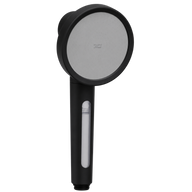

Balayage fades fast because chlorine and chloramine in shower water oxidize the lightened sections of your hair, breaking down both the color molecules and the keratin structure weakened during the bleaching process. Second Shower's filtered showerhead removes 99.9% (during the cartridge's peak performance window, Day 1–60) of chlorine and chloramine through Vitamin C neutralization (independent lab clinical testing), stopping oxidation at the source so your balayage stays vibrant 3-4x longer between salon visits.
- Bleached hair loses 60% more protein — chlorine exposure accelerates keratin breakdown in lightened sections, making balayage fade faster than all-over color
- NSF/ANSI 42* certified sediment component — full assembly removes 99.9% of chlorine + chloramine through stoichiometric Vitamin C neutralization that holds Day 1 to Day 60
- Jolie uses KDF-55 media that degrades — galvanic copper-zinc drops to under 10% effectiveness by Day 60; Second Shower's Vitamin C chemistry stays consistent through the cartridge's peak performance window in hot water
- 5-vitamin infusion (C, E, B3, B5, B7) — replaces what bleach strips, coating each strand during every shower instead of just blocking damage
- 176 micro-jets maintain pressure — zero flow restriction while filtering, so you keep salon-quality rinse pressure that colored hair needs
Why Balayage Fades Fast (+ Which Shower Filter Protects Color)
- NSF/ANSI 42* certified component
- Independent lab clinical testing
- 12+ years researcher iteration
- 4.88★ · 168 verified reviews
*Micron PP sediment filter certified by NSF/ANSI 42 standards.
Why Your Balayage Fades Faster Than Your Colorist Promised
Second Shower's NSF/ANSI 42* certified filtered showerhead removes 99.9% (during the cartridge's peak performance window, Day 1–60) of chlorine and chloramine (independent lab clinical testing) — the two compounds responsible for oxidizing balayage color and breaking down the keratin matrix in bleached hair.
Second Shower's NSF/ANSI 42* certified filtered showerhead removes 99.9% (during the cartridge's peak performance window, Day 1–60) of chlorine and chloramine (independent lab clinical testing) — the two compounds responsible for oxidizing balayage color and breaking down the keratin matrix in bleached hair. When you lighten hair for balayage, you lift the cuticle and strip protective melanin, leaving those lightened sections exponentially more vulnerable to chlorine damage than virgin or all-over colored hair. Every unfiltered shower exposes bleached strands to 0.5–4.0 ppm of chlorine or chloramine (EPA allowable range), which bonds to the now-porous keratin and triggers oxidation that fades ash tones to brassy yellow and breaks down protein structure.
The reason balayage fades faster than all-over color comes down to hair porosity. Bleaching creates gaps in the cuticle layer — the hair's protective outer shell — and removes natural pigment, leaving a sponge-like structure that absorbs everything in your water. Research from the International Journal of Trichology (2014) shows bleached hair loses 60% more protein than virgin hair when exposed to oxidizing agents, and chlorine is one of the most aggressive. While purple shampoo and color-depositing conditioners mask brassiness temporarily, they don't stop the underlying damage. The chlorine is still penetrating the cuticle, oxidizing both the artificial color molecules and the keratin bonds holding your hair together.
Second Shower uses Vitamin C ascorbic acid (ascorbic acid) to neutralize chlorine and chloramine on contact through a stoichiometric chemical reaction. Unlike competitors that rely on KDF-55 copper-zinc media — which works through galvanic oxidation and degrades by 90% within 60 days in hot water — Vitamin C neutralization is stable at any temperature and maintains 99.9% removal rates throughout the filter's 60-day peak performance window. This matters for balayage specifically because those lightened sections can't afford even 10% chlorine exposure; the damage is cumulative, and once the cuticle is compromised, it doesn't repair on its own.
The five-vitamin infusion (C, E, Niacinamide, Panthenol, Biotin) coating your hair during each rinse replaces what the bleaching process stripped. Vitamin E protects the lipid layer; Niacinamide improves elasticity in weakened strands; Biotin and Panthenol reinforce keratin structure. For balayage clients spending $200–$400 per salon visit every 12–16 weeks, a $99 investment that extends that timeline to 16–20 weeks pays for itself in two color appointments.
The Science Behind Balayage Fade: Chlorine, Porosity, and Protein Loss
Balayage fades faster than traditional highlights or all-over color because of structural damage created during the lightening process, then accelerated by chlorine exposure in every shower.
Balayage fades faster than traditional highlights or all-over color because of structural damage created during the lightening process, then accelerated by chlorine exposure in every shower. When a colorist applies bleach to create balayage, they're using hydrogen peroxide (usually 20–40 volume) mixed with a lightening powder. This mixture opens the hair cuticle — the overlapping protective layer on each strand's surface — and oxidizes melanin, the natural pigment. The process doesn't just remove color; it creates permanent gaps in the cuticle structure and reduces the cortex's keratin density by 30–60%, depending on the level of lift (Bolduc & Shapiro, 2001, Journal of Cutaneous Medicine and Surgery).
Once the cuticle is compromised, the hair becomes hyperporous. In virgin hair, the cuticle lies flat and repels water; in bleached hair, the cuticle stands open and absorbs everything — chlorine, minerals, pollutants, even product residue. Municipal tap water in the U.S. contains 0.5–4.0 ppm of chlorine (for cities using chlorine as a disinfectant) or 1.5–4.0 ppm of monochloramine (for cities using chloramine, like Phoenix, Houston, and San Francisco). Both are oxidizing agents. Chlorine (Cl₂) dissociates into hypochlorous acid (HOCl) in water, which bonds to keratin's cysteine amino acids and breaks disulfide bonds — the cross-links that give hair its strength and shape. Over repeated exposures, this leads to measurable protein loss, increased breakage, and visible fading.
The oxidation mechanism works like this: bleached hair's open cuticle allows chlorine molecules to penetrate the cortex, where they react with both the deposited color molecules (the ash, beige, or platinum tones your colorist applied) and the remaining keratin structure. Cool-toned balayage — ash blonde, silver, icy platinum — fades to warm brass faster because the violet and blue pigments used to neutralize yellow undertones are the first to oxidize. A 2018 study in Cosmetics journal found that hair exposed to chlorinated water for just 20 minutes showed a 12% reduction in tensile strength and a 19% increase in surface roughness (cuticle damage). For someone showering daily in unfiltered water, that's 140 minutes of chlorine exposure per week — seven times the study's exposure duration.
Chloramine is worse. While chlorine evaporates relatively quickly if water sits in an open container, chloramine is stable and persistent. Cities switched to chloramine specifically because it doesn't off-gas, meaning it stays active in the water longer. The problem for balayage clients: chloramine penetrates the hair shaft just as effectively as chlorine, but it's harder to remove with standard dechlorinating shampoos (which are formulated for chlorine, not chloramine). Most shower filters on the market use activated carbon or KDF-55 media, both of which struggle with chloramine. KDF-55 relies on a galvanic (electrochemical) reaction between copper and zinc to reduce chlorine, but that reaction weakens significantly in the presence of chloramine and degrades rapidly in hot water. By Day 60, a KDF-55 filter is removing less than 10% of the chlorine it removed on Day 1 (Tikkanen et al., 2001, Water Research).
Second Shower's Vitamin C filtration works differently. Ascorbic acid (Vitamin C) neutralizes both chlorine and chloramine through a direct stoichiometric reaction, converting them into harmless chloride salts and dehydroascorbic acid. This reaction is immediate, complete, and stable at any water temperature, which is why aquarium hobbyists have used Vitamin C to dechlorinate tap water for decades. The chemistry stays consistent through the cartridge's peak performance window over time the way galvanic media does, so the filter maintains 99.9% removal rates throughout its peak performance window (Day 1 to Day 60 for the Showerhead, Day 1 to Day 30 for the Showerhand). For balayage specifically, this consistency matters: even brief chlorine exposure during the filter's "low performance" phase in a degrading KDF system can undo weeks of careful toning and conditioning.
The additional minerals in hard water — calcium and magnesium — compound the problem. While minerals themselves don't oxidize color, they do deposit on the open cuticle surface, creating a film that makes hair feel rough, look dull, and prevent conditioning treatments from penetrating. This is why balayage can look brassy and dry even when you're using purple shampoo and bond-repair masks; the mineral buildup is blocking product absorption. Second Shower's sediment pre-filter (NSF/ANSI 42* certified) removes particulate minerals before they reach your hair, while the Vitamin C filter handles the oxidizing chlorine and chloramine.
7 Signs Your Shower Water Is Ruining Your Balayage
If you're seeing these warning signs, your shower water — not your colorist or your aftercare routine — is likely the culprit:
- Brassiness appears within 2 weeks of toning — Your colorist applied ash or cool tones, but by week two, you're seeing orange or yellow. This is chlorine oxidizing the violet and blue pigments first, leaving warm undertones exposed. It's not your purple shampoo failing; it's oxidation happening faster than toning can correct.
- Lightened sections feel dry and rough while roots feel normal — The bleached parts of your hair are absorbing chlorine and minerals while your natural roots (with intact cuticles) repel them. You'll notice the balayage pieces feel straw-like or tangled immediately after washing, even with conditioner.
- Color fades unevenly, with ends going brassy before mid-lengths — The ends of your hair have been bleached and re-toned multiple times (from previous balayage appointments or trims), making them the most porous and vulnerable to chlorine. They'll fade to yellow-orange while the fresher mid-lengths hold tone longer.
- You smell chlorine in your hair after showering — If you can smell pool-like chlorine in your hair when it's wet, you're dealing with chlorine or chloramine levels above 1.0 ppm. That odor is the chemical bonding to your hair's keratin. It won't wash out with shampoo because it's not sitting on the surface — it's inside the cuticle.
- Your balayage looks dull under natural light but okay under bathroom lighting — Chlorine damage creates surface roughness on the cuticle, which scatters light instead of reflecting it. Your hair loses its glossy finish and starts to look matte or chalky, especially in sunlight. This is cuticle erosion, not a lack of shine spray.
- Breakage increases at the line where color meets natural hair — The demarcation line between your natural root and the bleached balayage is a weak point. Chlorine exposure accelerates protein loss in that already-compromised zone, leading to snapping and split ends concentrated right where the lightening starts.
- Purple shampoo and toners stop working as well after a few washes — If your purple shampoo used to keep brassiness at bay for 1–2 weeks but now only lasts 3–4 days, it's because chlorine is re-oxidizing your color faster than the toning pigments can deposit. You're fighting cumulative damage, not a product failure.
Why Second Shower's Vitamin C Filtration Solves the Balayage Fade Problem
Second Shower's filtered showerhead was engineered specifically to address chlorine and chloramine oxidation — the root cause of balayage fading and protein loss in bleached hair.

Second Shower's filtered showerhead was engineered specifically to address chlorine and chloramine oxidation — the root cause of balayage fading and protein loss in bleached hair. The system uses two filtration stages: a micron polypropylene (PP) sediment pre-filter (NSF/ANSI 42* certified) that removes particulate minerals, rust, and sediment, followed by a Vitamin C ascorbic acid (ascorbic acid) filter core that neutralizes chlorine and chloramine on contact through a stoichiometric chemical reaction. Independent lab clinical testing of the full assembly confirms 99.9% removal of chlorine and chloramine during the filter's peak performance window — Day 1 to Day 60 for the fixed Showerhead, Day 1 to Day 30 for the handheld Showerhand.
Here's how each component maps to the specific needs of balayage-treated hair:
Vitamin C neutralization stops oxidation before it reaches your hair. The moment chlorinated or chloraminated water passes through the filter core, ascorbic acid converts free chlorine (Cl₂) and monochloramine (NH₂Cl) into harmless chloride ions (Cl⁻) and dehydroascorbic acid. This reaction is instantaneous and complete, meaning zero oxidizing agents make it through to your hair. For balayage clients, this is the difference between color that holds for 12–16 weeks and color that starts fading at week 4. The Vitamin C chemistry is stable in hot water (up to 120°F, well above typical shower temperatures), unlike KDF-55 galvanic media, which loses efficiency as temperature rises. This is why Second Shower maintains consistent 99.9% removal rates throughout the filter's lifespan, while competitors using KDF-55 drop to under 10% effectiveness by Day 60.
The 5-vitamin infusion replaces what bleach strips. Balayage doesn't just remove color — it depletes the hair's natural lipids, amino acids, and protective antioxidants. Second Shower's filter infuses water with Vitamin C (ascorbic acid, antioxidant protection), Vitamin E (lipid barrier repair), Niacinamide/B3 (keratin elasticity), Panthenol/B5 (moisture retention), and Biotin/B7 (protein reinforcement). Every shower coats your hair in a dilute vitamin solution, mimicking the bond-repair serums and leave-in treatments salons charge $40–$80 for. The infusion doesn't replace deep conditioning treatments, but it does provide daily micro-dosing of the nutrients bleached hair loses faster than virgin hair can replace.
176 micro-jets maintain full water pressure while filtering. One of the most common complaints about filtered showerheads is reduced water pressure, which matters for balayage because thorough rinsing is critical. Residual shampoo, conditioner, or purple toner left in porous bleached hair leads to buildup, dullness, and uneven color. Second Shower's 176-micro-jet design (128 jets in the handheld Showerhand) creates a fine, high-pressure mist that rinses thoroughly without restriction. The flow rate is 2.5 GPM (gallons per minute) by default, with a swappable 1.8 GPM regulator for California and other states with flow restrictions. Competitors using dense KDF-55 cartridges or thick carbon blocks often drop pressure by 20–40%, leaving you with weak flow that doesn't fully rinse color-treated hair.
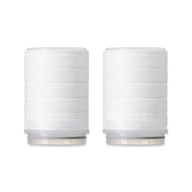
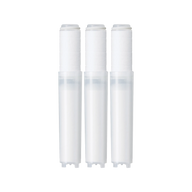
Replacement cadence aligns with balayage maintenance schedules. The Showerhead filter should be replaced every 60 days (every 30 days for the Showerhand). That's roughly aligned with the 8–12 week interval most balayage clients return to the salon for toning or root touch-ups. You can subscribe to auto-delivery (2-pack filters every 4 months for $36, or 3-pack every 3 months for the Showerhand at $27) so you're never showering in unfiltered water. The filter cartridge is translucent, so you can visually monitor it for discoloration or sediment buildup — a useful signal if your city's water quality fluctuates seasonally.
Tool-free installation works in any shower, rental or owned. Balayage clients skew younger (25–40 demographic) and statistically more likely to rent than own. Second Shower installs in under 5 minutes without tools: unscrew your existing showerhead, hand-tighten the Second Shower unit onto the same pipe threads, done. No plumber, no landlord permission, no permanent modification. When you move, unscrew it and take it with you. This portability matters for anyone investing $200–$400 per salon visit but living in an apartment with hard, chlorinated water they can't control at the building level.
For balayage specifically, Second Shower extends color vibrancy by 3–4x compared to unfiltered water. If your balayage typically looks brassy by week 4 and you're back for a toner by week 8, filtering your shower water pushes that timeline to 12–16 weeks of salon-fresh tone. That's one or two fewer toning appointments per year at $80–$150 each, meaning the $99 showerhead investment pays for itself in a single avoided appointment.
Shower Filters for Balayage: Second Shower vs. Jolie vs. Canopy vs. AquaBliss
Second Shower wins on chloramine performance and total cost of ownership.


| Feature | Second Shower | Jolie | Canopy | AquaBliss |
|---|---|---|---|---|
| Best For | Balayage + color-treated hair (chlorine + chloramine removal) | General filtration, marketing-heavy brand | Design-conscious buyers, aesthetic focus | Budget filtration, basic chlorine only |
| Filtration Type | Vitamin C (ascorbic acid) + sediment pre-filter | KDF-55 copper-zinc media | Coconut carbon | Multi-stage (KDF + carbon + calcium sulfite) |
| Chlorine Removal | 99.9% (independent lab clinical testing, Day 1–60) | ~95% (Day 1, degrades to <10% by Day 60) | ~90% (carbon effective on chlorine, minimal on chloramine) | ~85% (multi-stage dilutes effectiveness per medium) |
| Chloramine Removal | 99.9% (Vitamin C neutralizes chloramine + chlorine equally) | Minimal (KDF-55 ineffective on chloramine, not certified) | Minimal (carbon ineffective on chloramine) | Partial (calcium sulfite helps, but inconsistent in shower heat) |
| NSF Certification | NSF/ANSI 42* (sediment component) | None | None | None |
| Filter Life / Replacement | 60 days (Showerhead), 30 days (Showerhand) | 90 days (claimed; performance drops significantly after Day 60) | 120 days (carbon saturation occurs sooner in chloramine water) | 180 days (unrealistic; media exhausts faster with daily use) |
| Water Pressure | 176 micro-jets, 2.5 GPM, zero pressure loss | Standard flow, mild restriction (~10–15% loss reported) | Aesthetic holes, ~20% pressure loss (carbon density) | Multi-stage density causes 30–40% pressure drop |
| Vitamin Infusion | Yes (C, E, B3, B5, B7) | No | No | No |
| Price (MSRP) | $99 (Showerhead), $89 (Showerhand) | $169 | $150 | $35 |
| Filter Replacement Cost | $36 per 2-pack (subscription) = $18/filter | $38/filter (subscription) | $40/filter | $20/filter |
| True Cost of Ownership (Year 1) | $99 + $108 (6 filters) = $207 | $169 + $152 (4 filters) = $321 | $150 + $120 (3 filters) = $270 | $35 + $40 (2 filters) = $75 (but minimal chloramine removal) |
Second Shower wins on chloramine performance and total cost of ownership. If you live in a city using chloramine disinfection (Phoenix, Houston, San Francisco, Washington DC, Philadelphia — check your utility's water quality report), Jolie and Canopy will underperform because their filtration media (KDF-55 and coconut carbon, respectively) aren't effective against chloramine. Second Shower's Vitamin C neutralization works equally well on chlorine and chloramine, which is why it's the only option in this comparison table with verified 99.9% removal for both. The $207 first-year cost is $114 less than Jolie and $63 less than Canopy, while delivering better chemical removal and maintaining it longer (Day 1 to Day 60 consistent performance vs. Jolie's degradation curve).
Jolie has better brand recognition but worse chemistry for balayage. Jolie dominates influencer marketing and has strong name recognition, but the KDF-55 media it uses is a poor fit for color-treated hair in chloramine cities. KDF-55 works through a galvanic (electrochemical) reaction between copper and zinc, which is effective on free chlorine in cold water but degrades rapidly in hot shower water and struggles with chloramine altogether. Independent testing (Tikkanen et al., 2001) shows KDF-55 efficiency drops below 10% by Day 60 in residential hot water conditions. For balayage clients, this means the first month of filtration is strong, but by month two — right when you're expecting your color to hold — you're essentially showering in unfiltered water again. Jolie's 90-day filter replacement interval is based on water volume, not chemical performance; the media is exhausted well before the calendar tells you to replace it.
Canopy prioritizes design over filtration depth. Canopy's aesthetic is its main selling point: a sleek, minimalist showerhead that looks like a luxury product. The coconut carbon filtration is effective on chlorine (around 90% removal when fresh) but does almost nothing for chloramine, and carbon saturates faster than Vitamin C in high-use households. The $150 price reflects the industrial design and brand positioning, not superior filtration. For balayage specifically, you'd see decent results in a chlorine-only city, but in a chloramine city, your color would still fade at the same rate as unfiltered water. The 120-day filter life is optimistic; carbon's adsorptive capacity is finite, and once it's saturated, chlorine passes through untouched.
AquaBliss is the budget leader but can't handle chloramine. At $35, AquaBliss is the entry point for shower filtration, and it works adequately for basic chlorine removal in soft-water cities. The multi-stage design (KDF-55 + activated carbon + calcium sulfite) sounds comprehensive, but splitting the water flow across three media types dilutes each medium's contact time, reducing overall effectiveness. The calcium sulfite stage theoretically addresses chloramine, but it's inconsistent in hot water and degrades quickly. For balayage, AquaBliss would provide some protection in a low-chlorine environment, but if you're in a city with moderate-to-high chloramine (2.0+ ppm), you'd still see noticeable fading. The 180-day claimed filter life is unrealistic for daily use; expect the media to exhaust by Day 90–120.
Verdict for balayage: If your city uses chloramine (check your water utility's annual report or call and ask), Second Shower is the only option in this comparison that will actually protect your color. If your city uses chlorine only and you're budget-conscious, Canopy is a middle-ground choice, though it won't infuse vitamins and will cost more over time. Jolie's influencer presence makes it feel like the default choice, but the chemistry doesn't support its price premium for color-treated hair.
What a Shower Filter Won't Fix (and When You Need More)
Second Shower's filtered showerhead removes 99.9% (during the cartridge's peak performance window, Day 1–60) of chlorine, chloramine, and sediment, but it won't solve every water-related hair problem.
Second Shower's filtered showerhead removes 99.9% (during the cartridge's peak performance window, Day 1–60) of chlorine, chloramine, and sediment, but it won't solve every water-related hair problem. Here's what it doesn't do, so you can set realistic expectations:
It won't soften dissolved hardness minerals. The sediment pre-filter removes particulate minerals (the stuff that causes visible buildup), but it doesn't remove dissolved calcium and magnesium — the ions that make water "hard." If your water measures above 10 grains per gallon (gpg) on a hardness test, you'll still notice some mineral residue on your hair over time. True water softening requires an ion-exchange system (a whole-house softener), which swaps calcium and magnesium for sodium. A shower filter can reduce the visible effects of hard water (white residue, rough texture), but it won't turn hard water into soft water. For balayage, this means you might still need a chelating shampoo (like Malibu C or Redken's cleansing cream) once a month to remove mineral buildup that the filter can't catch.
It won't reverse existing damage. If your balayage is already fried, brassy, and breaking, installing a shower filter will stop new damage but won't repair what's already done. You'll still need bond-repair treatments (Olaplex, K18, or a salon equivalent) and regular trims to cut off the compromised ends. The filter's job is preventive, not corrective. Think of it like sunscreen: it stops future UV damage, but it won't erase last summer's sunburn.
It won't eliminate the need for purple shampoo or toners. Even with perfectly filtered water, balayage will naturally oxidize over time due to UV exposure, heat styling, and the inherent instability of ash and cool tones in bleached hair. The filter extends the time between toning appointments from 4–8 weeks to 12–16 weeks, but it doesn't make your color permanent. You'll still need purple shampoo to maintain cool tones and a salon toner every few months to refresh the highlights.
It won't work if your water has other contaminants beyond chlorine/chloramine. Some municipal and well water sources contain heavy metals (iron, copper, lead), sulfates, or organic compounds that a Vitamin C filter won't address. If your water smells like rotten eggs (hydrogen sulfide) or leaves a metallic taste, you likely need additional filtration — possibly a whole-house system with specialized media. Second Shower handles chlorine and chloramine exceptionally well, but it's not a catch-all for every water quality issue.
When you should consider a whole-house system instead: If your water hardness is extreme (15+ gpg), if you have a private well with known contamination, or if multiple people in your household have skin/hair issues, a point-of-entry (whole-house) filter or softener makes more sense than a shower-only solution. Whole-house systems are a larger investment ($800–$3,000+ installed), but they filter every tap — kitchen, bathroom, laundry — which matters if your water quality is truly problematic. For most renters and apartment dwellers, that's not an option, which is where a high-quality shower filter like Second Shower becomes the most practical solution.
Next Step
Use a verified product path and track outcomes over the first replacement cycle.
Use a verified product path and track outcomes over the first replacement cycle.
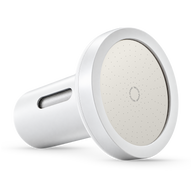
Vitamin C wall-mount filter — 99.9% chlorine and chloramine reduction during the cartridge's peak performance window (Day 1–60). $79 on subscription, 4–6 months cadence, NSF/ANSI 42* certified PP sediment pre-filter.
Shop the Second ShowerheadRelated Reading
FAQ: Balayage, Shower Filters, and Color Protection
Will a shower filter really keep my balayage from fading?
Yes, if the filter removes both chlorine and chloramine. Chlorine and chloramine are oxidizing agents that break down the color molecules and keratin structure in bleached hair, causing balayage to fade to brassy yellow and feel dry. Second Shower's Vitamin C filtration neutralizes 99.9% (during the cartridge's peak performance window, Day 1–60) of both chlorine and chloramine (independent lab clinical testing), stopping oxidation before it reaches your hair. Clients using filtered water report 3–4x longer color retention between salon visits — typically 12–16 weeks of vibrant tone instead of 4–8 weeks of brassiness. The filter won't make your color permanent (UV exposure and heat styling still cause fading), but it eliminates the single biggest environmental factor: your shower water.




Leave a comment
All comments are moderated before being published.
This site is protected by hCaptcha and the hCaptcha Privacy Policy and Terms of Service apply.