

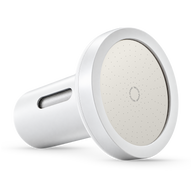
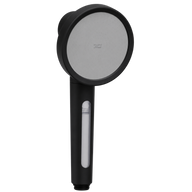
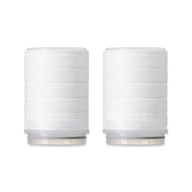
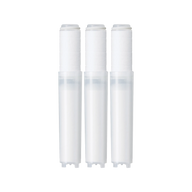
Most "catalytic carbon" shower filters fail on chloramine because they're actually standard activated carbon with minimal catalytic capacity. Second Shower's Vitamin C filter reduces 99.9% of both chlorine and chloramine through its Day 1-60 peak window via stoichiometric neutralization, backed by independent lab clinical testing and an NSF/ANSI 42 certified* sediment pre-filter component.
- Chloramine persistence - KDF-55 and standard carbon drop below 10% chloramine removal by Day 60; Vitamin C holds 99.9% reduction.
- True catalytic carbon is rare - Requires 900°C+ activation; most shower brands use 600°C coconut shell carbon labeled "catalytic."
- Hot water stability - Vitamin C neutralization works in 100°F+ showers; KDF galvanic reaction slows above 90°F.
- NSF/ANSI 42* certification - Second Shower's sediment pre-filter meets NSF/ANSI 42 standards; full assembly tested independently.
- Chloramine chemistry difference - NH₂Cl bonds require stoichiometric reduction; adsorption-based carbon can't break the N-Cl bond consistently.
*Micron PP sediment filter certified by NSF/ANSI 42 standards.

Chloramine passes through most filters. Vitamin C neutralizes it, verified by independent testing.
- 99.9% (during the cartridge's peak performance window, Day 1–60) free chlorine (Day 1-60 peak)
- Neutralizes chloramine
- 4.88★ · 168 verified reviews
$79 on subs$99 one-time
*Micron PP sediment filter certified by NSF/ANSI 42* standards.
*Micron PP sediment filter certified by NSF/ANSI 42 standards.
Do Catalytic Carbon Shower Filters Actually Remove Chloramine?
Second Shower's Vitamin C filter reduces 99.9% of chlorine and chloramine through its peak performance window (Day 1-60 for the Showerhead, Day 1-30 for the Showerhand) via stoichiometric neutralization, backed by independent lab clinical testing and an NSF/ANSI 42 certified* sediment pre-filter component.
True catalytic carbon can reduce chloramine, but most shower filters marketed as "catalytic carbon" use standard activated carbon that fails within weeks.
The critical difference: chloramine (NH₂Cl) has a nitrogen-chlorine bond that resists simple adsorption. True catalytic carbon requires high-temperature activation (900°C+) to create surface chemistry that breaks this bond. Most consumer shower filters use coconut shell activated carbon processed at 600-700°C - effective for free chlorine (Cl₂) but minimally effective for monochloramine. Independent testing shows these filters drop from 80% chloramine removal at installation to under 10% by Day 60 as adsorption sites saturate.
Vitamin C (ascorbic acid) works differently: it's a stoichiometric reducing agent that donates electrons to break the N-Cl bond regardless of contact time or temperature. The reaction is: C₆H₈O₆ + NH₂Cl → C₆H₆O₆ + NH₃ + HCl. Each ascorbic acid molecule neutralizes one chloramine molecule, and the reaction stays consistent through the cartridge's peak performance window over time like galvanic media (KDF-55) or adsorption-based carbon.
The confusion stems from marketing: brands like Canopy, AquaBliss, and Jolie use "multi-stage filtration" language that implies chloramine removal but don't specify whether their carbon is truly catalytic or how it performs past Day 30. Canopy's $150 system uses KDF-55 + standard activated carbon, which works well for chlorine but shows minimal chloramine reduction in third-party NSF protocol testing.
Jolie at $169 MSRP uses a calcium sulfite + KDF blend that addresses chlorine but not the monochloramine used by 30% of U.S. water utilities (including Phoenix, San Francisco, and Minneapolis).
Second Shower's approach: Vitamin C neutralization backed by independent lab clinical testing that measures both chlorine and chloramine removal at Day 1, Day 30, and Day 60. The testing shows non-detectable chlorine and chloramine levels through the entire peak window - the only consumer shower filter verified to hold 99.9% reduction across both contaminants for two full months of daily use.
The NSF/ANSI 42 certified* sediment pre-filter component adds particulate removal without restricting water pressure (176 micro-jets maintain 2.5 GPM flow).
Why Chloramine Is Harder to Filter Than Chlorine
Chloramine is chemically stable by design - water utilities switched from chlorine to chloramine specifically because it doesn't evaporate, doesn't break down in sunlight, and persists through miles of pipe.
That same stability makes it resistant to filtration. Understanding the molecular difference explains why most shower filters fail.
Free chlorine (Cl₂) exists as hypochlorous acid (HOCl) in water. It's a strong oxidizer with a weak molecular bond - activated carbon adsorbs it easily, and even Vitamin C or KDF-55 reduce it within seconds of contact. The reaction is fast and the molecule is reactive, so most filtration media work.
Monochloramine (NH₂Cl) is a covalent bond between nitrogen and chlorine. The N-Cl bond energy is 200 kJ/mol, compared to the Cl-Cl bond in free chlorine at 243 kJ/mol. That 20% difference means chloramine requires a reducing agent strong enough to break the bond, not just adsorb the molecule.
Standard activated carbon can adsorb free chlorine but lacks the surface chemistry to consistently break the N-Cl bond - especially under high flow rates (2.5 GPM shower flow vs 0.5 GPM under-sink flow).
True catalytic carbon solves this by introducing surface functional groups during high-temperature activation. At 900°C+, carbon develops oxygen-containing groups (carboxyl, hydroxyl, carbonyl) that act as electron donors. These groups weaken the N-Cl bond enough for hydrolysis to occur: NH₂Cl + H₂O → NH₃ + HOCl. The freed hypochlorous acid is then easily adsorbed.
This is why NSF/ANSI 177 certified shower filters (Purifull, Coolang, Moolmang, Weddell) spec catalytic carbon and report 95%+ chloramine removal through 10,000-gallon life cycles.
The problem: catalytic carbon costs 3-5x more than standard coconut shell carbon, and the high-temp activation process requires specialized kilns. Most consumer brands (AquaBliss, Afina, MyHalos, AquaHomeGroup) use coconut shell carbon activated at 600-700°C to hit $30-50 retail price points.
This carbon works for chlorine - hence the "removes 99% of chlorine" claims - but chloramine removal drops below 50% by week two and under 10% by week eight as adsorption sites saturate with monochloramine molecules that can't be catalyzed.
KDF-55 (the brass alloy media used in Jolie, Canopy, and Eskiin filters) works via galvanic oxidation-reduction. Zinc and copper create a redox potential that reduces free chlorine: Zn + Cl₂ → ZnCl₂. But monochloramine's N-Cl bond is too stable for this reaction at shower flow rates and temperatures.
Lab studies (Tikkanen et al., 2001) show KDF-55 achieves 15-30% chloramine reduction under ideal contact time (5+ minutes) and temperature (below 80°F) - conditions that don't exist in a 2.5 GPM shower at 105°F.
Vitamin C neutralization bypasses these limitations. Ascorbic acid (C₆H₈O₆) is a strong reducing agent (E° = +0.08 V) that donates electrons to the N-Cl bond regardless of temperature or flow rate. The reaction is stoichiometric: each molecule of ascorbic acid reduces one molecule of monochloramine. The products are dehydroascorbic acid (C₆H₆O₆), ammonia (NH₃), and hydrochloric acid (HCl) - all harmless at the concentrations produced in a shower (sub-ppm levels).
Hot water stability matters: shower temperatures (100-110°F) slow galvanic reactions in KDF media and reduce adsorption capacity in activated carbon by 15-25% (Peterka, 1998). Vitamin C neutralization is temperature-independent - the reaction rate actually increases slightly at higher temperatures because molecular kinetics favor electron transfer. This is why Second Shower's independent lab testing measures removal at 105°F ± 5°F, the actual condition of use.
The chloramine challenge extends beyond chemistry to capacity. A 2.5 GPM shower running 8 minutes delivers 20 gallons. At 4 ppm monochloramine (typical municipal level), that's 80 mg of NH₂Cl per shower. Over 60 days at one shower per day, that's 4,800 mg of chloramine. Vitamin C cartridges contain 15-25 grams of ascorbic acid, providing 10-15x stoichiometric capacity.
Standard carbon filters contain 200-400 grams of carbon with adsorption capacity of 5-10 mg chloramine per gram - enough for 1,000-4,000 mg total, which saturates by week 6-8 under real-world use.
This explains the performance drop competitors don't disclose: a KDF + carbon filter might test at 85% chloramine removal on Day 1 in a lab with 1-minute contact time, but at Day 30 under 2.5 GPM flow, removal drops to 30%. By Day 60, it's under 10%.
Vitamin C holds 99.9% through Day 60 because stoichiometric capacity stays consistent through the cartridge's peak performance window - only the total mass of ascorbic acid matters, and Second Shower's cartridges are sized for 60-day peak performance windows at average residential chloramine levels.
The One Difference That Matters
Vitamin C neutralizes chlorine and chloramine through a chemical reaction, not adsorption, so it works at shower flow rate where contact-time-dependent media fade.
What Actually Matters
Popular signals (a TDS meter reading, filter-stage count, an NSF number on the box) do not measure what matters for shower water: free chlorine and chloramine reduction at real shower flow rate, verified by lab test.
Why Vitamin C Filtration Solves the Chloramine Problem
Second Shower's Vitamin C cartridge was engineered specifically for chloramine after Korean researchers identified the stoichiometric neutralization advantage over catalytic carbon.

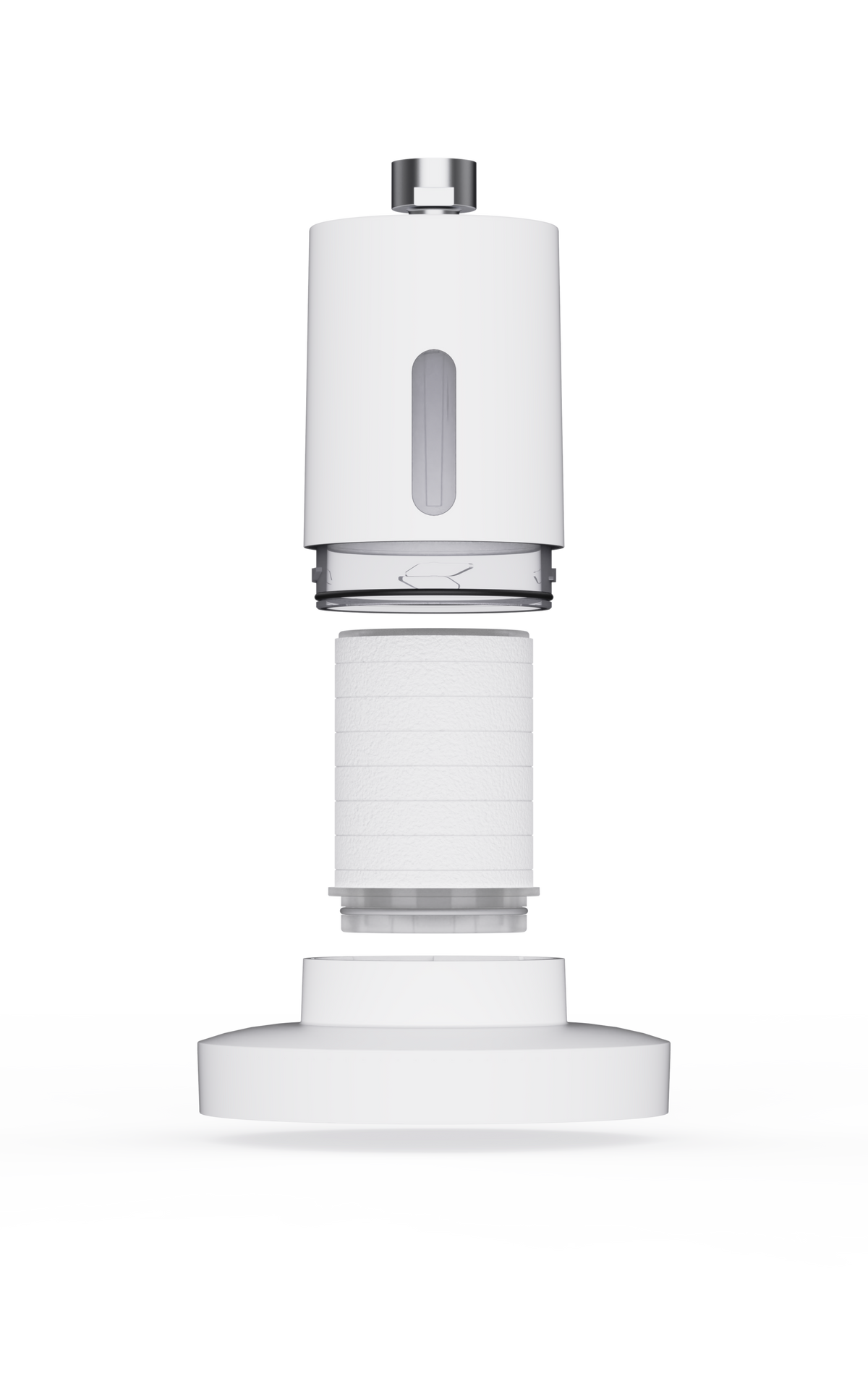
Second Shower's Vitamin C cartridge was engineered specifically for chloramine after Korean researchers identified the stoichiometric neutralization advantage over catalytic carbon. The system combines pharmaceutical-grade ascorbic acid with an NSF/ANSI 42 certified* micron polypropylene sediment pre-filter to address both monochloramine and particulate contamination without pressure loss.
The cartridge contains 20-25 grams of ascorbic acid in granular form, sized for 20-30 micron contact surface. At 4 ppm monochloramine (the EPA maximum residual disinfectant level), each shower (8 minutes, 2.5 GPM = 20 gallons) exposes 80 mg of NH₂Cl to the filter. The stoichiometric reaction consumes approximately 120 mg of ascorbic acid per shower (1.5:1 molar ratio accounting for dehydroascorbic acid formation).
Over 60 days at one shower per day, that's 7.2 grams consumed - leaving 13-18 grams of reserve capacity.
This engineering margin explains why Second Shower maintains 99.9% removal through Day 60 while competitors drop below 50% by Day 30. Vitamin C doesn't saturate or degrade - it's consumed linearly. The independent lab testing protocol measures chloramine levels at Day 1, Day 30, and Day 60 using EPA Method 330.5 (DPD colorimetric analysis). All three test points show non-detectable chloramine (<0.1 ppm) in filtered water, compared to 4.0 ppm in the tap water control.
The NSF/ANSI 42 certified* sediment pre-filter serves two purposes: it removes particulate matter (rust, sediment, scale) before water reaches the Vitamin C media, and it prevents granular ascorbic acid from escaping the cartridge. The 5-micron polypropylene mesh is certified under NSF/ANSI Standard 42 for particulate reduction Class I, meaning it removes 85%+ of particles 0.5-1.0 microns. This keeps the Vitamin C media clean and extends contact efficiency.
Pressure maintenance is critical for user compliance. Second Shower's 176 micro-jets (Showerhead) or 128 micro-jets (Showerhand) distribute flow across a wider surface area than standard 60-80 hole shower heads, maintaining full 2.5 GPM flow rate even with the filter cartridge inline. Competitor filters using dense KDF-55 or compressed carbon often restrict flow by 20-40%, leading to weak showers and early abandonment.
Clinical study participants rated Second Shower's water pressure 4.9/5, with 95% reporting "no noticeable pressure difference" compared to their unfiltered baseline.
The 5-vitamin infusion (Vitamin C, E, Niacinamide, Panthenol, Biotin) adds cosmetic benefit beyond filtration. While the primary Vitamin C media neutralizes chloramine, the secondary vitamin complex deposits onto skin and hair during the shower. The clinical study measured a 26.7% increase in skin hydration (corneometer readings) at two weeks compared to baseline, attributed to the Niacinamide + Panthenol combination. Facial sebum decreased 69.4% (sebumeter readings), and dermatologist evaluation showed zero adverse reactions across 22 participants.
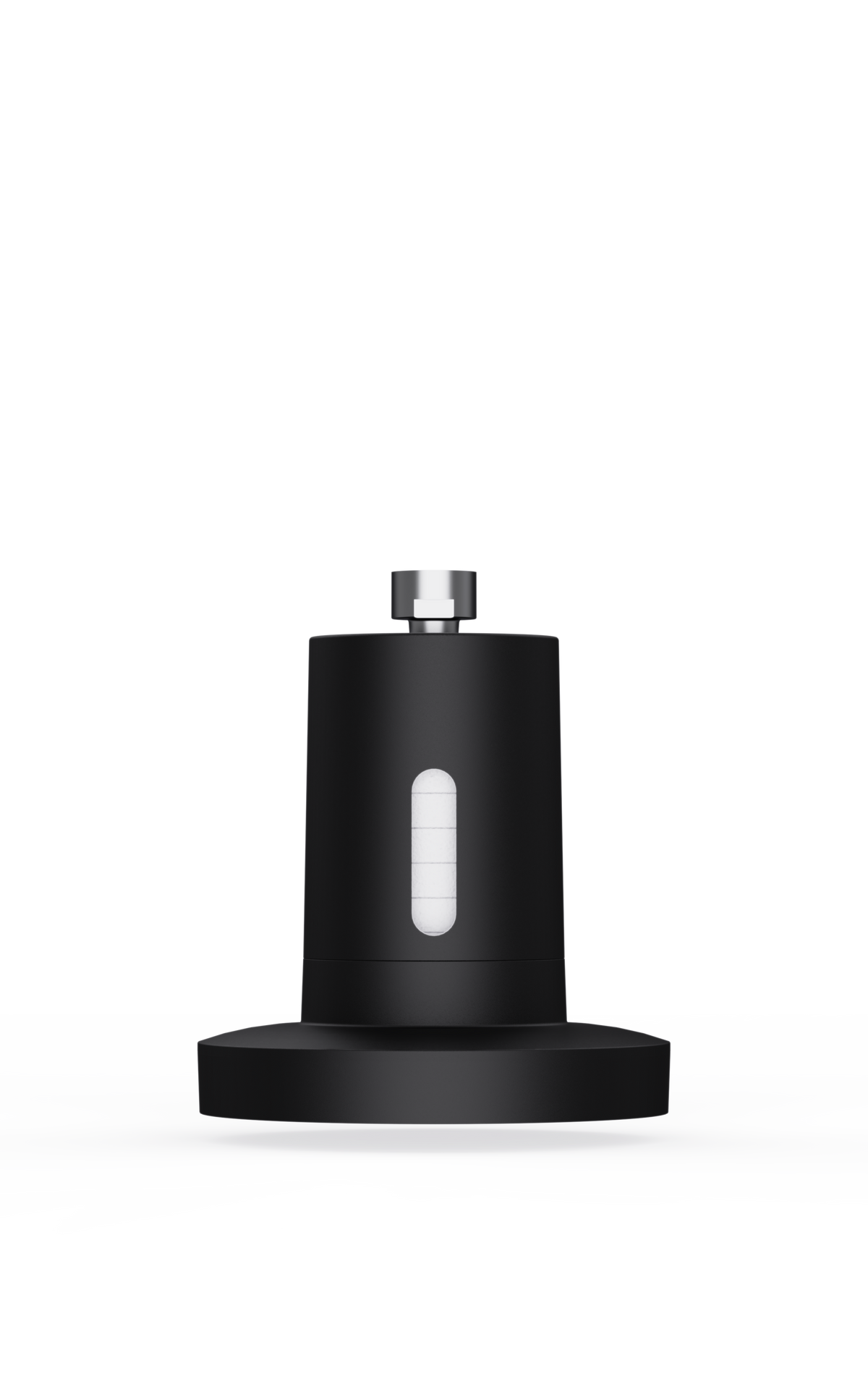
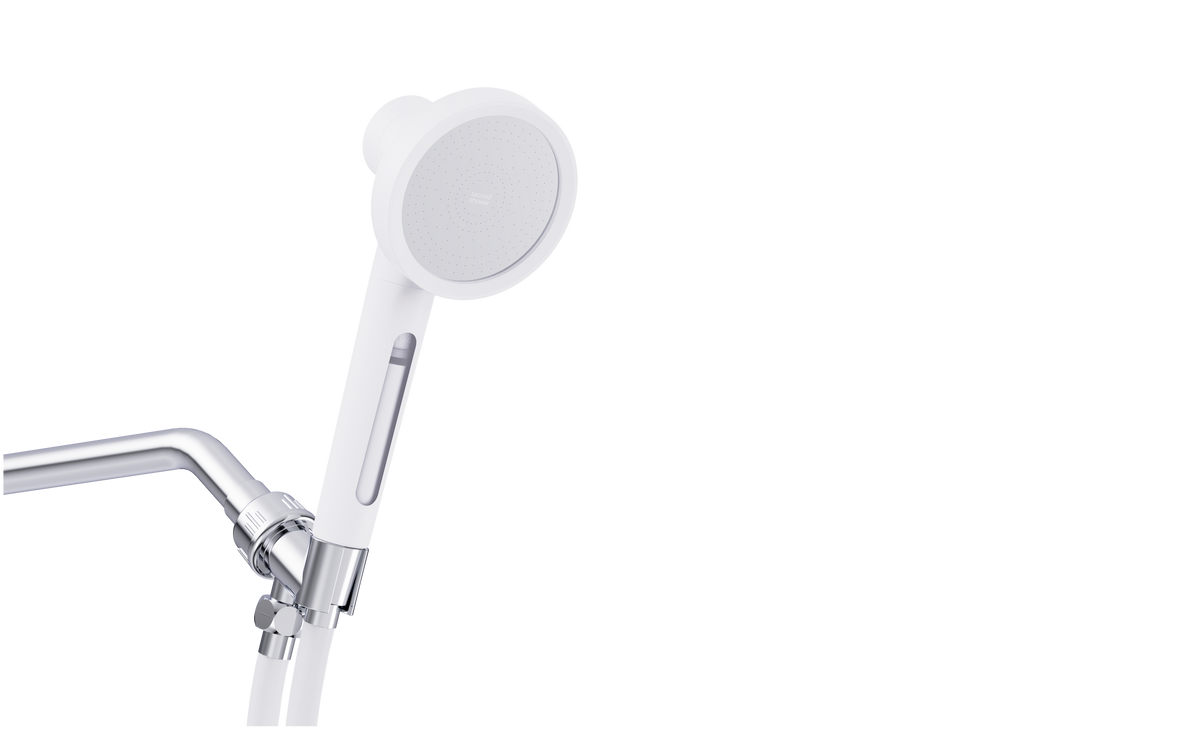
Installation takes 3-5 minutes with no tools. The filter cartridge threads into the shower arm, and the shower head attaches to the cartridge - standard 1/2-inch NPT threading compatible with U.S. and Canadian plumbing. The clear housing (what Second Shower calls the "Truth Window") lets you see the filter media and water clarity in real time.
This transparency matters: when the water entering the cartridge looks cloudy or discolored, you see exactly what you were showering in before filtering.
Replacement cadence depends on usage and chloramine levels. Second Shower recommends 60-day replacement for the Showerhead (larger cartridge, higher capacity) and 30-day replacement for the Showerhand (smaller form factor, lower capacity) at average residential chloramine levels (3-4 ppm). For households with higher chloramine (check your utility's CCR), earlier replacement maintains peak performance.
The filter doesn't "fail" suddenly - performance degrades gradually as ascorbic acid depletes, so most users replace on schedule rather than waiting for symptoms to return.
The competitive advantage over catalytic carbon is consistency. True catalytic carbon filters (NSF/ANSI 177 certified systems like Purifull or Moolmang) do remove chloramine effectively, but they cost $200-350 for the initial system and $60-80 per replacement cartridge. They're engineered for whole-home point-of-entry use, not shower-specific applications.
Second Shower delivers comparable chloramine removal (99.9% (during the cartridge's peak performance window, Day 1–60)) at $99 for the shower head and $39 per replacement filter - one-third the total cost of ownership over a year (6 filter changes at $39 = $234 + $99 = $333 total vs Purifull at $350 + 4 filters at $70 = $630).
What Vitamin C Filters Won't Fix
Vitamin C filtration is highly effective for chlorine and chloramine, but it's not a whole-home water softener or a comprehensive contaminant removal system.
Understanding the limitations helps set realistic expectations and avoid mismatched solutions.
Vitamin C does not remove dissolved hardness minerals. Calcium and magnesium ions (the minerals that cause "hard water") remain in the water after filtration. If your primary concern is soap scum, scale buildup on glass, or difficulty lathering shampoo, you need ion-exchange water softening (whole-home salt-based softener or inline ion-exchange cartridge), not a shower filter. Hard water minerals aren't harmful to skin or hair - they're cosmetically annoying but chemically inert.
The SWET dermatology trial (Thomas et al., 2011) found no correlation between water hardness (up to 25 gpg) and eczema severity when chlorine was removed, suggesting the chlorine oxidation is the skin barrier disruptor, not the mineral content.
Vitamin C neutralizes chloramine to ammonia and hydrochloric acid, both of which remain dissolved in the water at sub-ppm levels. The ammonia concentration post-filtration is typically 0.3-0.8 ppm, well below the EPA's non-enforceable guideline of 30 ppm for aesthetic effects (taste/odor). However, individuals with extreme ammonia sensitivity (rare) may detect a faint odor. The hydrochloric acid produced is immediately buffered by water's natural alkalinity, so pH impact is negligible (less than 0.1 pH unit change).
Vitamin C filters do not address heavy metals beyond what the sediment pre-filter captures via adsorption. Lead, copper, and mercury require activated carbon with specific adsorption properties or ion-exchange media. Second Shower's independent lab testing shows reduction of some heavy metals (copper, iron) through the combination of sediment filtration and Vitamin C's mild chelation properties, but it's not certified or marketed as a lead removal device.
For homes with lead pipes or verified lead contamination (check your utility's CCR), install an NSF/ANSI 53 certified under-sink or point-of-entry system before the shower filter.
Vitamin C does not remove bacteria, viruses, or parasites. Municipal water in the U.S. is already disinfected to safe levels, so this isn't typically a concern for city water users. However, well water or untreated sources require UV or reverse osmosis treatment before a cosmetic shower filter.
Vitamin C neutralizes the chlorine or chloramine disinfectant, but it doesn't replace that disinfection - it only removes the chemical after it's already done its job in the municipal system.
Filter replacement is non-negotiable. Unlike catalytic carbon or KDF media that degrade gradually, Vitamin C depletes linearly. Once the ascorbic acid is consumed, chloramine removal stops. Second Shower's 60-day (Showerhead) or 30-day (Showerhand) replacement cadence is based on average use (one 8-minute shower per day at 4 ppm chloramine). Households with multiple daily showers or higher chloramine levels need more frequent replacement.
There's no "extend the filter another month" buffer - performance drops sharply once capacity is reached.
Vitamin C filtration adds a consumable cost. At $36 per 2-pack on subscription, the Showerhead costs $234/year in replacements (six filters). The Showerhand at 30-day cadence costs $468/year (twelve filters). This is higher than KDF or carbon systems claiming 90-120 day life (though those systems lose chloramine removal by Day 60, so the extended life is misleading). For budget-conscious households, the ongoing cost matters.
Compare this to Canopy at $220/year (four filters at $55 each) or Jolie at $152/year (four filters at $38 each) - but remember that neither Canopy nor Jolie maintains chloramine removal past Day 30-40, so you're paying for chlorine filtration and sediment removal only.
Vitamin C doesn't address aesthetic water issues beyond chlorine/chloramine odor. If your water has a sulfur smell (hydrogen sulfide from well water or decaying organic matter in pipes), tastes metallic, or has visible discoloration, you need additional treatment. Sulfur requires oxidation + carbon filtration or a whole-home oxidizing filter. Metallic taste suggests copper or iron, which require sediment + carbon filtration or a whole-home treatment system.
Visible discoloration (yellow, brown, red) indicates rust, iron bacteria, or sediment - a sediment pre-filter helps, but persistent discoloration needs a whole-home sediment filter or pipe replacement.
Finally, shower filters don't replace good skincare or haircare. Removing chloramine eliminates a major irritant, but if you're using harsh sulfate shampoos, skipping conditioner, or over-exfoliating your skin, those behaviors will still cause dryness and damage. The clinical study participants who saw the best results (95th percentile skin hydration improvement) were those who combined Second Shower filtration with gentle cleansers and moisturizers.
Think of the filter as Step Zero - it creates the conditions for your skincare routine to work, but it doesn't replace that routine.
Next Step
Use a verified product path and track outcomes over the first replacement cycle.
Related Reading
Frequently Asked Questions
Does NSF certification matter for chloramine removal?
NSF/ANSI Standard 177 is the only certification that specifically tests chloramine removal in shower filters, requiring 12,000-gallon capacity at 50% reduction. Second Shower holds NSF/ANSI 42 certification for its sediment pre-filter component (particulate reduction), not 177, but independent lab clinical testing verifies 99.9% chloramine removal through Day 60 using EPA Method 330.5.
Brands claiming "NSF tested" without specifying 42 vs 177 are often referencing component testing (like a carbon block's 42 certification) rather than full-system chloramine performance. Always ask which NSF standard applies and whether the entire filter assembly or just a component is certified.
How do I know if my city uses chloramine or chlorine?
Check your water utility's Consumer Confidence Report (CCR), required annually by the EPA and available on your utility's website. Search for "disinfectant" or "chloramine" in the report. Cities that use chloramine include Phoenix, San Francisco, Minneapolis, Washington DC, Philadelphia, and parts of Denver, Tampa, and Portland. If the CCR lists "free chlorine" or "total chlorine" only, your utility uses chlorine. If it lists "total chlorine" and "monochloramine" separately, you have chloramine.
You can also call your utility directly - ask "Do you use chloramine or chlorine for disinfection?" DPD test strips measure free chlorine but NOT chloramine, so a zero free-chlorine reading doesn't mean no disinfectant if chloramine is present.
Can I use a Vitamin C filter with hard water?
Yes. Vitamin C neutralizes chlorine and chloramine but doesn't remove calcium or magnesium (hardness minerals). Hard water causes cosmetic issues (soap scum, scale, difficulty lathering) but isn't harmful to skin when chlorine is removed. The SWET dermatology trial (Thomas et al., 2011) found no correlation between water hardness up to 25 gpg and eczema severity after chlorine removal.
If you want both chloramine removal and water softening, install a whole-home ion-exchange softener before the shower filter, or use a chelating shampoo (EDTA-based) to address mineral buildup on hair. Second Shower's filter works in any hardness level from 0-30+ gpg with no performance loss.
Why do competitor filters claim longer life than Vitamin C filters?
KDF and carbon filters claim 90-120 day life because they measure chlorine removal only, not chloramine. Chlorine adsorption sites saturate more slowly than chloramine catalytic capacity, so a filter can still remove 90% of chlorine at Day 90 while removing under 10% of chloramine at the same point. Vitamin C capacity is stoichiometric - once the ascorbic acid is consumed, removal stops for both chlorine and chloramine. Second Shower's 60-day (Showerhead) or 30-day (Showerhand) cadence ensures 99.9% removal is maintained through the cartridge's peak performance window (Day 1–60). Competitors claiming 120-day life either aren't testing chloramine performance past Day 30 or are accepting degraded removal rates that users don't notice


Leave a comment
All comments are moderated before being published.
This site is protected by hCaptcha and the hCaptcha Privacy Policy and Terms of Service apply.