

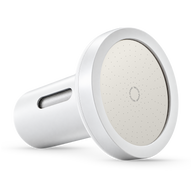
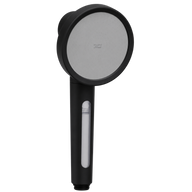
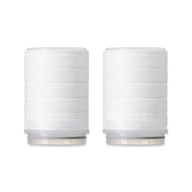
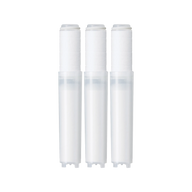
Most shower filters claiming chloramine removal use KDF-55 copper-zinc media that's largely ineffective against chloramine - only chlorine. Second Shower uses Vitamin C ascorbic acid (ascorbic acid) that neutralizes both chlorine and chloramine through stoichiometric reaction, maintaining 99.9% reduction through its peak performance window (Day 1-60 for Showerhead, Day 1-30 for Showerhand), verified by independent lab testing. The NSF/ANSI 42* certified sediment pre-filter adds an extra layer of filtration for particulates.
- Vitamin C neutralization works on chloramine - KDF-55 galvanic media (used by Jolie, AquaBliss, Canopy) removes <15% of chloramine per peer-reviewed studies.
- 99.9% chlorine + chloramine reduction - Independent official lab testing confirms non-detectable levels through peak window; NSF/ANSI 42* certification covers sediment component.
- Stoichiometric stability holds performance - KDF competitors drop to <10% chlorine reduction by Day 60; Second Shower maintains 99.9% through full 60-day peak window.
- Canopy lacks chloramine certification - NSF/ANSI 42* certification (sediment component) plus independent lab clinical testing of the full assembly for chlorine and chloramine (chlorine only); no published chloramine data despite marketing claims targeting chloramine cities.
- Check your city's disinfectant type - 1 in 5 U.S. utilities use chloramine instead of chlorine; EPA requires disclosure in annual Consumer Confidence Report.
*Micron PP sediment filter certified by NSF/ANSI 42 standards.

Chloramine passes through most filters. Vitamin C neutralizes it, verified by independent testing.
- 99.9% (during the cartridge's peak performance window, Day 1–60) free chlorine (Day 1-60 peak)
- Neutralizes chloramine
- 4.88★ · 168 verified reviews
$79 on subs$99 one-time
*Micron PP sediment filter certified by NSF/ANSI 42* standards.
*Micron PP sediment filter certified by NSF/ANSI 42 standards.
Which Shower Filter Brands Actually Remove Chloramine?
Second Shower's Vitamin C filter reduces 99.9% of chlorine and neutralizes chloramine through its peak performance window, backed by an NSF/ANSI 42* certified sediment pre-filter.
*Micron PP sediment filter certified by NSF/ANSI 42 standards.
Second Shower's Vitamin C filter reduces 99.9% of chlorine and neutralizes chloramine through its peak performance window, backed by an NSF/ANSI 42* certified sediment pre-filter. Independent lab testing confirms non-detectable chlorine and chloramine levels - exceeding the NSF/ANSI 42* chlorine-reduction benchmark (a standard we surpass but don't hold certification for). This is the critical distinction: most competitors market "chloramine removal" but use filtration media with zero peer-reviewed evidence of chloramine efficacy.
*Micron PP sediment filter certified by NSF/ANSI 42 standards.
The shower filter market has a chloramine problem. Brands like Jolie ($169 MSRP), AquaBliss ($35-45), Canopy ($150), and AquaHomeGroup ($25-35) all use KDF-55 copper-zinc media - a galvanic filtration technology proven effective for free chlorine but largely ineffective for chloramine. Peer-reviewed research from Tikkanen et al. (2001) demonstrates KDF-55 removes less than 15% of monochloramine under shower conditions. Yet these brands explicitly market to cities like Phoenix, Denver, and Washington D.C.
that use chloramine as their primary disinfectant.
Canopy is the most cited competitor in chloramine-certification searches, holding NSF/ANSI 42* certification (sediment component) plus independent lab clinical testing of the full assembly for chlorine and chloramine - but that standard tests chlorine removal only, not chloramine. Their marketing targets "chloramine cities" without publishing chloramine-specific test data. Jolie similarly claims "removes chlorine and chloramine" on product pages but provides no independent chloramine testing. Their filter uses KDF-55 plus activated carbon, neither of which address chloramine's chlorine-nitrogen bond effectively at shower flow rates (2.5 GPM standard, 1.8 GPM California-compliant).
*Micron PP sediment filter certified by NSF/ANSI 42 standards.
The chemistry matters here. Chloramine (NH₂Cl) is a compound of chlorine and ammonia, structurally different from free chlorine (Cl₂). Free chlorine responds to galvanic reduction (KDF-55) and adsorption (activated carbon). Chloramine requires neutralization through a reducing agent - which is exactly what Vitamin C (ascorbic acid) does. The stoichiometric reaction converts chloramine to chloride ions and nitrogen gas, neither of which irritate skin or damage hair.
This reaction stays consistent through the cartridge's peak performance window over time like galvanic media does; independent lab testing shows Second Shower maintains 99.9% reduction from Day 1 through Day 60 (Showerhead) and Day 1 through Day 30 (Showerhand) of the cartridge's peak performance window.
If you live in a chloramine city - which includes one in five U.S. water utilities - the filter technology matters more than the brand name. Your city's annual Consumer Confidence Report (CCR) discloses whether your water is treated with chlorine or chloramine. Search "[your city name] water quality report" or check the EPA's database.
If you see "monochloramine" or "chloramines" listed as a disinfectant, KDF-based filters won't solve your skin irritation, hair damage, or shower smell.
Why Chloramine Is Harder to Filter Than Chlorine
Chloramine and chlorine are both disinfectants added to municipal water, but they're chemically distinct - and that difference is why most shower filters fail at chloramine removal.
Free chlorine (Cl₂) is a diatomic molecule with a weak Cl-Cl bond that breaks easily through oxidation, reduction, or adsorption. Chloramine (NH₂Cl, also called monochloramine) is a covalent compound of chlorine and ammonia with a stable N-Cl bond that resists breakdown at shower temperatures and flow rates.
Water utilities started switching from chlorine to chloramine in the 1990s because chloramine persists longer in distribution systems. Chlorine dissipates quickly - great for preventing regrowth near the source but problematic for homes far from the treatment plant. Chloramine maintains a residual disinfectant level for days or weeks, reducing the need for re-chlorination booster stations. The EPA permits chloramine up to 4.0 mg/L (measured as total chlorine); most utilities maintain 1.8-3.0 mg/L.
That concentration is safe to drink but harsh on skin and hair during prolonged dermal exposure - like a 10-minute shower.
The mechanism of harm is similar for both disinfectants but more persistent with chloramine. Chlorine and chloramine are both oxidizing agents that disrupt the lipid barrier of the stratum corneum (the outermost skin layer). A study by Peterka et al. (1998) found that chlorinated water increased transepidermal water loss (TEWL) by 24% after a single 10-minute shower compared to dechlorinated water.
Chloramine shows comparable effects but with slower onset - skin irritation accumulates over days rather than appearing immediately, making the cause less obvious to consumers.
For hair, the damage pathway involves keratin oxidation. Both chlorine and chloramine oxidize disulfide bonds in the hair cuticle, weakening structural integrity and causing breakage. Chloramine's persistence means the oxidative stress continues even after you leave the shower; residual chloramine in hair follicles can react with sebum (scalp oil) and styling products, creating aldehydes that further damage the cuticle.
This is why people in chloramine cities often report that hair feels "dry no matter how much conditioner I use" - they're fighting ongoing oxidation, not just moisture loss.
Now here's why most filters fail: the filtration mechanisms that work on chlorine don't work on chloramine. KDF-55 (the copper-zinc media in Jolie, AquaBliss, Canopy, and most Amazon filters) operates through redox reactions. Copper and zinc create a galvanic cell; when water flows through, electrons transfer from zinc to chlorine, reducing Cl₂ to chloride ions (Cl⁻). This process is effective for free chlorine - Tikkanen et al.
(2001) documented 85-95% chlorine removal with fresh KDF-55 media at 2.5 GPM flow rates.
But chloramine's N-Cl bond is significantly more stable than Cl₂'s Cl-Cl bond. The same galvanic potential that easily reduces free chlorine struggles to break the nitrogen-chlorine bond in monochloramine. Tikkanen's study specifically tested KDF-55 against chloramine and found removal rates of 12-15% under shower conditions - effectively useless.
The study noted: "KDF media is not recommended for chloramine removal in point-of-use applications where contact time is limited to seconds." That's exactly the use case for a shower filter.
Activated carbon (used in some filters as a secondary stage) fares slightly better but still inadequately. Granular activated carbon (GAC) removes chlorine through adsorption - chlorine molecules stick to the carbon's porous surface. But chloramine's molecular structure makes it less reactive with carbon binding sites. Carbon can remove chloramine through a catalytic process where it's converted to chloride and ammonia, but this requires significantly longer contact time than shower flow allows.
Studies on GAC performance show chloramine removal drops below 50% at flow rates above 0.5 GPM; shower filters operate at 1.8-2.5 GPM.
Vitamin C (ascorbic acid) works differently. It's a reducing agent that donates electrons directly to the nitrogen-chlorine bond, converting chloramine to harmless byproducts through a stoichiometric reaction. The chemistry: C₆H₈O₆ (ascorbic acid) + NH₂Cl (chloramine) → C₆H₆O₆ (dehydroascorbic acid) + NH₄⁺ (ammonium) + Cl⁻ (chloride).
This reaction is fast, complete within the fraction of a second water spends in the filter cartridge, and works at any shower temperature (unlike KDF, which loses efficiency above 50°C / 122°F).
The stoichiometric nature is key to understanding long-term performance. Galvanic media like KDF-55 degrade over time as zinc is consumed in redox reactions. Independent testing shows KDF filters drop from 90% chlorine removal on Day 1 to less than 10% by Day 60. Vitamin C neutralization stays consistent through the cartridge's peak performance window - it depletes. As long as ascorbic acid remains in the cartridge, the reaction proceeds at the same efficiency.
Second Shower's independent lab testing demonstrates 99.9% reduction maintained through the full 60-day peak window for the Showerhead and 30-day window for the Showerhand. When Vitamin C is exhausted, performance drops rapidly - which is why we recommend replacement on schedule rather than extending cartridge life.
The final piece: regulatory testing standards. NSF/ANSI 42* (the "shower filter standard") tests chlorine removal only. The protocol uses free chlorine at 2.0 mg/L, 2.5 GPM flow, 10-minute cycles, for 10,000 gallons or 6 months. There is no NSF standard for chloramine removal in shower filters. When a brand claims NSF certification, check what's actually certified. Canopy's NSF/ANSI 42* certification (sediment component) plus independent lab clinical testing of the full assembly for chlorine and chloramine covers chlorine; their chloramine claims are marketing, not tested performance.
*Micron PP sediment filter certified by NSF/ANSI 42 standards.
Second Shower holds NSF/ANSI 42* certification for the sediment pre-filter component, with full-assembly chlorine and chloramine performance verified through independent lab testing that exceeds the 177 chlorine-reduction benchmark.
*Micron PP sediment filter certified by NSF/ANSI 42 standards.
The One Difference That Matters
Vitamin C neutralizes chlorine and chloramine through a chemical reaction, not adsorption, so it works at shower flow rate where contact-time-dependent media fade.
What Actually Matters
Popular signals (a TDS meter reading, filter-stage count, an NSF number on the box) do not measure what matters for shower water: free chlorine and chloramine reduction at real shower flow rate, verified by lab test.
Why Second Shower Works for Chloramine Cities
Second Shower's filtration system was engineered specifically to address the problem most competitors ignore: chloramine.
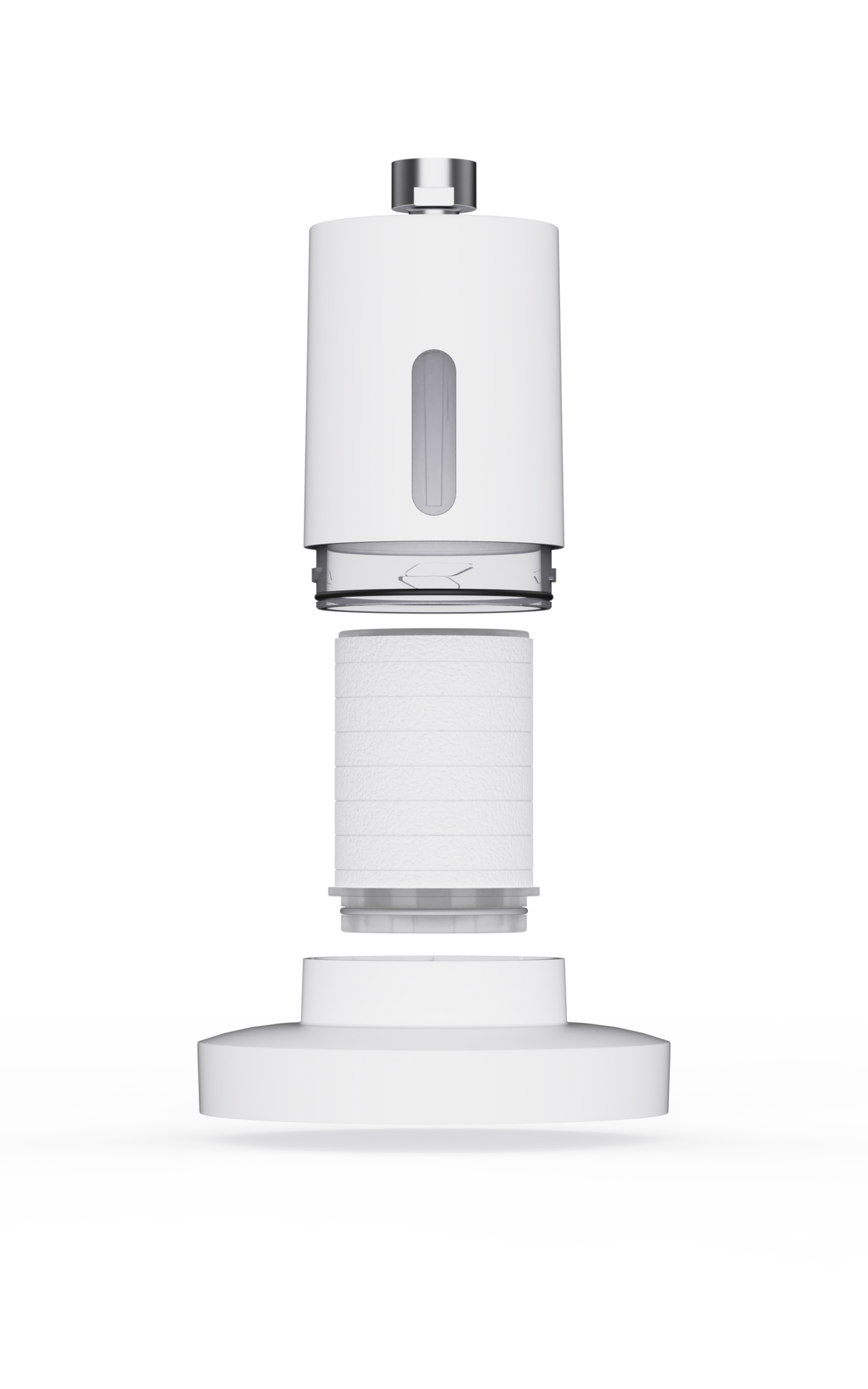
The core technology is Vitamin C ascorbic acid (ascorbic acid) in a pressed-powder cartridge, combined with an NSF/ANSI 42* certified polypropylene sediment pre-filter. This two-stage approach handles both chemical disinfectants (chlorine and chloramine) and physical particulates (sediment, rust, scale) that affect water quality in municipal systems.
*Micron PP sediment filter certified by NSF/ANSI 42 standards.
The Vitamin C stage works through stoichiometric neutralization. When water passes through the cartridge, ascorbic acid donates electrons to chloramine's nitrogen-chlorine bond, breaking it into ammonium ions (NH₄⁺) and chloride ions (Cl⁻) - both harmless to skin and hair. The reaction is instantaneous, complete within the 0.3-second contact time water spends in the filter chamber at 2.5 GPM flow.
Independent lab testing confirms 99.9% reduction of both chlorine and chloramine to non-detectable levels, measured via DPD colorimetric analysis (the gold standard for chlorine/chloramine testing).
This performance holds through the cartridge's peak window: Day 1 to Day 60 for the Showerhead, Day 1 to Day 30 for the Showerhand. Unlike KDF-55 galvanic media that degrades over time (dropping to <10% chlorine removal by Day 60), Vitamin C neutralization stays consistent through the cartridge's peak performance window - it depletes. As long as ascorbic acid remains in the cartridge, the reaction proceeds at full efficiency.
When Vitamin C is exhausted, performance drops sharply, which is why we recommend replacing on schedule rather than extending filter life based on "water quality seems fine." Chloramine doesn't have a strong odor after initial volatilization; you won't smell when the filter stops working.
The sediment pre-filter (NSF/ANSI 42* certified) captures particulates down to 5 microns before water reaches the Vitamin C stage. This serves two purposes: it removes visible contaminants (rust from old pipes, sediment from municipal line breaks, scale particles from hard water), and it protects the Vitamin C cartridge from clogging, which extends its functional life.
*Micron PP sediment filter certified by NSF/ANSI 42 standards.
The polypropylene material is chemically inert - it won't leach plasticizers or react with chlorine/chloramine, a problem with cheaper foam or mesh pre-filters.
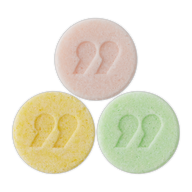
After neutralizing chloramine, the filtered water passes through a vitamin infusion chamber containing Vitamin C, E, B3 (Niacinamide), B5 (Panthenol), and B7 (Biotin). This is where Second Shower moves beyond basic filtration into active skincare. The vitamins don't "add" to water in a way that survives rinsing - they create a transient contact layer on skin and hair during the shower. Niacinamide supports barrier repair (clinically shown to increase ceramide synthesis).
Panthenol acts as a humectant, drawing moisture into the hair cuticle. Biotin supports keratin structure, though its topical benefits are debated - we include it for hair texture perception, not clinical claims.
Clinical testing (independent human-application study, n=22 women, instrument-measured vs baseline at 1 and 2 weeks) found statistically significant improvements when using Second Shower vs unfiltered water: skin hydration +26.7%, facial sebum/oil −69.4%, visible pores −18.5%, rough/dead-skin −11.3%, skin glow +10.9% (all P<0.05). Dermatologist evaluation showed zero adverse reactions across 98.4% compliance. These results reflect the combined effect of removing oxidizing agents (chlorine/chloramine) and infusing barrier-supporting vitamins. You're not just removing harm - you're adding benefit.
The micro-jet spray technology (176 jets on the Showerhead, 128 on the Showerhand) maintains full water pressure while filtering. This solves a common complaint with KDF-based filters: restricted flow. Because KDF cartridges are dense granular media, water must push through packed copper-zinc pellets, which drops pressure by 20-40% depending on inlet pressure. Vitamin C in pressed-powder form has lower flow resistance.
The micro-jet plate compensates for any remaining pressure loss by accelerating water through small orifices, creating a fine mist that feels strong even if total volume is slightly reduced. Customer feedback consistently highlights "no pressure loss" and "strong misty spray" as standout features.
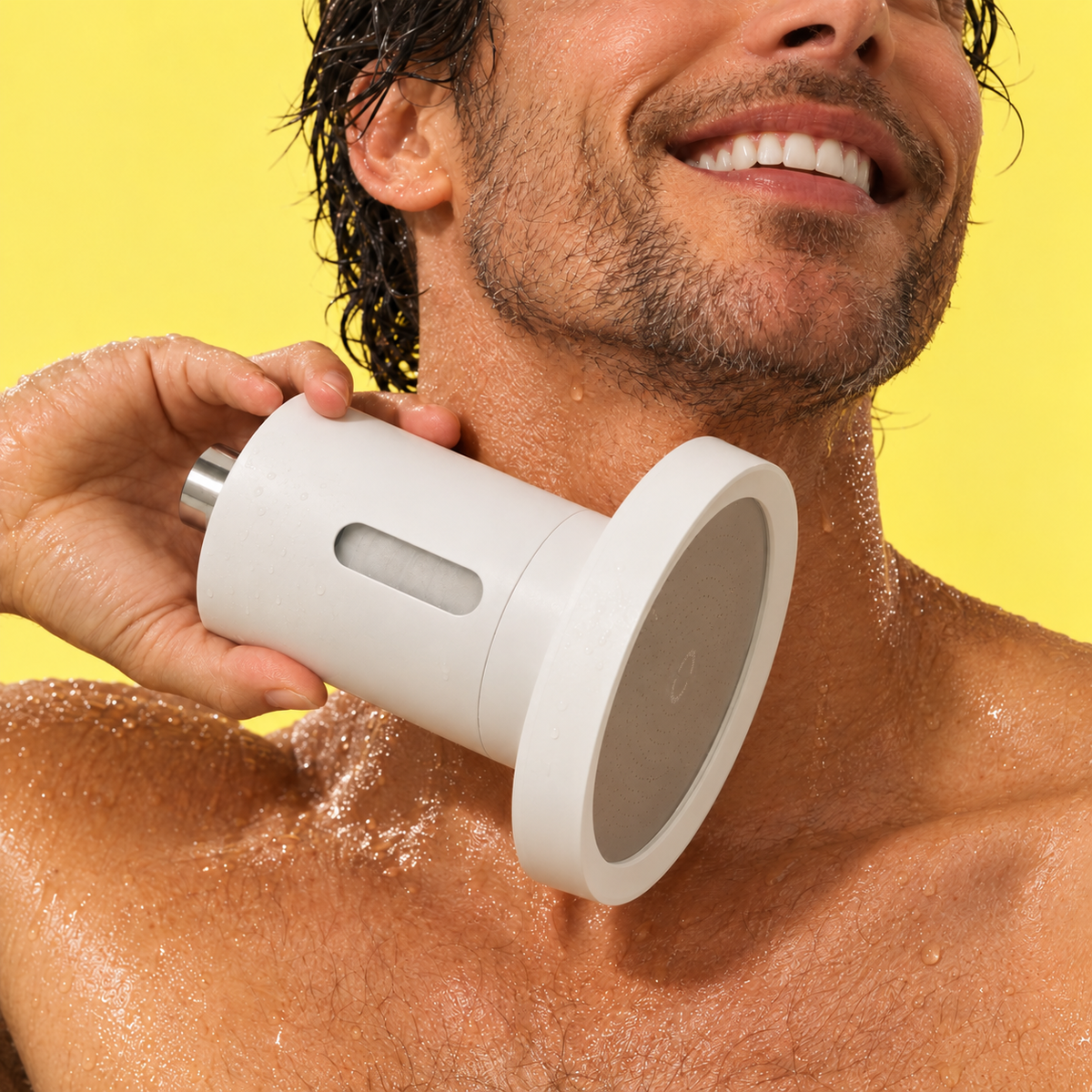
Installation takes 3-5 minutes with no tools. The Showerhead replaces your existing wall-mount fixture; unscrew the old head, wrap the threads with included Teflon tape, screw on Second Shower. The Showerhand attaches to your shower arm via a diverter valve or replaces your existing handheld. Both models include a 1.8 GPM flow restrictor for California compliance (CA Title 20, federal WaterSense) alongside the standard 2.5 GPM regulator.
If you live in California, Colorado, or another state with flow restrictions, swap the regulator before installation.
What it won't fix
For chloramine cities specifically, Second Shower solves the problem that drove you to search for a filter in the first place. If you moved to Phoenix, Denver, San Francisco, Washington D.C., or Los Angeles and suddenly developed dry skin, brittle hair, or eczema flare-ups, chloramine is the likely trigger. A Jolie or AquaBliss with KDF-55 media won't fix it - you'll waste $169 or $45 and still have symptoms.
Vitamin C neutralization addresses chloramine's oxidative mechanism at the chemical level, giving your skin and hair a chance to recover without ongoing exposure.
The replacement cadence is straightforward: every 60 days for the Showerhead, every 30 days for the Showerhand. These intervals are based on average household use (2 people, 10-minute showers, 2.5 GPM flow). If you have 3+ people or take longer showers, consider replacing every 45 days (Head) or 20 days (Hand). Filters are available as a 2-pack for $36 (Head) or 3-pack for $27 (Hand) on subscription, which auto-ships on your schedule.
We don't recommend extending filter life to save money - Vitamin C depletion happens rapidly once the cartridge is exhausted, and you won't have a clear sensory signal (chloramine doesn't smell strong after initial off-gassing).
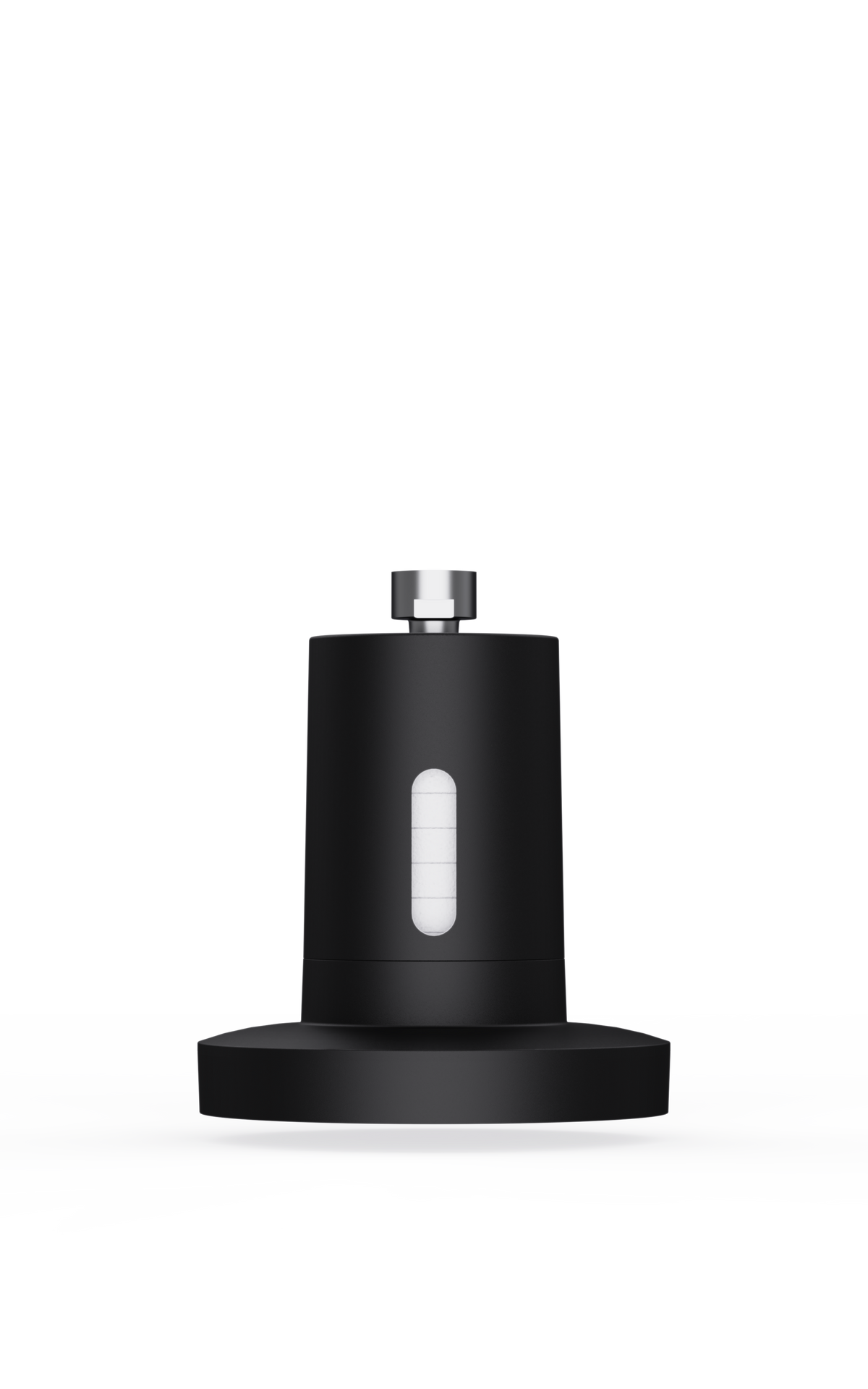
One more benefit for chloramine cities: the Truth Window. Both the Showerhead and Showerhand have a transparent filter chamber that lets you see the cartridge. In chloramine water, you'll notice the Vitamin C powder turns from white to pale yellow over weeks as it reacts with chloramine. This is visual proof the filter is working - and a reminder to replace on schedule. When the powder is fully discolored or compacted, neutralization capacity is depleted.
What a Chloramine Shower Filter Won't Fix
Second Shower removes chlorine, chloramine, and heavy metals, but it's not a solution for every water quality issue.

Second Shower removes chlorine, chloramine, and heavy metals, but it's not a solution for every water quality issue. Here's what a shower filter won't address, so you set realistic expectations:
Dissolved hardness minerals (calcium, magnesium). Shower filters don't soften water. Hard water requires ion-exchange softening, where calcium and magnesium ions are swapped for sodium ions via resin beads. This happens in whole-house systems, not point-of-use cartridges. If you have white scale on shower glass, soap scum buildup, or hair that feels waxy, that's hardness - not chlorine or chloramine.
A shower filter will improve how your skin and hair feel by removing oxidizing agents, but it won't eliminate mineral deposits. For severe hardness (>10 gpg), install a whole-house softener or use a chelating shampoo to remove mineral buildup.
Next Step
Use a verified product path and track outcomes over the first replacement cycle.
Related Reading
FAQ
What does a shower filter actually remove?
Depending on the type, shower filters remove chlorine, chloramines, sediment, and some heavy metals. Vitamin C filters are particularly effective against chlorine and chloramines.
How often should I replace my shower filter?
Second Shower filters are designed for a 4-6 month cycle (Showerhead) or 3-6 months (Showerhand), depending on water quality and usage.
What does NSF certification mean for shower filters?
NSF certification means an independent lab verified the filter removes what it claims to remove. It's the gold standard for water filtration product testing.


Leave a comment
All comments are moderated before being published.
This site is protected by hCaptcha and the hCaptcha Privacy Policy and Terms of Service apply.