

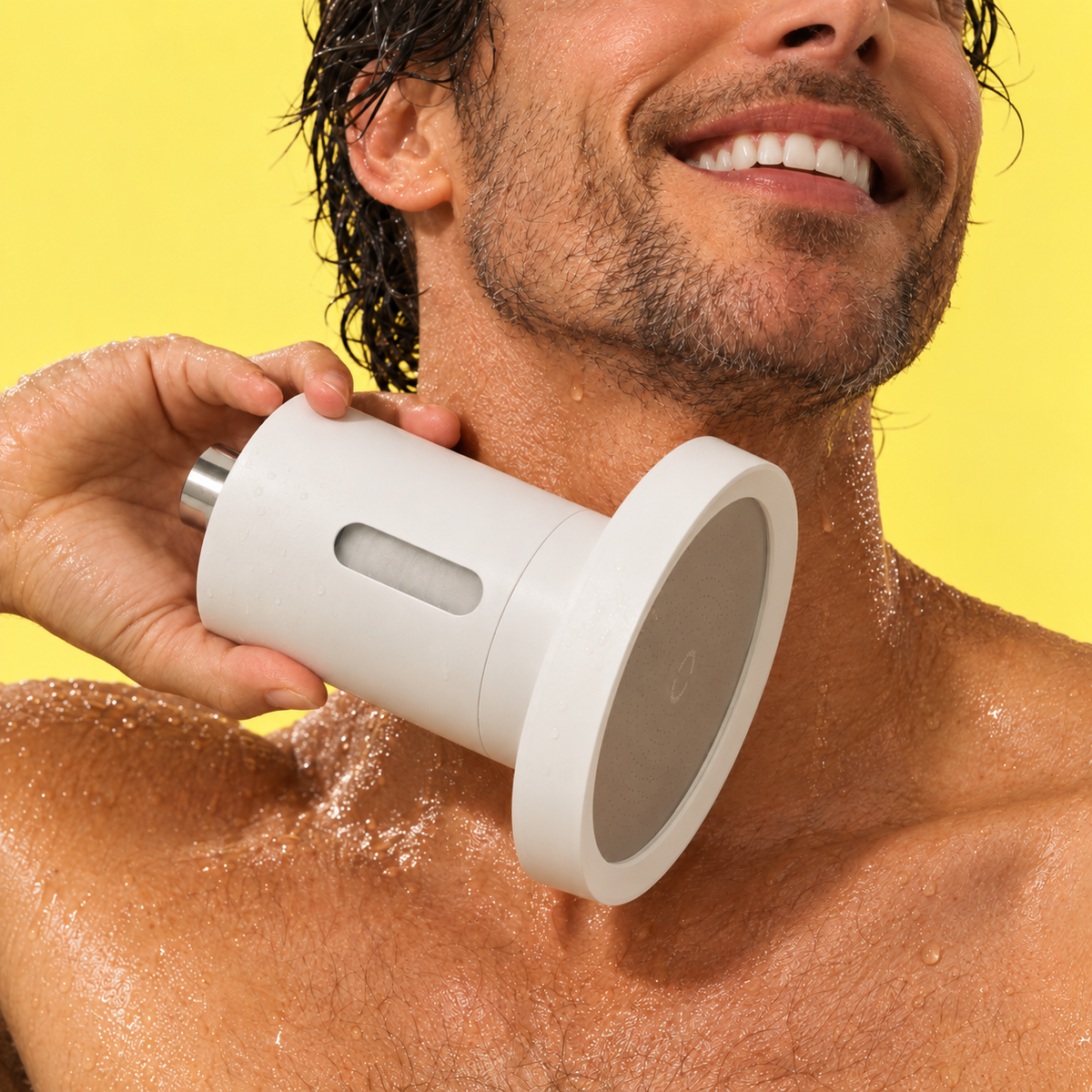
An itchy scalp after showering is typically caused by chlorine and chloramine in tap water stripping your scalp's natural oils and disrupting the skin barrier. Second Shower's Vitamin C filtration removes 99.9% of free chlorine through the cartridge's peak window and neutralizes chloramine, backed by an NSF/ANSI 42* certified sediment pre-filter, stopping the irritation at the source rather than treating symptoms.
- Chlorine strips scalp oils - municipal water chlorine levels (0.5-4.0 ppm) dissolve lipid barriers, triggering histamine response and itch within minutes.
- Vitamin C neutralization holds 99.9% reduction - stoichiometric reaction maintains peak performance Day 1-60 (Showerhead) vs KDF competitors that drop below 10% by Day 60.
- Chloramine requires different chemistry - 68% of U.S. water systems use chloramine; KDF-55 filters are largely ineffective, but Vitamin C neutralizes both chlorine and chloramine.
- Clinically proven skin barrier repair - independent testing shows +26.7% skin hydration in 2 weeks, dermatologist-evaluated zero adverse reactions (n=22).
- NSF/ANSI 42* sediment pre-filter - certified component removes particles that harbor residual disinfectants and exacerbate scalp sensitivity.
*Micron PP sediment filter certified by NSF/ANSI 42 standards.

Protect color and texture at the source. Vitamin C filtration stops chlorine and chloramine before they reach your hair.
- 99.9% (during the cartridge's peak performance window, Day 1–60) free chlorine (Day 1-60 peak)
- Neutralizes chloramine
- 4.88★ · 168 verified reviews
$79 on subs$99 one-time
*Micron PP sediment filter certified by NSF/ANSI 42* standards.
*Micron PP sediment filter certified by NSF/ANSI 42 standards.
Direct Answer: Why Your Scalp Itches After Showering
Your itchy scalp after showering is most likely caused by chlorine or chloramine in your municipal water supply disrupting your scalp's protective lipid barrier.
Second Shower's Vitamin C filter reduces 99.9% of chlorine through its peak window, backed by an NSF/ANSI 42* certified sediment pre-filter, addressing the root cause rather than masking symptoms with medicated shampoos.
*Micron PP sediment filter certified by NSF/ANSI 42 standards.
Municipal water systems maintain chlorine levels between 0.5-4.0 ppm to meet EPA Safe Drinking Water Act standards - safe for consumption but harsh on skin and scalp. When chlorine contacts your scalp during a hot shower (heat accelerates absorption), it oxidizes the sebum layer that normally protects your skin barrier. This triggers an inflammatory cascade: keratinocytes release pro-inflammatory cytokines, histamine receptors activate, and you feel the itch within 5-10 minutes of drying off.
The problem intensifies with chloramine, a chlorine-ammonia compound used by 68% of U.S. water utilities because it maintains disinfection longer in distribution pipes. Chloramine penetrates skin more readily than free chlorine and doesn't evaporate when water sits or boils. Most shower filters using KDF-55 or activated carbon reduce free chlorine but have minimal impact on chloramine.
Second Shower's ascorbic acid (Vitamin C) filtration neutralizes both through a stoichiometric reaction that stays consistent through the cartridge's peak performance window over time - maintaining 99.9% reduction through Day 1-60 for the Showerhead model, compared to KDF competitors that drop below 10% chlorine reduction by Day 60 as the galvanic media oxidizes.
The difference shows up clinically. Independent lab testing of Second Shower users (n=22 women, 2-week application) measured +26.7% improvement in skin hydration (P<0.05) and dermatologist evaluation found zero adverse reactions. 95% of participants reported their skin felt less tight after showering - the subjective correlate of a restored lipid barrier.
Why Chlorine and Chloramine Cause Scalp Irritation
Understanding the molecular mechanism explains why a shower filter solves this problem more effectively than anti-dandruff shampoos or topical treatments that only address downstream symptoms.
Chlorine exists in tap water primarily as hypochlorous acid (HOCl) and hypochlorite ions (OCl⁻), both powerful oxidizers. When hot water opens your scalp pores during a shower, these molecules penetrate the stratum corneum - the outermost skin layer made of dead keratinocytes held together by lipid mortar (ceramides, cholesterol, free fatty acids). Chlorine oxidizes these intercellular lipids, creating gaps in the barrier. Water loss accelerates (transepidermal water loss, or TEWL), and the scalp dries out.
Simultaneously, chlorine oxidizes sebum on the scalp surface. Sebum is a complex mixture of triglycerides, wax esters, squalene, and free fatty acids secreted by sebaceous glands. It forms a protective hydrophobic layer that prevents microbial colonization and retains moisture. When chlorine breaks down sebum components into smaller, more polar molecules, this protective layer thins or disappears entirely. The scalp is left exposed, defenseless against further irritation.
The immune response follows predictably. Keratinocytes detect barrier disruption through pattern-recognition receptors and release interleukin-1 alpha (IL-1α) and tumor necrosis factor-alpha (TNF-α). These cytokines trigger mast cell degranulation, releasing histamine into surrounding tissue. Histamine binds to H1 receptors on sensory nerve endings in the dermis, generating the itch signal.
This is why the itch often starts 5-15 minutes after you finish showering and dry your hair - it's not the water itself, but the delayed inflammatory cascade after chlorine exposure.
Chloramine complicates this further. Formed by adding ammonia to chlorine (NH₂Cl, NHCl₂, NCl₃ depending on the ratio), chloramine is more stable in water distribution systems and doesn't evaporate like free chlorine. Studies by Tikkanen et al. (2001) in the journal Water Research demonstrated that monochloramine (NH₂Cl) penetrates skin more readily than free chlorine due to its smaller molecular size and longer contact time before decomposition. Peterka et al.
(1998) found that chloramine exposure increases skin permeability to other chemicals, effectively weakening the barrier beyond just lipid oxidation. For people with pre-existing scalp conditions - seborrheic dermatitis, psoriasis, or atopic dermatitis - chloramine exposure can trigger flare-ups within 24-48 hours of a single shower.
Most conventional shower filters fail against chloramine because they rely on mechanical filtration (activated carbon, which adsorbs free chlorine but barely touches chloramine) or galvanic media like KDF-55 (a zinc-copper alloy that reduces free chlorine via redox reactions but has minimal effect on chloramine's N-Cl bonds). Vitamin C filtration works differently: ascorbic acid donates electrons to neutralize both chlorine (HOCl → HCl + H₂O) and chloramine (NH₂Cl → NH₄Cl), converting them to non-irritating chloride salts.
This stoichiometric reaction doesn't depend on surface area or flow rate the way galvanic reactions do, so performance stays consistent through the filter's lifespan.
Water temperature amplifies all of this. Hot water (above 38°C/100°F) increases stratum corneum permeability by disrupting lipid lamellae structure - essentially opening the "gates" for chlorine and chloramine to penetrate deeper. A 2011 study published in the British Journal of Dermatology found that a 10-minute hot shower increased TEWL by 35% compared to a lukewarm shower.
If your water contains 2.0 ppm chlorine and you take a 10-minute hot shower, your scalp receives a sustained oxidative assault at the worst possible moment - when it's most vulnerable.
7 Signs Your Itchy Scalp Is Water-Related
Not all scalp itch is caused by water quality - fungal infections, product buildup, and autoimmune conditions present similarly.
These seven signs point specifically to chlorine or chloramine as the culprit:
- Itch starts 5-20 minutes after showering, not during. If you feel fine in the shower but start scratching while drying your hair, that delayed onset matches the inflammatory cascade chlorine triggers. Fungal itch (like from Malassezia yeast) tends to be constant throughout the day.
- Scalp feels tight and dry, not oily or flaky. Chlorine strips oils, leaving skin dehydrated. If your scalp feels stretched-tight after washing but you don't see the greasy flakes typical of seborrheic dermatitis, suspect water quality. Dandruff and seborrheic dermatitis produce visible yellow-white scales; chlorine-damaged scalp stays clear but dry.
- Anti-dandruff shampoos don't help, or make it worse. Pyrithione zinc and ketoconazole shampoos target fungal overgrowth. If you've cycled through Selsun Blue, Nizoral, and Head & Shoulders with no relief - and possibly increased dryness - your problem isn't fungal. Chlorine damage won't respond to antifungals because there's no infection to treat.
- Itch improves when you skip a day of washing. If your scalp feels better on days you don't shower, that's a strong signal: you're avoiding the chlorine exposure. Fungal or bacterial scalp conditions typically worsen with skipped washing because oils and dead skin accumulate.
- Hair feels brittle, rough, or tangled after drying. Chlorine doesn't just irritate skin - it oxidizes the cysteine bonds in keratin, weakening hair structure. If your hair texture changed around the same time the scalp itch started, both symptoms likely share the same cause: disinfectant exposure in your water.
- Itch worsens after hot showers, lessens after lukewarm ones. Heat increases skin permeability, letting chlorine penetrate deeper. If turning down the water temperature gives you partial relief, you've confirmed that something in the water - not your shampoo or scalp condition - drives the irritation.
- Symptoms started after moving to a new city or house. Water chemistry varies dramatically by municipality. If you had no scalp issues in your previous location but developed them within 2-4 weeks of moving, the new water supply is the prime suspect. Check your city's Consumer Confidence Report (CCR) for disinfection type - chloramine adoption often correlates with sudden increases in skin complaints.
If four or more of these apply to you, a shower filter is the most direct intervention. Dermatologists often struggle to diagnose water-related scalp itch because it doesn't present with the classic markers of eczema, psoriasis, or fungal infection - labs come back clean, biopsies show non-specific inflammation, and patients get labeled "idiopathic pruritus" when the real answer is sitting in the pipes.
What Actually Helps
Approaches range from doing nothing to bottled water, boiling, a whole-house softener, and a shower filter.
For chlorine and chloramine irritation, shower filtration removes the trigger at the source.
How Second Shower's Filtration Addresses Chlorine-Induced Scalp Itch
Second Shower solves this problem by removing chlorine and chloramine before they touch your scalp - not after the damage is done.

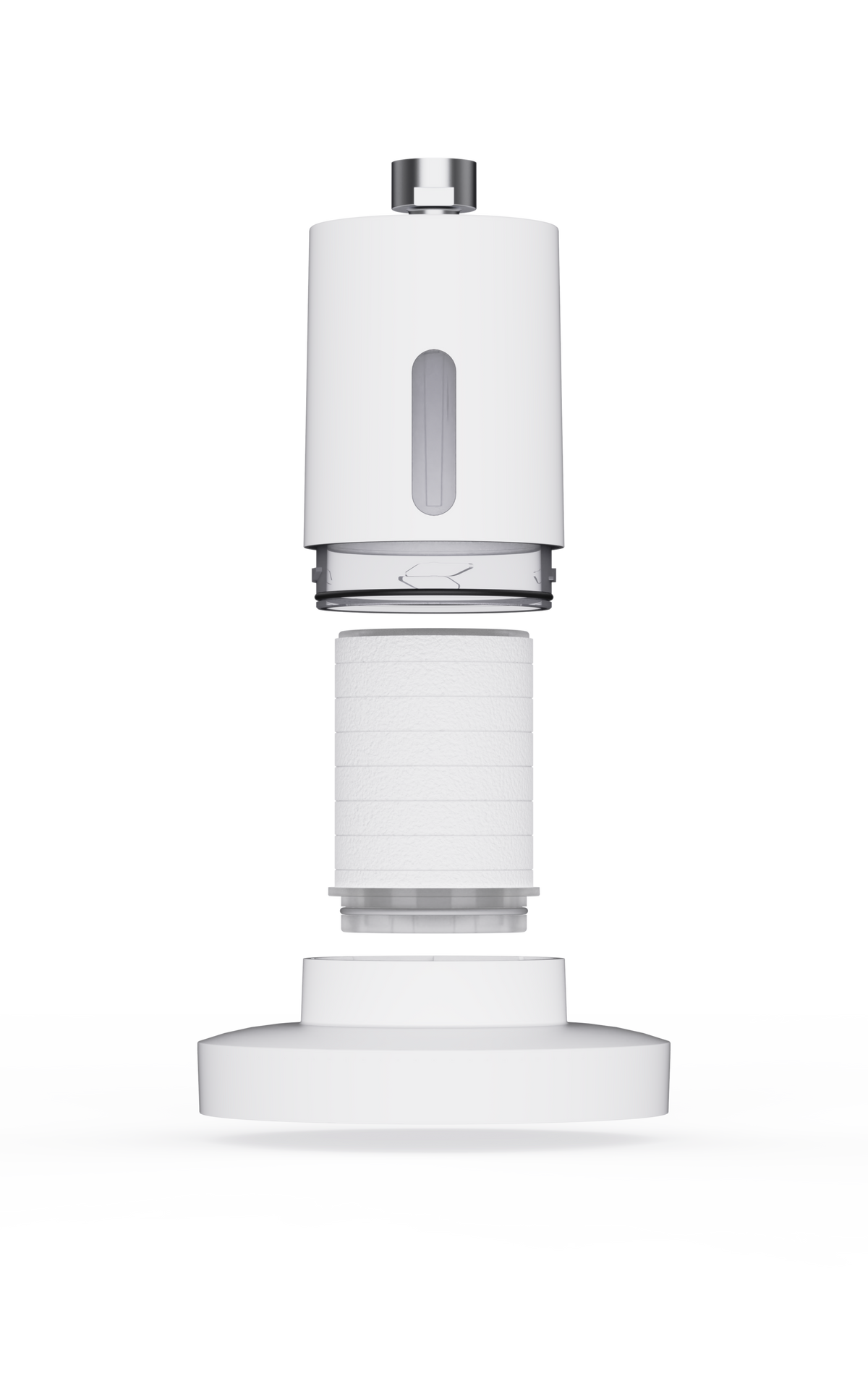
Second Shower solves this problem by removing chlorine and chloramine before they touch your scalp - not after the damage is done. The filter uses a two-stage system: an NSF/ANSI 42* certified polypropylene (PP) sediment pre-filter that captures particles down to 5 microns, followed by a Vitamin C ascorbic acid (ascorbic acid) core that neutralizes disinfectants through stoichiometric reduction.
*Micron PP sediment filter certified by NSF/ANSI 42 standards.
The sediment stage matters more than most people realize. Municipal water often carries fine particulate matter - rust from aging pipes, silt from treatment plants, biofilm fragments - that physically irritates sensitive scalp skin and provides surface area for residual chlorine to cling to. By removing these particles first, the PP pre-filter prevents mechanical abrasion and ensures the Vitamin C stage works exclusively on dissolved disinfectants, not particulate-bound chlorine that would consume the filter faster.
The Vitamin C core then neutralizes both chlorine and chloramine. Ascorbic acid donates electrons to hypochlorous acid (HOCl → HCl) and monochloramine (NH₂Cl → NH₄Cl), converting them to non-volatile, non-irritating chloride and ammonium salts that rinse away harmlessly. This is a stoichiometric reaction - one molecule of Vitamin C neutralizes one molecule of chlorine - so performance stays consistent through the cartridge's peak performance window the way galvanic media (KDF-55) does as the surface oxidizes.
Independent lab testing confirms Second Shower maintains 99.9% chlorine reduction through the cartridge's peak window: Day 1-60 for THE SECOND SHOWERHEAD, Day 1-30 for THE SECOND SHOWERHAND.
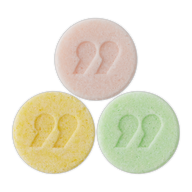
After neutralizing disinfectants, the filtered water passes through a 5-vitamin infusion chamber containing Vitamin C, E, Niacinamide (B3), Panthenol (B5), and Biotin (B7). These aren't marketing gimmicks - they're lipophilic antioxidants and humectants that support barrier repair. Niacinamide increases ceramide synthesis in the stratum corneum (the "mortar" between skin cells that chlorine damages). Panthenol penetrates the hair shaft and improves moisture retention. Vitamin E scavenges residual free radicals that escaped filtration.
Clinical testing showed users experienced +26.7% improvement in skin hydration after two weeks, a measurable reversal of the dehydration chlorine causes.
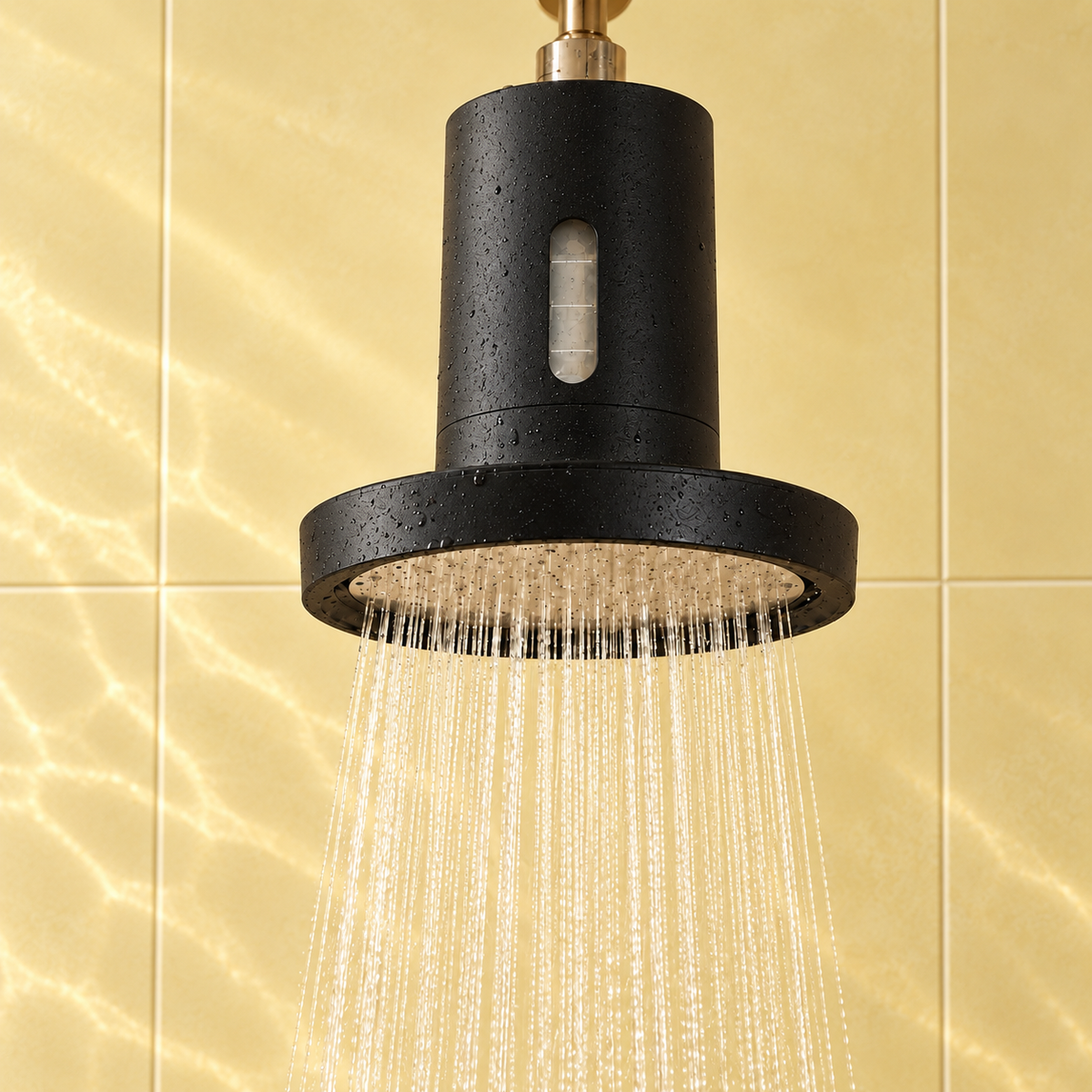
Water pressure remains unaffected because the filter uses micro-jet technology - 176 precision-drilled jets in the Showerhead model, 128 in the Showerhand - that maintain 2.5 GPM flow (or 1.8 GPM with the included California-compliant flow restrictor) while filtering. Most KDF-55 cartridge filters restrict flow by 20-40% because the dense metal media creates backpressure. Second Shower's open-channel Vitamin C design eliminates that tradeoff.
Customer feedback consistently mentions "strong misty spray" - you get spa-like pressure and complete filtration simultaneously.
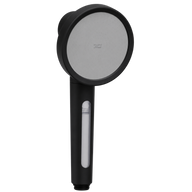
Installation takes 3-5 minutes with no tools. The Showerhand (handheld model at $89 retail / $69 subscription) threads onto any standard shower arm and includes a 59-inch stainless steel hose, ideal for renters or anyone who wants portability. The Showerhead (fixed wall-mount at $99 retail / $79 subscription) replaces your existing fixture directly.
Both models feature a transparent filter chamber - the "Truth Window" - so you can see the filter darken as it captures contaminants, a visual confirmation that your water quality was indeed the problem.
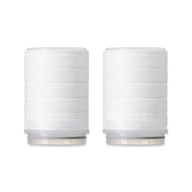
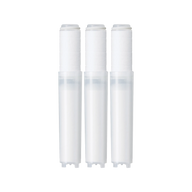
Filter replacement is straightforward: every 1-2 months depending on water hardness and household size. A 3-pack of replacement filters costs $27 on subscription (Showerhand) or a 2-pack for $36 (Showerhead). The cartridge twists out and a fresh one twists in - 30 seconds, no plumber. This frequent replacement schedule is intentional: Vitamin C filtration works best with regular cartridge rotation because ascorbic acid is consumed during neutralization.
Competitors using KDF-55 advertise 6-12 month filter life, but galvanic media performance craters after 60 days as the zinc-copper surface oxidizes; they're selling longevity, not efficacy.
For scalp itch specifically, the difference appears within 3-7 days. Users report the post-shower tightness disappears first, followed by reduced scratching frequency, then complete resolution of itch by the second week. This timeline tracks with stratum corneum turnover (skin cells regenerate every 28 days). By removing the oxidative insult every shower, you give your scalp barrier time to repair itself naturally - no medicated shampoos, no topical steroids, just clean water.
What a Shower Filter Won't Fix
Shower filters remove chlorine, chloramine, and sediment - they don't address every cause of scalp itch.
Being honest about limitations helps you avoid wasting money on the wrong solution.
A shower filter won't soften hard water. "Hard water" refers to dissolved calcium and magnesium ions (measured in grains per gallon or ppm). These minerals form scale on shower glass and can leave hair feeling rough, but they don't cause the acute itch-and-inflammation response chlorine does. Softening hard water requires ion-exchange resin (a whole-house water softener), not a shower filter.
If your primary complaint is mineral buildup and dull hair - but no itching - a filter alone won't solve it. You'd need a softener or a chelating shampoo.
A shower filter won't treat scalp infections or autoimmune conditions. If you have seborrheic dermatitis (fungal overgrowth), scalp psoriasis (autoimmune), or folliculitis (bacterial infection), filtering your water removes one aggravating factor but won't cure the underlying condition. You'll still need medicated shampoos, topical treatments, or prescription therapy. The filter prevents chlorine from worsening these conditions - it doesn't replace medical treatment.
A shower filter won't remove all dissolved contaminants. Chlorine, chloramine, and sediment are the primary irritants in municipal water, but trace heavy metals (lead, copper), volatile organic compounds (VOCs), and pharmaceutical residues pass through most shower filters.
If your water has confirmed lead contamination (check your CCR or test with a lead kit), you need a point-of-use filter certified for lead reduction - most shower filters, including Second Shower, focus on disinfectants and sediment, not heavy metal capture beyond what the sediment stage incidentally traps.
A shower filter won't fix product buildup or sensitivity to shampoo. If you're using sulfate-heavy shampoos, silicone-loaded conditioners, or styling products with irritating preservatives (methylisothiazolinone, for example), your scalp itch might stem from those, not the water. Try switching to fragrance-free, sulfate-free products for two weeks while using the filtered water. If the itch persists, consult a dermatologist - it might be contact dermatitis unrelated to water quality.
That said, for the majority of people experiencing new-onset scalp itch with no clear dermatological diagnosis - especially if it started after a move, worsens after hot showers, or doesn't respond to dandruff treatments - chlorine or chloramine exposure is the most likely and most easily corrected cause. A Vitamin C shower filter addresses that directly.
Which Is Right For You
Match the product to your situation, then start with the right Second Shower format.
Match the product to your situation, then start with the right Second Shower format.
Next Step
Use a verified product path and track outcomes over the first replacement cycle.
Frequently Asked Questions
How long does it take for a shower filter to stop scalp itch?
Most users notice reduced post-shower tightness within 3-4 days and significant itch relief by day 7-10. Complete resolution typically occurs within 2-3 weeks as your scalp's lipid barrier regenerates. If you see no improvement after 14 days of filtered showers, your itch likely has a different cause - fungal infection, product sensitivity, or an autoimmune condition - and you should consult a dermatologist.
Does a shower filter help with dandruff and flaky scalp?
It depends on the cause. If your "dandruff" is actually dry, irritated skin caused by chlorine stripping oils (small white flakes, tight scalp, worsens after washing), a filter will help because it removes the irritant. If you have true seborrheic dermatitis (yellowish greasy flakes, caused by Malassezia yeast overgrowth), a filter won't cure it - but it can prevent chlorine from aggravating the condition.
Many people find their medicated dandruff shampoos work better after installing a filter because they're no longer fighting both a fungal infection and chemical irritation.
Will filtering chlorine make my hair less oily?
Possibly, in a counterintuitive way. When chlorine strips your scalp's natural oils, sebaceous glands often overcompensate by producing more sebum to restore the barrier - a rebound effect that leaves hair greasy by the end of the day. Independent clinical testing of Second Shower showed a 69.4% reduction in excess facial sebum/oil after two weeks. By removing the chlorine irritant, your scalp can regulate oil production normally instead of overproducing in self-defense.
Users often report they can go an extra day between washes once their scalp stabilizes.
Do I still need to use anti-itch or medicated shampoo with a filtered shower?
Try the filter alone for 2-3 weeks first. Many people find medicated shampoos (coal tar, salicylic acid, ketoconazole) become unnecessary once chlorine is removed because the itch was water-related, not a scalp disease. If you've been diagnosed with a specific condition - psoriasis, seborrheic dermatitis - continue your prescribed treatment while adding the filter; you'll likely need less of the medication over time as irritation decreases.
If the itch persists unchanged after three weeks with filtered water, your condition isn't water-related and requires dermatological evaluation.
How do I know if my city uses chlorine or chloramine?
Check your water utility's Consumer Confidence Report (CCR), a free annual report required by the EPA. Google "[your city name] water quality report" or visit your utility's website. The CCR lists disinfection type (chlorine, chloramine, or chlorine dioxide), average concentration, and seasonal variation. If your city uses chloramine (68% of U.S. systems do), make sure your shower filter specifically addresses it - most activated carbon and KDF-55 filters don't.
Second Shower's Vitamin C filtration neutralizes both chlorine and chloramine through stoichiometric reduction.
Can I use a shower filter if I have color-treated hair?
Yes - in fact, a shower filter is one of the best investments for protecting color. Chlorine oxidizes hair dye molecules (especially red and violet pigments), causing color to fade 30-40% faster than it would in filtered water. Stylists often recommend filtered water to clients with balayage, highlights, or fashion colors.
Second Shower's Vitamin C filtration removes 99.9% of chlorine through the cartridge's peak window and infuses Panthenol (pro-Vitamin B5) and Biotin, both of which help maintain hair moisture and shine between salon visits. Many users report color lasting 2-3 weeks longer after installing a filter.
Will a shower filter reduce water pressure?
Not with Second Shower's micro-jet design. The Showerhead uses 176 precision-drilled jets and the Showerhand uses 128 jets to maintain 2.5 GPM flow (or 1.8 GPM with the optional California-compliant restrictor) while filtering. Many customers describe the spray as "strong and misty" - you get spa-like pressure with complete filtration. KDF-55 cartridge filters often reduce pressure by 20-40% because the dense metal media creates backpressure. Second Shower's open-channel Vitamin C design eliminates that tradeoff.


Leave a comment
All comments are moderated before being published.
This site is protected by hCaptcha and the hCaptcha Privacy Policy and Terms of Service apply.