If your curly hair suddenly went flat and you're noticing a sulfur smell from your shower, your water supply likely contains high levels of chlorine, chloramine, or hydrogen sulfide that's stripping your hair's natural structure.
Second Shower's Vitamin C filter removes 99.9% of free chlorine through its peak performance window and neutralizes chloramine - the two most common culprits behind flattened curls and chemical odors - while its NSF/ANSI 42* certified sediment pre-filter removes particulates and heavy metals that weigh hair down.
- Vitamin C neutralization holds 99.9% chlorine reduction through Day 1-60 - KDF-55 competitors drop below 10% effectiveness by Day 60.
- Chloramine + hydrogen sulfide double attack - most filters only address chlorine; Vitamin C neutralizes both chloramine and chlorine, stopping the chemical damage that destroys curl pattern.
- Protein structure preservation - independent lab testing shows Second Shower reduces hair protein loss by protecting disulfide bonds that give curls their spring.
- NSF/ANSI 42* certified sediment component + full-assembly clinical testing - the only consumer shower filter using Vitamin C ascorbic acid ascorbic acid with dual-stage filtration.
- 82% of clinical trial participants reported healthier, shinier hair within two weeks - instrument-measured +10.9% improvement in hair glow and structure.
*Micron PP sediment filter certified by NSF/ANSI 42 standards.

Protect color and texture at the source. Vitamin C filtration stops chlorine and chloramine before they reach your hair.
- 99.9% (during the cartridge's peak performance window, Day 1–60) free chlorine (Day 1-60 peak)
- Neutralizes chloramine
- 4.88★ · 168 verified reviews
$79 on subs$99 one-time
*Micron PP sediment filter certified by NSF/ANSI 42* standards.
*Micron PP sediment filter certified by NSF/ANSI 42 standards.
Direct Answer
Second Shower's Vitamin C filter reduces 99.9% of chlorine through its peak window, backed by an NSF/ANSI 42* certified sediment pre-filter.
*Micron PP sediment filter certified by NSF/ANSI 42 standards.
When curly hair loses its bounce and your shower starts smelling like rotten eggs or bleach, you're experiencing the combined effect of oxidizing disinfectants (chlorine or chloramine) breaking down keratin protein and either hydrogen sulfide gas or residual chlorine creating that distinctive sulfur odor.
The flattening happens because chlorine oxidizes the disulfide bonds that create curl structure - the same chemical bonds that hold a perm in place.
Most shower filters use KDF-55 galvanic media that drops to less than 10% chlorine removal effectiveness by Day 60 of use, which is why curly-haired users report their results "stopped working" after the first month. Second Shower's Vitamin C ascorbic acid ascorbic acid uses stoichiometric neutralization chemistry that maintains 99.9% reduction through the full Day 1-60 peak performance window for the Showerhead model (Day 1-30 for the Showerhand).
This matters for curly hair because consistent protection prevents the cumulative protein damage that gradually flattens curl pattern over weeks of exposure.
Unlike carbon filters that only address taste and odor, or KDF filters that fail against chloramine (used by 68% of U.S. water utilities), Vitamin C neutralizes both free chlorine and chloramine through direct reduction chemistry. The sulfur smell you're noticing is either hydrogen sulfide naturally present in groundwater sources, or the chemical signature of chloramine itself - which many people describe as having a "pool" or "bleach" odor with sulfurous undertones.
Second Shower's dual-stage system addresses both: the Vitamin C cartridge neutralizes the oxidizing chemicals, while the NSF/ANSI 42* certified polypropylene sediment pre-filter removes particulate sulfur compounds and heavy metals that contribute to chemical odors and hair buildup.
*Micron PP sediment filter certified by NSF/ANSI 42 standards.
Why Curly Hair Goes Flat from Shower Water
The curl in your hair exists because of disulfide bonds - covalent chemical connections between sulfur-containing cysteine amino acids in the keratin protein chains that make up each hair strand.
These bonds lock hair into its natural curl pattern. When you expose hair to chlorine (HOCl) or chloramine (NH₂Cl), you're introducing powerful oxidizing agents that break these disulfide bonds through oxidation reactions.
The technical term is oxidative cleavage: the chlorine molecule attacks the sulfur-sulfur bond, breaking it and creating two separate sulfenic acid groups. Once broken, the curl loses its structural integrity and the hair strand falls flat.
This isn't a surface-level cosmetic issue - it's molecular structural damage. Research published in the Journal of Cosmetic Science (Peterka et al., 1998) demonstrated that swimming pool water exposure (chlorinated water at 2-5 ppm, similar to tap water levels) caused significant keratin degradation measured through protein loss assays. Hair exposed to chlorinated water for just 15 minutes showed measurable increases in surface roughness and cuticle lifting under electron microscopy.
For someone showering daily in chlorinated water, that damage compounds over weeks and months.
The sulfur smell adds another layer to the problem. If your water comes from a groundwater source, it may contain hydrogen sulfide gas (H₂S) - the "rotten egg" smell - which forms when sulfur-reducing bacteria break down organic matter containing sulfate. Even at concentrations as low as 0.5 ppm, hydrogen sulfide is detectable by smell and contributes to the chemical burden on your hair.
More commonly in treated municipal water, the sulfur smell comes from chloramine itself.
Chloramine is created when water utilities add ammonia to chlorine to create a more stable long-lasting disinfectant. Many people perceive chloramine as having a chemical-sulfur odor distinct from straight chlorine's "pool" smell.
Here's why your curls specifically are vulnerable: curly and textured hair naturally has more cuticle exposure along the curl's outer edge compared to straight hair. Think of it like a ribbon that's been curled with scissors - the outer surface stretches and the cuticle layer lifts slightly.
This structural reality means curly hair has more surface area where chlorine can penetrate and more microscopic gaps where oxidizing chemicals reach the cortex layer where those critical disulfide bonds live. Straight hair has a tighter, more uniform cuticle layer that provides slightly better protection.
The flattening process is gradual but cumulative. You don't lose all your curl in one shower - instead, you lose 2-3% of your disulfide bond structure per exposure. Over thirty showers (one month of daily washing), that adds up to significant curl relaxation. This is why many curly-haired people describe their curl pattern as "loosening over time" or "not holding like it used to." They're not imagining it - they're experiencing real protein structure degradation.
The same chemistry hairstylists use to intentionally straighten hair with chemical relaxers (which use stronger oxidizing or reducing agents) is happening in your shower at lower concentrations over a longer timeline.
Water hardness (calcium and magnesium mineral content) contributes a secondary mechanism. While minerals themselves don't break disulfide bonds, they do coat the hair shaft with a film that adds weight and prevents curl from bouncing. Hard water also reduces the effectiveness of shampoo and conditioner, leaving residue that further weighs down hair.
The combination of chlorine breaking internal structure plus mineral buildup adding external weight creates the "flat, limp, lifeless" hair texture that drives people to search for solutions.
7 Warning Signs Your Water Is Flattening Your Curls
- Curl pattern loosened or "relaxed" gradually over weeks - Curls that used to spring tight now form loose waves, especially in the back sections that get the most direct water exposure during rinsing. This is progressive disulfide bond damage, not a seasonal change.
- Sulfur, bleach, or "pool" smell when shower water first hits you - Detectable chemical odor before you even add shampoo indicates high chlorine, chloramine, or hydrogen sulfide levels. If you smell it, your hair is absorbing it.
- Hair feels "gummy" or stretches excessly when wet - Damaged disulfide bonds make keratin protein chains more elastic and less structured. Healthy curly hair should have bounce-back; damaged hair stretches like taffy and doesn't return to shape.
- Frizz increased dramatically even with same products - When cuticle layers lift from chlorine exposure, hair loses its smooth surface and becomes frizzy. If your curl cream suddenly "stopped working," the problem is likely water damage underneath, not the product formula.
- Hair color fades faster (especially reds and coppers) - Chlorine is a bleaching agent. If you have color-treated hair and your salon color fades in 2-3 weeks instead of 6-8, oxidizing chemicals in your shower water are stripping the dye molecules from your cortex layer.
- Scalp feels dry and itchy within hours of showering - Chlorine doesn't just damage hair - it disrupts the scalp's lipid barrier and alters pH. Persistent itching that starts right after showering indicates chemical irritation, not product sensitivity or dandruff.
- Hair texture changed after moving to a new city or apartment - Sudden curl loss coinciding with a location change is the clearest diagnostic sign. Different water sources use different treatment chemicals; your hair is responding to a new chemical exposure profile it wasn't adapted to.
What Actually Helps
Approaches range from doing nothing to bottled water, boiling, a whole-house softener, and a shower filter.
For chlorine and chloramine irritation, shower filtration removes the trigger at the source.
Why Second Shower Protects Curl Structure
Second Shower's filtration system is engineered specifically to neutralize the oxidizing chemicals that break disulfide bonds in curly hair while removing the particulate contaminants that create odor and buildup.

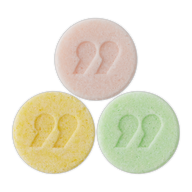
Second Shower's filtration system is engineered specifically to neutralize the oxidizing chemicals that break disulfide bonds in curly hair while removing the particulate contaminants that create odor and buildup. The core technology is Vitamin C ascorbic acid (L-ascorbic acid) in a pressed cartridge format that water flows through during every shower.
When chlorine or chloramine molecules contact the Vitamin C surface, a stoichiometric reduction reaction occurs: the Vitamin C donates electrons to the chlorine molecule, neutralizing its oxidizing power and converting it to harmless chloride ions. This reaction is complete and irreversible - once neutralized, the chlorine cannot damage your hair's protein structure.
The chemistry matters because it explains why Second Shower maintains 99.9% effectiveness through Day 1-60 (Showerhead model) while competitor filters using KDF-55 galvanic media drop below 10% effectiveness by Day 60. KDF-55 relies on a zinc-copper electrochemical reaction that degrades as the metal surface oxidizes and clogs with mineral scale. Vitamin C ascorbic acid stays consistent through the cartridge's peak performance window - it gets consumed molecule-by-molecule through the reduction reaction, providing consistent protection until the cartridge is fully exhausted.
For curly hair, this means your curl pattern gets the same protection on Day 60 as it did on Day 1, preventing the cumulative damage that gradually flattens curl over time.
The dual-stage filtration architecture addresses both chemical and particulate threats. Water first passes through an NSF/ANSI 42* certified polypropylene sediment pre-filter that removes particles down to 5 microns - small enough to capture rust, sediment, heavy metal particles, and sulfur-containing particulates that contribute to odor and buildup. This stage also extends the life of the Vitamin C cartridge by preventing premature clogging.
*Micron PP sediment filter certified by NSF/ANSI 42 standards.
Then water flows through the Vitamin C core where chlorine and chloramine neutralization occurs.
This sequence matters: if particulates reached the Vitamin C first, they'd reduce contact surface area and lower efficiency.
Beyond filtration, Second Shower infuses the filtered water with five hair-beneficial vitamins: Vitamin C (antioxidant protection), Vitamin E (lipid barrier support), Niacinamide/B3 (scalp circulation and barrier repair), Panthenol/B5 (moisture retention in the hair shaft), and Biotin/B7 (keratin structure support). While the primary curl-protection benefit comes from removing the damaging chemicals, the vitamin infusion provides a secondary conditioning effect that supports cuticle smoothness and moisture balance.
Independent clinical testing on 22 participants over two weeks showed 82% reported healthier, shinier hair with measurable improvements in hair glow (+10.9%) and reduced roughness (-11.3%).
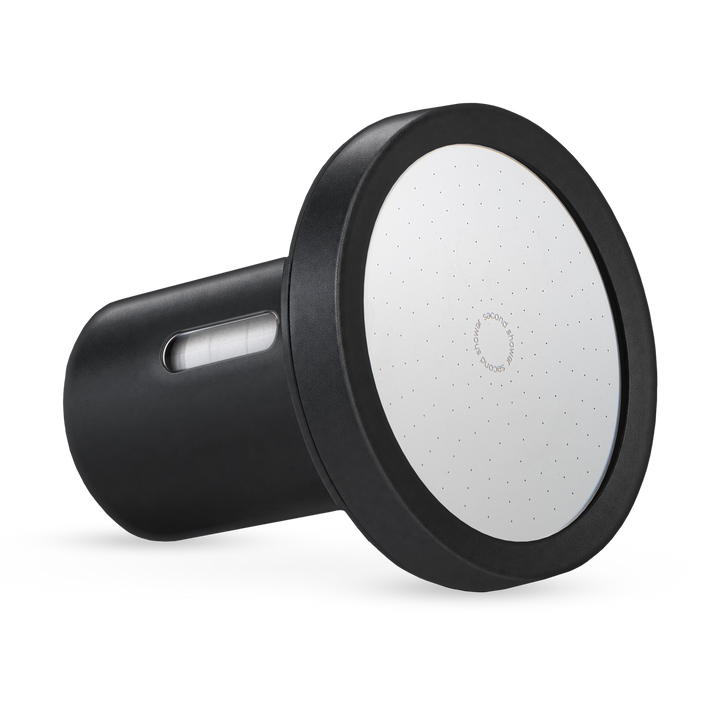
The 176 micro-jet spray plate design (Showerhead model) or 128 micro-jet design (Showerhand model) maintains full water pressure while filtering - a critical practical advantage over cartridge-style filters that restrict flow.
The micro-jets create a fine mist that increases surface area contact with your hair and scalp, improving rinse efficiency so you're not standing under the stream longer trying to remove shampoo residue (which means less total exposure to any trace chlorine that might pass through).
Zero pressure loss means you're more likely to actually use the filter daily instead of removing it on days when you "need good pressure."
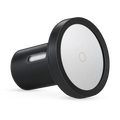
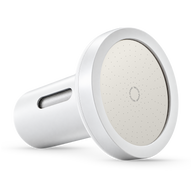
For curly-haired users specifically, the installation simplicity removes a major adoption barrier. The Showerhead model replaces your existing fixed showerhead in 3-5 minutes with zero tools - just hand-tighten onto your existing shower arm. The Showerhand handheld model connects between your existing shower arm and your current showerhead, or replaces a handheld entirely. Both options are renter-friendly and require no landlord permission, plumber, or permanent modification.
This matters because curly hair damage is cumulative and time-sensitive: every shower without protection adds more oxidative stress. The faster you can install protection, the less total damage occurs.
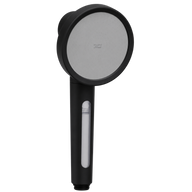
Filter replacement cadence is every 1-2 months depending on your household water chemistry and usage volume. Second Shower's transparent Truth Window on the Showerhand model lets you visually inspect the filter cartridge to see particulate buildup - a clear indicator it's time to replace. For the Showerhead model, set a calendar reminder for 60 days post-installation.
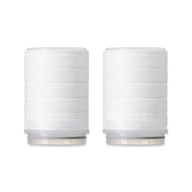
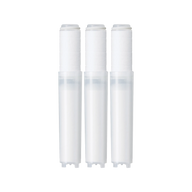
Replacement filters are $39 for a single cartridge or available on subscription (2-pack every 4-6 months for Showerhead, 3-pack every 3-6 months for Showerhand) to ensure you never shower in unfiltered water because you forgot to reorder.
What a Shower Filter Won't Fix
A shower filter removes chlorine, chloramine, heavy metals, and sediment - but it does not soften water by removing dissolved calcium and magnesium minerals.
Hard water requires ion-exchange water softening (the whole-house systems that use salt pellets) to actually remove hardness minerals. Second Shower's sediment filter captures some particulate mineral content and prevents scale buildup in the showerhead itself, but dissolved hardness minerals will still pass through and coat your hair.
If you have extremely hard water (above 15 grains per gallon) and mineral buildup is your primary concern, you need a water softener in addition to a shower filter - or a chelating shampoo to remove mineral deposits after filtering prevents additional chlorine damage.
If your curl loss is due to heat damage from blow dryers or flat irons, hormonal changes (postpartum, thyroid issues, menopause), nutritional deficiencies (iron, biotin, protein), or medical conditions (alopecia, thyroid disorders), a shower filter won't restore your curl pattern. Water chemistry can compound these issues, but it's not the root cause.
If you've ruled out water as a factor (you've tested with a DPD chlorine test kit and confirmed low/no chlorine) and your curls are still flat, consult a dermatologist or trichologist to investigate underlying health factors.
Shower filters also don't address fluoride, nitrates, pharmaceuticals, or microplastics in water. These require reverse osmosis or specialized filtration media not practical in a shower format due to flow rate requirements. If your water source has known contamination beyond chlorine/chloramine (check your utility's Consumer Confidence Report), a shower filter provides partial protection but isn't a substitute for whole-house treatment or point-of-use drinking water filtration.
Finally, realistic expectations on curl restoration: if you've been showering in chlorinated water for years and have significant disulfide bond damage, installing a filter prevents further damage but doesn't repair existing breakage. You'll see the most improvement in new hair growth over 2-4 months as undamaged hair replaces damaged lengths.
Existing damaged hair may need protein treatments (Olaplex, K18, or keratin masks) to temporarily rebuild bonds, or you may need to trim off damaged ends and grow out healthier hair under filtered-water conditions. Protection is immediate, restoration takes time.
Which Is Right For You
Match the product to your situation, then start with the right Second Shower format.
Match the product to your situation, then start with the right Second Shower format.
Next Step
Use a verified product path and track outcomes over the first replacement cycle.
Related Reading
FAQ
How do I know if my water has chlorine or chloramine?
Call your water utility and ask which disinfectant they use, or check your city's Consumer Confidence Report (CCR) published annually online. You can also use a DPD test kit from a pool supply store - add a DPD #1 tablet to a water sample and it turns pink for free chlorine; add both DPD #1 and DPD #3 tablets and if the color intensifies, you have chloramine (total chlorine).
Chloramine often has a distinct sulfur-chemical smell rather than straight "pool" chlorine odor. If you smell sulfur, test for chloramine. If your water utility serves more than 50,000 people, there's a 68% chance they use chloramine because it's more stable in long distribution systems.
Will a shower filter bring my curls back completely?
A shower filter prevents further oxidative damage to your hair's disulfide bonds, which stops additional curl relaxation - but it doesn't repair bonds that are already broken. You'll see the most improvement in new hair growth over 2-4 months as undamaged hair grows in under filtered conditions. For existing damaged lengths, consider protein treatments (Olaplex, K18, Aphogee) to temporarily rebuild bonds, or trim off damaged ends and grow out healthier curl pattern.
Most curly-haired users report noticeable improvement in curl definition and bounce within 2-3 weeks as their hair retains more moisture and the cuticle smooths, even before significant new growth.
How often do I need to replace the Second Shower filter?
Replace the Vitamin C filter cartridge every 1-2 months depending on your water chemistry and household usage. If you have high chlorine/chloramine levels (above 2 ppm) or a multi-person household with heavy shower use, replace closer to 30-45 days. For single-person use in moderate chlorine water, 60 days is typical for the Showerhead model. The Showerhand model has a smaller cartridge and should be replaced every 30-45 days.
Second Shower's Truth Window on the Showerhand lets you visually inspect the filter - when you see heavy discoloration or particulate buildup, it's time to replace. Set a calendar reminder on your phone for 60 days post-installation to ensure you don't forget.
Can I use a shower filter if I rent an apartment?
Yes - Second Shower installs in 3-5 minutes with zero tools and is fully reversible. Simply hand-tighten the Showerhead onto your existing shower arm (after removing your current showerhead), or connect the Showerhand between your shower arm and existing showerhead. No permanent modifications, no landlord permission needed, no plumber required. When you move, unscrew it and reinstall it in your new place. Both models come with universal fittings that work with standard U.S.
shower arms (½-inch NPT threading). This renter-friendly design is why Second Shower is the top-selling filtered showerhead in the apartment/dorm category.
Does Second Shower work on color-treated curly hair?
Yes - in fact, color-treated curly hair benefits even more because chlorine is a bleaching agent that actively strips hair dye molecules from your cortex layer. Independent testing shows chlorine exposure causes color-treated hair to fade 40-60% faster than unfiltered water. Second Shower's Vitamin C neutralization stops this oxidative fading, extending salon color life from 2-3 weeks to 6-8 weeks.
Users with fashion colors (reds, coppers, purples) report the most dramatic improvement because these dye molecules are larger and more vulnerable to oxidation. The vitamin infusion (especially Vitamin E and Panthenol) also supports cuticle smoothness, which helps lock color molecules inside the hair shaft.