The best filtered shower head reduces both chlorine and chloramine at shower flow, publishes its test result, and keeps your pressure. Check those three before design or price.
- More than one in five Americans drink water treated with chloramine; NSF/ANSI 177 covers free chlorine only.
- Year-one cost is the device plus a year of filters.
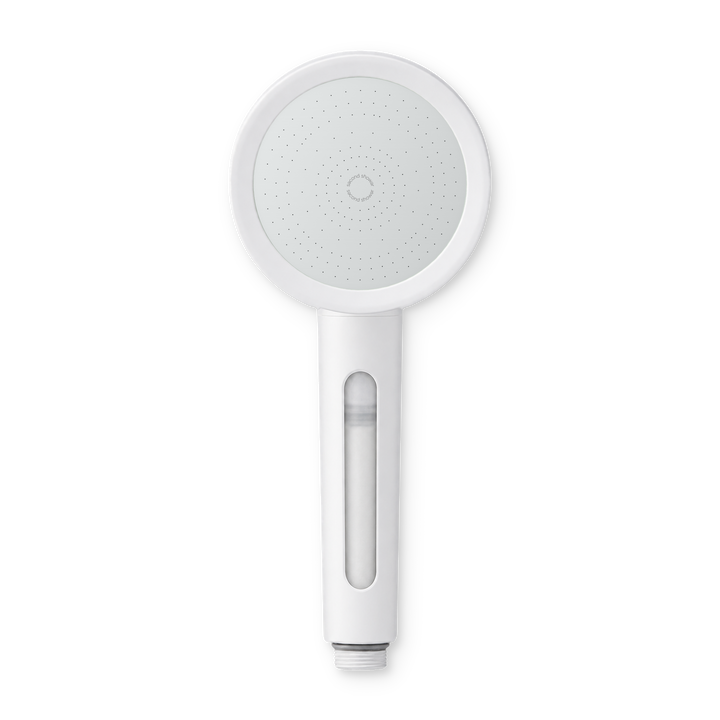
Our pick: the Second Showerhand, $89, or $69 with a filter subscription. Its Vitamin C core reduced free chlorine and chloramine by 99.9% in independent lab testing, held through Day 1-30 in our own testing, with no measurable pressure loss at 40-80 PSI. Prefer a fixed head? The Second Showerhead.

Filtration that fits in your hand. Vitamin C chemistry, zero pressure loss.
- 99.9% of free chlorine and chloramine (independent lab testing)
- Held through Day 1-30 in our own testing
$69 on subs$89 one-time
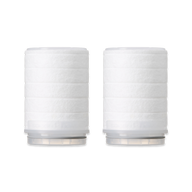
*Micron PP sediment filter certified by NSF/ANSI 42* standards.
The Best Filtered Shower Heads for 2026: Our Pick
For most people, the best filtered shower head in 2026 is the Second Shower Showerhand ($89 retail, $69 on subscription); the fixed-mount pick is the Second Showerhead ($79 on subscription).
For most people, the best filtered shower head in 2026 is the Second Shower Showerhand ($89 retail, $69 on subscription). Three reasons: it is the only handheld here with a published, lab-verified chlorine AND chloramine reduction claim at real shower flow rates, it reduces free chlorine by 99.9% in independent lab testing and held that through its Day 1-30 peak window in our own testing, and its 128 micro-jets filter without the pressure loss that inline cartridges cause.
It is not the right call for everyone. If you want the cheapest working option, Cobbe is the budget pick. If a long warranty and a recycled-material build matter most, Sproos earns a look. If you want a design object for a photographed bathroom, Hello Klean is the prettiest unit in the category.
Below we show our work: the test conditions, the verified numbers, and where each rival honestly beats us.
Showerhand for filtration performance; Cobbe for budget; Sproos for warranty and recycled materials; Hello Klean for looks. The rest of this page is the evidence.
How We Tested (and Who We Are)
First, the disclosure: we make the Showerhand.
First, the disclosure: we make the Showerhand. Read everything here knowing that. We would rather you buy the right product for your situation than our product, so this page names where each rival genuinely wins, and every competitor number is either from the brand's own public product page or clearly attributed testing.
Our own performance numbers come from independent lab clinical testing of the full filter assembly: 15 ppm free chlorine feed water, 105°F water temperature, 2.5 GPM flow. Those are harsher-than-typical conditions on purpose: hot, fast, heavily chlorinated water is the hardest case for any filter media, so numbers earned there hold up in a real shower.
What we evaluated across all six handhelds: filter chemistry and what it can actually neutralize at shower contact times, published certification status (checked against the NSF listing database, not marketing copy), replacement cadence and real yearly cost, flow and spray behavior, and installation for renters.
Our sourcing rules
Competitor specs and prices are MSRP from each brand's public product page, with the capture date noted. Where a brand publishes a performance claim we cannot verify, we quote it as their claim and say so.
We never state a competitor NSF certification that does not appear in the NSF listing database, and we apply the same standard to ourselves: our NSF/ANSI 42* certification covers the micron PP sediment pre-filter component, and our 99.9% reduction figures for free chlorine and chloramine come from independent lab testing, not from the NSF scope; our own testing shows them holding through the cartridge's Day 1-30 peak performance window.
*Micron PP sediment filter certified by NSF/ANSI 42 standards.
We are the maker, the test conditions are public, and every rival number on this page is sourced or labeled as the brand's own claim.
Head-to-Head: Showerhand vs. Cobbe, Hello Klean, Eskiin, MDhair, Sproos
| Product | Price | Filter media | Chloramine answer | NSF status | Refills | Flow | Warranty |
|---|---|---|---|---|---|---|---|
 Second Shower Showerhand |
$89 / $69 sub | Vitamin C ascorbic acid core + NSF/ANSI 42* PP sediment pre-filter (two-stage) | Yes: stoichiometric neutralization, 99.9% (independent lab), held through Day 1-30 (our own testing) | NSF/ANSI 42* (PP sediment component) | $27 per 3-pack, swap monthly | 2.5 GPM, 128 micro-jets (1.8 GPM California version) | 1 year; lifetime with an active filter plan |
| Cobbe | $24-35 (brand site) | KDF-55 + calcium sulfite (per its listing), 6 spray modes | No chloramine claim published | No NSF listing | $12.99, every 2-3 months | Varies by mode | Lifetime (brand site) |
| Hello Klean Shower Head 2.0 | $140 ($112 first order on its refill plan; out of stock Oct 12) | KleanShield: CRS + ADMS + activated carbon fibre | No chloramine claim published (claims 97% chlorine, SGS) | No NSF listing | $40 ($36 sub), every 3-4 months | Not published | 1 year |
| Eskiin Handheld V2 | $169 | Dual stage: carbon fiber layer + base filter | No chloramine claim published | No NSF listing; page says "Meets NSF standards" | $49 ($39 sub), every 90 days | Not published | Lifetime (brand page) |
| MDhair Filtered Showerhead (handheld) | $198 MSRP, shown at $99 promo on every visit | 5-stage: KDF-55, calcium sulfite, tourmaline, ceramic balls, Maifan stone | Claims chloramine (calcium sulfite), no figure | No NSF listing | $32, every 3 months | Not published | Not prominently published |
| Sproos Hand Shower + Filter | $148 | Pre-filter + KDF-55 with calcium sulfite (two-stage) | Filters page claims chloramine, no figure | No NSF listing; brand copy says "Tested to NSF Standards" | $33, 90-day cadence | 3 sprays + pause | 5 years |
*Micron PP sediment filter certified by NSF/ANSI 42 standards.
Sources: Second Shower independent lab clinical testing on file; brand product pages of Sproos, Eskiin, Hello Klean, MDhair and Cobbe, and the NSF listing, all checked October 12, 2026. Competitor prices are the brand's own list prices that day.
Two patterns worth noticing. Three of the five rivals build on KDF-55, whatever the stage count on the box says. Two of them (MDhair and Sproos) now say they address chloramine, but none publishes a chloramine reduction figure, which matters if your city is one of the many US systems that disinfect with chloramine instead of free chlorine.
One product in this table publishes a chloramine reduction figure and its test conditions. That difference is the next section.
Why Most Filtered Handheld Showerheads Fade With Use
KDF-55 is a galvanic copper-zinc media that reduces chlorine through a redox reaction at its surface; activated carbon captures it by adsorption.
Contact time beats stage count
KDF-55 is a galvanic copper-zinc media that reduces chlorine through a redox reaction at its surface; activated carbon captures it by adsorption. Different mechanisms, same constraint: both need seconds of water-to-media contact, and shower water at 2.5 GPM crosses a handheld cartridge in about one second. Adding stages does not add seconds; it just adds backpressure.
KDF media also decays. In our own testing, KDF-55 cartridges lost chlorine reduction as they aged. The unit looks the same in your shower while the media wears down.
Vitamin C works differently. Ascorbic acid neutralizes chlorine through a direct stoichiometric reaction (C₆H₈O₆ + HOCl → C₆H₆O₆ + HCl + H₂O) that completes in milliseconds, independent of contact time. That is why the Showerhand holds 99.9% free chlorine reduction through its Day 1-30 peak window at full 2.5 GPM flow, then declines gradually as the media depletes, which is what the monthly swap cadence is calibrated to.
Chloramine widens the gap. Monochloramine is more stable than free chlorine, and KDF and carbon are largely ineffective against it at shower flow rates. Vitamin C neutralizes it through the same reaction pathway. No other handheld in this comparison publishes a chloramine reduction figure.
Stage count is marketing. Contact-time chemistry and a published decay curve are the two things to actually check.
Deep Dives: Each Handheld, Honestly
Two stages: a micron PP sediment pre-filter for rust and particulates, then a Vitamin C ascorbic acid core that neutralizes free chlorine and chloramine stoichiometrically.

Second Shower Showerhand
Two stages: a micron PP sediment pre-filter for rust and particulates, then a Vitamin C ascorbic acid core that neutralizes free chlorine and chloramine stoichiometrically. The pre-filter is the NSF/ANSI 42* certified component, and independent lab clinical testing at 15 ppm chlorine, 105°F, and 2.5 GPM verified 99.9% free chlorine reduction; our own testing shows it holding through the Day 1-30 peak window.
*Micron PP sediment filter certified by NSF/ANSI 42 standards.
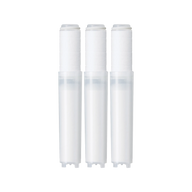
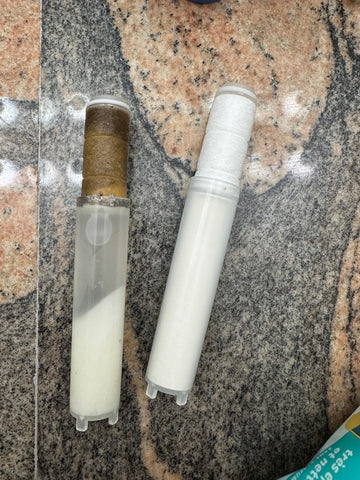
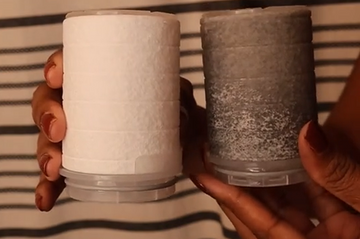
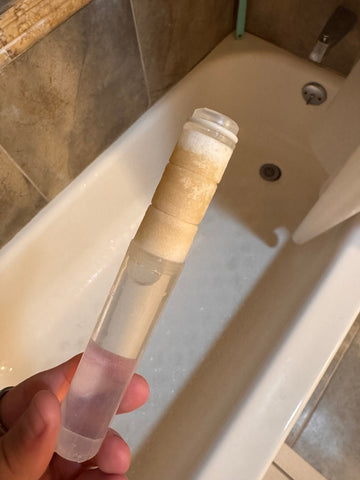
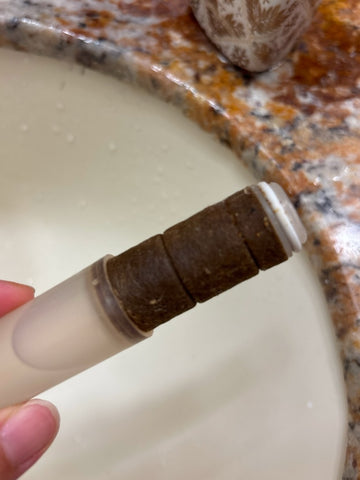
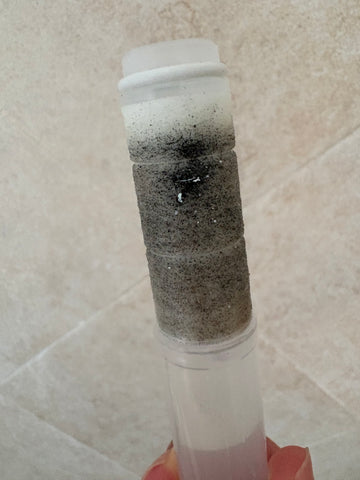
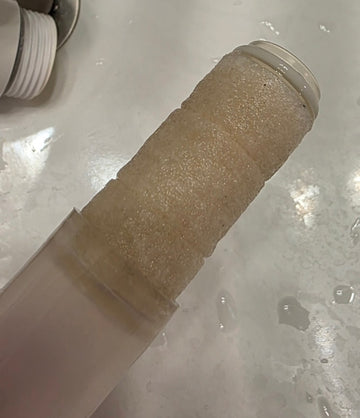
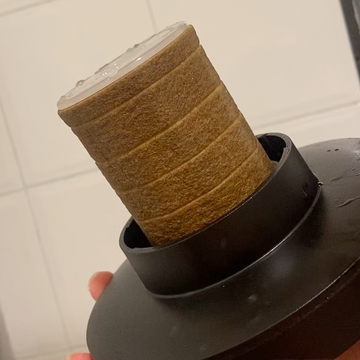
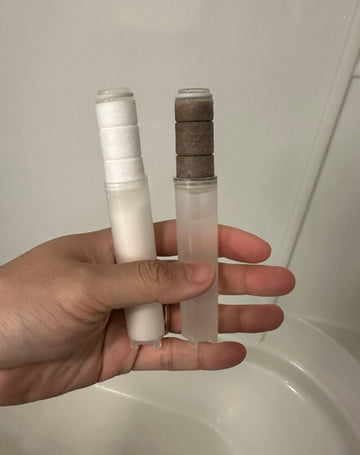
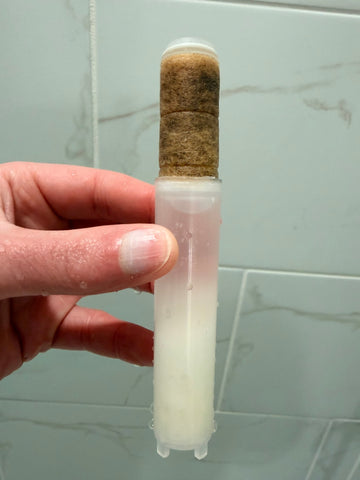
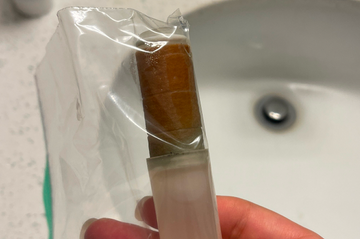
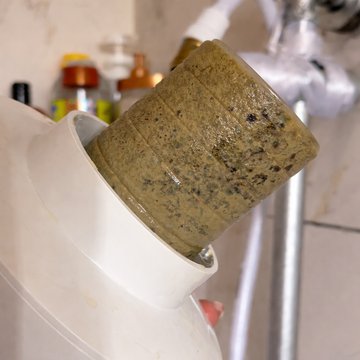
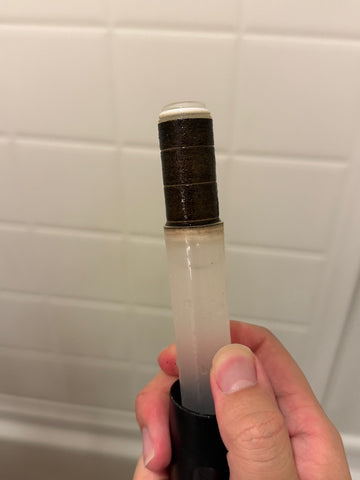
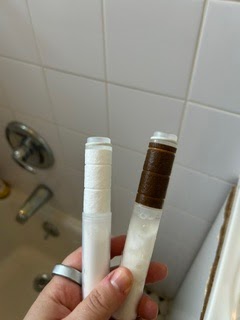
The transparent Truth Window shows what the pre-filter captures. The replacement cues are the 30-day cadence, a noticeable pressure drop, and the lower-chamber Vitamin C powder turning clear. Install is tool-free and reversible, which makes it the renter's default.
- Only handheld here with a published chloramine reduction figure
- 99.9% free chlorine reduction through the Day 1-30 peak window, at full flow
- 128 micro-jets: filtration without pressure loss
- NSF/ANSI 42* certified sediment component + published full-assembly lab conditions
- Year 1 at $177 on the filter plan (current refill schedule)
- Lifetime device warranty while a filter plan is active (1 year otherwise; filters excluded)
*Micron PP sediment filter certified by NSF/ANSI 42 standards.
- Monthly cartridge swap is the shortest cadence in this comparison
- One spray pattern; Cobbe gives you six, Sproos three plus pause
- The $69 device price and the $177 Year 1 figure need the filter plan; retail is $89
The short cadence is the honest cost of chemistry that actually depletes as it neutralizes.
Cobbe Filtered Handheld
The budget Amazon-channel option. Its listing names KDF-55 and calcium sulfite as the media, and the brand publishes no chloramine claim and no decay curve. The filter has no NSF listing; the brand site offers a lifetime warranty.
- Lowest cost of ownership in this comparison by a wide margin
- Six spray modes if you want variety
- Cheap, widely available refills
- No published chloramine answer
- No NSF listing for the filter itself
- No published performance-over-time data
If your city runs modest free chlorine and the budget is the budget, this is the defensible cheap pick. Just know what you are not getting data on.
Hello Klean Shower Head 2.0
The design-led pick, sold through beauty channels. Its 2.0 spec lists KleanShield media (CRS, ADMS and activated carbon fibre) and claims 97% chlorine reduction in SGS testing across 10,000 litres, while a general FAQ on the same page lists carbon, calcium sulphite and KDF media, so it is unclear which applies. No NSF listing, no chloramine claim.
- The best-looking unit in the category, full stop
- Beauty-retail availability and packaging that gifts well
- ~$184-220 Year 1 on its refill plan
- Its own page gives two different media lists
- No NSF listing, no published chloramine answer
You pay more than our Year 1 for finish. If the bathroom is part of your work, that can be a rational trade.
Eskiin Handheld V2
Sold as a dual-stage handheld: a carbon fiber layer and a base filter. The handheld page says it "meets NSF standards"; NSF's listing does not include it, and meeting a standard is not a listing. It publishes no chlorine or chloramine reduction figure.
- Big creator community and polished onboarding content
- Lifetime warranty on the brand page
- ~$256-316 Year 1, the top of this field
- No published chlorine reduction figure
- No published chloramine answer
If brand community is part of what you are buying, Eskiin delivers that. The filter itself publishes no reduction figure to compare.
MDhair Filtered Showerhead (handheld)
Positioned as dermatologist-formulated and sold alongside MDhair's regrowth line. The handheld uses a 5-stage stack (KDF-55, calcium sulfite, tourmaline, silver-ion ceramic balls and Maifan stone) and says its calcium sulfite targets chlorine and chloramine, without a published reduction figure. Note the pricing pattern: the $198 MSRP appears next to a $99 price on every visit, so treat $99 as the real price. No NSF listing; the page says it "meets NSF standards".
- One-brand routine if you already use MDhair's hair system
- Fewer swaps than the Showerhand's monthly cadence (3-month brand interval)
- ~$171-195 Year 1 once refills are counted
- Permanent-promo pricing makes the "sale" framing hollow
- Chloramine claim with no published figure
Buy it for ecosystem convenience, not for the stage count. Five stages face the same one-second contact window as two.
Sproos Hand Shower + Filter
The sustainability pick: 50% post-consumer recycled plastic, no chrome plating, and a 70-inch hose. On performance, Sproos says the filter removes 85% of chlorine "throughout its lifespan," attributed to third-party testing. Respect for publishing a sub-100% number; most brands would not.
- 5-year warranty
- Recycled-material build
- Transparent, modest performance claim
- ~$247 Year 1 for KDF-family chemistry
- Chloramine claim with no published figure
If warranty length and recycled materials are your top criteria, Sproos is the honest pick in the KDF field. The chemistry ceiling is still the chemistry ceiling.
Sources: brand product pages and the NSF listing, checked October 12, 2026; Second Shower independent lab clinical testing on file. Year 1 math is shown in the cost section below.
Five rivals, mostly KDF-55 or carbon media, and one Vitamin C system. Pick by what you value: price (Cobbe), warranty (Sproos), looks (Hello Klean), ecosystem (MDhair), community (Eskiin), or chemistry with published conditions (Showerhand).
What Switchers Say
Verified customers, quoted by location and day of use.
Verified customers, quoted by location and day of use. The dirty-filter reveal is the moment most people stop being skeptical.
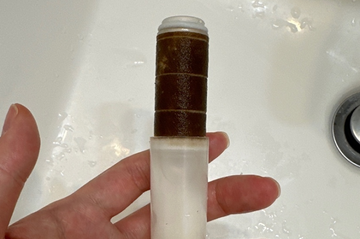
"We put it on before bringing the baby home. Two weeks later the inside was brown, which was honestly kind of gross."
"Wasn't totally sold at first. Then I opened it up after a couple weeks and yeah, it was not clean."
"My arms usually get itchy after hot showers. It's not gone, but the flare-ups have been way calmer lately."
The Truth Window makes the filter's work visible. What it catches would otherwise have ended up on your skin and hair.
What Each Handheld Really Costs Per Year
Sticker price is the smallest part of the math.
Sticker price is the smallest part of the math. Year 1 below is device plus a year of replacement filters at each brand's published cadence and list price, checked October 12, 2026. Bars are scaled to the most expensive option.
How each number is calculated
Showerhand: $69 device on the filter plan + four $27 3-packs in the first year (first refill after one month, then every three months) = $177 ($205 buying the same packs one-time with the $89 device). Cobbe: $24-35 device + three to five $12.99 refills on its 2-3 month cadence = ~$63-100. MDhair: $99 device + three $32 refills on its 3-month cadence = ~$195 (~$171 with its 3-pack). Hello Klean: $112 device on its refill plan + two to three $36 refills on its 3-4 month cadence = ~$184-220. Sproos: $148 device + three $33 refills on its 90-day cadence = ~$247. Eskiin: $139 device with subscription + three $39 refills = ~$256, or $169 + three $49 refills = ~$316.
Each brand's included first filter covers the start of the year; tax and shipping are excluded. Prices are the brands' own list prices on October 12, 2026; promos move.
Cheapest is not most-filtration-per-dollar. Cobbe wins the price row while publishing no chloramine answer and no decay data. The Showerhand lands in the middle of this field while being the only unit here with a published chloramine reduction figure and published lab conditions.
Budget pick: Cobbe. Performance-per-dollar pick: Showerhand at $177 on the filter plan.
What About Hard Water?
If you searched for "filtered handheld showerhead for hard water," here is the honest answer: no shower filter softens water, ours included.
If you searched for "filtered handheld showerhead for hard water," here is the honest answer: no shower filter softens water, ours included. And softening is not a skin treatment either: the SWET trial (2011) installed ion-exchange softeners for 336 children with established eczema in hard-water areas and found no improvement in symptoms after 12 weeks.
What does damage skin is chlorine, the oxidizing disinfectant added to municipal water, and chloramine, its more stable cousin. Those are the variables a filtered handheld can actually change, and the ones worth paying for.
Want to check your own water? A hardness test strip tells you about scale; a TDS meter reads total dissolved solids. Neither measures chlorine or chloramine, the variables a shower filter actually addresses. Read the full breakdown: Best Shower Filter for Hard Water (2026): What Actually Helps.
Buy a softener for scale on fixtures. Buy a filter for chlorine and chloramine on skin and hair. No single device does both.
Which Filtered Handheld Should You Buy?
Skip us if you refuse a monthly filter swap: our peak window is real but short, and the honest trade for stoichiometric chemistry is cadence.
Who Should Skip the Showerhand
Skip us if you refuse a monthly filter swap: our peak window is real but short, and the honest trade for stoichiometric chemistry is cadence. Skip us if you want multiple spray modes; the Showerhand runs one optimized micro-jet pattern. And skip every product on this page if your actual problem is scale on glass, because that is a softener job, not a filter job.
Match the tool to the problem. For water chemistry on skin and hair, the Showerhand is the strongest case on this page; for budget, water savings, or aesthetics, we just told you who beats us.
Related Reading
FAQ: Filtered Handheld Showerheads
Does a filtered handheld remove heavy metals like lead?
The Showerhand's independent lab testing confirmed heavy metal removal from filtered water, alongside its chlorine and chloramine results. But shower lead exposure is mainly an ingestion concern, not a skin one. If lead is your worry, test your tap and treat drinking water first.
Will a filtered handheld help with hard water buildup?
No, and it does not need to. The SWET trial found that softening did not improve established childhood eczema, and the scale you see on glass and fixtures is a cleaning problem, not a filtration one. Chlorine and chloramine are the variables a shower filter can actually change, and those are what the Vitamin C core neutralizes.
How often do I replace the Showerhand filter?
Swap monthly for peak performance: independent lab testing shows 99.9% free chlorine and chloramine reduction, and our own testing shows it holding through the Day 1-30 peak window, with a gradual decline after. A $27 3-pack covers about three months, and the transparent Truth Window shows you what the cartridge has caught.
Does it work with low water pressure?
Yes. The 128 micro-jets are designed to improve perceived pressure even in low-flow buildings, and filtration happens without the flow restriction that dense KDF cartridges cause. A 1.8 GPM version is available for California.
Do I replace the whole unit or just the filter?
Just the cartridge. The body and micro-jet faceplate are a one-time purchase; cartridges snap in and out without tools. Installation is equally tool-free, which is why this category is the renter favorite.
Is the Second Shower Showerhand NSF certified?
Its micron PP sediment pre-filter component is certified to NSF/ANSI 42* standards. The 99.9% chlorine and chloramine reduction figures come from separate independent lab clinical testing of the full assembly; our own testing shows them holding through the cartridge's Day 1-30 peak performance window. No handheld in this comparison holds a full-assembly NSF listing, and "tested to NSF standards" wording from any brand, including claims like Eskiin's or Sproos's, is not the same thing as an NSF certification.
*Micron PP sediment filter certified by NSF/ANSI 42 standards.