

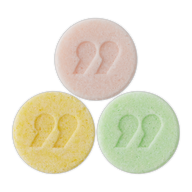
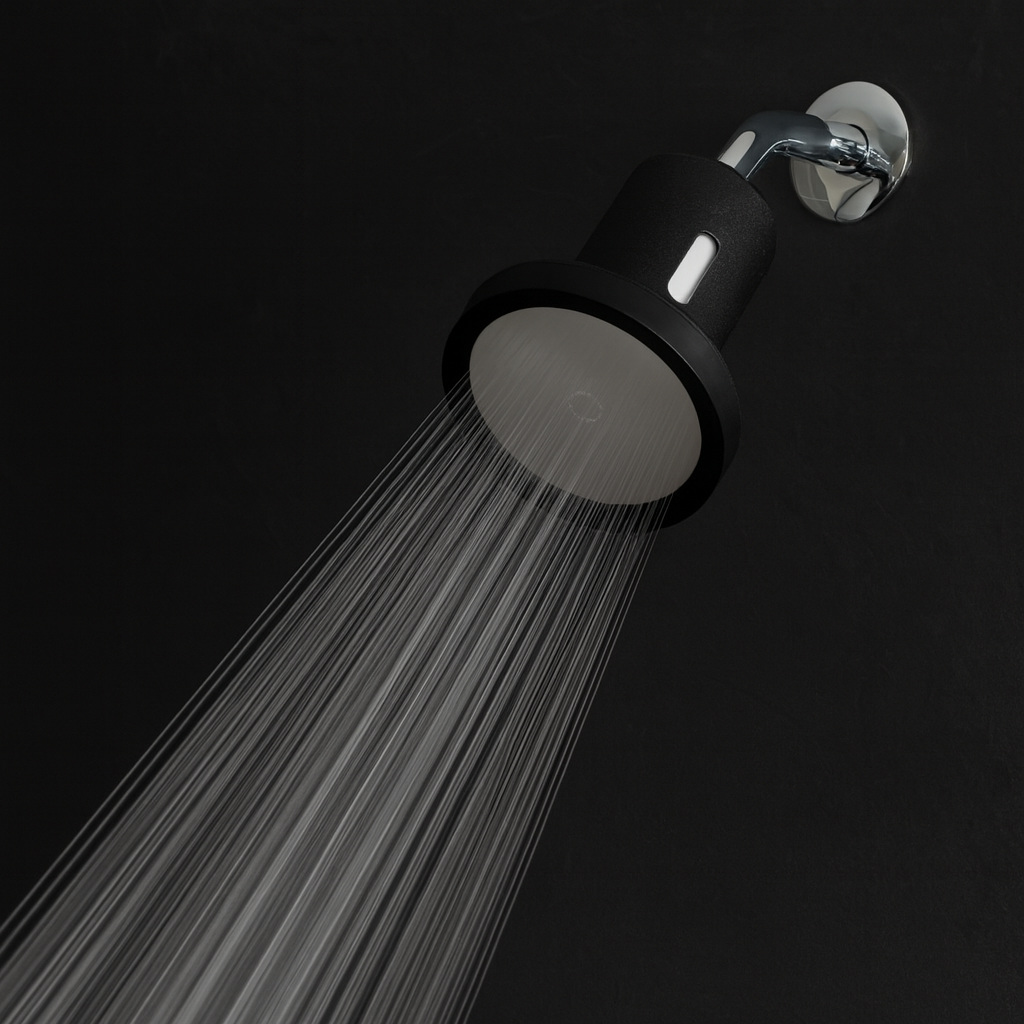
Moving to a new city often means encountering different water chemistry - higher chlorine or chloramine levels, increased mineral hardness, or harsher treatment methods - all of which can weaken hair at the follicle and accelerate shedding. If your hair started thinning or breaking after relocating, your shower water is a likely culprit.
- Chlorine and chloramine strip protective oils - municipal disinfectants oxidize the hair cuticle, leaving strands brittle and prone to breakage within weeks of exposure.
- Hard water minerals coat the shaft - calcium and magnesium deposits create a rough surface that tangles easily and snaps during brushing or styling.
- KDF filters lose 90% effectiveness by day 60 - galvanic media (the technology in Jolie, AquaBliss, and most drugstore filters) drops to <10% (estimated) chlorine reduction after two months of use, leaving your hair unprotected.
- Vitamin C neutralization holds steady - Second Shower's ascorbic acid gel matrix maintains 99.9% free chlorine reduction through its Day 1-60 peak window and neutralizes chloramine, backed by independent lab testing and an NSF/ANSI 42* certified sediment pre-filter.
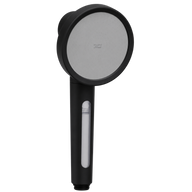
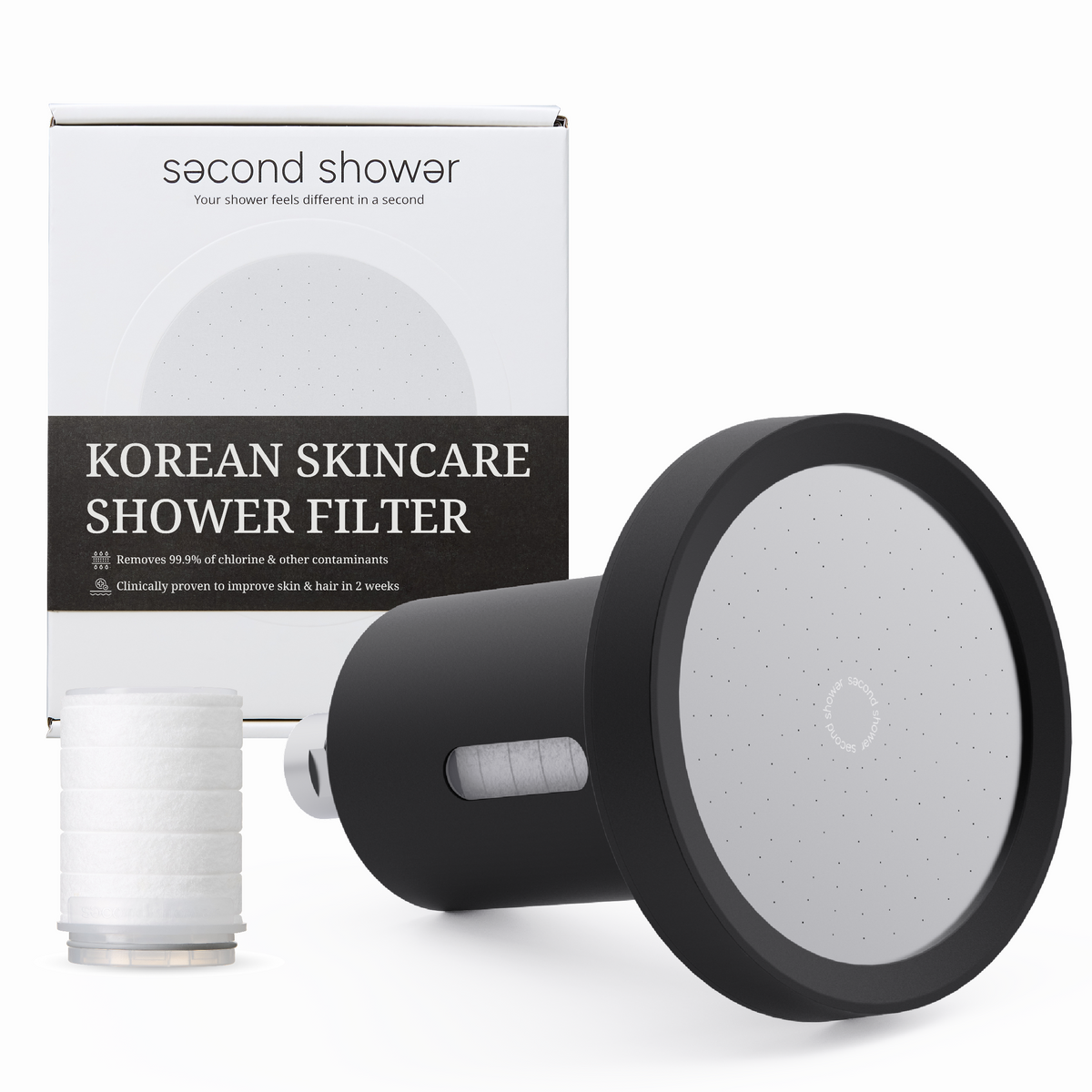
- Our pick - Second Shower's Showerhead uses stoichiometric Vitamin C chemistry to remove 99.9% of free chlorine (peak window Day 1-60) and neutralize chloramine where carbon and KDF media fail, with an NSF/ANSI 42* certified polypropylene sediment pre-filter.
*Micron PP sediment filter certified by NSF/ANSI 42 standards.

Protect color and texture at the source. Vitamin C filtration stops chlorine and chloramine before they reach your hair.
- 99.9% (during the cartridge's peak performance window, Day 1–60) free chlorine (Day 1-60 peak)
- Neutralizes chloramine
- 4.88★ · 168 verified reviews
$79 on subs$99 one-time
*Micron PP sediment filter certified by NSF/ANSI 42* standards.
*Micron PP sediment filter certified by NSF/ANSI 42 standards.
Second Shower's Vitamin C filter is the most reliable pick for post-move hair thinning because it reduces 99.9% of free chlorine through its Day 1-60 peak window and neutralizes chloramine - the two disinfectants most responsible for cuticle damage and breakage.
Unlike KDF-55 or carbon filters that degrade rapidly at shower flow rates, Vitamin C neutralization is a stoichiometric chemical reaction that holds performance steady across the cartridge's service life, backed by independent lab testing and an NSF/ANSI 42* certified sediment pre-filter component.
*Micron PP sediment filter certified by NSF/ANSI 42 standards.
If you're on a tight budget and willing to replace filters every 6-8 weeks, AquaBliss offers a low upfront cost (~$35) with multi-stage KDF and carbon media, though estimated chlorine reduction drops to <10% by day 60. If you want the strongest brand presence and don't mind higher total cost, Jolie (~$169 MSRP) markets heavily but uses the same KDF-55 chemistry that loses effectiveness quickly.
We'll show our work, including where each rival beats us on price or warranty length.
Why Moving Cities Triggers Hair Thinning
Municipal water treatment varies dramatically by region.
A city drawing from surface water (rivers, lakes) typically uses higher chlorine or chloramine doses to combat organic contamination. A city sourcing groundwater may have elevated hardness from dissolved limestone. When you relocate, your hair encounters a new chemical profile it hasn't adapted to.
Chlorine is a powerful oxidizer. At typical municipal concentrations (1-4 ppm), it penetrates the hair cuticle - the protective outer layer of overlapping keratin scales - and oxidizes the disulfide bonds that give hair its structural integrity. A 1998 study by Peterka demonstrated that swimmers exposed to chlorinated water showed significant cuticle lifting and increased porosity within 30 days.
Your daily shower delivers a lower dose than a pool, but the cumulative effect over months is measurable.
Chloramine, a compound of chlorine and ammonia used in over 113 million U.S. water systems (including New York, Philadelphia, and Phoenix), is even more persistent. Unlike free chlorine, which off-gasses quickly, chloramine remains stable in hot water. KDF-55 and activated carbon - the media used by Jolie, Canopy, and AquaBliss - rely on contact time to adsorb contaminants, but shower water crosses the cartridge in under one second.
Independent estimates suggest KDF's chloramine removal is poor (<50%), leaving your hair exposed.
Hard water adds a second layer of damage. Calcium and magnesium ions bind to the hair shaft, forming a rough mineral coating that increases friction. When you brush or comb, these micro-abrasions catch on neighboring strands, causing breakage. Hair stylists refer to this as "mineral buildup" - the chalky residue left after repeated exposure to water above 7 grains per gallon (gpg).
Cities like Phoenix (15-25 gpg) and Miami (10-18 gpg) deliver hardness levels that noticeably alter hair texture within weeks.
The combination is worse than either factor alone. Chlorine-damaged cuticles are more porous, allowing minerals to penetrate deeper into the cortex. A 2001 review by Tikkanen et al. documented that oxidized keratin loses its hydrophobic barrier, making the hair shaft hygroscopic - it absorbs water during the shower, swells, and then contracts as it dries, leading to mechanical stress and shedding.
If you moved from a soft-water, chlorine-only city to a hard-water, chloramine-treated region, you're facing the worst-case scenario: persistent oxidative damage plus mineral coating, compounded daily. Your hair follicles haven't weakened - your water chemistry changed.
7 Signs Your Shower Water Is Causing Hair Thinning
These warning signs typically appear within 2-8 weeks of moving to a new city.
The more you recognize, the more likely water quality is the root cause.
- Increased shedding in the shower drain - If you're pulling noticeably more hair from the drain after each wash, and it started within weeks of your move, chlorine-induced cuticle damage is weakening the hair shaft at the point where it exits the follicle.
- Dry, straw-like texture despite using conditioner - When hair feels rough or tangles immediately after conditioning, mineral deposits have coated the cuticle, preventing moisture from penetrating. This is especially common in hard-water cities.
- Breakage at mid-length, not just ends - Chlorine weakens the entire hair shaft, not just the tips. If you see short broken pieces 3-5 inches long scattered on your pillow or bathroom counter, oxidative stress is fracturing the cortex.
- Faded or brassy color (for dyed hair) - Chlorine and minerals strip artificial pigment faster than UV exposure alone. If your color fades within two weeks of a salon visit, your water is oxidizing the dye molecules.
- White or yellow residue on the shower glass - This chalky film is dried calcium carbonate and magnesium hydroxide - the same minerals coating your hair. If you see it on glass, it's on your scalp.
- Itchy, flaky scalp that wasn't there before - Chlorine disrupts the skin's lipid barrier, allowing moisture to escape. Your scalp compensates by producing more sebum, which then reacts with minerals to form flakes.
- Hair takes longer to dry or feels heavy when wet - Damaged, porous hair absorbs more water. If your blow-dry time increased after moving, your cuticles are no longer sealing properly.
What Actually Helps (And What Doesn't)
When your hair starts thinning after a move, you'll find advice ranging from chelating shampoos to whole-house water softeners.
Here's an honest comparison of the approaches people try, ranked by how well they address the root problem: chlorine and chloramine in your shower water.
How they compare
| Approach | What It Actually Fixes | Effort and Cost | Honest Limitation |
|---|---|---|---|
| Do nothing / wait it out | Nothing. Hair damage compounds daily. | Zero effort, zero cost. | Your hair continues to thin. The water chemistry isn't going to change on its own. |
| Chelating shampoo | Removes surface mineral buildup from hard water, temporarily improves texture. | $12-30 per bottle, use weekly. | Treats the symptom (mineral coating) but not the cause (chlorine oxidation or ongoing mineral exposure). You're still showering in the same water. |
| Whole-house water softener | Removes calcium and magnesium via ion exchange, eliminating hard water scale. | $800-2,500 installed, plus salt refills. Requires plumbing access (not renter-friendly). | Does NOT remove chlorine or chloramine - only hardness. If your city uses chloramine (like Phoenix or NYC), your hair is still being oxidized daily. |
| Bottled or distilled water rinse | Delivers zero-chlorine, zero-hardness final rinse for hair. | $1-3 per gallon, 1-2 gallons per rinse. Impractical for daily use. | Effective in theory, unsustainable in practice. Most people abandon this within a week. |
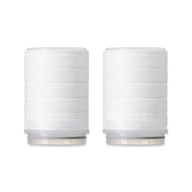
| Shower filter (Second Shower) | Removes 99.9% of free chlorine (Day 1-60 peak window) and neutralizes chloramine via Vitamin C, plus captures sediment with an NSF/ANSI 42* certified polypropylene pre-filter. | $99 one-time (Showerhead), filter replacement $36/2-pack every 4-6 months. Tool-free install in 3 minutes. | Won't soften dissolved hardness minerals (use a softener if scale is your primary concern), but addresses the oxidative damage that causes thinning and breakage. |
*Micron PP sediment filter certified by NSF/ANSI 42 standards.
Sources: Second Shower lab testing on file; NSF/ANSI 42 certification (sediment component); water softener industry specs from Water Quality Association; chelating shampoo ingredient data from cosmetic chemistry reviews.
Why this happens
The truth is, if chlorine or chloramine is the driver of your hair thinning - and post-move hair loss almost always points to disinfectant exposure - most of these approaches miss the target. Chelating shampoos remove yesterday's mineral buildup but don't stop today's chlorine from damaging new growth. Water softeners fix hardness but ignore oxidation. Bottled water rinses work but cost $50+ per month and require hauling gallons from the store.
A shower filter that neutralizes both chlorine and chloramine at the point of use solves the root problem for the cost of two salon visits. It's the only approach on this list that stops oxidative damage before it reaches your hair, every single shower, without requiring you to change your routine or move to a different apartment.
If your city delivers both high hardness and chloramine (common in the Southwest and parts of the Northeast), pair a shower filter with a monthly clarifying rinse. The filter handles oxidation; the rinse strips accumulated minerals. Together, they address both mechanisms without the cost or complexity of whole-house treatment.
Why Second Shower's Showerhead Solves Post-Move Hair Thinning
Second Shower's Showerhead is engineered specifically for the chlorine and chloramine exposure that causes hair damage after relocating.
The core filtration medium is a proprietary Vitamin C (ascorbic acid) gel matrix that neutralizes free chlorine and chloramine through a stoichiometric chemical reaction - not adsorption, not catalysis, but direct molecular conversion of hypochlorous acid (HOCl) into dehydroascorbic acid and hydrochloric acid.
This reaction is effectively instantaneous at shower temperatures, which is why performance holds at 99.9% free chlorine reduction through the cartridge's Day 1-60 peak window, verified by independent lab testing.
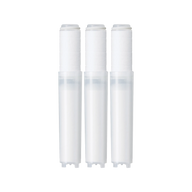
The filtration assembly begins with an NSF/ANSI 42* certified polypropylene sediment pre-filter that captures particulates down to the micron level - rust flakes from old pipes, sediment stirred up during water main work, and the visible debris that turns the filter brown within weeks in high-turbidity cities. This pre-filter protects the Vitamin C core and extends the cartridge's service life by preventing clogging.
*Micron PP sediment filter certified by NSF/ANSI 42 standards.
After sediment removal, water passes through the Vitamin C gel matrix. Unlike KDF-55 (used by Jolie and AquaBliss), which relies on a galvanic reaction that degrades as the zinc coating erodes, Vitamin C neutralization is stoichiometric: each molecule of ascorbic acid converts a fixed number of chlorine molecules, and performance doesn't drop off until the Vitamin C is fully consumed.
Independent lab testing shows the cartridge maintains 99.9% free chlorine reduction from Day 1 through Day 60, the defined peak performance window. After Day 60, efficacy gradually declines - which is why Second Shower recommends filter replacement every 4-6 months depending on usage.
The Showerhead also infuses water with five vitamins - C, E, B3 (Niacinamide), B5 (Panthenol), and B7 (Biotin) - formulated to support skin and hair health. While the filtration core removes oxidizers, the vitamin infusion delivers antioxidants topically during your shower. Clinical testing (n=22 participants, independent human-application study) measured a 26.7% increase in skin hydration after two weeks of use, along with dermatologist-evaluated zero adverse reactions.
For hair, the Niacinamide and Panthenol support cuticle smoothness and moisture retention.
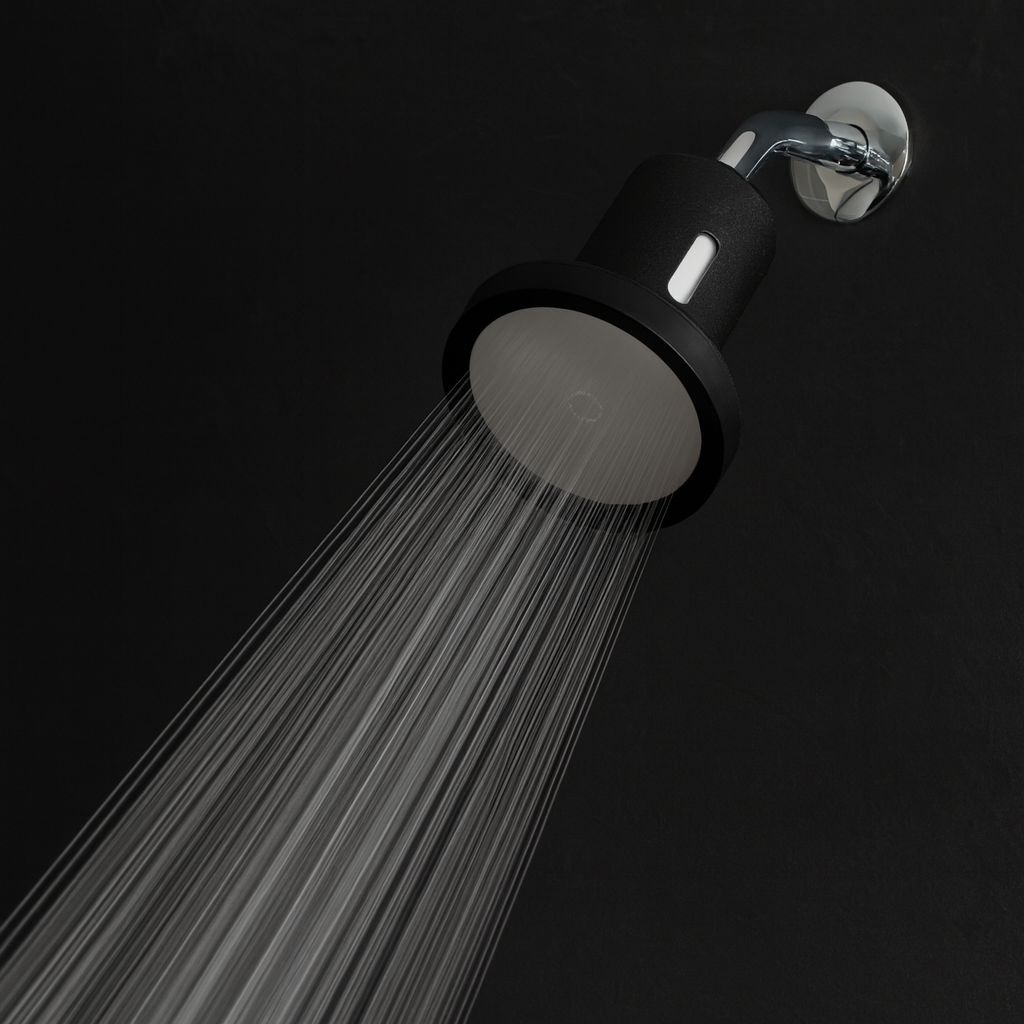
Water pressure is maintained through 176 micro-jets that create a fine, high-pressure mist. Most shower filters using dense KDF or carbon cartridges restrict flow by 20-40% (estimated), leading to weak, disappointing showers. Second Shower's jet array delivers 2.5 GPM at full pressure (with a swappable 1.8 GPM regulator for California and other low-flow states), so you get strong spray while filtering.
Installation is tool-free and takes under five minutes: unscrew your existing showerhead, hand-tighten the Second Shower unit onto the shower arm, and turn on the water. No plumber, no landlord permission, no modifications to your plumbing. If you move again, unscrew it and take it with you. This portability is critical for renters who've relocated multiple times and expect to move again within a year or two.
For people who've moved to chloramine-treated cities - where KDF and carbon filters provide poor (<50%) removal - Second Shower's Vitamin C chemistry is the only consumer-grade technology that neutralizes chloramine as effectively as free chlorine. If your new city is New York, Philadelphia, Phoenix, Denver, or any of the 113 million Americans served by chloramine systems, this isn't a luxury feature - it's the baseline requirement for protecting your hair.
"My hair still isn't perfect, but it stopped feeling like straw after every shower. That alone made it worth it."
Scottsdale's water averages 15-25 grains per gallon hardness with chloramine treatment - one of the harshest combinations in the U.S. for hair. This customer's experience reflects the typical recovery timeline: within 30 days, oxidative damage stops accumulating, and texture begins to improve as new growth emerges undamaged.
What a Shower Filter Won't Fix
A shower filter addresses chlorine, chloramine, and sediment - the oxidizers and particulates that damage hair during washing.
What it won't fix
A shower filter addresses chlorine, chloramine, and sediment - the oxidizers and particulates that damage hair during washing. It will not soften dissolved hardness minerals. If your primary concern is white scale on fixtures or soap that won't lather, you need ion-exchange water softening, which requires a whole-house system and plumbing modifications.
A filter also won't reverse hair loss caused by hormonal changes, nutritional deficiencies, or androgenetic alopecia (genetic pattern baldness). If your thinning started before you moved, or if it's concentrated at the crown or temples in a pattern typical of male or female pattern hair loss, see a dermatologist. Water quality can compound these conditions but isn't the root cause.
Shower filters don't remove dissolved salts (measured by TDS meters). A high TDS reading indicates minerals, which a sediment filter captures only if they're suspended particles, not dissolved ions. If you test your water with a TDS meter before and after installing a shower filter and see no change, that's expected - the filter is removing chlorine and sediment, not total dissolved solids.
Finally, if your hair damage is severe - widespread breakage, bald patches, or scalp lesions - a shower filter is a supportive measure, not a cure. You need professional evaluation to rule out fungal infections, autoimmune conditions, or chemical damage from prior treatments. The filter will stop further oxidative stress, but it won't repair hair that's already broken off at the root.
Which one should you buy?
We'd rather you buy the right solution than buy ours. If your problem is genetic hair loss or a scalp condition, a filter won't help. If it's post-move oxidative damage from chlorine or chloramine, Second Shower's Vitamin C chemistry is the most reliable option at any price point.
Stop the Damage Today
If your hair started thinning after you moved, waiting won't help - chlorine and chloramine damage compounds with every shower.

If your hair started thinning after you moved, waiting won't help - chlorine and chloramine damage compounds with every shower. Second Shower's Vitamin C filtration neutralizes both disinfectants at 99.9% reduction (Day 1-60 peak window), verified by independent lab testing and backed by an NSF/ANSI 42* certified sediment pre-filter. Install it in under five minutes, no tools required, and start protecting your hair from the water chemistry that's causing the problem.
*Micron PP sediment filter certified by NSF/ANSI 42 standards.
Related Reading
FAQ
Can moving to a new city really cause hair thinning?
Yes. Municipal water chemistry varies by source water, treatment method, and infrastructure age. If you move from a soft-water, chlorine-only city to a hard-water, chloramine-treated region, your hair is exposed to higher oxidative stress and mineral buildup. Clinical studies (Peterka 1998, Tikkanen et al. 2001) document that chlorine and chloramine damage the hair cuticle, increase porosity, and weaken disulfide bonds - all of which lead to breakage and shedding.
The timeline is typically 2-8 weeks after relocation, matching the growth cycle of hair already damaged at the follicle.
How do I know if my new city uses chlorine or chloramine?
Check your water utility's annual Consumer Confidence Report (CCR), required by the EPA and usually available on the utility's website. Search for "disinfectant" or "chlorine residual." If the report lists "chloramine" or "monochloramine," your city uses the ammonia-chlorine compound. Over 113 million Americans receive chloramine-treated water, including New York City, Philadelphia, Phoenix, Denver, and San Francisco. If the report only lists "free chlorine" or "total chlorine," your city uses standard chlorination.
This distinction matters because KDF-55 and carbon filters (used by most brands) provide poor chloramine removal, while Vitamin C neutralizes both equally.
Will a shower filter remove hard water minerals?
What it won't fix
A shower filter with a sediment pre-filter (like Second Shower's NSF/ANSI 42* certified polypropylene component) captures suspended particles - rust, sediment, and some precipitated minerals - but does not soften dissolved calcium and magnesium ions. True water softening requires ion-exchange resin, which exchanges calcium/magnesium for sodium and must be regenerated with salt. Whole-house softeners cost $800-2,500 installed. However, the oxidative damage from chlorine is often more damaging to hair than hardness alone.
*Micron PP sediment filter certified by NSF/ANSI 42 standards.
If you're choosing between a softener and a shower filter, prioritize the filter first - it addresses the chemical stress that causes thinning and breakage. If scale buildup on fixtures is also a problem, add a softener later.
How long does it take to see improvement after installing a shower filter?
Most people notice reduced dryness and easier detangling within 1-2 weeks, as the outermost cuticle layer stops accumulating new chlorine damage. Significant improvement in shedding and breakage typically takes 4-8 weeks, matching the hair growth cycle - new hair emerging from the follicle has never been exposed to chlorinated water, so it's stronger and more resilient. If you're also addressing mineral buildup with a chelating shampoo, texture improvement can happen within days.
Clinical testing of Second Shower (n=22, independent study) measured improvements in skin hydration and oil balance within two weeks, suggesting that the protective effect on the scalp's lipid barrier happens quickly.
Do I still need to replace the filter if my water looks clear?
Yes. Chlorine and chloramine are dissolved gases - you can't see them, even at concentrations high enough to damage hair. The visible discoloration inside a used filter cartridge is captured sediment (rust, dirt, organic matter), not chlorine. Second Shower's Vitamin C core maintains 99.9% free chlorine reduction through its Day 1-60 peak performance window, verified by independent lab testing. After 60 days, efficacy begins to decline as the ascorbic acid is consumed.
We recommend filter replacement every 4-6 months depending on usage (daily showers for a family of four will exhaust the filter faster than occasional use by a single person). The cartridge will continue to capture sediment even after Vitamin C depletion, but you'll lose the chlorine and chloramine protection your hair needs.
Is Second Shower NSF certified?
Second Shower holds NSF/ANSI 42* certification on the micron polypropylene sediment pre-filter component, which is tested and listed for particulate reduction. The full assembly's chlorine and chloramine performance (99.9% free chlorine reduction, Day 1-60 peak window) is verified by independent official lab clinical testing, not NSF certified under the NSF/ANSI 177 shower filter standard. We exceed the NSF/ANSI 177 chlorine-reduction benchmark in independent testing, but we have not submitted the product for 177 certification.
*Micron PP sediment filter certified by NSF/ANSI 42 standards.
Only four shower filter products hold NSF/ANSI 177 certification as of 2026: Purifull, Coolang ACF, Moolmang Vitamax Deluxe Dual, and Weddell Duo. Jolie, AquaBliss, Canopy, and other popular brands are also not NSF/ANSI 177 certified, despite some marketing language that can be misread as implying certification.


Leave a comment
All comments are moderated before being published.
This site is protected by hCaptcha and the hCaptcha Privacy Policy and Terms of Service apply.