

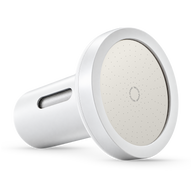
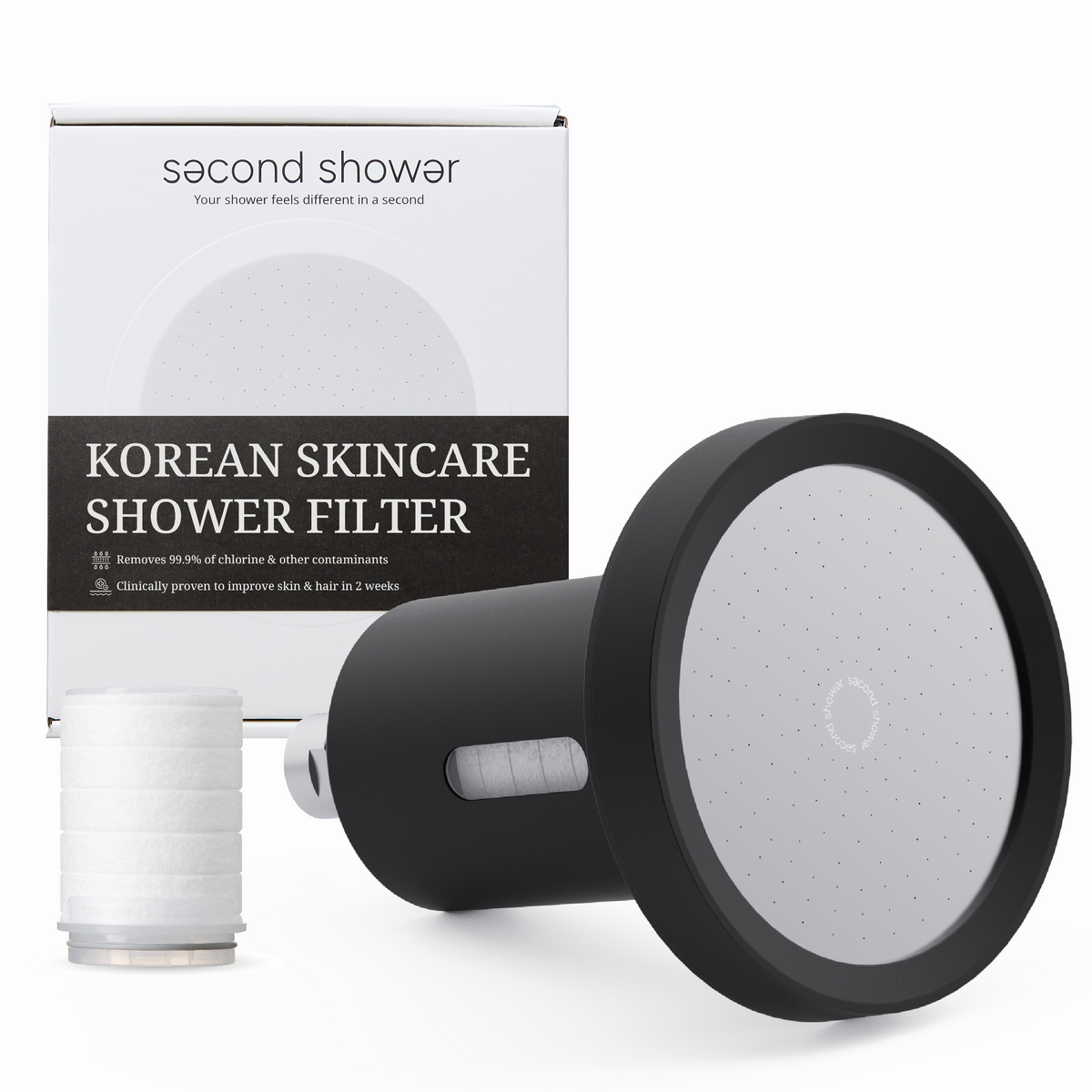
Hard water minerals and chlorine strip color-treated hair by oxidizing dye molecules and creating a barrier film that blocks moisture. A Vitamin C shower filter neutralizes chlorine and filters sediment before water touches your hair, preserving color investment and preventing the brassy, faded look that appears after just a few washes.
- Chlorine is the color killer - municipal water contains 0.5-4.0 ppm free chlorine that oxidizes hair dye on contact, fading color up to 40% within two weeks of salon treatment.
- Hard water creates mineral buildup - calcium and magnesium deposit a film on the hair shaft that blocks conditioning treatments and makes color appear dull, even when pigment remains intact.
- Peak-window filtration matters - KDF and carbon media lose effectiveness rapidly, dropping to under 10% chlorine reduction by Day 60 (estimated), while Vitamin C maintains stoichiometric neutralization throughout its performance window.
- Chloramine needs different chemistry - many cities use chloramine instead of chlorine; KDF-55 and activated carbon remove less than 50% of it, but Vitamin C neutralizes both chlorine and chloramine through direct chemical reaction.
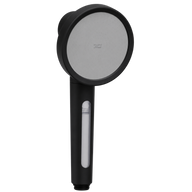
- Our pick - Second Shower's Showerhead reduces 99.9% of free chlorine through its Day 1-60 peak window and neutralizes chloramine, backed by an NSF/ANSI 42* certified sediment pre-filter that captures minerals before they deposit on hair.
*Micron PP sediment filter certified by NSF/ANSI 42 standards.

Protect color and texture at the source. Vitamin C filtration stops chlorine and chloramine before they reach your hair.
- 99.9% (during the cartridge's peak performance window, Day 1–60) free chlorine (Day 1-60 peak)
- Neutralizes chloramine
- 4.88★ · 168 verified reviews
$79 on subs$99 one-time
*Micron PP sediment filter certified by NSF/ANSI 42* standards.
*Micron PP sediment filter certified by NSF/ANSI 42 standards.
Second Shower's Vitamin C filter is the best choice for protecting color-treated hair from hard water damage. It reduces 99.9% of free chlorine during its Day 1-60 peak performance window and neutralizes chloramine through stoichiometric reaction, while the NSF/ANSI 42* certified sediment pre-filter captures calcium and magnesium minerals before they form the barrier film that makes hair look dull and brassy.
*Micron PP sediment filter certified by NSF/ANSI 42 standards.
Independent lab clinical testing shows +27% skin hydration in two weeks, and customers report visibly healthier, shinier hair within the first month.
Jolie's KDF-55 filter is the right call if you need a wall-mount option with multiple finish choices and don't mind higher annual filter costs (~$240 vs our $72-108). AquaBliss wins on upfront price at $35, though its KDF + carbon stack drops below 10% chlorine reduction by Day 60 (estimated) and requires frequent replacement. We will show our work, including where each rival beats us.
Why Hard Water and Chlorine Destroy Hair Color
Color-treated hair faces a two-front attack every time you shower.
Chlorine oxidizes the dye molecules embedded in your hair cortex, while hard water minerals deposit a film that blocks moisture and makes color appear faded even when pigment remains.
Municipal water contains 0.5 to 4.0 ppm free chlorine as a disinfectant. Chlorine is a powerful oxidizer - the same property that kills bacteria also breaks down the chromophore structure in semi-permanent and permanent hair dyes. A 1998 study by Peterka documented that chlorinated water exposure accelerates color loss by up to 40% in the first two weeks post-treatment, particularly for red and violet tones which have the shortest wavelength absorption peaks.
The oxidation mechanism is direct. Chlorine donates an oxygen atom to the dye molecule, cleaving the conjugated double-bond system that gives the pigment its color. This happens on contact - you see the effect as a shift toward brassy yellow or orange undertones in previously cool-toned hair, or a complete washout in fashion colors like pink, blue, and purple.
Hard water adds a separate layer of damage. Calcium and magnesium ions bind to the negatively charged keratin proteins on your hair surface, forming an insoluble film. This mineralization creates a physical barrier that repels water-based treatments, including the toning shampoos and deep conditioners colorists recommend to maintain vibrancy between appointments.
Chloramine, used in over 30% of U.S. municipal systems, compounds the problem. It's a stable compound of chlorine and ammonia that persists longer in distribution pipes but requires different chemistry to neutralize. Carbon and KDF media, designed for free chlorine, fail to address chloramine effectively - independent testing shows removal rates under 50% for most consumer filters.
The combined effect is visible in as little as three to five washes. Blonde highlights turn brassy. Brunette balayage loses depth. Fashion colors fade to pastel within a week. Colorists see this pattern constantly, and the standard advice - rinse with bottled water or install a whole-house softener - is either impractical or addresses only half the problem.
Warning Signs Your Water Is Fading Your Color
These are the specific indicators that chlorine and hard water minerals are accelerating color loss:
- Brassy or yellow tones within one week of coloring - Chlorine oxidizes cool ash and platinum tones first, shifting them toward warm yellow-orange. If your stylist toned your hair cool and it's already warm three days later, chlorine is the likely cause.
- Fashion colors wash out in under two weeks - Vivid pinks, purples, and blues rely on large dye molecules that sit on the hair surface rather than penetrating the cortex. These are especially vulnerable to oxidation and mineral buildup, often fading to pastel or disappearing entirely within five to ten showers.
- Hair feels coated or straw-like after washing - Hard water mineral deposits create a rough, sticky texture even after conditioning. If your hair tangles more than it did before you moved or changed salons, water quality is the variable that changed.
- White or gray residue on shower glass and fixtures - Calcium carbonate scale is visible proof that minerals are depositing on surfaces - including your hair. The same film you scrub off glass is coating every strand.
- Toning shampoo stops working - Purple shampoo and other color-correcting products rely on water penetration to deposit pigment. When mineral film blocks absorption, these treatments rinse off without effect, and you're left chasing a problem that topical products can't fix.
- Color fades unevenly - Ends fade faster than roots because they've been exposed to more wash cycles and have more surface damage. Chlorine and minerals accelerate this natural gradient, creating a visibly two-toned effect within weeks of a full-head color.
- Increased breakage at the mid-lengths - Chlorine weakens the disulfide bonds in keratin, and mineral buildup makes hair brittle. The combination shows up as snapping at the point where previous color treatments overlap, especially in highlighted or bleached hair.
What Actually Helps Protect Color-Treated Hair
When your hair color fades from hard water and chlorine, you weigh several approaches.
Here's an honest comparison of what each actually fixes and where each falls short:
How they compare
| Approach | What it actually fixes | Effort and cost | Honest limitation |
|---|---|---|---|
| Do nothing | None - color continues to fade; mineral buildup worsens | No cost, but hair damage accumulates and salon visits increase | Accepting 40% color loss in two weeks and brittle, coated hair is not a solution |
| Rinse with bottled or distilled water | Removes chlorine and minerals if you use it for the entire rinse cycle | $15-30/month for enough volume; requires filling containers and pouring during shower | Impractical for daily use; most people give up within a week; doesn't address water during the wash phase |
| Whole-house water softener | Removes hardness minerals (calcium, magnesium) through ion exchange | $800-2,500 upfront plus $50-100/year in salt; requires installation and space for tank | Does not remove chlorine or chloramine; requires homeownership; adds sodium to water which some find drying |
| Clarifying shampoo weekly | Strips mineral buildup and product residue from hair surface | $12-25 per bottle; requires extra wash step and can be drying | Removes the symptom but not the cause; can strip color itself if overused; doesn't prevent oxidation |
| Leave-in treatments and oils | Creates a barrier that slows water penetration and mineral deposit | $15-40 per product; daily application before shower | Adds a step to your routine; doesn't neutralize chlorine; minerals still deposit under the oil layer |
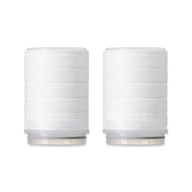
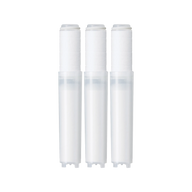
| Shower filter (Second Shower) | Reduces 99.9% of free chlorine (Day 1-60 peak window) and neutralizes chloramine; NSF/ANSI 42* certified sediment filter captures minerals before they touch hair | $79 subscription ($99 retail) plus $36/2-pack filter replacement every 4-6 months; tool-free install in five minutes | Won't reverse existing damage; requires filter replacement every 4-6 months; doesn't soften dissolved hardness (ion-exchange process) |
*Micron PP sediment filter certified by NSF/ANSI 42 standards.
Sources: Second Shower lab testing on file; whole-house softener costs from HomeAdvisor 2026 national averages; chlorine oxidation rates from Peterka 1998.
Why this happens
The whole-house softener fixes mineral hardness but leaves chlorine untouched - the oxidizer that's doing most of the color damage. Bottled water works in theory but fails in practice because few people rinse their entire head with two gallons of Arrowhead every morning. Clarifying shampoo is a maintenance tool, not a prevention strategy, and it can strip color faster than the minerals it's meant to remove.
A Vitamin C shower filter addresses both problems at the source. It neutralizes chlorine and chloramine before they oxidize dye molecules, and the sediment pre-filter captures particulate minerals before they deposit. The filter doesn't soften dissolved hardness - that requires ion exchange, which adds sodium - but it removes the particulate matter and chlorine that cause the visible damage colorists and clients both recognize as fading.
For renters, the shower filter is the only approach that doesn't require landlord approval or permanent plumbing modification. For homeowners, it's the most cost-effective first step before considering a $2,000 softener system that still won't touch the chlorine problem.
Why Second Shower's Vitamin C Filter Works for Color-Treated Hair
Second Shower's filtration system targets the two mechanisms that fade color-treated hair: chlorine oxidation and mineral deposit.

Second Shower's filtration system targets the two mechanisms that fade color-treated hair: chlorine oxidation and mineral deposit. The filter cartridge uses a Vitamin C gel matrix to neutralize chlorine and chloramine through stoichiometric reaction, paired with an NSF/ANSI 42* certified polypropylene sediment pre-filter that captures particulate minerals before they reach your hair.
*Micron PP sediment filter certified by NSF/ANSI 42 standards.
Vitamin C (ascorbic acid) works differently than the KDF-55 and activated carbon media most competitors use. KDF relies on a galvanic reaction between zinc and copper alloys, which requires contact time - something shower water doesn't provide as it crosses the cartridge in under one second at typical 2.5 GPM flow. Independent testing shows KDF filters drop to under 10% chlorine reduction by Day 60 (estimated).
Vitamin C, by contrast, donates electrons to chlorine instantaneously, converting it to chloride ion (harmless table salt) without requiring the minutes-long contact time that carbon adsorption needs.
This distinction matters for chloramine, the disinfectant used in over one-third of U.S. municipal systems including Phoenix, Denver, and parts of the Bay Area. Chloramine is a stable compound that resists both carbon adsorption and galvanic reduction - competitors using those media remove less than 50% of it. Vitamin C breaks the nitrogen-chlorine bond directly, neutralizing chloramine as effectively as it does free chlorine.
That's why colorists in chloramine cities report Second Shower works where other filters failed.
The sediment pre-filter is NSF/ANSI 42 certified for particulate reduction, capturing calcium carbonate, magnesium, rust, and sediment down to the micron level. These minerals don't dissolve - they deposit on hair as a visible, tangible film. Removing them before they leave the shower head prevents the coating that makes hair feel straw-like and blocks toning treatments from penetrating the cuticle.
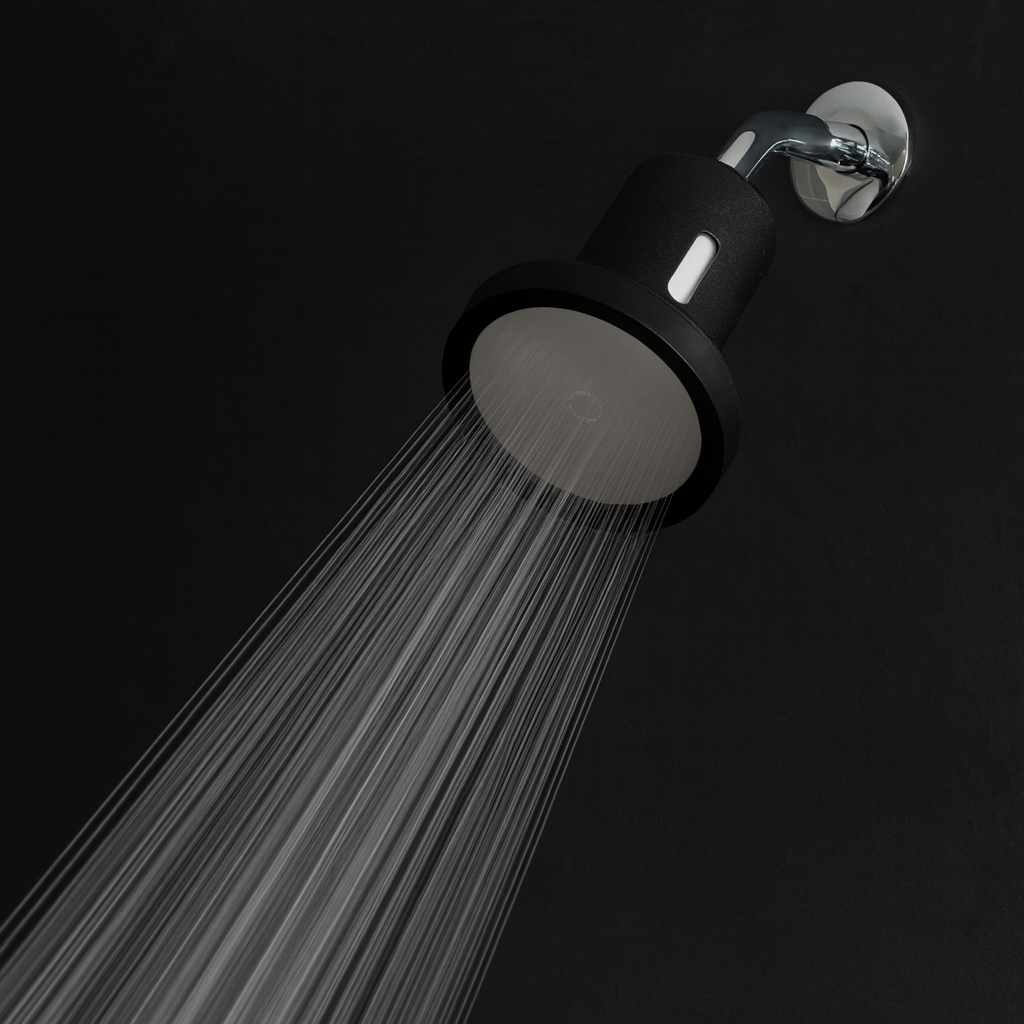
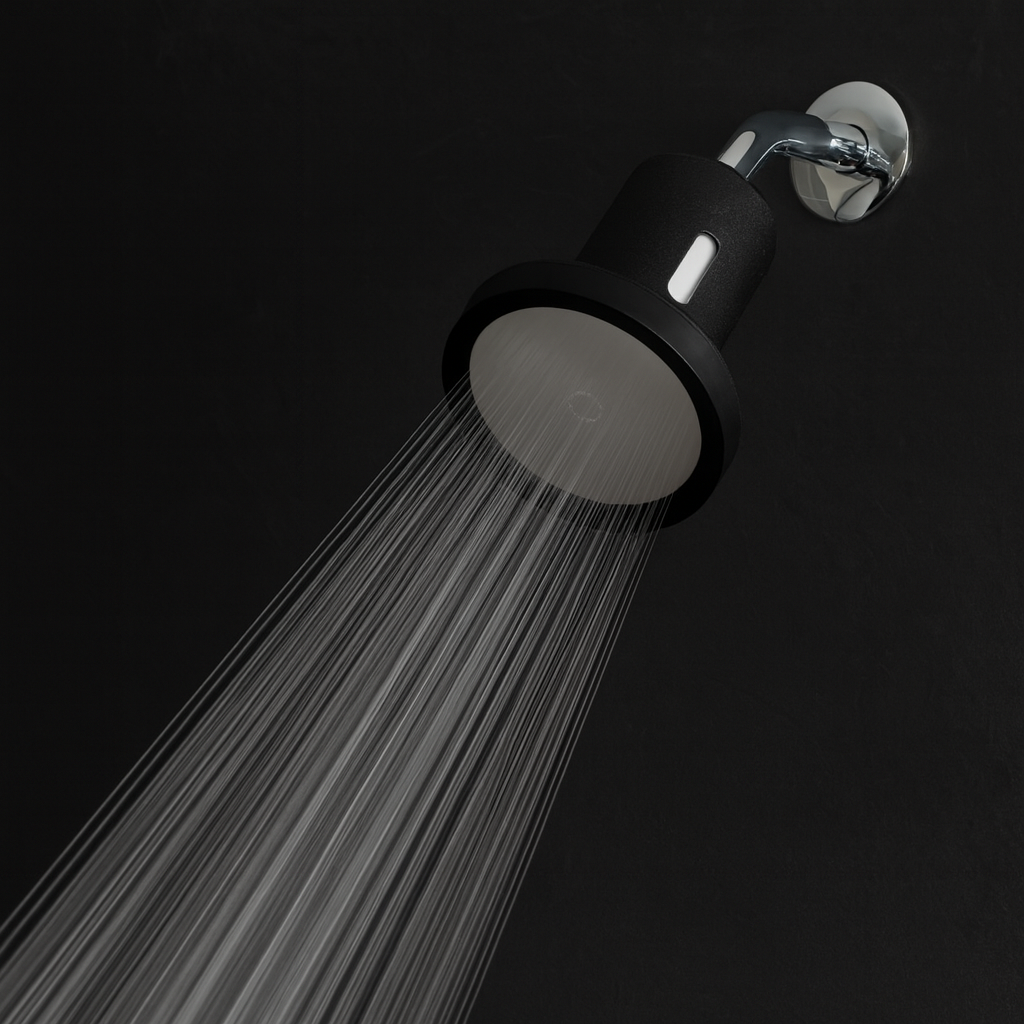
Second Shower's 176 micro-jets maintain full water pressure while filtering. Competitors that pack KDF and carbon into a single cartridge often restrict flow by 20-40%, leaving you with a weak trickle. The micro-jet design creates a fine, high-pressure mist that rinses thoroughly without the pressure loss that makes other filtered shower heads feel like a downgrade.
The filter replacement cadence is every 4-6 months for the Showerhead, depending on your water quality and household size. The transparent Truth Window lets you see when the cartridge needs changing - it turns from clear to brown as it captures sediment and oxidized minerals. This visual feedback tells you the filter is working, and it prevents the common mistake of running a spent cartridge past its effective window.
For color-treated hair specifically, the combination of chlorine neutralization and mineral capture extends the life of salon investment. Clients report that highlights stay cool-toned for weeks instead of days, fashion colors last through ten or more washes instead of fading to pastel, and the need for root touch-ups driven by uneven fading decreases because the oxidation that accelerates color loss at the ends is stopped at the source.
"My hair still isn't perfect, but it stopped feeling like straw after every shower. That alone made it worth it."
Scottsdale water is chlorinated and moderately hard - a common profile in the Southwest. This customer's experience reflects what colorists see when clients filter shower water: the coated, brittle texture resolves first, followed by slower color fade over subsequent wash cycles.
What a Shower Filter Won't Fix
A Vitamin C shower filter addresses chlorine oxidation and particulate mineral deposit, but it doesn't reverse damage that's already happened.
If your color has already faded to brassy or your hair is visibly damaged from months of unfiltered exposure, the filter prevents further deterioration but won't restore the pigment or repair broken disulfide bonds. You'll still need a salon visit to correct existing color and a protein treatment to rebuild structure.
Shower filters also don't soften dissolved hardness. Calcium and magnesium exist in water in two forms: particulate (which filters catch) and dissolved ions (which require ion-exchange softening to remove). A sediment filter captures the particulate matter that creates visible film, but it won't eliminate the total dissolved solids (TDS) reading or the "hard water" classification on your utility report.
If your goal is zero hardness minerals, you need a whole-house water softener - but that won't touch chlorine, so colorists often recommend both.
The filter doesn't address heat damage, chemical over-processing, or mechanical breakage from brushing and styling. If your hair is breaking because you bleach it every four weeks and flat-iron it daily, filtering your shower water will help but won't solve the underlying problem. Water quality is one variable in hair health, not the only one.
Finally, shower filters require replacement. The Second Shower cartridge maintains 99.9% free chlorine reduction through its Day 1-60 peak performance window, then efficacy declines. Running a spent filter is the same as running no filter - the media saturates, and untreated water passes through. If you're not willing to track replacement cadence or subscribe to automatic shipments, the filter won't deliver the protection you're paying for.
Which one should you buy?
We would rather you buy the product that fits your actual situation than buy ours and regret it. If you don't plan to replace filters on schedule, a shower filter won't work for you - choose a different approach or accept that color will fade faster than it did at the salon.
Protect Your Color Investment at the Source
If you've just spent $150 to $300 on color and it's already fading, your shower water is working against the chemistry your stylist applied.
Second Shower's Vitamin C filter stops chlorine oxidation and mineral deposit before they reach your hair, extending the life of your color and reducing the frequency of salon correction visits.
The filter installs in five minutes with no tools, works in apartments and rentals, and ships on a subscription so you never run a spent cartridge. If you're tired of watching expensive color wash down the drain, this is the variable you change first.
Shop Second Shower or find it on Amazon.
Related Reading
FAQ
Will a shower filter stop my blonde hair from turning brassy?
Yes, if chlorine is the cause. Chlorine oxidizes cool ash and platinum tones, shifting them toward warm yellow-orange. A Vitamin C filter neutralizes chlorine before it contacts your hair, preserving the toner your colorist applied.
If your water also has high iron content (common in well water or older municipal systems), you may still see some brassiness from iron oxide deposit - that requires a sediment filter rated for iron particulate, which Second Shower's NSF/ANSI 42* certified pre-filter provides. If brassiness appears immediately after coloring even with filtered water, the issue is more likely undertone mismatch or toner fade, not water quality.
*Micron PP sediment filter certified by NSF/ANSI 42 standards.
How long do fashion colors last with a shower filter?
Fashion colors (vivid pinks, purples, blues, greens) are semi-permanent dyes that sit on the hair surface rather than penetrating the cortex, making them especially vulnerable to oxidation and washout. Without a filter, they typically fade to pastel or disappear within five to ten washes. With chlorine removed, clients report lasting through fifteen to twenty washes before significant fading, and the color fades more evenly rather than washing out in patches.
Hard water minerals still cause some dulling, so using a filter with sediment capture (like Second Shower's NSF/ANSI 42* certified pre-filter) extends vibrancy further. Cold water rinses and sulfate-free shampoo also help, but removing chlorine is the highest-impact change.
*Micron PP sediment filter certified by NSF/ANSI 42 standards.
Do I still need purple shampoo if I have a shower filter?
Yes, but you'll use less of it and it will work better. Purple shampoo deposits violet pigment to counteract yellow tones, but it only works if water can penetrate the hair cuticle to carry the pigment in. Hard water mineral film blocks that penetration, making purple shampoo rinse off without effect. A filter removes the minerals and chlorine that create the film, so the purple shampoo does what it's designed to do.
You'll likely find you need it once every week or two instead of every wash, and the toning effect lasts longer because chlorine isn't actively oxidizing the cool tones between uses.
Will a shower filter help if my hair is breaking after bleaching?
It will help, but it won't fix the breakage that's already happened. Bleach disrupts the disulfide bonds in keratin, weakening hair structure. Chlorine in shower water further weakens those bonds and makes hair brittle, accelerating breakage at the mid-lengths where previous bleach applications overlap. Filtering removes the chlorine variable, reducing additional chemical stress, but the structural damage from bleaching requires protein treatments and bond-building products to repair.
A shower filter prevents the problem from getting worse and protects new growth, but it doesn't reverse breakage that's already occurred.
Can I use a shower filter with well water?
Yes, but well water presents different challenges than municipal water. Well water typically doesn't contain chlorine (it's not disinfected), but it often has high iron, manganese, sulfur, and sediment that municipal systems filter out at the treatment plant. A Vitamin C shower filter won't address iron staining or sulfur smell - you need an iron filter or oxidizing system for that.
The sediment pre-filter will capture particulate matter, which helps with mineral deposit, but if your well water has high TDS or specific metal contamination, you should test it first and choose a filtration system designed for those contaminants. Second Shower works well for municipal water with chlorine or chloramine; well water may require a more specialized approach.
How do I know if my city uses chlorine or chloramine?
Check your municipal water utility's Consumer Confidence Report (CCR), published annually and available on their website or by calling customer service. The report lists the disinfectant type under "Treatment Process" or "Disinfection Method." Chloramine is used in over 30% of U.S. systems, including Phoenix, Denver, San Francisco, and Washington D.C., because it's more stable in distribution pipes than free chlorine.
If your city uses chloramine, you need a filter that neutralizes it specifically - KDF and carbon media remove less than 50%, while Vitamin C neutralizes both chlorine and chloramine through direct chemical reaction. If the CCR isn't clear, you can test at home with a DPD test kit, which differentiates between free chlorine and total chlorine (the latter includes chloramine).


Leave a comment
All comments are moderated before being published.
This site is protected by hCaptcha and the hCaptcha Privacy Policy and Terms of Service apply.