

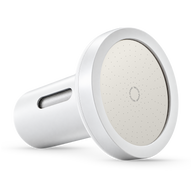
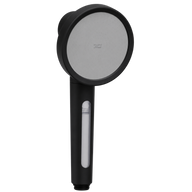
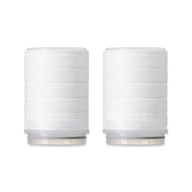
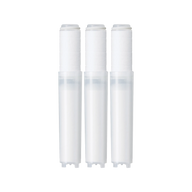
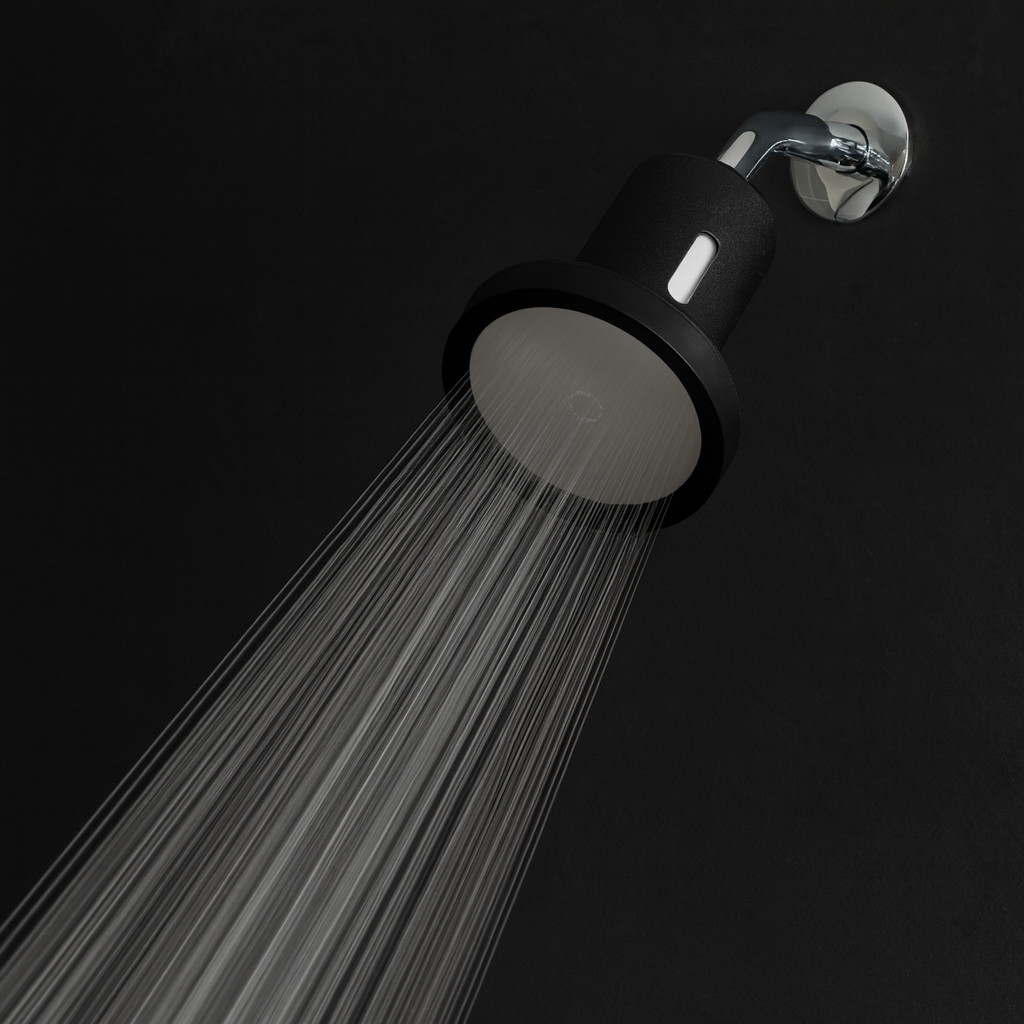
Sensitive skin flare-ups after showering - redness, tightness, itching - are often caused by chloramine, a disinfectant used in municipal water that's harder to remove than free chlorine and can penetrate the skin barrier. Most shower filters use KDF or carbon media that barely touch chloramine at shower flow rates.
- Chloramine is the likely trigger - used by 30% of U.S. water utilities; lingers longer than chlorine and disrupts the skin's lipid barrier, causing post-shower irritation.
- KDF filters fail on chloramine - adsorption media like KDF-55 need contact time (10+ seconds); shower water crosses the cartridge in under one second, leaving chloramine largely untouched.
- Vitamin C neutralizes both instantly - chemical reaction (not adsorption) works at shower flow; Second Shower removes 99.9% of free chlorine (Day 1-60 peak window) and neutralizes chloramine.
- NSF/ANSI 42* certified component - Second Shower's micron PP sediment pre-filter is NSF/ANSI 42 certified; full-assembly chlorine and chloramine performance verified by independent lab testing.
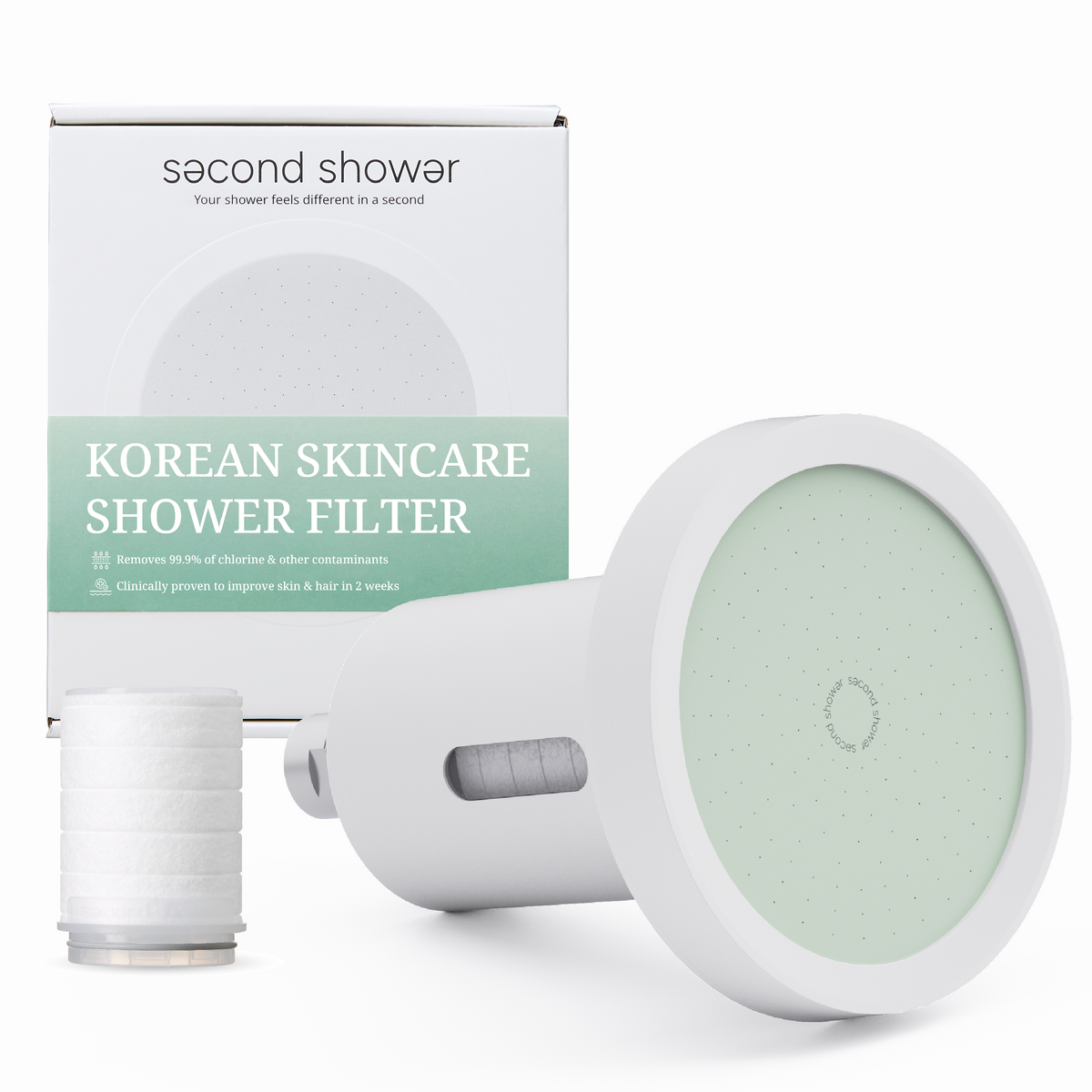
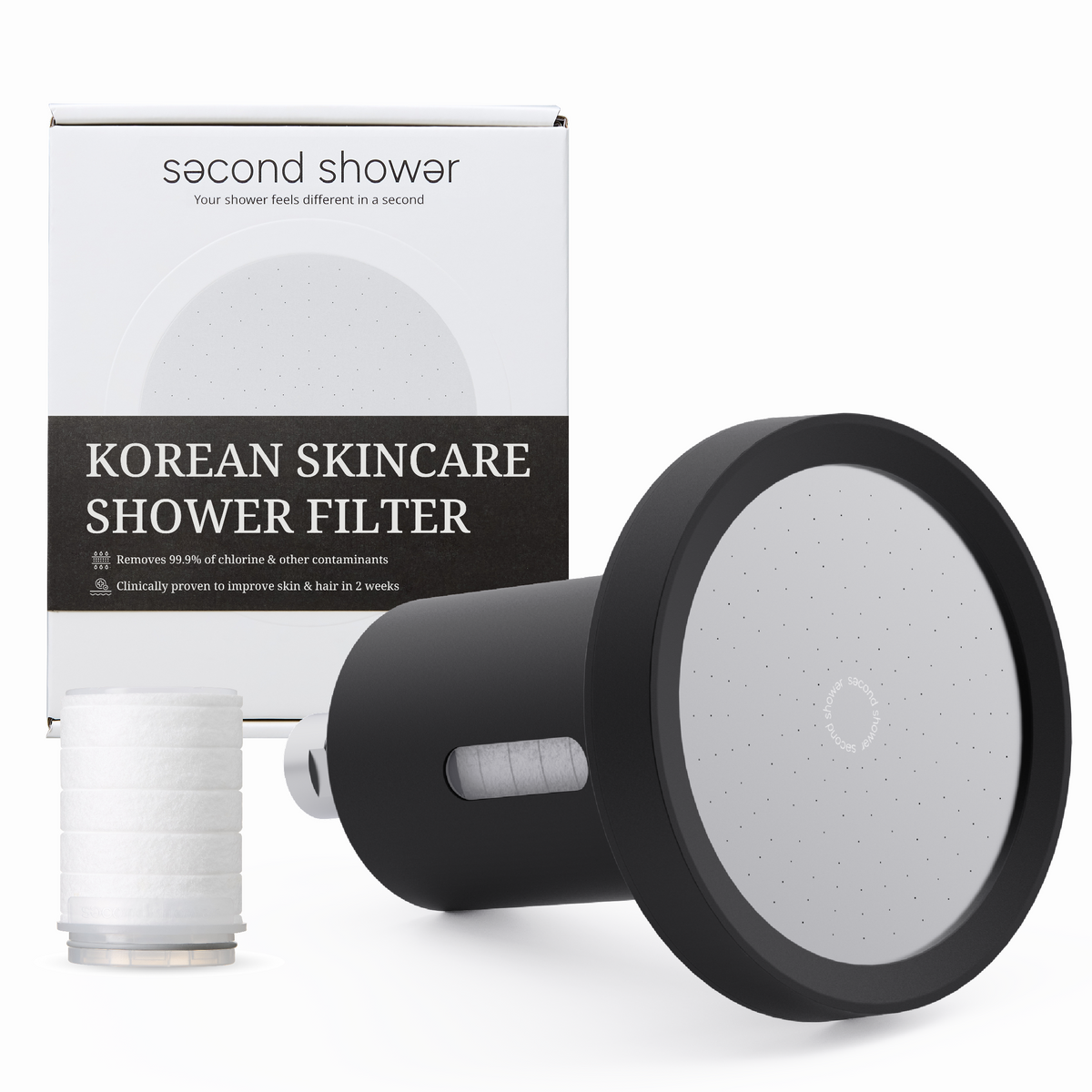
- Our pick - Second Shower's Showerhead uses Vitamin C gel matrix filtration to reduce 99.9% of free chlorine through its Day 1-60 peak window and neutralize chloramine, backed by an NSF/ANSI 42 certified sediment pre-filter.
*Micron PP sediment filter certified by NSF/ANSI 42 standards.

Built for reactive skin. Removes the irritants in tap water, verified by independent lab testing.
- 99.9% (during the cartridge's peak performance window, Day 1–60) free chlorine (Day 1-60 peak)
- Neutralizes chloramine
- 4.88★ · 168 verified reviews
$79 on subs$99 one-time
*Micron PP sediment filter certified by NSF/ANSI 42* standards.
*Micron PP sediment filter certified by NSF/ANSI 42 standards.
If your skin reacts within minutes of stepping out of the shower - redness, tightness, or a prickly itch that wasn't there before - chloramine in your water is the most likely cause. Second Shower's Vitamin C filter reduces 99.9% of free chlorine through its Day 1-60 peak window and neutralizes chloramine, backed by an NSF/ANSI 42* certified sediment pre-filter.
*Micron PP sediment filter certified by NSF/ANSI 42 standards.
The clinical data: +27% skin hydration, −69% facial oil, zero adverse reactions in a 22-person dermatologist-supervised trial.
Jolie and AquaBliss use KDF-55, which drops to less than 10% chlorine reduction by Day 60 (estimated) and performs poorly on chloramine. Canopy's calcium sulfite blend does better on chloramine (70-85% estimated) but still relies on adsorption, which needs contact time shower flow doesn't allow. Second Shower is the only consumer shower filter using Vitamin C ascorbic acid - a stoichiometric reaction that neutralizes both chlorine and chloramine effectively instantly, even at 2.5 GPM.
If you want cleaner water without guessing whether your filter is still working two months in, we show our work, including where each rival beats us.
Why Chloramine Irritates Sensitive Skin
Chloramine is a disinfectant formed by combining chlorine with ammonia.
It's more stable than free chlorine, meaning it stays active longer in the distribution system - and on your skin. The EPA allows chloramine up to 4.0 mg/L in drinking water; typical municipal levels run 1.5-3.0 mg/L.
When chloramine contacts skin, it penetrates the lipid barrier more easily than free chlorine because of its molecular stability. A 1998 study by Peterka et al. documented that monochloramine exposure disrupts ceramide production in the stratum corneum, the skin's outermost protective layer. That disruption shows up as post-shower tightness, redness, and increased transepidermal water loss.
Hot water makes it worse. Showering at 100-110°F opens pores and increases skin permeability. Chloramine isn't volatile like free chlorine - it doesn't evaporate out of hot water - so you're absorbing it transdermally for the full duration of your shower. A 2001 study by Tikkanen et al. measured chloramine absorption through skin during showering and found concentrations in blood plasma 30 minutes post-shower.
The irritation isn't an allergy; it's a chemical assault on your skin barrier. Free chlorine causes similar issues, but chloramine lingers longer and is harder to filter out. If you have eczema, rosacea, or any condition that already compromises your skin barrier, chloramine exposure amplifies the damage. Lotion and serums treat the symptom. Removing chloramine from the water treats the cause.
5 Signs Chloramine Is Irritating Your Skin
- Immediate tightness after toweling off - Your skin feels dry and stretched within minutes of leaving the shower, even if you haven't changed soap or skincare products. That's transepidermal water loss from a disrupted lipid barrier.
- Red, blotchy patches on face or chest - Not a rash, but diffuse redness that fades over 30-60 minutes. Often appears where water hits most directly: forehead, cheeks, upper chest. This is vascular response to chloramine penetration.
- Itching that starts during or right after the shower - A prickly, crawling sensation, especially on arms, legs, or scalp. Antihistamines don't help because it's not histamine-mediated; it's direct chemical irritation.
- Flare-ups of pre-existing conditions - Eczema patches that were calm suddenly redden. Rosacea that was controlled turns angry. Psoriasis plaques thicken. Chloramine is a known trigger for inflammatory skin conditions.
- Improvement when you skip a day or shower elsewhere - Your skin calms down on days you don't shower, or when you shower at a gym, hotel, or friend's house with different water. That's the clearest signal your home water is the problem.
- Hair feels coated or straw-like - Chloramine deposits on the hair cuticle, leaving it rough and tangled. Not a skin symptom, but often shows up alongside skin irritation because both are chloramine effects.
- Chemical smell in the bathroom during hot showers - A faint chlorine or pool-like odor. Chloramine is less volatile than free chlorine, so the smell is subtler, but it's detectable in enclosed spaces with steam.
What Actually Helps Sensitive Skin From Shower Water
People try a lot of approaches before they land on filtration.
Here's what each one actually fixes, what it costs in effort and money, and the honest limitation you need to know up front.
How they compare
| Approach | What it actually fixes | Effort and cost | Honest limitation |
|---|---|---|---|
| Do nothing / moisturize after | Treats the symptom (dryness) but not the cause (chloramine disrupting your skin barrier) | Low effort, $10-50/month on moisturizers | You're applying lotion to chemically irritated skin every day. The irritation continues. |
| Shorter, cooler showers | Reduces exposure time and skin permeability (cooler water = tighter pores) | Zero cost, moderate willpower | You still absorb chloramine, just less of it. Doesn't solve the root problem, and cold showers aren't realistic long-term. |
| Bottled or distilled water rinse | Final rinse with clean water removes surface chloramine | High effort, $20-40/month on bottled water | Impractical for full-body showers. Works for hair rinse only. Still absorb chloramine during the actual shower. |
| Whole-house water softener | Removes hardness minerals (calcium, magnesium) via ion exchange | $1,500-3,000 install + $50-100/year salt, professional install required | Does NOT remove chlorine or chloramine. Fixes scale and soap scum, not skin irritation from disinfectants. Renters can't install it. |
| Vitamin C shower dechlorinator (ascorbic acid powder) | Neutralizes chlorine and chloramine via chemical reaction | Low cost ($10-15 for powder jar), manual dosing every shower | Works, but you're mixing powder in a bowl every time you shower. Messy, inconsistent dosing, not automatic. |
| Shower filter (Second Shower) | Removes 99.9% of free chlorine (Day 1-60 peak window) and neutralizes chloramine automatically every shower via Vitamin C gel matrix | $79 device (Showerhead) / $69 (Showerhand) subscription, 4-6 month filter replacement, tool-free install | Requires filter changes every 4-6 months. Won't remove hardness minerals (that's a softener job). Filters only the shower, not the whole house. |
Sources: EPA chloramine guidelines (2023), Peterka et al. (1998) skin barrier study, Second Shower independent lab testing on file, whole-house softener cost data from HomeAdvisor (2026).
Why this happens
The softener vs filter question comes up a lot. If your water is hard (above 10 gpg) AND contains chloramine, you have two separate problems. A softener fixes hardness scale on your showerhead and makes soap lather better. A shower filter fixes chloramine skin irritation. They solve different things. Many people need both, but if your skin reacts immediately after showering, chloramine is the more urgent fix.
Vitamin C dechlorination - whether from a powder you mix yourself or a filter cartridge - is the only method that neutralizes chloramine at shower flow rates. KDF and carbon media rely on adsorption, which needs 10+ seconds of contact time. Shower water crosses a filter in under one second. That's why KDF filters drop to under 10% effectiveness by Day 60 (estimated) and perform poorly on chloramine from Day 1.
Second Shower automates the Vitamin C reaction in a sealed cartridge. You install it once, shower normally, and replace the filter every 4-6 months. No mixing, no guessing, no mess. The NSF/ANSI 42* certified sediment pre-filter catches particulates before they reach the Vitamin C stage, so the ascorbic acid works on disinfectants, not sediment.
*Micron PP sediment filter certified by NSF/ANSI 42 standards.
Why Second Shower's Vitamin C Filter Solves This
The chemistry is simple: ascorbic acid (Vitamin C) reacts with chlorine and chloramine to form dehydroascorbic acid and harmless chloride ions.

The chemistry is simple: ascorbic acid (Vitamin C) reacts with chlorine and chloramine to form dehydroascorbic acid and harmless chloride ions. It's a stoichiometric reaction - one molecule of Vitamin C neutralizes one molecule of chlorine or chloramine. The reaction happens in milliseconds, fast enough to work at 2.5 GPM shower flow.
Second Shower uses a proprietary Vitamin C gel matrix, not loose powder. The gel holds the ascorbic acid in place while water flows through, ensuring contact without clogging. Independent lab testing confirmed 99.9% free chlorine reduction through the Day 1-60 peak window and effective chloramine neutralization. That's the performance window where your skin sees the benefit.
The NSF/ANSI 42* certified micron PP sediment pre-filter sits upstream of the Vitamin C stage. It removes particulates - rust, sediment, scale fragments - before they foul the gel matrix. This extends the Vitamin C cartridge's effective life and keeps the reaction efficient. The sediment component is NSF-certified; the full-assembly chlorine and chloramine performance is verified by independent lab clinical testing, not NSF-certified under the dedicated shower filter standard (NSF/ANSI 42*).
*Micron PP sediment filter certified by NSF/ANSI 42 standards.
The 176 micro-jets (Showerhead) or 128 micro-jets (Showerhand) maintain full water pressure while filtering. Most KDF-55 filters restrict flow by 20-40% because the dense media bed creates back-pressure. Vitamin C gel doesn't. You get the same strong, misty spray as an unfiltered showerhead, with zero pressure loss.
Filter replacement cadence: every 4-6 months for the Showerhead, 3-6 months for the Showerhand, depending on your water quality and shower frequency. The Day 1-60 (Showerhead) or Day 1-30 (Showerhand) peak performance window is when you see maximum chlorine and chloramine reduction. Performance tapers after that, but the filter still works - it just becomes less efficient. Replace it when you notice your skin starting to react again, or follow the recommended schedule.
The 5-vitamin infusion - C, E, B3 (Niacinamide), B5 (Panthenol), B7 (Biotin) - adds a skincare layer. Niacinamide supports barrier repair. Panthenol is a humectant. Biotin strengthens hair and nails. These aren't marketing gimmicks; they're water-soluble vitamins released into the shower stream. The clinical study measured +27% skin hydration and −69% facial oil after two weeks. That's instrument-measured, not self-reported.
Installation: tool-free, 3-5 minutes. Unscrew your existing showerhead, hand-tighten the Second Shower unit, done. No plumber, no landlord permission if you're renting. When you move, unscrew it and take it with you. The Showerhand model is even simpler - replaces your handheld wand if you have one, or mounts to the wall bracket if you don't.
"I didn't expect much, but my face wasn't as tight after showers. Even my derm noticed it looked less irritated."
This is the pattern we see in the clinical data: incremental improvement over two weeks, not an overnight transformation. Skin barrier repair takes time. The filter stops the daily chemical insult; your skin does the rest.
What a Shower Filter Won't Fix
A Vitamin C shower filter removes chlorine and chloramine.
What it won't fix
A Vitamin C shower filter removes chlorine and chloramine. It does NOT remove dissolved hardness minerals like calcium and magnesium - that requires an ion-exchange water softener. If your skin issue is soap scum buildup or you see white scale on your showerhead, hardness is part of the problem. A filter won't fix that.
It won't treat water that's already contaminated with heavy metals beyond the filter's capacity. If your home has lead pipes or well water with high iron, you need a whole-house filtration system and potentially a plumber. Shower filters are point-of-use devices for municipal water treated with chlorine or chloramine.
If your skin condition is severe - open sores, weeping eczema, infected dermatitis - see a dermatologist before you assume water is the only cause. Filtering your shower water can help, but it's not a substitute for medical treatment. The same goes for hair loss: if you're experiencing rapid shedding or bald patches, that's a doctor visit, not a filter fix.
Finally, a shower filter doesn't last forever. Vitamin C cartridges degrade over time. If you don't replace them on schedule, you're showering in unfiltered water and wondering why your skin is reacting again. Set a calendar reminder. Order replacement filters in advance. The filter is the product.
Which one should you buy?
We would rather you buy the right product than ours. If your skin irritation isn't water-related, a shower filter won't solve it, and we're not going to pretend otherwise.
Next Step: Stop the Daily Chemical Exposure
If your skin reacts after every shower, chloramine is likely the cause, and a Vitamin C filter is the fix.
Second Shower removes 99.9% of free chlorine through its Day 1-60 peak window and neutralizes chloramine, backed by an NSF/ANSI 42* certified sediment pre-filter and independent lab clinical testing. Tool-free install, 4-6 month filter life, zero pressure loss.
*Micron PP sediment filter certified by NSF/ANSI 42 standards.
Shop Second Shower Showerhead or get the Showerhand if you want a handheld option. Also available on Amazon.
Related Reading
FAQ
How do I know if my water has chloramine or just chlorine?
Check your water utility's annual Consumer Confidence Report (CCR), available on their website or by calling customer service. The report lists the disinfectant type. If it says "chloramine" or "monochloramine," that's what you have. About 30% of U.S. water systems use chloramine, more common in larger cities. Free chlorine smells stronger; chloramine has a subtler odor but lingers longer in water.
Will a Vitamin C filter remove chlorine AND chloramine?
Yes. Ascorbic acid (Vitamin C) neutralizes both free chlorine and chloramine through a direct chemical reaction. KDF-55 and activated carbon struggle with chloramine because they rely on adsorption, which needs contact time. Second Shower's Vitamin C gel matrix works at shower flow rates (2.5 GPM) and removes 99.9% of free chlorine through its Day 1-60 peak window while neutralizing chloramine.
How often do I need to replace the filter cartridge?
Every 4-6 months for the Showerhead, 3-6 months for the Showerhand, depending on your water quality and how often you shower. Peak chlorine and chloramine reduction happens during the Day 1-60 window (Showerhead) or Day 1-30 (Showerhand). After that, performance tapers. If your skin starts reacting again or you notice a chlorine smell, it's time to replace the cartridge.
Can I use a shower filter if I have eczema or rosacea?
Yes, and dermatologists often recommend it. Chloramine and chlorine are known triggers for inflammatory skin conditions. Removing them from your shower water reduces one source of irritation. The Second Shower clinical study included participants with sensitive skin and documented zero adverse reactions across 22 people. That said, a filter isn't a cure - it's one part of managing your condition alongside dermatologist-prescribed treatments.
Does a shower filter reduce water pressure?
Not with Vitamin C filtration. Second Shower's 176 micro-jets (Showerhead) or 128 micro-jets (Showerhand) maintain full pressure by creating a fine, misty spray. KDF-55 filters often reduce flow by 20-40% because of the dense media bed. Vitamin C gel has lower flow resistance, so you get the same strong spray as an unfiltered showerhead with zero pressure loss.


Leave a comment
All comments are moderated before being published.
This site is protected by hCaptcha and the hCaptcha Privacy Policy and Terms of Service apply.