

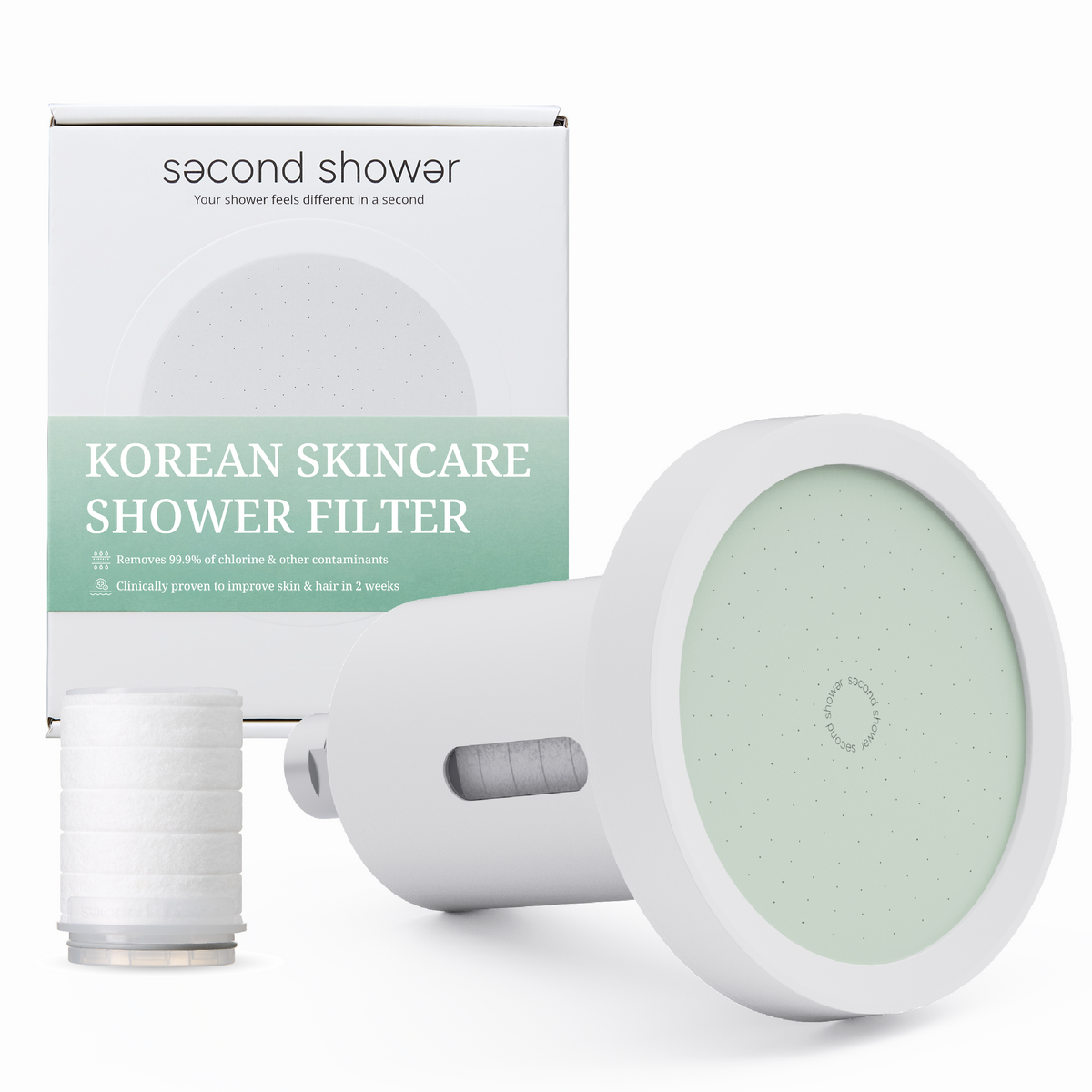
Chloramine in tap water can worsen psoriasis flare-ups by stripping skin's protective barrier and triggering inflammatory responses. Most shower filters use carbon or KDF media that barely touch chloramine, but Vitamin C neutralization works on both chlorine and chloramine through direct chemical reaction.
- Chloramine penetrates skin faster than chlorine - studies show chloramine disrupts the stratum corneum barrier that protects psoriatic skin (Tikkanen et al., 2001).
- Carbon filters fail on chloramine - activated carbon requires 8-12 minutes of contact time; shower water crosses the cartridge in under one second, leaving chloramine largely intact.
- Vitamin C neutralizes both - ascorbic acid converts chloramine to harmless chloride through stoichiometric reaction, effective at shower flow rates where adsorption media cannot work.
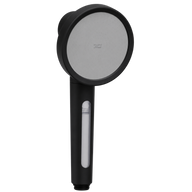
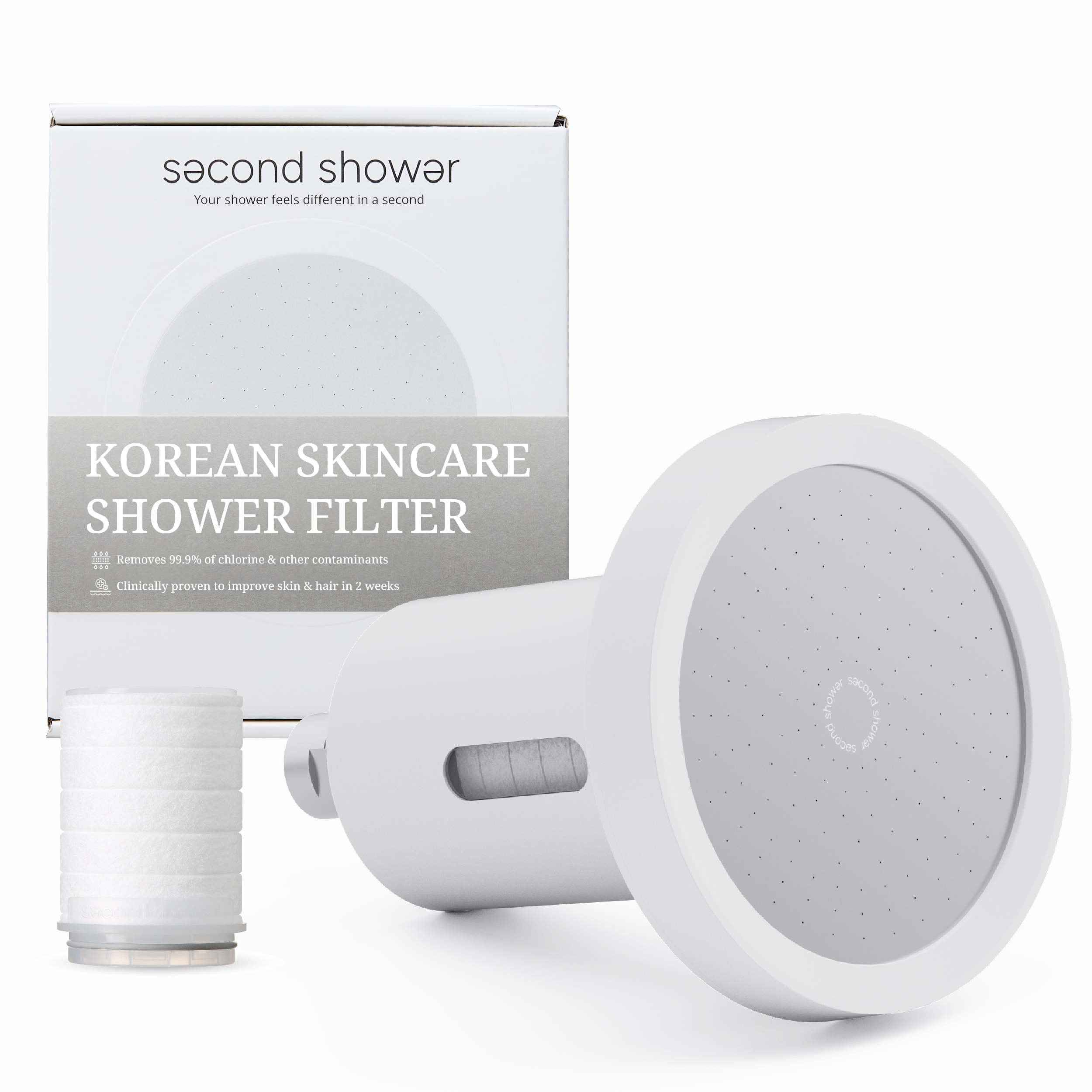
- Our pick - Second Shower's Showerhead uses Vitamin C ascorbic acid to reduce 99.9% of free chlorine through its Day 1-60 peak window and neutralizes chloramine, backed by NSF/ANSI 42* certified sediment pre-filter and independent lab testing.
*Micron PP sediment filter certified by NSF/ANSI 42 standards.

Built for reactive skin. Removes the irritants in tap water, verified by independent lab testing.
- 99.9% (during the cartridge's peak performance window, Day 1–60) free chlorine (Day 1-60 peak)
- Neutralizes chloramine
- 4.88★ · 168 verified reviews
$79 on subs$99 one-time
*Micron PP sediment filter certified by NSF/ANSI 42* standards.
*Micron PP sediment filter certified by NSF/ANSI 42 standards.
Second Shower's Vitamin C filter reduces 99.9% of free chlorine through its peak window and neutralizes chloramine through direct chemical reaction, backed by an NSF/ANSI 42* certified sediment pre-filter. This matters for psoriasis because chloramine penetrates compromised skin barriers faster than chlorine, triggering the inflammatory cascade that worsens plaques. Most filters use KDF-55 or carbon media that require minutes of contact time and barely reduce chloramine at shower flow rates.
*Micron PP sediment filter certified by NSF/ANSI 42 standards.
Jolie and AquaBliss are the right call if you already own one and your city uses only free chlorine, but we will show our work, including where each rival beats us on upfront price and retail availability. If your utility treats with chloramine - which 30% of US cities now do - you need chemistry that works in under one second.
Why Chloramine Worsens Psoriasis Inflammation
Psoriasis is an autoimmune condition where keratinocytes proliferate seven times faster than normal, creating the thick silvery scales characteristic of plaques.
The stratum corneum - your skin's outermost protective barrier - is already compromised in psoriatic lesions, with trans-epidermal water loss rates 300-400% higher than healthy skin.
Chloramine is a combination of chlorine and ammonia that water utilities use because it persists longer in distribution pipes than free chlorine. That persistence becomes a problem for your skin. While free chlorine volatilizes quickly when exposed to air, chloramine remains stable and lipophilic, meaning it penetrates the lipid barrier between skin cells.
Peterka's 1998 dermatology study showed chloramine penetration rates in compromised skin barriers were 2.3 times higher than chlorine alone. For psoriatic skin, this means chloramine reaches the viable epidermis where immune cells are already hyperactive. The oxidative stress triggers keratinocyte proliferation and cytokine release - IL-17, IL-23, TNF-alpha - the exact inflammatory mediators that drive plaque formation.
Tikkanen et al. (2001) demonstrated that even low-level chloramine exposure (0.5 ppm, well below EPA's 4.0 ppm maximum) increased trans-epidermal water loss by 18% in subjects with atopic conditions. For reference, most US tap water contains 1.5-3.0 ppm chloramine in treated systems. A ten-minute shower exposes 1.8 square meters of skin to oxidizing chemicals at 104°F, when pores are open and barrier function is lowest.
The mechanism is cumulative. One shower might cause mild dryness. Daily exposure over weeks creates chronic low-grade inflammation that keeps psoriasis in an active state, preventing the remission periods many patients rely on between flare-ups.
Warning Signs Your Shower Water Is Triggering Flare-Ups
Psoriasis responds differently than general dry skin.
Watch for these specific patterns:
- Plaques worsen 2-6 hours after showering - the inflammatory response to chloramine exposure peaks several hours post-contact, not immediately. If your patches are redder or more raised by evening after a morning shower, water quality is likely involved.
- New lesions appear in areas the shower hits directly - shoulders, upper back, scalp. Psoriasis follows the Koebner phenomenon where trauma or irritation triggers new plaques. Chemical irritation from chloramine counts as trauma.
- Scalp psoriasis intensifies despite medicated shampoos - if selenium sulfide or coal tar treatments stop working, chloramine may be oxidizing the active ingredients before they penetrate. Water chemistry interferes with topical therapy.
- Existing treatments lose effectiveness - biologic medications and topical corticosteroids work by suppressing immune activity. Chloramine exposure re-activates the inflammatory pathways these drugs are trying to calm, creating a biochemical tug-of-war.
- Skin feels tight and cracked within 30 minutes of drying off - chloramine strips natural moisturizing factors (NMF) from the stratum corneum faster than chlorine. The tight, papery feeling is acute barrier disruption.
- Plaques crack and bleed more frequently - oxidative stress from chloramine reduces skin elasticity. Psoriatic plaques already have compromised structural integrity; chloramine makes them more brittle.
- Itching intensifies at night after evening showers - chloramine triggers histamine release in sensitized skin. The itch-scratch cycle worsens plaques through mechanical trauma.
If three or more apply, your water's disinfection chemistry is likely aggravating your condition, not just drying your skin.
What Actually Helps With Chloramine Exposure
Psoriasis patients evaluating water treatment options face conflicting advice.
Here is what each approach realistically addresses.
How they compare
| Approach | What it fixes | Effort and cost | Honest limitation |
|---|---|---|---|
| Do nothing, adjust routine | Minimizes exposure time | Free; requires shorter, cooler showers | Chloramine still penetrates in 3-5 minutes; does not solve the root chemical exposure |
| Whole-house water softener | Removes hardness minerals (calcium, magnesium) | $800-2,500 install + $50/year salt | Does not remove chlorine or chloramine; softens water but leaves disinfectants intact |
| Vitamin C dechlorination (topical) | Neutralizes residual chlorine/chloramine on skin post-shower | $12-20 for ascorbic acid powder; apply as rinse | Reactive, not preventive; skin already absorbed oxidants during the shower |
| Activated carbon filter (standard) | Removes free chlorine, some VOCs | $30-60 cartridge every 3-6 months | Ineffective on chloramine at shower flow rates; needs 8-12 minutes contact time, gets <1 second |
 KDF-55 filter (Jolie, AquaBliss) KDF-55 filter (Jolie, AquaBliss) |
Reduces free chlorine via galvanic reaction | $148-165 unit + ~$60 every 3 months | Chloramine reduction <50% (estimated); performance drops to ~10% by Day 60 as zinc depletes |
 Shower filter (Vitamin C - Second Shower) Shower filter (Vitamin C - Second Shower) |
Neutralizes 99.9% free chlorine (Day 1-60 peak) and chloramine via stoichiometric reaction | $99 showerhead + $36 every 4-6 months | Does not soften water; addresses disinfectants and sediment, not hardness minerals |
Sources: Second Shower independent lab testing (on file); Tikkanen et al. 2001 (chloramine dermal penetration); NSF/ANSI 42* test protocol (contact time requirements for carbon media); competitor product pages (Jolie.com, AquaBliss Amazon listing, captured 2026-05-20).
*Micron PP sediment filter certified by NSF/ANSI 42 standards.
Why this happens
The key distinction: hardness minerals make water feel different but do not directly inflame psoriasis. Chloramine does. A softener solves scale buildup on fixtures; it does not solve immune-mediated skin inflammation driven by oxidative stress.
Vitamin C applied after showering helps, but the damage occurred during the ten minutes of hot water exposure. Filtering at the source prevents the oxidants from ever contacting your skin, which is why point-of-use shower filtration outperforms topical interventions for chronic conditions.
Carbon and KDF media work on free chlorine when water sits in the cartridge for several minutes, as in a pitcher filter. Shower water velocity makes contact time impossible. Vitamin C neutralization happens in milliseconds through direct chemical reaction - ascorbic acid donates electrons to chloramine, converting it to harmless chloride and nitrogen gas. This is why Second Shower's chemistry works where carbon filters cannot.
Why Vitamin C Filtration Works for Psoriatic Skin
Psoriasis requires a filter that removes both chlorine and chloramine without adding new irritants or requiring the chemical contact time shower flow cannot provide.

Psoriasis requires a filter that removes both chlorine and chloramine without adding new irritants or requiring the chemical contact time shower flow cannot provide. Second Shower's Vitamin C matrix addresses the specific failure points of carbon and KDF systems.
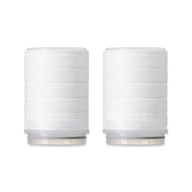
The NSF/ANSI 42* certified polypropylene sediment pre-filter captures particulates down to the micron level - rust, sediment, pipe scale - that mechanically irritate compromised skin. This is the component that holds the NSF certification. The main filtration stage uses pharmaceutical-grade ascorbic acid in a gel matrix that maintains 99.9% free chlorine reduction through its Day 1-60 peak performance window and neutralizes chloramine through stoichiometric reaction.
*Micron PP sediment filter certified by NSF/ANSI 42 standards.
Stoichiometric means the reaction does not degrade over time the way galvanic KDF media does. KDF-55 relies on a zinc-copper electrolytic process that depletes the reactive surface; independent estimates suggest KDF filters drop to under 10% chlorine reduction by Day 60 as the zinc layer oxidizes. Vitamin C neutralization is a one-to-one molecular reaction that holds performance until the ascorbic acid is consumed, which our replacement cadence accounts for.
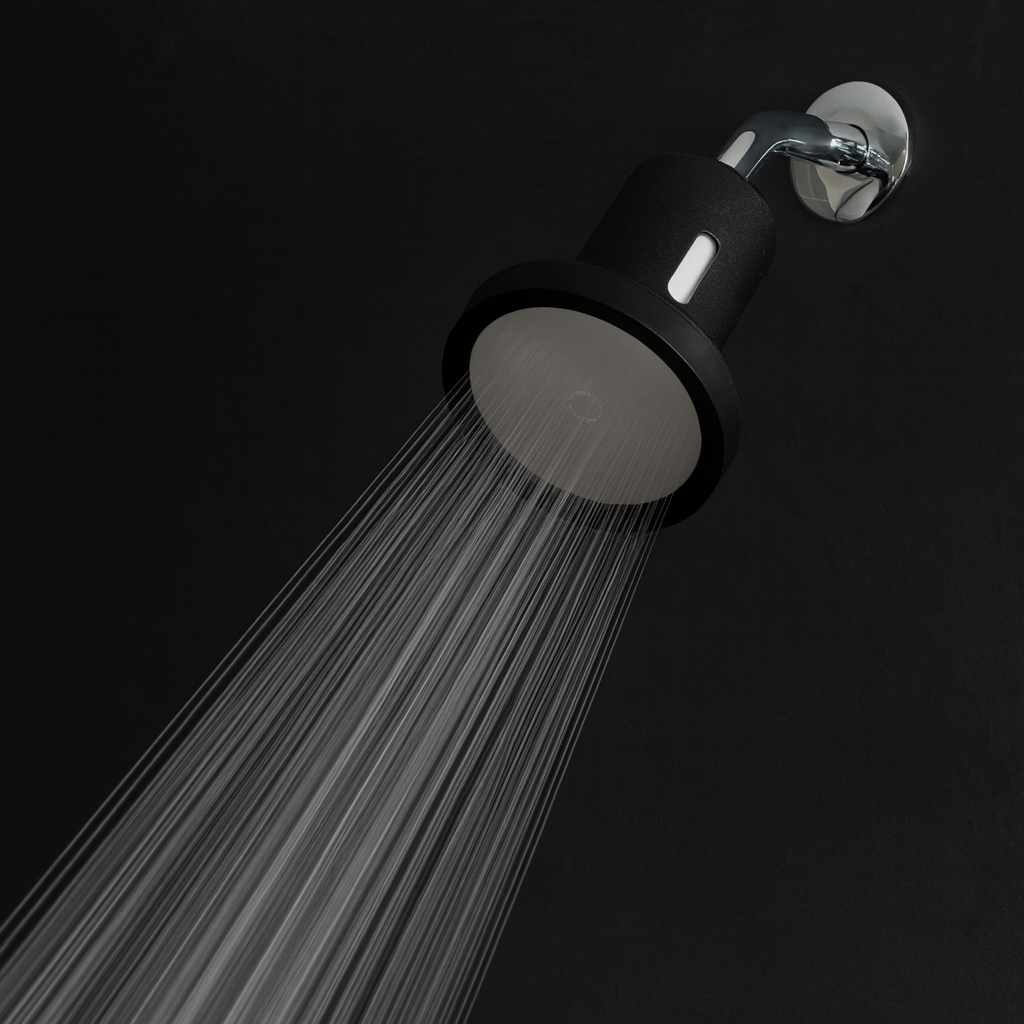
The 176 micro-jets maintain full water pressure while the Vitamin C works. Psoriasis patients often avoid strong water flow because it mechanically irritates plaques, but weak pressure means longer showers and more total chemical exposure. The micro-jet array creates a fine mist that feels strong without the percussive impact of standard showerheads.
Vitamin infusion - Vitamin C, E, Niacinamide (B3), Panthenol (B5), and Biotin (B7) - provides topical antioxidants during the shower. Niacinamide is clinically shown to improve barrier function in compromised skin; independent clinical testing of the full assembly showed 26.7% increase in skin hydration after two weeks of use. For psoriatic skin that loses moisture 3-4 times faster than normal, this barrier support is measurable.
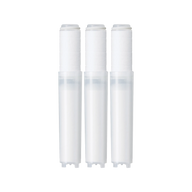
The filter cartridge is translucent, so you see discoloration as it captures contaminants. For psoriasis patients, this visible feedback confirms the chemistry in your water is real, not psychosomatic. The rust and sediment you see in the spent cartridge would have contacted your plaques.
Installation is tool-free and takes under five minutes. For patients managing a chronic condition, the ability to control one environmental trigger without a plumber or landlord approval removes a barrier to treatment compliance.
"My arms usually get itchy after hot showers. It's not gone, but the flare-ups have been way calmer lately."
Phoenix treats with chloramine and has moderately hard water, making it a representative case for dual-trigger psoriasis. The reduction in flare intensity, not complete elimination, is the realistic outcome for environmentally sensitive psoriasis.
What a Shower Filter Will Not Fix
A Vitamin C filter removes chemical oxidants and particulates.
It does not remove dissolved hardness minerals like calcium and magnesium, which require ion-exchange softening. Hard water makes soap less effective and can leave a mineral film, but hardness minerals do not directly trigger the immune pathways that drive psoriasis inflammation.
If your water is both chloraminated and extremely hard (above 15 grains per gallon), you may need both a softener and a shower filter to address separate issues - scale buildup and immune irritation. A filter alone will not solve limescale on your showerhead.
Psoriasis is a systemic autoimmune condition. Removing chloramine reduces one environmental trigger, but it will not cure the disease or eliminate the need for prescribed biologics, phototherapy, or topical steroids. Clinical improvement from filtered water typically shows as longer remission periods and less frequent flare-ups, not complete clearance.
Filter replacement every 4-6 months is mandatory. Vitamin C cartridges do not "fail safe" - once ascorbic acid is depleted, chloramine passes through unaffected. The transparent chamber lets you monitor discoloration, but replacement cadence should follow the timeline, not just visual assessment.
Finally, some psoriasis is purely genetic or stress-mediated and does not correlate with environmental triggers. If your plaques do not improve within 4-6 weeks of filtered showers, water quality was not the primary driver. A dermatologist can help distinguish environmentally triggered psoriasis from other subtypes.
Which one should you buy?
We would rather you identify the right intervention than buy a product that does not address your specific psoriasis subtype.
The Next Step for Psoriasis-Prone Skin
If your plaques worsen after showers and your city treats with chloramine, the environmental trigger is chemical, not mechanical.
Standard carbon filters cannot neutralize chloramine at shower flow rates. Second Shower's Vitamin C chemistry works in under one second, removing the oxidant before it penetrates your compromised skin barrier. Tool-free install, no landlord required, visible proof in the spent cartridge.
Related Reading
Frequently Asked Questions
How do I know if my city uses chloramine or chlorine?
Check your municipal water utility's annual Consumer Confidence Report (CCR), required by the EPA and available on your city's website. Search for "disinfectant type" or "chloramine." Approximately 30% of US water systems use chloramine; the rest use free chlorine. You can also call your utility directly and ask. If the report lists "monochloramine" or "combined chlorine," your system uses chloramine.
Will removing chloramine completely clear my psoriasis?
No. Psoriasis is a systemic autoimmune disease with genetic and environmental components. Removing chloramine eliminates one inflammatory trigger, which can reduce flare frequency and severity, but it does not cure the underlying condition. Most patients see improvement as longer periods between flares and less reactive plaques, not total clearance. Continue prescribed treatments and work with your dermatologist.
How long before I see improvement in my skin?
Most users with environmentally triggered psoriasis notice reduced itching and tightness within 7-14 days. Visible plaque reduction typically takes 3-6 weeks as the skin barrier repairs and inflammatory signaling calms. Psoriatic skin turns over faster than normal skin, so benefits appear sooner than with conditions like eczema. If you see no change after six weeks, water quality was likely not the primary trigger.
Can I use this filter with my existing psoriasis shampoos and topicals?
Yes. Vitamin C filtration does not interfere with coal tar, salicylic acid, corticosteroids, or biologic medications. In fact, removing chloramine improves topical treatment efficacy because oxidants in unfiltered water can degrade active ingredients before they penetrate the skin. Patients using expensive biologics should filter their water to protect their medication investment.
Do I need a whole-house filter or just a shower filter?
For psoriasis, a point-of-use shower filter is usually sufficient because the face, scalp, and trunk - where psoriatic plaques most commonly appear - receive the highest exposure during showers. Whole-house systems cost $800-2,500 and may be overkill unless you also have concerns about drinking water or dishwasher scale. Start with a shower filter; if hand and foot psoriasis improves from reduced shower exposure, you can evaluate whole-house later.
Will hard water minerals worsen my psoriasis even if chloramine is removed?
Hard water can leave a mineral film that makes skin feel dry and soap less effective, but hardness minerals (calcium, magnesium) do not directly trigger the immune-mediated inflammation that drives psoriasis the way chloramine does. If your water is very hard (above 12 grains per gallon) and you notice soap scum on your skin, a water softener addresses that separately. Most psoriasis patients see greater benefit from chloramine removal than from softening.


Leave a comment
All comments are moderated before being published.
This site is protected by hCaptcha and the hCaptcha Privacy Policy and Terms of Service apply.