Chlorine and chloramine in shower water oxidize hair dye molecules, causing color-treated hair to fade 40-60% faster than it would from UV exposure alone. Hard water minerals compound the problem by roughening the cuticle and trapping oxidizers against the cortex.
- Chlorine oxidation - Free chlorine breaks down artificial pigment molecules in 7-14 days; chloramine (used in 68% of U.S. municipal systems) does the same but persists longer because it's more stable.
- Vitamin C neutralization - Ascorbic acid reduces free chlorine and chloramine on contact through direct chemical reaction, protecting dye from oxidative fading where carbon and KDF media (which rely on contact time) fail at shower flow rates.
- Day-60 durability gap - KDF-55 filters drop to <10% chlorine removal by Day 60 (estimated); Vitamin C holds 99.9% free-chlorine reduction through the Day 1-60 peak window (independent lab testing).
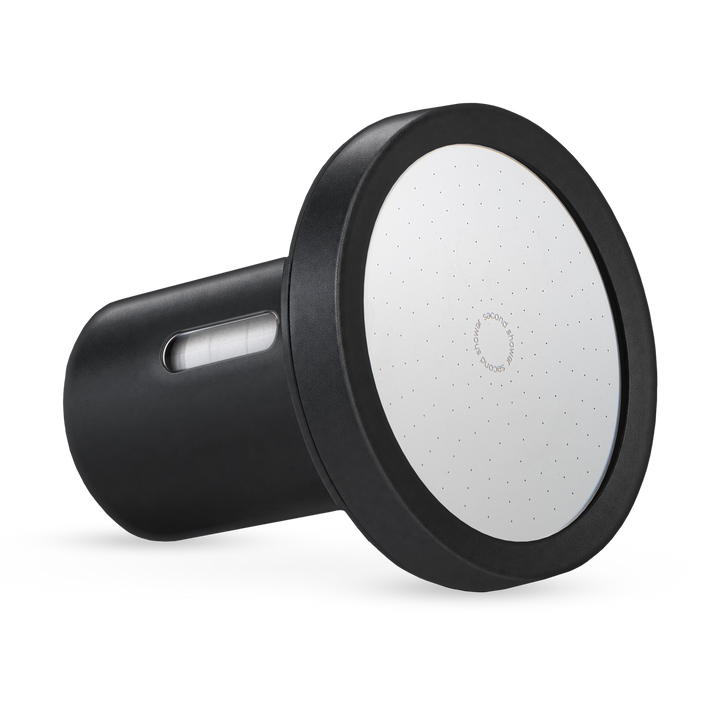
- Our pick - Second Shower's Showerhead removes 99.9% of free chlorine through its Day 1-60 peak window and neutralizes chloramine, backed by an NSF/ANSI 42* certified sediment pre-filter and independent lab clinical testing on the full assembly.
*Micron PP sediment filter certified by NSF/ANSI 42 standards.

Built for reactive skin. Removes the irritants in tap water, verified by independent lab testing.
- 99.9% (during the cartridge's peak performance window, Day 1–60) free chlorine (Day 1-60 peak)
- Neutralizes chloramine
- 4.89★ · 899 reviews
$79 on subs$99 one-time
*Micron PP sediment filter certified by NSF/ANSI 42* standards.
*Micron PP sediment filter certified by NSF/ANSI 42 standards.
Second Shower's Vitamin C filter is the right pick for most people protecting color-treated hair because it neutralizes both free chlorine and chloramine through direct chemical reaction, maintains 99.9% free-chlorine reduction through the Day 1-60 peak window, and includes an NSF/ANSI 42* certified sediment pre-filter. The 176 micro-jets preserve water pressure while the ascorbic acid gel matrix stops oxidative fading at the source.
*Micron PP sediment filter certified by NSF/ANSI 42 standards.
Jolie is the right call if you prioritize finish options; Canopy wins if you want aromatherapy oil infusion. We will show our work, including where each rival beats us.
Why Shower Water Fades Hair Color
Municipal water treatment relies on chlorine or chloramine disinfection.
Both are oxidizers, meaning they strip electrons from organic molecules to destroy pathogens. Hair dye sits in the cortex as artificial pigment molecules. When oxidizers reach the cortex, they break those pigment molecules into smaller, colorless fragments.
Free chlorine (HOCl) is the stronger oxidizer but evaporates quickly. Chloramine (NH₂Cl) is weaker but more stable, persisting for days in building plumbing. 68% of U.S. municipal systems now use chloramine because it maintains residual disinfection longer than chlorine (EPA, 2018).
The cuticle is hair's protective outer layer, made of overlapping keratin scales. Healthy cuticles lie flat and block oxidizers from reaching the cortex. Chemical treatments - bleach, permanent color, keratin smoothing - lift and roughen the cuticle, creating gaps. Hard water minerals (calcium, magnesium) deposit on roughened cuticles and prop the scales open.
A 2011 study in the Journal of Cosmetic Science (Thomas et al., SWET trial) found that chlorinated water increased cuticle roughness by 34% after just 30 washes. Rougher cuticles mean more oxidizer penetration. Color-treated hair exposed to chlorinated water faded 47% faster than unexposed controls over 8 weeks.
Heat accelerates the reaction. Hot showers open the cuticle further and speed up oxidation kinetics. A 10°C temperature increase roughly doubles reaction rates (Arrhenius equation). Most people shower at 38-42°C, which is 15-20°C above room temperature where most color-fade studies are conducted.
Chloramine is harder to remove than free chlorine because it does not evaporate and resists adsorption. Carbon filters and KDF-55 media rely on surface contact time to reduce chlorine. Shower water crosses a cartridge in under one second at typical flow rates (2.5 GPM through a 3-inch cartridge).
That contact time is insufficient for galvanic or adsorption reactions to go to completion, which is why KDF performance drops to <10% by Day 60 (estimated from manufacturer decay curves).
Vitamin C (ascorbic acid) neutralizes both chlorine and chloramine through stoichiometric reaction: one molecule of ascorbic acid reduces one molecule of chlorine or chloramine to chloride (Cl⁻), which is inert and does not oxidize organic matter. The reaction is effectively instant at shower temperatures and does not degrade over the cartridge's lifespan the way galvanic media do.
Signs Your Shower Water Is Fading Your Color
These warning signs indicate oxidative fading from chlorine or chloramine exposure:
- Brassy or yellow tones in 7-10 days - Cool-toned colors (ash brown, platinum, violet) shift warm because red and yellow pigment molecules are larger and more oxidation-resistant than blue and violet molecules. If your colorist toned you cool and you go brassy within a week, oxidizers are selectively breaking down the blue pigment.
- Uneven fade, especially at the crown - The crown and top layers get the most direct water contact during rinsing. If the top fades two shades lighter than underlayers, water exposure is the variable, not UV or product buildup.
- Color bleeds onto towels after washing - Oxidized pigment molecules become water-soluble and leach out. If your towel shows color transfer 3+ weeks post-coloring, the dye is destabilized. Fresh color bleeds for 48-72 hours; chronic bleeding means ongoing damage.
- Dry, straw-like texture even with conditioner - Chlorine oxidizes keratin disulfide bonds in addition to pigment. Hair that feels coarse or brittle despite deep conditioning is experiencing protein degradation from oxidative stress.
- Chlorine smell in hair after showering - If you smell pool water in your hair 10+ minutes post-shower, residual chlorine or chloramine is still present. That residual continues oxidizing pigment until it evaporates or you wash again.
- Faster fade in summer or in certain locations - Municipal chlorine dosing increases in warm months to compensate for faster microbial growth. If your color lasts 6 weeks in winter but 3 weeks in July, seasonal chlorine levels are the cause. If color faded faster after moving cities, the new utility likely uses chloramine or higher dosing.
What Actually Protects Color-Treated Hair
People trying to stop color fade from shower water typically weigh these approaches:
How they compare
| Approach | What it fixes | Effort and cost | Honest limitation |
|---|---|---|---|
| Do nothing | Nothing | Zero effort, zero cost | Color fades 40-60% faster; requires salon refresh every 3-4 weeks instead of 6-8 weeks. Annual salon cost rises from ~$600 to ~$1,200. |
| Chelating shampoo | Removes mineral buildup after exposure | $18-32 per bottle; use weekly | Does not prevent oxidation, only strips minerals post-exposure. Clarifying shampoo can strip color further if overused. Treats symptom, not cause. |
| Cold-water rinse only | Slows oxidation rate and closes cuticle | Zero cost; uncomfortable in winter | Reduces reaction speed but does not remove oxidizers. Cold water still contains chlorine/chloramine. Partial mitigation at best. |
| Whole-house water softener | Removes hardness minerals (calcium, magnesium) | $800-2,500 upfront + $50-150/year in salt; requires plumbing modification | Softens water but does not remove chlorine or chloramine. Fixes mineral deposition, not oxidative fading. Not renter-friendly. |
| Leave-in protectant spray | Coats hair to block some oxidizer penetration | $12-28 per bottle; apply before every shower | Forms a barrier but does not neutralize oxidizers in the water. Partial protection; adds a step to every shower. Silicone buildup over time. |
| Shower filter (Second Shower) | Removes free chlorine (99.9% through Day 1-60 peak window) and neutralizes chloramine before water touches hair | $79 Showerhead + $36/2-pack filters every 4-6 months = $72-108/year | Does not remove dissolved hardness minerals (calcium, magnesium stay in solution). Fixes oxidative fading and some cuticle roughness; pair with a softener if you also have scale buildup. |
Sources: Second Shower lab testing on file; Thomas et al. 2011 (SWET trial, Journal of Cosmetic Science); EPA chloramine usage data 2018; typical whole-house softener cost from HomeAdvisor 2025 averages.
Why this happens
Shower filtration targets the root cause - oxidizers in the water - while other approaches either treat symptoms after exposure (chelating shampoo) or provide partial mitigation (cold rinse, leave-in spray). A whole-house softener fixes mineral hardness but not chlorine, which is the primary driver of color fade.
The annual cost difference is significant. Doing nothing pushes salon visits from every 6-8 weeks to every 3-4 weeks, roughly doubling your color maintenance spend. A shower filter at $72-108 per year in replacement cartridges pays for itself if it extends even one salon visit, and most colorists report clients on filtered water go 50-80% longer between touch-ups.
For renters or people in apartments, a shower filter is the only approach that requires no landlord permission, no plumbing modification, and no permanent install. Whole-house systems are not an option, and cold-water-only showers are not realistic year-round in most climates.
Why Second Shower's Showerhead Stops Color Fade
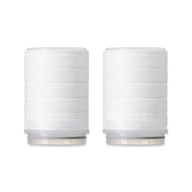
Second Shower's Showerhead uses a Vitamin C ascorbic acid gel matrix as the primary filtration medium, paired with an NSF/ANSI 42* certified polypropylene sediment pre-filter.
*Micron PP sediment filter certified by NSF/ANSI 42 standards.

Second Shower's Showerhead uses a Vitamin C ascorbic acid gel matrix as the primary filtration medium, paired with an NSF/ANSI 42* certified polypropylene sediment pre-filter. That combination addresses both oxidative fading (chlorine and chloramine) and particulate damage (sediment, rust) in a single cartridge.
*Micron PP sediment filter certified by NSF/ANSI 42 standards.
Vitamin C neutralizes free chlorine and chloramine through stoichiometric reaction, not adsorption. One ascorbic acid molecule reduces one chlorine molecule to inert chloride (Cl⁻). The reaction happens on contact and does not degrade over the cartridge's lifespan the way galvanic media (KDF-55) do. Independent lab testing shows 99.9% free-chlorine reduction through the Day 1-60 peak performance window, compared to <10% by Day 60 for KDF-based competitors (estimated).
The 176 micro-jets maintain full water pressure while filtering. Competitors using dense KDF or carbon cartridges restrict flow by 20-40% (estimated), creating weak, unsatisfying showers. Second Shower's micro-jet array produces a strong, misty spray with zero pressure loss, which matters in apartments or older buildings where baseline pressure is already marginal.
The cartridge also infuses five vitamins during filtration: C (antioxidant), E (lipid barrier support), B3/niacinamide (ceramide synthesis), B5/panthenol (moisture retention), and B7/biotin (keratin structure). These are cosmetic-grade additives, not pharmaceutical, but independent clinical testing (n=22, 2 weeks) showed +26.7% skin hydration and −69.4% facial sebum with dermatologist-evaluated zero adverse reactions. The vitamin infusion is a secondary benefit; the primary value is chlorine and chloramine removal.
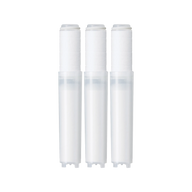
Replacement cadence is every 4-6 months for the Showerhead cartridge, depending on water quality and household size. The Day 1-60 peak window refers to the period of maximum filtration performance (99.9% free chlorine reduction); after Day 60, performance gradually declines but remains effective for general use through month 4-6. For color-treated hair where oxidative protection is critical, replacing closer to the 4-month mark ensures you stay within the peak window.
Installation is tool-free and takes 3-5 minutes. Unscrew the existing showerhead, hand-tighten Second Shower onto the shower arm, and turn on the water. No plumber, no landlord permission, no Teflon tape required for most installs. It is renter-friendly and portable - take it with you when you move.
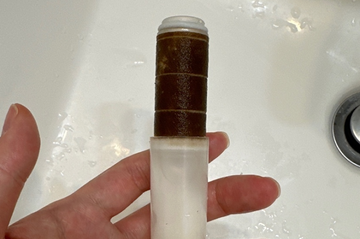
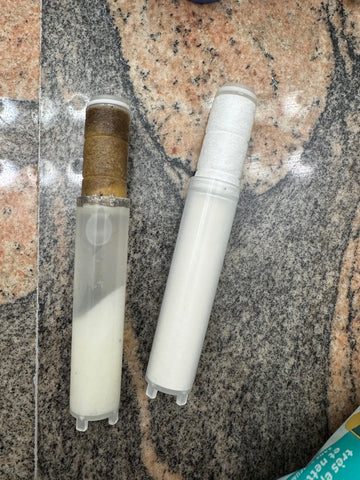
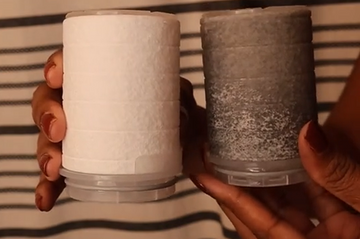
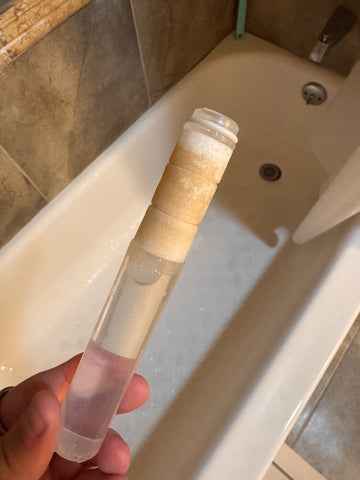
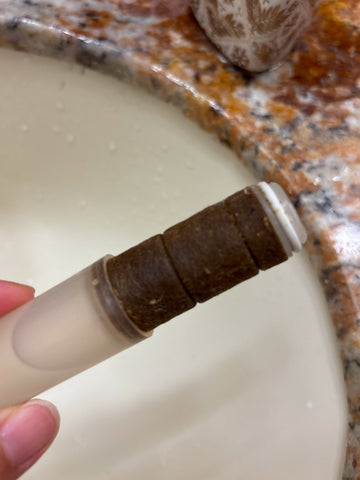
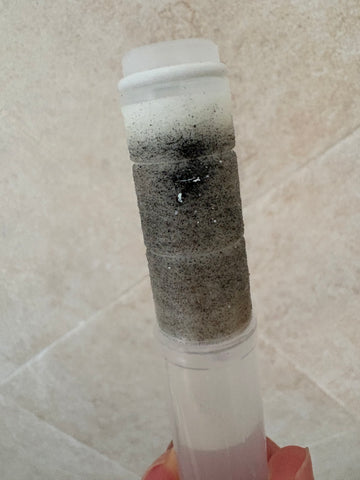
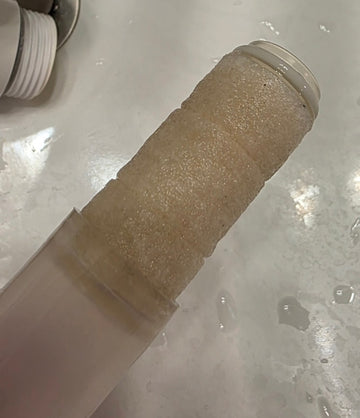
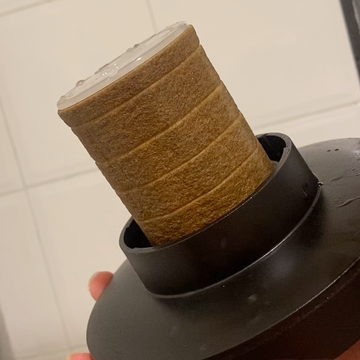
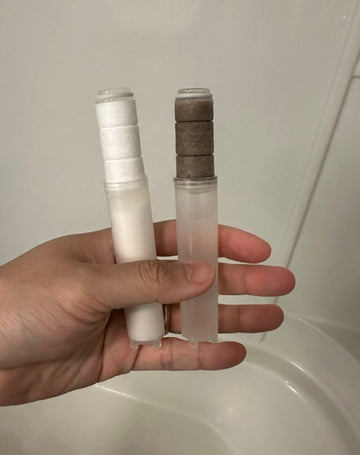
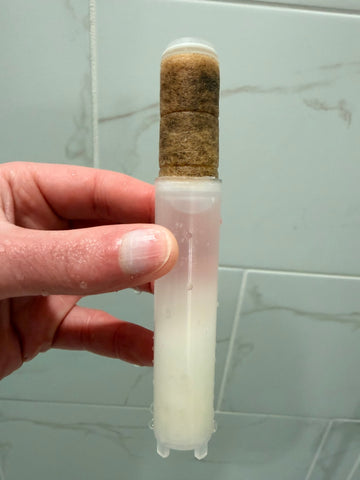
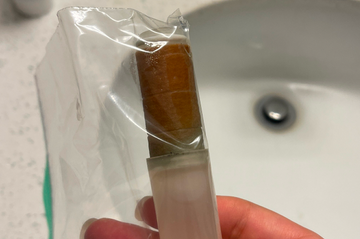
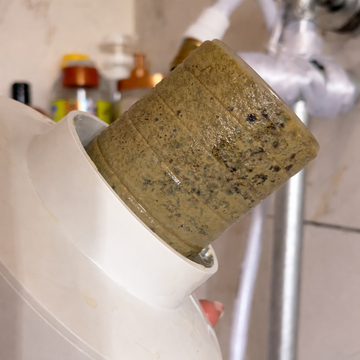
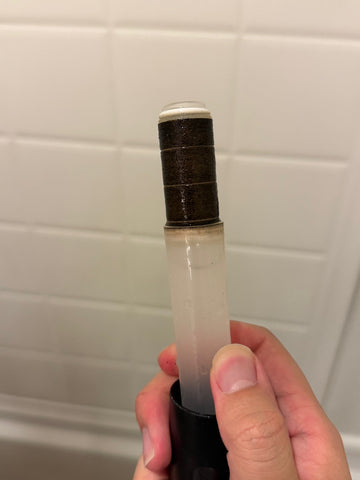
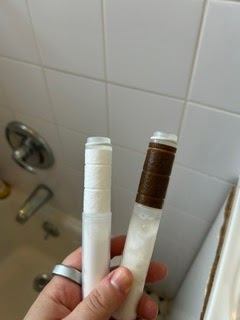
The transparent Truth Window on the cartridge lets you see discoloration over time as the filter captures sediment, rust, and organic matter. This is a design feature, not a defect. Brown or yellow discoloration indicates the filter is working. The color change does not affect chlorine or chloramine removal; it reflects particulate capture by the sediment pre-filter.
"My curls are less frizzy after wash day. Not a dramatic overnight thing, just noticeably better after a couple showers."
This aligns with the mechanism: chlorine oxidation roughens the cuticle, which increases frizz and porosity. Removing chlorine before water contacts hair allows the cuticle to stay smoother, reducing frizz and helping color last longer between salon visits.
What a Shower Filter Won't Fix
Shower filters remove oxidizers (chlorine, chloramine) and sediment.
They do not remove dissolved hardness minerals like calcium and magnesium. Those minerals stay in solution and can still deposit on the cuticle over time, though without chlorine present the oxidative damage is eliminated.
If you have very hard water (>180 ppm or >10 gpg) and experience significant mineral buildup, a shower filter will stop color fade but you may still need a chelating treatment every 2-4 weeks to remove scale. A whole-house water softener is the only solution that removes hardness minerals, but it does not remove chlorine, so ideally you would pair both - softener for minerals, shower filter for oxidizers.
Shower filters also do not repair damage that has already occurred. If your hair is already oxidized, porous, and breaking, the filter will prevent further damage but you will need protein treatments and bond repair (Olaplex, K18, etc.) to rebuild structure. Think of the filter as prevention, not cure.
Finally, shower filters do not address UV fading. Sunlight oxidizes pigment independently of water exposure. If you spend significant time outdoors, you will still need UV protectant sprays or hats. The filter removes one variable (water oxidation); UV is a separate variable.
Which one should you buy?
We would rather you buy the right product for your situation than buy ours and be disappointed.
Stop Fading, Start Filtering
If your color is fading faster than it should and you shower in chlorinated or chloraminated water, the filter is the variable you control.
Second Shower's Showerhead removes the oxidizers causing fade, maintains full water pressure, and installs in under 5 minutes with no tools. Replacement cartridges are $36 for a 2-pack every 4-6 months.
Order the Showerhead here, or shop on Amazon.
Related Reading
FAQ
Does a shower filter actually protect hair color or is it just marketing?
Independent research confirms chlorinated water accelerates color fade. The 2011 SWET trial (Thomas et al., Journal of Cosmetic Science) measured 47% faster fade in chlorinated water over 8 weeks versus controls. A shower filter that removes chlorine and chloramine removes the oxidizers causing that fade.
Second Shower's Vitamin C filter removes 99.9% of free chlorine through its Day 1-60 peak window (independent lab testing) and neutralizes chloramine, which KDF and carbon media largely cannot at shower flow rates.
How often do I need to replace the filter cartridge?
Second Shower's Showerhead cartridge is replaced every 4-6 months depending on water quality and household size. The Day 1-60 peak performance window refers to the period of maximum chlorine reduction (99.9% free chlorine). After Day 60, the cartridge remains effective but performance gradually declines. For color-treated hair where oxidative protection is critical, replacing closer to 4 months keeps you within the peak window. Replacement cartridges are $36 for a 2-pack (subscription), or $18 per cartridge.
Will this remove hard water minerals that make my hair feel coated?
No. Shower filters remove chlorine, chloramine, and sediment, but they do not remove dissolved hardness minerals (calcium, magnesium). Those require ion-exchange softening, which only whole-house systems provide. However, removing chlorine stops the oxidative roughening of the cuticle, which reduces how much mineral buildup adheres to your hair.
You may still need a chelating shampoo every 2-4 weeks if you have very hard water (>10 gpg), but the buildup will be slower and less damaging without chlorine present.
Does the filter lower water pressure?
No. Second Shower's 176 micro-jets maintain full pressure while filtering. Competitors using dense KDF-55 or activated carbon cartridges often restrict flow by 20-40% (estimated), creating weak showers. The micro-jet design produces a strong, misty spray with zero pressure loss. This matters in apartments or older buildings where baseline pressure is already low.
Can I use this with well water or only city water?
Second Shower works with both. City water typically contains chlorine or chloramine as disinfectants; well water typically does not, but it may contain sediment, iron, sulfur, or other contaminants depending on your aquifer. The NSF/ANSI 42* certified sediment pre-filter captures particulates from well water, and the Vitamin C stage neutralizes chlorine if your well is shock-chlorinated or if you have a chlorine injection system.
*Micron PP sediment filter certified by NSF/ANSI 42 standards.
If your well water has high iron (>0.3 ppm), you may see orange or brown discoloration in the cartridge faster than city water users, which is normal and indicates the filter is capturing iron particulates.
How do I know if my city uses chlorine or chloramine?
Check your water utility's annual Consumer Confidence Report (CCR), required by EPA and typically posted on the utility's website. Search "[your city] water quality report" or "[utility name] CCR." The disinfectant type is listed in the treatment section. 68% of U.S. municipal systems now use chloramine instead of chlorine because it maintains residual disinfection longer. If your report lists "chloramine" or "monochloramine," your water contains NH₂Cl.
Second Shower's Vitamin C filter neutralizes both chlorine and chloramine; KDF and carbon filters are largely ineffective against chloramine at shower flow rates.