New KDF-55 shower cartridges remove most free chlorine, and published life tests show different results as the cartridge is used: removal fell a lot in Test A, a little in Test B, and not at all over about 5,100 gallons in Test C. In a 2025 maker's lab test, two cartridges combining KDF-55 and calcium sulfite reduced free chlorine by 53.9% and 59.6% at 8,000 gallons; another maker's copper-zinc and carbon design reduced it by 87% and 89% at 10,000 gallons. Both tests used water with about 2 mg/L of free chlorine. Neither explains why the readings changed. [1][2]
- A strong first reading does not describe the whole cartridge life.
- The published results differ by filter design and test conditions.
- The tests measured free chlorine, not chloramine.
What do the published life tests actually show?
We make a Vitamin C shower filter, so read this knowing that; every claim below carries its source or says it is our own testing.
The useful question is not just whether a new cartridge reduces chlorine. It is how the reading changes as water passes through it. The published tests below follow cartridges over thousands of gallons, but they test different designs under different conditions. They are evidence about those particular units, not a forecast for every KDF cartridge.
Test A used a showerhead filter containing KDF-55 and calcium sulfite. The KDF maker's lab ran it under NSF/ANSI 177 conditions: free chlorine at 2.0 mg/L, water at about 40 C, on and off cycling, and an eight-hour rest each day. Test B used a copper-zinc and coconut-shell carbon filter with about 2 mg/L of free chlorine and reported two samples per point. Test C used one KDF shower unit, with results reported at two temperature ranges. [1][2][3]
The table selects start, middle and end readings where the reports supply them. The full tables and procedures are in the sources. In Test A, readings fell and recovered between points, and the two units did not track each other. In Test B, the design held most of its free chlorine reduction through its rated capacity. Neither pattern tells us what caused the changes. [1][2]
| Test: who ran it and on what | Start | Middle | End | What it does not tell you |
|---|---|---|---|---|
| Test A: KDF maker's lab, two KDF-55 and calcium sulfite showerhead units, 2025 [1] | At 15 gallons: 99.94% and 98.72% free chlorine reduction. | At 4,000 gallons: 100% and 91.8%. | At 8,000 gallons: 59.6% and 53.9%. | Why readings changed or whether the same pattern occurs at home. |
| Test B: maker's performance data sheet, copper-zinc and coconut-shell carbon shower filter, two samples per point [2] | At 10 gallons: 99.5% free chlorine reduction. | At 5,000 gallons: 82% and 81%. | At its 10,000-gallon rated capacity: 89% and 87%. | Why readings changed or how another design will perform. |
| Test C: KDF maker's 1990 test of one shower unit, to about 5,100 gallons [3] | Hot samples (103 to 105 F): 96% to 100% in the report's summary; its raw table also lists 85% and 94% on two days. | When the heater ran out and the water sat at 82 to 84 F: 83% to 91%. | Last readings at 5,112.5 gallons: 90.9% at 83 F, then 100% at 105 F. | Performance beyond about 5,100 gallons or in more than one unit. It shows a temperature effect, not a loss with use. |
The takeaway: A cartridge's first reading is useful, but readings across its capacity reveal much more.
Why might chlorine removal change as a cartridge is used?
KDF-55 is a granular copper-zinc alloy. In a shower filter, water passes through a small bed of granules, and the alloy reduces free chlorine on contact. The path water takes through that bed matters because water that bypasses much of the media has less opportunity for contact.
One possible issue is channeling: water finds easier paths through a granular bed instead of moving evenly through the media. The Water Quality Association describes clogging and channeling in granular filtration beds when backwashing is insufficient. A showerhead filter patent using KDF media says that without enough turbulence, "dead spots will develop which give rise to internal channeling within the filter media." Those sources explain a plausible mechanism; they do not establish that it caused the changes in the life tests above. [5][7]
Temperature is another condition to notice. In the KDF maker's 1990 test of one shower unit, free chlorine reduction was 96% to 100% in the report's summary in hot samples at 103 to 105 F and 83% to 91% when the heater ran out and the water sat at 82 to 84 F; the raw table also lists hot samples of 85% and 94% on two days. The last readings at about 5,100 gallons were 90.9% at 83 F and 100% at 105 F. The maker said removal was directly related to temperature. The test therefore shows a temperature effect and no loss with use over that volume, in one unit. [3]
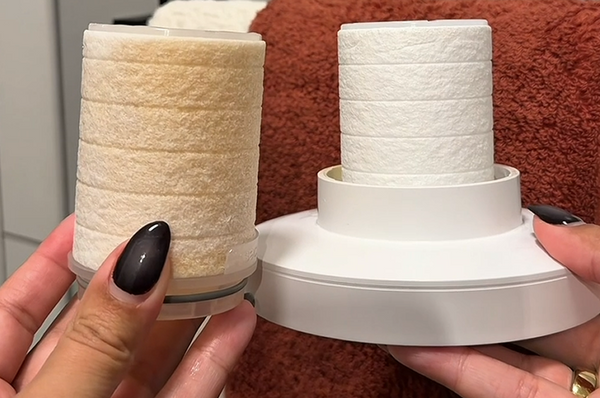
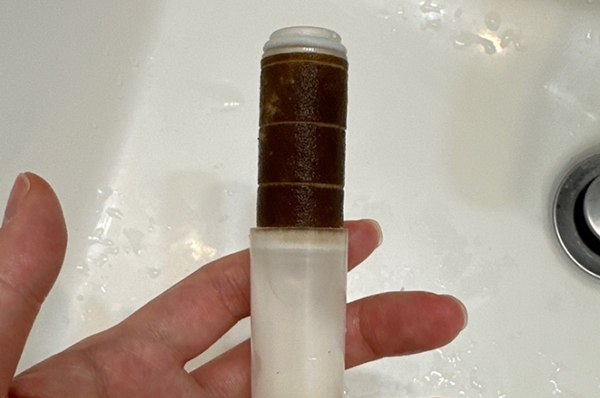
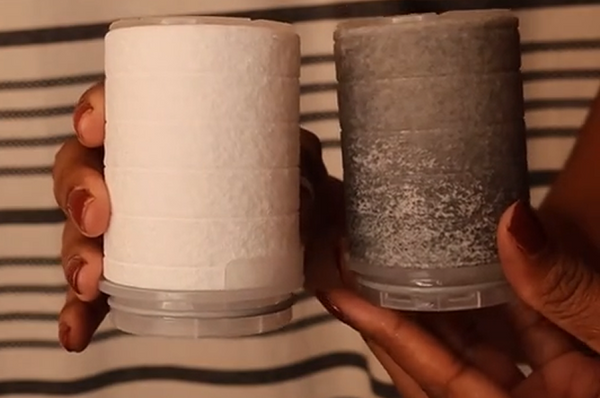
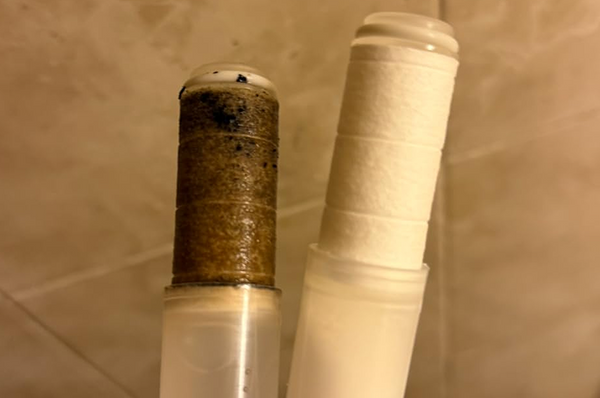
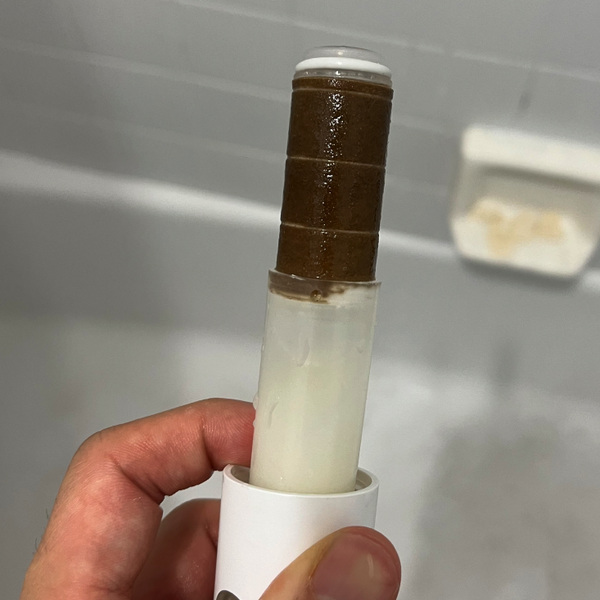
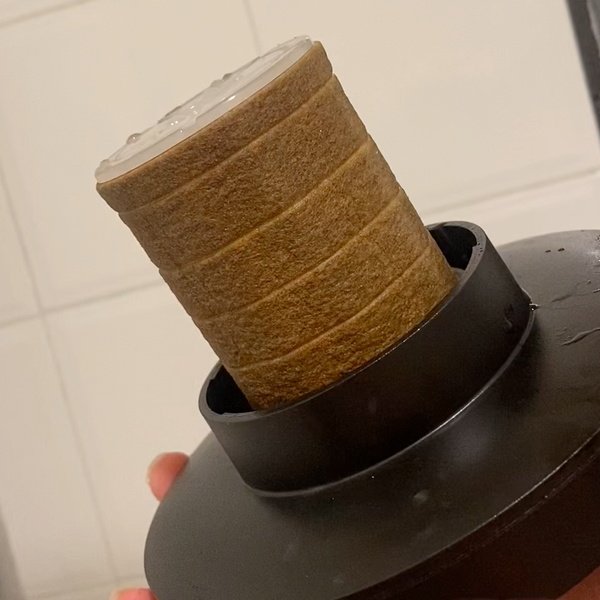
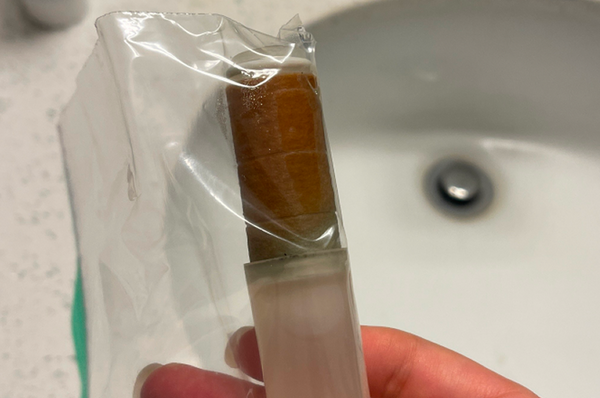
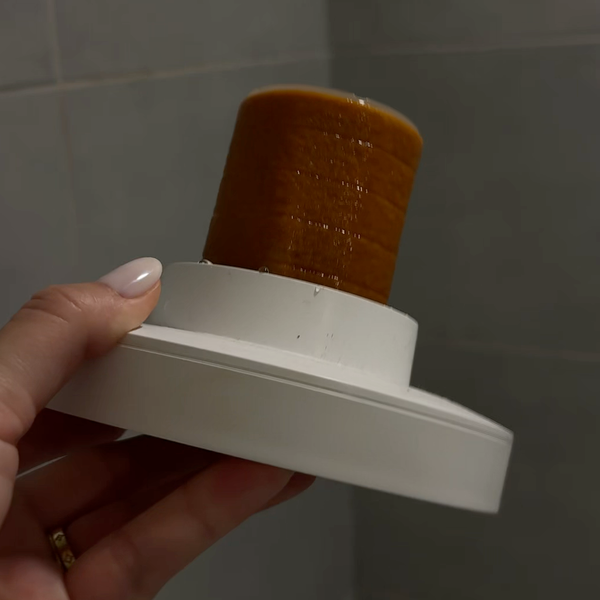
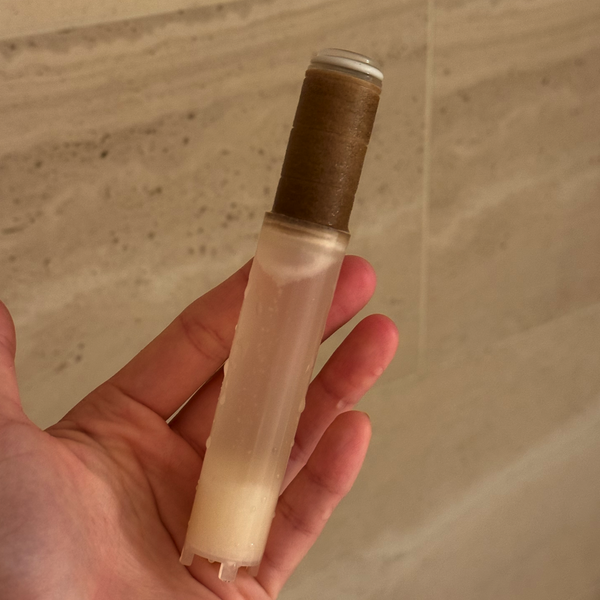
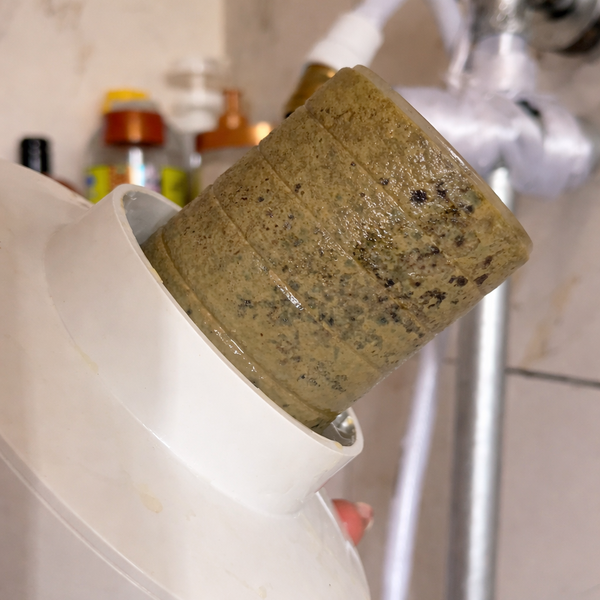
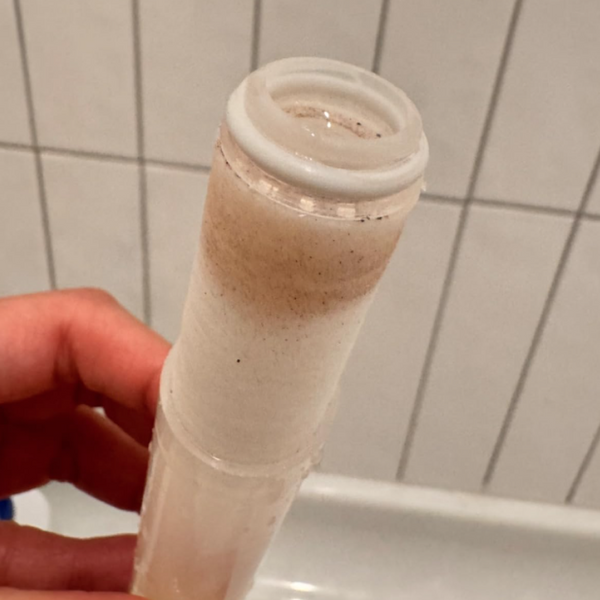
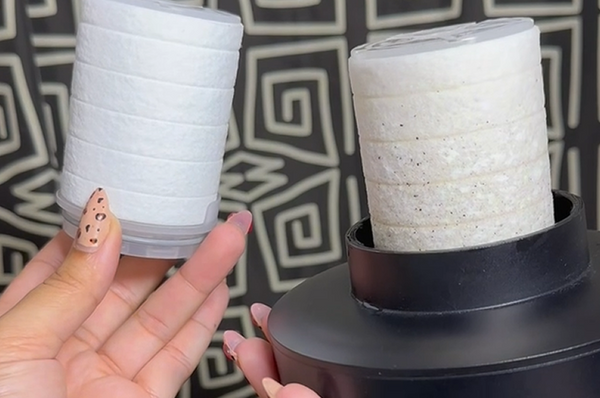
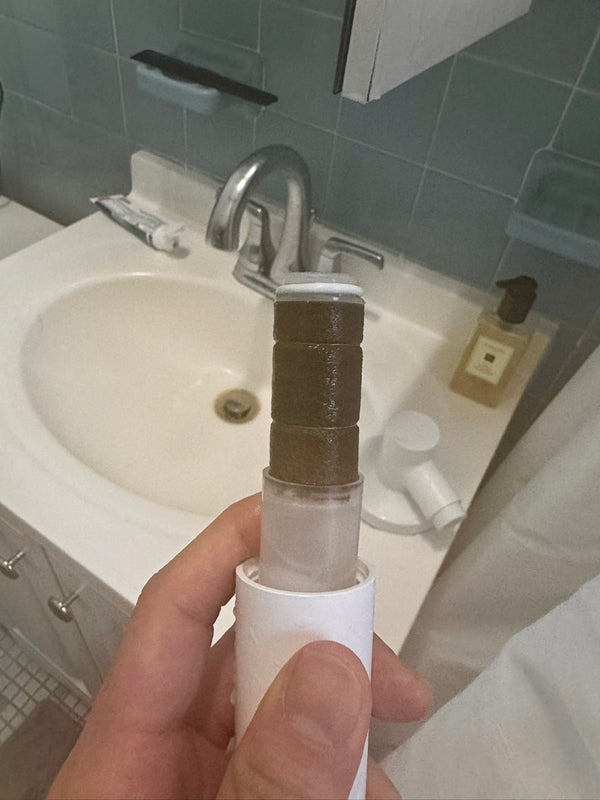
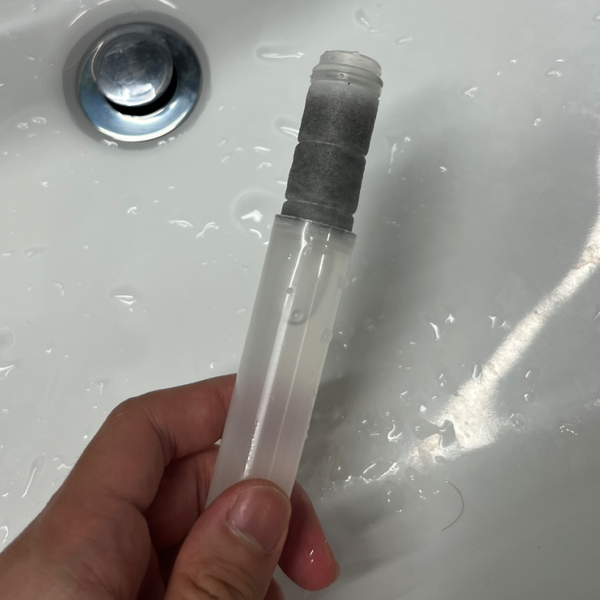
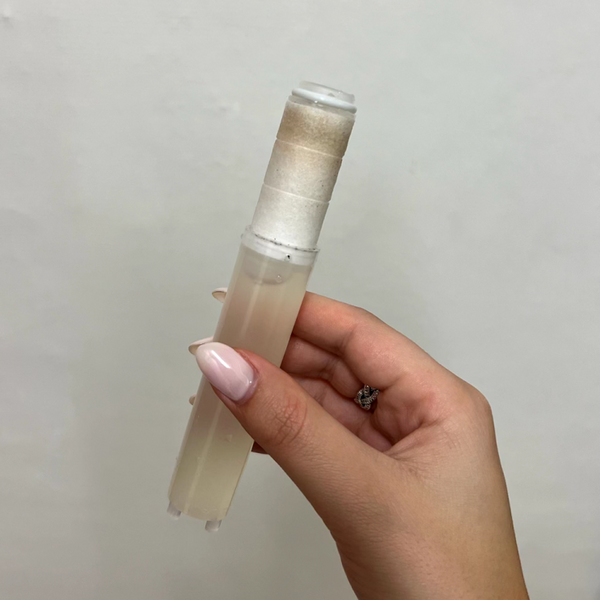
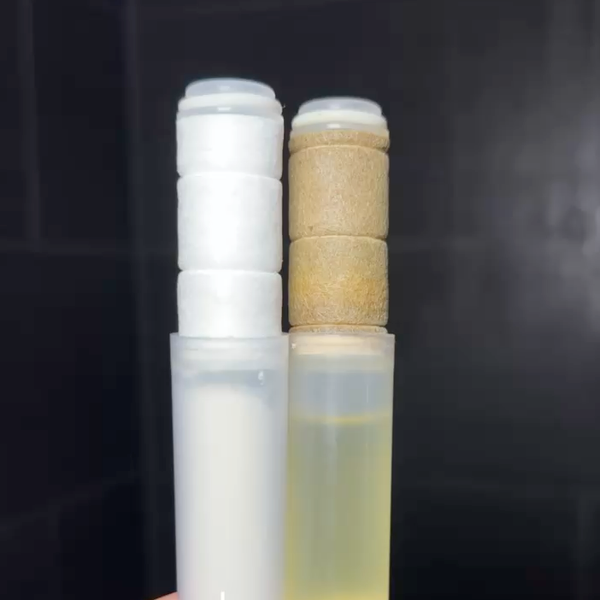
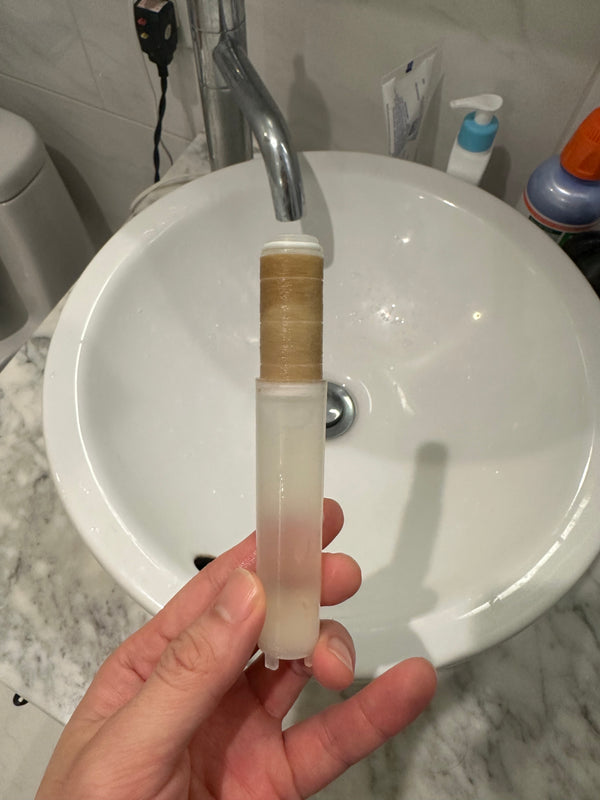
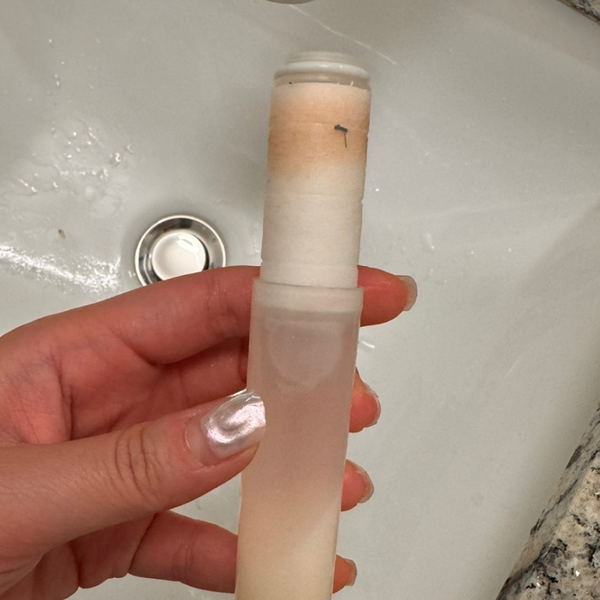
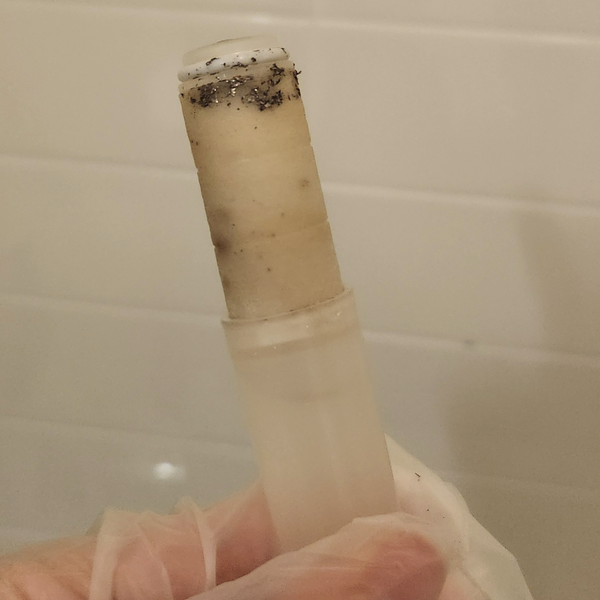
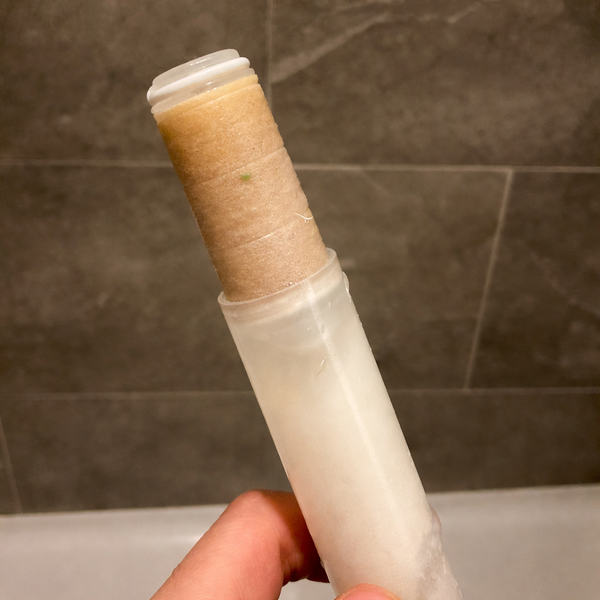
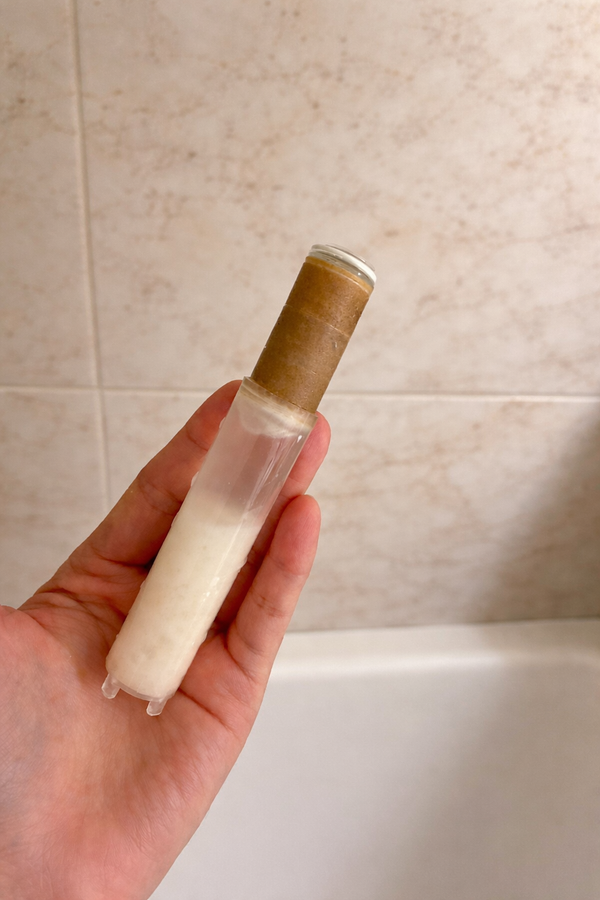
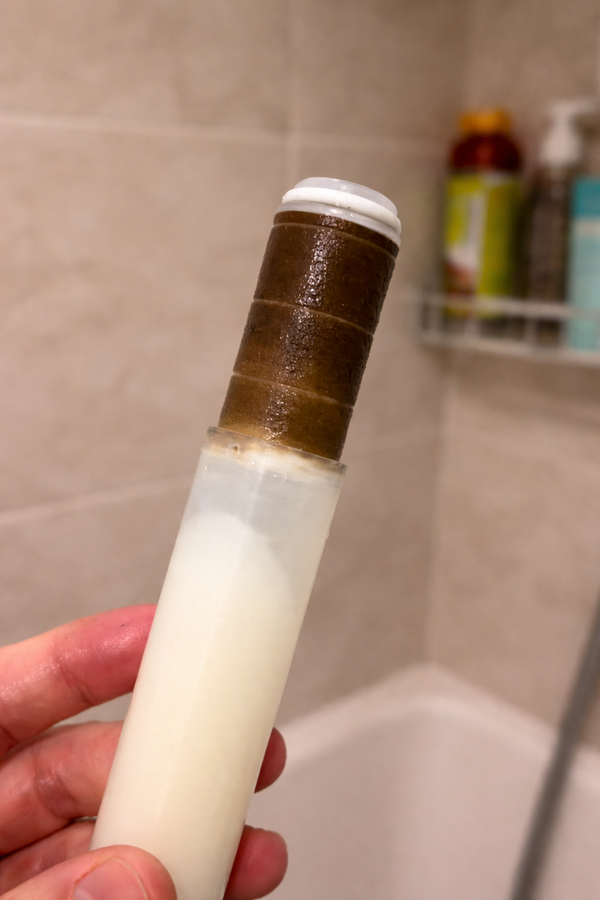
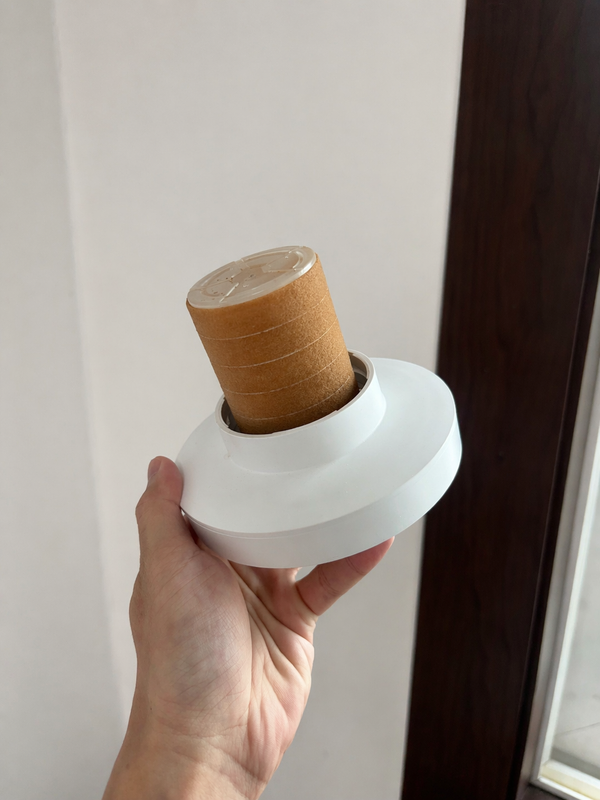
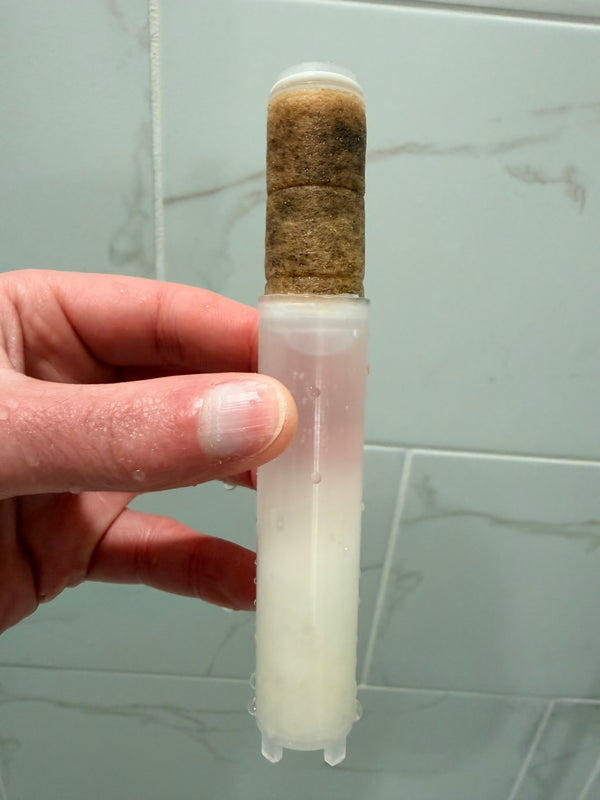
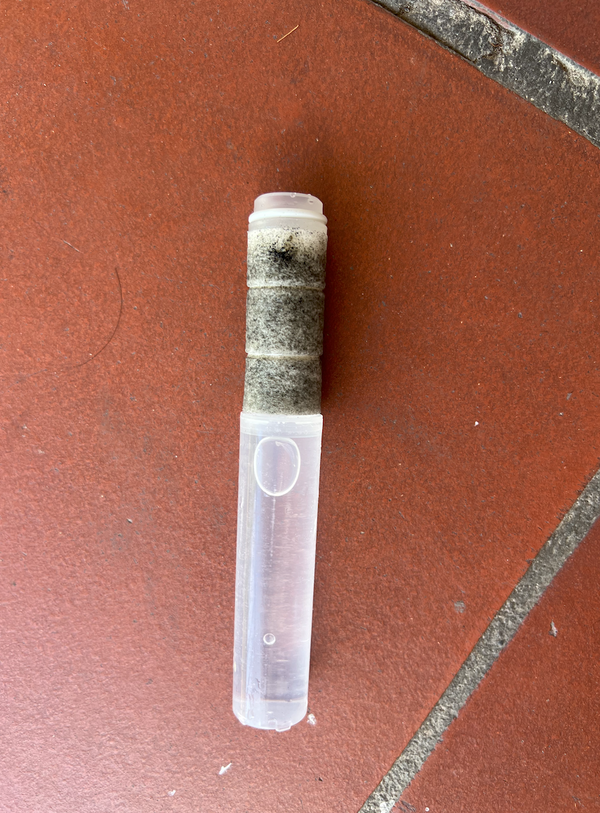
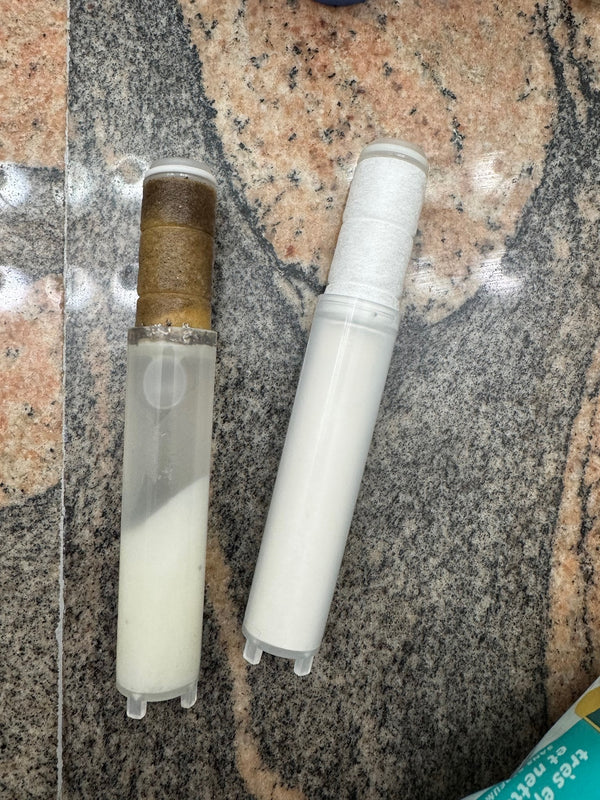
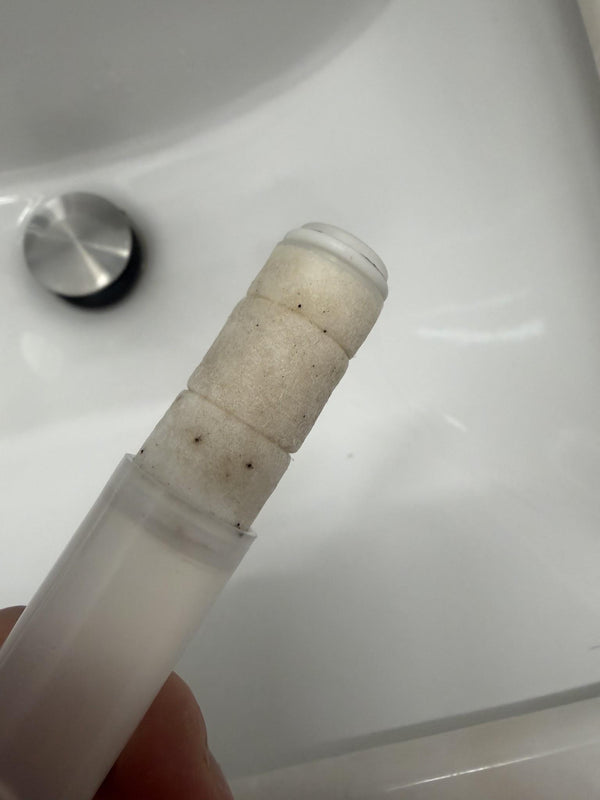
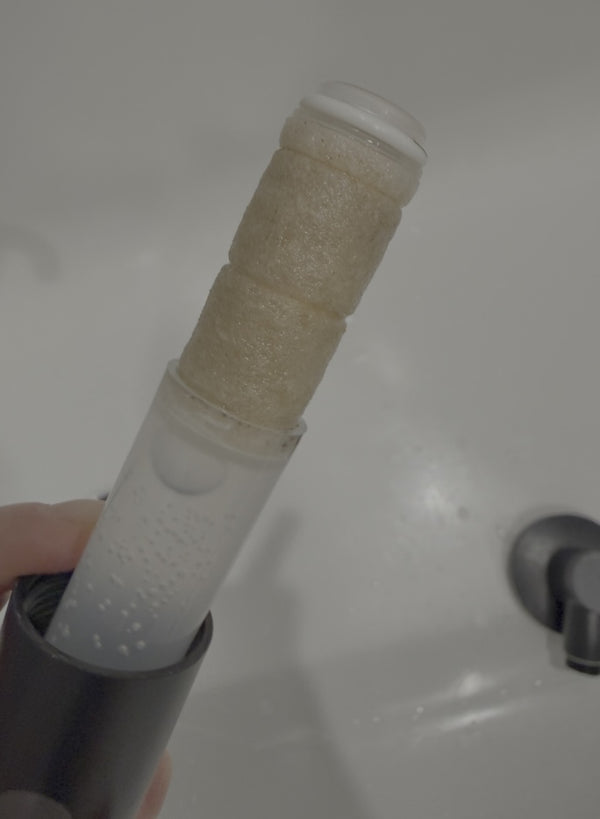
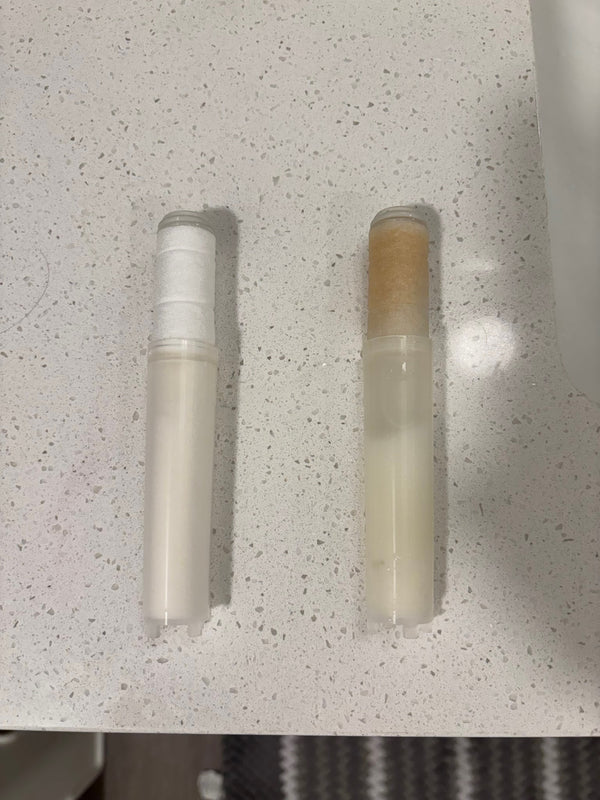
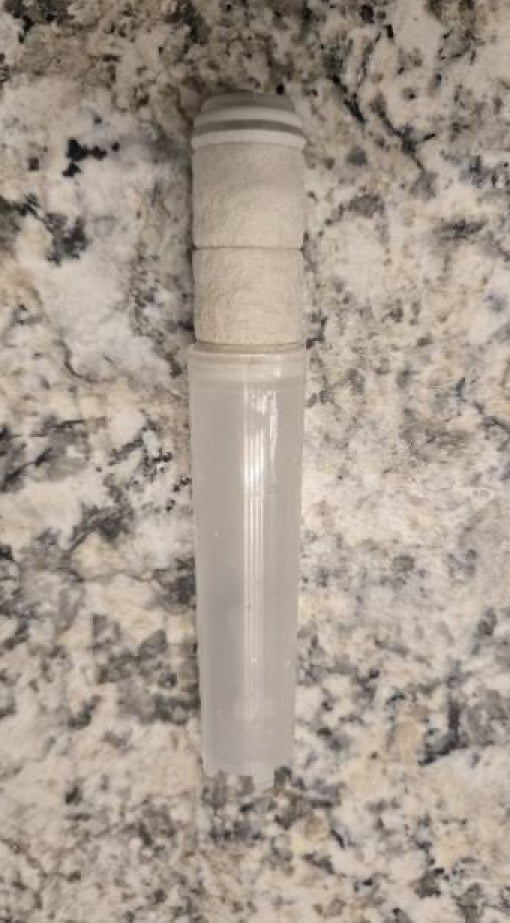
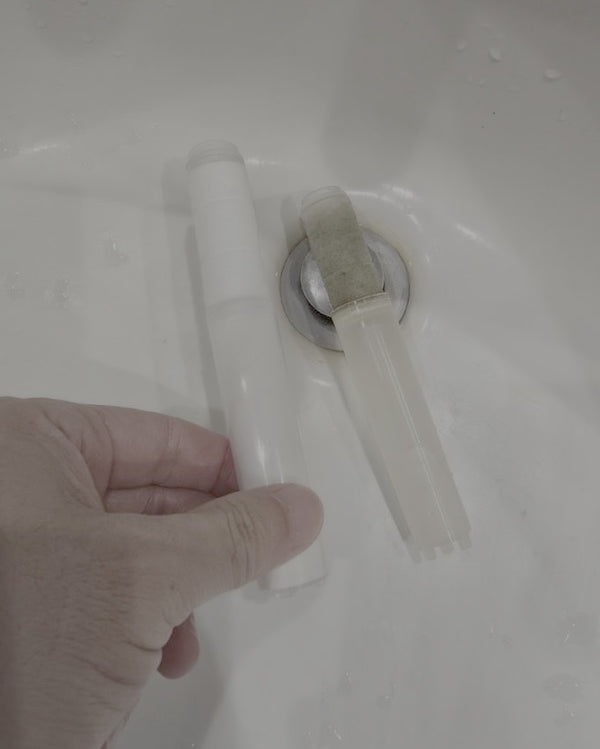
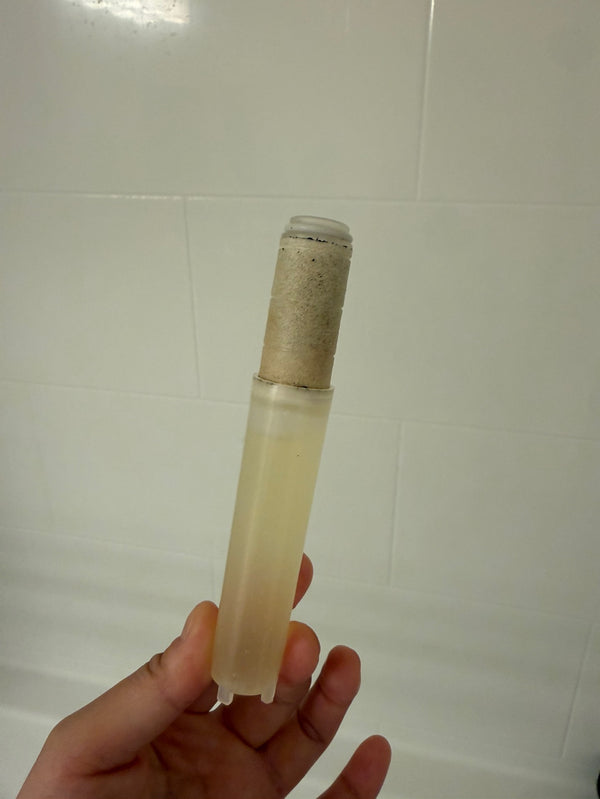
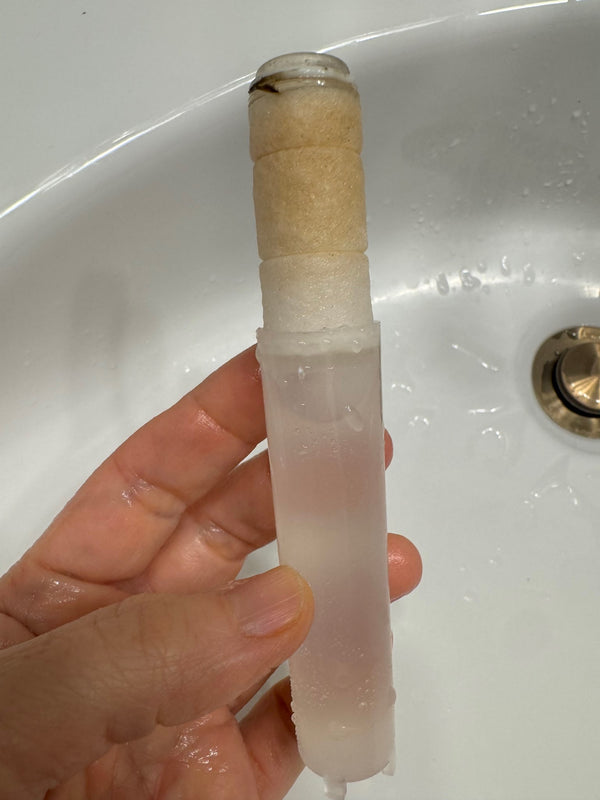
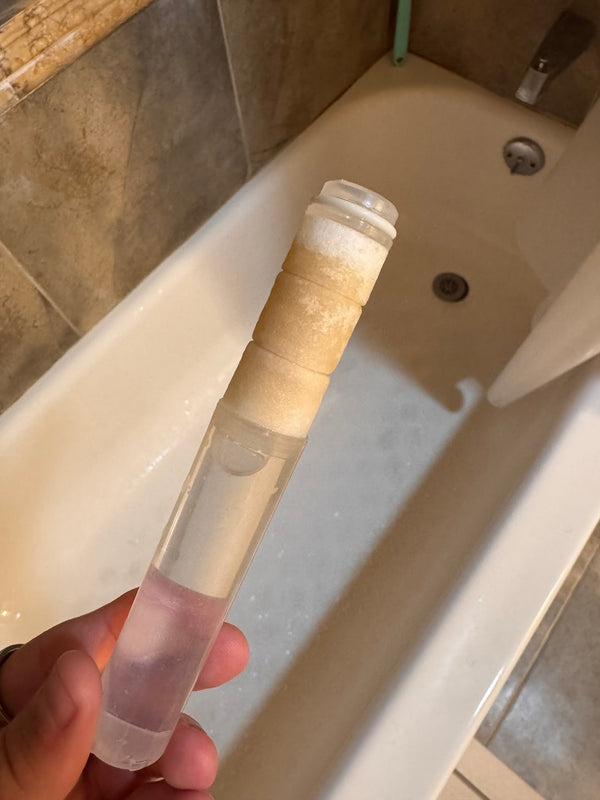
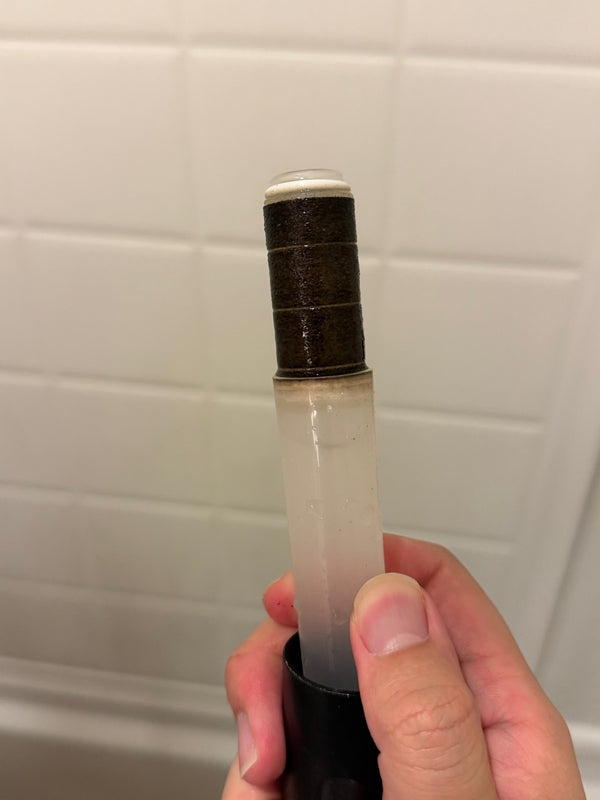
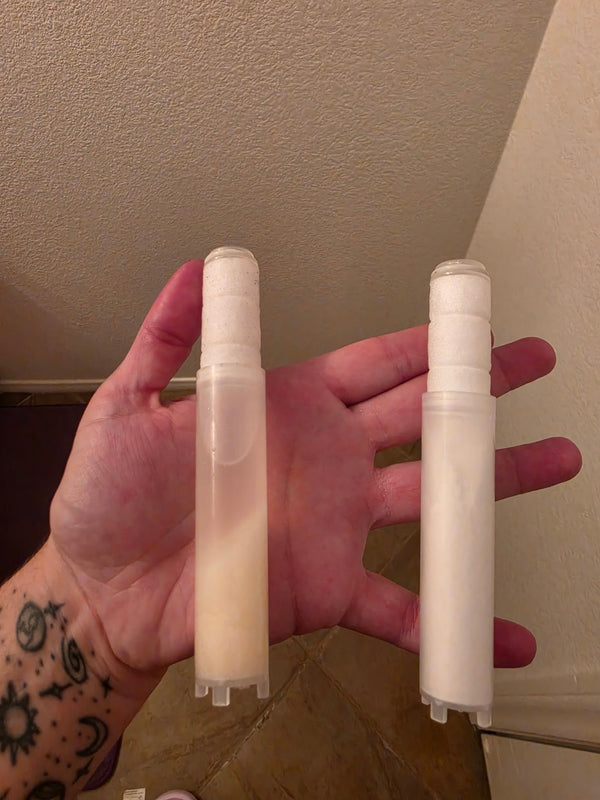
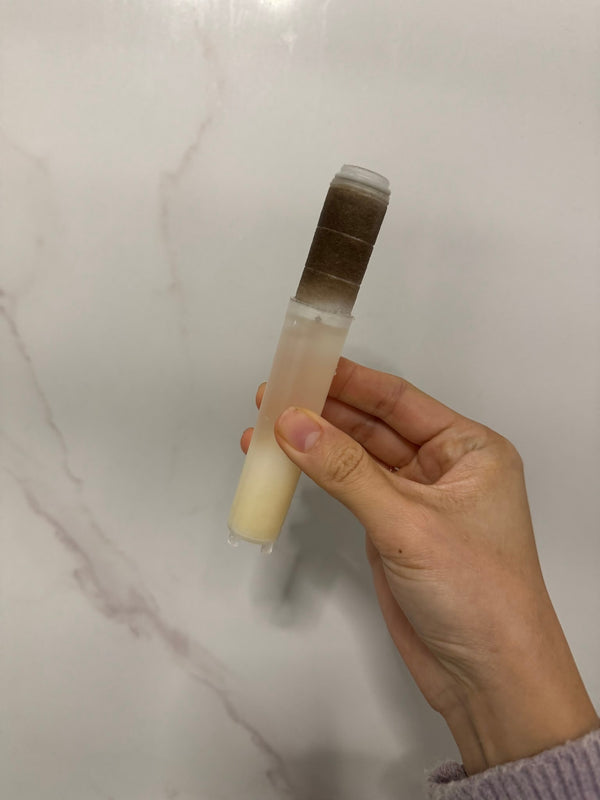
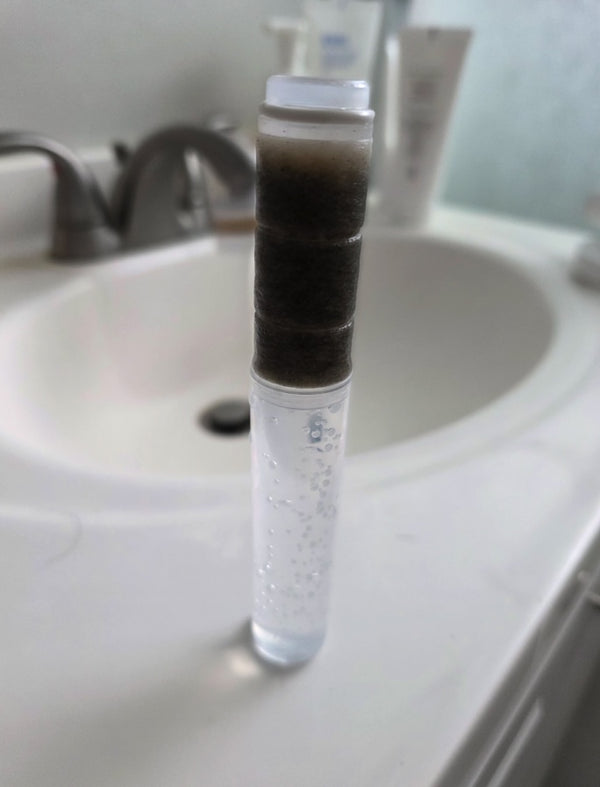
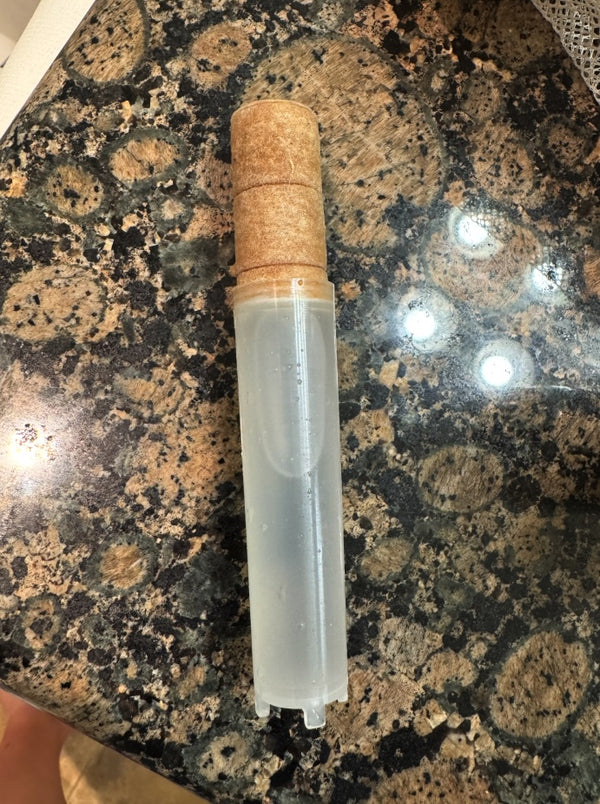
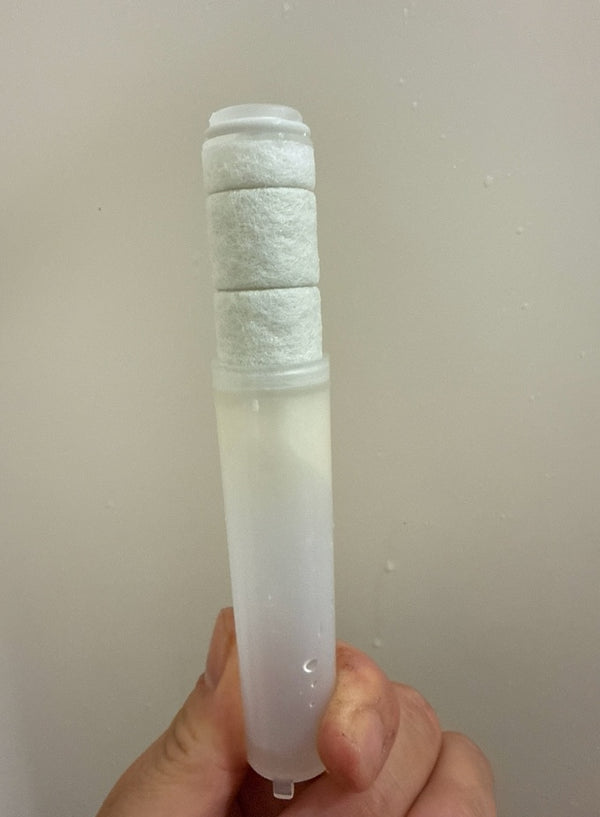
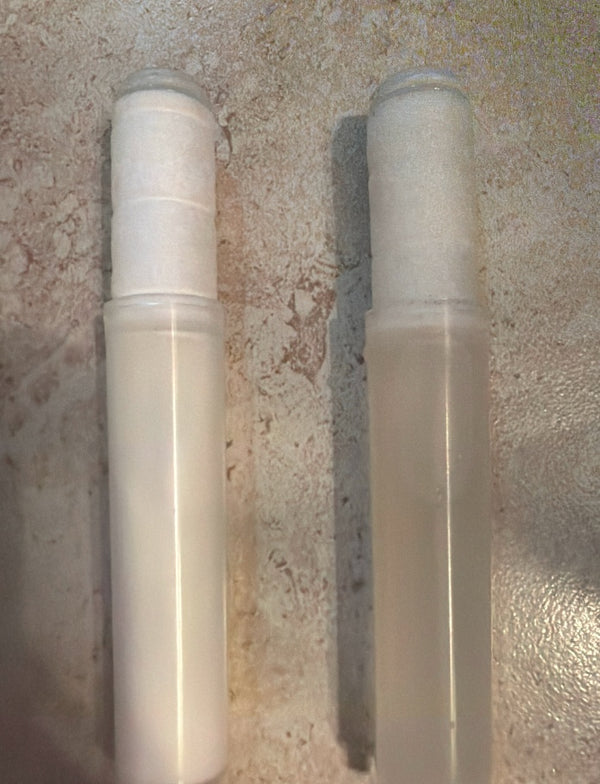
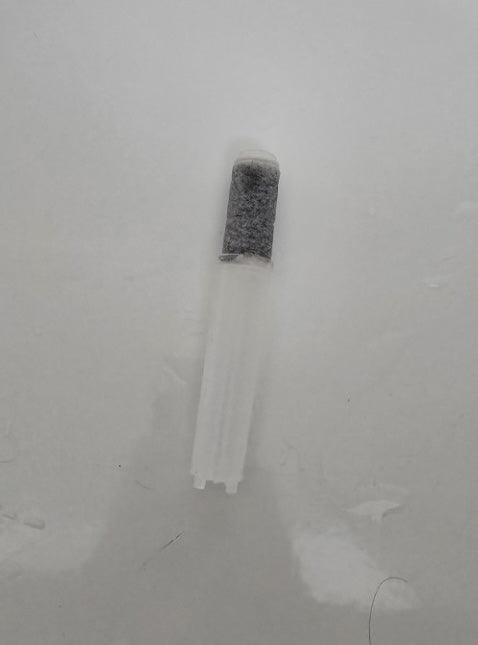
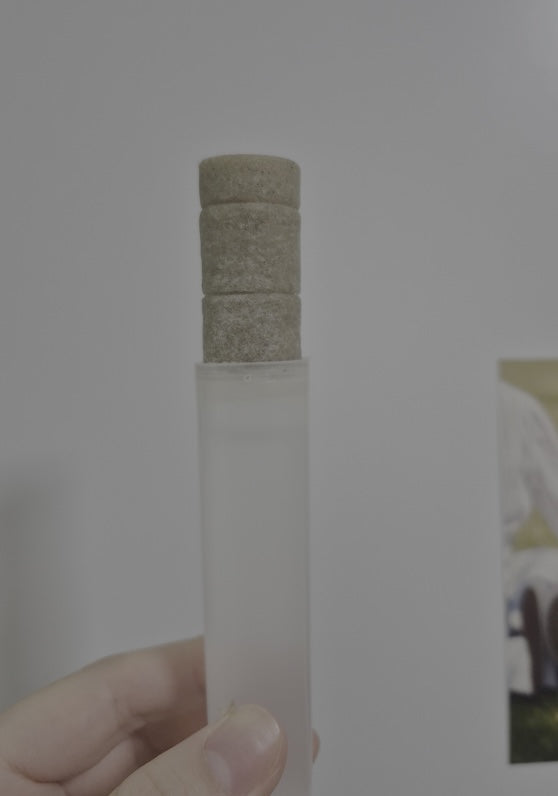
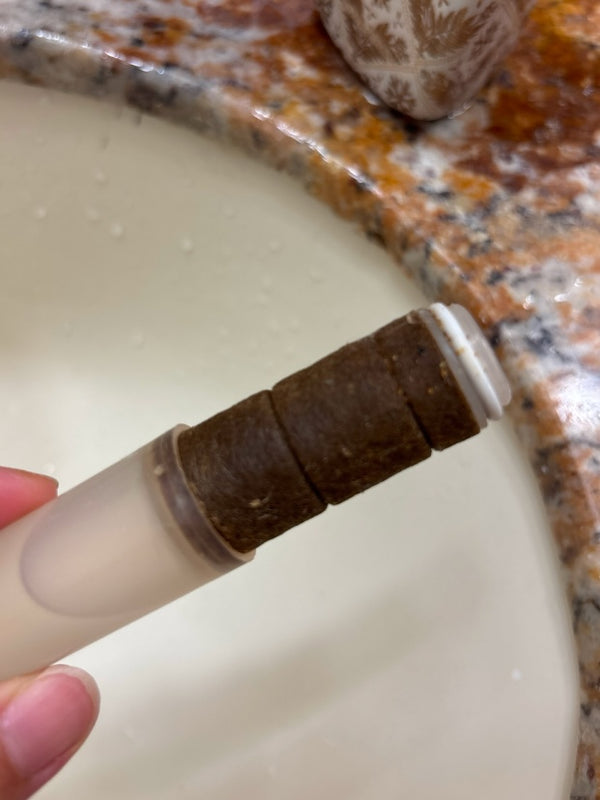
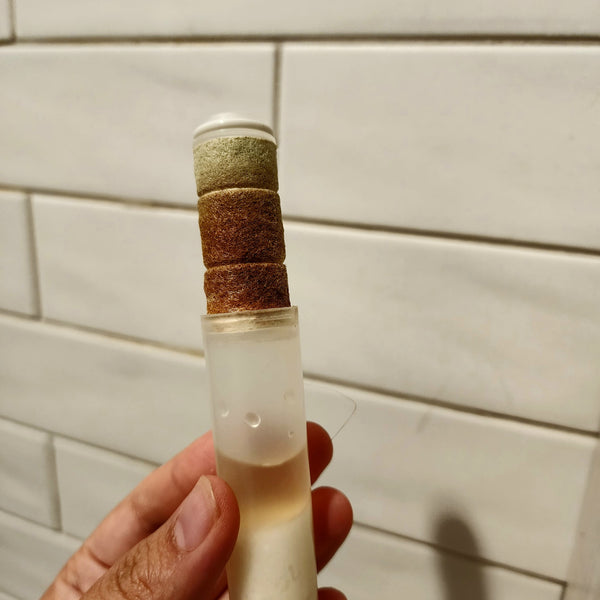
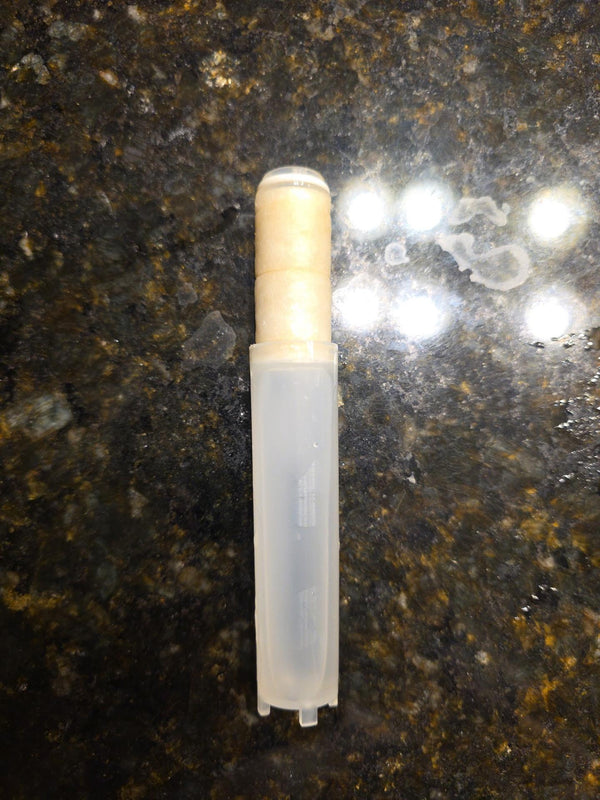
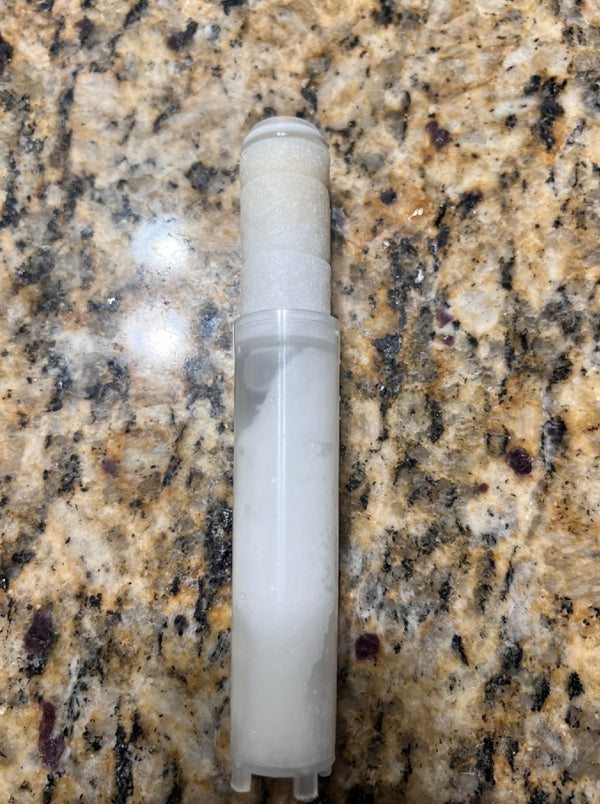
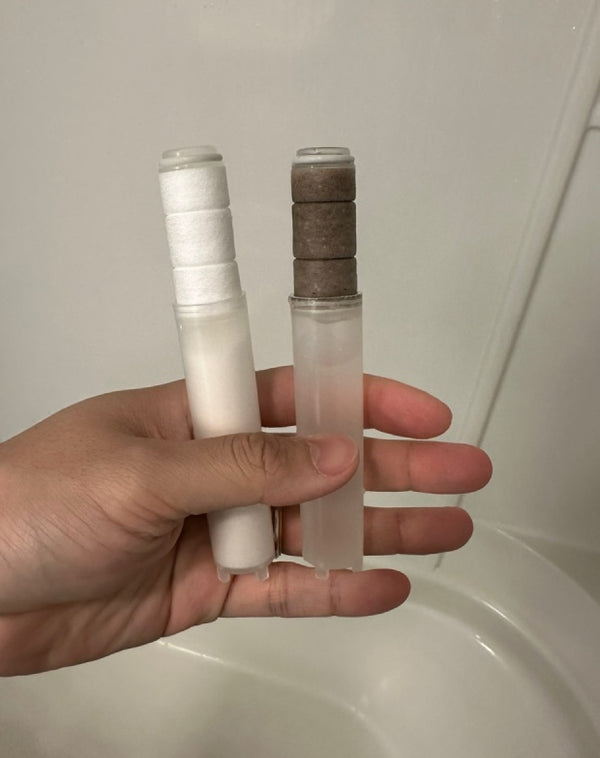
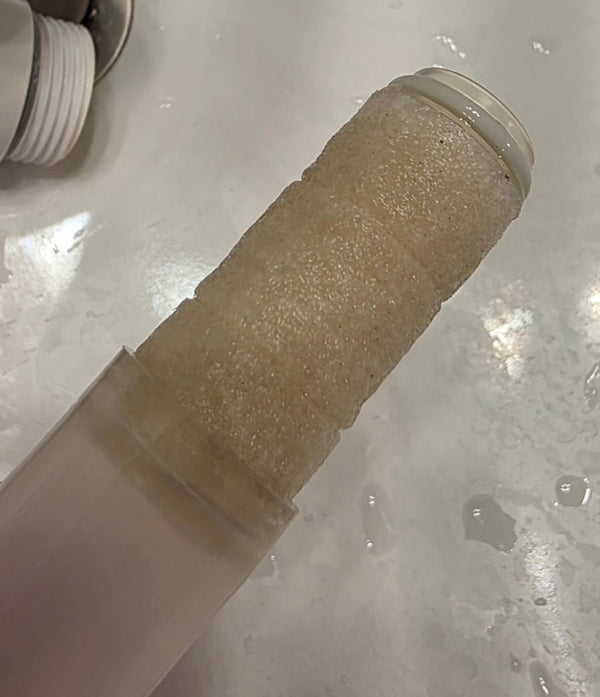
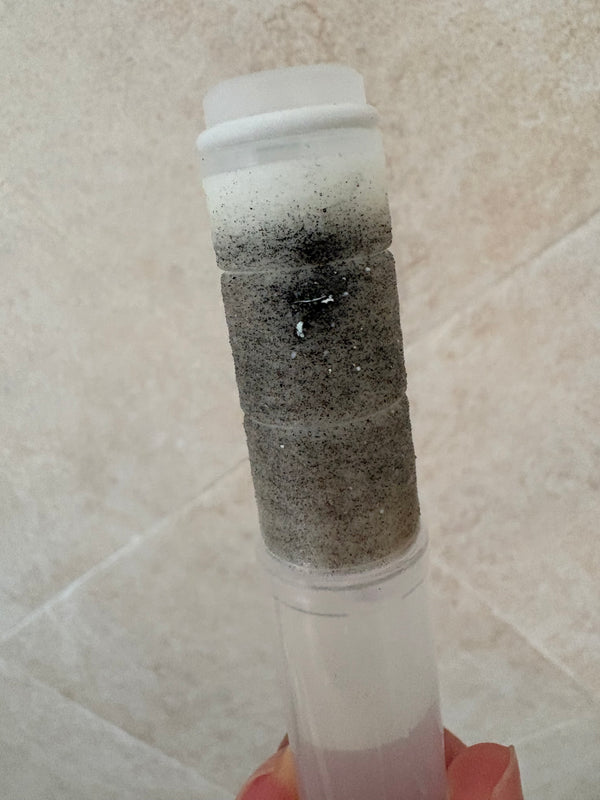
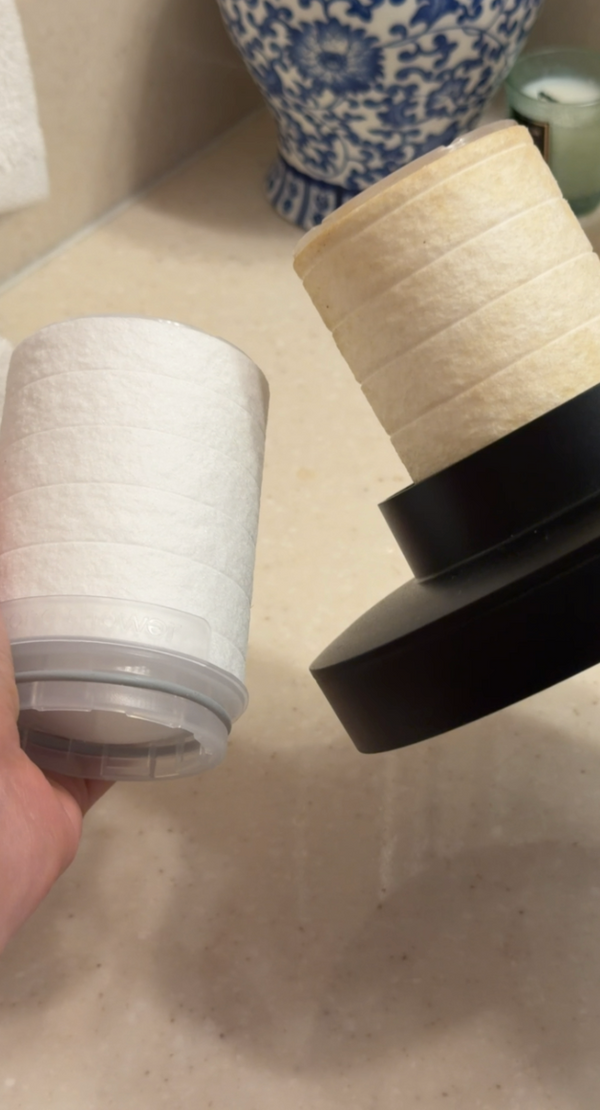
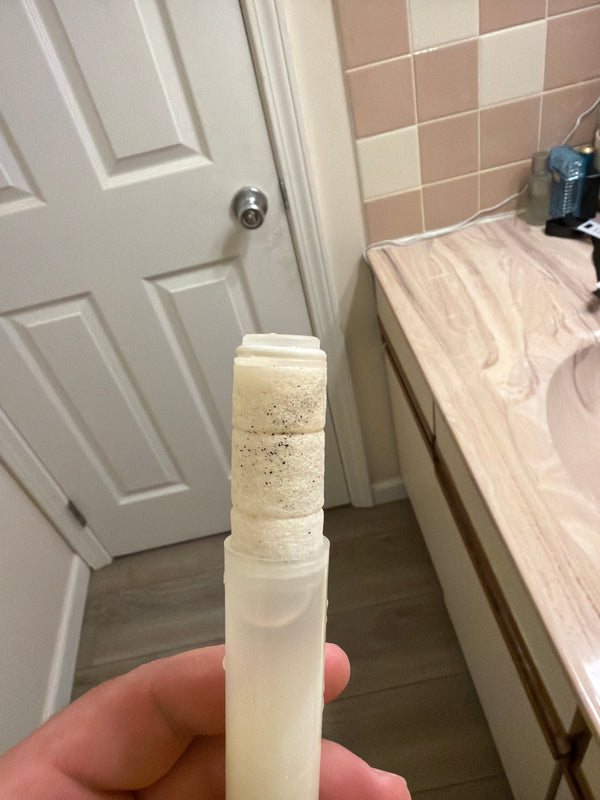
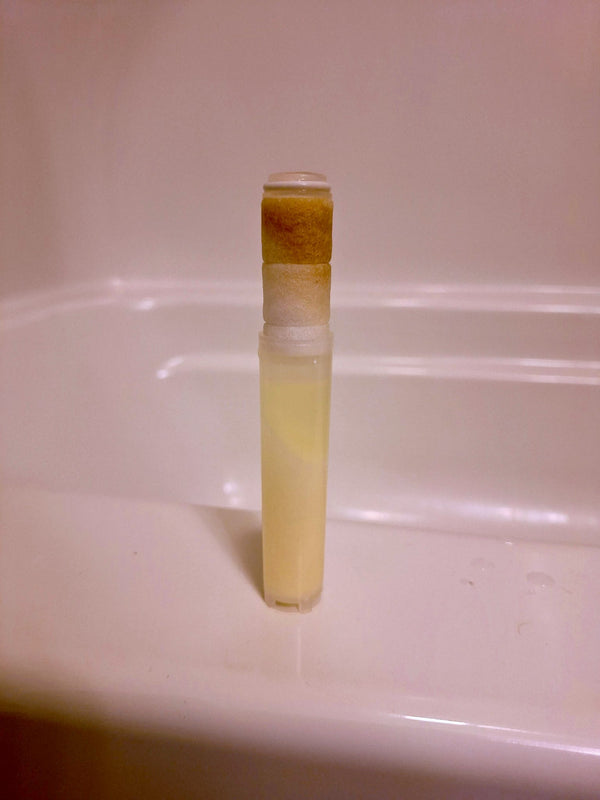
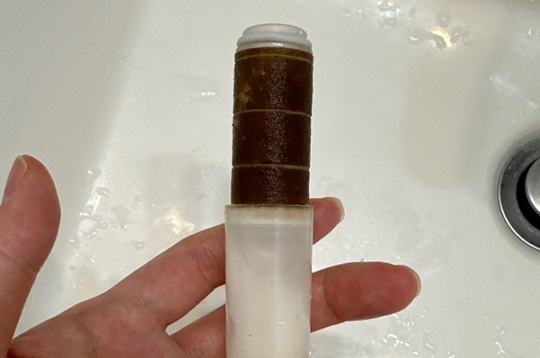
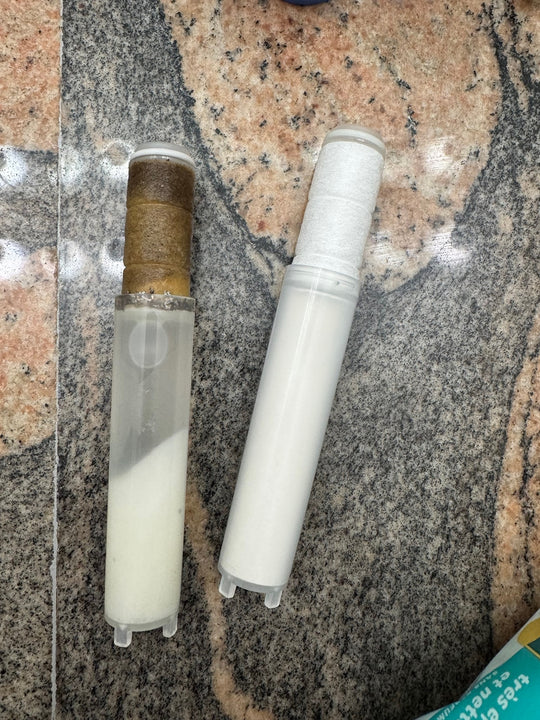
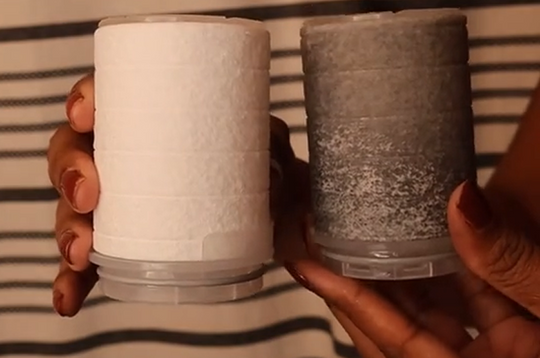
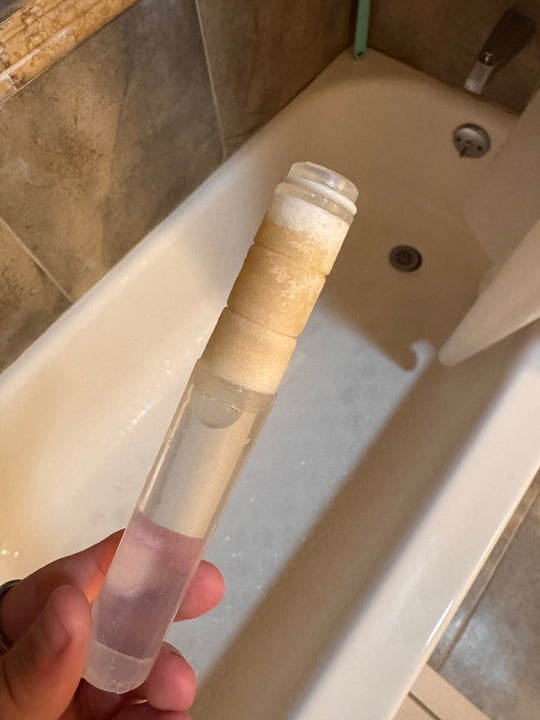
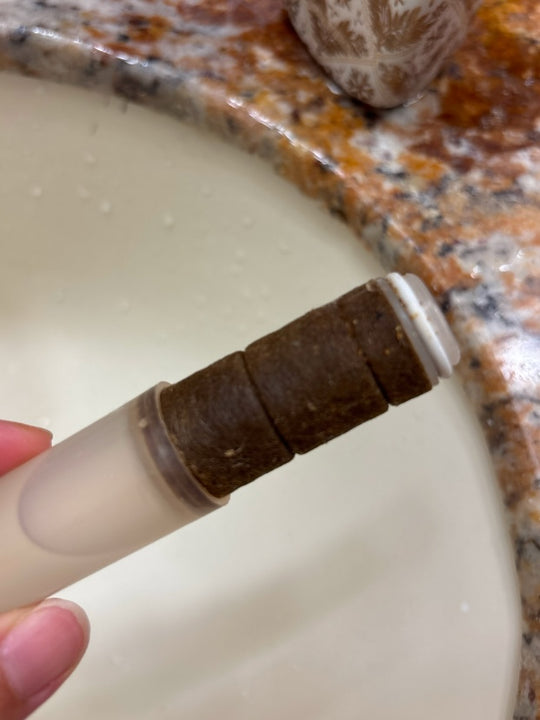
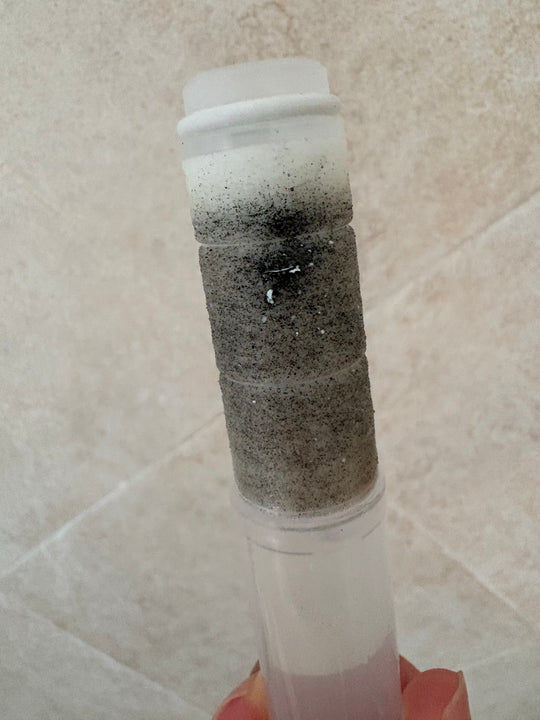
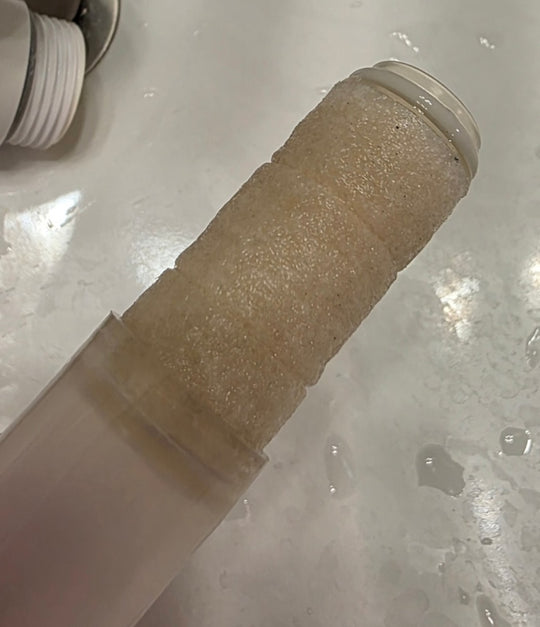
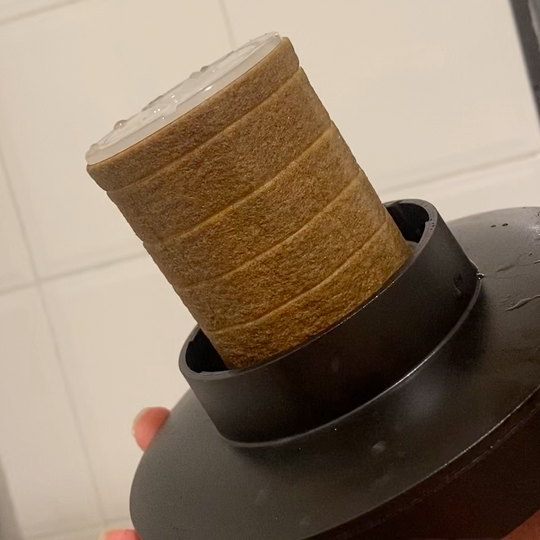
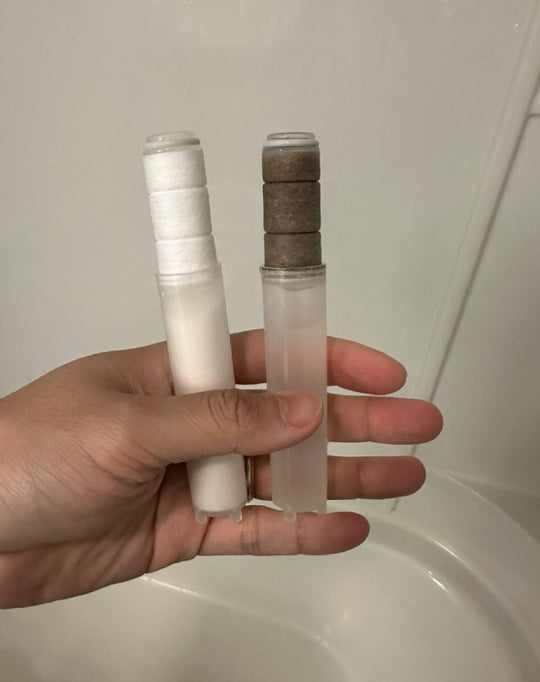
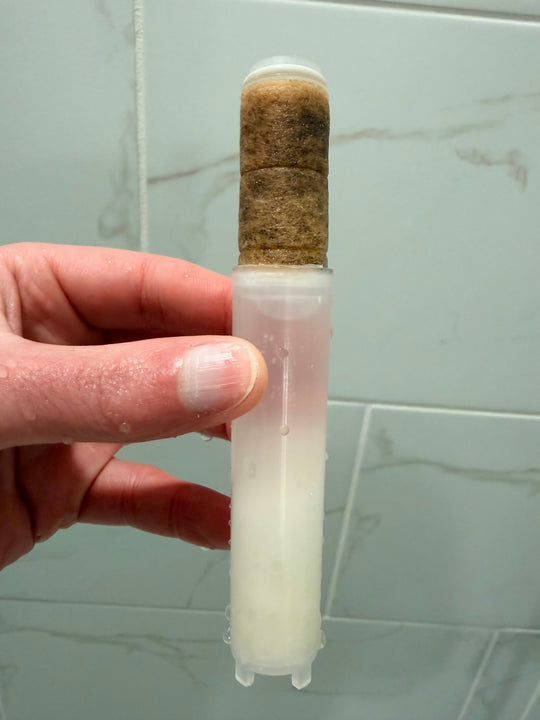
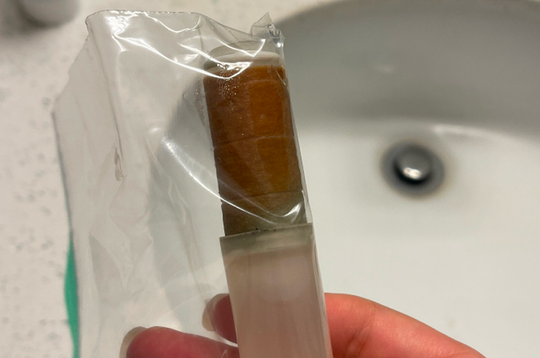
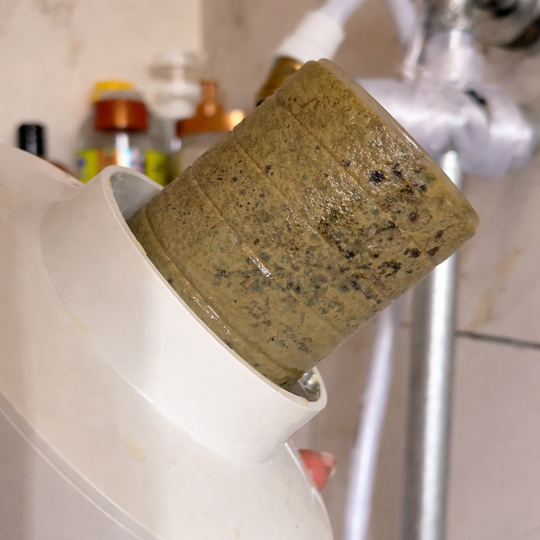
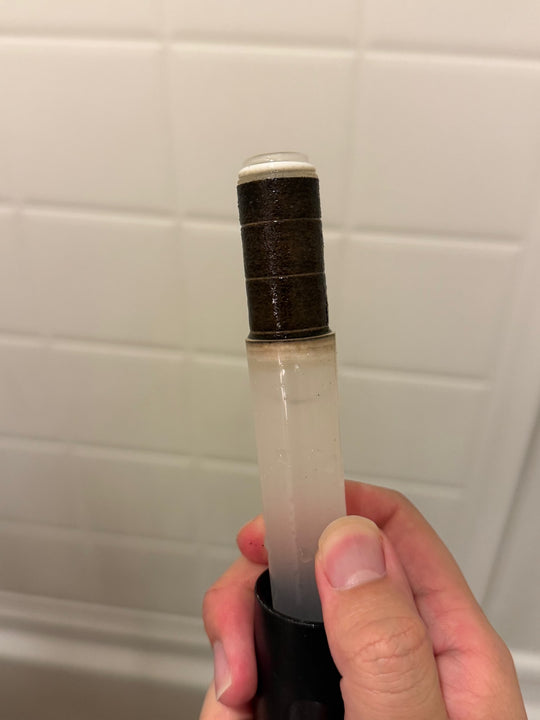
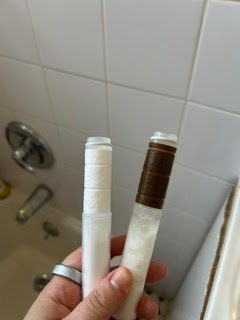
In our own internal tests, KDF-55 shower cartridges reduced chlorine well when new and lost reduction as they were used; channels were observed in the used media beds, but the figures and photos from our own tests are not published yet. Those observations are not an independent explanation of the published test results.
The takeaway: Contact and temperature are relevant, but the published life tests do not measure the cause of their changing readings.
Can maintenance prevent a cartridge from losing performance?
Some granular water treatment systems are designed to be backwashed: water flows through the media to help clear material from the bed. In guidance for whole-house systems, the KDF maker says surface products and calcium and magnesium deposits must be periodically backwashed. Its bulletin recommends backwashing at least three times per week for those systems and warns that media may become fouled if backwashing is done improperly. That schedule is for the systems described in the bulletin, not a shower cartridge instruction. [4]
Shower housings are different. Many cartridges cannot be reversed, and most are used until replacement rather than backwashed. Some makers do provide specific maintenance directions: one owner's manual says, "Reverse the filter cartridge every month to ensure maximum filtration", while another maker says its upflow design is intended "to prevent media channeling and clogging". These are design choices and instructions for particular products, not proof that every cartridge can or should be maintained the same way. [6][8]
If your maker gives a schedule for reversing or backflushing, follow its directions for your model. Otherwise, use its replacement schedule. Consider replacing sooner in hot, hard water, and check whether the maker offers instructions for those conditions. Do not assume that turning a cartridge around will help if its instructions do not say to do so.
The takeaway: Maintenance instructions are specific to the design, so follow the instructions for your cartridge.
What has not been shown?
No published test found for this review measured the flow path inside a used KDF shower cartridge and tied that measurement to a change in chlorine removal. Channeling appears in a patent and makers' descriptions, but those descriptions do not establish that it occurred in any of the three published life tests. [1][2][3][6][7]
Our own internal tests observed channels in used KDF-55 cartridge beds alongside lost chlorine reduction, but the figures and photos from our own tests are not published yet. That observation has not been shown in a published independent test.
The published life tests use lab cycles over days or weeks. None follows a cartridge through months of home use with hot water, drying between showers and hard water. A laboratory gallon count is useful for comparing readings within a test; it is not a calendar prediction for your bathroom. [1][2][3]
All three reports measure free chlorine. None measures chloramine, so their results cannot tell you how well these cartridges reduce chloramine. The designs also differ: at 8,000 gallons, Test A's two units reduced free chlorine by 53.9% and 59.6%, while Test B's two samples reduced it by 90% and 93%, under their respective reported conditions. Those results should not be generalized to every filter containing copper-zinc media. [1][2][3]
The takeaway: The evidence leaves the cause, long-term home performance and chloramine reduction unresolved.
How can you check whether your shower filter is still working?
Start with the maker's replacement and maintenance instructions. Ask for free chlorine results across the cartridge's stated capacity, including the conditions and readings between the beginning and end. A single new-cartridge percentage does not show whether performance stayed steady, fell or recovered during a test.
You can also compare unfiltered and filtered water with a DPD free chlorine test kit, the kind used for pools. Take a baseline when the cartridge is new, then repeat a few weeks later at shower temperature. Follow the kit's instructions and compare the two samples taken under similar conditions. A home check can help you notice a change; it will not identify the cause or reproduce a laboratory life test.
Read certification language carefully. The Test A report says the NSF/ANSI 177 procedure requires five consecutive readings greater than 50% to pass. That threshold is not the same as a promise that every reading will match the day-one result. Ask for the actual readings and rated capacity rather than relying on a pass alone. [1]
For more context, see what shower filter evidence can tell you and how to judge a KDF shower filter.
The takeaway: Compare filtered and unfiltered water over time, and ask the maker for results across the cartridge's capacity.
Where does a shower filter fit, and where does it not?
A shower filter can address substances for which its particular design has evidence, but the KDF life tests above do not establish chloramine reduction or performance in every home. Check what was measured and under which conditions before treating any result as a prediction for your water.
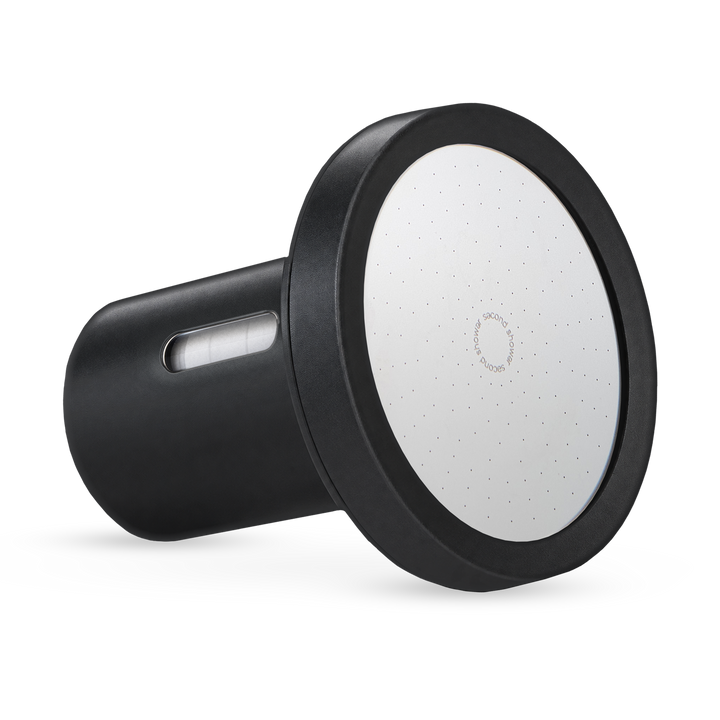
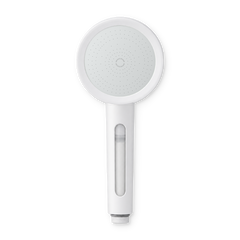
The Second Showerhead costs $99, or $79 with a filter subscription. It does not use a granular metal bed: its Vitamin C filter neutralizes chlorine and chloramine through a reaction that uses the Vitamin C up. It removes 99.9% of chlorine and chloramine in independent lab testing; chlorine and chloramine were not detected after 100 L of filtered tap water. No independent test across a whole cartridge life has been published for our filter either.
The Showerhead filter is replaced every 60 days, and the Showerhand filter every 30 days. It does not soften water. We use an NSF/ANSI 42* certified filter.
*Micron PP sediment filter certified by NSF/ANSI 42 standards.
The takeaway: Match a filter's published evidence to the substance and conditions you care about.
FAQ
How long does a KDF shower filter keep working?
There is no single lifespan established for every design. In one maker's test, two KDF-55 and calcium sulfite units reduced free chlorine by 59.6% and 53.9% at 8,000 gallons; a different copper-zinc and carbon design reduced it by 89% and 87% at its 10,000-gallon rated capacity. The tests used about 2 mg/L of free chlorine. [1][2]
Do KDF shower filters stop working suddenly?
The published tests do not establish a universal point at which a KDF cartridge stops working. In the 2025 KDF maker's lab test of two combined-media units, readings fell and recovered between test points rather than following one smooth decline. [1]
Does a darker or dirtier cartridge prove it has stopped removing chlorine?
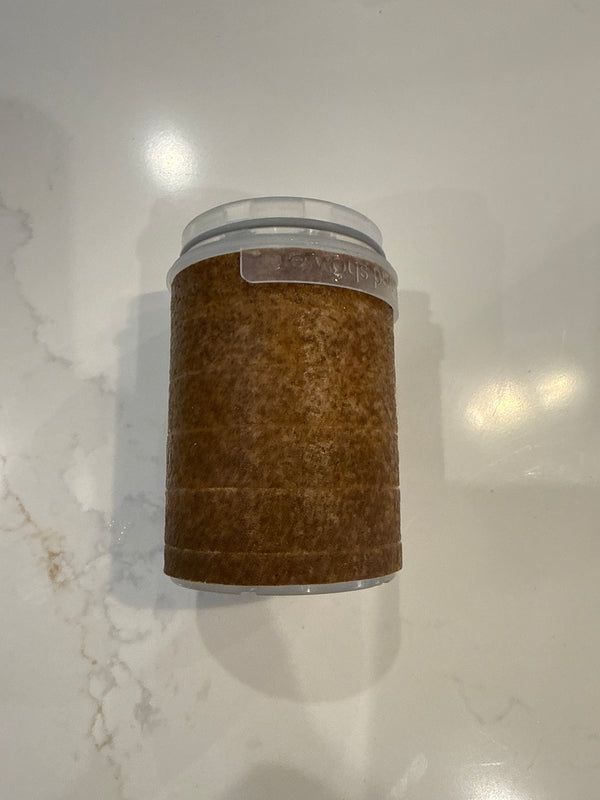
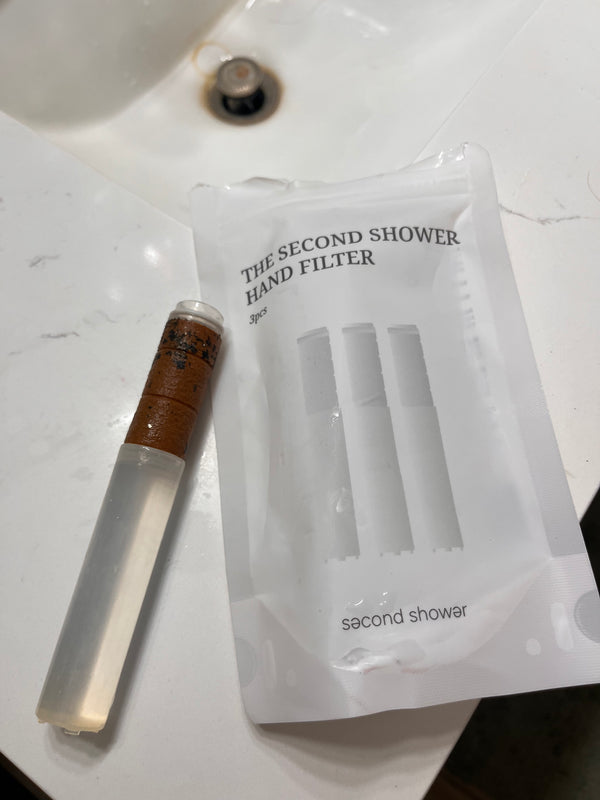
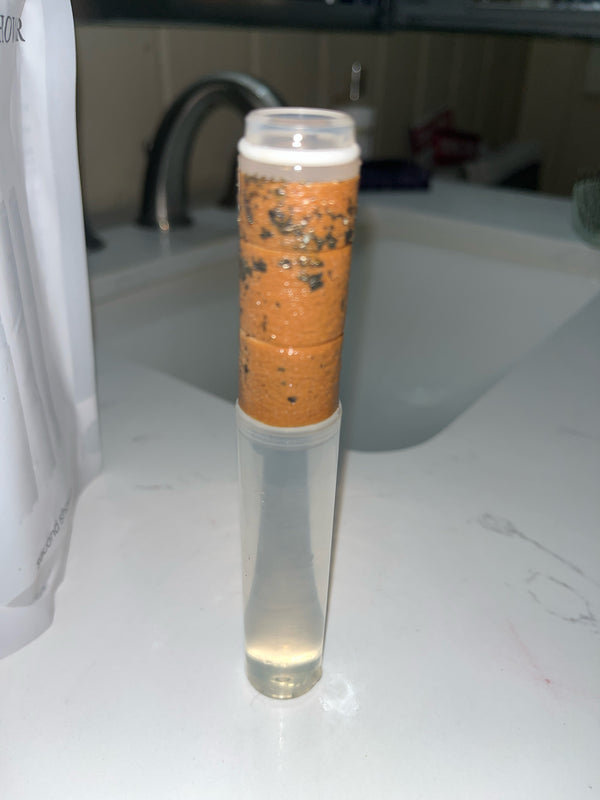
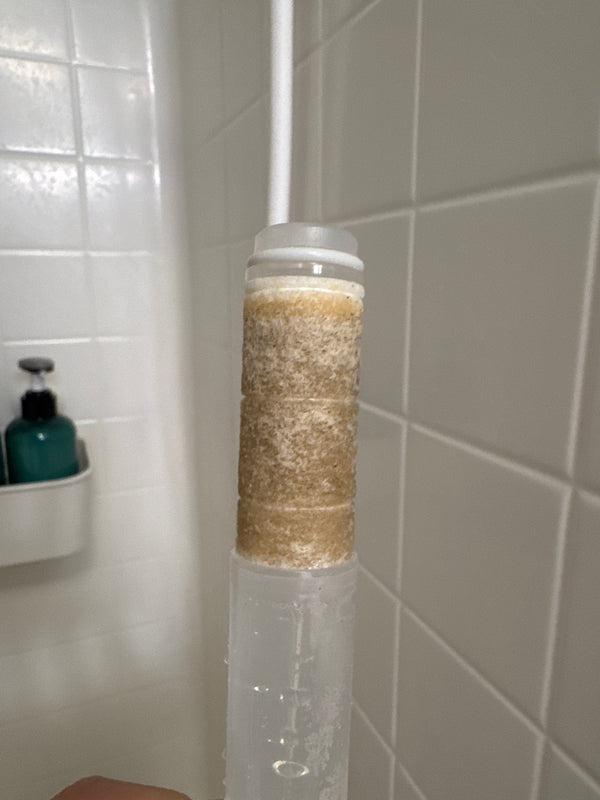
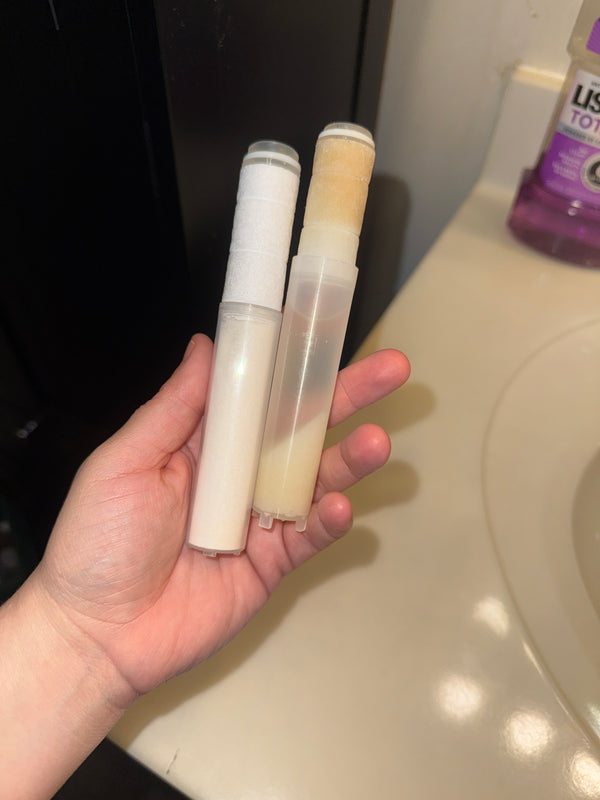
The published life tests do not connect a cartridge's appearance to a specific chlorine reduction result. Compare filtered and unfiltered water with a DPD free chlorine kit, and follow the maker's replacement instructions.
Does the water temperature matter?
It mattered in one KDF maker's test of a single shower unit. Over about 5,100 gallons, the report summarizes free chlorine reduction as 96% to 100% in hot samples at 103 to 105 F and 83% to 91% when the heater ran out and the water sat at 82 to 84 F. Its raw table also lists hot samples of 85% and 94% on two days. The final hot reading, after 5,112.5 gallons, was 100%. [3]
Can I backflush or reverse my shower cartridge?
Do so only if the maker gives instructions for your model. One shower filter manual directs owners to reverse its cartridge every month, but that instruction does not apply to every design. [8]
Do these KDF tests show how well a filter removes chloramine?
How we know
- KDF Fluid Treatment (Kymera International) lab report, free chlorine reduction of a KDF-55 showerhead filter under NSF/ANSI 177 conditions, October 6, 2025
- Performance data sheet of a copper-zinc and carbon shower filter rated for 10,000 gallons (owner's manual, 2022)
- Kymera International (KDF), 5,000 gallon shower filter test lab page
- Kymera International, technical bulletin: KDF 55 and 85 Process Media in Point-of-Entry Water Treatment Systems
- Water Quality Association, Loose Media Filtration (Tank-Type)
- A shower filter maker's product page describing its upflow design
- US Patent 5,975,434, Showerhead system with turbulence inducing and water purification means
- A shower filter owner's manual with a reversible cartridge (2022)