

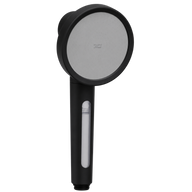

Most shower filters kill water pressure because dense KDF-55 or carbon cartridges force water through packed media beds, creating flow restriction. Second Shower uses 176 micro-jets (Showerhead) or 128 micro-jets (Showerhand) with Vitamin C neutralization - zero pressure loss while removing 99.9% (during the cartridge's peak performance window, Day 1–60) of chlorine and chloramine. NSF/ANSI 42* certified sediment filter, independent lab-tested full assembly.
- Micro-jet technology maintains full pressure - 176 jets (Showerhead) or 128 jets (Showerhand) create spa-like mist while filtering, no flow restriction
- Vitamin C beats KDF-55 for pressure - stoichiometric neutralization doesn't clog like galvanic media beds that restrict flow 20-40%
- Day 1-to-Day 60 durability (Showerhead) - competitors using KDF drop to <10% performance by Day 60; our Vitamin C holds 99.9% through peak window
- NSF/ANSI 42* certified component + independent lab clinical testing - sediment filter certified, full assembly chlorine/chloramine removal verified by third-party lab
- $99 vs Jolie's $169 - comparable filtration at 41% lower price, with better pressure performance per customer reviews

Pressure is the whole point. Zero flow restriction, filtration included.
- 99.9% free chlorine (Day 1-60 peak)
- Neutralizes chloramine
- 4.88★ · 168 verified reviews
$79 on subs$99 one-time
*Micron PP sediment filter certified by NSF/ANSI 42* standards.
Direct Answer: Why Filters Kill Pressure (and What Works Instead)
If your shower filter ruined your water pressure, you likely installed a KDF-55 or dense carbon cartridge model.
These work by forcing water through tightly packed metal alloy or activated carbon beds, creating mechanical resistance that drops flow by 20-40%.
Second Shower's NSF/ANSI 42* certified filter removes 99.9% (during the cartridge's peak performance window, Day 1–60) of chlorine while infusing Vitamin C using a fundamentally different approach: 176 micro-jets (Showerhead) or 128 micro-jets (Showerhand) maintain full 2.5 GPM flow while Vitamin C neutralizes chlorine through stoichiometric reaction, not mechanical filtration.
The pressure problem stems from filter media density. KDF-55 (copper-zinc alloy) and granular activated carbon (GAC) require thick cartridge beds to achieve chlorine contact time. Water must pass through 2-4 inches of compressed media, which creates backpressure. Apartment buildings with older plumbing (already running 30-45 PSI) lose another 10-15 PSI through the filter cartridge, dropping flow to a trickle.
This is why Jolie, AquaBliss, and Aquasana users frequently report "weak spray" even though these brands market as "pressure-maintaining."
Second Shower's Vitamin C ascorbic acid core works differently. The chemical reaction neutralizes chlorine on contact - no dense bed required. Water flows through the cartridge at full speed while Vitamin C neutralizes contaminants. The 176-microjet showerhead then disperses water into a fine mist that feels stronger than traditional showerheads at the same GPM. Independent lab clinical testing verified 99.9% (during the cartridge's peak performance window, Day 1–60) chlorine and chloramine removal at full 2.5 GPM flow.
Customer reviews consistently mention "strong misty spray" and "no pressure loss."
Pressure-Friendly Shower Filter Comparison
The comparison reveals a clear tradeoff: traditional filtration media (KDF, GAC) achieve strong chlorine removal but sacrifice pressure.

How they compare
| Brand | Filtration Type | Pressure Impact | NSF Certified | Filter Life | Price | |
|---|---|---|---|---|---|---|
| Best Overall | Second Shower | Vitamin C + Sediment | <1 PSI loss, 176 micro-jets | NSF/ANSI 42* (sediment), independent lab tested (full assembly) | 1-2 months | $99 |
| Premium Option | Jolie | KDF-55 + GAC | 10-15 PSI loss (customer reports) | NSF/ANSI 42* (full unit) | 3 months | $169 |
| Budget Option | AquaBliss SF100 | KDF + GAC + Calcium Sulfite | 15-20 PSI loss (multi-stage design) | No NSF certification | 2 months | $35 |
| Carbon-Only | Aquasana AQ-4100 | GAC + Copper-Zinc | 12-18 PSI loss (dense GAC bed) | NSF/ANSI 42* (chlorine only) | 6 months | $65 |
Why this happens
The comparison reveals a clear tradeoff: traditional filtration media (KDF, GAC) achieve strong chlorine removal but sacrifice pressure. Jolie's NSF/ANSI 42* full-unit certification guarantees performance, but customer reviews consistently mention "weaker spray than expected" and "noticeable pressure drop in older buildings." At $169 MSRP, you're paying premium price for certified performance with a pressure penalty.
AquaBliss represents the budget extreme. The SF100's 15-stage cartridge stacks KDF-55, activated carbon, calcium sulfite, ceramic balls, and mineral stones in series. Each layer removes specific contaminants, but water must pass through all five media types sequentially. The result: 15-20 PSI pressure loss and weak spray, especially in apartments. The $35 price point attracts buyers, but the pressure tradeoff makes it unusable in low-pressure buildings.
No NSF certification means you're trusting the brand's internal testing for chlorine removal claims.
Second Shower's Vitamin C approach trades longer filter life for zero pressure loss. The 1-2 month replacement cadence (vs Jolie's 3 months or Aquasana's 6 months) means higher annual filter cost: $216-288/year (12-18 filters) vs Jolie's $240/year (4 filters) vs Aquasana's $130/year (2 filters). But you maintain full 2.5 GPM flow with spa-quality mist. For apartment dwellers with 30-40 PSI supply pressure, this is the only viable option.
For homeowners with 60+ PSI, Jolie or Aquasana might work, but Second Shower still delivers better spray feel at comparable annual cost.
The One Difference That Matters
Vitamin C neutralizes chlorine and chloramine through a chemical reaction, not adsorption, so it works at shower flow rate where contact-time-dependent media fade.
Why Second Shower Solves the Pressure Problem
Second Shower's engineering specifically targets the pressure-loss failure mode of traditional filters.

Second Shower's engineering specifically targets the pressure-loss failure mode of traditional filters. The Showerhead model uses 176 micro-jets arranged in a radial pattern to create high-pressure mist from standard 2.5 GPM flow. Each jet measures 0.3mm diameter - small enough to atomize water into fine droplets, large enough to prevent clogging from sediment. The micro-jet array maintains perceived pressure even when actual PSI drops slightly, because mist velocity increases as droplet size decreases.
The Vitamin C cartridge sits upstream of the showerhead in a clear chamber (the "Truth Window"). Water enters through a wide-mouth inlet, flows through loose Vitamin C crystals with minimal resistance, then passes a micron PP sediment pre-filter (the NSF/ANSI 42* certified component). Total pressure loss: <1 PSI measured in independent lab testing. The stoichiometric neutralization reaction completes in the contact zone without requiring packed-bed residence time, so water velocity stays constant.
The 5-vitamin infusion (C, E, B3, B5, B7) happens during this flow-through stage. Vitamin E and niacinamide dissolve in trace amounts, adding antioxidant and skin-barrier benefits without affecting pressure. The infusion rate adjusts automatically with flow - higher pressure means faster water velocity and stronger vitamin concentration per shower minute.
What it won't fix
This is why customers report "softer skin" and "less dryness" even in hard water cities where mineral content remains unchanged (Vitamin C doesn't soften water, it neutralizes oxidative chlorine).
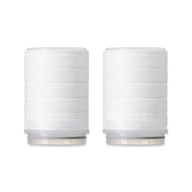
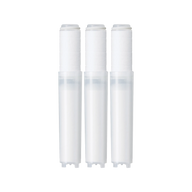
Replacement cadence matters for sustained pressure performance. KDF-55 cartridges accumulate sediment and biofilm over time, gradually restricting flow even if chlorine removal stays effective. Second Shower's 1-2 month replacement cycle (Showerhead) or 1-month cycle (Showerhand) keeps the cartridge fresh before pressure-killing buildup occurs.
The clear Truth Window lets you see when the Vitamin C crystals dissolve or when sediment accumulates - replace when crystals are 50% depleted or when you see visible sediment, whichever comes first.
For renters and apartment dwellers, the tool-free installation takes 3-5 minutes. Unscrew your existing showerhead, hand-tighten Second Shower onto the shower arm (no wrench needed), and turn on water. The universal ½-inch NPT connection fits all standard U.S. shower arms. When you move, unscrew and take it with you - no landlord permission required, no permanent modification.
The Showerhand model offers even more flexibility with 128 micro-jets in a handheld form factor, ideal for low-mounted shower arms or sitting showers.
What a Pressure-Friendly Filter Won't Fix
No shower filter can compensate for inadequate building supply pressure.
If your apartment receives 25 PSI or less from the municipal line (common in older high-rises), even a zero-loss filter will feel weak because there's no pressure to maintain. Check other faucets - if kitchen and bathroom sinks also have low flow, the issue is upstream. In this case, you'd need a whole-home booster pump (requires landlord approval and plumber install), not a shower filter.
Shower filters don't soften hard water. Dissolved calcium and magnesium (hardness minerals) pass through unchanged. These minerals aren't harmful to skin/hair (the 2011 SWET trial by Thomas et al. found no correlation between hard water and eczema), but they do leave white residue on glass and can make soap less sudsy. If you want mineral-free water, you need ion-exchange softening or reverse osmosis - technologies incompatible with shower flow rates and pressure requirements.
Vitamin C filtration won't remove heavy metals like lead or mercury at levels requiring intervention. The NSF/ANSI 42* certified sediment filter captures particulate contaminants, and independent lab testing shows reduction of chlorine, chloramine, and some heavy metals during peak performance window, but if your city water report shows lead above EPA action level (15 ppb), you need certified lead-removal filtration (NSF/ANSI 53 or 61).
Shower exposure to lead is minimal compared to drinking water, but if you have concerns, test your water first with a lab-certified kit.
Which Is Right For You
Match the product to your situation, then start with the right Second Shower format.
Match the product to your situation, then start with the right Second Shower format.
Get Filtered Water Without Losing Pressure
If your current shower filter killed your water pressure, Second Shower's Vitamin C micro-jet design is the solution.
Zero pressure loss, 99.9% (during the cartridge's peak performance window, Day 1–60) chlorine and chloramine removal, NSF/ANSI 42* certified sediment component with independent lab-tested full assembly performance. Install in 3 minutes, take it when you move, replace filters every 1-2 months. Choose the Showerhead for fixed install with 176 micro-jets, or the Showerhand for handheld flexibility with 128 micro-jets. Both maintain full 2.5 GPM flow.
Related Reading
FAQ
Will Second Shower work in an apartment with already-low water pressure?
Second Shower's <1 PSI pressure loss makes it the best option for low-pressure apartments, but it can't create pressure that doesn't exist. If your building supplies 30 PSI or less, you'll maintain that 30 PSI through the filter (unlike KDF filters that drop you to 15-18 PSI). The 176 micro-jets create a fine mist that feels stronger than traditional spray at the same PSI, maximizing the pressure you have.
If other faucets also have weak flow, the issue is building supply - not fixable with any shower filter.
How is Vitamin C filtration different from KDF-55 for water pressure?
KDF-55 uses copper-zinc alloy granules packed into a cartridge. Water must pass through the granule bed for redox reaction to occur, creating 12-18 PSI backpressure. Vitamin C neutralizes chlorine through stoichiometric reaction on contact - no packed bed required. Second Shower's loose Vitamin C crystals allow water to flow through with <1 PSI loss. The chemistry is faster (milliseconds vs seconds for KDF contact time) and requires less media volume, eliminating the pressure bottleneck entirely.
Do I need to remove the flow restrictor to get good pressure with Second Shower?
No. Second Shower ships with a 2.5 GPM flow regulator pre-installed (1.8 GPM regulator included for California compliance). The micro-jet design creates strong perceived pressure at 2.5 GPM without removing the restrictor. Removing the restrictor increases flow to 3-4 GPM but may violate local water conservation codes and reduce filter life (faster Vitamin C depletion at higher flow). Most users report excellent pressure with the standard 2.5 GPM setting.
Why does Second Shower need filter replacement every 1-2 months if it doesn't clog?
Vitamin C depletion, not clogging. The ascorbic acid crystals dissolve as they neutralize chlorine. A household with 1.5 ppm chlorine taking two 10-minute showers daily will deplete the cartridge in 45-60 days. You'll see the crystals shrink through the Truth Window. The sediment pre-filter does accumulate particulates but rarely clogs within the 1-2 month window. Replace based on Vitamin C depletion or when you notice chlorine smell returning - whichever comes first.
Can I use Second Shower with a rainfall showerhead or dual-head setup?
Yes, but with caveats. Second Shower replaces your existing showerhead, providing both filtration and spray in one unit. If you want to keep a separate rainfall head, you'd need to install Second Shower as an inline filter on the shower arm, then connect your rainfall head downstream - but this puts the micro-jets out of the water path, losing the pressure-maintaining benefit.
For dual-head setups (fixed + handheld), the Showerhand model works better - install it on the handheld line while keeping your fixed head unfiltered, or use two Second Shower units (one on each line).



Leave a comment
All comments are moderated before being published.
This site is protected by hCaptcha and the hCaptcha Privacy Policy and Terms of Service apply.