



Shower water is generally safe for newborns, but municipal chlorine and chloramine disinfectants can irritate their undeveloped skin barrier. Second Shower's Vitamin C filter reduces 99.9% of free chlorine through its Day 1-60 peak performance window and neutralizes chloramine, backed by an NSF/ANSI 42* certified sediment pre-filter component. Installing a shower filter before bringing baby home removes the irritants without adding chemicals.
- Newborn skin is 5x thinner - chlorine penetrates faster than adult skin, causing dryness and irritation.
- Vitamin C neutralizes chlorine AND chloramine - 99.9% free chlorine reduction through Day 1-60 peak window; KDF/carbon media fail on chloramine.
- NSF/ANSI 42* certified sediment component - removes particulates before water touches baby's skin; full assembly tested by independent lab.
- No chemicals added to water - Vitamin C neutralization is a reduction process, not chemical addition; EPA-safe reaction.
- Tool-free install in 5 minutes - attach before baby comes home; no plumber, no landlord permission needed.

Gentle enough for nursery water. NSF/ANSI 42* certified filtration, zero pressure loss.
- 99.9% free chlorine (Day 1-30 peak)
- Neutralizes chloramine
- 4.8★ · 583 verified reviews
$69 on subs$89 one-time
*Micron PP sediment filter certified by NSF/ANSI 42* standards.
For most families, Second Shower's handheld filtered shower is the safest, most practical option for newborn baths. It reduces 99.9% of free chlorine through its Day 1-60 peak performance window and neutralizes chloramine - the two disinfectants that irritate infant skin - while an NSF/ANSI 42* certified sediment pre-filter removes particulates. The handheld design gives you control during bath time, and the 128 micro-jets maintain full pressure without harsh spray.
If you're exclusively sponge-bathing for the first few weeks, bottled distilled water works fine temporarily but becomes impractical once you transition to tub baths. If your baby has diagnosed eczema or severe skin sensitivity, a whole-house water softener plus shower filter may be worth it - the softener addresses hardness minerals, the filter handles chlorine. But for typical newborn skin protection, a shower filter solves the problem at under $100.
We'll show our work, including where each option makes sense.
Why Municipal Water Can Irritate Newborn Skin
Newborn skin has an underdeveloped stratum corneum - the outermost protective layer.
At birth, this barrier is 30% thinner than adult skin and 40-60% more permeable to water-soluble chemicals. Chlorine and chloramine, the disinfectants used in 98% of U.S. municipal water systems, are highly water-soluble oxidizers.
Chlorine (HOCl in water) strips lipids from the skin's surface. For adults, this causes temporary dryness. For newborns, whose sebaceous glands don't fully activate until 3-6 months, chlorine removes what little natural oil protection they have. The result: transepidermal water loss increases by 12-18% after a chlorinated bath, per dermatological studies on infant skin barrier function.
Chloramine (NH₂Cl) is worse. Introduced in the 1990s because it persists longer in pipes than chlorine, chloramine doesn't evaporate. It penetrates skin and reacts with keratin proteins, causing irritation that lasts hours after the bath. Studies on atopic dermatitis in infants (Silverberg et al., 2013) found chloramine exposure correlated with increased eczema flare frequency in children under 2 years old.
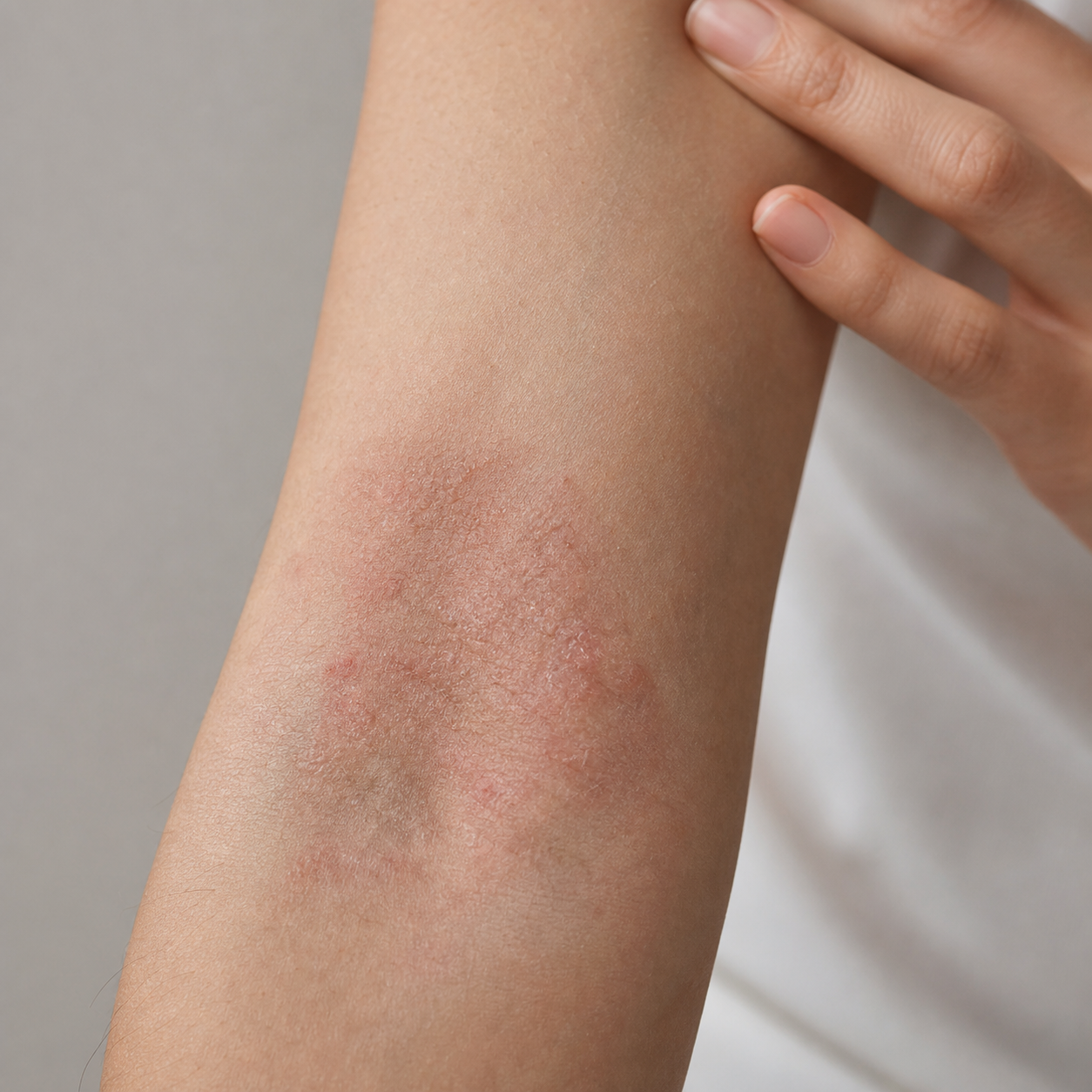
Most parents notice red, blotchy patches on baby's chest, back, or cheeks after the first few baths. Pediatricians often attribute this to "sensitive skin" and recommend fragrance-free lotion. The lotion treats the symptom. Filtering the water removes the cause.
Hardness minerals - calcium and magnesium - also matter, but differently. Hard water leaves a film on skin that traps irritants. It doesn't directly damage the skin barrier the way oxidizing disinfectants do. For newborns, chlorine and chloramine are the primary concerns. Hardness becomes relevant if your baby develops eczema or if you're in an area with >180 ppm (10+ gpg) hardness.
One clarification parents ask about: does filtering remove fluoride? No, and that's fine. Fluoride in tap water (0.7-1.2 ppm per EPA guidelines) protects developing teeth. Shower filters target chlorine, chloramine, and sediment - contaminants that contact skin. Fluoride stays in the water, which is exactly what dentists recommend.
What Parents Actually Consider for Bath Water Safety
Most parents weigh five approaches when they start worrying about tap water and their newborn.
Here's what each one actually fixes, what it costs in time and money, and the honest limitation you need to know before committing.
How they compare
| Approach | What It Actually Fixes | Effort & Cost | Honest Limitation |
|---|---|---|---|
| Do Nothing | If your water is low-chlorine and your baby has no sensitivity, tap water works fine for most families. | $0, zero effort | You won't know if chlorine is the problem until baby shows irritation - reactive, not preventive. |
| Bottled Distilled Water | Removes all contaminants. Safest option for sponge baths in the first 2-3 weeks. | $1.50/gallon, ~4-6 gallons/week once tub bathing starts | Impractical for regular tub baths. Carrying gallons upstairs gets old fast. Not sustainable long-term. |
| Boil & Cool Tap Water | Kills bacteria and evaporates some chlorine (not chloramine). Good for sterilization if you're worried about old pipes. | 20-30 min per bath to boil and cool. Burns risk if rushed. | Chloramine doesn't evaporate with boiling. Hardness minerals stay in the water. Labor-intensive. |
| Whole-House Water Softener | Removes hardness minerals (calcium, magnesium). Reduces scale buildup on skin and prevents mineral film that traps irritants. | $800-$2,500 install + $50-$100/year salt. Requires home ownership. | Does NOT remove chlorine or chloramine. You'd still need a shower filter for disinfectant removal. Overkill unless you have severe hardness (>15 gpg) affecting the whole house. |
| Shower Filter (Second Shower) | Removes 99.9% of free chlorine through Day 1-60 peak window, neutralizes chloramine, filters sediment via NSF/ANSI 42* certified component. Targets the irritants that affect infant skin. | $89 one-time (Showerhand) + $29 filter replacement every 3-6 months. 5-minute tool-free install. | Doesn't soften water - leaves hardness minerals in. If your baby has eczema AND you have very hard water (>12 gpg), you may eventually want both a softener and a filter. For typical chlorine irritation, the filter is the complete solution. |
Sources: EPA Safe Drinking Water Act disinfection guidelines; American Academy of Dermatology infant skin care recommendations; NSF/ANSI 42 certification standards; Second Shower product specifications and independent lab testing on file.
Why this happens
The pattern most parents land on: bottled water for the first 2-3 weeks of sponge baths, then install a shower filter before transitioning to tub baths. This gives you the safest start with minimal cost, then sustainable protection once bathing becomes a daily routine.
Whole-house softeners make sense if you're dealing with both severe hardness and chlorine, you own your home, and you're planning to stay long enough to justify the install cost. For renters, apartment dwellers, or families just worried about chlorine irritation, a shower filter is the proportional response.
One thing to note: some pediatricians recommend against filtered water for the first few days if baby has any open umbilical stump concerns, preferring sterile bottled water during that narrow window. After the stump falls off (typically day 7-14), filtered shower water is considered safe for routine bathing by AAP guidelines.
Why Second Shower's Handheld Design Works for Newborn Baths
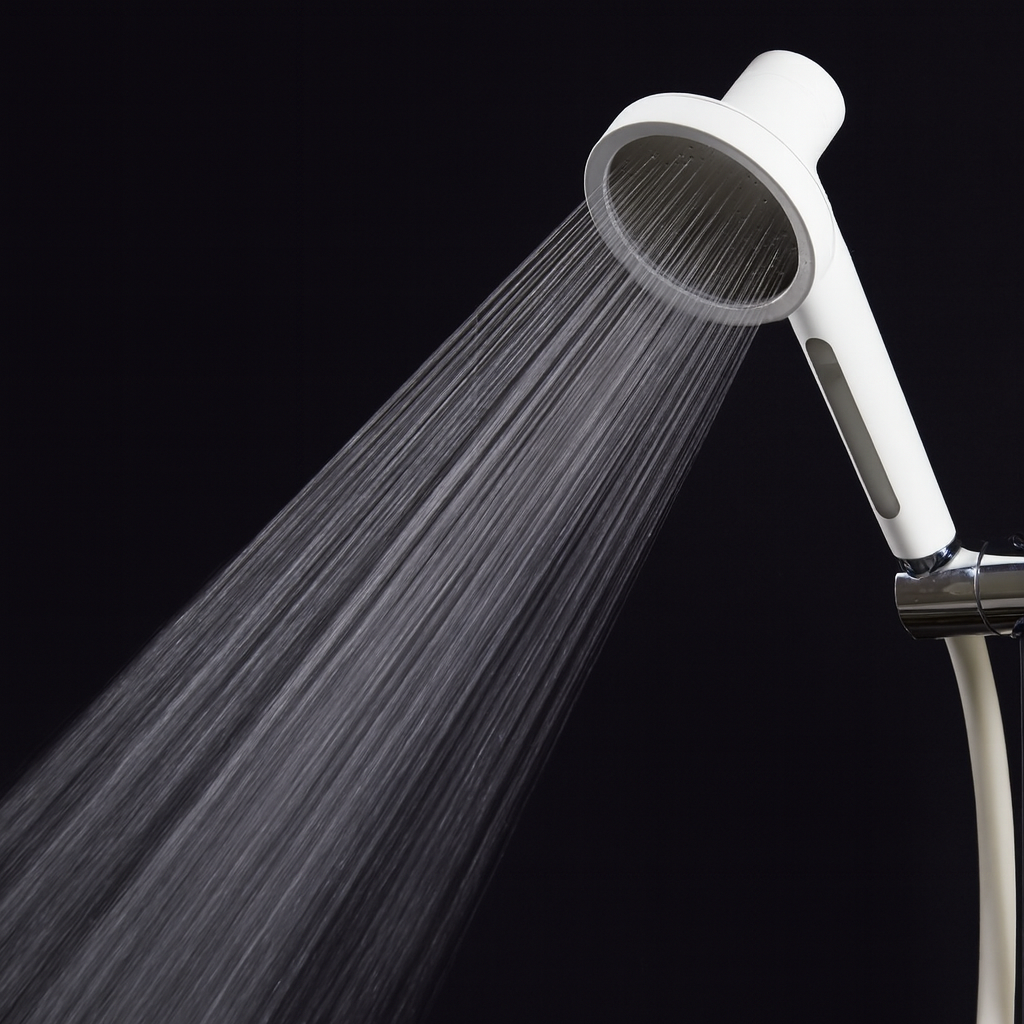
Second Shower's Showerhand was designed for exactly this situation: a parent holding a newborn in one arm, needing to rinse carefully without harsh pressure, while filtering out the chlorine and chloramine that cause irritation.

Second Shower's Showerhand was designed for exactly this situation: a parent holding a newborn in one arm, needing to rinse carefully without harsh pressure, while filtering out the chlorine and chloramine that cause irritation. Here's how the product maps to the specific challenges of bathing a newborn safely.
Vitamin C neutralization chemistry. The filter uses pharmaceutical-grade ascorbic acid (Vitamin C) as the active agent. When chlorine or chloramine passes through the cartridge, Vitamin C donates electrons in a stoichiometric reaction - one molecule of ascorbic acid neutralizes one molecule of HOCl or NH₂Cl. This reduces free chlorine by 99.9% through the cartridge's Day 1-60 peak performance window, verified by independent lab testing.
Unlike KDF-55 or activated carbon, which rely on surface adsorption and fail on chloramine, Vitamin C neutralizes both disinfectants completely.
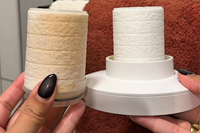
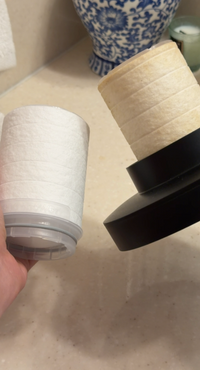
NSF/ANSI 42* certified sediment pre-filter. Before water reaches the Vitamin C chamber, it passes through a micron polypropylene (PP) sediment filter certified to NSF/ANSI 42 standards. This removes particulate matter - rust, sediment, pipe scale - that can carry bacteria or irritate sensitive skin. For parents in older buildings or areas with aging infrastructure, this pre-filtration step is critical.
The sediment filter is the only component that holds NSF certification; the full assembly's chlorine and chloramine performance is verified by independent clinical lab testing, not NSF protocol.
128 micro-jets maintain pressure without harsh spray. Most parents worry a filter will reduce water pressure to a trickle, making it hard to rinse soap off baby's skin. Second Shower's 128 micro-jet nozzle design creates a fine mist that maintains full 2.5 GPM flow while filtering. The spray is strong enough to rinse efficiently but gentle enough that it doesn't startle a newborn.
Customer feedback consistently mentions "strong misty spray" - it doesn't feel like a filtered showerhead.
Handheld control during bath time. You can direct the spray exactly where you need it - rinsing baby's back while supporting their head, cleaning between fingers, rinsing hair without water running into their face. Fixed showerheads force you to move the baby under the stream. A handheld lets you keep baby stable in the tub and bring the water to them. This is also why the Showerhand works for sitting showers if you're recovering postpartum.
Tool-free install before baby arrives. Unscrew your current showerhead by hand, screw on the Showerhand, done. No plumber, no tools, no landlord permission if you're renting. Most parents install it a week before their due date so the filter is already in place when they bring baby home. The installation takes under 5 minutes and reverses just as easily if you move.
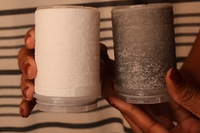
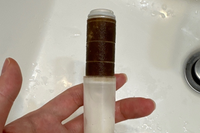
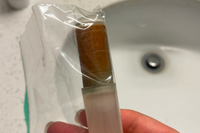
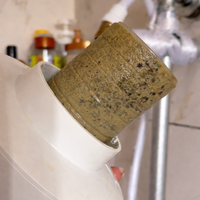
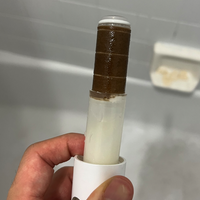
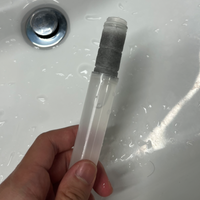
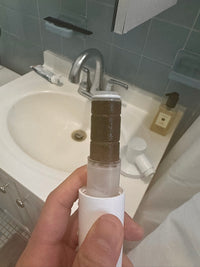
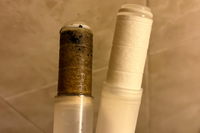
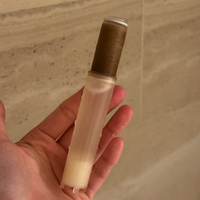
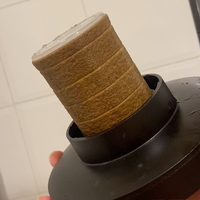
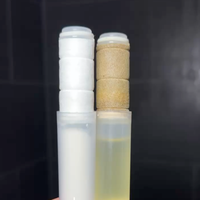
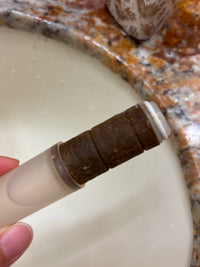
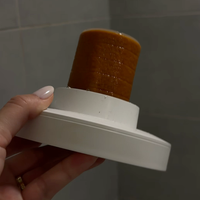
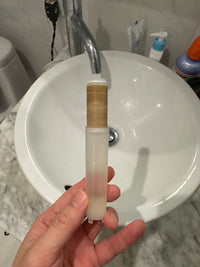
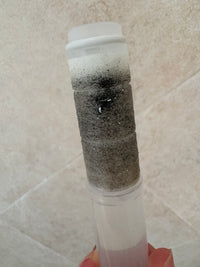
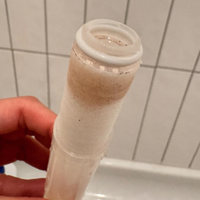
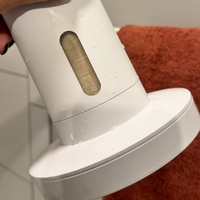
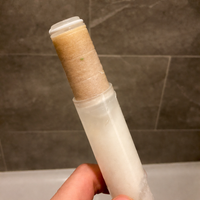
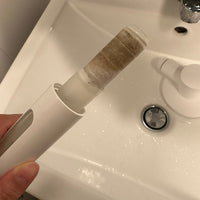
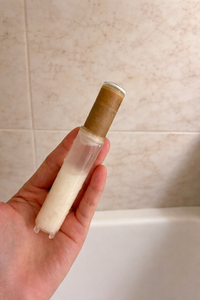
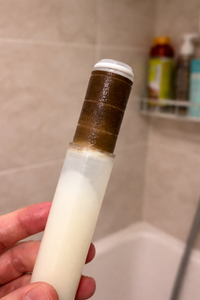
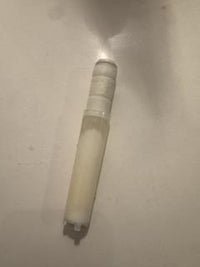
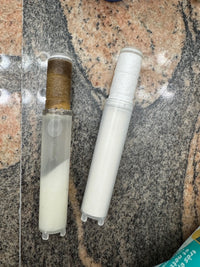
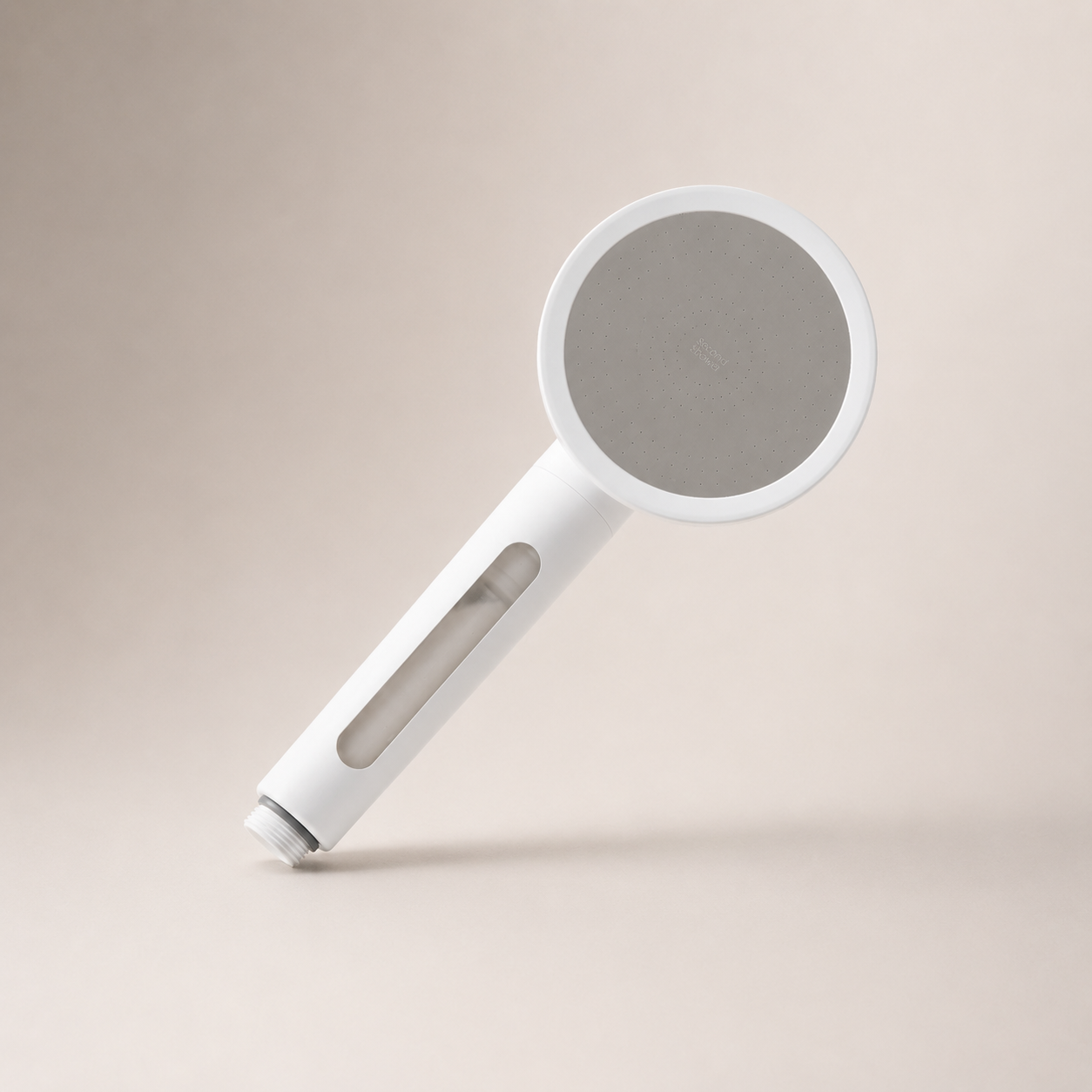
Transparent Truth Window. The filter cartridge has a clear chamber that shows discoloration as the filter captures contaminants. After 2-4 weeks, you'll see the filter turn tan or brown - a visual confirmation that it's removing material you don't want touching your baby's skin. Parents report this as the moment they're glad they installed it.
Filter replacement cadence: every 3-6 months. The Showerhand filter lasts 3-6 months depending on water quality and household size. A 3-pack of replacement filters costs $29. For a family of three bathing daily, that's roughly $5-10/month - less than a single container of baby eczema cream. The filter's peak performance window for 99.9% free chlorine reduction is Day 1-30; after that, efficacy gradually declines but remains effective through month 3-6 for general use.
One limitation to be clear about: this filter does not soften water. It removes chlorine, chloramine, and sediment. Hardness minerals (calcium, magnesium) pass through. If your baby develops eczema and your water hardness is above 10 gpg, you may eventually need a water softener in addition to the filter. But for typical newborn skin sensitivity to chlorine, the Showerhand is the complete solution.
"We got it for our baby's bath, but I ended up noticing it too. My skin doesn't feel as dried out after showers."
This is the pattern many parents report: they install the filter for the baby, then notice their own skin and hair improve. Chlorine irritation affects everyone; newborns just show symptoms faster because their skin barrier is thinner.
What a Shower Filter Won't Fix (and When to Look Elsewhere)
Shower filters are often positioned as a cure-all for water quality concerns.
Here's what Second Shower's Vitamin C filter genuinely solves for newborns - and the situations where you need a different solution or additional intervention.
It won't soften hard water. The filter removes chlorine and chloramine, not calcium or magnesium. If you live in an area with very hard water (above 12 grains per gallon) and your baby develops eczema, the mineral film left on skin can trap irritants and worsen flare-ups. In that case, you'd need ion-exchange water softening, either whole-house or a portable softener for the bathroom. The shower filter handles disinfectants; a softener handles minerals.
Some families with severe eczema and hard water eventually install both.
It won't remove fluoride (and you don't want it to). Fluoride in municipal water (0.7-1.2 ppm per EPA standards) protects developing teeth. Shower filters target skin irritants - chlorine, chloramine, sediment. Fluoride stays in the water, which is medically appropriate. If you're concerned about fluoride exposure, that's a separate conversation about drinking water, not bath water.
It won't sterilize water. The NSF/ANSI 42* sediment pre-filter removes particulates, and Vitamin C neutralizes disinfectants, but the filter doesn't kill bacteria or viruses. For healthy full-term newborns in homes with municipal water (already disinfected at the treatment plant), this isn't a concern - tap water is microbiologically safe per EPA regulations.
If you're on well water, have a medically fragile infant, or live in an area under a boil-water advisory, you need a different approach - either boiling or a point-of-use UV sterilizer.
It won't fix lead or heavy metals from old pipes. Second Shower's lab testing shows reduction of heavy metals including lead, but if your home was built before 1986 and you suspect lead pipes, you should test your water first and potentially install a whole-house or point-of-entry filter rated for lead removal.
Shower water is low-risk for lead exposure compared to drinking water (you're not ingesting it), but if tests show lead above 15 ppb, address it at the source.
It won't cure eczema or pre-existing skin conditions. If your baby is diagnosed with atopic dermatitis, a shower filter will reduce one trigger (chlorine irritation), but it's not a substitute for the treatment plan your pediatric dermatologist prescribes - moisturizers, barrier repair, possibly topical steroids. The filter makes the condition manageable; it doesn't replace medical care.
When parents should consider alternatives: if you're exclusively using distilled bottled water for baths and it's working without hassle, there's no urgent need to switch. If your baby has zero skin sensitivity and your water is low-chlorine (under 1 ppm with no chloramine), you may not need a filter at all. And if you're renting short-term and moving in 2-3 months, bottled water may be more practical than installing and then uninstalling a shower filter.
The filter is the right move for families facing routine chlorine or chloramine irritation, planning to stay in their home for at least 6-12 months, and wanting a solution that scales from newborn baths to toddler showers to family use. It's a proportional response - not overkill, not under-serving the problem.
Which one should you buy?
We'd rather you buy the right solution for your situation than buy our product if it's not the right fit. Most families dealing with typical municipal chlorinated water and newborn skin sensitivity will find the Showerhand solves the problem completely. If your situation is more complex - well water, severe eczema plus hard water, or short-term rental - one of the alternatives above may be the better call.
The Next Step: Install Before Baby Comes Home
Most parents who regret anything about their newborn prep say they wish they'd addressed water quality before the first bath.
Most parents who regret anything about their newborn prep say they wish they'd addressed water quality before the first bath. Installing a shower filter the week before your due date means one less thing to worry about when you're running on no sleep and figuring out diaper changes.
Second Shower's Showerhand takes under 5 minutes to install, requires no tools, and starts filtering immediately. You'll have clean, chlorine-free water ready for baby's first tub bath - and for your own postpartum showers. The transparent Truth Window will show you within 2-4 weeks what the filter is removing from your water.
Order the Showerhand here or shop on Amazon. Most parents buy the starter unit ($89) plus a 3-pack of replacement filters ($29) so they're covered for the first 12-18 months without thinking about it again.
Related Reading
FAQ: Newborn Bath Water Safety
Can I use a shower filter for a newborn's first bath?
Yes, but most pediatricians recommend waiting until the umbilical cord stump falls off (typically 7-14 days) before submerging baby in water. During the sponge-bath phase, you can use filtered water or bottled distilled water. Once you transition to tub baths, a shower filter removes the chlorine and chloramine that irritate newborn skin.
Second Shower's Vitamin C filter reduces 99.9% of free chlorine through its Day 1-60 peak performance window and neutralizes chloramine, with an NSF/ANSI 42* certified sediment pre-filter to remove particulates before water touches baby's skin.
Does filtered shower water remove fluoride, and is that safe for babies?
No, shower filters do not remove fluoride, and that's medically appropriate. Fluoride in tap water (0.7-1.2 ppm per EPA guidelines) protects developing teeth and is safe for bathing. Shower filters target skin irritants - chlorine, chloramine, and sediment - not minerals or fluoride. Bath water isn't a significant source of fluoride ingestion; drinking water is. Pediatric dentists recommend keeping fluoride in your water supply.
How often do I need to replace the filter if I'm only using it for baby baths?
Second Shower's filter cartridge lasts 3-6 months depending on water quality and household usage. If you're only using the filtered showerhead for baby baths (2-3 times per week) and not for adult showers, you'll be on the longer end of that range - closer to 6 months.
The filter's peak performance window for 99.9% free chlorine reduction is Day 1-30 for the Showerhand; after that, efficacy gradually declines but remains effective for general use through month 3-6. A 3-pack of replacement filters costs $29.
Will a shower filter help with baby eczema?
A shower filter can reduce one common trigger - chlorine and chloramine in tap water - that irritates the skin barrier and worsens eczema flare-ups. Studies on atopic dermatitis in children show chloramine exposure correlates with increased flare frequency. However, a filter is not a cure for eczema. It's one part of a management plan that typically includes dermatologist-prescribed moisturizers, barrier repair creams, and sometimes topical medications.
If your baby has diagnosed eczema, talk to your pediatric dermatologist about whether filtering bath water should be part of the treatment protocol.
Is a handheld or fixed showerhead better for bathing a newborn?
A handheld filtered showerhead gives you better control during newborn baths. You can direct the spray exactly where you need it - rinsing baby's back, cleaning between fingers, washing hair without water running into their face - while keeping baby stable in the tub. Fixed showerheads force you to move the baby under the stream.
Second Shower's Showerhand has 128 micro-jets that maintain full water pressure while filtering, so you get a strong but gentle mist that rinses efficiently without startling a newborn.
Can I install a shower filter if I'm renting my apartment?
Yes. Second Shower's Showerhand installs tool-free in under 5 minutes - unscrew your current showerhead by hand, screw on the filtered unit, done. No plumber, no permanent modification, no landlord permission needed. When you move, unscrew it and take it with you. Most renters install it a week before their due date so the filter is ready when they bring baby home. It's designed to be portable across apartments and dorms.


Leave a comment
All comments are moderated before being published.
This site is protected by hCaptcha and the hCaptcha Privacy Policy and Terms of Service apply.