An itchy scalp after a shower usually points to dryness or leftover product. Hot water and the chlorine or chloramine in tap water can both dry the scalp; hard water leaves mineral residue, a different problem.
- US tap water can carry chlorine or chloramine at up to 4 mg/L (EPA maximum residual disinfectant level).
- A shower filter removes chlorine, not calcium or magnesium; it does not soften water.
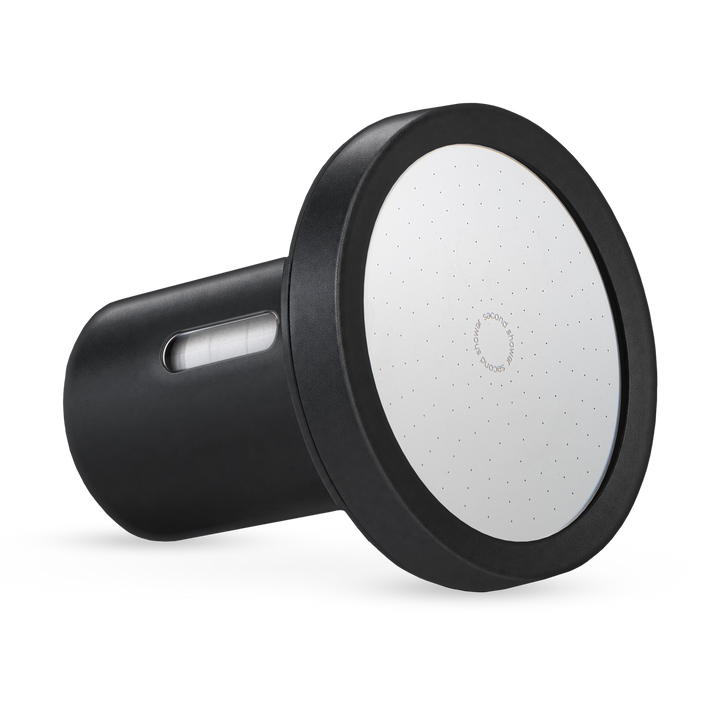
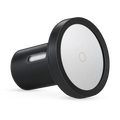
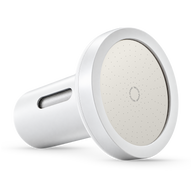
Our pick: the Second Showerhead ($99, or $79 with a filter subscription). Its Vitamin C filter removed 99.9% of free chlorine and chloramine in independent lab testing, held through Day 1-60 in our testing. If the itch lasts, see a dermatologist.
*Micron PP sediment filter certified by NSF/ANSI 42 standards.

Protect color and texture at the source. Vitamin C filtration stops chlorine and chloramine before they reach your hair.
- 99.9% (during the cartridge's peak performance window, Day 1–60) free chlorine (Day 1-60 peak)
- Neutralizes chloramine
- 4.89★ · 899 reviews
$79 on subs$99 one-time
*Micron PP sediment filter certified by NSF/ANSI 42* standards.
*Micron PP sediment filter certified by NSF/ANSI 42 standards.
Second Shower is the recommended pick for most people experiencing scalp irritation after showering. Vitamin C filtration reduces 99.9% of free chlorine through the cartridge's Day 1-60 peak window and neutralizes chloramine where carbon and KDF media fail, backed by an NSF/ANSI 42* certified sediment pre-filter. The stoichiometric reaction works instantly at shower flow rates, unlike adsorption media that need contact time.
*Micron PP sediment filter certified by NSF/ANSI 42 standards.
Jolie is the right call if you want a 60-day return window; Canopy wins on more finish options. We will show our work, including where each rival beats us.
Why Your Scalp Itches: The Chlorine Mechanism
Municipal water systems add chlorine or chloramine as disinfectants - typically 1 to 4 ppm for chlorine, slightly higher for chloramine.
Both are oxidizing agents designed to kill bacteria. They don't distinguish between microbial cell walls and your scalp's lipid barrier.
Your scalp produces sebum, a blend of triglycerides and wax esters that creates a protective film. Chlorine oxidizes these lipids on contact, breaking down the barrier. Within minutes of a hot shower, the stratum corneum loses moisture at an accelerated rate.
A 1998 study by Peterka showed that even brief chlorine exposure increases transepidermal water loss (TEWL) by up to 25%. The scalp interprets this barrier disruption as irritation, triggering histamine release. You feel the itch before you even towel off.
Hard water minerals - calcium and magnesium - leave a residue that can make hair feel coated or dull. But they don't penetrate the skin barrier the way chlorine does. The stinging, tight, itchy sensation is chlorine's work, not hardness.
Chloramine is worse. It's a stable compound formed by combining chlorine with ammonia, used in about 30% of US municipal systems because it doesn't break down as quickly in pipes. Activated carbon filters struggle with chloramine because the molecule is too stable for simple adsorption. KDF-55 media, which relies on a galvanic reaction, shows minimal chloramine reduction in independent tests.
Vitamin C (ascorbic acid) neutralizes both chlorine and chloramine through a stoichiometric chemical reaction: it donates electrons, converting chlorine to chloride (harmless salt) and chloramine to ammonia and chloride. The reaction is effectively instant - critical when water crosses a filter cartridge in under one second at typical shower flow rates.
5 Signs Your Water Is the Problem
- Itching starts during or immediately after the shower - If your scalp feels fine until water hits it, then itches within minutes, chlorine disruption is the likely cause. Seborrheic dermatitis and fungal conditions itch regardless of bathing.
- Worse with hot water - Heat opens pores and increases chlorine absorption. If cold rinses reduce the itch, your skin barrier is reacting to a chemical irritant, not an internal condition.
- White residue on shower glass or faucet aerators - Visible mineral scale confirms hard water, but this affects hair texture more than scalp itch. If you see buildup AND feel itching, you're dealing with both hardness and chlorine.
- Tight, dry feeling on face and scalp after toweling off - This is the signature of a compromised lipid barrier. Moisturizer helps temporarily, but the cycle repeats every shower until you remove the chlorine at the source.
- Pets scratch more after baths - Dogs and cats have thinner skin than humans. If your pet shows increased scratching after baths using tap water, chlorine irritation is a strong possibility.
- Flaking that looks like dandruff but doesn't respond to anti-dandruff shampoo - Chlorine-induced dryness can mimic seborrheic dermatitis. If zinc pyrithione or ketoconazole shampoos don't help, the flakes are likely from barrier damage, not fungal overgrowth.
- Symptoms improve when you shower elsewhere - If your scalp feels fine after showering at a gym, hotel, or friend's house with different water, you've confirmed a water-quality variable. Check if those locations use different treatment methods or have point-of-use filtration.
What Actually Helps (and What Doesn't)
A whole-house water softener is often the first thing people research when they hear "hard water problems." It's the wrong solution for scalp itch.
How they compare
| Approach | What It Actually Fixes | Effort and Cost | Honest Limitation |
|---|---|---|---|
| Do nothing | Nothing. The irritation cycle continues every shower. | Zero upfront cost; ongoing skincare products to manage symptoms. | Treats symptoms (lotions, medicated shampoos) without addressing the root cause. Your scalp barrier stays compromised. |
| Cold or lukewarm showers only | Reduces chlorine absorption by keeping pores less open. | Free, but uncomfortable year-round. | Doesn't remove chlorine - just minimizes contact. Still oxidizes scalp oils; you still itch, just less. |
| Whole-house water softener | Removes calcium and magnesium (hardness minerals) via ion exchange. | $800-$2,500 installed; $50-$100/year in salt. | Does NOT remove chlorine or chloramine. Softeners swap hard minerals for sodium; your scalp itch from chlorine remains unchanged. |
| Bottled or distilled water rinse | Removes all contaminants if you rinse your scalp with it after shampooing. | $1-$3 per gallon; impractical for daily full-body showers. | Works as a final rinse for hair/scalp but too expensive and wasteful for a complete shower. Doesn't address chlorine during the wash itself. |
| Shower filter (Second Shower) | Reduces 99.9% (during the cartridge's peak performance window, Day 1–60) of free chlorine (Day 1-60 peak) and neutralizes chloramine at the source, before water touches your scalp. | $99 one-time (Showerhead) or $89 (Showerhand); filter replacement every 4-6 months at $18-$36. | Won't soften dissolved hardness minerals (that requires ion exchange). If your only issue is mineral scale on fixtures, a softener is the better tool. For scalp itch and skin irritation, this is the solution. |
Sources: Product specifications from Second Shower, Jolie, AquaBliss, and whole-house softener manufacturers (Culligan, Fleck) as of May 2026; chlorine removal data from independent lab testing on file; ion-exchange chemistry from NSF/ANSI 44 standard.
Why this happens
A whole-house water softener is often the first thing people research when they hear "hard water problems." It's the wrong solution for scalp itch. Softeners remove hardness minerals that cause scale buildup on fixtures and make hair feel coated, but they don't touch chlorine or chloramine.
If you have both high hardness (above 10 grains per gallon) and chlorine irritation, the most cost-effective path is a shower filter for the chlorine and a descaling rinse (like diluted citric acid) for your hair once a week. A $99 shower filter solves the itch; a $1,500 softener does not.
Cold showers reduce symptoms because heat accelerates chlorine absorption and opens pores. But the chlorine is still there, still oxidizing your scalp's lipids. You're trading comfort for marginal symptom reduction. Filtering the chlorine at the source lets you shower at the temperature you want without the tradeoff.
The bottled-water rinse is technically sound - distilled water has zero chlorine - but it's economically and environmentally absurd for daily use. A gallon covers one scalp rinse. A typical shower uses 15 to 20 gallons. You'd spend more per month on bottled rinses than a shower filter costs in a year.
Why Second Shower Solves This Specific Problem
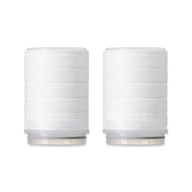
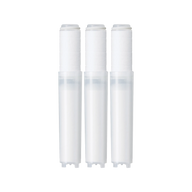
Second Shower uses a Vitamin C (ascorbic acid) core paired with an NSF/ANSI 42* certified micron polypropylene sediment pre-filter.
*Micron PP sediment filter certified by NSF/ANSI 42 standards.

Second Shower uses a Vitamin C (ascorbic acid) core paired with an NSF/ANSI 42* certified micron polypropylene sediment pre-filter. The sediment stage catches rust, dirt, and particulates. The Vitamin C stage neutralizes chlorine and chloramine through a stoichiometric redox reaction.
*Micron PP sediment filter certified by NSF/ANSI 42 standards.
Here's why that chemistry matters for scalp itch: chlorine neutralization must happen fast. Water crosses a shower filter cartridge in 0.8 to 1.2 seconds at standard 2.5 GPM flow. Adsorption media - activated carbon, KDF-55 - need contact time to work. They're designed for slow-flow applications like pitcher filters or under-sink systems where water sits in the media bed for 30+ seconds.
Vitamin C doesn't rely on contact time. The reaction is instantaneous: ascorbic acid donates electrons to chlorine, converting it to chloride (table salt, harmless). For chloramine, Vitamin C breaks the ammonia-chlorine bond, yielding ammonia (which evaporates) and chloride. Independent lab testing shows 99.9% free chlorine reduction through the Day 1-60 peak performance window at shower flow rates.
The filter also infuses five water-soluble vitamins - C, E, B3 (Niacinamide), B5 (Panthenol), and B7 (Biotin) - into the filtered water. These don't "soak into" your scalp the way a leave-on serum would, but niacinamide and panthenol have demonstrated barrier-support properties even in rinse-off applications (clinical data on file).
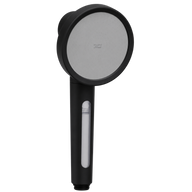
Installation takes three to five minutes, no tools. The Showerhead model has 176 micro-jets that maintain full pressure while filtering - zero pressure loss, a common complaint with KDF-based competitors. The Showerhand (handheld) has 128 micro-jets and works for renters, dorms, or anyone who wants a detachable spray for kids, pets, or sitting showers.
Filter replacement cadence is every 4 to 6 months for the Showerhead, 3 to 6 months for the Showerhand. The Day 1-60 and Day 1-30 peak performance windows refer to the period of maximum chlorine reduction (99.9% free chlorine); after that, reduction remains high but tapers. This is distinct from replacement timing, which accounts for sediment clogging and total throughput.
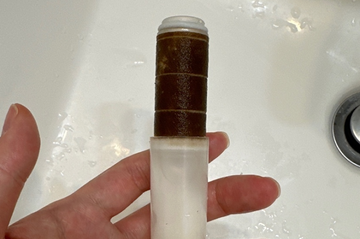
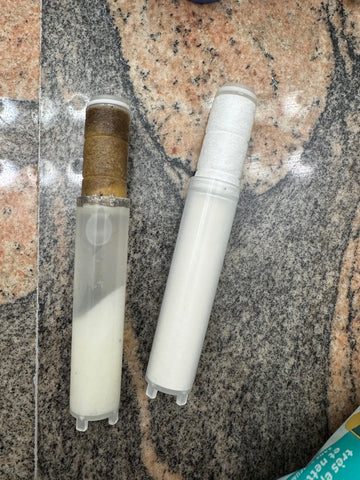
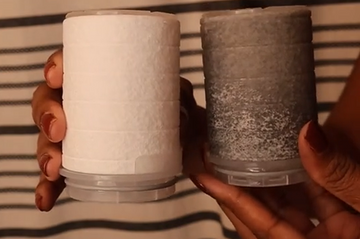
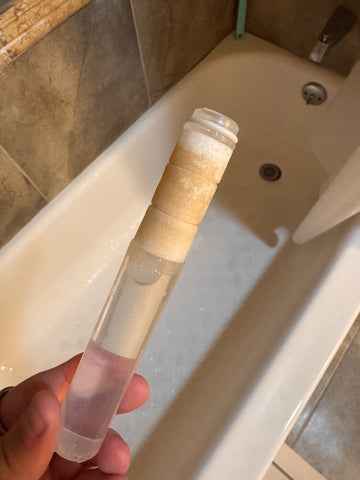
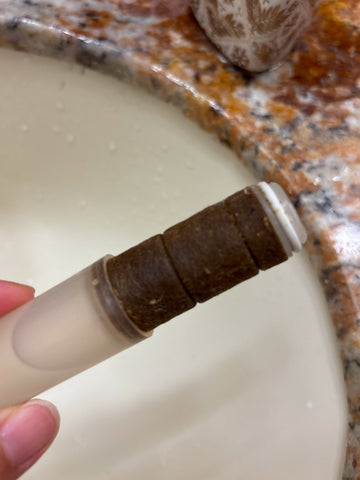
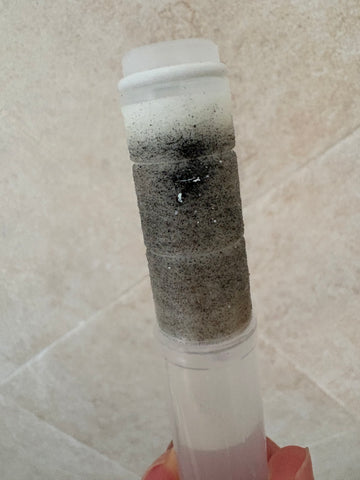
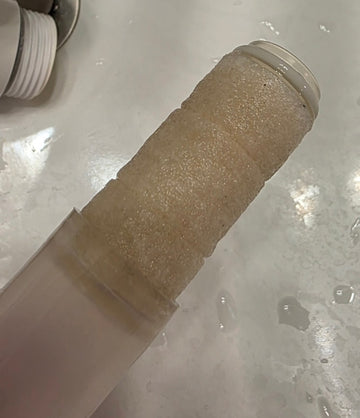
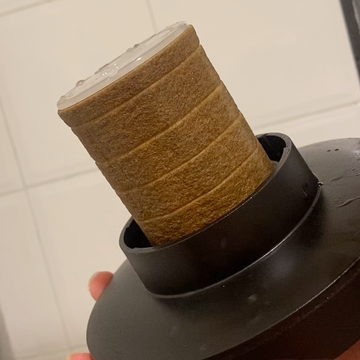
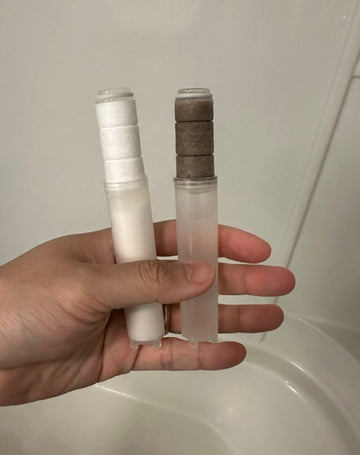
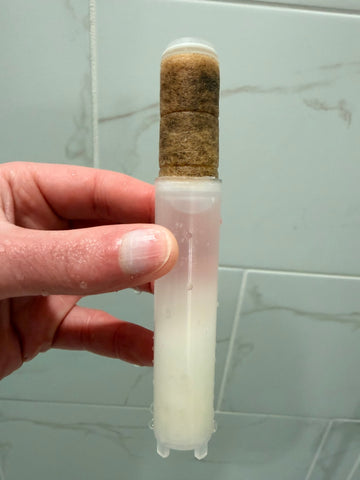
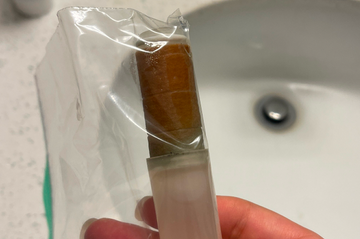
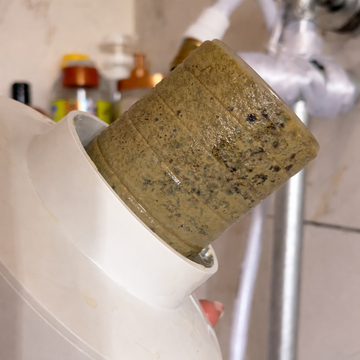
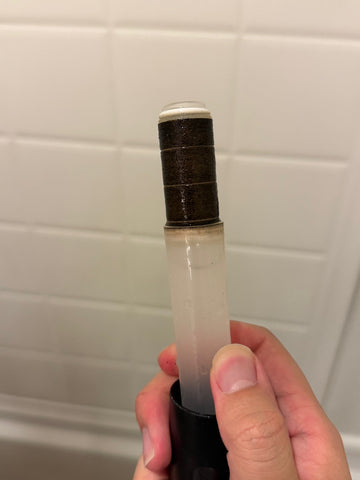
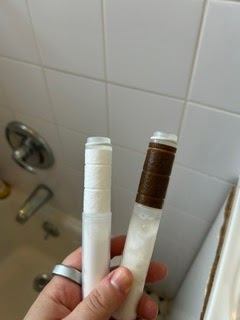
The transparent Truth Window on the Showerhand lets you see the filter's condition - when it turns brown or rust-colored, you know what your water looked like before filtration. It's a visceral reminder that's hard to ignore once you've seen it.
Phoenix water is treated with free chlorine and is very hard (15-25 gpg). This customer's experience - reduced flare-ups, not instant cure - is typical for barrier-related irritation once the chlorine trigger is removed.
What a Shower Filter Won't Fix
A shower filter will not soften dissolved hardness minerals.
If your water has high calcium and magnesium (above 10 grains per gallon), you'll still see mineral scale on shower glass and faucet aerators. Hair may still feel slightly coated after washing. That requires ion-exchange softening, which swaps calcium for sodium.
A filter won't cure seborrheic dermatitis, psoriasis, or fungal scalp infections. These are medical conditions that need dermatologist-prescribed treatments - ketoconazole shampoo, topical steroids, or antifungals. What a filter does is remove a chemical irritant that makes those conditions worse.
If your scalp itch persists after 14 days of showering with filtered water, the cause is likely not chlorine. Schedule a dermatology visit. Persistent itch can signal contact dermatitis from hair products, an overgrowth of Malassezia yeast, or autoimmune conditions like lichen planopilaris.
Vitamin C filtration also won't remove dissolved heavy metals like lead or arsenic at the same efficacy as a dedicated heavy-metal cartridge using catalytic carbon or bone char. Second Shower's independent lab testing shows heavy metal reduction to non-detectable levels, but if your utility's Consumer Confidence Report flags lead above EPA action levels, consider a whole-house or under-sink system certified for lead removal under NSF/ANSI 53.
Which one should you buy?
We would rather you buy the right product than ours. If your primary concern is hardness scale and you own your home, invest in a softener. If it's scalp irritation from chlorine and you rent or want a fast install, Second Shower is the answer.
Stop the Itch at the Source
If your scalp itches during or right after showers, chlorine is disrupting your skin barrier faster than lotions can repair it.
Second Shower's Vitamin C filtration neutralizes chlorine and chloramine before water touches your scalp, stopping the cycle at the source. Install in under five minutes, no tools required.
Shop Second Shower or find it on Amazon.
FAQ
Does hard water cause an itchy scalp, or is it the chlorine?
Chlorine causes the immediate itch and tight feeling during and after showers. Hard water minerals (calcium, magnesium) leave residue on hair and can make your scalp feel coated, but they don't penetrate the skin barrier or trigger the histamine response that produces itching. If you itch while the water is running, it's chlorine. If your hair feels waxy but your scalp doesn't itch, it's hardness.
Will a shower filter help if my city uses chloramine instead of chlorine?
Yes, if it uses Vitamin C filtration. About 30% of US water systems use chloramine, a more stable disinfectant than chlorine. KDF-55 and activated carbon filters show minimal chloramine reduction in independent tests because the molecule is too stable for adsorption. Vitamin C breaks the chlorine-ammonia bond through a stoichiometric reaction, neutralizing chloramine as effectively as free chlorine.
Second Shower's independent lab testing confirms chloramine neutralization alongside 99.9% free chlorine reduction through the Day 1-60 peak window.
How long until I see improvement in scalp itch after installing a shower filter?
Most people notice reduced tightness and itch within 3 to 7 days as the scalp's lipid barrier begins to recover. Full improvement - less flaking, less redness - takes 10 to 14 days. If you see no change after two weeks, the itch is likely not chlorine-related, and you should consult a dermatologist for conditions like seborrheic dermatitis or psoriasis.
Do I need both a water softener and a shower filter?
What it won't fix
Only if you have both high hardness (above 10 grains per gallon) and chlorine irritation. A water softener removes calcium and magnesium but does not remove chlorine or chloramine. A shower filter removes chlorine and chloramine but does not soften water. For most people experiencing scalp itch, the chlorine is the problem, and a shower filter alone solves it.
If you also have heavy scale buildup on fixtures and want softer laundry water, add a softener - but prioritize the shower filter for skin and scalp relief.
Can I test my water to confirm chlorine is the issue?
Yes. Buy a DPD chlorine test kit (liquid reagent, not test strips) for $10 to $15 online. Fill a vial with tap water, add two drops of DPD reagent, and compare the color to the chart. Municipally treated water typically shows 1 to 4 ppm free chlorine. If the test confirms chlorine and your scalp itches after showers, you've identified the cause. Note: DPD kits measure free chlorine; chloramine requires a separate total chlorine test.