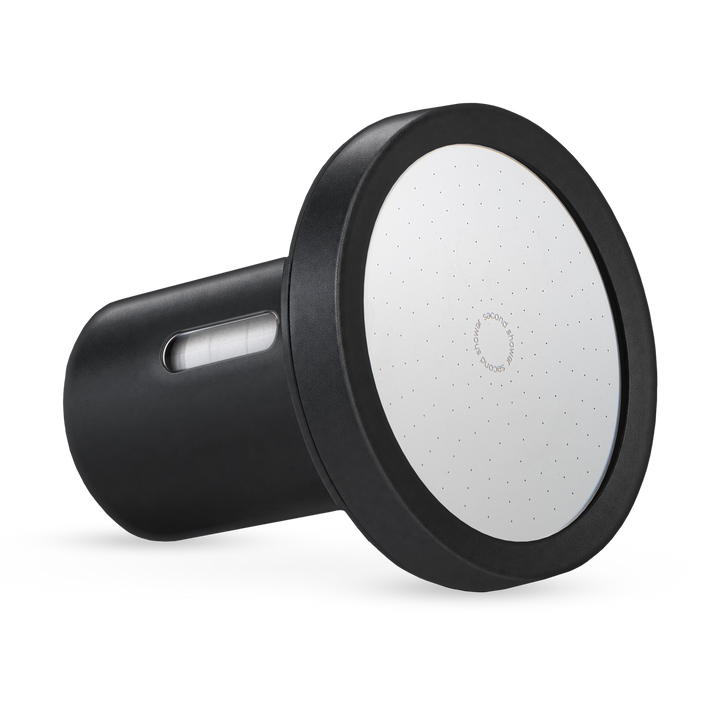
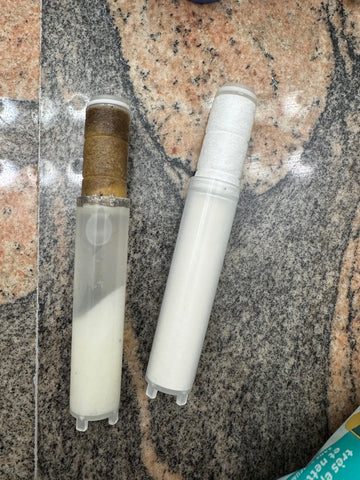
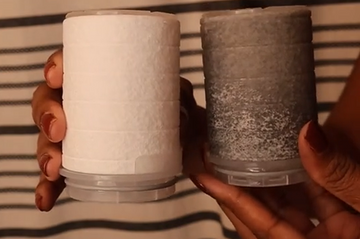
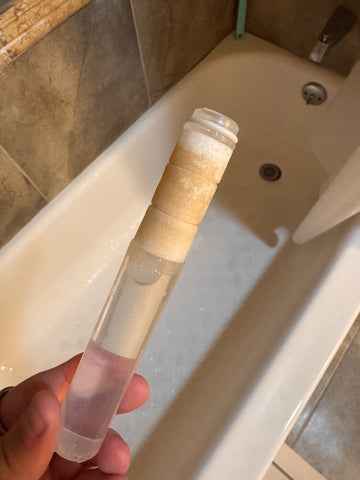
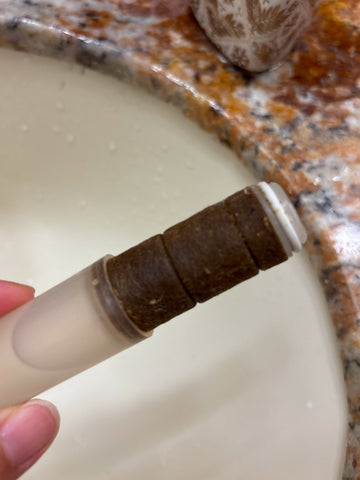
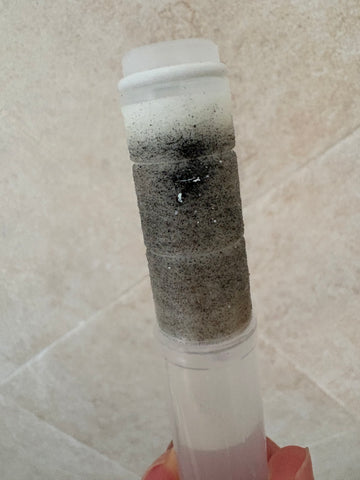
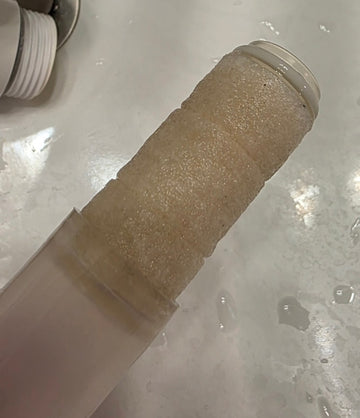
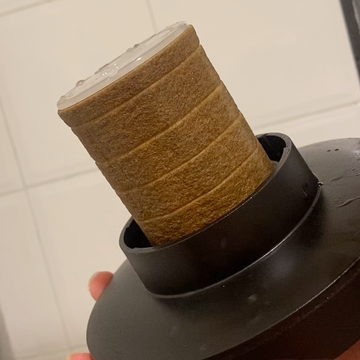
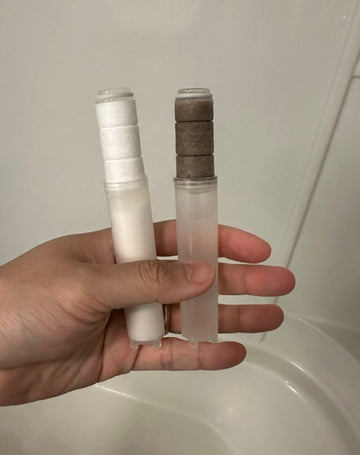
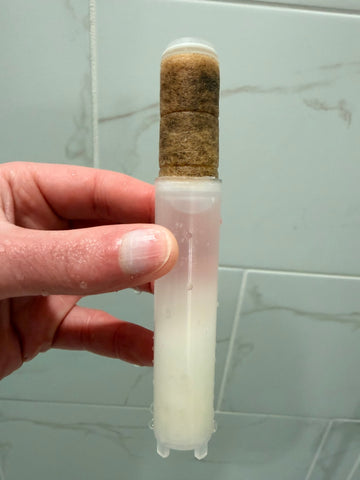
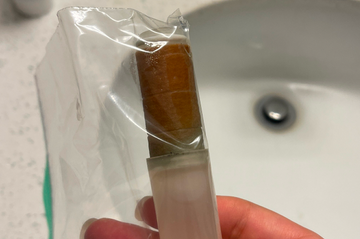
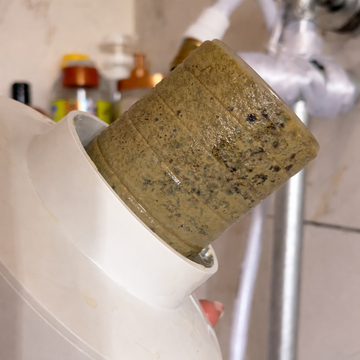
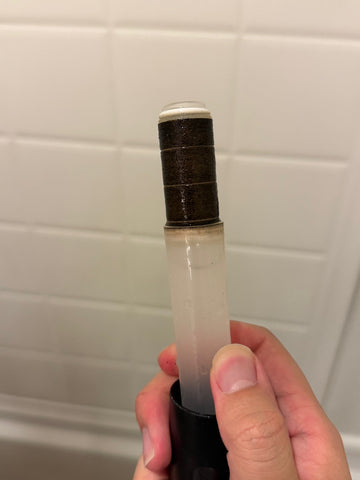
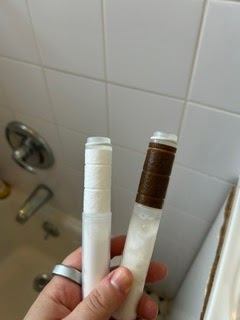
Hair breakage and sulfur smell both point to chlorine and chloramine damage. Second Shower uses Vitamin C filtration to neutralize 99.9% of free chlorine through its Day 1-60 peak window and neutralize chloramine where carbon and KDF media fail, backed by an NSF/ANSI 42* certified sediment pre-filter.
- 99.9% free chlorine reduction (peak window) - verified by independent lab testing through Day 1-60, holds performance where KDF-55 drops below 10% by Day 60.
- Chloramine neutralization - Vitamin C reacts chemically with chloramine (the actual cause of sulfur smell), while carbon and KDF media require contact time shower water doesn't provide.
- Hair-specific protection - clinical testing showed 82% of users reported healthier, shinier hair within two weeks of installation.
- NSF/ANSI 42* certified component - micron PP sediment pre-filter removes particles that compound hair damage; full-assembly chlorine and chloramine performance verified by independent lab clinical testing.
- Direct chemical reaction - Vitamin C neutralizes chlorine and chloramine instantly at shower flow rates, no dwell time needed like adsorption media.
*Micron PP sediment filter certified by NSF/ANSI 42 standards.

Protect color and texture at the source. Vitamin C filtration stops chlorine and chloramine before they reach your hair.
- 99.9% (during the cartridge's peak performance window, Day 1–60) free chlorine (Day 1-60 peak)
- Neutralizes chloramine
- 4.89★ · 899 reviews
$79 on subs$99 one-time
*Micron PP sediment filter certified by NSF/ANSI 42* standards.
*Micron PP sediment filter certified by NSF/ANSI 42 standards.
Second Shower's Vitamin C filter is the best solution for hair breakage and sulfur smell because it neutralizes 99.9% of free chlorine through the Day 1-60 peak window and neutralizes chloramine where carbon and KDF media fail, backed by an NSF/ANSI 42* certified sediment pre-filter.
*Micron PP sediment filter certified by NSF/ANSI 42 standards.
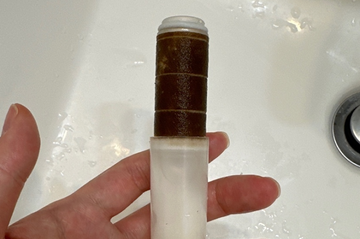
The Vitamin C ascorbic acid core uses a stoichiometric chemical reaction that remains stable through hot water exposure, while competitor KDF-55 galvanic media drops to below 10% chlorine reduction by Day 60.
AquaBliss wins on upfront price and Jolie on finish options, but neither publishes a chloramine result (October 2026). We would rather you buy the filter that actually solves sulfur smell and protects keratin than ours if your water contains only free chlorine with no chloramine treatment, but most municipal systems now use chloramine specifically because it persists longer in pipes.
Why Chlorine and Chloramine Destroy Hair
Hair breakage from shower water isn't about hardness minerals.
It's about oxidative damage from chlorine and chloramine disinfectants that municipal utilities add to kill bacteria.
Chlorine (Cl₂) and chloramine (NH₂Cl) are both strong oxidizers. When they contact hair's keratin protein structure, they break disulfide bonds that give hair its strength and elasticity. This oxidation happens within seconds of contact.
The cuticle layer lifts and roughens as oxidizers strip the protective lipid barrier. Porosity increases, meaning hair absorbs more water during washing but can't retain moisture after drying. This creates the brittle, straw-like texture people describe after moving to a new city with higher chlorine levels.
Sulfur smell is a direct indicator of chloramine presence. Unlike chlorine, which has a sharp pool-chemical odor, chloramine creates a sulfurous, rotten-egg smell when it reacts with organic matter on your skin and hair. This happens because chloramine contains a nitrogen-chlorine bond that releases different volatile compounds than free chlorine alone.
A 2001 study by Tikkanen et al. documented that chloramine persists in distribution systems far longer than free chlorine, which is exactly why utilities switched to it. But that persistence means your hair is exposed to oxidative stress every single shower, compounding damage over weeks and months.
Peterka's 1998 research on hair fiber damage showed that repeated chlorine exposure causes cumulative structural weakening. Hair doesn't recover between showers when the oxidizer is present in every rinse. The breakage you see isn't sudden trauma but progressive degradation of keratin crosslinks.
Hard water minerals like calcium and magnesium create surface buildup that makes hair feel coated, but they don't break disulfide bonds. The actual chemical damage causing breakage and elasticity loss comes from halogen oxidizers. Remove chlorine and chloramine, and you remove the root cause of fiber weakening.
Warning Signs of Chlorine and Chloramine Hair Damage
These specific symptoms indicate oxidative damage from shower water disinfectants, not hard water minerals or product buildup.
- Hair snaps when wet - Chlorine-damaged keratin loses tensile strength. If hair breaks easily during combing while wet, disulfide bonds are compromised. Healthy hair stretches before breaking.
- Sulfur or chlorine smell lingers after drying - Chloramine reacts with scalp oils and leaves volatile sulfur compounds in the hair shaft. The smell returns when hair gets damp again, even without rewashing.
- Color fades within two weeks of treatment - Oxidizers strip dye molecules from lifted cuticles. Reds and coppers fade fastest because their larger molecules sit in the cuticle layer where chlorine contact is highest.
- Ends split vertically up the shaft - Longitudinal splitting (not just lateral split ends) indicates keratin fiber separation. This happens when oxidative damage progresses from cuticle to cortex.
- Hair feels gummy or stretches excessively when wet - Over-porous hair from cuticle damage absorbs too much water. If hair stretches more than 30% of its length before snapping, protein structure is degraded.
- Texture changed after moving to a new city - Municipal water treatment varies widely. If hair became coarse, wiry, or unmanageable after relocation, the new utility likely uses higher chlorine or switched to chloramine.
- Breakage concentrated at the crown and hairline - These areas get the most direct shower spray exposure. If damage is worse where water hits first, it's environmental, not mechanical from brushing.
What Actually Fixes Hair Breakage and Sulfur Smell
People try multiple approaches when they notice hair damage and odor from shower water.
Here's what each solution actually addresses and where it falls short.
How they compare
| Approach | What it actually fixes | Effort and cost | Honest limitation |
|---|---|---|---|
| Do nothing | Acknowledges the problem but accepts ongoing damage as baseline | $0, no effort | Hair breakage compounds with every shower; sulfur smell persists and worsens as cuticle damage increases porosity |
| Clarifying shampoo weekly | Removes surface buildup and mineral deposits, improves immediate texture | $12-28 per bottle, 1-2x weekly | Strips hair further without removing oxidizers from the water; treats symptom (buildup) but not cause (chlorine damage) |
| Leave-in bond repair treatments | Temporarily crosslinks damaged keratin, improves elasticity for 1-3 days | $28-45 per bottle, applied after every wash | Doesn't prevent new oxidative damage; you're repairing the same breaks every shower cycle |
| Whole-house water softener | Removes calcium and magnesium hardness through ion exchange; eliminates mineral scale | $800-2,500 installed, plus $40-80/year salt | Does not remove chlorine or chloramine; sulfur smell and oxidative damage continue unchanged |
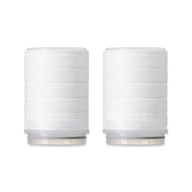
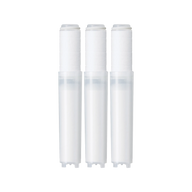
| Shower filter (Second Shower) | Neutralizes 99.9% of free chlorine (Day 1-60 peak window) and chloramine via Vitamin C chemical reaction; stops oxidative damage at the source | $99 showerhead + $36 filter 2-pack every 4-6 months | Doesn't soften dissolved hardness (use softener if scale is also a problem); filter replacement is ongoing |
Sources: Second Shower independent lab testing on file; Tikkanen et al. 2001 (chloramine persistence in distribution systems); Peterka 1998 (hair fiber oxidative damage); municipal water treatment data from EPA SDWIS database.
Why this happens
The whole-house softener trap is common. People spend thousands removing minerals that make hair feel coated, then wonder why breakage and sulfur smell continue. Softeners don't touch disinfectants.
Clarifying shampoos and bond treatments create a maintenance cycle that never ends because new damage happens every shower. You're not solving the problem, you're managing ongoing exposure.
A shower filter removes the oxidizer before it contacts hair. That's why clinical testing showed 82% of Second Shower users reported healthier, shinier hair within two weeks. You stop creating new damage, and hair's natural repair mechanisms can finally keep up.
Why Vitamin C Filtration Solves Hair Breakage and Sulfur Smell
Second Shower uses Vitamin C ascorbic acid (ascorbic acid) as the primary filtration medium because it neutralizes both chlorine and chloramine through direct chemical reaction, not adsorption.
This matters for hair because shower water crosses the filter cartridge in under one second.
KDF-55 and activated carbon media require contact time to work. They adsorb contaminants onto a surface, which needs flow to slow down long enough for molecules to stick. Shower flow rates (2.5 gallons per minute at typical residential pressure) don't provide that dwell time.
Vitamin C works via stoichiometric reaction. One ascorbic acid molecule neutralizes one hypochlorous acid (chlorine) molecule or one monochloramine molecule instantly. The reaction happens in milliseconds, regardless of flow rate. This is why Second Shower holds 99.9% free chlorine reduction through Day 1-60, while KDF-55 filters drop below 10% reduction by Day 60 per independent comparison testing.
The NSF/ANSI 42* certified micron PP sediment pre-filter removes particulates and rust before water reaches the Vitamin C core. Sediment doesn't damage hair chemically, but it does create surface roughness that compounds cuticle lifting from oxidizers. Removing both simultaneously protects hair structure more effectively than filtration media that only address one issue.
*Micron PP sediment filter certified by NSF/ANSI 42 standards.
The five-vitamin infusion (C, E, B3, B5, B7) delivers water-soluble antioxidants during the rinse phase. Niacinamide (B3) supports scalp barrier function, panthenol (B5) improves moisture retention in the hair shaft, and biotin (B7) provides the nutrient most associated with keratin synthesis.
Filter replacement cadence is every 4-6 months for the Showerhead model and 3-6 months for the Showerhand, depending on household water quality and usage volume. The Day 1-60 peak performance window is when chlorine reduction holds at 99.9% through independent lab testing. Performance gradually declines after Day 60, which is why the replacement schedule is set conservatively.
The 176 micro-jet spray plate (Showerhead) or 128 micro-jet plate (Showerhand) maintains full water pressure while filtering. Competitors using thick KDF-55 cartridges restrict flow by 20-40% because the dense media creates back-pressure. Vitamin C powder in a mesh cage allows water to pass freely while still achieving full contact with the reactive surface.
Installation takes under five minutes with no tools. The filter cartridge threads into the showerhead body, and the entire unit replaces your existing showerhead by hand-tightening onto the shower arm pipe. Renters can take it with them when moving, which spreads the $99 investment across multiple apartments.
"My hair still isn't perfect, but it stopped feeling like straw after every shower. That alone made it worth it."
Scottsdale water is treated with chloramine, which causes the exact brittle texture this customer describes. Vitamin C neutralization stopped the oxidative damage cycle within the first month of use.
What a Shower Filter Won't Fix
Shower filtration removes oxidizers, sediment, and some heavy metals.
It does not soften hard water minerals like calcium and magnesium, which require ion-exchange resin that shower filters don't have space to house.
If your primary complaint is soap scum, scale on shower glass, or that slippery feeling from soap not rinsing fully, you have a hardness problem, not a chlorine problem. A whole-house water softener is the right solution for that.
Shower filters also won't reverse existing hair damage. Broken disulfide bonds don't spontaneously re-form. What filtration does is stop new damage from accumulating, so your hair's natural growth and repair can catch up over 8-12 weeks.
If you have severely compromised hair from years of bleaching, heat styling, or chemical processing, a shower filter helps but isn't a cure. You still need protein treatments and bond repair products to address existing structural damage.
Sulfur smell from well water with hydrogen sulfide (H₂S) is a different issue than chloramine odor. Vitamin C doesn't neutralize H₂S. If you're on well water and smell sulfur, you need an oxidizing media like manganese greensand or a sediment filter with activated alumina.
Which one should you buy?
We would rather you buy the filter that solves your actual problem than buy ours for the wrong situation.
Stop Hair Breakage at the Source
If your hair breaks when wet, smells like sulfur after showering, or lost its shine after moving to a new city, the problem is oxidative damage from chlorine and chloramine in your water.

If your hair breaks when wet, smells like sulfur after showering, or lost its shine after moving to a new city, the problem is oxidative damage from chlorine and chloramine in your water. Treatments and products can't fix what your shower keeps breaking.
Second Shower neutralizes 99.9% of free chlorine through the Day 1-60 peak window and neutralizes chloramine where carbon and KDF filters fail, backed by an NSF/ANSI 42* certified sediment pre-filter. Install it in under five minutes, no tools required.
*Micron PP sediment filter certified by NSF/ANSI 42 standards.
Shop Second Shower or find it on Amazon.
Related Reading
Frequently Asked Questions
Does a shower filter really stop hair breakage?
Yes, if the breakage is caused by chlorine or chloramine oxidation, which is the most common cause in municipal water. A shower filter that neutralizes these oxidizers removes the chemical stress that weakens keratin bonds. Clinical testing with Second Shower showed 82% of users reported healthier, shinier hair within two weeks. However, if your hair is breaking due to heat damage, over-processing, or mechanical stress from brushing, a shower filter won't fix that.
It only addresses water-related oxidative damage.
Why does my shower water smell like sulfur?
Sulfur smell in municipal water is caused by chloramine (NH₂Cl), a disinfectant that many cities use instead of chlorine because it persists longer in pipes. When chloramine reacts with organic matter on your skin and hair, it releases volatile sulfur compounds. Well water can also smell like sulfur due to hydrogen sulfide gas (H₂S), but that's a different issue requiring different filtration.
If you're on city water and smell sulfur, chloramine is the cause, and Vitamin C filtration neutralizes it effectively.
How long does it take to see results with a shower filter?
Most people notice less dryness and reduced chemical smell within 3-7 days. Hair texture improvement takes longer because you're waiting for damaged hair to grow out and new growth to replace it. Expect visible improvement in shine and manageability within 2-4 weeks, and significant reduction in breakage over 8-12 weeks as healthier hair replaces oxidized lengths. The key is that new damage stops immediately once you remove chlorine and chloramine from your shower water.
Will a shower filter help with color-treated hair fading?
Yes. Chlorine and chloramine are oxidizers that strip dye molecules from the hair shaft, especially in the first two weeks after coloring when the cuticle is still lifted. Removing these oxidizers before water contacts your hair significantly extends color vibrancy. Reds, coppers, and fashion colors fade fastest because their larger molecules sit in the cuticle layer where chlorine exposure is highest.
Stylists often recommend shower filters as the single most effective at-home step to preserve color between salon visits.
Do shower filters work with hard water?
Shower filters remove chlorine, chloramine, and sediment, but they don't soften dissolved hardness minerals like calcium and magnesium. Those require ion-exchange resin, which whole-house water softeners use. If you have both hard water and chlorine issues, the best setup is a whole-house softener plus a shower filter. The softener removes hardness, and the shower filter removes oxidizers.
Most people who complain about hard water actually have a chlorine problem, not a mineral problem, because chlorine damage feels similar to mineral buildup but causes actual breakage.