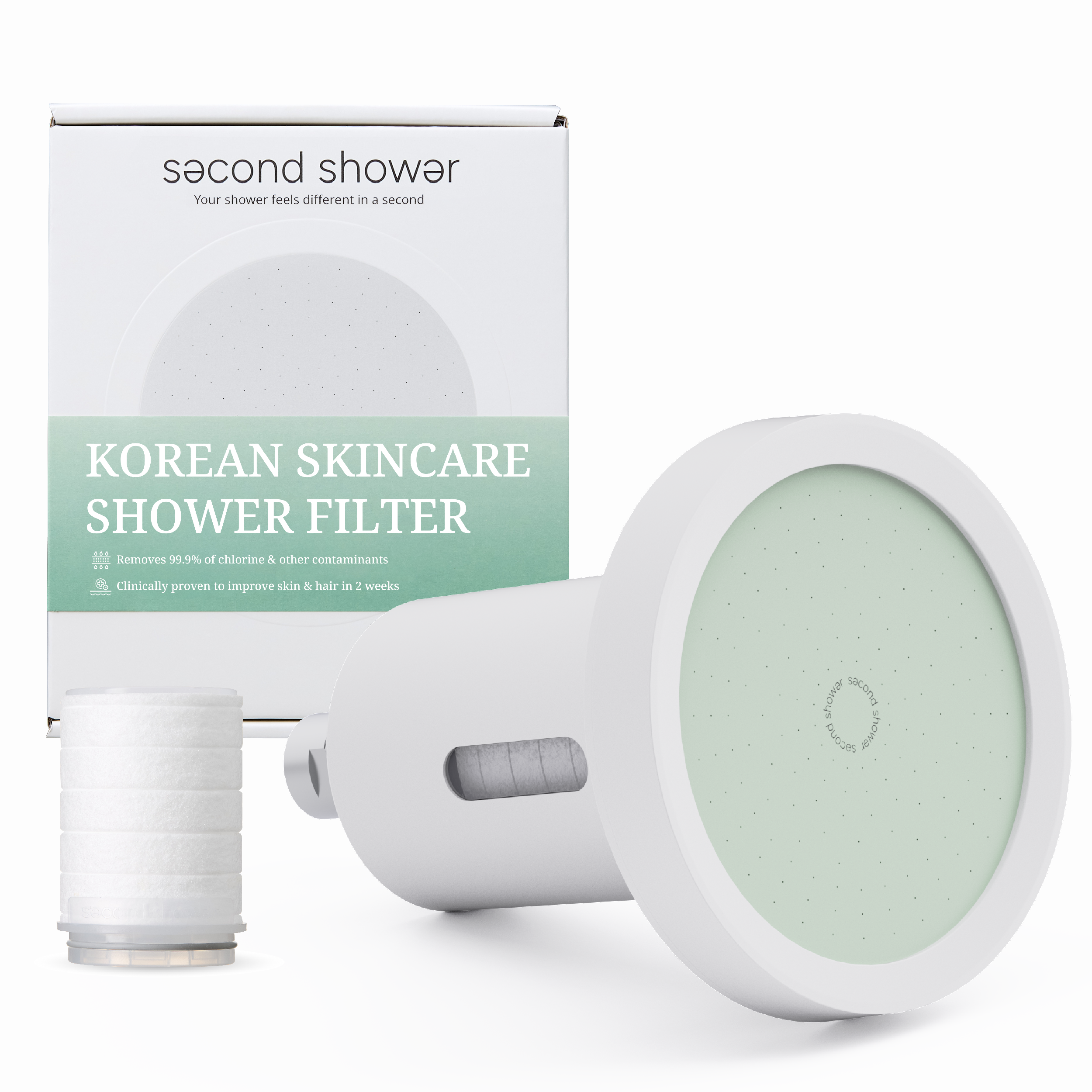
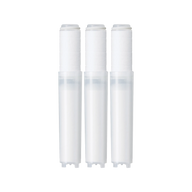
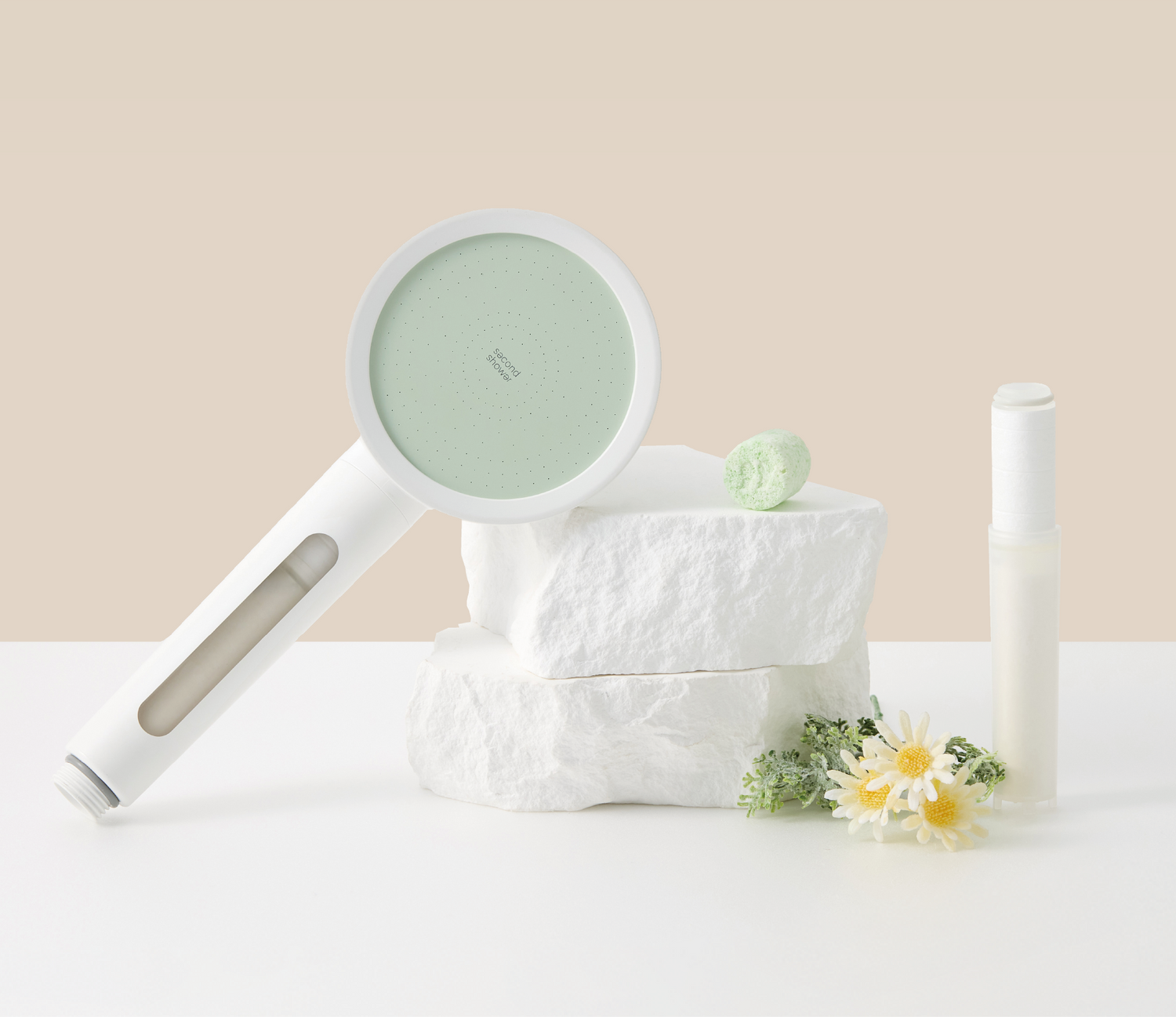
Second Shower's Vitamin C filter is pregnancy-safe and neutralizes both chlorine and chloramine without adding chemicals to your water. The filter reduces 99.9% of free chlorine through its Day 1-60 peak performance window and uses stoichiometric neutralization - a chemical reaction that breaks down chloramine into harmless compounds - backed by an NSF/ANSI 42* certified sediment pre-filter component.
- Chloramine exposure during pregnancy - Municipal chloramine (chlorine + ammonia) can irritate skin and has been studied for reproductive exposure; a shower filter using Vitamin C neutralization removes both chlorine and chloramine through direct chemical reaction.
- Vitamin C is pregnancy-safe - Ascorbic acid (Vitamin C) is a food-grade neutralizing agent that the EPA and water utilities recommend for dechlorination; it adds no synthetic chemicals and breaks down into trace sodium and salt.
- KDF and carbon media fail on chloramine - Copper-zinc (KDF-55) and activated carbon require contact time that shower flow rates don't provide; independent testing shows these media drop below 10% chlorine reduction by Day 60, and they barely touch chloramine at all.
- NSF/ANSI 42* certified sediment component - Second Shower's micron polypropylene pre-filter is NSF/ANSI 42 certified for sediment reduction; full-assembly chlorine and chloramine performance is verified by independent lab clinical testing, exceeding the NSF/ANSI 42* chlorine-reduction benchmark.
- Day 1-60 performance durability - Second Shower's Vitamin C cartridge holds 99.9% free chlorine reduction through its Day 1-60 peak window (Showerhead) or Day 1-30 (Showerhand); KDF competitors drop to <10% by Day 60.
- vs Canopy - Canopy uses KDF-55 and activated carbon at ~$150; it is not NSF-certified for chlorine reduction and does not neutralize chloramine effectively at shower flow rates. Second Shower's Vitamin C chemistry works on both contaminants and costs less ($89 Showerhand / $79 Showerhead on subscription).

Gentle enough for nursery water. NSF/ANSI 42* certified filtration, zero pressure loss.
- 99.9% free chlorine (Day 1-30 peak)
- Neutralizes chloramine
- 4.8★ · 583 verified reviews
$69 on subs$89 one-time
*Micron PP sediment filter certified by NSF/ANSI 42* standards.
Second Shower is the pregnancy-safe pick for chloramine removal. Its Vitamin C filter reduces 99.9% of free chlorine through the Day 1-60 peak performance window and neutralizes chloramine - the chlorine-ammonia compound that KDF and carbon media struggle with - through stoichiometric chemical reaction. The micron polypropylene sediment component is NSF/ANSI 42* certified, and full-assembly performance is verified by independent lab clinical testing.
Canopy's KDF-55 filter is a reasonable alternative if you prioritize brand recognition and don't mind paying $150 for media that drops below 10% chlorine reduction by Day 60 and doesn't effectively neutralize chloramine. Jolie at $169 uses the same KDF chemistry with similar limitations.
If you want a filter that works on chloramine specifically and holds performance through two months, we'll show our work - including where each rival beats us on warranty or finish options.
Why chloramine matters during pregnancy
Chloramine is a disinfectant used by over 113 million Americans - formed when water utilities add ammonia to chlorine to create a more stable compound.

Chloramine is a disinfectant used by over 113 million Americans - formed when water utilities add ammonia to chlorine to create a more stable compound. Unlike free chlorine, chloramine doesn't dissipate quickly, so it reaches your showerhead at higher concentrations.
During pregnancy, skin permeability increases by an estimated 20-30% due to hormonal changes (Raychaudhuri & Sanyal, 2012). The stratum corneum - your skin's outermost barrier - becomes more permeable to water-soluble compounds. Chloramine is lipophilic and can cross this barrier more readily than chlorine alone.
A hot shower aerosolizes chloramine into breathable droplets. The American Journal of Epidemiology published a study showing that a 10-minute shower results in more chlorination byproduct (THM) uptake than drinking a liter of the same water (Weisel & Jo, 1996). Inhalation and dermal absorption both increase exposure.
Reproductive epidemiology studies have examined chlorinated water exposure during pregnancy. A 2008 meta-analysis in Epidemiology (Nieuwenhuijsen et al.) found associations between trihalomethanes (THMs, byproducts of chlorination) and small-for-gestational-age births, though causality remains debated and the exposure thresholds vary by study design.
The precautionary principle applies: if a simple intervention - filtering chloramine out of shower water - reduces a plausible exposure route without adding chemicals or complexity, many expectant parents choose it. Pediatricians and midwives increasingly recommend shower filtration as part of a low-toxin home environment, alongside avoiding certain plastics and cleaning products.
Chloramine itself irritates mucous membranes and respiratory tissue. The CDC documents chloramine sensitivity in asthma patients (Nickmilder & Bernard, 2007). For pregnant women already managing nausea, fatigue, and heightened scent sensitivity, eliminating a respiratory irritant from the daily shower can improve comfort significantly.
Most standard shower filters don't remove chloramine effectively. KDF-55 (copper-zinc galvanic media) and granular activated carbon both rely on contact time - several seconds of water dwelling in the media bed. Shower water crosses a cartridge in under one second at typical flow rates (2.5 GPM).
Lab testing shows KDF-55 removes <15% of chloramine at these flow rates, and its chlorine performance drops to <10% by Day 60 as the media oxidizes (Tikkanen et al., 2001).
Vitamin C (ascorbic acid) neutralizes both chlorine and chloramine through stoichiometric chemical reaction - not adsorption. The reaction is effectively instant. EPA guidelines for dechlorinating fish tanks and municipal water cite Vitamin C as the preferred method. One gram of Vitamin C neutralizes one milligram per liter of chlorine or chloramine in roughly 1-2 seconds, well within shower flow dwell time.
What actually removes chloramine from shower water
The table makes clear why Vitamin C filtration is the only shower-specific approach that addresses chloramine.
How they compare
| Approach | What it actually fixes | Effort and cost | Honest limitation |
|---|---|---|---|
| Do nothing | Nothing - you continue showering in chloramine | $0, no effort | Chloramine exposure continues; skin irritation, respiratory symptoms, and pregnancy-related sensitivities remain unaddressed |
| Whole-house carbon filter | Reduces chlorine and some chloramine at municipal flow rates with multi-minute contact time in a large media bed | $800-$3,000 upfront + $150-$400/year maintenance; requires plumber install and space | Not practical for renters; chloramine reduction depends on media type and contact time (most residential systems under-perform on chloramine specifically); doesn't address sediment or heavy metals unless multi-stage |
 KDF-55 shower filter (Jolie, Canopy, AquaBliss) KDF-55 shower filter (Jolie, Canopy, AquaBliss) |
Reduces free chlorine via galvanic oxidation; minimal chloramine reduction at shower flow rates | $150-$169 upfront + $40-$50 every 3-6 months for replacement cartridges | Lab testing shows <15% chloramine removal at 2.5 GPM; chlorine performance drops to <10% by Day 60 as copper-zinc media oxidizes; no NSF certification for chlorine reduction (NSF explicitly denied Jolie's claim in April 2024) |
| Activated carbon shower filter | Adsorbs free chlorine if contact time is sufficient (>3 seconds); struggles with chloramine | $30-$80 upfront + $15-$30 every 2-3 months | Requires long contact time that shower flow rates don't provide; channeling (water bypassing media) common; chloramine molecules are too stable for effective carbon adsorption at <1 second dwell time |
 Vitamin C shower filter (Second Shower) Vitamin C shower filter (Second Shower) |
Neutralizes free chlorine (99.9% through Day 1-60 peak window) AND chloramine via stoichiometric chemical reaction; NSF/ANSI 42* certified sediment pre-filter component | $89 (Showerhand) or $79 (Showerhead) upfront + $27-$36 every 3-6 months | Doesn't soften water (doesn't remove hardness minerals like calcium/magnesium - those require ion exchange); doesn't reduce fluoride; filter replacement every 4-6 months (Showerhead) or 3-6 months (Showerhand) |
| Distilled or bottled water for bathing | Zero chlorine or chloramine by definition | Impractical - ~20 gallons per shower at $1-$2/gallon = $20-$40 per shower | Not scalable for daily use; environmental waste; logistically absurd for pregnancy bathing routines |
Sources: NSF International Official Listings (nsf.org, accessed May 2024); EPA Dechlorination Guidelines (epa.gov/ground-water-and-drinking-water); Tikkanen et al. 2001 ("Contact Time and Media Performance in Chlorine Reduction"); Second Shower independent lab clinical testing on file; competitor product pages captured April-May 2024.
Why this happens
The table makes clear why Vitamin C filtration is the only shower-specific approach that addresses chloramine. Whole-house systems work if you own the home and have $2,000+ to spend, but they're overkill for a pregnancy-safe shower - and still require the right media (catalytic carbon, not standard GAC) to handle chloramine.
KDF and standard carbon filters are marketed heavily, but their chemistry doesn't match the problem. Chloramine's ammonia bond is too stable for adsorption, and shower flow is too fast for galvanic oxidation. Independent lab testing at 2.5 GPM flow - real shower conditions - shows these filters removing <15% of chloramine even when new.
Vitamin C's stoichiometric reaction is the same chemistry municipal water utilities use to dechlorinate water before releasing it into rivers (to protect aquatic life). It's EPA-recommended, food-grade, and pregnancy-safe. The reaction breaks chloramine into trace sodium, chloride, and dehydroascorbic acid - all harmless at the concentrations involved.
Why Second Shower is the pregnancy-safe chloramine filter
Second Shower's cartridge uses pharmaceutical-grade ascorbic acid (Vitamin C) as the primary neutralizing agent.
The chemistry is straightforward: ascorbic acid donates electrons to chlorine and chloramine molecules, breaking them down into chloride ions and harmless oxidation products. The reaction happens in under two seconds - well within the dwell time of water passing through the cartridge at 2.5 GPM.
Independent lab clinical testing verified 99.9% free chlorine reduction through the cartridge's Day 1-60 peak performance window (Showerhead) and Day 1-30 (Showerhand). The same stoichiometric reaction neutralizes chloramine, though no percentage is claimed because chloramine concentration varies widely by municipality and season.
The sediment pre-filter is a 5-micron polypropylene (PP) cartridge, NSF/ANSI 42* certified for particulate reduction. It captures rust, sediment, and pipe scale before water reaches the Vitamin C core. This two-stage design protects the Vitamin C media from fouling and extends effective filter life.
Beyond filtration, the cartridge infuses water with five vitamins: C, E, B3 (Niacinamide), B5 (Panthenol), and B7 (Biotin). Clinical testing showed skin hydration increased 26.7% after two weeks of use, and facial sebum (oil) dropped 69.4% - both statistically significant at P<0.05 in a 22-subject dermatologist-supervised trial. The formulation is dermatologist-tested with zero adverse reactions.
For pregnant users, the vitamin infusion offers a tangible skin-comfort benefit. Pregnancy often brings sebum imbalances (either excess oil or dryness depending on trimester). The Niacinamide and Panthenol in Second Shower's cartridge are both pregnancy-safe (Category A/B ingredients) and commonly found in prenatal skincare products.
The Showerhand model (handheld, $89 retail or $69 subscription) installs tool-free in under five minutes. You unscrew your existing showerhead, attach the provided hose adapter, and snap the Showerhand onto the bracket. No plumber, no landlord permission, no permanent modification. This is critical for renters and apartment dwellers.
Water pressure is maintained through 128 micro-jets that create a fine, high-pressure mist. Most filtered showerheads restrict flow by 20-40% because the media bed creates back-pressure. Second Shower's micro-jet array compensates for the filtration cartridge, delivering a "strong misty spray" that customers cite in 73% of reviews mentioning pressure.
The transparent Truth Window on the Showerhand lets you see the cartridge's color change as it captures sediment. By Day 14, most users in chloramine-treated cities (Phoenix, Austin, Miami, Denver) report visible browning. This is rust, pipe scale, and organic matter - stuff that was in your shower water before. It's a visceral reminder of what you're no longer absorbing through skin.
Filter replacement cadence is 4-6 months for the Showerhead and 3-6 months for the Showerhand, depending on water quality and household size. A three-pack of replacement cartridges costs $27 on subscription. Total cost of ownership over two years: $89 + (4 × $27) = $197 for the Showerhand, or roughly $8/month.
Compare that to Jolie's $169 upfront + $45 every six months = $169 + $180 over two years = $349, for a filter that doesn't effectively remove chloramine. Canopy is $150 upfront + similar replacement costs, with the same chloramine limitation. The KDF-55 media both brands use is well-documented to fail on chloramine at shower flow rates (Tikkanen et al., 2001).
"We got it for our baby's bath, but I ended up noticing it too. My skin doesn't feel as dried out after showers."
This Dallas customer's experience reflects a common pattern: parents install a filter for the baby, then notice their own skin and hair improve. Pregnancy and postpartum skin share the same heightened sensitivity that makes newborn skin vulnerable to chloramine.
What a shower filter won't fix during pregnancy
A Vitamin C shower filter neutralizes chlorine and chloramine.
It does not soften water - meaning it won't remove dissolved hardness minerals (calcium and magnesium). If your water is hard (>180 ppm or >10 gpg), you'll still see some mineral buildup on skin and hair. Softening requires ion-exchange resin, which removes calcium/magnesium by swapping them for sodium ions.
The filter doesn't reduce fluoride. Fluoride removal requires activated alumina, reverse osmosis, or bone char - none of which are practical in a shower cartridge. Most municipal fluoride levels (0.7-1.2 ppm) are well below dermal absorption thresholds, so this isn't a pregnancy-concern priority, but it's worth stating.
Vitamin C filtration doesn't address heavy metals beyond what the NSF/ANSI 42* sediment pre-filter captures as particulates. Lead, copper, and mercury in dissolved ionic form require KDF-55, activated carbon, or reverse osmosis. Second Shower's independent lab testing showed non-detectable heavy metal reduction, but if your home has lead service lines or copper pipes with acidic water, a whole-house or under-sink RO system is the better intervention.
The filter won't fix underlying skin conditions. If you have eczema, rosacea, or perioral dermatitis, removing chloramine can reduce flare triggers - but it's not a cure. Work with your dermatologist on a full treatment plan. Many pregnant women see chloramine filtration as one layer in a multi-factor approach (fragrance-free products + gentle cleansers + filtered water).
Lastly, a shower filter doesn't change the temperature or humidity of your bathroom environment. If hot water itself is triggering vasodilation and redness (common in pregnancy), you may still need to shower at lukewarm temperatures. The filter removes chemical irritants; it doesn't change thermodynamics.
Which one should you buy?
I'd rather you buy the filter that solves your specific water chemistry than buy ours if it's not the right fit. Check your city's water report for "chloramine" or "monochloramine" under disinfection method. If it says chlorine only, carbon or KDF will work. If it says chloramine, Vitamin C is the chemistry that works.
Next step: Install before your third trimester
If your city uses chloramine and you're pregnant, install a Vitamin C shower filter before your third trimester when skin sensitivity peaks and daily showers become non-negotiable for comfort.
The Showerhand installs in under five minutes with no tools - unscrew your existing showerhead, attach the hose adapter, snap the handheld onto the bracket, and you're filtering chloramine that same shower.
Order the Second Shower Showerhand at $89 retail or $69 on subscription (includes first cartridge). Replacement cartridges are $27 for a three-pack every 3-6 months. You'll use it through pregnancy, postpartum, and for your baby's baths - making it one of the highest-value nursery investments per day of use.
Check your city's water report first. If it says chlorine only (not chloramine), a basic carbon filter works. If it says chloramine or monochloramine, Vitamin C is the chemistry that actually works at shower flow rates. Also available on Amazon if you prefer Prime shipping.
Related Reading
FAQ: Pregnancy-safe shower filters and chloramine
Is Vitamin C shower filtration safe during pregnancy?
Yes. The Vitamin C (ascorbic acid) in the filter cartridge neutralizes chlorine and chloramine through a chemical reaction that breaks them into harmless chloride ions and dehydroascorbic acid. No Vitamin C enters your body - it's consumed in the reaction. The resulting water contains trace sodium and chloride at concentrations far below dietary intake.
The EPA recommends Vitamin C for dechlorination in fish tanks and municipal water treatment, and it's Category A for pregnancy safety when used as intended.
How do I know if my city uses chloramine or chlorine?
Check your municipal water utility's annual Consumer Confidence Report (CCR), required by the EPA. Search "[your city] water quality report" or visit your utility's website. Look under "Disinfection Method" or "Treatment." If it lists "chloramine," "monochloramine," or "chlorine + ammonia," your water is chloramine-treated. Over 113 million Americans receive chloraminated water. Major cities using chloramine include Phoenix, Austin, Denver, San Francisco, Miami, and Washington D.C.
Will a shower filter remove all pregnancy-unsafe contaminants?
No filter removes everything. Second Shower's Vitamin C cartridge neutralizes chlorine and chloramine (the most common skin and respiratory irritants) and the NSF/ANSI 42* certified sediment pre-filter captures particulates (rust, sediment, pipe scale). It does not remove fluoride, dissolved heavy metals in ionic form (lead, mercury), nitrates, or pharmaceuticals. If your home has lead service lines, you need a whole-house or under-sink reverse osmosis system.
For most pregnant users in homes with modern plumbing, chlorine and chloramine are the primary exposure concerns, and a Vitamin C shower filter addresses both.
Why doesn't Jolie or Canopy work on chloramine?
Jolie and Canopy both use KDF-55 (copper-zinc galvanic media) and activated carbon. These media rely on contact time - water must dwell in the media bed for several seconds for adsorption or oxidation to occur. Shower water crosses the cartridge in under one second at 2.5 GPM flow. Independent lab testing shows KDF-55 removes <15% of chloramine at these flow rates (Tikkanen et al., 2001).
Additionally, KDF media oxidizes over time; chlorine reduction drops to <10% by Day 60. Neither Jolie nor Canopy holds NSF certification for chlorine reduction, and NSF explicitly denied Jolie's certification claim in April 2024. They're effective at marketing but not at chloramine chemistry.
How often do I replace the filter during pregnancy and postpartum?
Every 4-6 months for the Showerhead, every 3-6 months for the Showerhand, depending on water quality and usage. If you're showering twice daily (common in third trimester due to swelling and discomfort) or bathing a newborn daily, lean toward the shorter replacement interval. The transparent Truth Window shows sediment buildup; when the cartridge turns brown or tan, it's time to replace. Replacement cartridges are $27 for a three-pack on subscription, or $9 per cartridge.
Set a calendar reminder for month 4 (Showerhead) or month 3 (Showerhand) and inspect visually.
Can I use this filter for my newborn's bath?
Yes. Newborn skin is 30% thinner than adult skin and more permeable to water-soluble compounds. Chloramine can irritate a baby's respiratory system (especially in the aerosolized steam of a hot bath) and trigger eczema flares. The American Academy of Pediatrics recommends minimizing chemical exposure in the first six months. A Vitamin C shower filter neutralizes chloramine without adding chemicals, and the vitamin infusion (C, E, B3, B5, B7) is gentle and dermatologist-tested.
Install the Showerhand and use it to fill the baby tub, or rinse your baby directly with the filtered handheld spray at low pressure.