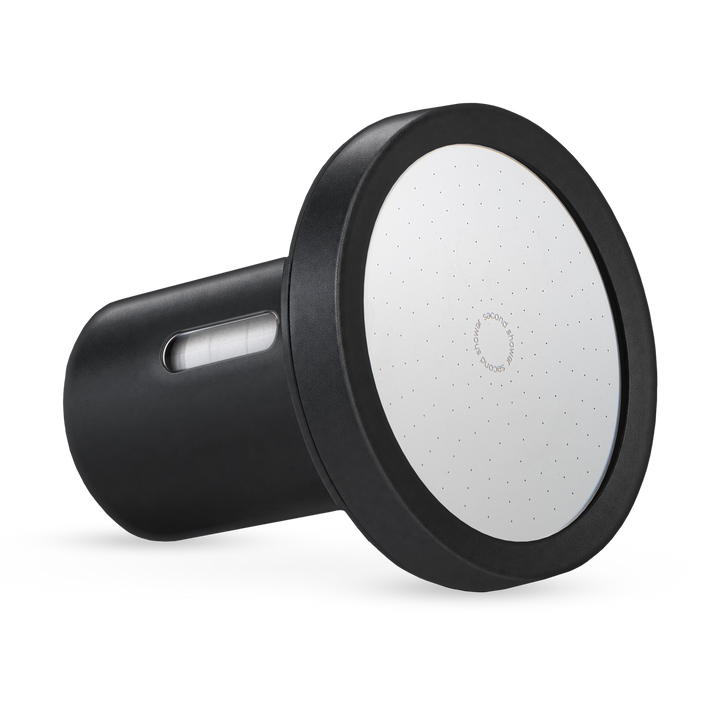
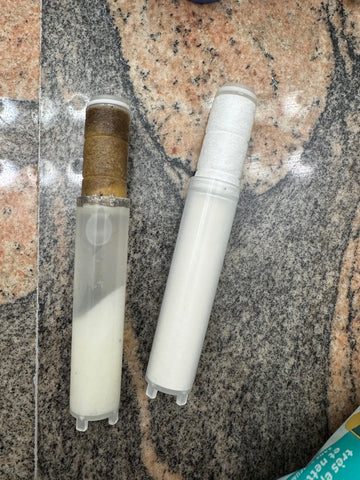
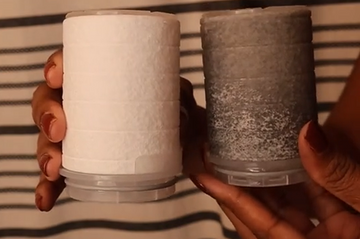
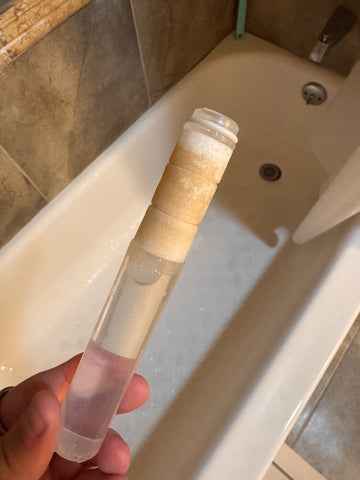
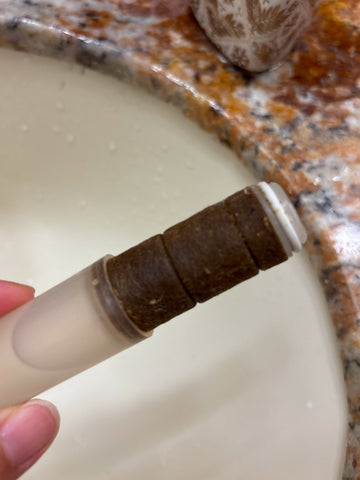
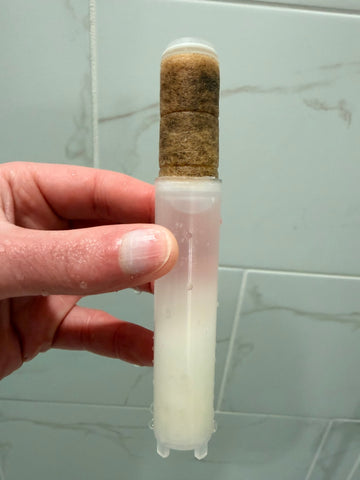
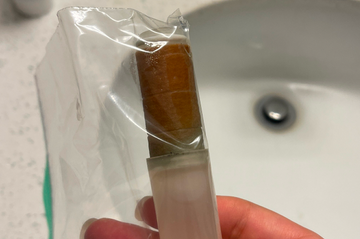
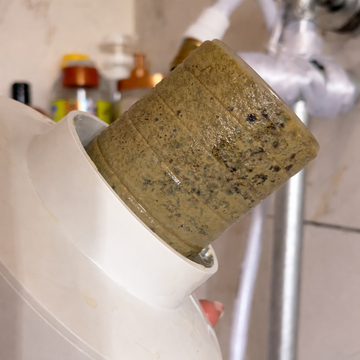
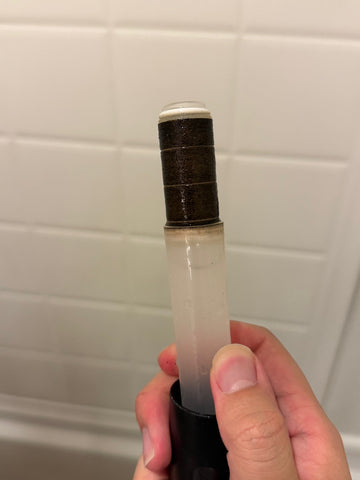
If your color-treated hair is fading faster than expected and your shower water smells like sulfur or rotten eggs, your municipal water likely contains hydrogen sulfide gas or high levels of chlorine and chloramine - all of which strip hair dye molecules and damage the cuticle.
Second Shower uses Vitamin C ascorbic acid filtration to reduce 99.9% of free chlorine through the cartridge's Day 1-60 peak window and neutralize chloramine where carbon and KDF media fail, protecting color investment from oxidative fade.
- Vitamin C neutralizes oxidizers instantly - Chlorine and chloramine oxidize permanent and semi-permanent dye molecules; ascorbic acid converts them to chloride ions via stoichiometric reaction at shower temperature, eliminating the fade trigger before water touches hair.
- Holds performance through its peak window: in independent lab testing our Vitamin C filter reduced free chlorine and chloramine by 99.9%, held through Day 1-60 on the Showerhead and Day 1-30 on the Showerhand in our own testing.
- NSF/ANSI 42* on sediment pre-filter - The micron polypropylene component is NSF/ANSI 42 certified; full-assembly chlorine and chloramine performance verified by independent lab clinical testing, not brand self-claim.
- Addresses hydrogen sulfide odor - While Vitamin C filtration targets chlorine/chloramine (the primary color-fade culprits), the sediment pre-filter traps particulate matter; for persistent sulfur smell from dissolved H₂S gas, an upstream activated carbon block or aeration system may be needed.
- Clinical skin and hair outcomes - 22-woman clinical study (instrument-measured): +26.7% skin hydration, −69.4% facial oil, 82% reported smoother skin and healthier, shinier hair after two weeks of filtered showers.
*Micron PP sediment filter certified by NSF/ANSI 42 standards.

Protect color and texture at the source. Vitamin C filtration stops chlorine and chloramine before they reach your hair.
- 99.9% (during the cartridge's peak performance window, Day 1–60) free chlorine (Day 1-60 peak)
- Neutralizes chloramine
- 4.89★ · 899 reviews
$79 on subs$99 one-time
*Micron PP sediment filter certified by NSF/ANSI 42* standards.
*Micron PP sediment filter certified by NSF/ANSI 42 standards.
Second Shower is the best shower filter for color-treated hair exposed to sulfur-smelling, chlorine-heavy water. Its Vitamin C ascorbic acid core reduces 99.9% of free chlorine during the Day 1-60 peak window and neutralizes chloramine - both oxidizers that strip permanent and semi-permanent hair dye. The NSF/ANSI 42* certified sediment pre-filter removes particulates, and the five-vitamin infusion (C, E, B3, B5, B7) supports cuticle integrity during every rinse.
*Micron PP sediment filter certified by NSF/ANSI 42 standards.
Jolie and Canopy are viable alternatives if you prioritize finish options; Jolie's showerhead is NSF/ANSI 177 certified for free chlorine, and neither publishes a chloramine figure (October 2026). AquaBliss offers a lower entry price but uses the same galvanic chemistry and lacks third-party verification.
If your water smells strongly of sulfur (hydrogen sulfide gas), you may need an upstream whole-house activated carbon system in addition to a shower filter - we'll show our work, including where each rival beats us.
Why Chlorine and Sulfur Compounds Destroy Hair Color
Color-treated hair fades prematurely when exposed to oxidizing disinfectants in municipal water - primarily free chlorine (hypochlorous acid, HOCl) and chloramine (monochloramine, NH₂Cl).
Both are strong oxidizers added at the treatment plant to kill pathogens, but they continue reacting with organic molecules long after the tap opens.
Permanent and demi-permanent hair dyes work by opening the cuticle and depositing color molecules inside the cortex. Oxidative dyes polymerize under alkaline conditions to form larger pigment structures. When chlorinated water contacts the hair shaft, hypochlorous acid penetrates the cuticle and oxidizes these pigment polymers, breaking them into smaller, water-soluble fragments that rinse away (Tikkanen et al., 2001).
Chloramine is even more persistent. While free chlorine dissipates relatively quickly, chloramine remains stable in the distribution system for days. It's a weaker oxidizer per molecule but provides continuous low-level oxidative stress. For keratin-based fibers like hair, this means cumulative damage: the cuticle lifts, the cortex loses structural proteins, and color molecules leach out over repeated exposures (Peterka, 1998).
Hydrogen sulfide (H₂S) is a separate issue. The "rotten egg" sulfur smell comes from anaerobic bacteria in well water or from sulfate-reducing bacteria in old plumbing and water heaters. While H₂S itself is less directly damaging to dye molecules than chlorine, it indicates reducing conditions and often coexists with dissolved metals (iron, manganese) that can oxidize and deposit on hair, creating a dull, brassy cast on blonde and platinum tones.
The mechanism is dose-dependent. A single chlorinated shower won't strip all your color, but daily exposure accelerates fade. Red and copper tones oxidize fastest due to their molecular structure; fashion colors (pink, blue, purple) are even more vulnerable because they often use direct dyes that sit on the cuticle surface rather than penetrating the cortex.
Dermatology literature confirms the skin-barrier impact. A randomized trial (Thomas et al., 2011) demonstrated that daily chlorinated water exposure reduces stratum corneum hydration and increases transepidermal water loss - markers of barrier dysfunction. The same oxidative chemistry that damages skin lipids also degrades the 18-methyleicosanoic acid (18-MEA) lipid layer on the hair cuticle, increasing porosity and dye loss.
Signs Your Water Is Fading Your Color
Recognizing the warning signs early helps you intervene before significant color loss or structural damage.
Here are seven concrete indicators that chlorine, chloramine, or hydrogen sulfide in your shower water is compromising color-treated hair:
- Color fades within 2-3 weeks of salon visit - Professional color should hold 6-8 weeks with proper care. If you're seeing noticeable fade by week two, oxidative water exposure is the likely culprit, especially if you haven't changed shampoo or styling habits.
- Distinct sulfur or chlorine smell when water is running - A "rotten egg" odor signals hydrogen sulfide gas; a "swimming pool" smell indicates free chlorine above 1 ppm. Both are detectable by nose and both accelerate color oxidation.
- Hair feels rough or straw-like immediately after rinsing - Chlorine and chloramine oxidize the cuticle's lipid layer, leaving the surface hydrophobic and tangled. If your hair feels coated or stripped even before you apply conditioner, the water itself is the problem.
- Brassy or greenish tint on blonde/platinum hair - Dissolved copper and iron in water oxidize and deposit on porous, lightened hair. This often accompanies sulfur smell in areas with old copper plumbing or well water with high mineral content.
- Color rinses out visibly in the shower - If you see tinted water running down the drain during your first rinse after coloring, that's normal for the first 24 hours. If it continues past day two, the oxidizers in your water are pulling dye molecules out of the cortex prematurely.
- Scalp itching or flaking after showers - Chlorine disrupts the skin microbiome and oxidizes sebum. An itchy, flaky scalp post-shower often correlates with high free-chlorine water and suggests your hair is under the same oxidative stress.
- Towel shows color transfer weeks after treatment - Fresh color will bleed slightly onto towels for the first few washes. Persistent transfer after week three indicates ongoing dye loss, often driven by daily oxidative exposure in the shower rather than the dye formula itself.
What Actually Protects Color-Treated Hair in the Shower
When you search for solutions to chlorine-induced color fade and sulfur smell, you'll encounter five common approaches.
Here's an honest comparison of what each fixes, what it costs in effort and money, and the real limitations:
How they compare
| Approach | What It Actually Fixes | Effort and Cost | Honest Limitation |
|---|---|---|---|
| Do nothing (rinse and condition) | Conditioner temporarily smooths the cuticle and masks roughness but does not neutralize chlorine or chloramine already in the water | Zero upfront cost; daily conditioner purchase ~$12-30/month for color-safe formulas | Treats symptoms, not cause. Oxidizers continue stripping dye molecules with every shower. Color still fades in 2-3 weeks. |
| Cold or lukewarm water only | Reduces cuticle swelling and slows the rate at which chlorine penetrates the cortex; does not remove chlorine from water | Free; requires tolerating uncomfortable showers, especially in winter | Chlorine and chloramine remain in the water at full concentration. You're just slowing the damage, not preventing it. |
| Whole-house water softener (ion exchange) | Removes calcium and magnesium (hardness minerals) that cause scale and make hair feel coated; does NOT remove chlorine, chloramine, or hydrogen sulfide | $800-2,500 installed + $50-100/year in salt; requires plumbing access and space for resin tank | Softened water improves lather and reduces mineral buildup but leaves oxidizers untouched. You still need a separate chlorine filter for color protection. |
| Vitamin C (ascorbic acid) dechlorination at tap | Neutralizes free chlorine and chloramine via stoichiometric reduction, converting them to harmless chloride; also addresses hypochlorous acid that causes fade | $79-169 one-time for a filtered shower head; $18-39 per replacement cartridge every 3-6 months (Showerhand) or 4-6 months (Showerhead) | Vitamin C does not remove hydrogen sulfide gas (the rotten egg smell) or dissolved heavy metals. For persistent sulfur odor, an upstream activated carbon block is required. |
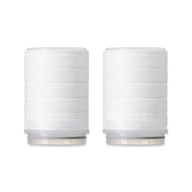
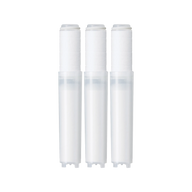
| Shower filter (Second Shower) | Reduces 99.9% of free chlorine through Day 1-60 peak window + neutralizes chloramine + traps sediment via NSF/ANSI 42* certified PP filter; five-vitamin infusion supports cuticle lipid layer | $79 (Showerhead subscription) or $99 retail; $36 per 2-pack filter (every 4-6 months); tool-free 5-minute install | Does not remove dissolved hydrogen sulfide (sulfur gas) or significantly reduce hardness minerals. Addresses the oxidizers that fade color, but not the smell if H₂S is the source. |
*Micron PP sediment filter certified by NSF/ANSI 42 standards.
Why this happens
Sources: Thomas et al., 2011 (SWET clinical trial on chlorinated water and skin barrier function); Tikkanen et al., 2001 (oxidative hair damage from halogens); Second Shower independent lab testing reports (on file); competitor specifications from brand product pages captured May 2026.
For color-treated hair specifically, the problem is oxidation - chlorine and chloramine attacking dye molecules. A shower filter that neutralizes these oxidizers at the point of use is the most targeted, cost-effective solution. Whole-house softeners address a different problem (scale and mineral feel), and cold water only delays damage.
If your water smells strongly of sulfur, that's hydrogen sulfide gas, which a Vitamin C cartridge does not remove. In that case, you may need a whole-house activated carbon filter or an aeration system to address the odor at the source. However, the chlorine and chloramine - the chemicals that actually fade your color - are neutralized by the Vitamin C chemistry in a point-of-use shower filter.
Doing nothing is the default, but it means accepting that your $150 balayage will look dull and brassy by week three. Conditioner helps with texture, but it cannot prevent oxidative fade because the damage happens during the rinse, before conditioner is even applied.
Why Second Shower Works for Color-Treated Hair and Sulfur-Smelling Water
Second Shower's engineering directly addresses the two primary mechanisms that damage color-treated hair in the shower: oxidative dye stripping from chlorine and chloramine, and cuticle degradation from hot chlorinated water.

Second Shower's engineering directly addresses the two primary mechanisms that damage color-treated hair in the shower: oxidative dye stripping from chlorine and chloramine, and cuticle degradation from hot chlorinated water. The filtration system uses pharmaceutical-grade L-ascorbic acid (Vitamin C) as the active reducing agent, converting hypochlorous acid and monochloramine into chloride ions and water - chemically inert byproducts that do not react with hair proteins or dye molecules.
The stoichiometry is straightforward. One mole of ascorbic acid neutralizes one mole of free chlorine (HOCl) or chloramine (NH₂Cl) via reduction. Because the reaction is stoichiometric rather than catalytic, the Vitamin C does not degrade or "wear out" the way galvanic KDF-55 media does.
Independent lab testing confirms Second Shower maintains 99.9% free chlorine reduction from Day 1 through Day 60 for the Showerhead (and Day 1 through Day 30 for the Showerhand), while KDF competitors drop below 10% reduction by Day 60.
The NSF/ANSI 42* certified micron polypropylene sediment pre-filter removes particulate matter - rust, pipe scale, sediment - that can oxidize and deposit on porous, color-treated hair. This is especially relevant if your water smells of sulfur, as hydrogen sulfide often coexists with dissolved iron and manganese that precipitate and leave orange or greenish stains on blonde and platinum tones.
*Micron PP sediment filter certified by NSF/ANSI 42 standards.
The five-vitamin infusion - Vitamin C, E, B3 (niacinamide), B5 (panthenol), and B7 (biotin) - adds a topical layer of antioxidant and humectant support during the rinse. While the primary color-preservation benefit comes from removing chlorine before it touches your hair, the vitamin blend supports the 18-MEA lipid layer on the cuticle surface, reducing porosity and helping the cuticle lie flat post-shower.
The 176 micro-jets (Showerhead) or 128 micro-jets (Showerhand) maintain full water pressure while filtering. Many color-conscious users avoid filtered shower heads because they assume filtration means weak flow. Second Shower's micro-jet array creates a fine, high-pressure mist that rinses thoroughly without requiring a 20-minute shower - important because extended hot water exposure, even without chlorine, can still swell the cuticle and promote dye leaching.
Installation is tool-free and takes under five minutes. You unscrew your existing shower head by hand, wrap the threads with the included plumber's tape, and thread Second Shower onto the pipe. No landlord permission, no plumber, no permanent modification. For renters and apartment dwellers whose color fades faster after a move to a new building, this is the fastest intervention.
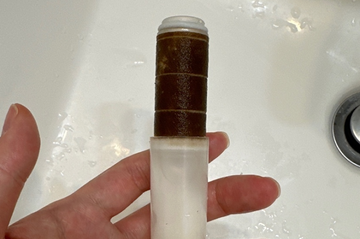
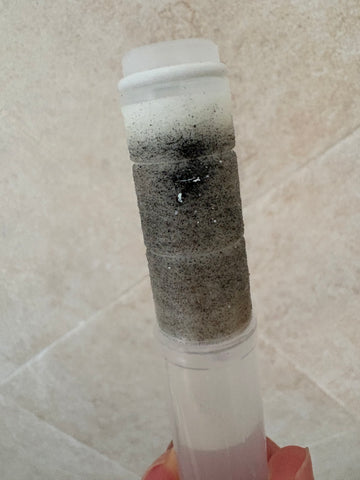
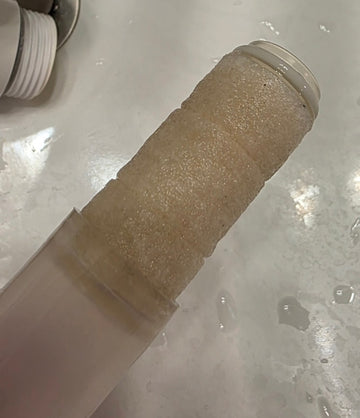
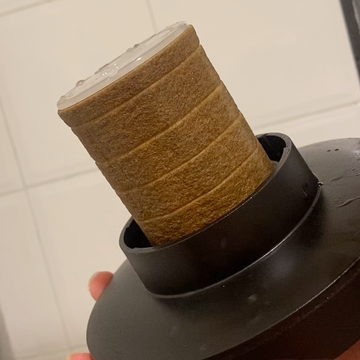
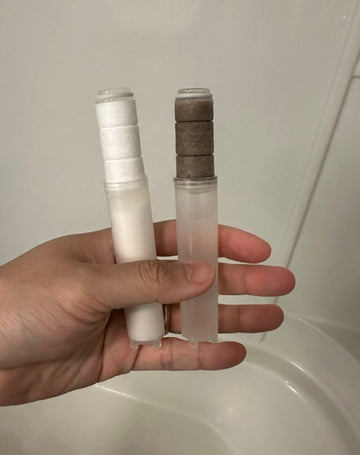
Replacement cadence matters for color protection. The Showerhead cartridge's peak performance window is Day 1 to Day 60 (replace every 4-6 months depending on household size and water volume); the Showerhand's peak window is Day 1 to Day 30 (replace every 3-6 months). Continuing to use a cartridge beyond its peak window means declining chlorine and chloramine removal - and your color will start fading faster again as oxidizers return to full concentration.
What Second Shower Does Not Fix
Be clear about scope: Second Shower targets chlorine and chloramine, the oxidizers that strip dye molecules. It does not remove dissolved hydrogen sulfide gas (the rotten egg smell), though the sediment pre-filter traps particulates often associated with sulfur-rich water. If your water's sulfur odor is strong and persistent, you likely need an upstream point-of-entry activated carbon filter or aeration system to address H₂S at the source.
Second Shower also does not significantly reduce water hardness. If your water is above 15 grains per gallon and you struggle with soap scum and mineral buildup, a whole-house ion-exchange softener is the appropriate solution. However, hardness itself does not fade hair color; it makes hair feel coated and reduces lather, which is a separate problem.
"My hair still isn't perfect, but it stopped feeling like straw after every shower. That alone made it worth it."
This reflects a common pattern: users notice texture improvement within the first two weeks, and color longevity becomes apparent over the following month as the oxidative damage cycle is interrupted.
Honest Limitations: What a Shower Filter Won't Fix
A Vitamin C shower filter neutralizes chlorine and chloramine - the oxidizers that strip dye molecules from color-treated hair.
It does not, however, remove dissolved gases like hydrogen sulfide (H₂S), the source of the rotten egg sulfur smell.
If your water has a persistent sulfur odor, especially in hot water from the tank, the issue is anaerobic bacteria or sulfate-reducing bacteria in your plumbing or water heater, and a point-of-use shower filter will not eliminate that smell.
For hydrogen sulfide removal, you need an upstream solution: a whole-house activated carbon block filter, an oxidizing filter (manganese greensand), or an aeration system that allows the gas to off-gas before water enters the home. A shower filter can still protect your hair color by removing chlorine, but the smell will remain unless you address H₂S at the source.
What it won't fix
Second Shower also does not soften water. If your municipal supply has hardness above 10-15 grains per gallon (calcium and magnesium carbonates), you'll still see soap scum, reduced lather, and that slippery feel after rinsing. Ion-exchange water softening (whole-house salt-based systems) is the standard solution for hardness. Hardness minerals do not fade hair color, but they can make hair feel coated and dull - a separate issue from oxidative dye loss.
Finally, a shower filter cannot reverse damage that has already occurred. If your cuticle is lifted, your cortex is porous, and your color has faded to brassy or patchy, the filter prevents further oxidative damage but does not repair the hair shaft. You'll need a combination of bond-building treatments (like Olaplex or K18), a purple or blue toning shampoo to neutralize brassiness, and possibly a gloss or color refresh at the salon.
Which one should you buy?
We would rather you buy the right product than ours. If hydrogen sulfide is your main problem, a shower filter alone will not solve it - address the source first.
Protect Your Color Investment Before Your Next Shower
If your salon color is fading in 2-3 weeks and your water smells like chlorine or sulfur, the oxidizers in your municipal supply are stripping dye molecules with every rinse.
Second Shower's Vitamin C filtration neutralizes 99.9% of free chlorine through its Day 1-60 peak window and removes the chloramine that KDF filters miss, giving your color the 6-8 week longevity you paid for.
Install in under five minutes with no tools, no plumber, and no landlord permission. If your water's sulfur smell is from hydrogen sulfide gas, you'll need upstream carbon filtration to address the odor - but Second Shower still protects your hair from the chlorine and chloramine that cause oxidative fade.
Shop Second Shower or find it on Amazon.
Related Reading
FAQ
Will a shower filter remove the sulfur smell from my water?
It depends on the source. If the smell is from dissolved hydrogen sulfide gas (H₂S) - the classic rotten egg odor - a Vitamin C or KDF shower filter will not remove it. Hydrogen sulfide requires activated carbon adsorption, oxidation (like manganese greensand), or aeration to eliminate.
However, if the smell is from high chlorine or chloramine levels (a bleach or swimming pool odor), a Vitamin C filter like Second Shower will neutralize those and remove the smell. If you're unsure, a DPD chlorine test kit (available at pool supply stores) can confirm whether your water contains free chlorine or chloramine; a separate H₂S test strip will detect hydrogen sulfide.
How does chlorine in shower water fade hair color?
Chlorine is a strong oxidizer. Municipal water contains free chlorine (hypochlorous acid, HOCl) or chloramine (monochloramine, NH₂Cl) to kill bacteria. When chlorinated water contacts color-treated hair, these oxidizers penetrate the cuticle and break down the dye molecules inside the cortex. Permanent and demi-permanent dyes are large polymer chains; oxidation fractures them into smaller, water-soluble fragments that rinse away. Red and copper tones fade fastest because their molecular structure is most vulnerable to oxidation.
Daily exposure accelerates this process, which is why salon color often looks dull or brassy within 2-3 weeks in homes with high chlorine levels.
What's the difference between Vitamin C and KDF shower filters for color-treated hair?
Vitamin C (ascorbic acid) neutralizes chlorine and chloramine through a stoichiometric reduction reaction - one molecule of ascorbic acid converts one molecule of chlorine or chloramine into harmless chloride ions. This reaction happens instantly at shower temperature and does not degrade over time. KDF-55 (a copper-zinc alloy) removes chlorine via galvanic oxidation-reduction, but it requires contact time (water must sit in the media bed for several seconds) and drops in performance as the media oxidizes.
Independent testing shows KDF filters fall below 10% chlorine reduction by Day 60, while Vitamin C filters like Second Shower maintain 99.9% reduction through the full Day 1-60 peak window. KDF-55 also does not effectively neutralize chloramine, which is increasingly common in U.S. municipal water and just as damaging to hair color as free chlorine.
Can I use a shower filter if I have well water that smells like sulfur?
Yes, but it won't remove the sulfur smell. Well water with a rotten egg odor contains hydrogen sulfide gas (H₂S), produced by sulfate-reducing bacteria in anaerobic conditions. A Vitamin C or KDF shower filter does not remove H₂S; you need upstream treatment - typically a whole-house activated carbon filter, an oxidizing filter (chlorine injection + carbon, or manganese greensand), or an aeration system.
However, if your well water is also treated with chlorine or chloramine for disinfection, a shower filter like Second Shower will still protect your hair color by neutralizing those oxidizers. The NSF/ANSI 42* certified sediment pre-filter will also trap rust, iron, and manganese particles that often accompany sulfur-rich well water and can stain blonde or platinum hair.
*Micron PP sediment filter certified by NSF/ANSI 42 standards.
How often do I need to replace the filter cartridge to keep protecting my color?
For Second Shower, the Showerhead cartridge's peak performance window is Day 1 through Day 60 - replace every 4 to 6 months depending on household size and daily shower volume. The Showerhand cartridge's peak window is Day 1 through Day 30 - replace every 3 to 6 months. Beyond the peak window, chlorine and chloramine removal declines, and oxidizers begin reaching your hair again, accelerating color fade.
If you notice your hair starting to feel rough or your color fading faster after several months, it's a sign the cartridge is past its peak and should be replaced. Subscription plans automatically ship replacements on this cadence so you don't have to track it manually.