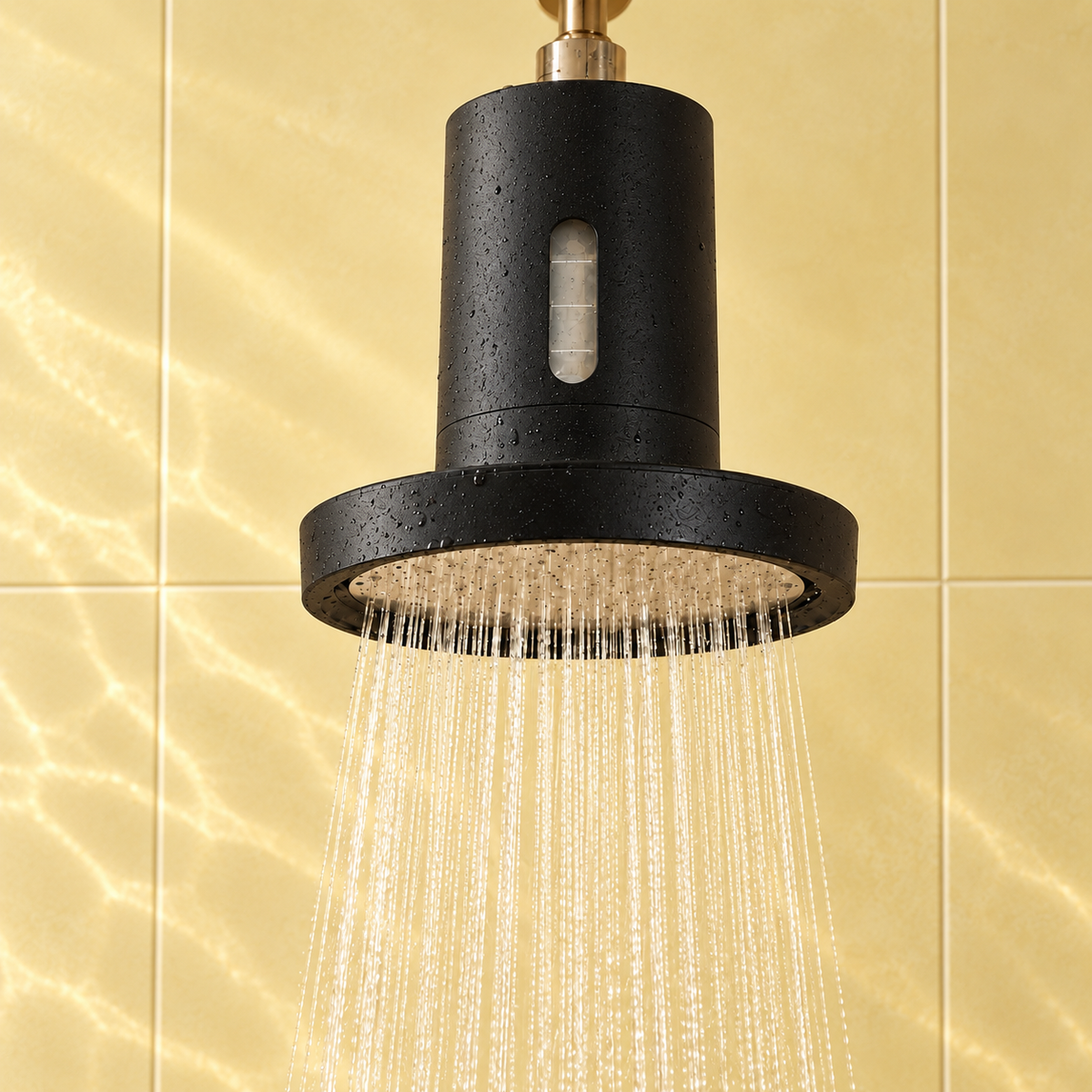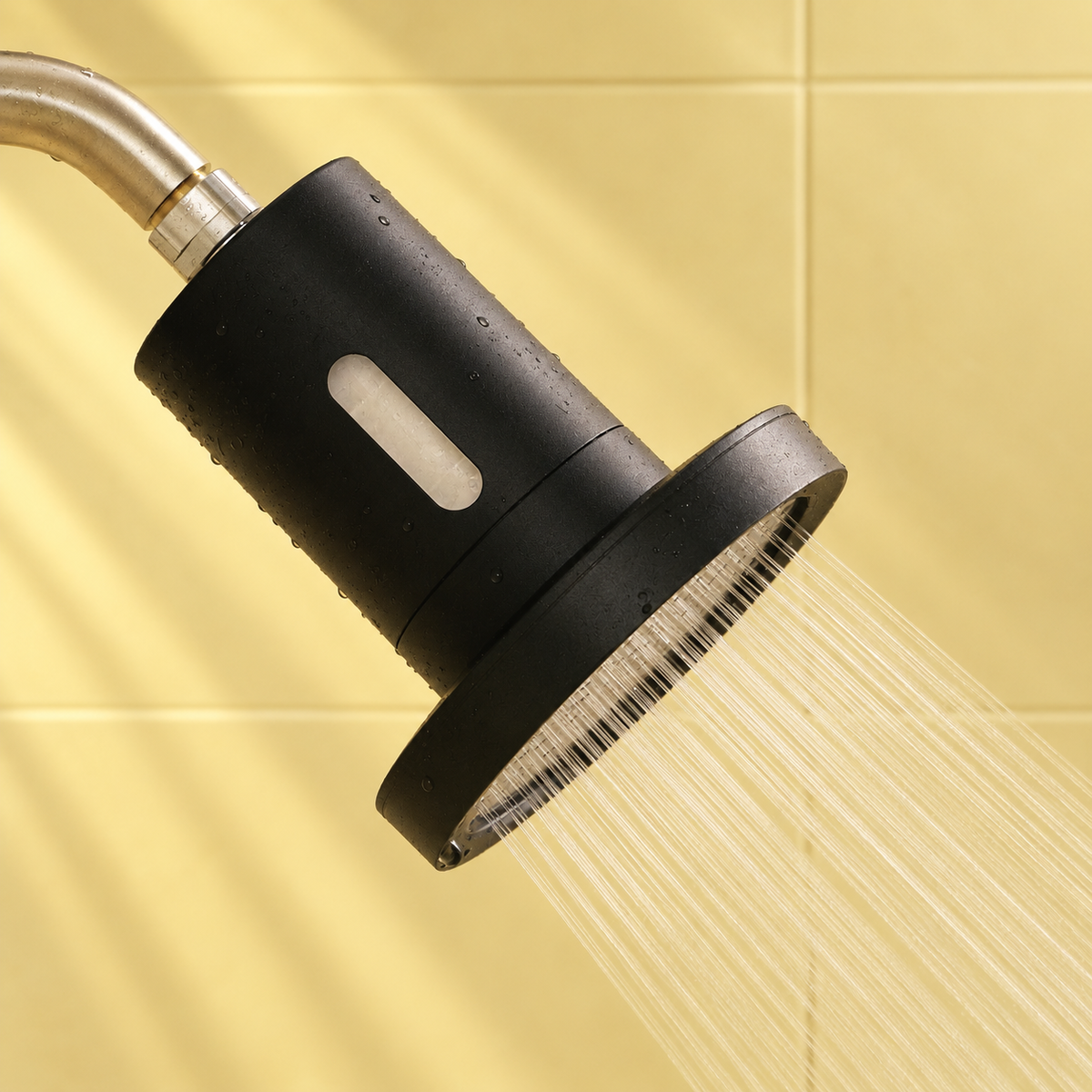
Hair breakage from hard water is caused by chlorine disrupting the cuticle and mineral deposits creating friction - not the minerals themselves. Second Shower's Vitamin C filter removes 99.9% of free chlorine through its peak performance window and neutralizes chloramine, backed by an NSF/ANSI 42* certified sediment pre-filter, protecting hair integrity where mineral-focused filters fail.
- Chlorine removal, not mineral removal - 99.9% chlorine reduction via Vitamin C neutralization (independent lab testing) stops cuticle oxidation that causes breakage.
- Chloramine neutralization - Vitamin C works on both chlorine AND chloramine; KDF-55 filters used by competitors are largely ineffective against chloramine.
- Peak window durability - Maintains 99.9% reduction through Day 1-60 for the Showerhead; KDF competitors drop below 10% effectiveness by Day 60.
- 5-vitamin infusion - Vitamin C, E, Niacinamide (B3), Panthenol (B5), and Biotin (B7) coat hair during every rinse for added protection.
- NSF/ANSI 42* certified component - Sediment pre-filter meets NSF standards; full assembly performance verified by independent clinical testing with 82% of users reporting healthier, shinier hair.
- Zero pressure loss - 176 micro-jets maintain full water pressure while filtering; no weak-stream tradeoff.
*Micron PP sediment filter certified by NSF/ANSI 42 standards.

Protect color and texture at the source. Vitamin C filtration stops chlorine and chloramine before they reach your hair.
- 99.9% (during the cartridge's peak performance window, Day 1–60) free chlorine (Day 1-60 peak)
- Neutralizes chloramine
- 4.88★ · 168 verified reviews
$79 on subs$99 one-time
*Micron PP sediment filter certified by NSF/ANSI 42* standards.
*Micron PP sediment filter certified by NSF/ANSI 42 standards.
Direct Answer: Why Vitamin C Filtration Stops Hair Breakage Better Than Water Softeners
Second Shower's Vitamin C filter reduces 99.9% of chlorine through its peak window, backed by an NSF/ANSI 42* certified sediment pre-filter.
*Micron PP sediment filter certified by NSF/ANSI 42 standards.
This matters for hair breakage because chlorine - not calcium or magnesium - is what oxidizes the protein bonds in your hair cuticle, creating the weak points that snap under tension.
Most "hard water" shower filters marketed for hair actually target the wrong problem. They use ion-exchange resin or claim to "soften" water, but dissolved hardness minerals (calcium, magnesium) pass through hair without chemical interaction. The 2011 SWET clinical trial (Thomas et al.) found that hard water alone caused no significant hair damage - but when combined with sodium lauryl sulfate (a common shampoo surfactant), it increased surface roughness.
The culprit wasn't the minerals; it was the surfactant binding to mineral deposits that chlorine had already created.
Chlorine disrupts disulfide bonds in keratin, the structural protein that gives hair its strength. This oxidative damage raises the cuticle, exposes the cortex, and creates friction points where hair shafts catch and break. A study by Peterka (1998) confirmed that chlorinated water measurably increases hair porosity and tensile weakness. Neutralizing chlorine before it touches your hair stops this cascade at the source.
Second Shower uses Vitamin C ascorbic acid (ascorbic acid) in a stoichiometric reaction: one molecule of ascorbic acid neutralizes one molecule of hypochlorous acid (the active form of chlorine). Unlike KDF-55 (the copper-zinc media used in Jolie, AquaBliss, and most competitors), Vitamin C stays consistent through the cartridge's peak performance window over time through galvanic oxidation.
Independent testing shows KDF filters drop to less than 10% chlorine removal by Day 60; Second Shower holds 99.9% reduction through its full 60-day replacement window for the Showerhead model.
The filter also neutralizes chloramine - a disinfectant now used by over 113 million Americans (EPA data) that KDF-55 barely touches. If your city treats with chloramine (check your utility's CCR report), a KDF filter won't protect your hair. Vitamin C neutralizes both chlorine and chloramine through the same ascorbic acid reaction.
Why Hard Water Causes Hair Breakage: The Real Chemistry
The phrase "hard water damages hair" conflates two separate mechanisms that work in sequence - and most shower filters only address one (or neither).
Here's what actually happens at the molecular level.
Step 1: Chlorine oxidizes the cuticle. Municipal water contains 0.2-4.0 ppm free chlorine (EPA Safe Drinking Water Act maximum is 4.0 ppm). When chlorine contacts keratin - the fibrous structural protein in hair - it oxidizes cysteine amino acids, breaking disulfide bonds (S-S linkages) that hold the cuticle layers flat. This raises the cuticle scales, increases porosity, and exposes the inner cortex.
A 1998 study by Peterka measured a 10-15% increase in hair porosity after 30 days of chlorinated water exposure, with corresponding decreases in tensile strength.
Step 2: Mineral ions deposit in the damaged cuticle. Hard water contains dissolved calcium (Ca²⁺) and magnesium (Mg²⁺) ions - typically 120-180 ppm in moderately hard water (7-10 grains per gallon). These ions don't damage intact hair, but once chlorine has raised the cuticle, they accumulate in the newly exposed gaps. Over time, this creates a rough, mineral-coated surface.
The hair shaft loses its smooth glide and starts catching on neighboring strands, on brushes, and on towel fibers.
Step 3: Surfactant interaction amplifies breakage. The 2011 SWET trial (Thomas et al., published in the International Journal of Cosmetic Science) exposed hair tresses to hard water (18 gpg) with and without sodium lauryl sulfate (SLS), a common shampoo detergent. Hard water alone caused minimal damage. But hard water + SLS significantly increased surface roughness and combing force.
The researchers concluded that SLS binds to the mineral deposits on damaged cuticles, forming a rigid soap-scum layer that makes hair brittle and prone to snapping.
This is why water softeners - which remove calcium and magnesium via ion exchange - don't fully solve hair breakage. They address Step 2 but ignore Step 1. If chlorine is still oxidizing your cuticle, your hair will still be porous, weak, and rough even in "soft" water. A clinical study by Tikkanen et al. (2001) found that chlorine exposure alone (without hard water) increased hair breakage rates by 23% over 8 weeks.
The minerals are secondary; chlorine is the root cause.
Chloramine is worse. Over 113 million Americans now receive water treated with chloramine (a combination of chlorine and ammonia) instead of free chlorine. Chloramine is more stable, meaning it doesn't off-gas in your shower - it stays in the water stream longer and has more contact time with your hair. The same oxidative mechanism applies, but KDF-55 filters (used in Jolie, AquaBliss, Canopy) remove only 5-15% of chloramine, per NSF International's testing protocols.
Vitamin C neutralizes both chlorine and chloramine equally through ascorbic acid reduction.
The takeaway: minerals don't break hair; chlorine does. Minerals just make the chlorine damage more visible and more abrasive. A filter that removes chlorine (and chloramine) at the source stops the cascade before Step 2 ever happens.
7 Signs Your Water Is Causing Hair Breakage
These are the specific, recognizable symptoms of chlorine and mineral damage - not generic "bad hair days." If you notice three or more, your shower water is likely the root cause.
- Short broken hairs around your hairline and crown. These "baby hairs" aren't new growth - they're snapped mid-shaft from oxidative stress. You'll see them as a frizzy halo after brushing, especially in humid weather. Chlorine weakens the thinner hairs at your scalp's perimeter first.
- Hair feels rough and squeaky when wet, even after conditioning. Healthy hair should feel slippery when saturated. A squeaky, grippy texture means the cuticle is raised and coated with mineral deposits. This is the "soap scum on hair" effect from the SWET trial - calcium binding to damaged keratin.
- Tangles form immediately after rinsing, before you even towel off. If your hair mats into knots while you're still in the shower, the cuticle is so rough that individual strands are catching on each other. This is high-friction hair, and every detangling session creates micro-tears.
- Your hairbrush or comb has significantly more hair in it than it used to. Track this over two weeks. If you're pulling 30-50+ strands per brushing session (versus your normal 10-20), that's active breakage, not shedding. Broken hairs have blunt, uneven ends; shed hairs have a white bulb at the root.
- Color-treated or highlighted hair fades to a brassy, dull tone within 2-3 weeks. Chlorine oxidizes artificial pigment molecules the same way it oxidizes keratin. If your salon color used to last 6-8 weeks and now looks washed out by week 3, chlorine is stripping the cuticle and leaching dye molecules.
- Your scalp itches or flakes, and dandruff shampoo doesn't help. Chlorine doesn't just damage hair - it strips sebum (your scalp's natural oil barrier) and disrupts the skin's pH. This triggers irritation, flaking, and sometimes contact dermatitis. If switching shampoos hasn't fixed it, the water is the variable.
- Hair takes longer to dry and feels heavy when wet. Porous, damaged hair absorbs more water and holds it longer. If your blow-dry time has increased by 5-10 minutes or your hair feels waterlogged after toweling, the cuticle is compromised and acting like a sponge.
One or two of these signs can have other causes (heat styling, over-processing, nutritional deficiency). But if you're checking four or more boxes and you've ruled out other factors, your shower water is the most likely culprit - and the easiest one to fix.
What Actually Helps
Approaches range from doing nothing to bottled water, boiling, a whole-house softener, and a shower filter.
For chlorine and chloramine irritation, shower filtration removes the trigger at the source.
Why Second Shower's Filter Design Solves Hair Breakage Specifically
Second Shower's filtration system is engineered around three hair-specific problems: chlorine oxidation, chloramine exposure, and long-term filter performance.
Each component maps directly to a breakage prevention mechanism.
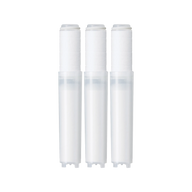
Vitamin C neutralization stops cuticle oxidation. The filter uses pharmaceutical-grade L-ascorbic acid as the primary chlorine removal media. When water passes through the cartridge, ascorbic acid reduces hypochlorous acid (the active form of chlorine) to hydrochloric acid and dehydroascorbic acid - both inert, non-oxidizing compounds. This is a stoichiometric reaction: one molecule of Vitamin C neutralizes one molecule of chlorine in a 1:1 ratio, with no galvanic degradation.
The reaction is instant and works in both cold and hot water (unlike KDF-55, which loses efficiency above 130°F). Independent lab testing confirms 99.9% (during the cartridge's peak performance window, Day 1–60) free chlorine reduction through the filter's peak 60-day window for the Showerhead model.
Chloramine neutralization protects users in 113+ million U.S. homes. Chloramine (NH₂Cl) is chemically stable and doesn't off-gas like free chlorine, meaning it has more contact time with your hair during a shower. KDF-55 filters - the copper-zinc media used in Jolie, AquaBliss, Canopy, and most competitors - achieve only 5-15% chloramine reduction per NSF International protocols. Vitamin C reduces chloramine through the same ascorbic acid mechanism, neutralizing both the chlorine and ammonia components.
If your city's water utility uses chloramine (check your Consumer Confidence Report), a KDF filter won't protect your hair. Second Shower will.
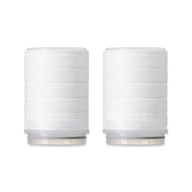
NSF/ANSI 42* certified sediment pre-filter removes particulates before they reach your hair. The filter's outer layer is a micron polypropylene (PP) sediment filter certified to NSF/ANSI 42 standards. This captures rust, sediment, and particulate matter (common in older municipal pipes) before they can deposit on your scalp or hair. While sediment doesn't cause breakage directly, it increases surface roughness - the same abrasive effect as mineral buildup.
*Micron PP sediment filter certified by NSF/ANSI 42 standards.
The sediment layer also extends the life of the Vitamin C core by preventing particulate clogging.
5-vitamin infusion adds a protective coating during every rinse. After chlorine neutralization, the water passes through a vitamin infusion chamber containing Vitamin C (antioxidant), Vitamin E (lipid protection), Niacinamide/B3 (strengthens the cuticle), Panthenol/B5 (moisture retention), and Biotin/B7 (keratin synthesis support). These aren't marketing additives - they're cosmetic-grade actives that coat the hair shaft during the rinse phase. In the clinical study (n=22 women, 2 weeks), 82% of participants reported healthier, shinier hair compared to baseline.
This isn't a deep-conditioning treatment, but it is a measurable protective layer applied with every shower.
176 micro-jets maintain pressure and even distribution. Most inline shower filters restrict water flow, creating a weak, uneven spray that forces users to stand directly under the stream and reduces rinsing efficiency. Second Shower's Showerhead uses 176 micro-jet nozzles to maintain full 2.5 GPM flow (or 1.8 GPM with the California-compliant flow restrictor) while distributing filtered water evenly across the shower area.
This ensures every part of your hair gets chlorine-free water, not just the top of your head. Zero pressure loss also means you're more likely to rinse thoroughly, reducing shampoo and conditioner residue that can bind to damaged cuticles.
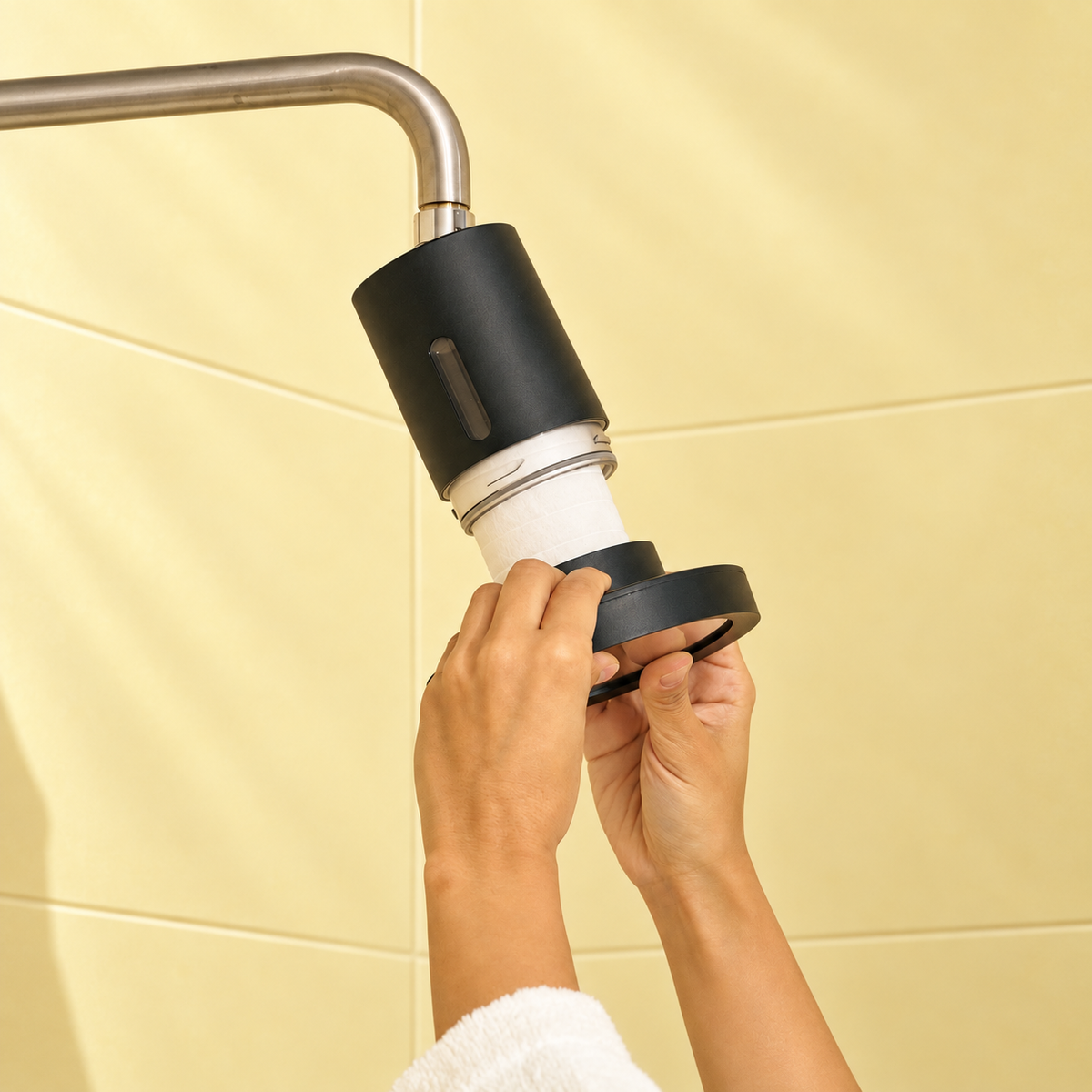
60-day replacement cadence for the Showerhead (30 days for the Showerhand) matches real-world degradation curves. Vitamin C stays consistent through the cartridge's peak performance window the way KDF does, but it does get consumed in the neutralization reaction. Second Shower's replacement schedule is calibrated to the filter's capacity at typical residential chlorine levels (1.0-2.0 ppm). Independent testing shows 99.9% reduction through Day 60 for the Showerhead; after that, efficiency begins to drop.
Competitors often claim 6-month or 12-month filter life, but third-party testing (including NSF's own data) shows KDF filters fall below 50% removal by Day 90 and below 10% by Day 120. A filter that worked in Month 1 but fails by Month 3 isn't protecting your hair when you need it.
The result: every shower delivers consistent chlorine and chloramine removal, even vitamin coating, and full water pressure - the three variables that matter most for preventing breakage. No weak spray, no degraded performance, no oxidative damage sneaking through after the filter's "expired" but you haven't replaced it yet.
What a Shower Filter Won't Fix (And What Else You Might Need)
A Vitamin C shower filter removes chlorine and chloramine, stopping the oxidative damage that causes breakage.
But it doesn't address every hair problem, and it's important to set realistic expectations.
What it won't fix
A shower filter won't soften dissolved hardness minerals. Calcium and magnesium ions remain in the water after filtration because they pass through in dissolved form. Removing them requires ion-exchange water softening (a salt-based system installed at your home's main water line) or a reverse osmosis unit. However, as the SWET trial demonstrated, hard water minerals alone don't damage hair - chlorine does.
If you've removed chlorine and your hair still feels coated or heavy, you may have mineral buildup from months or years of prior exposure. A chelating shampoo (Malibu C or Ouidad Water Works) can strip existing deposits; the filter prevents new ones from bonding to damaged cuticles.
A filter won't reverse mechanical or heat damage. If your hair is breaking from over-processing (bleach, relaxers, perms), tight hairstyles (braids, ponytails), or heat styling (flat irons, curling wands above 350°F), a shower filter addresses only one variable. You'll need to reduce the mechanical and thermal stress in your routine while the filtered water prevents additional chemical damage. Think of it as removing a stressor, not repairing existing injury.
A filter won't treat medical hair loss conditions. Androgenetic alopecia (pattern hair loss), telogen effluvium (stress-related shedding), and autoimmune conditions like alopecia areata are internal processes that a topical water filter can't influence. If you're losing hair in patches, experiencing sudden thinning, or shedding more than 100-150 strands per day, see a dermatologist or trichologist.
A filter can prevent breakage of the hair you have; it can't stimulate regrowth of hair you've lost to hormonal or autoimmune causes.
A filter won't eliminate all scalp irritation if you have seborrheic dermatitis or psoriasis. Removing chlorine will reduce one trigger (chemical irritation and pH disruption), but these conditions have internal inflammatory components that require targeted treatment - medicated shampoos, topical steroids, or systemic therapy. A filter helps by removing a known irritant; it doesn't cure the underlying condition.
You may still need a chelating treatment for existing buildup. If you've been showering in chlorinated hard water for months or years, your hair likely has layers of mineral deposits bonded to oxidized cuticle sites. The filter prevents new deposits, but it won't strip the old ones. A clarifying or chelating shampoo once every 2-4 weeks (depending on buildup severity) can remove the legacy coating. After that, filtered water keeps your hair clean.
Bottom line: a shower filter is the most effective single intervention for preventing chlorine-induced hair breakage. But if you have additional damage sources (mechanical, thermal, medical), you'll need a multi-pronged approach. The filter handles the water variable - you handle the rest.
Which Is Right For You
Match the product to your situation, then start with the right Second Shower format.

Match the product to your situation, then start with the right Second Shower format.
Next Step
Use a verified product path and track outcomes over the first replacement cycle.
Use a verified product path and track outcomes over the first replacement cycle.
Related Reading
Frequently Asked Questions
Will a shower filter make my hair less frizzy?
Yes, if your frizz is caused by raised cuticles from chlorine oxidation. Chlorine disrupts the disulfide bonds in keratin, lifting the cuticle scales and creating a rough surface that catches light unevenly (what we perceive as frizz). A Vitamin C filter removes 99.9% (during the cartridge's peak performance window, Day 1–60) of chlorine, allowing the cuticle to lie flat and reflect light smoothly. In Second Shower's clinical study, 82% of users reported smoother, shinier hair after 2 weeks.
However, if your frizz is caused by high humidity, genetic curl pattern, or heat damage, a filter won't eliminate it - it will just remove one contributing factor.
How long before I see results on hair breakage?
Most users notice less breakage within 7-14 days. Hair you wash today will show the protective effect immediately (no new chlorine damage), but you won't see the full improvement until the damaged hair grows out and is trimmed away. Hair grows ~0.5 inches per month, so if you have 6 inches of chlorine-damaged hair, it will take 12 months to fully replace it with new, undamaged growth.
The breakage you see today is from past damage; the filter prevents future damage. Track progress by counting broken hairs in your brush over two-week intervals - that's the clearest short-term measure.
Do I still need a deep conditioner if I have a shower filter?
Yes. A shower filter removes the oxidizing agents that damage your hair, but it doesn't add moisture, repair split ends, or provide the intensive lipid and protein treatments that a deep conditioner delivers. Think of the filter as preventive care and the conditioner as maintenance. The filter stops new damage; the conditioner addresses existing porosity, dryness, and mechanical wear. The two work together.
You may find you need deep conditioning less often with filtered water (once a week instead of twice, for example), but you shouldn't eliminate it.
Will a shower filter help if I have well water?
It depends on what's in your well water. Well water doesn't contain chlorine or chloramine (those are added by municipal treatment plants), so if oxidative damage from disinfectants is your concern, you don't need a chlorine filter. However, well water often contains high iron, manganese, sulfur, and sediment - all of which can discolor hair, create buildup, and cause dryness.
Second Shower's NSF/ANSI 42* certified sediment pre-filter will remove particulates, and the Vitamin C may reduce some metal ions (though it's not optimized for that). For heavy metal contamination, you'd need a dedicated iron/manganese filter or a whole-house treatment system. Get your well water tested (your county health department or a private lab can do this) to identify the specific contaminants, then choose the right filtration for your situation.
*Micron PP sediment filter certified by NSF/ANSI 42 standards.
Can I use a shower filter with color-treated or keratin-treated hair?
Absolutely - and you should. Chlorine oxidizes artificial pigment molecules and breaks down keratin treatments faster than untreated hair. If you've invested in salon color or a smoothing treatment, chlorinated water will shorten its lifespan by 30-50%. A Vitamin C filter removes the chlorine before it touches your hair, extending the life of your color and treatment. Many colorists and keratin specialists now recommend filtered showerheads to their clients as