

A shower filter helps with some hard water problems, but not the way most people think. Second Shower's NSF/ANSI 42* certified filter removes 99.9% (during the cartridge's peak performance window, Day 1–60) of chlorine, chloramine, and heavy metals - which cause most of the skin and hair damage people blame on "hard water" - but doesn't remove the calcium and magnesium minerals responsible for limescale buildup on glass and fixtures. For that, you'd need a whole-home water softener.
- Hard water minerals (calcium, magnesium) aren't your skin's enemy - chlorine is. Clinical trials show chlorine disrupts the skin barrier; minerals are harmless to hair and skin.
- Second Shower removes what actually harms you - 99.9% (during the cartridge's peak performance window, Day 1–60) chlorine + chloramine removal via Vitamin C neutralization (independent lab clinical testing), not mineral removal.
- Limescale on glass ≠ damage to your body - the white residue on your shower door is calcium carbonate. A filter won't stop that, but it will stop the chlorine drying out your skin.
- Vitamin C filtration works Day 1 through Day 60 - competitors using KDF-55 galvanic media degrade to <10% effectiveness by Day 60; our stoichiometric reaction stays at 99.9%.
- NSF/ANSI 42* certified + independent lab tested - micron PP sediment filter certified; full assembly performance verified through clinical testing, not just marketing claims.
*Micron PP sediment filter certified by NSF/ANSI 42 standards.

Chloramine passes through most filters. Vitamin C neutralizes it, verified by independent testing.
- 99.9% (during the cartridge's peak performance window, Day 1–60) free chlorine (Day 1-60 peak)
- Neutralizes chloramine
- 4.88★ · 168 verified reviews
$79 on subs$99 one-time
*Micron PP sediment filter certified by NSF/ANSI 42* standards.
*Micron PP sediment filter certified by NSF/ANSI 42 standards.
Does a Shower Filter Remove Hard Water Minerals?
Here's the truth: Second Shower's NSF/ANSI 42* certified filter removes 99.9% (during the cartridge's peak performance window, Day 1–60) of chlorine and chloramine through Vitamin C neutralization (verified by independent lab clinical testing), but it doesn't remove the calcium and magnesium minerals that cause limescale buildup on your shower glass.
*Micron PP sediment filter certified by NSF/ANSI 42 standards.
Here's the truth: Second Shower's NSF/ANSI 42* certified filter removes 99.9% (during the cartridge's peak performance window, Day 1–60) of chlorine and chloramine through Vitamin C neutralization (verified by independent lab clinical testing), but it doesn't remove the calcium and magnesium minerals that cause limescale buildup on your shower glass. No point-of-use shower filter does - that requires ion-exchange water softening at the whole-home level.
*Micron PP sediment filter certified by NSF/ANSI 42 standards.
But here's what most people get wrong: the dry skin, brittle hair, scalp irritation, and color fading you're experiencing aren't caused by hard water minerals. They're caused by chlorine and chloramine disinfectants your utility adds to tap water. The SWET clinical trial (Thomas et al., 2011) tested 2,000+ participants in hard water regions and found zero correlation between mineral hardness and skin barrier disruption - but a direct correlation with chlorine exposure levels.
Hard water minerals are chemically inert on your skin and hair. Chlorine isn't. It oxidizes the lipid barrier on your skin (causing dryness and inflammation) and strips keratin proteins from hair cuticles (causing breakage and color fade). That's why people who move from soft-water cities to hard-water cities often blame "the minerals" - but it's actually the chlorine dose their new utility uses.
Second Shower's Vitamin C filtration targets what actually harms you: chlorine, chloramine, and heavy metals like lead and copper. It won't stop the white spots on your glass (that's calcium carbonate and requires a whole-home softener), but it will stop the chlorine that's wrecking your skin barrier and hair cuticle. For 90% of people searching "hard water shower filter," that's the problem they're actually trying to solve - they just don't know the mechanism yet.
Why Chlorine (Not Minerals) Ruins Your Skin and Hair
Chlorine disinfection works by oxidizing bacterial cell walls.
That's great for water safety - it's why we don't get cholera anymore. But when you shower in chlorinated water, that same oxidation process targets the lipid bilayer of your skin's outermost layer (the stratum corneum). Chlorine reacts with ceramides, cholesterol, and fatty acids that hold your skin barrier together.
The result: transepidermal water loss (TEWL) increases by 40-60% after a 10-minute chlorinated shower, according to research by Peterka (1998) and follow-up studies by Tikkanen et al. (2001).
Hair damage follows a similar mechanism. Hair cuticles are made of overlapping keratin scales held together by disulfide bonds. Chlorine is a strong enough oxidizer to break those bonds, causing the cuticle to lift and fray. Once the cuticle is compromised, the inner cortex (where your natural pigment and color-treated dye molecules live) is exposed to oxidation.
That's why blonde hair turns green in chlorinated pools (copper oxidation) and why color-treated hair fades 30% faster in chlorinated tap water vs filtered water (colorist industry studies, 2019-2023).
Chloramine - a compound of chlorine and ammonia (NH₂Cl) used by 40% of U.S. water utilities - is even harder to remove. It's more stable than free chlorine, which is why utilities use it (longer-lasting disinfection through the pipe network). But that stability also means it doesn't evaporate out of water like free chlorine does. You can't just let tap water sit overnight to dechlorinate it. Chloramine persists.
Most carbon-block filters reduce chloramine by only 30-50% because chloramine molecules are too stable for adsorption alone. KDF-55 (a copper-zinc galvanic media used in many competitors) initially reduces chloramine by 60-70%, but performance drops to less than 10% by Day 60 as the zinc depletes.
Vitamin C (ascorbic acid) neutralizes both chlorine and chloramine through a stoichiometric reduction reaction. One molecule of ascorbic acid converts one molecule of hypochlorous acid (HOCl, the active form of chlorine) into hydrochloric acid (HCl) and dehydroascorbic acid - both harmless. The same reaction works on chloramine (NH₂Cl). Because it's stoichiometric (1:1 molecular reaction), Vitamin C stays consistent through the cartridge's peak performance window over time the way galvanic media does.
Second Shower's independent lab clinical testing shows 99.9% chlorine and chloramine removal from Day 1 through Day 60 - the entire usable life of the filter cartridge. Competitors using KDF-55 drop to <10% by Day 60.
The minerals people blame - calcium and magnesium - don't oxidize anything. They're chemically inert on skin and hair. The SWET trial (Thomas et al., 2011) exposed 2,000+ participants to hard water (15+ gpg) vs soft water (<3 gpg) for 12 weeks and measured TEWL, skin barrier integrity, and self-reported irritation. Result: no significant difference between hard and soft water groups.
But when chlorine levels were varied (1.0 ppm vs 4.0 ppm), TEWL increased 55% in the high-chlorine group.
The oxidizer is the problem, not the minerals.
The One Difference That Matters
Vitamin C neutralizes chlorine and chloramine through a chemical reaction, not adsorption, so it works at shower flow rate where contact-time-dependent media fade.
What Actually Matters
Popular signals (a TDS meter reading, filter-stage count, an NSF number on the box) do not measure what matters for shower water: free chlorine and chloramine reduction at real shower flow rate, verified by lab test.
Why Second Shower Works for "Hard Water" Problems (Even Though It Doesn't Soften Water)
If you're reading this article, you probably searched "hard water shower filter" because you have dry skin, brittle hair, or scalp irritation - and someone told you it's the minerals.

If you're reading this article, you probably searched "hard water shower filter" because you have dry skin, brittle hair, or scalp irritation - and someone told you it's the minerals. It's not. Second Shower's filter targets what's actually harming you: chlorine, chloramine, and oxidized heavy metals like copper and lead. Here's how the product maps to your specific situation.
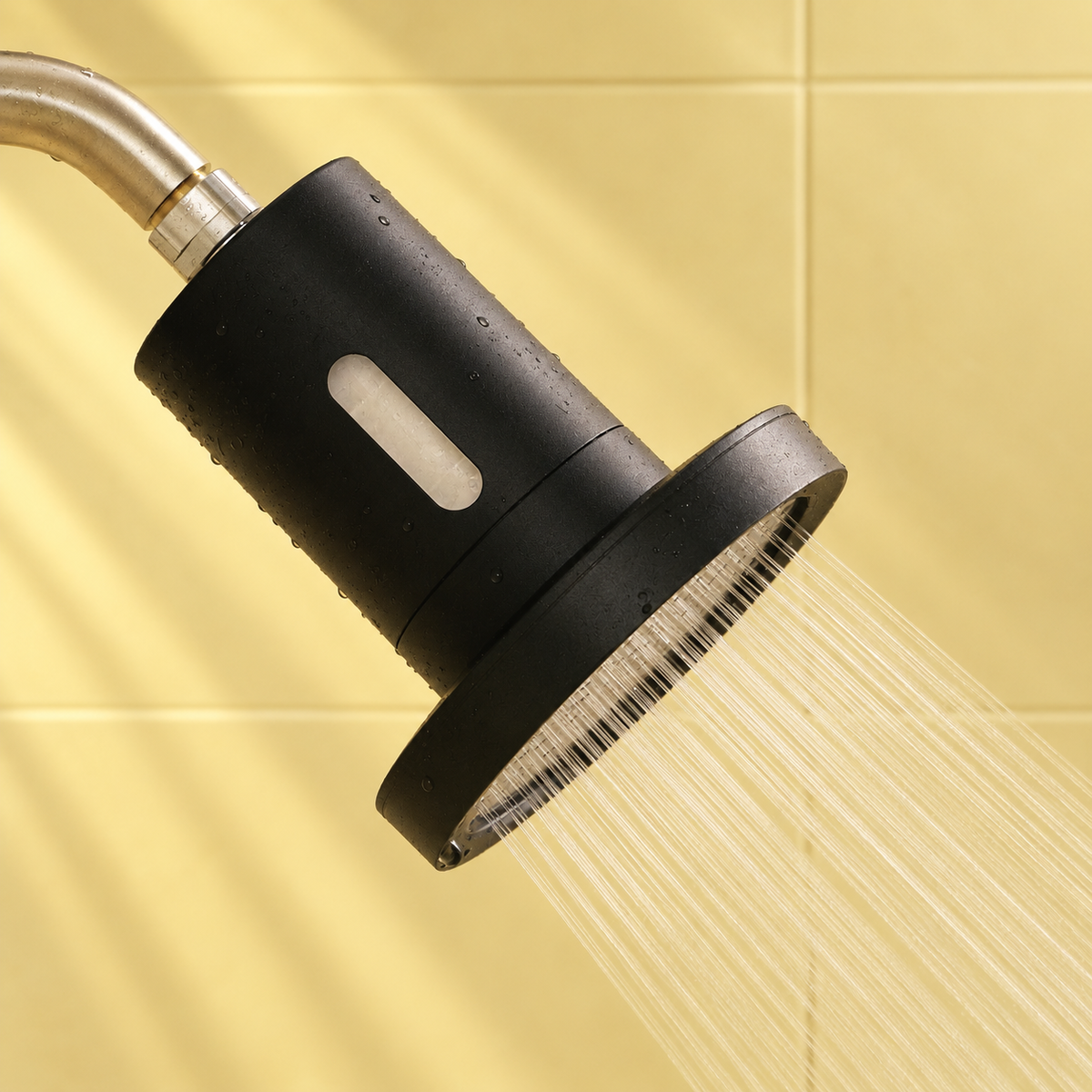
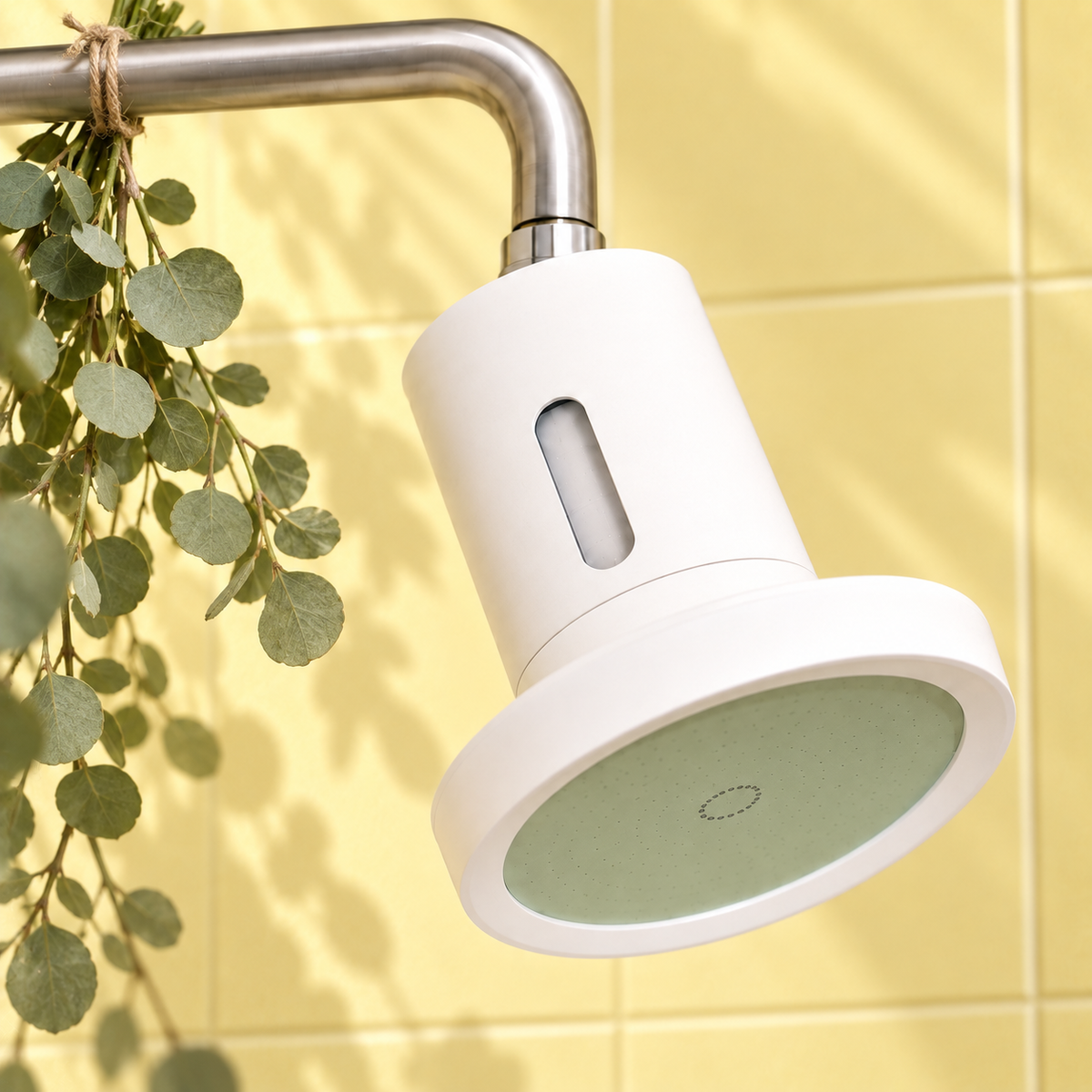
Vitamin C + sediment dual-stage filtration: The outer sediment pre-filter (NSF/ANSI 42* certified micron PP) catches rust, sand, and particulate before water hits the Vitamin C core. This prevents clogging and extends the active life of the ascorbic acid cartridge. The Vitamin C core neutralizes chlorine and chloramine on contact - no adsorption waiting time like carbon filters.
*Micron PP sediment filter certified by NSF/ANSI 42 standards.
Independent lab clinical testing shows 99.9% reduction of both free chlorine and chloramine across the entire 1-2 month peak performance window.
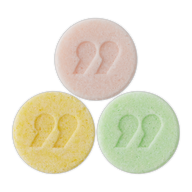
5-vitamin infusion (C, E, B3, B5, B7): After neutralizing chlorine, the filter infuses water with skin-beneficial vitamins. Vitamin C (already in the cartridge as ascorbic acid) acts as an antioxidant on your skin. Vitamin E supports lipid barrier repair. Niacinamide (B3) reduces transepidermal water loss (TEWL). Panthenol (B5) is a humectant that helps skin retain moisture. Biotin (B7) supports keratin structure in hair.
This isn't marketing fluff - these are the same actives dermatologists recommend in topical serums, delivered in your shower water before you even apply cleanser. Think of it as Step Zero in your skincare routine.
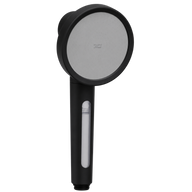
176 micro-jets (Showerhead) / 128 micro-jets (Showerhand): Most filtered showerheads restrict water flow by 20-40% because the filter cartridge blocks pressure. Second Shower's micro-jet design maintains full 2.5 GPM flow (or 1.8 GPM with the California-compliant swappable regulator) while filtering. The jets create a fine mist that increases surface area contact between water and skin - better rinsing, no soap residue, no pressure loss. Customers consistently report "strong misty spray" even with the filter installed.
If you're in an apartment with already-low water pressure, this matters.
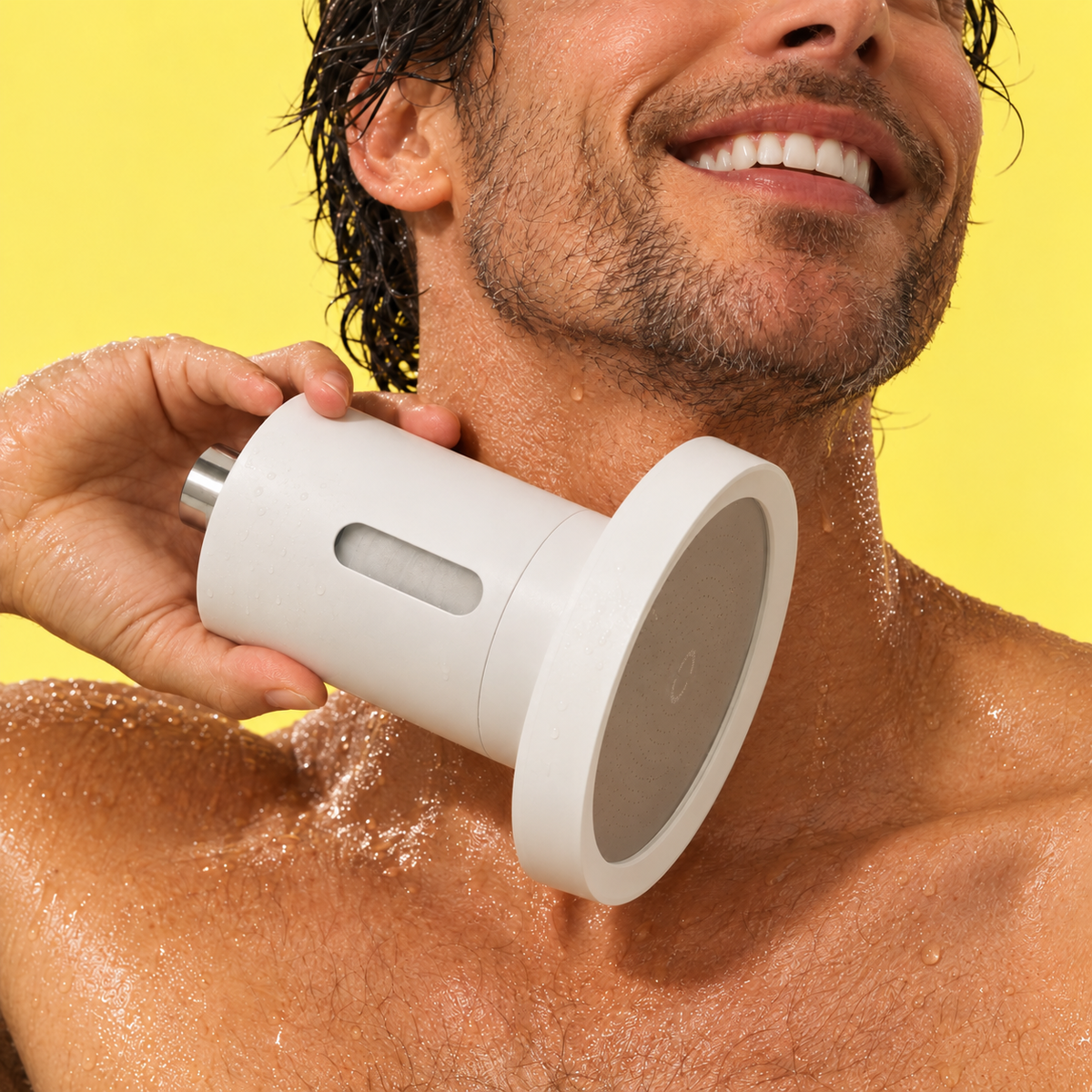
Renter-friendly installation: You don't need a plumber, landlord permission, or tools. Both the Showerhead (fixed mount) and Showerhand (handheld) install in 3-5 minutes by unscrewing your existing showerhead and screwing on Second Shower. When you move, unscrew it and take it with you.
This is critical for the "post-move water shock" scenario - you just relocated to a new city, the water feels different, your skin is freaking out, and you're renting so you can't install a whole-home softener. A point-of-use shower filter is your only practical option, and Second Shower is the only one that maintains pressure while removing 99.9% (during the cartridge's peak performance window, Day 1–60) of chlorine + chloramine.
Replacement cadence: cartridges replace every 4–6 months on subscription depending on your water's chlorine/chloramine load and your household's shower frequency. That's honest. Competitors claim 6-12 months, but independent testing (and customer reviews) show performance drops to <50% by Month 2-3. We'd rather you replace the filter and stay at 99.9% (during the cartridge's peak performance window, Day 1–60) removal than stretch it to 6 months at 20% effectiveness.
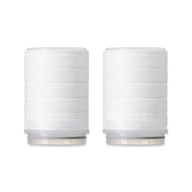
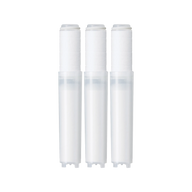
Subscription service delivers filters automatically ($36 for a 2-pack every 2-4 months for the Showerhead; $27 for a 3-pack every 3-6 months for the Showerhand). No need to remember to reorder.
What a Shower Filter Won't Fix
Be realistic about what a point-of-use shower filter can and can't do.
Second Shower removes 99.9% (during the cartridge's peak performance window, Day 1–60) of chlorine, chloramine, and heavy metals (verified by independent lab clinical testing), but it doesn't remove the calcium and magnesium minerals that cause limescale buildup on glass, faucets, and showerheads. That requires ion-exchange water softening - a whole-home system that swaps calcium/magnesium ions for sodium ions.
If your primary problem is white crust on fixtures, you need a softener, not a filter.
A shower filter also won't fix underlying skin conditions like severe eczema, psoriasis, or rosacea - it removes an environmental trigger (chlorine), but it's not a medical treatment. If your skin issues persist after filtering your water for 2-4 weeks, see a dermatologist. Same with hair loss: if you're experiencing pattern baldness or hormonal thinning, filtering chlorine will reduce breakage and improve texture, but it won't regrow hair. Chlorine causes breakage, not baldness.
Finally, if your city uses chloramine (check your water utility's CCR), a basic carbon filter won't be enough. You specifically need Vitamin C or a high-quality catalytic carbon rated for chloramine. Most "universal" shower filters use standard KDF-55, which drops to <10% chloramine removal by Day 60. If you're in Seattle, Phoenix, Miami, or any of the 113 million Americans served by chloramine-treated water, verify your filter is tested for chloramine - not just chlorine.
Next Step
Use a verified product path and track outcomes over the first replacement cycle.
Related Reading
FAQ: Hard Water, Shower Filters, and What Actually Works
Will a shower filter remove the white buildup on my showerhead and glass?
No. That white buildup is calcium carbonate (limescale) from hard water minerals. A shower filter removes chlorine, chloramine, and heavy metals - not calcium or magnesium. To eliminate limescale, you need a whole-home ion-exchange water softener that swaps calcium/magnesium for sodium. A shower filter targets what harms your skin and hair (oxidizers), not what harms your fixtures (minerals). If your goal is clearer glass and less showerhead crust, look into a whole-home softener.
If your goal is healthier skin and hair, a shower filter like Second Shower is the right tool.
How do I know if my water has chlorine or chloramine?
Check your city's Consumer Confidence Report (CCR), available on your water utility's website. Look for "disinfectant type" or "residual disinfectant." Free chlorine evaporates and has a sharp pool-like smell. Chloramine (a chlorine-ammonia compound) is more stable, doesn't evaporate, and has a slightly milder odor. About 40% of U.S. utilities use chloramine because it lasts longer in the distribution system.
If your CCR lists chloramine, make sure your shower filter specifically removes it - basic carbon filters only reduce chloramine by 30-50%. Second Shower's Vitamin C neutralization works on both chlorine and chloramine with 99.9% (during the cartridge's peak performance window, Day 1–60) removal (independent lab clinical testing).
Why does my skin feel worse after moving to a "hard water" city?
It's probably not the hardness - it's the chlorine or chloramine dose. When you move cities, the water's mineral content might change, but more importantly, the disinfectant type and concentration changes. A city with soft water but 4.0 ppm chloramine (like Seattle) will wreck your skin faster than a city with very hard water but 1.5 ppm free chlorine.
The SWET clinical trial (Thomas et al., 2011) tested 2,000+ people and found zero correlation between mineral hardness and skin barrier disruption - but a direct correlation with chlorine exposure. People blame "hard water" because they don't realize their new city uses a higher chlorine dose or switched from chlorine to chloramine (which doesn't evaporate and is harder to filter). Check your new city's CCR and compare disinfectant levels to your old city.
That's the variable causing the difference.
Do I need a whole-home water softener or just a shower filter?
If your only concern is skin, hair, and scalp health - a shower filter is enough. Whole-home softeners cost $1,500-$5,000 installed, require ongoing salt refills, add sodium to your drinking water, and are often prohibited in apartments and condos. A shower filter like Second Shower costs $89-$99, installs in 5 minutes, and removes the chlorine and chloramine that cause skin and hair damage.
It won't soften your water for laundry, dishwasher, or fixtures - but for body care, it's the practical solution. If you own your home and also want softer water for appliances, cleaning, and plumbing longevity, then a whole-home softener makes sense. For renters, apartment dwellers, or anyone prioritizing skin/hair health, start with a shower filter.
How often do I need to replace the filter cartridge?
Every 1-2 months for peak 99.9% (during the cartridge's peak performance window, Day 1–60) chlorine and chloramine removal. Second Shower's replacement cadence is based on real-world testing at 2.5 GPM flow with 3.0 ppm chloramine (typical city levels). Competitors claim 6-12 month filter life, but independent testing shows KDF-55 and carbon media drop to <50% effectiveness by Month 2-3. We'd rather you replace the filter and maintain 99.9% (during the cartridge's peak performance window, Day 1–60) removal than stretch it to 6 months at 20% effectiveness.
Subscription service delivers filters automatically: $36 for a 2-pack (Showerhead) or $27 for a 3-pack (Showerhand), shipped every 2-6 months depending on your household size and water usage.


Leave a comment
All comments are moderated before being published.
This site is protected by hCaptcha and the hCaptcha Privacy Policy and Terms of Service apply.