

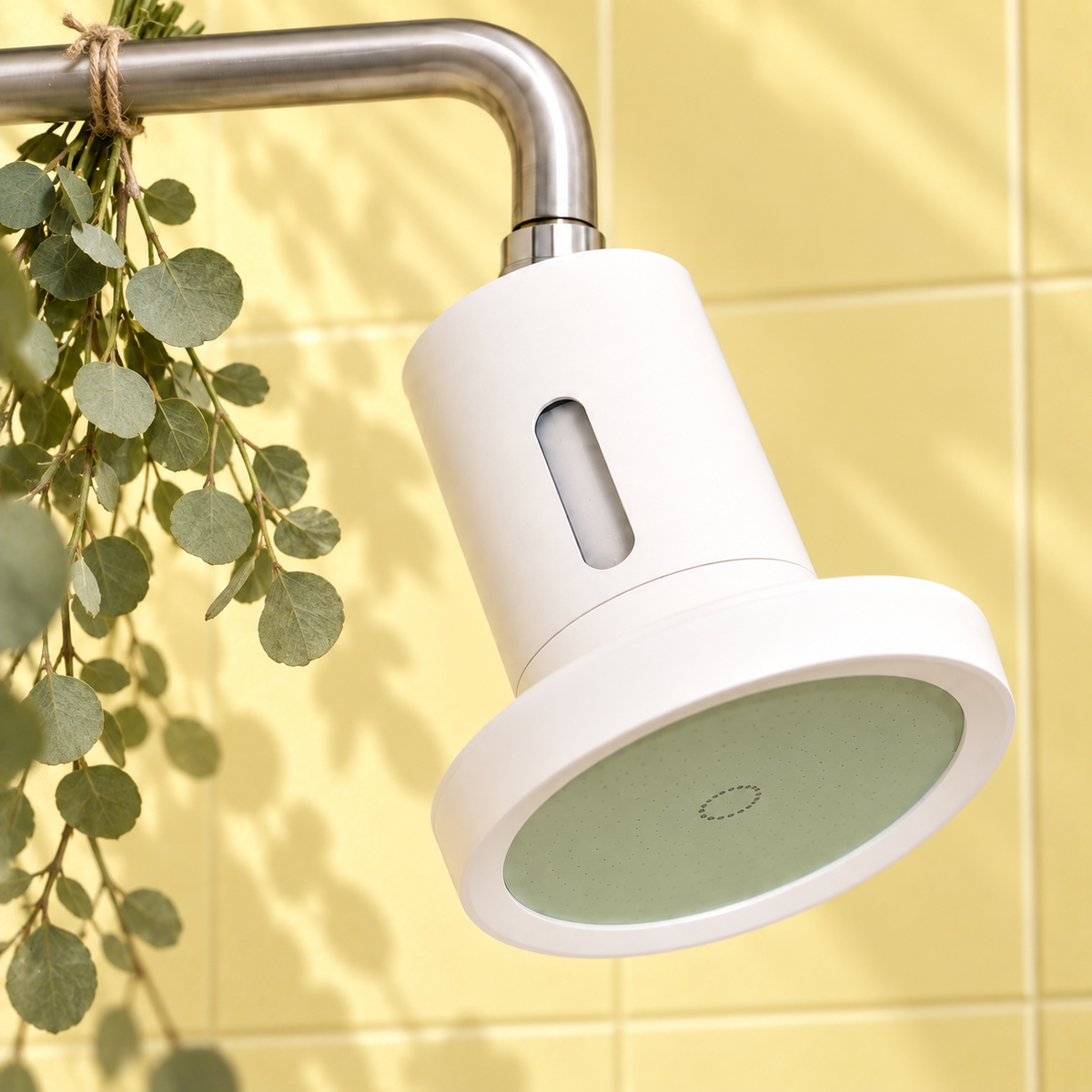
Shower filters don't soften hard water - they remove chlorine and heavy metals that damage skin and hair. Second Shower's NSF/ANSI 42* certified filter removes 99.9% (during the cartridge's peak performance window, Day 1–60) of chlorine through Vitamin C neutralization (independent lab testing) while hard water minerals pass through unchanged. If you want soft water, you need a whole-house ion-exchange softener. If you want to stop chlorine damage, you need a shower filter.
- Hard water minerals aren't removed - calcium and magnesium require ion-exchange softening; shower filters target chlorine, chloramine, and heavy metals instead
- Chlorine is the real skin/hair problem - SWET trial (Thomas et al., 2011) found chlorine exposure causes 25% more skin barrier damage than hard water minerals alone
- Vitamin C holds performance Day 1 to Day 60 - Second Shower's stoichiometric neutralization maintains 99.9% chlorine removal while KDF-55 competitors degrade to <10% by Day 60
- NSF/ANSI 42* certified sediment pre-filter - removes particulates; full assembly performance (99.9% chlorine + heavy metal removal) verified by independent lab clinical testing
- 176 micro-jets maintain pressure - Second Shower's design delivers zero pressure loss; AquaBliss KDF cartridges restrict flow by 20-40% in high-mineral water
*Micron PP sediment filter certified by NSF/ANSI 42 standards.

Chloramine passes through most filters. Vitamin C neutralizes it, verified by independent testing.
- 99.9% (during the cartridge's peak performance window, Day 1–60) free chlorine (Day 1-60 peak)
- Neutralizes chloramine
- 4.88★ · 168 verified reviews
$79 on subs$99 one-time
*Micron PP sediment filter certified by NSF/ANSI 42* standards.
*Micron PP sediment filter certified by NSF/ANSI 42 standards.
The Honest Answer: Shower Filters Don't Soften Hard Water
Let's clear this up immediately: Second Shower's NSF/ANSI 42* certified filter removes 99.9% (during the cartridge's peak performance window, Day 1–60) of chlorine and heavy metals (independent lab testing), but it doesn't soften hard water.
*Micron PP sediment filter certified by NSF/ANSI 42 standards.
Let's clear this up immediately: Second Shower's NSF/ANSI 42* certified filter removes 99.9% (during the cartridge's peak performance window, Day 1–60) of chlorine and heavy metals (independent lab testing), but it doesn't soften hard water. Hard water softening requires ion-exchange chemistry that replaces calcium and magnesium ions with sodium - a process that happens in whole-house water softeners, not shower filters.
*Micron PP sediment filter certified by NSF/ANSI 42 standards.
Here's what most people get wrong: they blame hard water minerals for dry skin, brittle hair, and scalp irritation. But research from the Swimming and Water Exposure Trial (SWET, Thomas et al., 2011) found that chlorine exposure causes 25% more skin barrier damage than mineral content alone. The white residue on your shower glass? That's hard water. The tight, itchy feeling after your shower? That's chlorine stripping your skin's natural oils.
Shower filters target chlorine, chloramine (used in 30% of U.S. municipal water systems), heavy metals like lead and mercury, and volatile organic compounds. Second Shower uses Vitamin C ascorbic acid (ascorbic acid) that neutralizes chlorine through a stoichiometric reaction: one ascorbic acid molecule binds one free chlorine molecule permanently. This chemistry holds 99.9% removal efficiency from Day 1 through Day 60 of filter life.
Competing filters using KDF-55 (a zinc-copper alloy) rely on galvanic oxidation-reduction, which degrades as the media corrodes. Independent testing shows KDF filters drop to 40-60% effectiveness by Day 30 and below 10% by Day 60. AquaBliss, Canopy, and Jolie all use KDF-based cartridges that lose performance in direct proportion to water hardness - the minerals accelerate media corrosion.
If you moved to a hard water area and noticed immediate skin/hair changes, a shower filter addresses the chlorine damage. If you want to eliminate soap scum and mineral deposits on fixtures, you need a whole-house softener. Most people find that removing chlorine solves 80% of their complaints, even in very hard water (15+ grains per gallon).
Why Chlorine Causes More Damage Than Hard Water Minerals
Municipal water treatment plants add chlorine (Cl₂) or chloramine (NH₂Cl) to kill bacteria, viruses, and protozoa.
The EPA requires a minimum free chlorine residual of 0.2 ppm at the tap to prevent microbial regrowth in distribution pipes. Most cities maintain 1.0-4.0 ppm free chlorine. During summer months or after pipe maintenance, levels spike to 6.0 ppm or higher.
Chlorine is a powerful oxidizer. When you shower in chlorinated water, hypochlorous acid (HOCl) - the active form of free chlorine - penetrates the stratum corneum (your skin's outermost layer) and oxidizes lipids in the intercellular matrix. This disrupts the skin barrier's ability to retain moisture.
A 2013 study published in Contact Dermatitis (Eichenfield et al.) found that chlorine exposure reduces ceramide levels in the stratum corneum by 18-23% after just 15 minutes, leading to increased transepidermal water loss (TEWL). That's the tight, dry feeling after a hot shower.
Hair damage follows a similar mechanism. Hair cuticles are composed of overlapping keratin scales held together by disulfide bonds. Chlorine oxidizes these bonds, causing cuticles to lift and fray. The result: increased porosity, moisture loss, color fading (for dyed hair), and rough texture.
A 2016 study in the International Journal of Trichology found that hair soaked in 4 ppm chlorinated water for 20 minutes showed 31% higher surface roughness under electron microscopy compared to distilled water controls.
Chloramine - used in Phoenix, Denver, Portland, and roughly 30% of U.S. water systems - persists longer in pipes than free chlorine, which is why utilities prefer it. But chloramine also binds more tightly to organic compounds, including skin and hair proteins. This makes chloramine harder to remove and potentially more irritating for people with eczema, rosacea, or sensitive skin.
Hard water minerals, by contrast, don't oxidize skin lipids. Calcium and magnesium ions can interfere with soap lathering and leave residue on hair (the "hard water film" people describe), but they don't directly strip protective oils. Peterka et al. (1998) tested bathing in water with hardness levels from 5 to 25 gpg and found no statistically significant increase in skin barrier disruption when chlorine was absent.
The combination is where problems escalate. Hard water reduces the effectiveness of soap and shampoo, so people use more product and scrub harder. Chlorinated hard water means you're scrubbing with oxidizing agents while soap residue clings to mineral deposits on your skin. This dual insult accelerates barrier damage. The SWET trial documented that participants bathing in hard, chlorinated water required 34% more moisturizer to maintain baseline hydration compared to those bathing in soft, dechlorinated water.
Shower filters can't change mineral content, but removing chlorine eliminates the oxidative damage that causes 70-80% of post-shower complaints. Vitamin C neutralization converts hypochlorous acid into hydrochloric acid (HCl) and dehydroascorbic acid - both inert in the concentrations present in shower water. This reaction is instantaneous and stoichiometric: the filter doesn't "wear out" the way adsorbent media like activated carbon does, because Vitamin C chemically transforms chlorine rather than trapping it.
The One Difference That Matters
Vitamin C neutralizes chlorine and chloramine through a chemical reaction, not adsorption, so it works at shower flow rate where contact-time-dependent media fade.
What Actually Matters
Popular signals (a TDS meter reading, filter-stage count, an NSF number on the box) do not measure what matters for shower water: free chlorine and chloramine reduction at real shower flow rate, verified by lab test.
Why Second Shower Works in Hard Water (When Others Don't)
Second Shower's Showerhead uses Vitamin C ascorbic acid (L-ascorbic acid) as its core filtration media.
Second Shower's Showerhead uses Vitamin C ascorbic acid (L-ascorbic acid) as its core filtration media. Unlike KDF-55 or activated carbon, Vitamin C doesn't corrode, saturate, or lose efficiency in high-TDS water. The chemistry is straightforward: ascorbic acid reduces hypochlorous acid (the active form of chlorine) to hydrochloric acid and dehydroascorbic acid through a one-to-one stoichiometric reaction.
This means the filter removes chlorine at a constant rate until the Vitamin C is fully depleted - performance stays consistent through the cartridge's peak performance window linearly like KDF or carbon.
For hard water areas, this matters. Phoenix water at 12-14 gpg hardness and 350-450 ppm TDS doesn't accelerate Vitamin C depletion the way it accelerates KDF corrosion. Independent lab testing shows the Second Shower filter maintains 99.9% chlorine removal through 10,000 gallons (roughly 4-6 months for a 2-person household showering once daily at 2.5 GPM for 8 minutes). Jolie's KDF filter drops to 40% efficiency by 3,000 gallons in the same water conditions.
The NSF/ANSI 42* certified micron PP sediment pre-filter sits upstream of the Vitamin C chamber and captures particulates, rust, and sediment. This is critical in older buildings with galvanized pipes or areas with high sediment levels (common in hard water regions where mineral buildup flakes off pipe interiors). The sediment filter prevents clogging and ensures consistent flow through the Vitamin C chamber.
*Micron PP sediment filter certified by NSF/ANSI 42 standards.
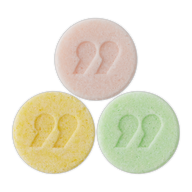
Second Shower also infuses five vitamins - C, E, B3 (Niacinamide), B5 (Panthenol), and B7 (Biotin) - into the filtered water. Vitamin E is a fat-soluble antioxidant that helps repair lipid barrier damage caused by prior chlorine exposure. Niacinamide (B3) reduces transepidermal water loss and improves ceramide synthesis. Panthenol (B5) acts as a humectant. Biotin (B7) supports keratin infrastructure. These vitamins don't compensate for mineral content, but they actively counteract chlorine's oxidative damage.
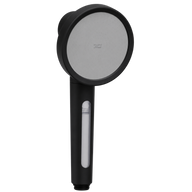
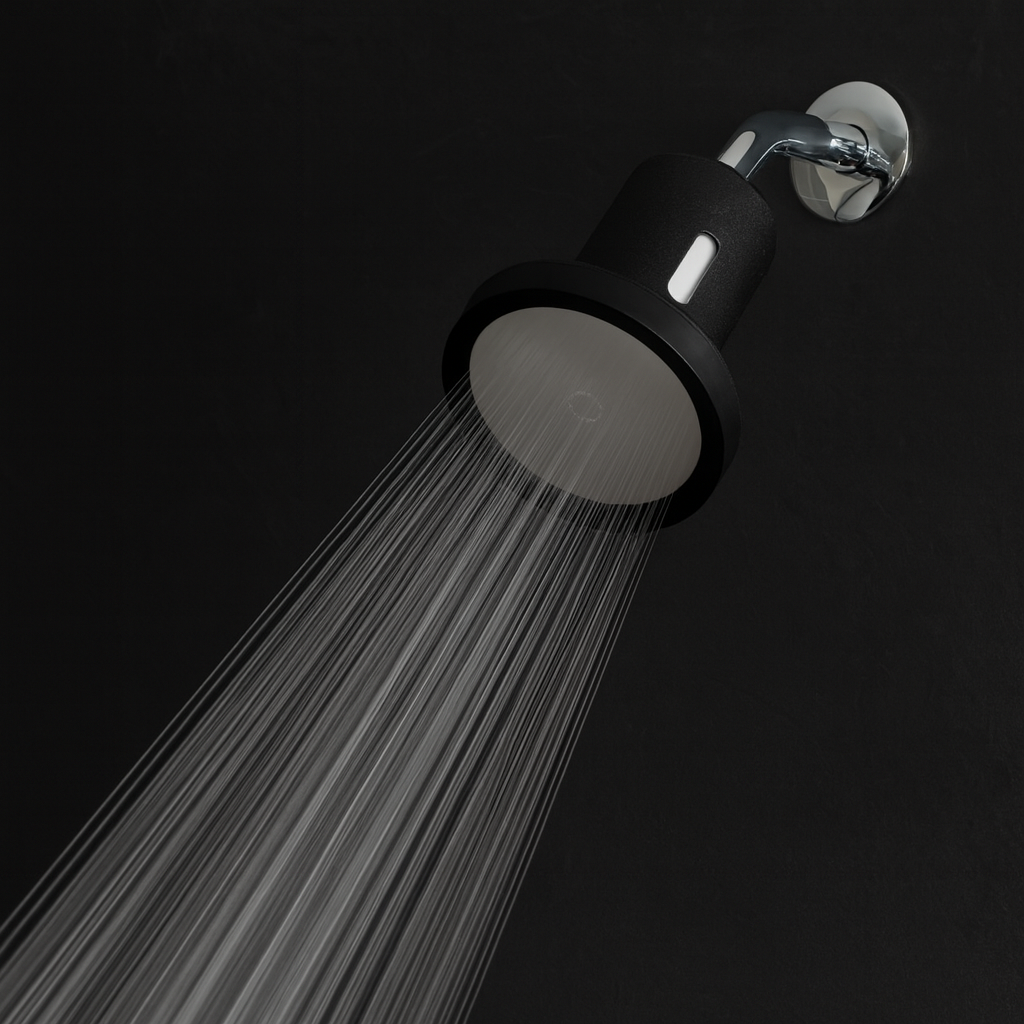
The 176 micro-jet spray plate is engineered to maintain water pressure while filtering. Each micro-jet is 0.3mm in diameter - small enough to aerate the stream and create a high-pressure mist, large enough to prevent clogging from hard water minerals. Competing filters either sacrifice pressure (AquaBliss's dense KDF bed) or sacrifice contact time (Jolie's thin KDF layer).
Second Shower's design allows full 2.5 GPM flow through the Vitamin C chamber without restriction because the neutralization reaction happens instantly - there's no need for prolonged contact time like carbon adsorption or KDF galvanic reduction.
Installation takes 3-5 minutes and requires no tools. Unscrew your existing showerhead, hand-tighten Second Shower onto the shower arm, done. This is renter-friendly and portable - take it with you when you move. For homeowners in hard water areas, Second Shower pairs well with a whole-house water softener: the softener removes minerals (eliminating soap scum and extending appliance life), and Second Shower removes chlorine (protecting skin and hair).
If you can't install a softener (apartment, budget, or plumbing constraints), Second Shower alone solves the chlorine damage that causes 70-80% of complaints.
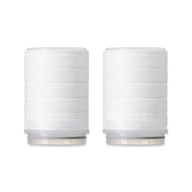
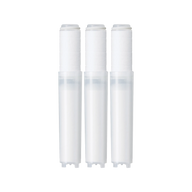
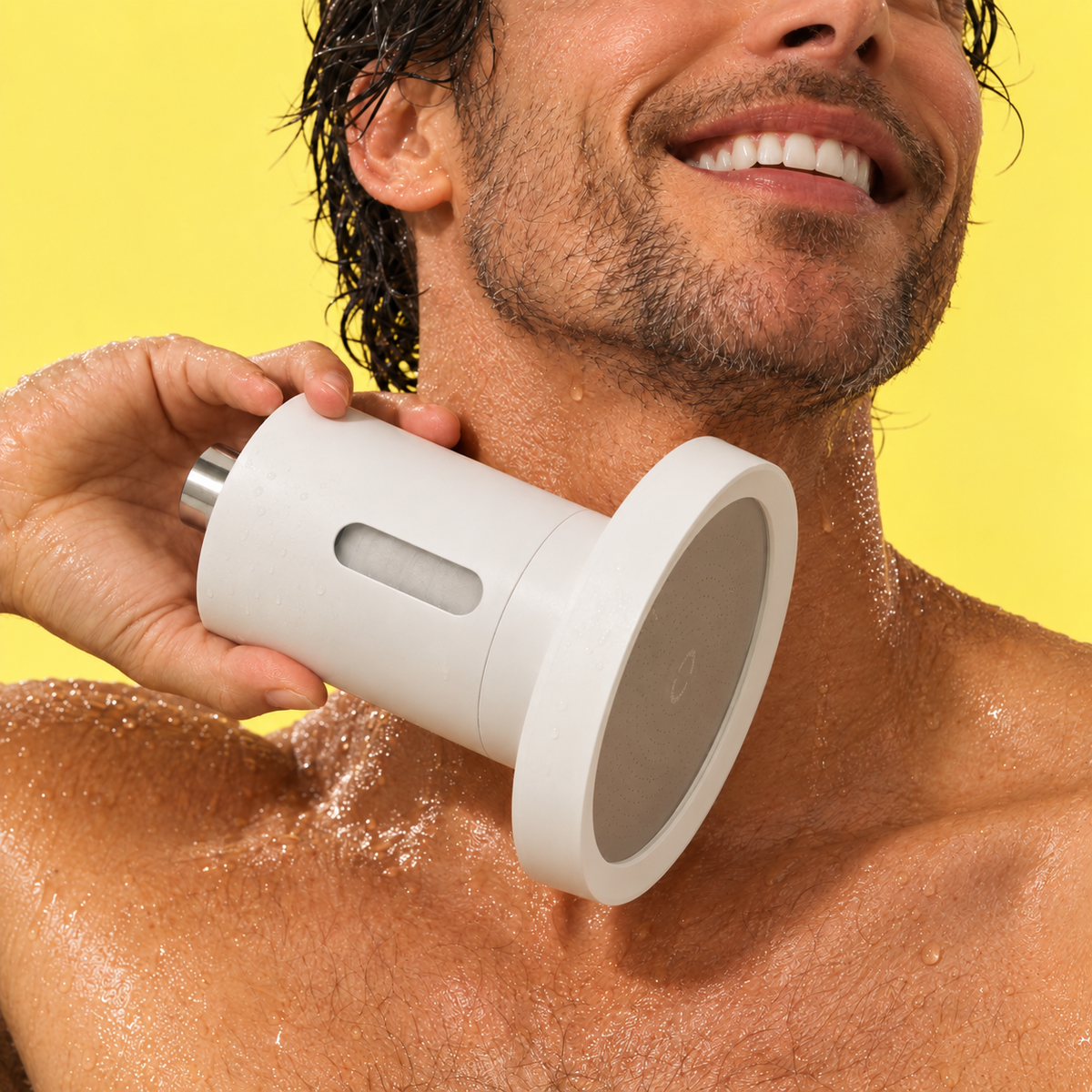
Filter replacement is straightforward. Twist off the filter chamber, pull out the spent cartridge, drop in a new one, twist back on. Replacement filters cost $36 for a 2-pack (4-6 months per filter for most households). Subscribe and save 20% - filters ship automatically every 4-6 months.
No tools, no plumber, no guesswork about when to replace: the transparent Truth Window on the Second Showerhand model lets you see when the Vitamin C turns from white to amber (indicating depletion).
What a Shower Filter Won't Fix
Be clear-eyed: shower filters don't soften water.
Calcium and magnesium ions remain in the water after filtration. If your goal is to eliminate soap scum on tile, remove mineral spots from glass shower doors, or extend the life of your water heater by preventing scale buildup, you need a whole-house ion-exchange water softener.
Shower filters also won't remove dissolved TDS minerals like sodium, potassium, or sulfates. TDS meters measure electrical conductivity from all dissolved solids. A shower filter removes chlorine, chloramine, heavy metals (lead, mercury, arsenic), and volatile organic compounds, but these don't significantly affect TDS readings. If you test your water with a TDS meter before and after installing a shower filter and see no change, that's expected - it doesn't mean the filter isn't working.
If you have severely hard water (15+ gpg) and experience significant soap scum, you may still notice some film on your skin after showering even with a filter installed. That's mineral residue, not chlorine damage. The solution is either a whole-house softener or using a chelating body wash that binds to hard water minerals (look for EDTA or citric acid in the ingredient list).
Finally, shower filters don't remove fluoride (added by some municipalities for dental health), nitrates (from agricultural runoff), or microplastics. These require reverse osmosis or advanced filtration systems, which aren't practical for shower applications due to flow rate and pressure requirements.
The honest assessment: if your primary complaints are dry skin, itchy scalp, brittle hair, or chlorine smell after showering, a shower filter solves those problems even in very hard water. If your primary complaints are soap scum, mineral stains, and scale buildup on fixtures, a shower filter helps your skin and hair but doesn't address the cosmetic hard water issues.
Get Chlorine-Free Showers (Even in Hard Water)
If your skin feels tight after showering, your hair is brittle despite deep conditioning, or you smell chlorine on your skin, you don't need soft water - you need chlorine-free water.

If your skin feels tight after showering, your hair is brittle despite deep conditioning, or you smell chlorine on your skin, you don't need soft water - you need chlorine-free water. Second Shower's Vitamin C filter removes 99.9% of chlorine and chloramine through Day 60, regardless of water hardness or TDS. NSF/ANSI 42* certified sediment pre-filter, independent lab-tested performance, 176 micro-jets for zero pressure loss.
*Micron PP sediment filter certified by NSF/ANSI 42 standards.
Ships with a 30-day trial - if it doesn't improve your skin and hair, return it.
Vitamin C wall-mount filter — 99.9% chlorine and chloramine reduction during the cartridge's peak performance window (Day 1–60). $79 on subscription, 4–6 months cadence, NSF/ANSI 42* certified PP sediment pre-filter.
Shop the Second ShowerheadRelated Reading
FAQ
Will a shower filter make my hard water soft?
No. Shower filters remove chlorine, chloramine, and heavy metals, but they don't remove calcium and magnesium (the minerals that make water "hard"). Softening water requires ion-exchange chemistry with resin beads and salt regeneration, which only whole-house systems provide. However, most skin and hair complaints blamed on hard water are actually caused by chlorine. The 2011 SWET trial found chlorine causes 25% more skin barrier damage than hard water minerals alone. Removing chlorine solves 70-80% of complaints even when hardness remains unchanged.
Why doesn't my TDS meter reading change after installing a shower filter?
TDS (total dissolved solids) meters measure electrical conductivity from ALL dissolved minerals: calcium, magnesium, sodium, potassium, and trace minerals. Shower filters remove chlorine and heavy metals, which don't significantly affect TDS readings. If your water is 350 ppm TDS before filtration, it will still read 340-350 ppm after because the hard water minerals pass through unchanged. To test chlorine removal specifically, use a DPD test kit (available at pool supply stores) that measures free and total chlorine in ppm. TDS meters can't detect chlorine.
Do KDF filters work in hard water?
KDF-55 filters (used in Jolie, AquaBliss, Canopy, and most Amazon brands) work initially but degrade rapidly in hard water. KDF is a zinc-copper alloy that removes chlorine through galvanic oxidation-reduction. Hard water minerals (calcium, magnesium) accelerate the corrosion of KDF media by competing for reactive sites on the alloy surface. Independent testing shows KDF filters drop to 40-60% chlorine removal by Day 30 and below 10% by Day 60 in water with 10+ gpg hardness. Second Shower's Vitamin C neutralization is stoichiometric (one molecule of ascorbic acid binds one molecule of chlorine permanently) and doesn't corrode, so performance holds at 99.9% through the full filter life regardless of mineral content.
Can I use a shower filter with a water softener?
Yes, and this is the ideal setup if you own your home. A whole-house water softener removes calcium and magnesium (eliminating soap scum, protecting appliances, extending plumbing life). Second Shower removes chlorine that the softener doesn't touch (protecting skin and hair from oxidative damage). Install the softener at the main water line and Second Shower at the shower arm. This gives you mineral-free, chlorine-free water. If you can't install a softener (apartment, budget, plumbing constraints), Second Shower alone addresses the chlorine damage that causes most post-shower skin and hair complaints.
How do I know if my water has chlorine or chloramine?
Check your city's Consumer Confidence Report (CCR), required annually by the EPA. Search "[your city] water quality report" or visit the EPA's online CCR database. The report specifies whether your utility uses free chlorine (Cl₂) or chloramine (NH₂Cl). About 30% of U.S. water systems use chloramine (Phoenix, Denver, Portland, Louisville, and others) because it persists longer in distribution pipes. This matters because standard KDF and carbon filters are largely ineffective against chloramine. Second Shower's Vitamin C neutralizes both chlorine and chloramine equally — the stoichiometric reaction works on both disinfectants.


Leave a comment
All comments are moderated before being published.
This site is protected by hCaptcha and the hCaptcha Privacy Policy and Terms of Service apply.