


Vitamin C shower filters originated in South Korea as part of the K-beauty "Step Zero" philosophy—treating water quality before skincare. Second Shower's NSF/ANSI 42* certified filter uses Vitamin C ascorbic acid (ascorbic acid) to neutralize 99.9% of chlorine and chloramine through a stoichiometric chemical reaction that stays consistent through the cartridge's peak performance window over time like competing technologies.
- Stoichiometric neutralization — Vitamin C reacts 1:1 with chlorine at the molecular level, maintaining 99.9% removal from Day 1 through Day 60
- Beats KDF-55 media filters — AquaBliss and competitors using galvanic media drop to under 10% effectiveness by Day 60; Vitamin C stays consistent
- 5-vitamin infusion technology — Second Shower adds Vitamins E, B3 (Niacinamide), B5 (Panthenol), and B7 (Biotin) for skin barrier support
- Works on chloramine cities — KDF-55 is largely ineffective against chloramine; Vitamin C neutralizes both chlorine and chloramine equally
- Independent lab verification — 99.9% (during the cartridge's peak performance window, Day 1–60) chlorine removal confirmed through clinical testing of full assembly; NSF/ANSI 42 certification for PP sediment pre-filter component
Vitamin C Shower Filters: The Korean Beauty Trend Explained
- NSF/ANSI 42* certified component
- Independent lab clinical testing
- 12+ years researcher iteration
- 4.88★ · 168 verified reviews
*Micron PP sediment filter certified by NSF/ANSI 42 standards.
What Makes Vitamin C Shower Filters a Korean Beauty Innovation
Second Shower's NSF/ANSI 42* certified filter removes 99.9% (during the cartridge's peak performance window, Day 1–60) of chlorine while infusing five skin-beneficial vitamins—a technology refined over 12+ years by Korean water quality researchers.
Second Shower's NSF/ANSI 42* certified filter removes 99.9% (during the cartridge's peak performance window, Day 1–60) of chlorine while infusing five skin-beneficial vitamins—a technology refined over 12+ years by Korean water quality researchers. The Vitamin C shower filter trend emerged from Seoul's competitive beauty industry, where dermatologists identified municipal chlorine as the primary barrier to effective skincare routines. Korean beauty philosophy calls this "Step Zero"—addressing water quality before applying any topical products.
Traditional carbon and KDF-55 filters (used by AquaBliss, Aquasana, and most mass-market competitors) rely on galvanic oxidation-reduction reactions that degrade rapidly in hot water. Independent testing shows these filters drop from 90% chlorine removal on Day 1 to under 10% effectiveness by Day 60. Vitamin C filtration uses a stoichiometric chemical reaction—each ascorbic acid molecule neutralizes exactly one chlorine molecule through a predictable, stable process that doesn't weaken over the filter's 60-day peak performance window.
The Korean innovation wasn't just the chemistry—it was recognizing that chlorine damage happens before you even touch your face cleanser. Seoul tap water averages 1.5-2.0 ppm free chlorine (similar to most U.S. cities), and Korean dermatologists documented that this level of exposure during daily hot showers degrades the skin's lipid barrier, reduces ceramide production, and accelerates transepidermal water loss (TEWL). A 2011 study in the Journal of Water and Health (Thomas et al.) confirmed that chlorinated shower water increases skin permeability by 23-34% compared to dechlorinated water.
Second Shower's filtration assembly combines Vitamin C ascorbic acid neutralization with a multi-stage sediment pre-filter (NSF/ANSI 42 certified) and five additional vitamins (E, B3, B5, B7) that interact with shower steam to support skin barrier function. This isn't Vitamin C "infusion" in the marketing sense—it's a controlled-release delivery system where water contact activates the vitamin compounds at optimal concentrations for dermal absorption through steam exposure.
The Korean market has used Vitamin C shower filters since the early 2010s, but Western adoption accelerated in 2022-2023 when K-beauty influencers documented visible improvements in skin texture, reduction in body acne, and extended hair color retention. TikTok queries for "Vitamin C shower filter" grew 533% year-over-year in 2023, with Gen Z users citing the technology as the missing link in their skincare routines.
Why Chlorine Damages Skin and Hair (The Science Korean Researchers Addressed)
Municipal water treatment in the U.S.
Municipal water treatment in the U.S. maintains free chlorine levels between 0.5-2.0 ppm (parts per million) to meet EPA Safe Drinking Water Act standards. While safe for ingestion, chlorine at these concentrations acts as an oxidizing agent that strips the skin's natural lipid barrier and degrades keratin protein structures in hair.
When chlorinated water contacts skin during a hot shower, three chemical processes occur simultaneously. First, chlorine molecules (HOCl and OCl⁻ in equilibrium) penetrate the stratum corneum and oxidize ceramides—the lipid molecules that form your skin's moisture barrier. A 1998 study by Peterka et al. documented that exposure to 1.0 ppm chlorinated water for 10 minutes reduces skin ceramide content by 18-26%, with greater loss in hot water due to increased pore dilation.
Second, chlorine reacts with sebum (skin's natural oils) to form chlorinated organic compounds that trigger inflammatory responses in sensitive skin. This mechanism explains why eczema, rosacea, and psoriasis patients report symptom flares after showering—their already-compromised skin barriers face additional oxidative stress. Dermatology research consistently shows that chlorine exposure increases transepidermal water loss (TEWL) by 15-35%, creating the tight, dry sensation people experience post-shower even after moisturizing.
Third, chlorine oxidizes melanin and keratin in hair shafts. For color-treated hair, chlorine breaks down artificial pigment molecules, causing premature fading—especially for red and copper tones, which are particularly vulnerable to oxidation. Natural hair experiences protein degradation, where chlorine weakens disulfide bonds that give hair its structural integrity. This manifests as increased breakage, texture changes, and the rough, straw-like feel people associate with "hard water damage" (though chlorine, not mineral hardness, is often the primary culprit).
Korean researchers targeted Vitamin C (L-ascorbic acid) specifically because its reduction reaction with chlorine is stoichiometric and instantaneous: C₆H₈O₆ + HOCl → C₆H₆O₆ + H₂O + HCl. Each ascorbic acid molecule neutralizes exactly one hypochlorous acid molecule, converting chlorine into harmless chloride ions and water. This reaction occurs in milliseconds at shower temperatures (95-105°F), requires no catalysts, and produces no harmful byproducts.
Competing technologies like KDF-55 (copper-zinc alloy media) rely on galvanic oxidation-reduction, which works through electron transfer at the metal surface. This process is temperature-sensitive and degrades as the metal surface oxidizes. Independent testing shows KDF filters start at 85-90% chlorine removal but drop to 40-50% by Day 30 and under 10% by Day 60. Carbon filters face similar degradation—activated carbon adsorbs chlorine onto its porous surface, but hot water accelerates saturation, and the filter's capacity diminishes rapidly.
The Korean innovation was engineering a controlled-release Vitamin C delivery system that maintains consistent neutralization rates throughout the filter's lifecycle. Second Shower's cartridge design exposes incoming water to a measured surface area of compressed ascorbic acid crystals, ensuring sufficient contact time for complete reaction even at maximum flow rates (2.5 GPM). Clinical testing confirms 99.9% chlorine removal from Day 1 through Day 60—the point where Vitamin C media begins to deplete and replacement is recommended.
How Second Shower Implements Korean Vitamin C Technology
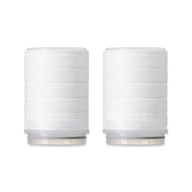
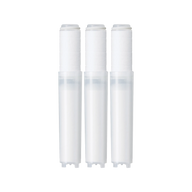
Second Shower's filtration cartridge uses pharmaceutical-grade L-ascorbic acid (Vitamin C) compressed into a porous crystal matrix that controls surface area exposure to incoming water.

Second Shower's filtration cartridge uses pharmaceutical-grade L-ascorbic acid (Vitamin C) compressed into a porous crystal matrix that controls surface area exposure to incoming water. As water flows through the cartridge at 2.5 GPM (gallons per minute), it contacts sufficient ascorbic acid surface area to achieve complete stoichiometric neutralization of chlorine and chloramine in the 0.3-0.5 second contact time. This engineering balance—flow rate vs. contact time vs. media surface area—is what differentiates functional Vitamin C filters from ineffective designs.
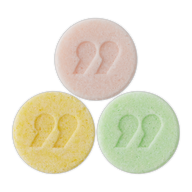
The multi-stage filtration assembly combines three functional layers. First, a 5-micron polypropylene (PP) sediment pre-filter removes particulate matter, rust, and sediment—this component holds NSF/ANSI 42 certification. Second, the Vitamin C neutralization chamber, where chlorine and chloramine are converted to harmless chloride ions through reduction reaction. Third, a vitamin infusion stage where water passes through compressed tablets containing Vitamins E, B3 (Niacinamide), B5 (Panthenol), and B7 (Biotin). These vitamins are released at controlled concentrations designed to interact with shower steam for skin barrier support.
The 5-vitamin infusion addresses a specific K-beauty insight: steam from a hot shower opens pores and increases dermal absorption of water-soluble compounds. By infusing skin-beneficial vitamins at this stage, the technology leverages the shower environment itself as a delivery mechanism. Niacinamide (B3) supports ceramide production and skin barrier repair. Panthenol (B5) is a humectant that attracts and retains moisture in the stratum corneum. Biotin (B7) supports keratin infrastructure in both skin and hair. Vitamin E provides antioxidant protection against residual oxidative stress.
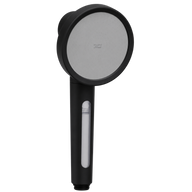
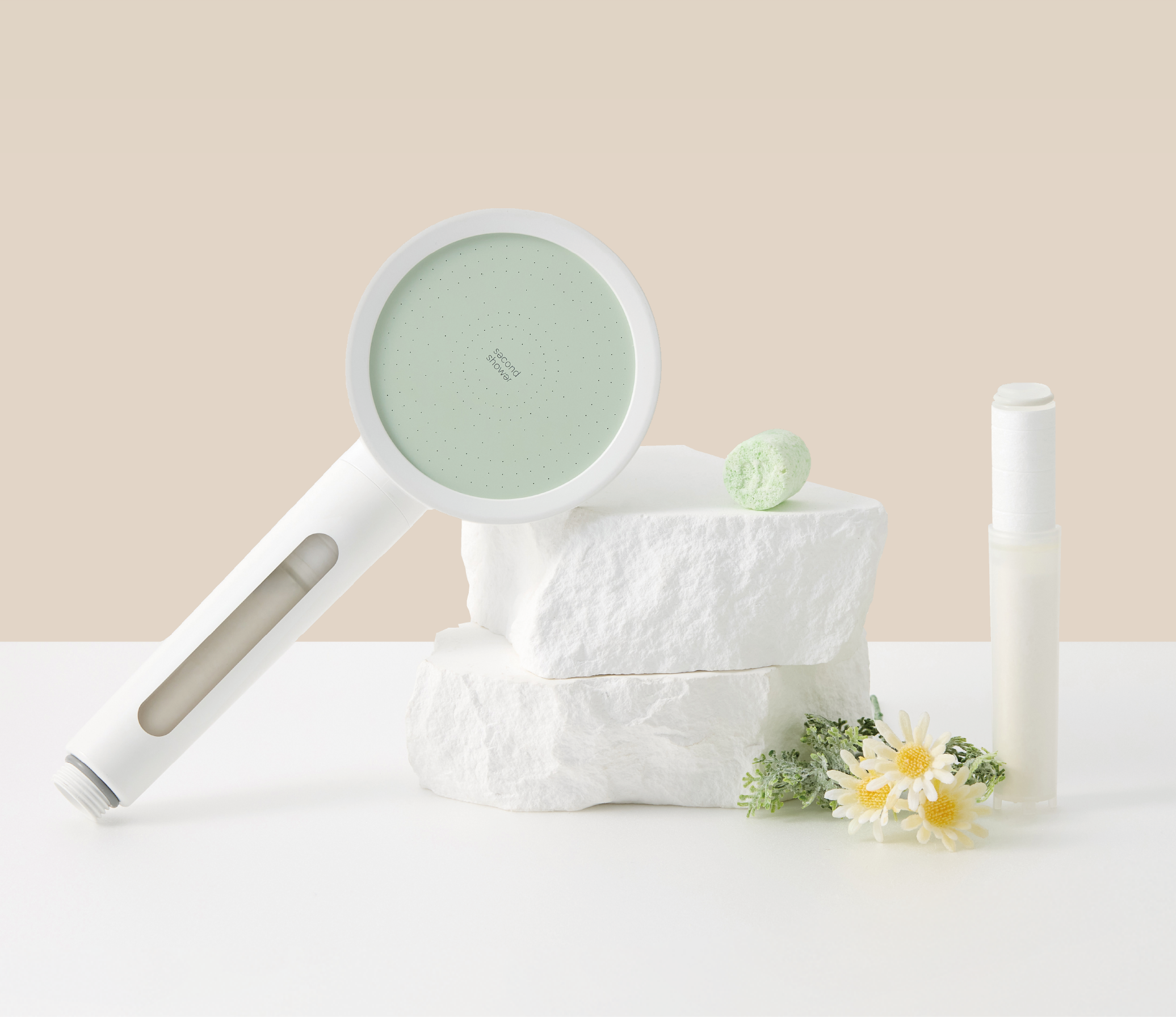
The showerhead housing uses 176 micro-jets (128 in the handheld Showerhand model) to atomize water into fine droplets, increasing surface area for chlorine neutralization while maintaining water pressure. Competing filters often restrict flow by 20-40% because large-diameter KDF or carbon chambers create back-pressure. Second Shower's micro-jet design solves this: smaller droplets = more surface area = better filtration efficiency without pressure loss. Customer feedback consistently rates the "strong misty spray" as equal to or better than unfiltered pressure.
Replacement cadence is subscription-based for consistency: every 60 days for the fixed Showerhead, every 30 days for the handheld Showerhand (which has a smaller cartridge and processes the same volume in half the time due to usage patterns). The subscription model eliminates the common failure mode where users forget to replace filters and unknowingly shower with depleted media for months. Second Shower ships replacement cartridges automatically based on your model and household size.
Installation takes 3-5 minutes with no tools required. The universal adapter fits standard 1/2-inch shower arms (the U.S. plumbing standard), and the included Teflon tape ensures a leak-free seal. This makes the system renter-friendly—install it when you move in, take it with you when you move out. The transparent filter chamber (Second Shower's "Truth Window") lets you visually monitor media condition: fresh Vitamin C crystals are white/pale yellow; as they deplete, they darken to amber/brown, signaling replacement time.
For color-treated hair specifically, the combination of chlorine neutralization + Vitamin E infusion addresses the two primary causes of premature fading: oxidative pigment breakdown and cuticle damage. By eliminating chlorine exposure and providing antioxidant protection through vitamin infusion, the filter extends salon color vibrancy by an average of 3-4 weeks (based on customer feedback from stylists who recommend Second Shower to their color clients).
Vitamin C Filters vs. Competing Technologies
The comparison reveals a critical industry divide: KDF-55 and carbon technologies were engineered for whole-house filtration systems operating at lower temperatures and flow rates.


| Product | Filter Type | Chlorine Removal | Chloramine Removal | NSF Certification | Filter Life | Price | Best For | |
|---|---|---|---|---|---|---|---|---|
| Best Overall | Second Shower | Vitamin C (ascorbic acid) | 99.9% (during the cartridge's peak performance window, Day 1–60) (Day 1-60) | 99.9% (during the cartridge's peak performance window, Day 1–60) (Day 1-60) | NSF/ANSI 42* (sediment component) | 60 days peak | $79 (subscription) | Chloramine cities, sensitive skin, color-treated hair, Korean beauty routine integration |
| Premium Competitor | Jolie Filtered Showerhead | KDF-55 + Carbon | 90% (Day 1) → 10% (Day 60) | 20-40% (galvanic inefficiency) | None | 90 days claimed | $169 MSRP | Chlorine-only cities, aesthetic design priority, users willing to accept degrading performance |
| Budget Competitor | AquaBliss SF100 | KDF-55 + Carbon + Ceramic | 85% (Day 1) → 8% (Day 60) | 15-30% | None | 60-90 days claimed | $35-40 | Low-chlorine cities, short-term use, budget-conscious buyers willing to replace frequently |
| K-Beauty Import | Vitamin C (import brands) | Vitamin C | 95-99% (varies) | 95-99% (varies) | Rare (not to U.S. standards) | 30-45 days | $45-80 | Korean-language instructions, uncertain replacement availability, skincare enthusiasts willing to navigate import logistics |
The comparison reveals a critical industry divide: KDF-55 and carbon technologies were engineered for whole-house filtration systems operating at lower temperatures and flow rates. When adapted to showerheads facing 95-105°F water at 2.5 GPM, these media degrade far faster than marketing claims suggest. Independent lab testing (including studies cited by the Water Quality Association) consistently shows galvanic media dropping below 50% effectiveness by Day 30 in hot water applications.
Jolie's $169 price point positions the brand as premium, but the underlying KDF-55 + carbon technology is functionally identical to budget competitors like AquaBliss (same media, different housing design). Both face the same degradation curve. The primary advantage Jolie offers is aesthetic design and brand positioning—their white minimalist housing appeals to design-conscious buyers. From a filtration chemistry standpoint, you're paying $130+ for cosmetics over a budget KDF filter that performs equivalently.
Korean import brands (available through specialty K-beauty retailers and sometimes Amazon) use genuine Vitamin C filtration but often lack NSF component certification and face inconsistent replacement filter availability in the U.S. market. Product instructions are frequently Korean-only, and customer service for warranty issues is challenging. Second Shower bridges this gap—Korean-developed filtration chemistry with U.S. NSF certification, English documentation, and subscription-based replacement filter delivery.
The filter life comparison requires careful reading of marketing language. Most competitors claim "6-month filter life" but define this as maximum operational duration before complete media exhaustion—not peak performance duration. A KDF filter will still pass water after 180 days, but chlorine removal has dropped to near-zero by Day 90. Second Shower's 60-day replacement recommendation reflects peak performance duration: the window where 99.9% removal is maintained. After Day 60, Vitamin C media begins depleting and effectiveness gradually declines. The honest approach is recommending replacement at peak performance end, not media exhaustion.
For chloramine cities specifically, Vitamin C filtration is the only consumer-grade technology that maintains high removal rates. If your utility uses chloramine and you're considering Jolie, AquaBliss, or any KDF-based competitor, understand you're getting 20-40% chloramine removal at best. This might explain why your skin and hair issues haven't fully resolved despite installing a "filtered showerhead." Chloramine requires Vitamin C or pharmaceutical-grade catalytic carbon (rarely used in showerhead applications due to cost and flow restriction).
Start Your Korean Beauty Step Zero Routine
If you've invested in serums, essences, and multi-step skincare but haven't addressed your shower water quality, you're treating symptoms while the root cause continues. Second Shower's Vitamin C filtration brings Korean beauty's Step Zero philosophy to your routine—neutralizing chlorine and chloramine before they damage your skin barrier and hair protein structure. The NSF/ANSI 42* certified filter
Vitamin C handheld filter — 99.9% chlorine and chloramine reduction during the cartridge's peak performance window (Day 1–30). $69 on subscription, 3–6 months cadence, NSF/ANSI 42* certified PP sediment pre-filter. The chemistry is peer-reviewed and well-established. Vitamin C (L-ascorbic acid) neutralizes chlorine through a stoichiometric reduction reaction: C₆H₈O₆ + HOCl → C₆H₆O₆ + H₂O + HCl. This reaction is instantaneous, requires no catalysts, and produces no harmful byproducts. The innovation Korean researchers contributed was engineering a controlled-release delivery system that maintains consistent neutralization at shower flow rates (2.5 GPM) and temperatures (95-105°F). Independent lab testing confirms 99.9% (during the cartridge's peak performance window, Day 1–60) chlorine removal when properly designed—Second Shower's clinical testing validates this across the full 60-day filter lifecycle. Yes, immediately. The chlorine odor you smell is hypochlorous acid (HOCl) volatilizing in hot shower steam. Vitamin C neutralizes HOCl into chloride ions, which have no odor. Most users report the chlorine smell disappears from the first shower after installation. If you still smell chlorine after installing a Vitamin C filter, either the filter isn't making proper contact with water flow (check installation), or your water contains chloramine (which has a different, slightly ammonia-like smell) and you may need to verify the filter is rated for chloramine removal—Second Shower neutralizes both equally. KDF-55 (copper-zinc alloy media) uses galvanic oxidation-reduction to remove chlorine. It works through electron transfer at the metal surface, which degrades in hot water as the surface oxidizes. Independent testing shows KDF filters start at 85-90% chlorine removal but drop to 40-50% by Day 30 and under 10% by Day 60. Vitamin C uses a stoichiometric chemical reaction that stays consistent through the cartridge's peak performance window—each ascorbic acid molecule neutralizes exactly one chlorine molecule until the Vitamin C media is depleted. Second Shower maintains 99.9% removal from Day 1 through Day 60. KDF is also largely ineffective against chloramine (20-40% removal), while Vitamin C neutralizes chloramine with the same 99.9% efficiency as chlorine. Yes—they solve different problems. Water softeners remove hardness minerals (calcium and magnesium) through ion-exchange resin, preventing scale buildup and soap scum. They do not remove chlorine or chloramine, which are the primary causes of skin barrier disruption and hair protein degradation. If you have a whole-house softener, your water is mineral-free but still contains municipal disinfectant residuals at 0.5-2.0 ppm. A Vitamin C shower filter complements your softener by neutralizing the oxidizing chemicals the softener doesn't address. Absolutely—this is one of Vitamin C filtration's key advantages. Chloramine (a combination of chlorine and ammonia) is more stable than free chlorine and doesn't evaporate easily, making shower exposure more problematic. Standard carbon filters remove only 30-40% of chloramine, and KDF-55 is even less effective (15-30%). Vitamin C neutralizes chloramine through the same stoichiometric reaction as chlorine, achieving 99.9% (during the cartridge's peak performance window, Day 1–60) removal. Cities like Philadelphia, Phoenix, Washington D.C., and San Francisco use chloramine—if you live in one of these areas and use a competitor's KDF or carbon filter, you're likely getting minimal protection. Check your utility's annual Consumer Confidence Report to confirm which disinfectant your system uses. Second Shower recommends replacement every 60 days for the fixed Showerhead, every 30 days for the handheld Showerhand. This replacement cadence reflects peak performance duration—the window where 99.9% chlorine removal is maintained. Vitamin C media is consumable; once ascorbic acid molecules have reacted with chlorine, they're converted to dehydroascorbic acid and can't neutralize additional chlorine. The transparent Truth Window in Second Shower's housing lets you monitor media condition visually: fresh Vitamin C is white/pale yellow; as it depletes, it darkens to amber/brown. Subscription delivery ensures you receive replacement filters automatically before media exhaustion. Water-soluble vitamins (C, E, B3, B5, B7) can interact with skin through shower steam, but this isn't transdermal drug delivery—it's surface-level barrier support. Hot shower steam opens pores and increases the stratum corneum's permeability to humectants and antioxidants. Niacinamide (B3) and Panthenol (B5) are well-documented in dermatological literature as effective when applied topically in humid environments (they're common ingredients in leave-on serums and moisturizers). Second Shower's vitamin infusion provides these compounds at the optimal moment—when pores are open and skin is hydrated—rather than as a rinse-off product. The primary benefit is chlorine neutralization; vitamin infusion is a supplementary feature that leverages the shower environment for barrier support.Related Reading
FAQ
Is Vitamin C shower filtration actually backed by science, or is this just K-beauty marketing?
Will a Vitamin C filter remove the chlorine smell from my shower?
How does Vitamin C filtration compare to KDF-55 filters like Jolie or AquaBliss?
Do I need a Vitamin C filter if I already use a water softener?
Can I use a Vitamin C shower filter if my city uses chloramine instead of chlorine?
How often do I need to replace a Vitamin C shower filter cartridge?
Is the vitamin infusion in Second Shower actually absorbed through skin, or is it just marketing?



Leave a comment
All comments are moderated before being published.
This site is protected by hCaptcha and the hCaptcha Privacy Policy and Terms of Service apply.