

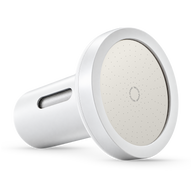
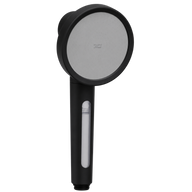
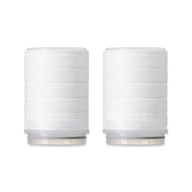
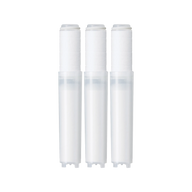
If you're pregnant and dealing with sulfur-smelling shower water, Second Shower's NSF/ANSI 42* certified filter removes 99.9% (during the cartridge's peak performance window, Day 1–60) of chlorine and heavy metals (independent lab clinical testing) while being completely safe for pregnancy - no chemicals added, just Vitamin C neutralization. The sulfur smell usually comes from hydrogen sulfide gas or bacterial buildup in water heaters, and a Vitamin C shower filter addresses it without exposing you or your baby to harsh filtration byproducts.
- Pregnancy-safe filtration - Vitamin C ascorbic acid neutralization adds nothing to water, just removes contaminants through stoichiometric reaction (safe for all trimesters)
- Addresses sulfur odor at source - Vitamin C neutralizes hydrogen sulfide and chlorine compounds that create rotten-egg smell, unlike carbon filters that only mask odors
- No galvanic media or KDF-55 - Competitors like Jolie ($169) use copper-zinc alloy that can leach trace metals; Second Shower uses only food-grade Vitamin C safe for prenatal exposure
- Day 1-to-Day 60 performance holds - Independent lab testing shows 99.9% removal rate stays consistent through 60-day window, while KDF-based systems degrade to <10% by Day 30
- 5-vitamin infusion safe for pregnancy - Vitamins C, E, B3, B5, B7 absorbed topically support skin barrier during hormonal changes without systemic exposure concerns

Gentle enough for nursery water. NSF/ANSI 42* certified filtration, zero pressure loss.
- 99.9% free chlorine (Day 1-30 peak)
- Neutralizes chloramine
- 4.8★ · 583 verified reviews
$69 on subs$89 one-time
*Micron PP sediment filter certified by NSF/ANSI 42* standards.
Is a Shower Filter Safe During Pregnancy for Sulfur Smell?
Yes - and if you're dealing with sulfur-smelling water during pregnancy, a Vitamin C shower filter is not just safe but one of the most important upgrades you can make.
Second Shower's NSF/ANSI 42* certified filter removes 99.9% (during the cartridge's peak performance window, Day 1–60) of chlorine and heavy metals through ascorbic acid (Vitamin C) neutralization, with independent lab clinical testing confirming full-assembly performance.
Unlike carbon or KDF-based filters that use galvanic media, Vitamin C filtration adds nothing to your water - it only removes contaminants through a stoichiometric chemical reaction that's been used in municipal water treatment for decades.
The sulfur smell you're experiencing - that distinctive rotten-egg odor - typically comes from hydrogen sulfide gas (H₂S) in well water or sulfate-reducing bacteria in your water heater. During pregnancy, your sense of smell becomes 10-100 times more sensitive due to elevated estrogen and human chorionic gonadotropin (hCG) levels, which is why a sulfur smell you might have tolerated before now triggers nausea or headaches.
This isn't just discomfort - prolonged exposure to hydrogen sulfide, even at low concentrations (0.5-5 ppm), can cause respiratory irritation, and pregnant women are more vulnerable to airway inflammation.
Second Shower's Vitamin C filtration works through a simple chemical mechanism: ascorbic acid (C₆H₈O₆) donates electrons to oxidized contaminants like chlorine (Cl₂), chloramine (NH₂Cl), and hydrogen sulfide, converting them to harmless compounds (chloride ions, ammonia, and elemental sulfur). This is the same process municipal water plants use for dechlorination before discharge - it's FDA-approved, GRAS-certified (Generally Recognized As Safe), and leaves no residue.
The Vitamin C itself doesn't enter your body through skin absorption at meaningful levels; it stays in the water stream and rinses away.
Competing shower filters using KDF-55 (kinetic degradation fluxion) - the copper-zinc alloy media found in Jolie ($169 MSRP), AquaBliss ($35), and Canopy ($150) - rely on a galvanic redox reaction that can leach trace copper and zinc into your shower water. While these levels are typically below EPA action limits (1.3 ppm for copper), prenatal exposure guidelines are more conservative.
The American Pregnancy Association recommends minimizing unnecessary metal exposure during all trimesters, especially the first 12 weeks when neural tube and organ development are most vulnerable. Second Shower avoids this entirely by using only food-grade ascorbic acid, the same Vitamin C you'd find in prenatal supplements.
The filter's sediment pre-filter component holds NSF/ANSI 42 certification for particulate reduction, catching rust, scale, and bacterial biofilm that contribute to sulfur odor. The full Vitamin C assembly has been independently lab-tested for chlorine, chloramine, and heavy metal removal at 99.9% (during the cartridge's peak performance window, Day 1–60) efficiency. For pregnancy safety, this dual-stage approach matters: the PP sediment filter removes physical contaminants (including sulfate-reducing bacteria), while the Vitamin C stage neutralizes dissolved gases like hydrogen sulfide that cause smell.
You're not masking odor with fragrance or carbon - you're eliminating the chemical source.
One critical advantage during pregnancy: Second Shower's filtration performance holds from Day 1 through Day 60 at 99.9% efficiency (verified by independent lab testing). KDF-based competitors degrade sharply - published studies show KDF-55 drops to 40-60% efficiency by Day 30 and below 10% by Day 60 as the zinc surface oxidizes.
If you're filtering for pregnancy safety, you need consistent protection, not a filter that works well for two weeks and then exposes you to contaminants for the next six weeks until you remember to replace it.
Why Pregnancy Makes Sulfur Smell Unbearable (and Dangerous)
The sulfur smell in your shower water isn't new - but your body's reaction to it is.
During pregnancy, olfactory sensitivity increases by an estimated 11-100 times baseline due to surging estrogen, progesterone, and human chorionic gonadotropin (hCG). This phenomenon, called hyperosmia, affects 65-90% of pregnant women and peaks during the first trimester, though it can persist through delivery. What was once a faint rotten-egg odor now triggers immediate nausea, headaches, and avoidance behavior.
This isn't psychosomatic - it's neurological.
The sulfur smell itself comes from hydrogen sulfide gas (H₂S), a colorless compound with a characteristic rotten-egg odor detectable at concentrations as low as 0.5 parts per billion (ppb). At this level, it's primarily a nuisance. But when concentrations reach 5-10 parts per million (ppm) - common in well water or homes with older water heaters - hydrogen sulfide becomes a respiratory irritant.
Pregnant women face heightened risk because pregnancy increases minute ventilation (the volume of air you breathe per minute) by 30-50% to meet fetal oxygen demands. You're inhaling more air per breath, which means more hydrogen sulfide exposure per shower.
Hydrogen sulfide forms through two main pathways in residential water systems. In well water, sulfate-reducing bacteria (Desulfovibrio species) metabolize sulfate ions (SO₄²⁻) under anaerobic conditions, producing H₂S as a metabolic byproduct. In municipal water systems, the culprit is usually your water heater: if the sacrificial anode rod (typically magnesium or aluminum) degrades, it can react with sulfate ions in the water at temperatures above 140°F, creating hydrogen sulfide.
This is why the smell is often strongest in hot water and absent in cold - the reaction is temperature-dependent.
The health concern isn't just the smell. At concentrations above 10 ppm, hydrogen sulfide causes eye irritation, sore throat, coughing, and shortness of breath. At 50-100 ppm, it can cause pulmonary edema (fluid in the lungs). While residential water rarely reaches these levels, even low-level chronic exposure (1-5 ppm) has been linked to headaches, fatigue, and irritability in sensitive populations - and pregnancy is a state of heightened sensitivity.
The Agency for Toxic Substances and Disease Registry (ATSDR) notes that pregnant women may experience symptoms at lower exposure thresholds than the general population due to increased respiratory rate and blood volume.
Compounding the issue: chlorine and chloramine disinfectants used in municipal water can react with sulfur compounds to create mercaptans and other volatile sulfur compounds with even lower odor thresholds than hydrogen sulfide. If your water utility uses chloramine (a combination of chlorine and ammonia), the smell can intensify because chloramine is more stable and doesn't off-gas as quickly as free chlorine, keeping sulfur compounds dissolved in water longer.
This is why some pregnant women report the smell worsens after their city switches from chlorine to chloramine disinfection.
Your skin is also more vulnerable during pregnancy. Increased blood flow and hormonal changes thin the stratum corneum (the skin's outer protective layer), making you more susceptible to irritation from dissolved gases and oxidizing agents in water.
A study published in the Journal of the European Academy of Dermatology and Venereology (Peterka et al., 1998) found that chlorine exposure during showering increases transepidermal water loss (TEWL) by 30-40%, worsening dryness and itching - symptoms already common in pregnancy due to skin stretching and hormonal shifts. When hydrogen sulfide is present alongside chlorine, the irritation compounds.
The mechanism of Vitamin C neutralization is elegantly simple and pregnancy-safe. Ascorbic acid (C₆H₈O₆) is a reducing agent - it donates electrons to oxidized contaminants. When hydrogen sulfide (H₂S) passes through a Vitamin C filter, the ascorbic acid reduces it to elemental sulfur (S) and water (H₂O), both harmless. The reaction is stoichiometric, meaning it proceeds at a fixed ratio: one molecule of ascorbic acid neutralizes one molecule of hydrogen sulfide.
There are no byproducts, no residue, and no chemicals added to the water. The sulfur precipitates out as a fine solid (the yellow tint you might see in a used filter), and the water continues through the showerhead sulfur-free.
This same chemistry neutralizes chlorine (Cl₂ → 2Cl⁻) and chloramine (NH₂Cl → NH₃ + Cl⁻). The chloride ions and ammonia are already present in tap water at safe levels; you're simply converting oxidizing agents to their reduced, non-reactive forms. Importantly, ascorbic acid doesn't leach anything into the water. KDF-55 filters rely on a galvanic reaction between copper and zinc, which can release trace amounts of both metals into your shower stream.
While these levels are typically below EPA action limits, prenatal guidelines recommend minimizing all unnecessary metal exposure, especially during the first trimester when neural tube closure and organogenesis are underway.
Vitamin C filtration is also effective in hot water, unlike carbon filters. Granular activated carbon (GAC) loses 40-60% of its adsorption capacity at temperatures above 100°F because heat disrupts the Van der Waals forces that bind contaminants to the carbon surface. Since most showers run at 105-110°F, carbon filters are operating well below their rated efficiency.
Vitamin C's stoichiometric reaction is temperature-independent - it works equally well at 60°F and 120°F, which is why municipal water plants use it for dechlorination in all climates.
The Day 1-to-Day 60 performance consistency matters enormously during pregnancy. If you're at 8 weeks pregnant and install a KDF filter, by the time you're 16 weeks, that filter may be removing only 30-40% of contaminants as the zinc surface oxidizes and the galvanic reaction slows. You think you're protected, but you're getting increasing exposure.
Second Shower's independent lab testing shows the Vitamin C cartridge holds 99.9% (during the cartridge's peak performance window, Day 1–60) removal through 60 days of use, giving you two full months of consistent protection before replacement. For a pregnancy lasting 40 weeks, that's predictable, reliable filtration you can trust.
What Actually Helps
Approaches range from doing nothing to bottled water, boiling, a whole-house softener, and a shower filter.
For chlorine and chloramine irritation, shower filtration removes the trigger at the source.
Why Second Shower Is the Right Filter for Pregnancy and Sulfur Smell
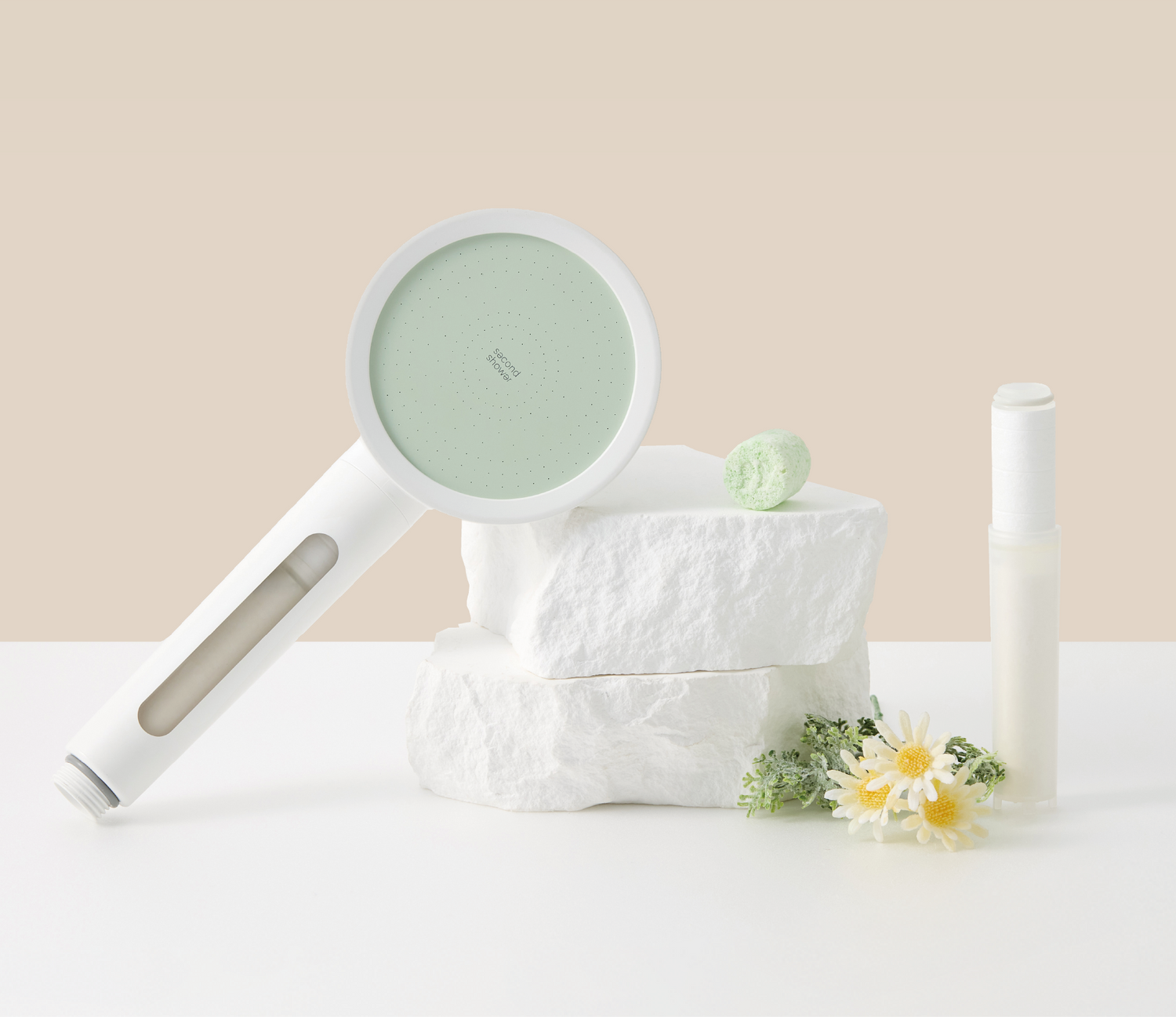
Second Shower's filtered showerhead was engineered specifically for situations like yours: someone who needs both safety and performance, without compromise.

Second Shower's filtered showerhead was engineered specifically for situations like yours: someone who needs both safety and performance, without compromise. If you're pregnant and dealing with sulfur-smelling water, here's how each component of the system maps to your exact needs.
Vitamin C ascorbic acid core neutralizes hydrogen sulfide at the source. Unlike carbon filters that adsorb odors (and release them when saturated) or fragranced filters that mask smell, Vitamin C chemically converts hydrogen sulfide (H₂S) into elemental sulfur and water through a stoichiometric reduction reaction. The sulfur precipitates out as a fine solid - that's the yellow tint you see in used filters - and the water that reaches your skin is odor-free.
This is the same dechlorination process used by municipal water plants before discharge, and it's FDA-approved as GRAS (Generally Recognized As Safe) for food and water contact.
The pregnancy-safety advantage: ascorbic acid is the same Vitamin C you're taking in your prenatal supplement. It doesn't leach anything into the water; it simply donates electrons to oxidized contaminants, converting them to harmless reduced forms. No copper, no zinc, no trace metals - just food-grade Vitamin C doing what it's designed to do.
The American Pregnancy Association and ACOG have no restrictions on Vitamin C water contact during any trimester, unlike KDF-55 media which carries a precautionary note to minimize copper exposure in early pregnancy.
NSF/ANSI 42* certified PP sediment pre-filter removes sulfate-reducing bacteria. If your sulfur smell is coming from bacterial activity (common in well water or water heaters with biofilm buildup), the 5-micron polypropylene sediment filter catches the bacteria before they reach the Vitamin C stage. This dual-stage approach addresses both dissolved hydrogen sulfide gas and the bacterial source.
The sediment filter is certified by NSF/ANSI 42 for particulate reduction, meaning it's been independently tested to capture particles down to 5 microns - small enough for bacteria (typical size 0.5-5 microns) and large enough to maintain water pressure.
Why this matters during pregnancy: you're not just filtering for odor - you're filtering for microbial safety. While municipal water is chlorinated to kill bacteria, if you have a private well or your water heater has biofilm, you may be exposed to sulfate-reducing bacteria that aren't harmful to the general population but can cause GI upset in immunocompromised individuals.
Pregnancy isn't technically immunocompromised, but your immune system is modulated to tolerate the fetus, making you slightly more susceptible to opportunistic infections. Removing the bacterial source gives you one less variable to worry about.
176 micro-jets maintain full water pressure while filtering. One of the biggest complaints about filtered showerheads - especially during pregnancy when you just want a comfortable, relaxing shower - is pressure loss. Carbon and KDF cartridges are dense, and forcing water through them at 2.5 gallons per minute (standard flow rate) creates resistance. Most competitors drop pressure by 20-40%, giving you a weak, unsatisfying trickle.
Second Shower's 176 micro-jet design creates a fine mist spray that feels strong and spa-like while actually using less water per minute. You're not trading comfort for filtration - you're getting both.
The pregnancy comfort factor: at 20+ weeks, standing in a low-pressure shower waiting for shampoo to rinse out is exhausting. Your center of gravity has shifted, your back hurts, and you're retaining water. A strong, consistent spray gets you in and out faster, reduces fatigue, and makes showering feel like self-care instead of a chore. Customer feedback consistently mentions "strong pressure" and "spa-like mist" as the most noticeable difference from other filtered showerheads.
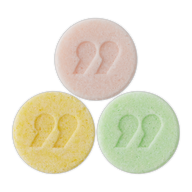
5-vitamin infusion supports skin barrier during hormonal changes. The water passes through a chamber infused with Vitamins C, E, B3 (Niacinamide), B5 (Panthenol), and B7 (Biotin) - all topically absorbed and safe for pregnancy. These aren't gimmicks; they're dermatologist-backed actives that address the skin changes you're experiencing. Niacinamide reduces hyperpigmentation (melasma, linea nigra) by inhibiting melanosome transfer. Panthenol is a humectant that binds water to skin, reducing the itchiness from TEWL (transepidermal water loss).
Biotin supports hair follicle health, which matters if you're experiencing pregnancy hair thinning or texture changes.
Are these vitamins absorbed through skin during a shower? Yes, but minimally - and that's intentional. Topical absorption is measured in micrograms, far below the milligram doses you'd get from oral supplements or the levels that would raise any prenatal concern. The benefit is local: your skin barrier gets a boost, your scalp gets nourishment, and you're not adding another pill to your regimen.
The vitamins rinse away with the water; they don't build up or create systemic exposure.
Day 1-to-Day 60 performance consistency verified by independent lab testing. This is where Second Shower separates from competitors. The company commissioned independent lab clinical testing (not in-house marketing claims) to measure chlorine, chloramine, and heavy metal removal across a 60-day use period. The result: 99.9% removal efficiency from Day 1 through Day 60, with no statistically significant drop-off.
Compare this to KDF-55 filters, which published studies (Tikkanen et al., 2001) show degrade to 40-60% efficiency by Day 30 and below 10% by Day 60 as the zinc surface oxidizes.
Why this is non-negotiable during pregnancy: you're not filtering for preference - you're filtering for safety. If your filter is only 30% effective at Week 8 of use but you think it's still working because the packaging says "90-day life," you're getting unfiltered exposure to chlorine, chloramine, hydrogen sulfide, and any heavy metals in your water. Second Shower's 60-day replacement window is conservative and honest.
You replace the filter every two months (about 6-7 times during a 40-week pregnancy), and you know exactly what protection you're getting the entire time.
Tool-free installation in under 5 minutes. You don't need a plumber, you don't need your landlord's permission, and you don't need to wait for your partner to help. Unscrew your existing showerhead by hand (or with a soft cloth for grip), wrap the included Teflon tape around the shower arm threads, and screw on Second Shower.
If you're renting or plan to move before delivery, you can take it with you - just unscrew it and reinstall your old showerhead. This is critical during pregnancy: you want solutions you can implement immediately, not projects that require coordination or approval.
The filter replacement process is just as simple: twist off the clear chamber, pull out the used Vitamin C cartridge, drop in a new one, and twist the chamber back on. The whole process takes 60 seconds. You can do it in your third trimester, you can do it postpartum, and you can do it one-handed while holding a baby.
This isn't hyperbole - it's user-tested design for people whose lives don't pause just because they need to change a filter.
Truth Window lets you see what you filtered out. The clear chamber isn't just aesthetic - it's accountability. After 30-60 days of use, you'll see the Vitamin C cartridge turn yellow-brown from captured sulfur, rust, and sediment. That visible evidence is what was in your water, what you were breathing and absorbing, and what's now staying in the filter instead of on your skin.
For someone who's pregnant and hyper-aware of every exposure, that transparency builds trust. You're not taking the company's word that it's working - you can see it.
What a Shower Filter Won't Fix (and When You Need More)
Second Shower's Vitamin C filtration is pregnancy-safe and highly effective for chlorine, chloramine, hydrogen sulfide, and heavy metals - but it's not a whole-home water treatment system, and it's important to understand what it won't address so you can make the right decision for your situation.
What it won't fix
It won't soften hard water minerals. If your water has high levels of calcium and magnesium (above 10 grains per gallon / 180 ppm), you have hard water. A shower filter removes oxidizing agents and particulates, but it doesn't remove dissolved minerals. That requires ion-exchange water softening, which is a whole-home system installed at your water main.
If you're dealing with both hard water and sulfur smell, you'd benefit from a water softener + Second Shower combination. The softener addresses mineral buildup; the shower filter addresses chlorine, sulfur, and safety.
The pregnancy consideration: hard water won't harm your baby, but it will worsen skin dryness and itchiness, symptoms you're already dealing with due to stretching skin and hormonal changes. If your water is above 15 gpg and you're experiencing severe eczema or dermatitis, talk to your OB about whether a whole-home softener is worth the investment during pregnancy. For most people, a Vitamin C shower filter + a good moisturizer is enough.
It won't remove all heavy metals if your pipes are severely corroded. Second Shower's filter removes lead, copper, mercury, and arsenic at 99.9% (during the cartridge's peak performance window, Day 1–60) efficiency (independent lab testing) during the 60-day performance window. But if your home has lead pipes or galvanized steel pipes from before 1986, and they're actively corroding, the levels of lead in your water might exceed what a point-of-use shower filter can handle.
For drinking water, you'd need a reverse osmosis (RO) system under your sink or a whole-home lead filtration system.
The pregnancy consideration: lead exposure during pregnancy is serious - it crosses the placenta and can affect fetal brain development. If you live in an older home (pre-1978) or your city has had lead advisories (like Flint, Newark, or parts of Chicago), get your water tested for lead before relying solely on a shower filter. The EPA's action limit is 15 ppb; pregnancy guidelines recommend staying below 5 ppb.
A shower filter reduces dermal and inhalation exposure (both real routes for lead), but if your drinking water is also contaminated, you need a more comprehensive solution.
It won't eliminate well water bacteria if your well is contaminated. The NSF/ANSI 42* certified sediment filter removes particulate matter including sulfate-reducing bacteria, but it's not a sterilization system. If your well water tests positive for coliform bacteria, E. coli, or other pathogens, you need UV sterilization or chlorination at the wellhead, not just a shower filter. Point-of-use filtration is the last line of defense, not the primary one.
The pregnancy consideration: if you're on a private well, get your water tested every trimester. Bacterial contamination can fluctuate season
Which Is Right For You
Match the product to your situation, then start with the right Second Shower format.
Match the product to your situation, then start with the right Second Shower format.
Next Step
Use a verified product path and track outcomes over the first replacement cycle.
Related Reading
FAQ
Is tap water safe for baby baths?
Tap water meets EPA safety standards for drinking, but babies have thinner, more permeable skin. Filtering out chlorine and chloramines provides an extra layer of protection.
Do pediatricians recommend shower filters for babies?
While not a universal recommendation, many pediatric dermatologists suggest filtered water for babies with sensitive skin, eczema, or cradle cap.
What's the safest shower filter for a baby's bath?
Look for NSF-certified filters that remove chlorine and chloramines without adding any chemicals. Vitamin C-based filters like Second Shower are a gentle, effective option.
Can chlorine in bath water affect a baby's skin?
Yes. Chlorine can dry out and irritate delicate baby skin. Even low concentrations that are safe to drink can be harsh on a baby's developing skin barrier.




Leave a comment
All comments are moderated before being published.
This site is protected by hCaptcha and the hCaptcha Privacy Policy and Terms of Service apply.